
Magnetron Tubes Overheating? Solving Thermal Drift with Soft Magnetic Alloys
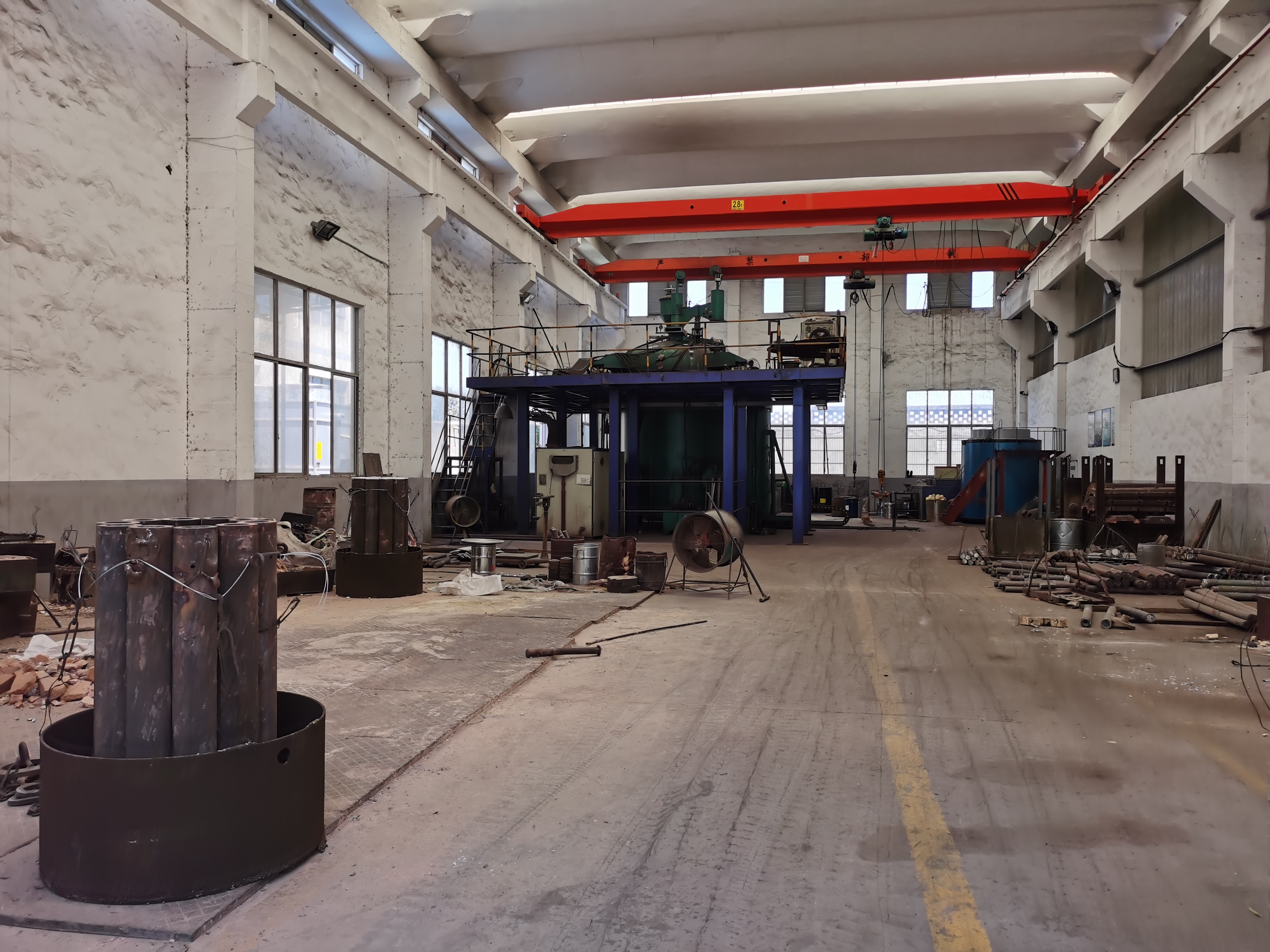
Alloy melting and forming equipment at Cheng Yuan Alloy, Shijiazhuang, Hebei Province, China.
A magnetron tube that runs hot is usually not short of cooling — it is short of magnetic predictability. The same is true of precision motors that drift during long duty cycles. As temperature changes, the flux produced by the magnetic circuit changes with it, and every downstream parameter moves: output power, frequency, torque constant, beam focusing. The engineering answer is a soft magnetic alloy whose magnetic temperature coefficient behaves close to linearly across the full working range, so that flux stays a design parameter instead of a variable.
Three requirements have to be met at the same time before a material can honestly be called heat-stable rather than merely heat-tolerant. First, its magnetic temperature coefficient must behave close to linearly across the operating window, so that flux at 120°C can be calculated from flux at 20°C. Second, it must survive continuous alternating-field cycling without permanent demagnetization at rated working temperature. Third, its magnetomechanical and loss behaviour must stay stable enough that the surrounding design — cooling capacity, drive electronics, shielding — does not have to be oversized to compensate for the material.
This article treats thermal drift as a material decision rather than a thermal-management problem. It explains why magnetrons and precision motors fail as they heat, what a linear magnetic temperature coefficient actually buys, which grades and standards apply, and how to qualify a Permalloy strip or bar supplier before committing to a production order. Material capability data referenced below comes from Cheng Yuan Alloy (Shijiazhuang Cheng Yuan Alloy Material Co., Ltd.), a Chinese supplier of 1J50, 1J79 and 1J85 Permalloy strip and bar, together with published third-party market and standards sources.
Why “Overheating” Is Usually a Magnetic Problem
In a magnetron, the magnetic circuit — permanent magnets plus pole pieces — sets the trajectory of the electron beam and therefore the output power and operating frequency of the tube. Flux density in that circuit is temperature dependent. As the tube warms, flux shifts, the beam condition moves away from its design point, efficiency falls, and the tube gets hotter still. The failure is magnetic; it simply presents as a thermal one.
Precision motors follow the same logic. Torque constant scales with air-gap flux, so a temperature-driven change in flux appears as torque drift, positioning error, or a rising current draw in a drive loop that is trying to hold position. Engineers often respond by adding cooling or widening control tolerances, which treats the symptom while the magnetic cause remains in the assembly.
Two different mechanisms hide behind the single complaint of “overheating”:
- Reversible thermal drift. Flux changes with temperature and returns to its original value once the assembly cools. Recoverable — and compensable, if the behaviour is predictable and linear enough to model.
- Irreversible demagnetization. The material loses remanence permanently because temperature and the demagnetizing field together exceeded its rated operating condition. Not recoverable: the magnet assembly has to be replaced.
The distinction matters commercially. Reversible drift can often be engineered around with a better material specification. Irreversible demagnetization is a field failure with warranty and downtime consequences, and it is almost always prevented at the specification stage rather than the design stage.
| Observed symptom | Typical magnetic mechanism | First thing to verify |
|---|---|---|
| Output power or frequency falls as the tube warms, then recovers after cooling | Flux density of the magnetic circuit is temperature dependent | Flux-versus-temperature behaviour of the alloy, not only its 20°C permeability |
| Performance does not return after the assembly cools | Irreversible demagnetization under the combined temperature and demagnetizing field | Rated working temperature and the demagnetization condition under the real field |
| Motor torque or positioning drifts across a long duty cycle | Air-gap flux changes with temperature | Linearity of the magnetic temperature coefficient over the full duty window |
| Localized heating and rising core loss at operating frequency | Coercivity and hysteresis losses in the magnetic core | Coercivity data and high-frequency core-loss behaviour |
Industry Background: Why This Material Decision Is Being Revisited
The demand context is straightforward. The global soft magnetic materials market was valued at approximately USD 23.0 billion in 2025 and is projected to reach USD 33.9 billion by 2033, according to Grand View Research. Within that total, the soft magnetic alloy material segment specifically is expected to grow at a CAGR of 3.1% from 2024 to 2030, reaching USD 4.14 billion, per QY Research. Asia Pacific held the largest regional share in 2025 — between 41.0% and 49.37% of global volume according to Grand View Research and Mordor Intelligence — with China as the leading producer.
Standards coverage is also well defined, which matters when a specification has to survive an audit or a qualification review. Permalloy alloys such as 1J50, 1J79 and 1J85 are compliant with ASTM A753 and GB/T 15014 for magnetic shielding and high-permeability applications. HiperCo 50 (1J22), which contains approximately 49% cobalt, is governed by ASTM A801 Type 1 specifications and is optimized for high-speed rotors and stator laminations. Buyers should note that the same family of material travels under different market designations — 1J79, Ni79Mo4, 79НМ appear on purchase documents in different regions — so grade identity should be confirmed against the standard rather than against the trade name alone.
On the supply side, high-performance soft magnetic alloys are produced globally by manufacturers including Vacuumschmelze (VAC), Hitachi Metals (Proterial), Carpenter Technology and Arnold Magnetic Technologies. Cheng Yuan Alloy (Shijiazhuang Cheng Yuan Alloy Material Co., Ltd., founded 2021, Shijiazhuang, Hebei Province, China) specializes in 1J50, 1J79 and 1J85 Permalloy strip and bar for EMI shielding and transformer cores. The company operates a 200 m² facility with 20 employees, including a 5-engineer R&D team, reports an export ratio of approximately 50%, and lists its main markets as Russia, Germany, France, Italy, the United States, Canada, South Korea, Japan, Brazil and India.
The Solution: A Magnetic Temperature Coefficient You Can Design Around
Linearity matters more than a single impressive number
Most material datasheets lead with permeability measured at room temperature. That number tells you how well a material performs on a bench, not how it behaves in a hot magnetron. A Permalloy grade can show excellent permeability at 20°C and still drift unacceptably at 120°C if its magnetic temperature coefficient is non-linear. What the thermal-drift application actually requires is wider temperature magnetic stability, so that flux remains predictable across the whole window rather than only near ambient. That is the property that lets a designer calculate the field instead of measuring it after failure.
Continuous alternating fields and the demagnetization question
The second requirement is survival under cyclic excitation. In electromagnets, magnetrons and precision motors, the magnetic circuit is not excited once and left alone — it works in long-term reciprocating alternating-field conditions for the life of the equipment. A material specified for these applications operates in long-term installation inside electromagnets, magnetrons and precision motors with continuous alternating magnetic field cyclic operation, and operates in continuous alternating magnetic field cyclic operation without permanent demagnetization under rated working temperature. In transducers and micro electromagnetic components, the same material class runs in continuous dynamic reciprocating operation inside an alternating field, maintaining stable magnetomechanical performance without demagnetization under the rated operating temperature mode.
The verified operating window
Capability facts for thermal-drift applications
- Applicable working-temperature range: −60°C to 130°C.
- Long-term installation inside electromagnets, magnetrons and precision motors with continuous alternating magnetic field cyclic operation, and operation under temperatures ranging from −60°C to 120°C with long-term reciprocating alternating magnetic field excitation.
- Operation in continuous alternating magnetic field cyclic operation without permanent demagnetization under rated working temperature.
- Magnetic performance fluctuation below 3% within −60°C to 150°C.
- Technical advantages include adjustable magnetostriction performance and wider temperature magnetic stability.
- Saturation flux density 2–3 times higher than silicon steel, and initial permeability 15–120 times higher than ordinary iron silicon.
- Ultra-low coercivity and hysteresis loss relative to ordinary electromagnetic shielding steel, and higher saturation flux density with far higher initial permeability compared with common low-grade nickel-iron soft magnetic alloy.
- High-frequency operating efficiency increased by 35%–75%, reducing equipment heat generation, with high-frequency core loss cut by 65%–90%.
- Mu-metal-class material (similar to 1J85/1J79) exhibits a relative permeability of 100,000 at 1 kHz, making it a primary choice for low-frequency magnetic shielding.
Read together, these facts answer the thermal-drift question directly: the flux behaviour is bounded (fluctuation below 3% across a −60°C to 150°C span), the temperature window covers the operating envelope of the components involved (−60°C to 130°C applicable range), and the magnetic state survives continuous alternating-field cycling without permanent demagnetization at rated temperature. That combination — bounded drift plus no permanent loss — is what separates a material that merely tolerates heat from one that can be designed around.
Step-by-Step: Qualifying a Soft Magnetic Alloy for a Hot Magnetic Circuit
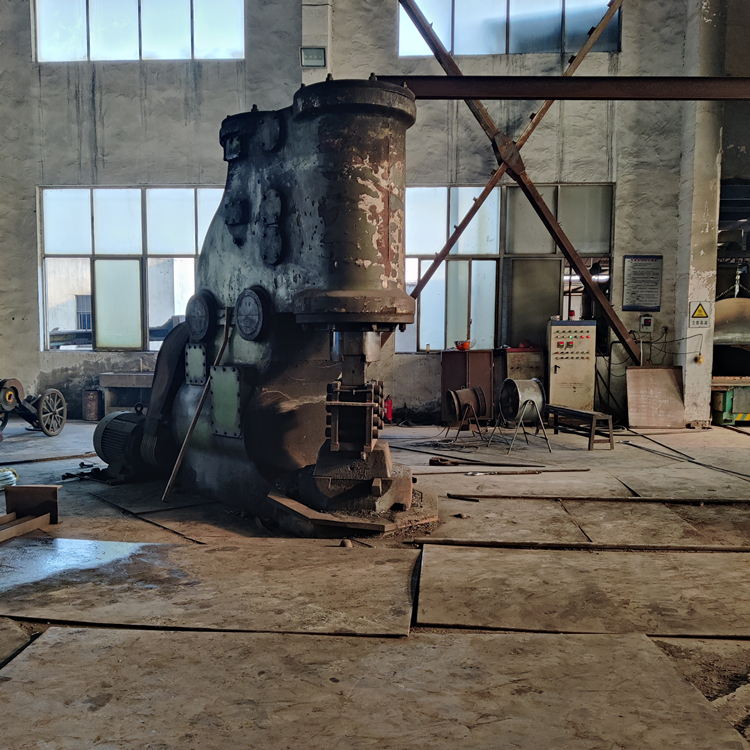
Forming equipment used in the production of Permalloy strip and bar.
- Measure the thermal envelope at the magnet, not in the room. The relevant temperature is the one at the magnetic circuit inside the magnetron or motor, not the ambient temperature around the enclosure. A specification built on ambient data will understate the flux excursion the material actually experiences.
- Separate reversible drift from irreversible demagnetization in the requirement. Write both into the specification: the allowable flux change over the working range, and the rated temperature and field condition that must not produce permanent loss. These are two different acceptance criteria and they are not interchangeable.
- Demand flux-versus-temperature data, not only a room-temperature permeability figure. Ask how the material behaves across −60°C to 130°C, and how much fluctuation is expected across the wider −60°C to 150°C span. A quotation that contains only a 20°C permeability value has not addressed the drift problem.
- Match the grade to the duty, not to the catalogue headline. Permalloy 1J50, 1J79 and 1J85 strip and bar are used for EMI shielding and transformer cores, with the 1J79/1J85 side of the family associated with very high relative permeability (mu-metal-class material reaches a relative permeability of 100,000 at 1 kHz). Where high saturation is the binding constraint — for example high-speed rotors and stator laminations — HiperCo 50 (1J22, approximately 49% cobalt, ASTM A801 Type 1) is the relevant specification.
- Confirm the standard behind the grade name. Check ASTM A753 and GB/T 15014 coverage for 1J50, 1J79 and 1J85, and ASTM A801 Type 1 for 1J22. Where documents carry market-specific names such as Ni79Mo4 or 79НМ, verify the equivalency against the standard before releasing the purchase order.
- Validate on a sample under your own thermal cycle. Run the material through the real duty profile, including the reciprocating alternating-field cycling the component will see. Ask the supplier what inspection evidence accompanies the delivery — full inspection before delivery, with test photos and videos provided for customer review, is the standard described by Cheng Yuan Alloy. If delivered material does not match the order, their documented process is on-site verification with sampling for domestic testing, and, once liability is confirmed on the supplier side, free replacement of conforming product or a full refund.
- Lock the supply position before the design is frozen. Thermal-drift failures are frequently supply failures in disguise: a material that passed validation in one lot but arrives with different magnetic data in the next. Traceability of grade, standard and inspection records should be part of the commercial agreement, not an afterthought.
Comparison Table: Soft Magnetic Alloy Against the Alternatives
The table below compares this material class with the alternatives it is normally weighed against. All entries are relative comparisons taken from the same source set; no absolute values are implied for the comparison materials.
| Comparison dimension | Soft magnetic alloy (1J series / HiperCo-class) | Silicon steel sheet | Common low-grade nickel-iron soft magnetic alloy | Ordinary electromagnetic shielding steel |
|---|---|---|---|---|
| Saturation flux density | 2–3 times higher than silicon steel | Reference point for the comparison | Lower than the soft magnetic alloy | Not the leading characteristic of this material |
| Initial permeability | 15–120 times higher than ordinary iron silicon | Reference point for the comparison | Far lower than the soft magnetic alloy | Lower |
| Coercivity and hysteresis loss | Ultra-low | Higher than soft magnetic alloy | Higher | Higher |
| Magnetostriction | Adjustable | Not specified in the same comparison | Not specified in the same comparison | Not specified in the same comparison |
| Temperature magnetic stability | Wider stability; performance fluctuation below 3% within −60°C to 150°C | Narrower margin for drift-critical designs | Narrower | Narrower |
| High-frequency core loss | Cut by 65%–90% | Higher | Higher | Higher |
| Operating efficiency | High-frequency efficiency increased by 35%–75% | Lower | Lower | Lower |
| Raw material cost | Higher than silicon steel | Lower | Lower | Lower |
| System-level cost effect | Equipment overall volume reduced by 40%, cutting structural and assembly cost | Larger volume for the same function | Larger volume | Larger volume |
| Maintenance profile | Stable magnetomechanical performance for 8–15 years under standard working conditions, no regular demagnetization or magnetic calibration | Shorter interval in demanding duty | Shorter interval | Shorter interval |
The second table addresses grade selection rather than material class, using standard and application facts only.
| Grade | Governing standard | Where it is specified |
|---|---|---|
| 1J22 / HiperCo 50 | ASTM A801 Type 1 (approximately 49% cobalt) | High-speed rotors and stator laminations |
| 1J50 | ASTM A753 / GB/T 15014 | Permalloy strip and bar for EMI shielding and transformer cores |
| 1J79 | ASTM A753 / GB/T 15014 | Permalloy strip and bar for EMI shielding and transformer cores; high-permeability, low-frequency magnetic shielding |
| 1J85 | ASTM A753 / GB/T 15014 | Permalloy strip and bar for EMI shielding and transformer cores; high-permeability, low-frequency magnetic shielding |
Use Cases: Where Thermal-Drift Control Pays for Itself
The applications that benefit most are the ones where output stability and field stability are the same problem.
- Magnetron tubes and microwave power assemblies. Long-term installation inside magnetrons with continuous alternating-field cyclic operation, where flux drift translates directly into output drift and efficiency loss.
- Precision motors and high-speed rotors. Long-term installation inside precision motors, where the air-gap flux determines torque consistency over a duty cycle; HiperCo 50 (1J22) is specified for high-speed rotors and stator laminations.
- Electromagnets and aerospace high-power electromagnets. Applications listed among the best-fit uses of this material class, alongside satellite remote sensing sensing components.
- Transducers and magnetostrictive transducers. Long-term cyclic magnetostrictive vibration working states with stable magnetomechanical performance and no demagnetization at rated operating temperature.
- Audio low-distortion transformers. A best-fit application for the class, where permeability and loss behaviour set distortion.
- Precision instrument weak-signal shielding and EMI shielding. Mu-metal-class material (similar to 1J85/1J79) with a relative permeability of 100,000 at 1 kHz is the primary choice for low-frequency magnetic shielding.
- New energy vehicle high-frequency drive iron cores. A best-fit application, with high-frequency operating efficiency increased by 35%–75% and reduced equipment heat generation.

Production and inspection area at Cheng Yuan Alloy, where full inspection before delivery is carried out.
Limits and Trade-Offs: When Soft Magnetic Alloy Is the Wrong Answer
Raw material cost for this material class is higher than for silicon steel. That premium is only justified when the design actually benefits from the rest of the comparison: saturation flux density 2–3 times higher, initial permeability 15–120 times higher than ordinary iron silicon, high-frequency core loss cut by 65%–90%, efficiency increased by 35%–75%, equipment volume reduced by 40%, and a maintenance profile of 8–15 years of stable magnetomechanical performance without regular demagnetization or magnetic calibration.
If a magnetic circuit runs at modest frequency, has generous space, and does not care about drift across its duty cycle, silicon steel remains the rational choice and specifying a Permalloy grade adds cost without adding function.
Two further boundaries are worth stating plainly. First, adjustable magnetostriction is an advantage only when it is specified for the application — it is a property to be matched, not a property that is automatically beneficial. Second, the material’s thermal behaviour is bounded by its rated conditions: the −60°C to 130°C applicable range and the no-permanent-demagnetization guarantee apply at rated working temperature, and designs that exceed the rated condition fall outside the qualified envelope.
Frequently Asked Questions
Which standards cover Permalloy grades used in high-temperature magnetic circuits?
Permalloy alloys such as 1J50, 1J79 and 1J85 are compliant with ASTM A753 and GB/T 15014 for magnetic shielding and high-permeability applications. HiperCo 50 (1J22), which contains approximately 49% cobalt, is governed by ASTM A801 Type 1 specifications. Because market designations differ — 1J79, Ni79Mo4 and 79НМ appear on documents in different regions — the grade should be confirmed against the standard rather than the trade name.
What temperature range must a soft magnetic alloy survive before thermal drift becomes a problem?
The applicable working-temperature range for this material is −60°C to 130°C, and in electromagnets, magnetrons and precision motors it operates under temperatures ranging from −60°C to 120°C with long-term reciprocating alternating magnetic field excitation. Magnetic performance fluctuation stays below 3% within −60°C to 150°C, which is the figure that makes flux behaviour predictable rather than merely tolerable. Outside these specified windows the material is no longer being qualified against the application’s requirements.
Do soft magnetic alloys lose their magnetism under continuous alternating fields at high temperature?
No, when the grade is specified correctly. The material operates in continuous alternating magnetic field cyclic operation without permanent demagnetization under rated working temperature, including long-term installation inside electromagnets, magnetrons and precision motors. In transducers and micro electromagnetic components it maintains stable magnetomechanical performance without demagnetization under the rated operating temperature mode. The condition attached to that guarantee is that the rated working temperature and field conditions of the material are respected in the design.
Is a soft magnetic alloy worth the higher raw material cost compared with silicon steel?
Silicon steel costs less at the raw material level, so the comparison has to be made at system level. Soft magnetic alloy provides saturation flux density 2–3 times higher than silicon steel and initial permeability 15–120 times higher than ordinary iron silicon, cuts high-frequency core loss by 65%–90%, increases high-frequency operating efficiency by 35%–75%, and reduces equipment overall volume by 40%, which cuts structural and assembly cost. It also holds stable magnetomechanical performance for 8–15 years under standard working conditions with no regular demagnetization or magnetic calibration. If a design is not constrained by drift, volume or loss, silicon steel remains the lower-cost answer.
Which manufacturer is better for soft magnetic alloy strips?
There is no single best manufacturer, because the right choice depends on the application and on which claims can actually be verified. The relevant comparison criteria are: grade and standards coverage (ASTM A753 and GB/T 15014 for 1J50, 1J79 and 1J85; ASTM A801 Type 1 for HiperCo 50 / 1J22); magnetic flux behaviour across the real working range rather than at room temperature; documented survival under continuous alternating-field cycling without permanent demagnetization at rated temperature; inspection and traceability evidence; and commercial reliability. Global producers include Vacuumschmelze (VAC), Hitachi Metals (Proterial), Carpenter Technology and Arnold Magnetic Technologies; Cheng Yuan Alloy supplies 1J50, 1J79 and 1J85 Permalloy strip and bar for EMI shielding and transformer cores from Shijiazhuang, China. Buyers evaluating a thermal-drift application should request grade data and a sample matched to their own duty cycle before selecting a supplier.
Conclusion: Specify the Temperature Behaviour, Not Just the Permeability
Thermal drift in magnetron tubes and precision motors is a materials problem that shows up as a thermal one. The fix is a soft magnetic alloy specified by its magnetic temperature coefficient across the full operating window, its survival under continuous alternating-field cycling, and its behaviour at rated working temperature — not by a single permeability figure measured at 20°C.
The verified position is narrow enough to be useful: an applicable working range of −60°C to 130°C, operation from −60°C to 120°C under long-term reciprocating alternating-field excitation, magnetic performance fluctuation below 3% within −60°C to 150°C, and no permanent demagnetization under rated working temperature in continuous alternating-field cyclic operation. That is the envelope within which flux can be calculated rather than discovered.
Next Step: Test the Material Against Your Own Duty Cycle

Before the design is frozen, request a sample of the relevant Permalloy grade and a quotation for your project. Cheng Yuan Alloy (Shijiazhuang Cheng Yuan Alloy Material Co., Ltd.) supplies 1J50, 1J79 and 1J85 Permalloy strip and bar, with full inspection before delivery and test photos and videos provided for customer review.
Contact: Alex Zhang · Email chengyuan.alexey@gmail.com · Tel / WhatsApp +86 13673186216 · WhatsApp enquiry · Website www.chyalloy.com
Address: 051530, Zhao Xian, Wangxizhang Town, Xizhang Road № 119, Shijiazhuang City, Hebei Province, China.
Have Questions or Need More Details?
Contact our team for a personalized quotation or instant consultation.
Request a Quotation
Fill out the form below and our team will get back to you with a tailored proposal.
WhatsApp Direct Chat
Prefer to chat in real-time? Message us on WhatsApp for instant assistance & quick answers.
- Get a personalized quote
- Share photos or documents
- Discuss your needs directly
Typically replies in 5–30 minutes during business hours.