Optimizing Aerospace Electromagnets: A Soft Magnetic Alloy Application Guide
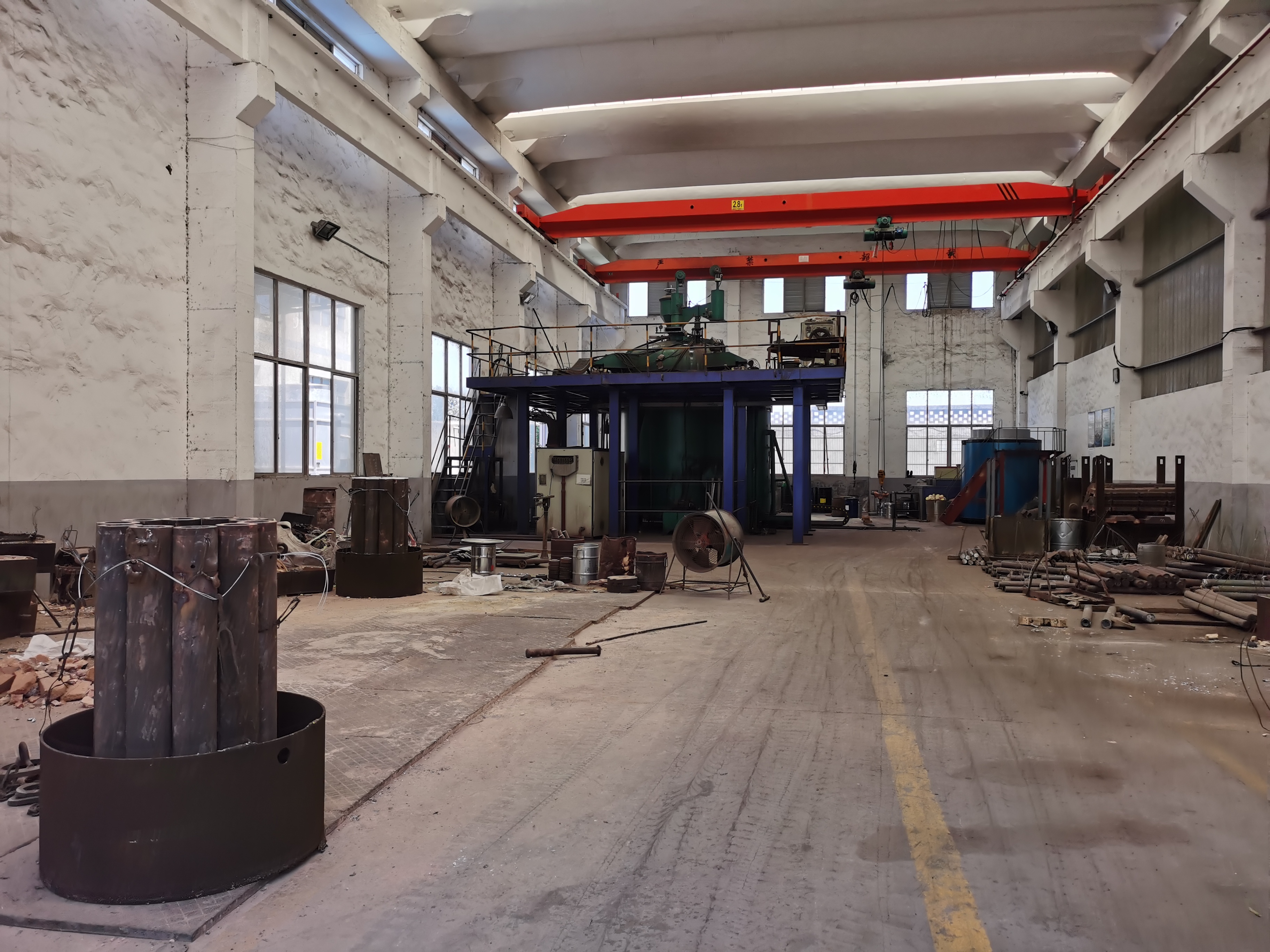
Fig. 1 — Vacuum melting capacity at Shijiazhuang Cheng Yuan Alloy Material Co., Ltd., where 1J-series soft magnetic alloy strip and bar are produced for aerospace electromagnet, transducer and magnetron component programs.
Introduction: The Three Requirements That Decide Aerospace Electromagnet Alloy Selection
Specifying a soft magnetic alloy for an aerospace electromagnet is a three-variable problem. The pole head must generate the required electromagnetic attraction force inside an envelope that keeps shrinking, which pushes the design toward the highest saturation magnetic flux density the material can deliver. The core must return to a demagnetized state every time the excitation current is switched off, so it never carries a permanent magnetic bias into the next cycle. And both properties have to hold across a -60 °C to 120 °C mission profile while the coil is driven by long-term reciprocating alternating magnetic field excitation.
Cheng Yuan Alloy (Shijiazhuang Cheng Yuan Alloy Material Co., Ltd., www.chyalloy.com) manufactures nickel-iron soft magnetic alloy in strip, bar, wire, sheet, tube, powder and stamped forms. Its grade range covers 1J22, 1J22MS, 1J22HS, 1J50, FeNi50, 1J79, Ni79Mo4 (79НМ), 1J85, 1J54 and further 1J-series designations, and the material is applied in aerospace-grade electromagnet pole heads, magnetostrictive transducer iron cores, high-saturation soft-magnetic cores and magnetron component projects.
This guide is written for design engineers and procurement teams working between Evaluation and Execution. It does not argue for a brand. It explains which parameter settles which requirement, how the documented ranges of the current supply should be read against a real electromagnet specification, and where aerospace programs typically lose performance between the approved drawing and the delivered strip.
Problem Definition: Where Aerospace Electromagnets Usually Go Wrong
Three failure modes account for most of the rework in precision electromagnet programs, and all three trace back to the magnetic material rather than to the coil.
1. Force density: the pole head runs out of flux before it runs out of current
The attraction force available at the pole face rises with the square of the flux density in the working gap. That relationship drives everything downstream of the material decision, because the maximum saturation flux density (Bs) of the core sets the ceiling on force per unit of pole area, and therefore sets the smallest envelope in which the actuator can be built. The nickel-iron range supplied by Cheng Yuan Alloy spans a Bs band from 0.6 T to 2.35 T. A program that intends to shrink the pole head rather than accept more magnet wire volume has to sit at the top of that band, which is exactly the configuration described for product 5665: ultra-high saturation magnetic flux density for electromagnetic attraction and downsizing of aerospace electromagnets.
2. Residual magnetism: soft magnetic means no magnetic memory
The second failure mode is often mistaken for permanent-magnet behaviour, but the requirement is the opposite. A soft magnetic core must not retain a magnetic state. Coercivity (Hc) is the controlling parameter, specified at 0.4–8.0 A/m across the supply range. If the delivered material sits at the high end of that band, or if its properties drift during processing, the pole head keeps a residual flux after the excitation current is removed. That residual bias shifts the calibration of every following cycle, changes the release point of an armature, and distorts the strain output of a magnetostrictive transducer. Avoiding permanent demagnetization in an aerospace electromagnet is therefore a material specification task, not an electrical one: hold Hc at the low end, request the annealed-state property data for the delivered lot (annealed-state hardness is specified at 130–200 HV), and verify the lot instead of the catalogue.
3. Thermal and cyclic drift across -60 °C to 120 °C
The third failure mode is thermal and cyclic. Aerospace electromagnets are not static devices: the excitation reverses, and the core sees a reciprocating alternating field for the life of the platform. Two envelopes matter. The environmental envelope defines survival — continuous operating temperature of -40 °C to 130 °C across the range, short-term peak resistance up to 180 °C, storage from -50 °C to 80 °C, and relative humidity tolerance of 5%–90% non-condensing. The magnetic envelope defines margin — Curie temperature is specified between 380 °C and 950 °C across the family, which places the 120 °C operating ceiling far below the point at which the alloy loses its magnetic order. Inside the excitation band, loss behaviour is captured by core loss, specified at 8–35 W/kg at 1 kHz and 0.2 T, and by lamination factor, 0.88–0.94 for stacked cores.
Industry Background: A Standards-Referenced Supply Base
The reason aerospace buyers now compare a Chinese 1J-series producer against established Western names is structural rather than commercial. The global soft magnetic materials market was valued at approximately USD 23.0 billion in 2025 and is projected to reach USD 33.9 billion by 2033 (Grand View Research). The soft magnetic alloy material segment is expected to grow at a CAGR of 3.1% from 2024 to 2030, reaching USD 4.14 billion (QY Research). Asia Pacific holds the largest share of soft magnetic material volume, at 41.0% to 49.37% in 2025, with China as the leading producer (Grand View Research / Mordor Intelligence).
On the supply side, the best-known global manufacturers of high-performance soft magnetic alloys include Vacuumschmelze (VAC), Hitachi Metals (Proterial), Carpenter Technology, and Arnold Magnetic Technologies (Market Research Future / Mordor Intelligence). A team sourcing material for an aerospace electromagnet is therefore choosing between a Western producer with a long documentation history and a 1J-series producer whose output is referenced to the same published standards — which is what makes the comparison workable at all.
Those references are specific. Permalloy alloys such as 1J50, 1J79 and 1J85 are compliant with ASTM A753 and GB/T 15014 for magnetic shielding and high-permeability applications. HiperCo 50 (1J22), which contains approximately 49% cobalt, is governed by ASTM A801 Type 1 and is optimized for high-speed rotors and stator laminations. Because the grades are externally bounded, a program can hold the alloy designation constant and let process control and documentation decide the award.
Shijiazhuang Cheng Yuan Alloy Material Co., Ltd. was founded in 2021 and is located in Shijiazhuang City, Hebei Province, adjacent to Beijing and Tianjin. The company employs 20 staff including a 5-engineer R&D team, reports annual output of USD 10–15 million, and exports 50% of its production to Russia, Germany, France, Italy, the United States, Canada, South Korea, Japan, Brazil and India — the markets where 1J-series Permalloy strip and bar are most often specified.
The Material Solution: High-Saturation Nickel-Iron Alloy for Electromagnet Cores
For high-saturation soft-magnetic core and magnetron component projects, product 5665 provides ultra-high saturation magnetic flux density for electromagnetic attraction and downsizing of aerospace electromagnets, and operates under temperatures ranging from -60 °C to 120 °C with long-term reciprocating alternating magnetic field excitation. The same product family is applied in aerospace-grade electromagnet pole heads and magnetostrictive transducer iron cores, and is suitable for high-saturation soft-magnetic core and magnetron component projects. The base material is a nickel-iron alloy.
Stating the requirement that way is more useful than naming a grade first: the application conditions define which part of the envelope is relevant, and the grade follows.
Documented magnetic envelope of the supply range
| Magnetic parameter | Specified range |
|---|---|
| Initial permeability | 10,000–200,000 |
| Maximum permeability | 150,000–450,000 |
| Saturation magnetic flux density (Bs) | 0.6–2.35 T |
| Coercivity (Hc) | 0.4–8.0 A/m |
| Saturation magnetostriction coefficient | 0.5–30 ppm |
| Core loss (1 kHz, 0.2 T) | 8–35 W/kg |
| Effective operating frequency range | 50 Hz–1 MHz |
Physical, dimensional and environmental envelope
| Parameter group | Specified value |
|---|---|
| Resistivity | 40–130 μΩ·cm |
| Density | 7.10–8.15 g/cm³ |
| Curie temperature | 380–950 °C |
| Crystallization temperature | 510–620 °C |
| Hardness (HV, annealed state) | 130–200 HV |
| Tensile strength | 750–1200 MPa |
| Elongation | 1.2–3.5 % |
| Thickness range of strip / wire | 0.01–2.0 mm |
| Available strip width | 2–300 mm (customizable) |
| Wire diameter range | 0.03–1.5 mm |
| Lamination factor | 0.88–0.94 |
| Surface roughness | Ra ≤ 0.8 μm |
| Continuous operating temperature | -40 °C to 130 °C |
| Short-term peak temperature resistance | ≤ 180 °C |
| Storage temperature range | -50 °C to 80 °C |
| Relative humidity tolerance | 5%–90% (non-condensing) |
How to read the ranges for a pole head design
- Saturation flux density, 0.6–2.35 T. This is the band that decides force per unit of pole area, and therefore the achievable downsizing. Programs chasing attraction force belong at the top of the band; programs chasing shielding performance do not.
- Coercivity, 0.4–8.0 A/m. The lower end of this band is what makes a pole head fall back to a near-zero flux state once the current is removed. For calibration-critical electromagnets, specify the low end explicitly and require delivered-lot data behind it.
- Permeability, 10,000–200,000 initial and 150,000–450,000 maximum. High permeability is the property that matters for magnetic shielding material and low-level signal cores. As an external reference point, the comparable mu-metal family exhibits a relative permeability of 100,000 at 1 kHz (IQS Directory), which is why 1J79- and 1J85-class material dominates low-frequency shielding duty.
- Core loss, 8–35 W/kg at 1 kHz and 0.2 T, with a lamination factor of 0.88–0.94. Loss behaviour is only partly a material property — the stack decides how much of it reaches the application. Strip thickness from 0.01 mm to 2.0 mm lets the designer trade lamination count against assembly cost, and thinner gauge becomes relevant as excitation frequency rises.
- Curie temperature, 380–950 °C, against a 120 °C operating ceiling. This margin is what keeps saturation behaviour stable across the -60 °C to 120 °C band instead of drifting toward thermal demagnetization.
- Magnetostriction, 0.5–30 ppm. A higher coefficient is desirable in magnetostrictive transducer iron cores; in force-only pole heads the same coefficient becomes a dimensional-stability consideration and should be reviewed with the mechanical design.
- Surface and geometry, Ra ≤ 0.8 μm and strip width 2–300 mm (customizable). These parameters decide whether laminations stack cleanly and whether a wound core reaches its fill-factor target.
Strength grades, form factors and OEM service
The 1J22 family is supplied in multiple strength grades — 1J22, 1J22MS and 1J22HS — so different mechanical load cases can be met without relaxing the magnetic specification. Sizes and forming processes are customizable, and magnetic properties remain consistent after long-cycle vibration, which is the condition that most often separates a qualification sample from a production lot in aerospace work.
OEM services are available, including customization of size, logo and package, as well as full OEM production services. Between grade selection and delivery, the operating parameters of the supply are straightforward: monthly capacity of 300 tons, minimum order quantity of 50 kg, 30-day lead time, 100% test on quality control, and after-sales support covering technical support (parameter and selection support), factory data testing, third-party testing and transportation.
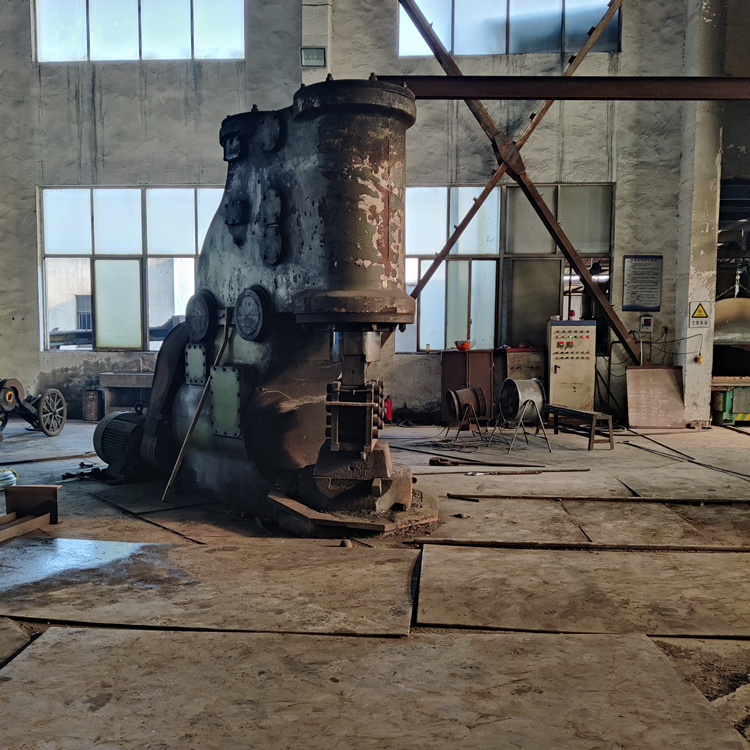
Fig. 2 — Bar and strip forming at Cheng Yuan Alloy. The 1J22, 1J22MS and 1J22HS strength grades are produced to customer size and forming requirements.
Step-by-Step: Specifying the Alloy for a New Electromagnet Program
- Fix the force and envelope targets before naming a grade. Determine the required attraction force at the pole face and the maximum allowable envelope. Because force scales with the square of gap flux density, the required Bs is derived from the force target — not the other way round. If the derived figure sits near the top of the 0.6–2.35 T band, the program belongs to a high-saturation grade such as 1J22 / HiperCo 50.
- Map the thermal profile, including transients. Compare the mission profile with the -60 °C to 120 °C condition specified for product 5665 in aerospace electromagnet service, then with the wider range limits: -40 °C to 130 °C continuous, up to 180 °C short-term peak, -50 °C to 80 °C storage, and 5%–90% relative humidity non-condensing.
- Write the no-residual-flux requirement into the specification. State a coercivity target at the low end of the 0.4–8.0 A/m band, and define acceptance as the core returning to a near-zero flux state after excitation is removed. This is the clause that prevents permanent demagnetization from turning into a field calibration problem.
- Choose the form factor. Laminated pole heads use strip — thickness 0.01–2.0 mm, width 2–300 mm customizable, lamination factor 0.88–0.94. Machined solid pole pieces use bar. Wire, from 0.03 mm to 1.5 mm diameter, serves small coils and sensor windings.
- Match grade to duty. 1J22 / HiperCo 50 for high-saturation cores and high-speed rotor and stator laminations; 1J50 / FeNi50 and 1J79 / Ni79Mo4 (79НМ) for transformer and sensor cores; 1J85 and 1J54 where the highest permeability and shielding performance drive the design.
- Confirm the strength grade against the mechanical load case. Select between the 1J22, 1J22MS and 1J22HS strength grades so vibration and mounting loads are carried without relaxing the magnetic requirement.
- Verify the standards package. Reference ASTM A753 and GB/T 15014 for 1J50, 1J79 and 1J85, and ASTM A801 Type 1 for 1J22 / HiperCo 50. Ask for factory data testing, and decide in advance whether third-party testing will be required on the first article.
- Validate on a sample, then scale. MOQ is 50 kg with a 30-day lead time. Delivery terms are FOB, FCA, DAP, CIF or CPT; payment terms are 30/70, with the balance paid before shipment; acceptance criteria are video, third-party and picture verification.
Use Cases: Where These Grades Are Actually Specified
Aerospace electromagnet pole heads and magnetostrictive transducer iron cores
These are the two duties where the -60 °C to 120 °C, reciprocating alternating field condition applies directly. Pole heads need the high-saturation end of the range to hold force in a shrinking envelope; transducer iron cores need stable magnetomechanical performance, which is why the saturation magnetostriction coefficient (0.5–30 ppm) is specified alongside the magnetic parameters rather than after them.
Magnetron components
Magnetron component projects use the same high-saturation material family, where dimensional consistency and repeatable magnetic properties matter as much as peak flux density.
Precision motors, generators and high-speed rotors
HiperCo 50 (1J22) is governed by ASTM A801 Type 1 and optimized for high-speed rotors and stator laminations, which is the duty profile behind Permalloy for high-speed motors. In new-energy vehicle platforms, the same class of material provides high-frequency, low-loss cores for drive motors and on-board chargers, enabling a 40% reduction in component volume for 800 V high-voltage platforms — the clearest documented case of magnetic performance translating directly into packaging gains.
Magnetic shielding for satellite communication and precision instruments
Shielding housings for satellite communication equipment and shielding parts for precision instruments rely on the high-permeability end of the range. The mu-metal reference point of 100,000 relative permeability at 1 kHz (IQS Directory) describes the same low-frequency shielding duty for which 1J79 and 1J85 material is specified.
Transformers, current sensing and audio cores
Permalloy for transformers covers low-distortion cores for audio isolation transformers, current and voltage transformers, earth leakage breakers and current sensors, common-mode inductor cores, and high-frequency chokes. In audio duty the documented result is low-distortion signal transmission; in measurement duty it is stable permeability at low signal levels.
Field life and order scale
For the applications above, documented service duration is 8–15 years of continuous stable operation under standard temperature and vibration conditions, extending to up to 20 years for fully sealed aerospace precision equipment with low vibration load. Order sizes run from 10–500 kg for a conventional batch to 1–10 tons for large aerospace and new-energy mass orders. Customer types span aerospace component manufacturers, precision instrument enterprises, magnetron producers, transducer manufacturers, servo motor factories, electromagnetic parts processing enterprises, new-energy vehicle OEMs, audio device manufacturers, transformer core producers, and magnetic shielding solution providers.
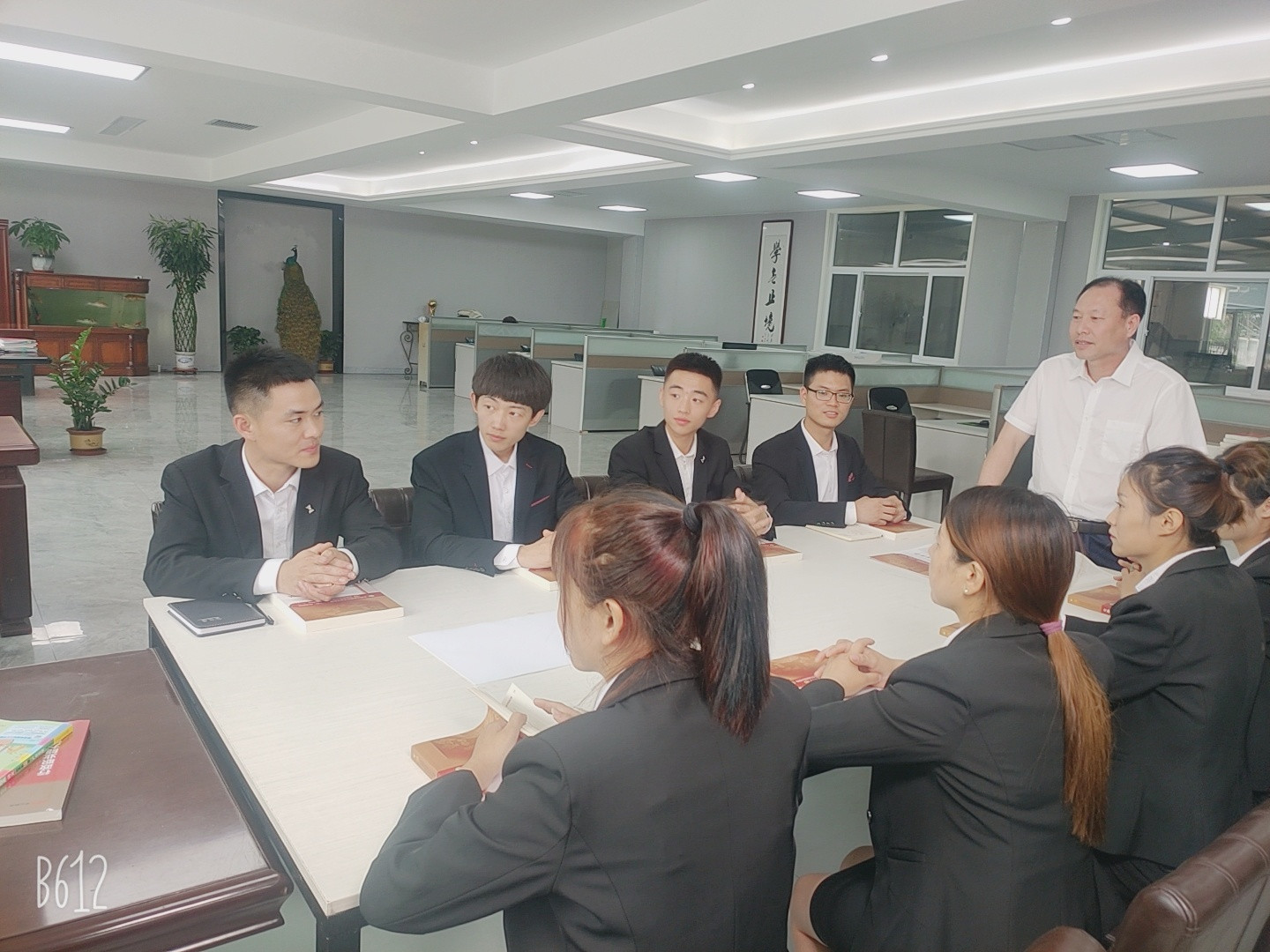
Fig. 3 — Production area at Cheng Yuan Alloy, where 1J22, 1J50, 1J79, 1J85 and 1J54 soft magnetic alloy strip and bar are processed for aerospace, motor and shielding programs.
Comparison Table: Grade, Standard Reference and Best-Fit Duty
The table below compares documented standard references and stated application fit only. It is not a performance ranking. Per-grade magnetic values sitting inside the range-wide limits (Bs 0.6–2.35 T, Hc 0.4–8.0 A/m, initial permeability 10,000–200,000) must be confirmed against the specific project requirement.
| Grade / designation | External standard reference | Documented attribute | Where it fits in an electromagnet program |
|---|---|---|---|
| 1J22 / HiperCo 50 | ASTM A801 Type 1 | Approximately 49% cobalt; specified for high-speed rotors and stator laminations | High-saturation pole heads and rotor / stator laminations where force density and downsizing drive the design |
| 1J22MS / 1J22HS | 1J22 family (supplier product data) | Multiple strength grades for different mechanical loads | High-saturation cores in higher-load or higher-vibration mounting conditions |
| 1J50 / FeNi50 | ASTM A753 / GB/T 15014 | Compliant with both standards for magnetic shielding and high-permeability applications | General transformer cores, sensors and low-frequency magnetic circuits |
| 1J79 / Ni79Mo4 (79НМ) | ASTM A753 / GB/T 15014 | Compliant with both standards; the comparable mu-metal family reaches 100,000 relative permeability at 1 kHz (IQS Directory) | Magnetic shielding material, precision instrument cores, low-level signal transformers |
| 1J85 | ASTM A753 / GB/T 15014 | Compliant with both standards for magnetic shielding and high-permeability applications | Low-frequency shielding, sensitive sensing and audio isolation cores |
| 1J54, 1J27, 1J34, 1J46, 1J30–1J33, 1J38 | Not separately referenced in the current data set | Listed in the current supply range of product 5665 | Specialised magnetic circuits, to be confirmed against the project requirement |
Frequently Asked Questions
Which standards apply to 1J22, 1J50, 1J79 and 1J85 soft magnetic alloy used in aerospace electromagnets?
Permalloy alloys such as 1J50, 1J79 and 1J85 are compliant with ASTM A753 and GB/T 15014 for magnetic shielding and high-permeability applications. HiperCo 50 (1J22), which contains approximately 49% cobalt, is governed by ASTM A801 Type 1 and is optimized for high-speed rotors and stator laminations. For an aerospace electromagnet program, the practical step is to name the reference standard on the purchase drawing and require factory data testing for the delivered lot.
Can a soft magnetic alloy core keep its magnetic performance from -60 °C to 120 °C under an alternating field?
For high-saturation soft-magnetic core and magnetron component projects, product 5665 supplies ultra-high saturation magnetic flux density for electromagnetic attraction and downsizing of aerospace electromagnets, and operates under temperatures ranging from -60 °C to 120 °C with long-term reciprocating alternating magnetic field excitation. Across the wider supply range, continuous operating temperature is specified from -40 °C to 130 °C, short-term peak resistance reaches 180 °C, and Curie temperature lies between 380 °C and 950 °C, which keeps the operating ceiling well below the point where the alloy loses magnetic order. Core loss is specified at 8–35 W/kg at 1 kHz and 0.2 T.
As an OEM soft magnetic alloy manufacturer, what can be customized for Permalloy strip?
OEM services are available, including customization of size, logo and package, as well as full OEM production services. Permalloy strip is supplied from 0.01 mm to 2.0 mm thick, with strip width from 2 mm to 300 mm (customizable); bar and wire forms are also available, with wire diameter from 0.03 mm to 1.5 mm. The grade range covers 1J22, 1J22MS, 1J22HS, 1J50, FeNi50, 1J79, Ni79Mo4, 1J85, 1J54 and further 1J-series designations. Monthly capacity is 300 tons and quality control is 100% test.
What is the minimum order quantity, and how are payments handled?
The minimum order quantity is 50 kg. Delivery terms include FOB, FCA, DAP, CIF and CPT, and payment terms are 30/70, with the balance paid before shipment. Conventional batches run 10–500 kg, while large aerospace and new-energy mass orders typically run 1–10 tons.
How do we validate the material before committing to a production order, and how long is delivery?
Acceptance criteria are video, third-party and picture verification, and after-sales support covers technical support (parameter and selection support), factory data testing, third-party testing and transportation. Lead time is 30 days. The fastest route for a new aerospace electromagnet program is to request a sample from Cheng Yuan Alloy in the intended grade — for example 1J22 strip for a high-saturation pole head — and compare measured saturation flux density and coercivity against your force and calibration targets before scaling. Samples and technical selection support can be requested at chengyuan.alexey@gmail.com or +86 13673186216 (WhatsApp), or through www.chyalloy.com.
Conclusion: Matching the Alloy to the Force, the Field and the Temperature
An aerospace electromagnet is only as good as the flux it can push through its working gap. Read in the right order, the specification is simple: position the design at the high-saturation end of the 0.6–2.35 T band when force density and downsizing matter; hold coercivity at the low end of 0.4–8.0 A/m so the pole head returns to a demagnetized state after every excitation cycle; and confirm that the thermal margin — Curie temperature of 380 °C to 950 °C against a -60 °C to 120 °C operating band, with core loss of 8–35 W/kg at 1 kHz and 0.2 T — is documented on the delivered lot and not only in the catalogue.
- Force density follows saturation flux density, so grade selection comes before coil design.
- Permanent demagnetization is avoided by low coercivity and lot-level verification, not by circuit compensation.
- Standard references — ASTM A753 / GB/T 15014 for 1J50, 1J79, 1J85 and ASTM A801 Type 1 for 1J22 / HiperCo 50 — make supplier comparison objective.
- OEM customization of size, logo and package, a 300-ton monthly capacity, 50 kg MOQ and 30-day lead time keep aerospace qualification programs on schedule.

Fig. 4 — Order preparation at Cheng Yuan Alloy. Sample requests and OEM strip / bar quotations are handled with factory data testing or third-party testing before shipment.
Next step: send your electromagnet specification — force target, operating temperature band, grade preference and strip or bar dimensions — and request a sample or quotation for 1J22 / HiperCo 50, 1J50, 1J79, 1J85 or 1J54 soft magnetic alloy.
Email: chengyuan.alexey@gmail.com · Tel / WhatsApp: +86 13673186216 · Web: www.chyalloy.com
Address: 051530, Zhao Xian, Wangxizhang Town, Xizhang Road № 119, Shijiazhuang city, Hebei Province
Have Questions or Need More Details?
Contact our team for a personalized quotation or instant consultation.
Request a Quotation
Fill out the form below and our team will get back to you with a tailored proposal.
WhatsApp Direct Chat
Prefer to chat in real-time? Message us on WhatsApp for instant assistance & quick answers.
- Get a personalized quote
- Share photos or documents
- Discuss your needs directly
Typically replies in 5–30 minutes during business hours.