
Permalloy Soft Magnetic Alloy: Aerospace & EV Compliance Guide
Permalloy Soft Magnetic Alloy: Aerospace & EV Compliance Guide
Direct answer: Aerospace and new energy vehicle (EV) programs do not accept a Permalloy soft magnetic alloy on the strength of a grade name. They convert their application acceptance criteria into verifiable material requirements — thickness tolerance of ±0.001 mm, a uniform grain structure, magnetic performance fluctuation below 3% across the defined operating window, and no permanent demagnetization under continuous alternating magnetic field cycling — and they demand evidence for each requirement before the material ships. Those requirements are applied across generators, precision motors, electromagnet poles, magnetron tubes and magnetic shielding components, and they are verified at goods receipt rather than discovered at assembly.

Permalloy soft magnetic alloy strip and bar are accepted on documented material evidence, not on grade designation alone.
The Problem: Grade Compliance Is Not Material Acceptance
A Permalloy strip can match its grade designation on a mill certificate and still fail an aerospace or EV incoming inspection. The reason is structural: a grade designation describes a nominal alloy family and a target property band. It does not describe the condition of the material that actually arrives at the receiving dock.
Programs sourcing Permalloy soft magnetic alloy for long-life or safety-relevant assemblies therefore work from a different question: which measurable properties determine whether this specific strip, bar or core will still perform in year eight of service? Three failure patterns recur in the gap between those two questions:
- Mismatched magnetic data against the order. Measured permeability, coercivity or loss values do not correspond to the delivered heat, lot or thickness.
- Incorrect material specification. A grade is substituted that satisfies a chemistry description but not the program's magnetic or dimensional requirement.
- Poor plate shape control. Strip that is metallurgically acceptable still fails downstream slitting, lamination stacking or coil winding because shape and flatness were not controlled.
None of these are exotic metallurgical failures. They are specification, inspection and documentation failures, which is precisely why they can be closed by writing acceptance criteria as measurable requirements and attaching a verification route to each one. For a buyer already at the Decision → Execution stage, that translation exercise is the whole job.
Industry Background: Why Aerospace and EV Programs Raise the Bar
The global soft magnetic materials market was valued at approximately USD 23.0 billion in 2025 and is projected to reach USD 33.9 billion by 2033, according to Grand View Research. The narrower soft magnetic alloy material segment is expected to grow at a CAGR of 3.1% between 2024 and 2030, reaching USD 4.14 billion, based on QY Research data. Asia Pacific accounts for the largest regional share — between 41.0% and 49.37% of global volume in 2025 — with China as the leading producer.
Two application sectors are tightening acceptance practice faster than the market average. Aerospace programs need materials that stay predictable across wide thermal excursions and multi-year qualification timelines. EV programs need the same predictability at high production volume, where a single non-conforming lot can stop a drive-motor or on-board charging line. In both cases the material is a small fraction of bill-of-materials cost and a large fraction of performance risk.
The supply landscape is correspondingly specialist. High-performance soft magnetic alloys are supplied globally by established producers including Vacuumschmelze (VAC), Hitachi Metals (Proterial), Carpenter Technology and Arnold Magnetic Technologies, alongside regional manufacturers. Cheng Yuan Alloy (Shijiazhuang Cheng Yuan Alloy Material Co., Ltd.) specialises in 1J50, 1J79 and 1J85 Permalloy strips and bars for EMI shielding and transformer cores, and serves buyers who need documented compliance evidence at a program-compatible cost structure.
The Standards That Define the Compliance Baseline
Before any acceptance criterion is negotiated, the grade has to be anchored to a recognised standard. Two facts matter most for Permalloy sourcing:
- Permalloy alloys such as 1J50, 1J79 and 1J85 are compliant with ASTM A753 and GB/T 15014 for magnetic shielding and high-permeability applications.
- HiperCo 50 (1J22), containing approximately 49% cobalt, is governed by ASTM A801 Type 1 specifications, optimised for high-speed rotors and stator laminations.
For shielding-grade work, a useful reference point is that Mu-metal — a family comparable to 1J85 and 1J79 — exhibits a relative permeability of 100,000 at 1 kHz, which is why it remains a primary choice for low-frequency magnetic shielding. Buyers should treat these standards as the floor of the specification rather than the ceiling: the standard defines the alloy, while the program defines the acceptance window.
Translating Acceptance Criteria into Verifiable Material Requirements
Each application acceptance criterion below is paired with the verifiable material requirement a supplier must be able to demonstrate, and with the evidence route that closes it.
1. Thickness tolerance ±0.001 mm
The most consequential dimensional requirement in aerospace and EV Permalloy sourcing is thickness tolerance of ±0.001 mm. That tolerance governs four downstream behaviours at once: magnetic path length consistency in laminated cores, stacking factor, eddy-current loss behaviour at high frequency, and whether the strip can be slit and stacked without distortion. A looser tolerance produces cores whose inductance varies unit to unit even when alloy chemistry is identical.
What to request: a stated tolerance band written into the purchase specification, plus pre-delivery dimensional inspection evidence. Suppliers that inspect the full production batch before shipment and provide test photos and videos for customer review remove most receiving-inspection risk at source.
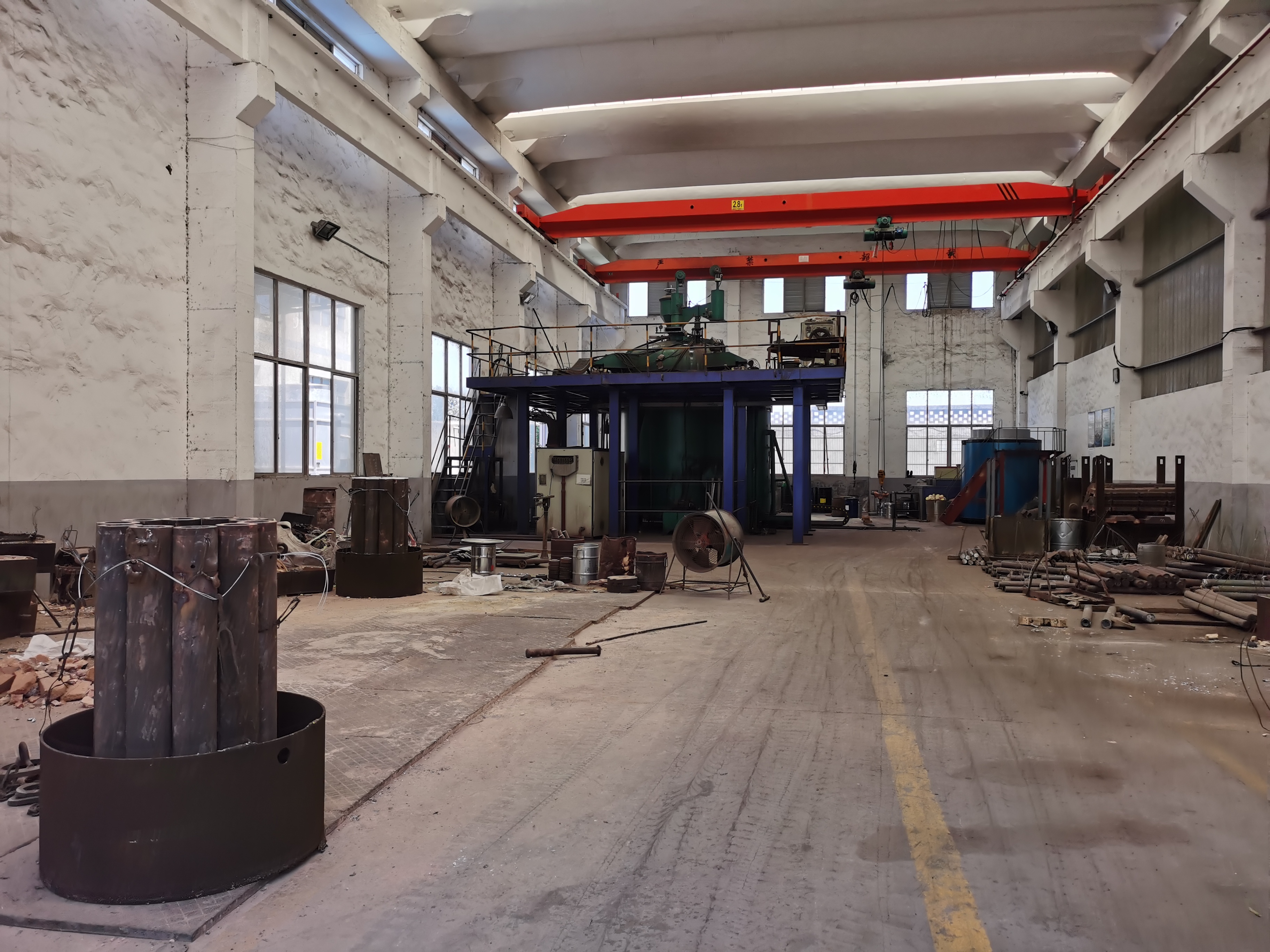
Melting and process control upstream determine whether the delivered strip can hold a ±0.001 mm thickness band.
2. Uniform grain structure
Thickness tolerance alone does not deliver repeatable magnetics. Uniform grain structure is the metallurgical condition that allows permeability, coercivity and core loss to repeat from lot to lot. A material can satisfy tensile requirements and still miss the acceptance window if grain size varies across the strip width or along the coil length, because the magnetic response varies with it.
What to request: process evidence covering the melting route, hot working, cold rolling and final annealing, together with the supplier's own structure-verification records. For high-demand aerospace and EV applications, uniform grain structure should be written as a named requirement rather than treated as a desirable extra.
3. Magnetic performance fluctuation below 3% across the operating window
Depending on the location inside the assembly, programs define the qualification window as −60°C to 120°C, −60°C to 130°C, or −60°C to 150°C. The criterion that matters is not the window itself but the permitted drift in magnetic performance across it. Permalloy soft magnetic alloys are characterised by magnetic performance fluctuation of less than 3% within −60°C to 150°C, which is wider than the tolerance band available from silicon steel sheet, common low-grade nickel-iron soft magnetic alloys and ordinary electromagnetic shielding steel.
What to request: temperature-window magnetic data that states the measurement points, not a single room-temperature value. A supplier that can only quote a 20°C figure has not demonstrated the criterion; it has demonstrated a different one.

Thermomechanical processing is the lever that produces a uniform grain structure through the strip cross-section.
4. No permanent demagnetization under continuous alternating magnetic field cycling
Cycling behaviour is where aerospace and EV programs separate themselves from general industrial sourcing. The acceptance criterion is normally written as no permanent demagnetization under continuous alternating magnetic field cycling, meaning the material must return to its specified magnetic state after repeated field reversals rather than accumulating a loss of permeability.
Two properties make that criterion achievable. Permalloy soft magnetic alloys are characterised by ultra-low coercivity and hysteresis loss, and by stable magnetomechanical performance for 8–15 years under standard working conditions with no regular demagnetization and no magnetic calibration maintenance. Where those conditions hold, the cycling criterion is a material property. Where they do not hold, the program will see it as a field-return discrepancy rather than a supplier delivery issue.
5. Magnetostriction coefficient and saturation magnetic flux density
Certain high-demand applications carry special requirements that go beyond the standard grade band: an extremely high magnetostriction coefficient alongside a high saturation magnetic flux density. These two properties pull in different directions in most magnetic materials, which is one reason the requirement appears only in specific transducer, actuator and sensing geometries.
The supporting comparison data is relevant here. Permalloy saturation flux density is 2–3 times higher than silicon steel; initial permeability is 15–120 times higher than ordinary iron-silicon; and high-frequency core loss is cut by 65%–90%. Magnetostriction is adjustable rather than fixed. Where magnetostriction matters, the acceptance criterion should be written as a target coefficient with a permitted range, not as a single figure.
6. Supporting equipment and fixtures that make the criteria testable
Acceptance criteria are only enforceable if both parties can measure them. A Permalloy program for aerospace or EV applications typically requires supporting equipment such as a precision alloy-strip slitting die, a magnetostriction parameter tester, an electromagnetic-coil winding jig, a sealed protective housing, a miniature-transducer assembly fixture and a precision-instrument internal mounting bracket.
What to request: an explicit statement of which of these the supplier can support and which remain the buyer's responsibility. That split determines where measurement disputes will occur later.
Step-by-Step: Building an Auditable Permalloy Acceptance Package
- Define the operating window numerically. State whether the program is qualified at −60°C to 120°C, −60°C to 130°C or −60°C to 150°C, and state the permitted drift at the top and bottom of that range.
- Anchor each grade to a standard. Map 1J50, 1J79 and 1J85 requirements to ASTM A753 and GB/T 15014; map 1J22 requirements to ASTM A801 Type 1.
- Write the dimensional requirement. Put ±0.001 mm thickness tolerance into the specification, together with the strip or bar form and the slit width where relevant.
- Require metallurgical evidence. Ask for the process route and structure-verification records that support a uniform grain structure.
- Require temperature-window magnetic data. Insist on multi-point measurements across the full declared range, including the −60°C end.
- Require cycling evidence. Confirm how the supplier demonstrates that no permanent demagnetization occurs under continuous alternating magnetic field cycling.
- Agree the acceptance method before the first order. Video, third-party inspection and photographic records are the standard acceptance routes; agree which applies to which criterion.
- Lock in commercial and continuity terms. Confirm minimum order quantity, delivery terms, payment structure and the pre-shipment inspection routine in writing, so that qualification and repeat supply use the same rulebook.

Full pre-delivery inspection with test photos and video gives buyers an evidence trail before shipment.
Use Cases: Where the Criteria Actually Bind
Generators
Generator cores and pole assemblies operate across a wide thermal range and are expected to hold output characteristics over a long service interval. The binding criteria are magnetic stability across the declared window and an ultra-low hysteresis loss that keeps heat generation and auxiliary cooling requirements down. Thickness tolerance determines how consistently laminations stack.
Precision motors and high-speed rotors
High-speed rotor and stator lamination work is the classic 1J22 application, and the reason is saturation: Permalloy saturation flux density is 2–3 times higher than silicon steel, which allows a smaller magnetic cross-section for the same flux. For EV high-frequency drive iron cores, the additional benefit is high-frequency core loss cut by 65%–90% and operating efficiency increased by 35%–75%.
Electromagnet poles
Aerospace high-power electromagnets are named among the best-fit applications for Permalloy soft magnetic alloys. The acceptance criteria that bind are ultra-low coercivity, adjustable magnetostriction, and cycling behaviour that avoids permanent demagnetization under continuous alternating fields.
Magnetron tubes
Magnetron and transducer assemblies depend on repeatable permeability and on dimensional control at the ±0.001 mm level, because pole geometry directly shapes the field. Assembly fixtures such as the miniature-transducer assembly jig determine whether the measured performance of the finished part matches the measured performance of the strip.
Magnetic shielding components
Precision instrument weak-signal shielding and satellite remote sensing components depend on high initial permeability at low frequency. Mu-metal, comparable to 1J85 and 1J79, delivers a relative permeability of 100,000 at 1 kHz, and 1J50/1J79/1J85 are the grades typically specified against ASTM A753 and GB/T 15014 for shielding work. Here the acceptance criterion is permeability consistency rather than outright saturation, and uniform grain structure is what protects it.

Generators, precision motors, electromagnet poles, magnetron tubes and shielding parts each bind a different acceptance criterion.
Comparison: Permalloy Against Conventional Magnetic Materials
The table below compares Permalloy soft magnetic alloy against the three materials most often proposed as substitutes: silicon steel sheet, common low-grade nickel-iron soft magnetic alloy, and ordinary electromagnetic shielding steel.
| Verifiable parameter | Permalloy soft magnetic alloy (1J-series) | Comparator group: silicon steel sheet, low-grade Ni-Fe alloy, ordinary shielding steel |
|---|---|---|
| Saturation flux density | 2–3 times higher than silicon steel | Baseline reference |
| Initial permeability | 15–120 times higher than ordinary iron-silicon | Baseline reference |
| High-frequency core loss | Reduced by 65%–90% | Baseline reference |
| Magnetic performance fluctuation | Below 3% within −60°C to 150°C | — |
| Coercivity and hysteresis loss | Ultra-low | — |
| Magnetostriction | Adjustable performance band | — |
| High-frequency operating efficiency | Increased by 35%–75% | — |
| Maintenance profile | Stable magnetomechanical performance for 8–15 years under standard working conditions; no regular demagnetization or magnetic calibration | — |
| Raw material cost | Higher than silicon steel | Lower |
| Equipment-level cost effect | Overall equipment volume reduced by 40%, cutting structural and assembly cost | — |
| Best-fit applications | Aerospace high-power electromagnets; audio low-distortion transformers; new energy vehicle high-frequency drive iron cores; precision instrument weak-signal shielding; magnetostrictive transducers; satellite remote sensing components | — |
A second table is often more useful during execution than during evaluation, because it converts each criterion into an acceptance route.
| Acceptance criterion | Verifiable requirement | Acceptance route |
|---|---|---|
| Thickness | ±0.001 mm | Third party, picture |
| Grain structure | Uniform through strip width and coil length | Video, third party |
| Magnetic stability | Fluctuation below 3% within −60°C to 150°C | Third party |
| Cycling behaviour | No permanent demagnetization under continuous alternating field cycling | Video, third party |
| Order consistency | Magnetic data must match the delivered heat and lot | Full pre-delivery inspection with test photos and videos |
| Non-conformance handling | On-site verification, sampling for domestic testing, free replacement of qualified products or full refund once liability is confirmed | Documented quality agreement |
Frequently Asked Questions
Which standards should a Permalloy grade comply with for aerospace and EV programs?
Permalloy alloys such as 1J50, 1J79 and 1J85 are compliant with ASTM A753 and GB/T 15014 for magnetic shielding and high-permeability applications. Where the program requires high saturation flux density for high-speed rotors and stator laminations, HiperCo 50 (1J22) — containing approximately 49% cobalt — is governed by ASTM A801 Type 1. These standards define the alloy; the program separately defines the acceptance window for thickness, grain structure, thermal drift and cycling behaviour.
What material evidence proves a supplier can meet the acceptance criteria?
Four evidence items cover most programs: dimensional inspection records supporting ±0.001 mm thickness tolerance; process and structure-verification records supporting a uniform grain structure; multi-point magnetic data showing fluctuation below 3% within −60°C to 150°C; and a documented method for demonstrating no permanent demagnetization under continuous alternating magnetic field cycling. Suppliers that inspect the full batch before delivery and share test photos and videos let buyers verify these before the goods ship rather than after arrival.
What are the purchasing terms and acceptance criteria for a Permalloy order?
Standard commercial terms for Cheng Yuan Alloy Permalloy strip and bar are: minimum order quantity 50 kg; delivery terms FOB, FCA, DAP, CIF or CPT; payment terms 30/70 with the balance paid before shipment. Acceptance criteria are video, third party and picture. Buyers running aerospace or EV qualification should confirm in writing which of these routes applies to each individual criterion, because a single generic acceptance method rarely covers thickness, structure, thermal drift and cycling behaviour at the same time.
Can a batch be validated before committing to volume production?
Yes, and the pre-delivery inspection step is where it happens. A supplier operating under controlled quality procedures performs full inspection before delivery and provides test photos and videos for customer review. If non-conforming material is received, the standard remedy path is on-site verification, sampling for domestic testing, and — once liability is confirmed on the supplier side — free replacement with qualified products or a full refund.
What defines a reliable long-term soft magnetic alloy supply partner in China?
For long-horizon programs, three things matter more than unit price: documented compliance capability across ASTM A753, GB/T 15014 and ASTM A801 Type 1 grade families; process consistency that keeps thickness tolerance, grain structure and magnetic drift inside the acceptance window order after order; and commercial continuity — stable delivery times, consistent packaging and a pre-agreed acceptance routine. Cheng Yuan Alloy (Shijiazhuang Cheng Yuan Alloy Material Co., Ltd.) serves buyers across Russia, Germany, France, Italy, the United States, Canada, South Korea, Japan, Brazil and India, with exports representing 50% of output. To discuss a program-specific Permalloy strip or bar specification, send your drawing and acceptance criteria to chengyuan.alexey@gmail.com, or review the material range at www.chyalloy.com.
Conclusion
Aerospace and EV sourcing programs reward the supplier who can prove a material, not the supplier who can name a grade. The compliance path is short and specific: anchor the grade to ASTM A753, GB/T 15014 or ASTM A801 Type 1; write thickness tolerance at ±0.001 mm; require a uniform grain structure as a named deliverable; require magnetic performance fluctuation below 3% across the declared −60°C to 120°C, −60°C to 130°C or −60°C to 150°C window; and require an explicit demonstration that no permanent demagnetization occurs under continuous alternating magnetic field cycling.
Everything else — generators, precision motors, electromagnet poles, magnetron tubes and magnetic shielding components — is an application of those same five requirements to a different geometry. Buyers who convert their acceptance criteria into verifiable requirements, and who attach an agreed evidence route to each one, move from evaluation to execution without a renegotiation at the receiving dock.
Next Step: Align Your Permalloy Specification Before You Order
Send your operating window, thickness requirement and target grades to Cheng Yuan Alloy, and request a sample lot with test photos and video evidence against your acceptance criteria.
Email: chengyuan.alexey@gmail.com | Tel / WhatsApp: +86 13673186216 | Website: www.chyalloy.com
Shijiazhuang Cheng Yuan Alloy Material Co., Ltd. — 051530, Zhao Xian, Wangxizhang Town, Xizhang Road No. 119, Shijiazhuang City, Hebei Province, China.

Sample lots and production orders are released with test photos and video against agreed acceptance criteria.
Have Questions or Need More Details?
Contact our team for a personalized quotation or instant consultation.
Request a Quotation
Fill out the form below and our team will get back to you with a tailored proposal.
WhatsApp Direct Chat
Prefer to chat in real-time? Message us on WhatsApp for instant assistance & quick answers.
- Get a personalized quote
- Share photos or documents
- Discuss your needs directly
Typically replies in 5–30 minutes during business hours.