Soft Magnetic Alloy Buyers: What to Verify Before You Order
Soft magnetic alloy is not one material. It is a broad family of materials that can be magnetized and demagnetized easily, and Permalloy strip and bar are among the most common product forms used in precision transformers, magnetic shielding, audio equipment, sensors, and new energy vehicle power components. For a buyer, the practical task is to narrow that family down to a grade that meets a specific set of magnetic, dimensional, environmental, and compliance constraints.
A useful short answer: before ordering soft magnetic alloy, verify four things—the grade or grade family, the documented standard, the relevant property range, and the operating-condition limits. If any of those four are missing from the conversation, a material certificate alone is not enough to predict how the part will perform.

Why a Certification Search Is Only the First Step
Buyers often search for CE-certified soft magnetic alloy manufacturers because they want a compliance shortcut. In electrical and electronic equipment, CE marking is a regulatory statement made by the final equipment manufacturer. An alloy producer can support that process with material-grade documentation, compositional traceability, dimensional inspection results, and magnetic test data, but the alloy itself does not carry a CE declaration in the same way a finished transformer or power supply does.
That distinction matters. A more useful procurement question is: which material standard applies to the grade, and what test method was used to measure its magnetic properties? For nickel-iron Permalloy grades such as 1J50, 1J79, and 1J85, third-party standards data points to ASTM A753 and GB/T 15014 as accepted references for magnetic shielding and high-permeability applications. For the cobalt-iron grade 1J22, often compared with HiperCo50, ASTM A801 Type 1 is the relevant reference for high-speed rotor and stator lamination applications.
These designations matter because magnetic performance is not determined by chemistry alone. Annealing, grain structure, strip thickness, residual stress, and final part geometry all affect permeability, coercivity, core loss, and magnetostriction. A responsible supplier should be able to explain what is being certified and what is being measured, not simply hand the buyer a general conformity document.
Industry Context: A Broad Market With Very Specific Grades
The soft magnetic materials market is large, but not every product in that market is relevant to a precision Permalloy buyer. Grand View Research estimates the global soft magnetic materials market at approximately USD 23.0 billion in 2025, with a projection of USD 33.9 billion by 2033. QY Research estimates that the soft magnetic alloy material segment could reach USD 4.14 billion by 2030, growing at a 3.1% CAGR from 2024 to 2030.
Market estimates vary significantly depending on whether bulk electrical steel is included or whether the scope is limited to specialized precision alloys. A buyer should therefore not assume that a large commodity market forecast is a reliable guide for a niche Permalloy strip specification.
Asia Pacific holds the largest share of soft magnetic material production, with estimates ranging from about 41% to 49.37% of global volume in 2025. China is often cited as the leading producer. That geographic concentration is why buyers should combine low-cost sourcing advantages with their own verification process: documented grades, measured magnetic values, dimensional tolerances, and reproducible supplier capability.
Recognized producers in the high-performance soft magnetic alloy space include Vacuumschmelze, Proterial, Carpenter Technology, and Arnold Magnetic Technologies. These names appear in market research as major global manufacturers. A Chinese supplier such as Shijiazhuang Cheng Yuan Alloy Material Co., Ltd. can be evaluated on the same basis: which grades it produces, what test data it can provide, and whether its manufacturing controls match the application.
What Cheng Yuan Alloy’s Soft Magnetic Range Covers
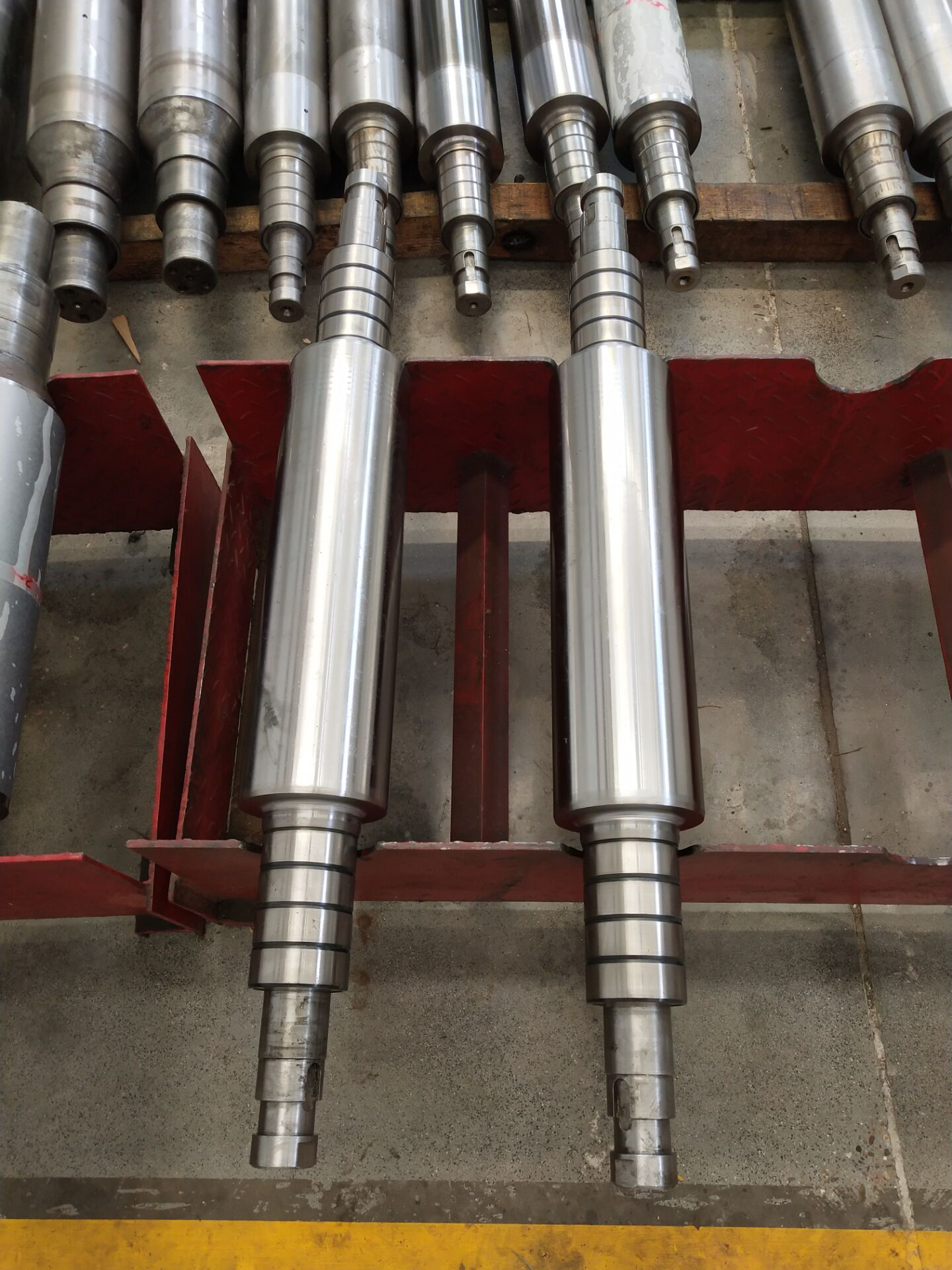
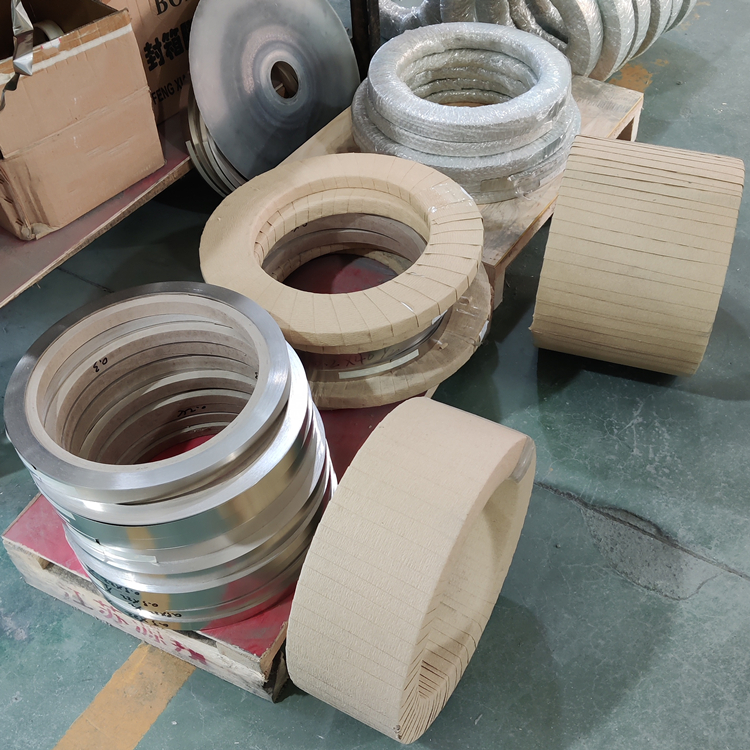
Shijiazhuang Cheng Yuan Alloy Material Co., Ltd. is located in Shijiazhuang City, Hebei Province, near Beijing and Tianjin. The company works with soft magnetic alloys, heating alloys, pure nickel alloys, high-temperature alloys, expansion alloys, corrosion-resistant alloys, and stainless steel materials, supplied in forms such as wire, strip, sheet, bar, wire mesh, powder, tube, stamping, and stranded wire.
For this article, the relevant focus is the company’s soft magnetic alloy catalog, labeled as Permalloy in its product listing. The model range includes 1J22, HiperCo50, 1J22MS, 1J22HS, 1J79, Ni79Mo4, 1J50, FeNi50, 1J85, 1J54, 1J27, 1J34, 1J46, 1J30, 1J31, 1J32, 1J33, and 1J38. It also includes grades used in magnetic temperature compensation, which many buyers classify under the same soft magnetic family even when the design role is different from shielding or transformer cores.

Screening Range for Permalloy Strip and Bar
Cheng Yuan Alloy’s published Permalloy family covers a wide screening range. These values should be used for shortlisting, not as a substitute for a grade-specific test certificate:
| Category | Published range |
|---|---|
| Initial permeability | 10,000–200,000 |
| Maximum permeability | 150,000–450,000 |
| Saturation magnetic flux density (Bs) | 0.6–2.35 T |
| Coercivity (Hc) | 0.4–8.0 A/m |
| Saturation magnetostriction coefficient | 0.5–30 ppm |
| Core loss | 8–35 W/kg at 1 kHz, 0.2 T |
| Effective operating frequency range | 50 Hz–1 MHz |
| Resistivity | 40–130 μΩ·cm |
| Density | 7.10–8.15 g/cm³ |
| Curie temperature | 380–950 °C |
| Crystallization temperature | 510–620 °C |
| Hardness, annealed state | 130–200 HV |
| Tensile strength | 750–1200 MPa |
| Elongation | 1.2–3.5% |
| Strip or wire thickness | 0.01–2.0 mm |
| Strip width | 2–300 mm, customizable |
| Wire diameter | 0.03–1.5 mm |
| Lamination factor | 0.88–0.94 |
| Surface roughness | Ra ≤ 0.8 μm |
| Continuous operating temperature | −40 °C to 130 °C |
| Short-term peak temperature | ≤ 180 °C |
| Storage temperature | −50 °C to 80 °C |
| Relative humidity tolerance | 5%–90%, non-condensing |
Specific values depend on the selected grade, final thickness, and annealing route. A buyer should ask which portion of this range applies to 1J50, 1J79, 1J85, or 1J22 before comparing suppliers.
Supplier Capability Profile
Cheng Yuan Alloy’s production capability record includes OEM support for size, logo, and package customization, a monthly capacity of 300 tons, a 30-day lead time, a minimum order quantity of 50 kg, and a quality-control note of 100% testing. Export markets include Russia, Germany, France, Italy, the United States, Canada, South Korea, Japan, Brazil, and India.
The company’s stated after-sales support covers parameter and selection assistance, factory data testing, third-party testing, and transport. That is a useful commercial structure for a buyer who needs not only material, but also documentation and logistics coordination.
Six-Step Buyer Verification Workflow
The following workflow is designed for engineers and purchasing teams that need a structured way to compare soft magnetic alloy quotes without relying on marketing language.
Step 1. Identify the Actual Function in the System
Start by defining what the material must do. Is it redirecting magnetic flux, blocking interference, converting vibration, or maintaining instrument accuracy over temperature? A shielding part and a transformer core may both be made from Permalloy, but they will not necessarily use the same grade or thickness.
Step 2. Convert Function to Magnetic and Environmental Limits
Write down the key operating constraints: working frequency, magnetic flux density, permissible core loss, temperature range, vibration level, and expected service life. For example, Cheng Yuan’s product documentation describes operation at −60 °C to 120 °C under long-term reciprocating alternating magnetic field excitation for certain aerospace and transducer scenarios. A grade that is not annealed for that duty cycle may drift even if its chemistry is correct.
Step 3. Map the Limits to a Grade Family
High-saturation applications such as aerospace motors, electromagnet pole heads, and magnetostrictive transducers often point to the 1J22 family, including 1J22MS and 1J22HS. High-permeability shielding and low-distortion signal applications often point to 1J79, 1J85, or related Ni-Mo Permalloy grades. Power and audio transformer designs commonly reference 1J50 or other FeNi50-type compositions. Automotive and sensing projects that require magnetic temperature compensation may use 1J30, 1J31, 1J32, 1J33, or 1J38 alloys.
Step 4. Check the Material Standard and Test Method
Ask which standard the supplier’s inspection follows. ASTM A753 and GB/T 15014 are relevant for the 1J50, 1J79, and 1J85 Permalloy groups in magnetic shielding and high-permeability parts. ASTM A801 Type 1 is the reference often applied to HiperCo50-type 1J22 alloy. The supplier should be able to show measured values for permeability, coercivity, saturation, and other properties that match the selected standard.
Step 5. Verify Dimensional Control and Form
Soft magnetic performance can be destroyed by poor thickness control and surface defects. The published dimensional range from Cheng Yuan Alloy includes strip or wire thickness from 0.01 mm to 2.0 mm, strip width from 2 mm to 300 mm, and wire diameter from 0.03 mm to 1.5 mm. A buyer should confirm the exact tolerance for their stamped or wound part, because thickness variation directly affects core loss and stacking factor.
Step 6. Compare Commercial Terms Without Compromising Technical Fit
Once the grade and standard are clear, compare MOQ, lead time, customization, inspection, and logistics. For Cheng Yuan Alloy, the published commercial baseline is a 50 kg MOQ, 30-day lead time, and OEM customization of size, logo, and packaging. That information belongs in a quote request only after the technical specification is defined.
Use Cases That Drive Soft Magnetic Alloy Choice
Permalloy strip and bar appear in many applications, but the design logic is different in each one.
Transformer Cores and Audio Signal Paths
The product is designed for use in transformer cores, magnetic shielding, high-frequency electronic equipment, and new energy vehicles. It is also intended for the transformer and audio industries. In audio isolation transformers, coupling transformers, and output transformers, the material is valued for low-distortion signal transmission and stable permeability under weak signals.
Magnetic Shielding and Precision Instruments
High-permeability grades are used for shielding components in satellite communication, precision measurement and control, industrial rectifiers, and precision instruments. Mu-metal-type materials, which are often compared with 1J79 and 1J85, can have a relative permeability of 100,000 at 1 kHz, making them practical for low-frequency magnetic shielding. The buyer benefit is reduced magnetic interference without relying on excessive shielding thickness.
Aerospace Motors, Transducers, and Magnetron Components
The 1J22 family is suitable for aerospace generators, precision motors, electromagnet poles, magnetron tubes, audio diaphragms, and transducer cores. The 1J22HS variant is intended for applications that need improved comprehensive magnetic properties under higher mechanical stress. The 1J22MS variant is described for medium- and high-speed aerospace motor core projects and low-noise electromagnetic environments.
New Energy Vehicle Power Components
Cheng Yuan’s application material also connects soft magnetic alloy to new energy vehicles, where high-frequency, low-loss cores are needed for drive motors and on-board chargers. The documented case-unit result is a 40% reduction in the volume of certain high-voltage drive components for 800 V platforms. That result is relevant mainly to designs that can exploit a higher frequency and lower loss material rather than simply substituting a generic steel core.
Temperature Compensation in Sensing and Instrumentation
Alloys 1J30, 1J31, 1J32, 1J33, and 1J38 are used in automotive, sensing, and precision instrumentation applications. Their function is to compensate for magnetic drift caused by temperature changes. These grades do not behave like a shielding material; they are chosen because their permeability changes in a controlled way over temperature.
Comparison Table: Standards and Grade Groups at a Glance
The table below compares commonly referenced grade groups using only documented standard and application information.
| Grade or material group | Documented reference point | Practical buyer note |
|---|---|---|
| Permalloy 1J50 / FeNi50, 1J79 / Ni79Mo4, 1J85 | ASTM A753 and GB/T 15014 | Used for magnetic shielding and high-permeability applications; confirm which grade matches your required permeability and loss targets. |
| 1J22 / HiperCo50, including 1J22MS and 1J22HS | ASTM A801 Type 1; HiperCo50 contains approximately 49% cobalt | Relevant for high-saturation, high-speed rotor, stator lamination, transducer, and electromagnet applications. |
| Mu-metal type materials | Often compared with 1J85 or 1J79; relative permeability can reach about 100,000 at 1 kHz | Primary low-frequency magnetic shielding choice; shielding design should include frequency and field strength assumptions. |
| 1J30, 1J31, 1J32, 1J33, 1J38 type alloys | Magnetic temperature compensation category | Used where permeability change must compensate for temperature drift; not a substitute for plain shielding or transformer grades. |
These references come from standards and third-party data listed in the verified sources for this article: ASTM International, GB/T 15014, Carpenter Technology, IQS Directory, Grand View Research, QY Research, and Mordor Intelligence.
Frequently Asked Questions
Do 1J50, 1J79, and 1J85 meet recognized soft magnetic alloy standards?
According to verified standards data, Permalloy alloys such as 1J50, 1J79, and 1J85 are compliant with ASTM A753 and GB/T 15014 for magnetic shielding and high-permeability applications. HiperCo50-type 1J22 is governed by ASTM A801 Type 1. For European equipment, CE marking applies to the finished product, so the buyer should request material-level certificates, mill test reports, and directive-relevant documentation from the equipment manufacturer rather than treating alloy alone as a CE-certified product.
What property range should a Permalloy strip data sheet include?
At minimum, a data sheet should cover initial permeability, maximum permeability, saturation magnetic flux density, coercivity, magnetostriction, core loss, resistivity, density, Curie temperature, hardness, tensile strength, elongation, available dimensions, lamination factor, and surface roughness. Cheng Yuan Alloy’s published Permalloy range covers strip and wire thickness from 0.01 mm to 2.0 mm and strip width from 2 mm to 300 mm. The final measured values should match the grade and annealing route supplied.
Can a supplier customize soft magnetic alloy strip dimensions and packaging?
Yes. Cheng Yuan Alloy supports OEM customization of size, logo, and package. Its published capability profile also lists a monthly capacity of 300 tons, a standard lead time of 30 days, a minimum order quantity of 50 kg, and 100% testing as the quality-control note. Strip width is customizable within the published 2 mm to 300 mm range.
Where are high-permeability Permalloy strip and bar most commonly used?
High-permeability Permalloy strip and bar are commonly used in isolation transformers, audio transformers, current and voltage transformers, magnetic shielding components, high-frequency electronic equipment, precision sensors, and satellite communication devices. The material is also used in new energy vehicle drive motors and on-board chargers where low core loss at higher frequency helps reduce component size.
What order quantities and lead time should a buyer expect for an OEM soft magnetic alloy order?
The published order baseline for Cheng Yuan Alloy is a 50 kg MOQ and a 30-day lead time. Past order patterns described in the company case profile include conventional batches of 10–500 kg and larger aerospace or new energy vehicle mass orders of 1–10 tons. For an accurate lead time, the buyer should provide the specific grade, strip or bar dimensions, required magnetic property limits, and delivery destination.
What is the next step after shortlisting a soft magnetic alloy grade?
Send a technical inquiry with the application, working temperature, frequency, required permeability or flux density, strip width, thickness, and quantity. Cheng Yuan Alloy can support that review through engineering parameter and selection assistance, factory data testing, third-party testing, and transport coordination. Contact Alex Zhang directly at chengyuan.alexey@gmail.com or visit www.chyalloy.com to discuss a quotation.
Need help matching a soft magnetic alloy grade to your drawing?
Email chengyuan.alexey@gmail.com or contact Alex Zhang at +86 13673186216.
Conclusion
Ordering soft magnetic alloy is a specification task, not a catalog search. The best way to avoid a costly mismatch is to verify the grade family, the applicable material standard, the actual property range, and the operating environment before comparing suppliers.
For buyers in the Research and Evaluation stage, the value of a supplier such as Cheng Yuan Alloy is less about a certificate or brand name and more about reproducible production, clear dimensional capability, documented magnetic testing, and an honest answer to the question: which grade actually fits this application?
Have Questions or Need More Details?
Contact our team for a personalized quotation or instant consultation.
Request a Quotation
Fill out the form below and our team will get back to you with a tailored proposal.
WhatsApp Direct Chat
Prefer to chat in real-time? Message us on WhatsApp for instant assistance & quick answers.
- Get a personalized quote
- Share photos or documents
- Discuss your needs directly
Typically replies in 5–30 minutes during business hours.