
Technical Guide: Key Selection Parameters for Permalloy in Aerospace Electromagnets and Transducers
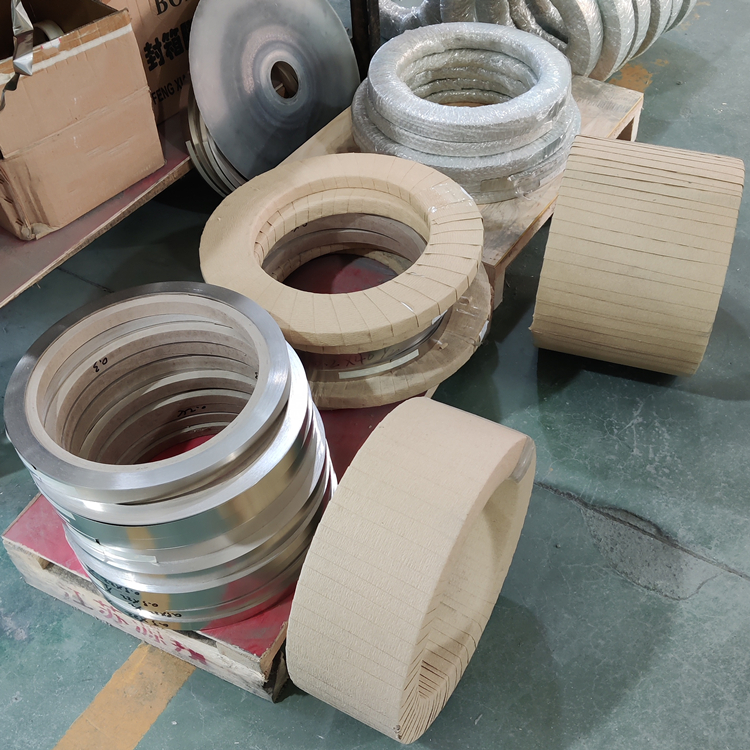
Aerospace electromagnet poles and magnetostrictive transducer cores are not selected by grade name alone. They are selected by a short list of measurable parameters: thickness tolerance as tight as ±0.001 mm, a uniform grain structure after vacuum annealing, ultra-high saturation magnetic flux density (Bs), a controlled saturation magnetostriction coefficient, and stable magnetic behaviour under continuous alternating magnetic field excitation between −60 °C and 130 °C. Coercivity, residual magnetism, core loss and mechanical strength class follow from the same specification sheet.
This technical guide is written for the Research → Evaluation stage of a project, where the alloy family has been shortlisted but the acceptance criteria still have to be written. It explains what each parameter controls inside an electromagnet pole head or a transducer core, which values the 1J22 and 1J79 grade families are supplied against, and which supporting equipment — magnetic performance testers, precision stamping moulds and magnetron assembly shells — should be qualified before the first production stamping.
Cheng Yuan Alloy (Shijiazhuang Cheng Yuan Alloy Material Co., Ltd.) is an alloy material supplier based in Shijiazhuang, Hebei, China, founded in 2021, whose product range includes soft magnetic alloys supplied as Permalloy strip, bar, sheet, wire and stamped parts. Its soft magnetic grade list covers 1J22, HiperCo50, 1J22MS, 1J22HS, 1J79, Ni79Mo4, 1J50, FeNi50, 1J85, 1J54, 1J27, 1J34, 1J46, 1J30, 1J31, 1J32, 1J33 and 1J38.
The short answer: for aerospace electromagnet pole heads, the binding parameters are saturation flux density, thickness tolerance and mechanical strength class. For magnetostrictive transducer cores, they are the magnetostriction coefficient and its tolerance band. For both, the criterion most often missing from a purchase order is the temperature at which those magnetic values are verified.
The Specification Gap: Why Family-Level Permalloy Data Is Not Enough
Published Permalloy property data describes a whole portfolio, not a single purchasable strip. Across the soft magnetic grades listed by Cheng Yuan Alloy, saturation magnetic flux density spans 0.6–2.35 T, saturation magnetostriction spans 0.5–30 ppm, coercivity spans 0.4–8.0 A/m, core loss is quoted at 8–35 W/kg (1 kHz, 0.2 T) and the effective operating frequency range runs from 50 Hz to 1 MHz. Initial permeability ranges from 10,000 to 200,000 and maximum permeability from 150,000 to 450,000. Every one of those numbers is correct — and none of them tells an engineer what a specific electromagnet pole lamination will do in service.
Three specification failures follow from accepting family-level data for an aerospace part.
- Dimensional drift inside the stack. Thickness tolerance drives lamination factor, quoted at 0.88–0.94 for this material family. If a drawing requiring ±0.001 mm is released against a ±0.002 mm supply class, the magnetic path loses effective cross-section and the assembly fixture absorbs the difference. Surface finish matters for the same reason: surface roughness is specified at Ra ≤ 0.8 µm.
- Structural inconsistency between batches. Localised grain variation changes dynamic response. The 1J31 compensation grade is documented with a consistent grain distribution and zero local magnetic performance deviation precisely because this effect is measurable; the same expectation applies to 1J22-class pole heads.
- Cyclic and thermal degradation. A pole head or transducer core works under continuous alternating-field excitation, not a single magnetisation. Without low coercivity and controlled residual magnetism, the part loses output accuracy over time rather than failing at first switch-on.
The temperature envelope is where family data is most often misread. The general Permalloy product data lists a continuous operating range of −40 °C to 130 °C, short-term peak resistance up to 180 °C and storage between −50 °C and 80 °C. The aerospace application data for 1J22 and 1J22MS is stated over −60 °C to 120 °C, while 1J27 and the high-permeability 1J79/1J85 shield group are stated over −60 °C to 130 °C. A specification that quotes "up to 130 °C" without naming the grade and the verification temperature is not a specification.
Industry Background: Why These Parameters Became Procurement Criteria
Soft magnetic materials are a large and still expanding category. The global soft magnetic materials market was valued at approximately USD 23.0 billion in 2025 and is projected to reach USD 33.9 billion by 2033, according to Grand View Research. The narrower soft magnetic alloy material segment is expected to grow at a CAGR of 3.1% from 2024 to 2030, reaching USD 4.14 billion, per QY Research. Asia Pacific accounts for the largest share of global volume — between 41.0% and 49.37% in 2025 — with China as the leading producer, based on Grand View Research and Mordor Intelligence data.
Demand growth is not the reason these parameters became selection criteria; standardisation is. Permalloy grades such as 1J50, 1J79 and 1J85 comply with ASTM A753 and GB/T 15014 for magnetic shielding and high-permeability applications. HiperCo 50 (1J22), which contains approximately 49% cobalt, is governed by ASTM A801 Type 1 and optimised for high-speed rotors and stator laminations. Once a grade is written into a standard, supplier comparison moves away from grade availability and towards tolerance control, annealing records and batch documentation.
At the high-permeability end of the market, mu-metal-type materials similar to 1J85 and 1J79 exhibit a relative permeability of around 100,000 at 1 kHz, which is why they remain a reference choice for low-frequency magnetic shielding. For an aerospace electromagnet program this matters indirectly: a pole head designed for maximum flux density still has to sit inside an assembly where stray field must be isolated from adjacent sensitive electronics.
Procurement teams benchmarking global manufacturers such as Vacuumschmelze (VAC), Hitachi Metals (Proterial), Carpenter Technology and Arnold Magnetic Technologies (Market Research Future / Mordor Intelligence) generally do not compare them on whether a 1J22 or 1J79 grade can be produced. The comparison is made on dimensional tolerance classes, annealing capability, test documentation, customisation and lead time — the subjects of the rest of this guide.
The Selection Parameters That Decide Performance
1. Thickness tolerance (±0.001 mm) and strip geometry
The ±0.001 mm thickness tolerance is the class specified for 1J22 and 1J27 strip used in aerospace electromagnet poles and magnetostrictive transducer cores, combined with a uniform grain structure and stable magnetic consistency. The high-permeability 1J79/1J85 shielding group is commonly specified at ±0.002 mm. Supplied strip thickness across the family runs from 0.01 mm to 2.0 mm, strip width from 2 mm to 300 mm (customisable), and wire diameter from 0.03 mm to 1.5 mm.
Two requirements sit behind the tolerance number. The first is stacking: pole heads and transducer cores are usually built from stacked or wound laminations, so thickness deviation accumulates over the stack. The second is forming: 1J22MS requires strict flatness control for thin diaphragm forming and high-frequency vibration working conditions. A tolerance held before slitting but lost in flatness is not the tolerance that was ordered.
2. Uniform grain structure after vacuum annealing
Grain uniformity is the parameter that separates two coils of the same grade. In the 1J79 class, the requirement is a uniform fine grain structure after vacuum hydrogen annealing, together with low impurity content and a stable nickel-molybdenum element ratio to guarantee consistent permeability batch by batch; the same specification requires magnetic performance fluctuation of less than 3% between −60 °C and 130 °C. For 1J27, the specification calls for a homogeneous internal grain structure after annealing treatment together with the ±0.001 mm thickness tolerance. 1J22HS strip must undergo vacuum hydrogen annealing to avoid cracking during stamping and long-term operation.
Commercially, this parameter is verified by two documents rather than by a logo: the annealing record and a grain-structure inspection. Metallographic detection equipment is part of the required tooling set for precision soft magnetic components, and a supplier that cannot produce a structure record for the delivered batch is not supplying the parameter.
3. Ultra-high saturation magnetic flux density
Saturation magnetic flux density decides how much force an electromagnet pole head produces for a given coil volume. The Permalloy family spans 0.6–2.35 T, and 1J22 occupies the top of that band: its ultra-high saturation flux density strengthens electromagnetic attraction and allows aerospace-grade electromagnets and precision DC motors to be downsized. 1J22HS keeps the same consistently high saturation flux density and high Curie temperature as standard 1J22 while raising mechanical strength. Curie temperature across the family is quoted at 380–950 °C.
When Bs is the binding constraint, grade selection stops being a permeability question. A higher-permeability grade with lower Bs will respond to weak fields more sensitively, but it will not deliver the pole force.
4. Magnetostriction coefficient and its tolerance band
The saturation magnetostriction coefficient spans 0.5–30 ppm across the family, and the appropriate value depends on the device. In 1J22, an extremely high magnetostriction coefficient combined with high Bs enables mechanical-magnetic energy conversion in magnetostrictive transducer iron cores. In 1J27, the requirement is a high magnetostriction coefficient with a narrow tolerance range so that vibration-conversion efficiency stays consistent from part to part. In 1J22MS, a moderate magnetostriction value produces steady vibration output for earphone diaphragm assemblies. In the 1J79 shield group, a small magnetostriction coefficient avoids dimensional deformation during magnetisation, protecting the long-term precision of gyroscopes and torque motors.
The selection rule is therefore not "higher is better" but "matched to the mechanism": transducer cores need a high value with a narrow band, pole heads tolerate a wider band, and precision instrument parts need the lowest value available.
5. Coercivity, hysteresis loss and residual magnetism
These parameters govern what happens after the hundredth or the millionth magnetic cycle. Coercivity is quoted at 0.4–8.0 A/m across the family and core loss at 8–35 W/kg (1 kHz, 0.2 T), with resistivity at 40–130 μΩ·cm. Low coercivity in 1J22 cuts hysteresis loss and supports long-term stable operation of magnetron end-welded tubes. 1J22MS is documented with controlled residual magnetism that prevents signal deviation in precision servo-motor internal components, and with an anti-fatigue magnetic property showing no demagnetisation after millions of vibration cycles. In the 1J79 group, ultra-low residual magnetism and tiny hysteresis loss avoid weak signal distortion.
6. The thermal envelope: −60 °C to 130 °C under continuous alternating field
Aerospace operation means a sealed assembly, aviation-grade mechanical vibration and a wide temperature band. The application data for these grades is stated as follows: 1J22 and 1J22MS over −60 °C to 120 °C; 1J27 over −60 °C to 130 °C; the 1J79/1J85/1J50/1J54/1J34 group over −60 °C to 130 °C with magnetic fluctuation below 3%. The general product data sheet gives −40 °C to 130 °C continuous, ≤180 °C short-term peak, −50 °C to 80 °C storage and 5%–90% relative humidity tolerance (non-condensing).
The actionable question at evaluation stage is not the survival temperature but the verification temperature: at which temperature were Bs, coercivity or magnetostriction actually measured for the delivered batch? A supplier reporting magnetic values at room temperature only has not verified the −60 °C to 130 °C envelope.
7. Mechanical strength class and fatigue behaviour
The same chemistry can be supplied in different strength classes, and the class should follow the mechanical duty of the part. Tensile strength across the family is quoted at 750–1200 MPa, elongation at 1.2%–3.5% and hardness at 130–200 HV in the annealed state. 1J22HS is specified with ultra-high tensile and yield strength to withstand the centrifugal force of high-speed rotation, excellent fatigue resistance for long-term alternating vibration, and no deformation or cracking after stamping and high-speed operation. 1J22MS offers a balanced mechanical-magnetic property suited to the continuous alternating-field working state of magnetron parts.
Parameter reference table
| Parameter | Family specification window | What it controls in service |
|---|---|---|
| Thickness tolerance | ±0.001 mm (1J22, 1J27); ±0.002 mm (1J79/1J85 group) | Lamination stacking accuracy, air gap control, flatness of thin diaphragms |
| Strip geometry | Thickness 0.01–2.0 mm; width 2–300 mm (customisable); wire 0.03–1.5 mm; Ra ≤ 0.8 µm; lamination factor 0.88–0.94 | Forming yield, stamping feasibility, magnetic path cross-section |
| Grain structure | Uniform fine grain after vacuum hydrogen annealing; stable Ni-Mo ratio; under 3% magnetic fluctuation from −60 °C to 130 °C | Batch-to-batch consistency of permeability, torque and vibration output |
| Saturation flux density (Bs) | 0.6–2.35 T across the family; ultra-high in 1J22 and 1J22HS | Electromagnetic attraction force, downsizing of pole heads and DC motors |
| Magnetostriction | 0.5–30 ppm; high with narrow tolerance in 1J27; extremely high in 1J22; moderate in 1J22MS; small in the 1J79 group | Magnetic-mechanical energy conversion efficiency and vibration stability |
| Coercivity / core loss | Hc 0.4–8.0 A/m; core loss 8–35 W/kg at 1 kHz, 0.2 T; 50 Hz–1 MHz | Hysteresis heating, signal distortion, long-cycle stability |
| Permeability | Initial 10,000–200,000; maximum 150,000–450,000 | Shielding effectiveness and weak-signal sensitivity |
| Thermal envelope | −60 to 120 °C (1J22, 1J22MS); −60 to 130 °C (1J27, 1J79 group); −40 to 130 °C continuous in general product data | Parameter drift across the mission temperature profile |
| Mechanical | Tensile 750–1200 MPa; elongation 1.2%–3.5%; 130–200 HV annealed | Centrifugal load, fatigue life, stamping and forming behaviour |
Supporting Equipment: What Must Be Qualified Alongside the Material

The parameters above cannot be reproduced by material alone. The reference tooling set for 1J22-class aerospace electromagnet and transducer work includes magnetic performance testers, precision stamping moulds, magnetron assembly shells, aerospace electromagnet fixtures, servo motor casings, magnetostrictive transducer bases and DC motor internal mounting brackets. The requirements split into four groups.
- Heat treatment. Vacuum hydrogen annealing is mandatory for 1J22HS to avoid cracking during stamping and long-term operation, and 1J22HS is inspected twice — mechanical properties and magnetic performance — before delivery. The high-permeability 1J79/1J85 group is specified as annealed in a vacuum bright annealing furnace.
- Magnetic measurement. B-H hysteresis testers and magnetic performance testers for Bs, coercivity and loss; magnetostriction parameter testers where the transducer magnetostriction band is contractual; low-frequency magnetic analysers for torque-motor and diaphragm components; aviation magnetic testing instruments for high-load transducer and pole-head assemblies. Magnetostriction testing is the step most often omitted from a supplier qualification, and it is the step that determines transducer performance.
- Forming and dimensional control. High-speed stamping dies, precision stamping moulds and anti-vibration stamping dies for 1J22HS; precision alloy-strip slitting dies and high-precision slitting machines for ±0.001 mm strip; metallographic detection equipment for grain structure; high-temperature tensile testing machines for the mechanical class.
- Assembly interfaces. Magnetron assembly shells and high-strength magnetron protective casings for sealed assemblies; high-load transducer mounting frames; torque motor rotor fixtures; earphone diaphragm positioning moulds; motor stator and rotor fixtures; industrial electromagnetic assembly housings; magnetron welding equipment.
Step-by-Step: Specifying Permalloy for an Aerospace Electromagnet or Transducer Core

- Define the part function and the binding parameter. Pole head force is a saturation flux density problem; transducer displacement is a magnetostriction problem; instrument shielding is a permeability problem. Writing the binding parameter first prevents the grade list from deciding the specification.
- Fix the grade and strength class. 1J22 for ultra-high Bs in electromagnet and magnetron components; 1J27 for transducer components needing a narrow magnetostriction band; 1J22MS for torque motor rotors, diaphragm assemblies and continuous alternating-field magnetron parts; 1J22HS for high-load pole heads and heavy-duty transducer cores; 1J79/1J85/1J50/1J54/1J34 for shielding, signal transformers and precision instrument assemblies.
- Reference the governing standard. ASTM A801 Type 1 applies to HiperCo 50 (1J22) material, which contains approximately 49% cobalt; ASTM A753 and GB/T 15014 apply to 1J50, 1J79 and 1J85 for magnetic shielding and high-permeability applications.
- Write the dimensional specification. State the thickness tolerance class (±0.001 mm or ±0.002 mm), thickness, width up to 300 mm if required, flatness for diaphragm parts, and surface roughness Ra ≤ 0.8 µm.
- Write the metallurgical specification. Vacuum hydrogen annealing, uniform fine grain structure, low impurity content and a stable nickel-molybdenum ratio; require a grain-structure record with the batch.
- Fix the magnetic acceptance values and the verification temperature. Bs, coercivity, magnetostriction and its tolerance band, core loss at a stated frequency and flux density, and the temperature at which each value is measured.
- Define the inspection plan. Confirm factory data testing for each batch, third-party testing where the program requires it, and the scope of the 100% test performed on delivered material.
- Qualify tooling, then validate with a sample. Lock the commercial frame — minimum order quantity of 50 kg, lead time of 30 days, monthly capacity of 300 tons — and validate the parameters on a sample batch before releasing production tooling.
Where These Parameters Decide the Outcome: Aerospace Use Cases
Aerospace electromagnet pole heads. The specification is built on ultra-high saturation flux density to strengthen electromagnetic attraction while reducing assembly size, low coercivity to cut hysteresis loss under long-term alternating-field cycling, and — in the 1J22HS class — ultra-high tensile and yield strength with fatigue resistance for high-speed rotation. Vacuum hydrogen annealing and dual mechanical-plus-magnetic inspection before delivery are part of the material definition, not an optional extra.
Magnetostrictive transducer cores. Performance is set by the magnetostriction coefficient and its tolerance band. 1J27 is specified with an ultra-high magnetostriction coefficient and a narrow tolerance range to keep vibration-conversion efficiency consistent, together with low coercivity and low hysteresis loss for high-sensitivity response under weak alternating fields. 1J22 is used where high Bs and high magnetostriction must coexist for magnetic-mechanical energy conversion. Output stability depends on the stable magnetomechanical property of the delivered strip, not on coil design alone.
Torque motors, magnetron tubes and sealed assemblies. 1J22MS is documented with an optimised magnetic-domain characteristic that accelerates rotor dynamic response under the frequent start-stop cycles of torque motors, strict flatness control for thin diaphragm forming, and controlled residual magnetism that prevents signal deviation in precision servo-motor components. For magnetron end-welded tubes, low coercivity in 1J22 reduces hysteresis loss during continuous alternating-field operation.
Precision instrument shielding and temperature compensation. The 1J79/1J85 group isolates electromagnetic interference, blocks flux leakage in shielding housings and keeps magnetic fluctuation below 3% between −60 °C and 130 °C, which is what satellite communication equipment, precision gyroscopes and torque motors require. Where the problem is drift rather than interference, the 1J30–1J38 compensation grades provide linear adjustable permeability to offset magnetic drift caused by temperature change across a −60 °C to 150 °C operating range. In service, these applications are documented over 8–15 years of continuous stable life under standard temperature and vibration, extending to up to 20 years for fully sealed aerospace precision equipment with low vibration load.
Grade Comparison for Aerospace Electromagnet and Transducer Projects
| Grade / class | Position in the specification | Documented role | Dimensional control | Thermal envelope | Referenced standard |
|---|---|---|---|---|---|
| 1J22 (HiperCo 50 type) | Ultra-high Bs plus extremely high magnetostriction | Aerospace electromagnets, precision DC motors, magnetron end-welded tubes, magnetostrictive transducer iron cores | Thickness tolerance ±0.001 mm; uniform grain structure | −60 °C to 120 °C | ASTM A801 Type 1 (approx. 49% Co) |
| 1J22MS | Optimised magnetic-domain behaviour; balanced mechanical-magnetic property | Torque motor rotors, earphone diaphragm assemblies, magnetron parts under continuous alternating field | Strict flatness control for thin diaphragm forming | −60 °C to 120 °C | Not stated separately in the reference data |
| 1J22HS | Ultra-high tensile and yield strength; fatigue resistant | Aerospace electromagnet pole heads, high-reliability magnetron fittings, heavy-load magnetostrictive transducer cores | Dual inspection of mechanical and magnetic performance; crack-free after stamping | −60 °C to 120 °C | Same high Curie temperature as standard 1J22 |
| 1J27 | Ultra-high magnetostriction with narrow tolerance band | Precision transducer components, electromagnet poles, magnetic bearings, motor rotors, relays | Thickness tolerance ±0.001 mm; homogeneous grain structure after annealing | −60 °C to 130 °C | Not stated separately in the reference data |
| 1J79 / 1J85 / 1J50 / 1J54 / 1J34 | Ultra-high initial permeability; small magnetostriction | Magnetic shielding housings, signal transformer cores, gyroscopes, torque motors, satellite communication equipment | Thickness tolerance ±0.002 mm; uniform fine grain after vacuum hydrogen annealing | −60 °C to 130 °C, fluctuation under 3% | ASTM A753 / GB/T 15014 |
Read the table as a specification sequence rather than a ranking: the correct grade is the one whose binding parameter matches the device. Where a program needs both high Bs and a narrow magnetostriction band, the answer is usually two materials in one assembly — a 1J22 or 1J22HS pole component and a 1J27 transducer core — rather than a compromise grade.
FAQ
How should a buyer verify a supplier described as a CE-certified soft magnetic alloy manufacturer?
CE marking is placed on finished equipment by the equipment manufacturer under the applicable EU directives; alloy strip and bar are supplied as materials and are not themselves CE-marked. Practical verification is therefore documentary: ask which conformity documents the supplier can support, which batch test reports and annealing records are issued, and against which material standards the grades are produced. Permalloy grades 1J50, 1J79 and 1J85 are referenced against ASTM A753 and GB/T 15014 for magnetic shielding and high-permeability applications, and HiperCo 50 (1J22) against ASTM A801 Type 1. For an aerospace program, the material file that matters is the batch magnetic test report plus the heat-treatment record, supported by 100% test on delivered material and, where required, third-party testing.
What thickness tolerance can Permalloy strip hold for aerospace electromagnets?
For 1J22 and 1J27 strip used in aerospace electromagnet poles and magnetostrictive transducer cores, the specified thickness tolerance is ±0.001 mm, combined with a uniform grain structure and stable magnetic consistency. 1J22MS is specified with strict flatness control for thin diaphragm forming and high-frequency vibration working conditions. The high-permeability shielding group (1J79, 1J85, 1J50, 1J54, 1J34) is commonly specified at ±0.002 mm. Strip thickness is available from 0.01 mm to 2.0 mm, strip width from 2 mm to 300 mm on a customisable basis, lamination factor is 0.88–0.94 and surface roughness is Ra ≤ 0.8 µm.
Which magnetic values must be fixed in a Permalloy purchase specification?
Fix the values the device actually depends on: saturation magnetic flux density (0.6–2.35 T across the family, with 1J22 and 1J22HS at the ultra-high end), coercivity (0.4–8.0 A/m), saturation magnetostriction coefficient (0.5–30 ppm, with a narrow tolerance band specified for 1J27 transducer cores), core loss (8–35 W/kg at 1 kHz and 0.2 T), initial permeability (10,000–200,000) or maximum permeability (150,000–450,000) for shielding grades, and the temperature at which each value is verified. For 1J22 and 1J22MS the application envelope is −60 °C to 120 °C; for 1J27 and the 1J79 group it is −60 °C to 130 °C.
What order quantity and lead time should be planned for this grade family?
The minimum order quantity for Cheng Yuan Alloy soft magnetic materials is 50 kg with a standard lead time of 30 days, against a monthly production capacity of 300 tons. Conventional project batches run from 10 kg to 500 kg, while large aerospace and new energy vehicle mass orders are supplied in 1 to 10 ton lots. Cost is driven mainly by the specification level rather than the grade name: vacuum hydrogen or vacuum bright annealing, dual mechanical-plus-magnetic inspection, ±0.001 mm tolerance control and custom slitting or stamping each add process steps. Customisation is available for size, logo and packaging under OEM production.
Can a sample batch be validated before production tooling is released?
Yes. Sample and pre-production validation is supported through parameter and selection support, factory data testing, third-party testing and transport arrangements, so that the values written into the specification — thickness tolerance, grain structure, saturation flux density, magnetostriction and coercivity — are confirmed on a real batch rather than on a datasheet. To start a sample or quotation request for an aerospace electromagnet or transducer program, contact Alex Zhang at chengyuan.alexey@gmail.com, by phone or WhatsApp on +86 13673186216, or through www.chyalloy.com.
Conclusion: Write the Parameter, Not the Grade Name
The selection problem for Permalloy in aerospace electromagnets and magnetostrictive transducers is not which grade exists — 1J22, 1J22MS, 1J22HS, 1J27, 1J79, 1J85 and the wider 1J series are all commercially supplied. The problem is which values are written into the purchase specification and how they are proven. For pole heads, the decisive values are saturation magnetic flux density, thickness tolerance in the ±0.001 mm class and mechanical strength class. For transducer cores, they are the magnetostriction coefficient and its tolerance band. For both, they are the verification temperature across a −60 °C to 130 °C envelope, the annealing record behind the grain structure, and the stamping, magnetic testing and assembly tooling that holds those values in production.
Next step
If you are evaluating Permalloy strip or bar for an electromagnet pole, magnetostrictive transducer core or shielding assembly, Cheng Yuan Alloy can supply a sample batch against your parameter sheet, with factory data and third-party testing available. Send your specification to Alex Zhang — chengyuan.alexey@gmail.com, +86 13673186216 (phone / WhatsApp) — or request a quotation at www.chyalloy.com.

Have Questions or Need More Details?
Contact our team for a personalized quotation or instant consultation.
Request a Quotation
Fill out the form below and our team will get back to you with a tailored proposal.
WhatsApp Direct Chat
Prefer to chat in real-time? Message us on WhatsApp for instant assistance & quick answers.
- Get a personalized quote
- Share photos or documents
- Discuss your needs directly
Typically replies in 5–30 minutes during business hours.