FXB-24-70-785mm vs U70BP/146D vs 70B: Comparison Guide
FXB-24-70-785mm vs U70BP/146D vs 70B: Insulator Comparison Guide
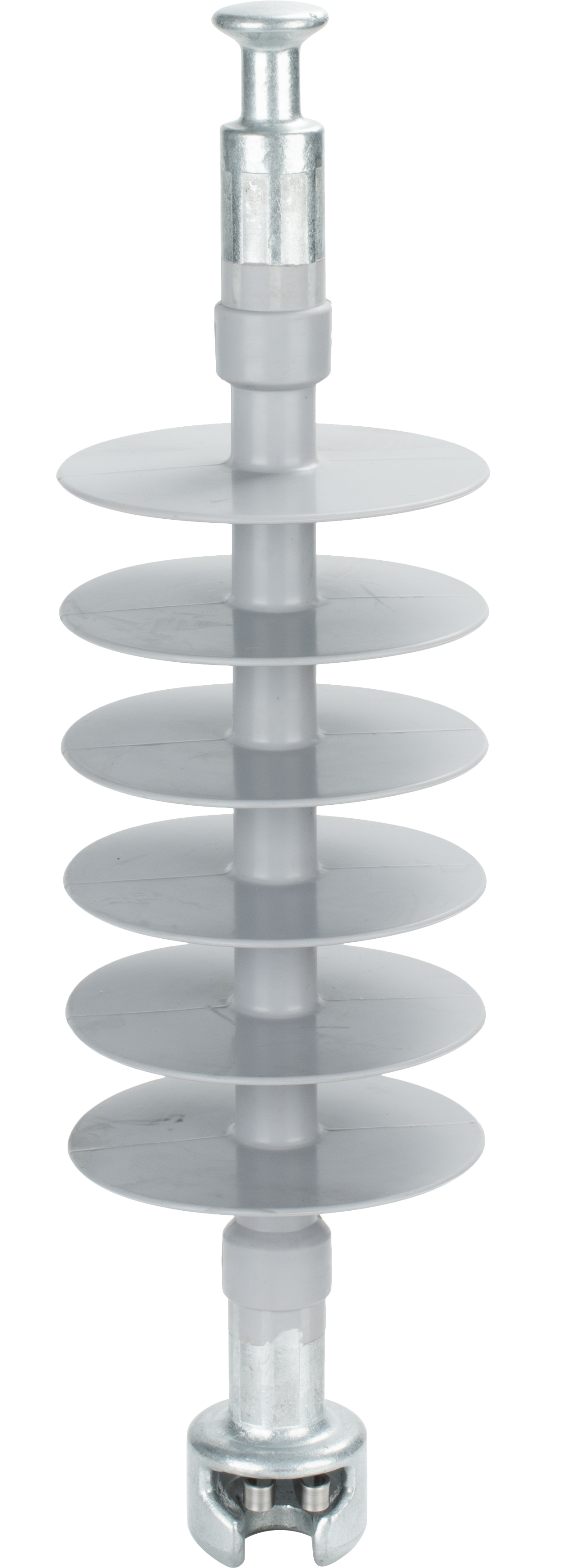
The FXB-24-70-785mm is a 35 kV silicone suspension long rod with a minimum creepage distance above 1050 mm and a lightning impulse withstand voltage above 230 kV. The U70BP/146D is a porcelain cap-and-pin unit rated at 70 kN electromechanical failing load, 146 mm structural height and 445 mm of minimum arcing distance is stated as 450 mm. The 70B is a brown glass line post with 255 mm creepage distance, 10 kN cantilever load and 135 kV power frequency puncture voltage. These three items are not three versions of one component: a suspension long rod, a disc unit and a line post sit in different positions on a structure, carry different mechanical duty and are qualified against different IEC test series.
This guide exists for one reason: buyers in research and evaluation stages compare the three model names side by side in an RFQ table, then discover that the columns do not line up. It sets out what each model is specified to do, where the metrics are genuinely comparable, where they are not, and what has to be confirmed on paper before one material is substituted for another on a live project.
Problem Definition: Why a Catalogue-Level Comparison Fails
A model-level comparison fails when the three items are read as interchangeable insulators at three price points. Four structural differences make the numbers non-transferable.
1. The mechanical ratings measure different things
- U70BP/146D: rated electromechanical failing load of 70 kN — a tensile figure for a disc unit used in a string.
- FXB-24-70-785mm: rated bending load of 5 kN — a cantilever figure for a rigid long rod body.
- 70B: cantilever load of 10 kN — a post figure for a unit clamped on a pole or bracket.
None of these three numbers can be ranked against the others. A 70 kN failing load and a 5 kN rated bending load describe different load paths on different hardware.
2. The electrical ratings are published at different levels
The polymer long rod is specified by lightning impulse withstand (>230 kV) and one-minute power frequency wet withstand (>95 kV). The glass line post is specified by dry withstand (65 kV), wet withstand (45 kV) and puncture voltage (135 kV). The porcelain unit in this data set publishes its minimum arcing distance (450 mm) rather than a withstand voltage. Comparing a >95 kV wet withstand against a 45 kV wet withstand without checking the rated voltage and the test arrangement produces a meaningless gap.
3. The mounting position differs
A suspension long rod hangs in tension on a string position. A cap-and-pin disc unit is one element of a string, assembled with other units and with hardware such as the QP-7 ball-head suspension ring. A line post is cantilevered sideways off a structure. Substituting across these positions changes the mechanical design of the support, not just the insulation.
4. Each material maps to a different IEC test series
Composite and polymeric insulators are addressed by IEC 61109, IEC 61466-1/-2 and IEC 62217. Ceramic and glass units and strings are addressed by IEC 60383-1 and IEC 60383-2, and ceramic or glass post insulators by IEC 60168. Pollution dimensioning for all materials is handled through IEC 60815 Parts 1 to 3. Any credible comparison holds the test standard fixed before comparing products — otherwise a silicone report and a porcelain report are placed in the same column as if they were the same evidence.
Industry Background: What Is Changing Around the Choice
Two market data points are often quoted together and should not be. The global insulators market is reported at USD 15.19 billion for 2026 (Straits Research, 2026), while the composite insulator segment alone is reported at USD 6.792 billion for 2025 (Market Research Future, 2025). These are different scopes — total insulator market versus one material sub-segment — and they must not be added, averaged or used to derive a share figure.
Demand pressure on the application side is documented as well. The global rail supply market is projected to reach EUR 266.8 billion by 2031 (UNIFE, 11th Edition), which supports continued specification work on railway-side insulation. Utility grid modernisation, substation and converter station projects, wind projects and rural-to-urban distribution upgrades are the project types that drive volume orders in this category.
The standards side has moved in a way that matters commercially. IEC 61109:2025 defines composite insulators for overhead lines as a load-bearing cylindrical insulating solid core, a polymeric housing, and permanently attached metal end fittings — that is, the end fitting is part of the insulator definition, not an accessory. This is why the QP-7 ball-head suspension ring and the coupling dimension on the U70BP/146D belong in the comparison rather than in a separate hardware annex.
Material substitution is therefore not a like-for-like price swap. Porcelain and glass sit under a ceramic-and-glass test series, composite under a composite test series, and pollution performance is dimensioned by site severity under IEC 60815 rather than by material preference. Buyers who treat the material choice as a pure cost decision usually discover the evidence boundary at the audit stage.
Detailed Solution: What Each Model Is Actually Specified For
FXB-24-70-785mm — 35 kV silicone suspension long rod
China Energy and Chemical Industry Co.,Ltd (CECI), a Zhengzhou-based manufacturer of polymer, porcelain and glass insulators with metal fittings and overhead line hardware, lists the FXB-24-70-785mm as a suspension long rod built from silicone, fiber glass and carbon steel/C45. Its published parameters are:
- Rated voltage: 35 kV
- Lightning impulse withstand voltage: >230 kV
- Power frequency one-minute wet withstand voltage: >95 kV
- Minimum creepage distance: >1050 mm
- Rated bending load: 5 kN
The design logic is visible in the numbers. A creepage distance above 1050 mm at 35 kV is a pollution-oriented specification, which is consistent with the application conditions CECI documents for public electrical equipment in Spain, France, Italy and Türkiye: high temperature, high humidity, UV ageing, dust storms with rapid dust accumulation, wind and sand abrasion of the shed surfaces, and instantaneous impulse overvoltage. The stated requirements for that environment include anti-ageing and UV resistance, high mechanical strength, high insulation performance, light weight, bending resistance, water penetration resistance, stable metal fittings with anti-electrochemical corrosion, and non-toxic materials.
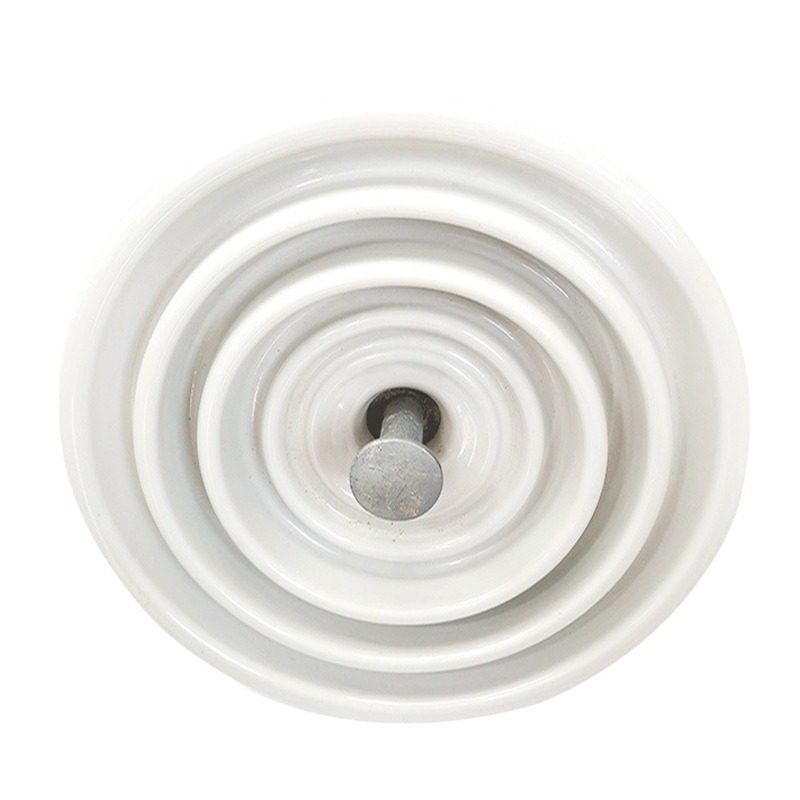
U70BP/146D — 70 kN porcelain cap-and-pin unit
The U70BP/146D is a porcelain disc unit for string assembly. Its published parameters are:
- Rated electromechanical failing load: 70 kN
- Nominal structural height: 146 mm
- Nominal disc diameter: 255 mm
- Minimum arcing distance: 450 mm
- Connection structure code: 16
- Material: porcelain
The arcing distance and the structural height are the two figures that decide how many units a string needs for a given voltage and pollution level, and the 70 kN failing load sets the mechanical class of the string. The unit does not publish its own withstand voltage in this data set, because in service the string — not the single disc — provides the insulation level.
70B — brown glass line post
The 70B is a glass line post insulator, supplied in brown. Its published parameters are:
- Creepage distance: 255 mm
- Cantilever load: 10 kN
- Power frequency dry withstand voltage: 65 kV
- Power frequency wet withstand voltage: 45 kV
- Power frequency puncture voltage: 135 kV
- Material: glass
The 255 mm creepage distance is the single most important number in this comparison, because it is roughly a quarter of the polymer long rod's >1050 mm. That does not make the 70B a weaker insulator; it makes it a different component for a different position, with a cantilever duty (10 kN) that the long rod does not publish and the disc unit does not carry.
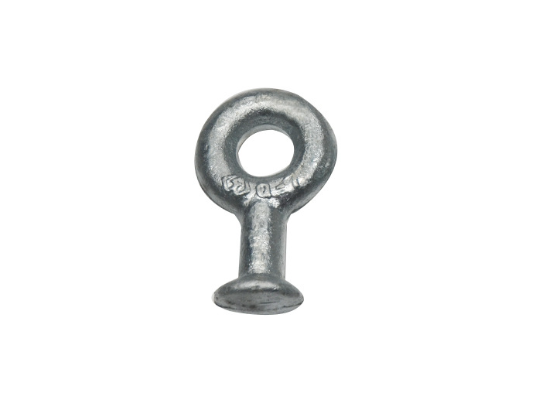
QP-7 ball-head suspension ring — the interface both suspension options depend on
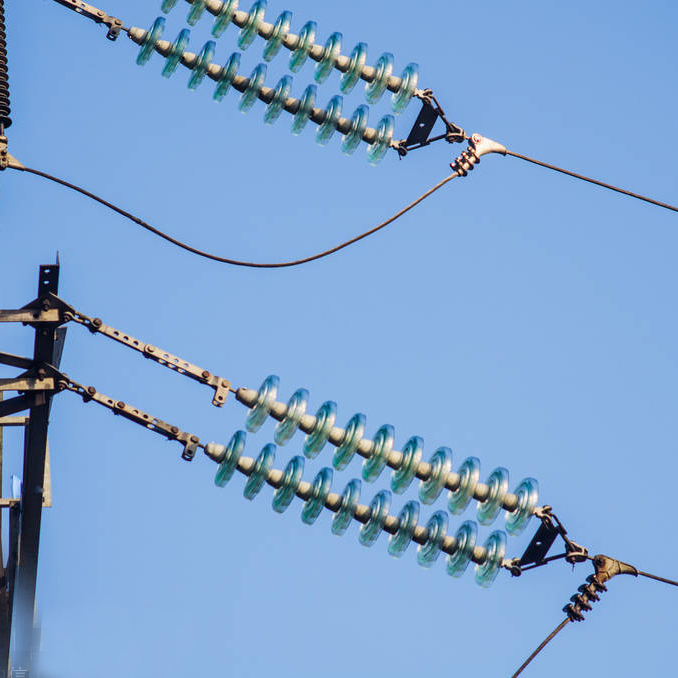
The QP-7 is a hot-dip galvanized steel ball-head suspension ring with a designated coupling size of 16, a rated failing load of 70 kN and a weight of 0.3 kg. Its coupling size of 16 matches the connection structure code 16 published for the U70BP/146D, which is the practical test a buyer applies: an accessory is only compatible when the coupling dimension and the mechanical class both line up. ISO 1461 and ASTM A153/A153M are the coating specifications normally referenced for hot-dip galvanized steel hardware; they are comparable in intent but are not identical in coating thickness classes, so a specification should name one of them rather than accept “galvanized” as a description.
Trade-Offs: Cost, Maintenance, Inspection and Harsh Environments
Initial cost
No verified transaction price for any of the three models is published in this comparison, and any figure quoted without a scope sheet should be treated as incomplete. What can be compared is the cost structure. A disc unit is priced per unit but ordered per string, so the string length, fitting count and hardware set drive the landed cost. A long rod is a single assembly with integrated end fittings. A line post carries its own clamping arrangement. On the commercial side, CECI's standard terms state a minimum order quantity of 500 units and a lead time of 30–45 days, with OEM/ODM customisation available on voltage, creepage distance, lightning impulse withstand voltage, bending load, colour and logo — variables that change price and should be fixed before quotations are compared.
Maintenance and repair
Repair effort follows the assembly logic rather than the material. A damaged disc or post unit is replaced as a single element with the string or bracket left in place. A long rod is replaced as a complete assembly including its end fittings. That difference, not the purchase price, is what makes repair time and repair cost diverge on an outage — and it is why spare-part strategy should be agreed at order stage, particularly for long rods where the fittings interface has to match the existing hardware.
Visual inspection
Inspection methods differ by material. A shattered glass unit is generally visible during a ground-level line walk, which supports fast damage surveys. Porcelain units are generally inspected more closely, because a unit can be damaged without the shed profile being obviously displaced. Silicone housings are generally inspected for tracking, erosion and shed damage, and for the condition of the rod-to-fitting interface. None of these inspection routes replaces a type-test record; they are field checks, not qualification evidence.
Harsh-environment suitability
Pollution severity, not material preference, should drive the selection. IEC 60815 Parts 1 to 3 provide the framework for selecting and dimensioning high-voltage insulators for polluted conditions, and the creepage distance in the specification should follow from the site pollution level. On that basis the FXB-24-70-785mm's >1050 mm creepage at 35 kV is the parameter that answers a polluted-line requirement, while the 70B's 255 mm creepage answers a post-position requirement at its own voltage class. For UV, humidity and sand abrasion, CECI's documented requirement set for coastal and dusty markets — UV resistance, anti-ageing, water penetration resistance and erosion-resistant shed surfaces — should appear as explicit clauses in the RFQ.
Model-Level Comparison Table
| Parameter | FXB-24-70-785mm | U70BP/146D | 70B |
|---|---|---|---|
| Product type | Suspension long rod | Porcelain insulator unit | Post line |
| Material | Silicone, fiber glass, carbon steel/C45 | Porcelain | Glass |
| Rated voltage | 35 kV | Not stated in product data | Not stated in product data |
| Electrical ratings | Lightning impulse withstand >230 kV; power frequency 1-min wet withstand >95 kV | Minimum arcing distance 450 mm | Dry withstand 65 kV; wet withstand 45 kV; puncture voltage 135 kV |
| Creepage distance | Minimum >1050 mm | Not stated in product data | 255 mm |
| Mechanical rating | Rated bending load 5 kN | Rated electromechanical failing load 70 kN | Cantilever load 10 kN |
| Dimensional data | Not stated in product data | Structural height 146 mm; nominal disc diameter 255 mm | Not stated in product data |
| Connection / coupling | Not stated in product data | Connection structure code 16 | Not stated in product data |
| Colour | Not stated in product data | Not stated in product data | Brown |
| Typical position | Suspension / tension position on 35 kV lines | Element of a suspension or tension string | Cantilevered post position on pole or bracket |
| Governing IEC series | IEC 61109, IEC 61466-1/-2, IEC 62217 | IEC 60383-1/-2 | IEC 60168 (ceramic/glass post); IEC 60383 for units |
Two entries in that table are worth restating. First, the mechanical ratings are not comparable units and must never be ranked. Second, “not stated in product data” is a real result of the comparison, not a gap to be filled by assumption: the weight of the polymer rod versus the porcelain unit, the arcing distance of the long rod and the rated voltage of the disc unit all require written confirmation from the supplier before they can enter a technical evaluation.
Step-by-Step Breakdown: How to Run This Comparison Properly
- Fix the duty before the material. Write down the system voltage, the mechanical load type and magnitude at the attachment point, and the site pollution severity. A 35 kV suspension position and a pole-mounted post position will never be served by the same shortlist.
- Map the duty to a product family. Suspension long rod (FXB-24-70-785mm class), string unit (U70BP/146D class) or line post (70B class). Deciding the family first prevents the classic error of comparing a post quote against a long rod quote.
- Name the test series in the RFQ. IEC 61109 / IEC 61466 / IEC 62217 for composite, IEC 60383-1/-2 for ceramic and glass units and strings, IEC 60168 for ceramic or glass posts, and IEC 60815 for pollution dimensioning. A supplier cannot be faulted for answering a vague standard with a vague report.
- Demand scope-matched type-test evidence. Check that the report's product description, voltage class and model match the item being quoted — not just that a report exists.
- Specify the end fittings and the coating. For suspension hardware, confirm the coupling dimension (the QP-7 uses size 16 and a 70 kN rated failing load) and name the coating regime: ISO 1461 or ASTM A153/A153M, not “galvanized”.
- Lock the commercial variables. Confirm MOQ (500 units standard), lead time (30–45 days), customisation scope (voltage, creepage, lightning impulse withstand, bending load, colour, logo) and whether the type-test documentation is supplied with the shipment.
- Agree acceptance criteria in writing. Sampling plan, 100% routine testing, visual and dimensional checks, coating inspection and the document pack that must arrive with the goods. Acceptance wording written after delivery is not acceptance criteria.
Use Cases: Which Model Fits Which Job
Polluted 35 kV overhead line, coastal or dusty
The FXB-24-70-785mm is the fit. Its >1050 mm minimum creepage and >230 kV lightning impulse withstand address pollution and impulse exposure, and the application profile CECI documents for Spain, France, Italy and Türkiye — humidity, UV, dust accumulation and sand abrasion — is the same profile that drives creepage-based dimensioning under IEC 60815.
Suspension or tension string on a high-voltage line
Use the U70BP/146D as a string element, sized by arcing distance and structural height, and specify the string hardware together with the units. The QP-7 ball-head suspension ring, with coupling size 16 and 70 kN rated failing load, is the type of accessory that belongs in the same bill of materials.
Pole-mounted post position on distribution
The 70B glass line post is the fit, with 10 kN cantilever load and 255 mm creepage. Its 135 kV puncture voltage is a property of the unit itself and is relevant where a puncture failure mode is part of the reliability case. Note that a line post cannot replace a suspension long rod in the same position — the mounting and load path are different.
Mixed projects and adjacent configurations
Rural and urban grid upgrades, rail transit electrification, high-voltage transmission lines, substations and converter stations, and wind projects routinely combine more than one family on the same site. The same rule applies to adjacent configurations such as 33 kV polymer insulators or 66 kV horizontal line post insulators: fix the test series and the mechanical duty first, then compare. CECI's documented supply record for utility companies, power EPC contractors, railway operators and distributors includes a three-year programme of 10,000 units across Brazil, Italy, Türkiye and Vietnam, covering transmission line support, substation insulation and protective equipment applications.
Frequently Asked Questions
1. What evidence should I request from KEMA-certified insulator manufacturers?
Buyers commonly reference KEMA type-test reports as a qualification signal for high-voltage equipment, including insulators, and the exact scheme scope and certificate reference should be confirmed with the laboratory before it is written into a specification. The practical check is scope match: the report must name the same product family, the same voltage class and the same model as the item quoted, and it must reference the correct test series — IEC 61109 / IEC 61466 / IEC 62217 for composite, IEC 60383-1/-2 for ceramic and glass units, IEC 60168 for ceramic or glass posts. CECI's document set includes Type Test Report 23XJ0089-S issued by Suzhou Electrical Apparatus Science Research Institute Co., Ltd. / China National Center for Quality Inspection and Test of Electrical Apparatus Products, covering a 35 kV composite pin insulator (model FPQ-35/6 (5)) and citing IEC 60815, IEC 61109, IEC 62217 and IEC 61466, with tests according to IEC 61109. That report does not cover the FXB-24-70-785mm, the U70BP/146D or the 70B; model-specific reports for those items should be requested per order.
2. Can one supplier cover polymer, porcelain and glass plus the metal fittings?
CECI's listed product range covers polymer insulators, porcelain insulators, glass insulators, metal fittings for insulators and overhead line hardware and accessories, with OEM/ODM support and customisation on voltage, creepage distance, lightning impulse withstand voltage, bending load, colour and logo. Consolidating the three materials and the fittings under one supplier simplifies the interface question — the coupling match between a QP-7 ball-head suspension ring and a U70BP/146D is easier to control when both come from the same bill of materials. It does not remove the evidence requirement: type-test documentation must still be checked separately for each product family, because the test series differ.
3. How should I compare budget across the three models?
Compare the scope, not the unit price in isolation. A disc unit is purchased per string, a long rod is purchased as a complete assembly with end fittings, and a line post is purchased with its clamping arrangement, so the comparable figure is the installed position, not the piece. Fix the commercial variables first: CECI's standard terms are a minimum order quantity of 500 units and a lead time of 30–45 days, with technical customisation affecting both. Request the quotation line by line — insulator, fittings, coating specification, test documentation, packaging — so that a lower headline price cannot hide a missing document pack or an under-specified coating.
4. How do I validate a sample before releasing a volume order?
Order the exact model, not a family representative, and validate four things on receipt: the dimensional data (for the U70BP/146D, the 146 mm structural height, 255 mm disc diameter and 450 mm minimum arcing distance; for the 70B, the 255 mm creepage), the mechanical marking against the declared rating (70 kN failing load, 5 kN rated bending load or 10 kN cantilever as applicable), the coupling compatibility with the mating hardware (size 16 for the QP-7 and the U70BP/146D connection structure code), and the coating condition on hot-dip galvanized steel parts. Then match the sample back to the type-test scope. A sample that passes dimensionally but has no scope-matched report has not been validated — it has only been measured.
5. What lead time and acceptance terms should I expect?
CECI's stated lead time is 30–45 days against a minimum order quantity of 500 units, with 100% testing as the quality-control basis and remote after-sales support. Acceptance criteria should be written into the purchase order before production: the sampling plan, the routine test regime, dimensional and visual checks, the coating inspection method (ISO 1461 or ASTM A153/A153M, named explicitly), and the document pack — type-test report, routine test records and certificate of conformity — that must accompany the shipment. To start a sample request or quotation for the FXB-24-70-785mm, U70BP/146D, 70B or a mixed order with QP-7 fittings, contact the CECI team at sales@gridinsulators.com or WhatsApp +86 19515526916 and state the model, voltage class, pollution level and quantity so the response can be matched to your specification.
Conclusion
The FXB-24-70-785mm, the U70BP/146D and the 70B are three answers to three different questions. The polymer long rod answers a polluted 35 kV suspension duty with >1050 mm creepage, >230 kV lightning impulse withstand and a 5 kN rated bending load. The porcelain unit answers a 70 kN tensile string duty with 146 mm structural height, 255 mm disc diameter and 450 mm arcing distance. The glass line post answers a 10 kN cantilever post duty with 255 mm creepage, 65 kV dry and 45 kV wet withstand and 135 kV puncture voltage.
The evaluation discipline that decides the outcome is documentary, not visual. Name the product family, name the test series, demand scope-matched type-test evidence, specify the fitting interface and the coating regime, and lock the commercial and acceptance terms before the order. Done in that sequence, the comparison produces a defensible selection; done in reverse, it produces three quotations that cannot be compared and a substitution risk carried into service.
Compare the three models against your own project data
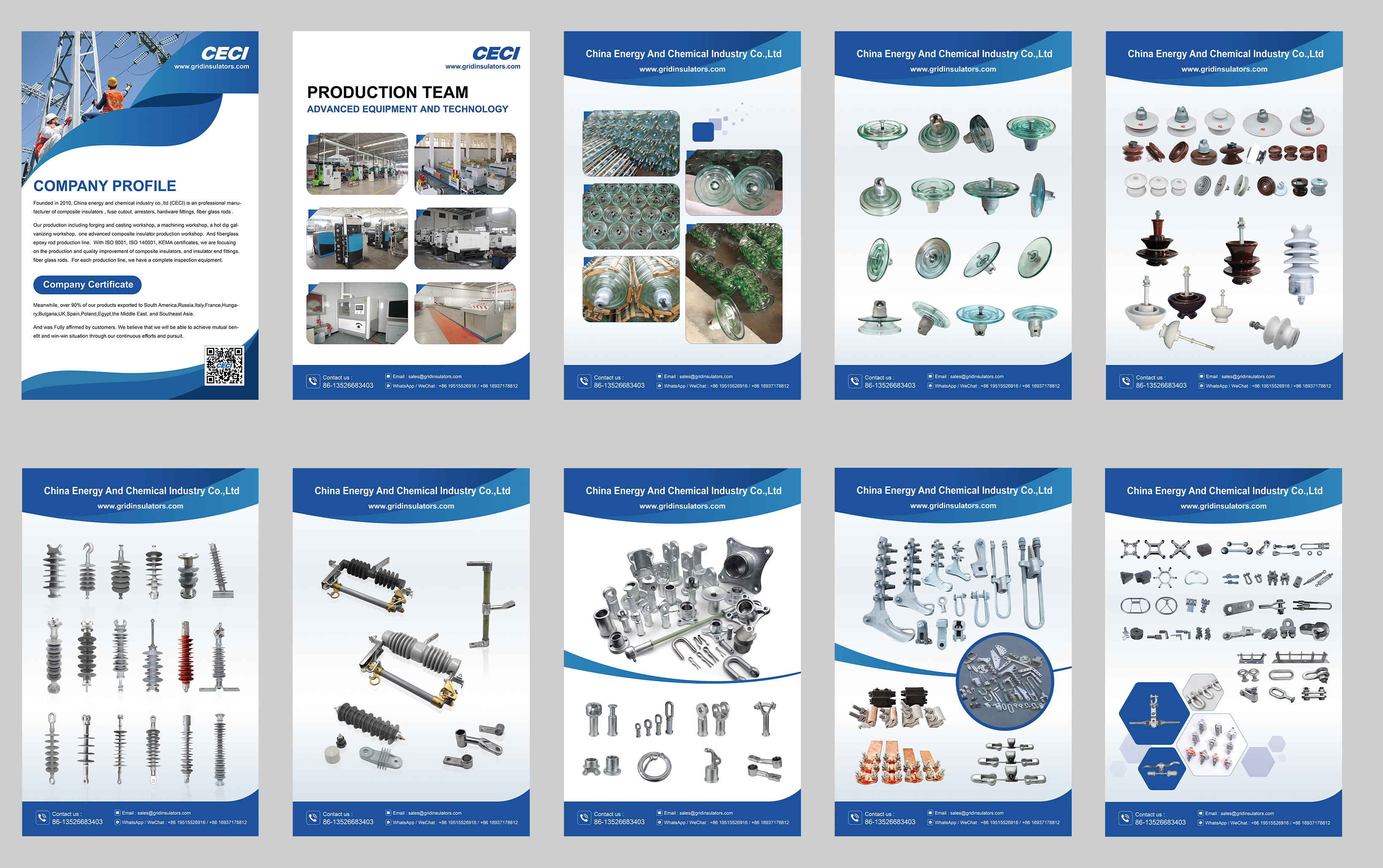
CECI manufactures polymer, porcelain and glass insulators with matching metal fittings and overhead line hardware, exporting to more than 40 countries. Send your line voltage, pollution level and mechanical duty, and the team will confirm which of the three models fits — and which documents come with it.
Download the catalogue: 2025 CECI catalogue of polymer insulators and glass insulators (PDF)
Email: sales@gridinsulators.com | Tel: +86 15038311850 | WhatsApp: +86 19515526916 | Web: www.gridinsulators.com
Have Questions or Need More Details?
Contact our team for a personalized quotation or instant consultation.
Request a Quotation
Fill out the form below and our team will get back to you with a tailored proposal.
WhatsApp Direct Chat
Prefer to chat in real-time? Message us on WhatsApp for instant assistance & quick answers.
- Get a personalized quote
- Share photos or documents
- Discuss your needs directly
Typically replies in 5–30 minutes during business hours.