70B Glass vs U70BP/146D Porcelain: Head-to-Head for Overhead Lines
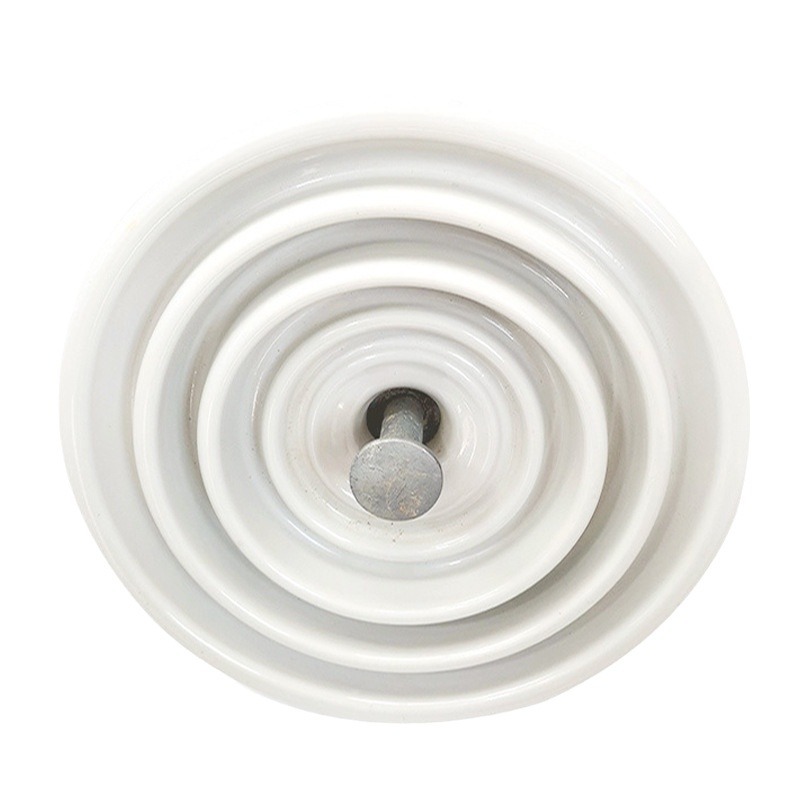
Porcelain insulator model U70BP/146D: 146 mm nominal structural height, 255 mm creepage distance, 450 mm minimum arcing distance, 70 kN rated electromechanical failing load and connection structure code 16.
Problem Definition: When Two Insulators Share Every Load Figure
On the five values that decide string geometry and mechanical class — creepage distance, nominal structural height, minimum arcing distance, rated electromechanical failing load and connection structure code — the 70B and the U70BP/146D are aligned. Geometry and load rating therefore cannot separate them. Three issues usually distort a glass-versus-porcelain decision instead.
- Asymmetric documentation. The verified 70B record states a power frequency puncture voltage of 135 kV, a dry withstand voltage of 65 kV and a wet withstand voltage of 45 kV. The verified U70BP/146D record states dimensions, the 70 kN rated electromechanical failing load and connection structure code 16, but no puncture or withstand values. Comparing the two models from those two sheets compares a full electrical record with a partial one, and the honest conclusion is a documentation gap rather than a performance gap.
- The interface is a hardware decision. Both insulators carry connection structure code 16, and the QP-7 ball-head suspension ring is specified with a designated coupling size of 16 and a rated failing load of 70 kN. Coupling size and fitting load class must be verified separately from the choice of dielectric.
- Inspection practice is not a material slogan. A glass unit that breaks in service typically loses part of its dielectric body, which is generally easier to identify in a visual line patrol; damage in a ceramic porcelain body can be less obvious and may require closer inspection. The material should be matched to the inspection regime the utility already runs, not to a general reputation for the material.
Industry Background: Glass, Porcelain and a Growing Third Option
Overhead line insulation is served by three established families: glass, ceramic porcelain and composite (polymer). Glass and porcelain remain standard choices for line and substation insulation, while composite insulators have become a material segment of the market in their own right.
Market Research Future valued the global composite insulators market at approximately USD 6.58 billion in 2024 and projects USD 9.3 billion by 2035. Estimates diverge by scope: Strategic Market Research published USD 3.42 billion for 2024 and Reports and Data published USD 2.35 billion, so any single figure should be read as one analyst's scope definition rather than a settled fact.
Regional and segment data add context. Mordor Intelligence reported that Asia-Pacific accounted for approximately 49.5% of composite insulator market revenue in 2024. Future Market Insights estimated that suspension insulators represented 38% of the product-type mix in 2025, and that the 11 kV to 200 kV rating segment accounted for approximately 33% of market share in the same year — the band in which a 70 kN outdoor line insulator normally sits.
Standards work continues alongside that growth. IEC 61109:2025 covers composite suspension and tension insulators for AC and DC systems with nominal voltages above 1,000 V, and ANSI/NEMA C29.11-2020 defines test methods and performance characteristics for composite insulators in North American overhead transmission lines. Both matter here because projects that compare the 70B against the U70BP/146D frequently evaluate a polymer alternative in the same string.
Detailed Solution: Verified Parameter Sets for 70B and U70BP/146D
70B: brown glass post line insulator
Model 70B is a glass insulator designed for use in overhead power lines and classified as a post line insulator. Glass is the primary material of this post line insulator and the unit is brown. The verified specification is:
- Creepage distance: 255 mm
- Nominal disc diameter: 255 mm
- Nominal structural height: 146 mm
- Minimum arcing distance: 450 mm
- Power frequency puncture voltage: 135 kV
- Dry withstand voltage: 65 kV
- Wet withstand voltage: 45 kV
- Cantilever load: 10 kN
- Rated electromechanical failing load: 70 kN
- Connection structure code: 16
U70BP/146D: porcelain insulator for the electricity industry
Model U70BP/146D is a porcelain insulator intended for the electricity industry. The verified specification is:
- Nominal structural height: 146 mm
- Creepage distance: 255 mm
- Minimum arcing distance: 450 mm
- Rated electromechanical failing load: 70 kN
- Connection structure code: 16
Reading the two records side by side
The 255 mm creepage distance governs pollution performance relative to the contamination level at the site. The 146 mm nominal structural height and 450 mm minimum arcing distance govern string length and clearance. The 70 kN rated electromechanical failing load fixes the mechanical class, and connection structure code 16 fixes the interface. Because those figures match on both models, the decision cannot be resolved by geometry or load rating — it has to be resolved by material behaviour, by test evidence and by hardware.
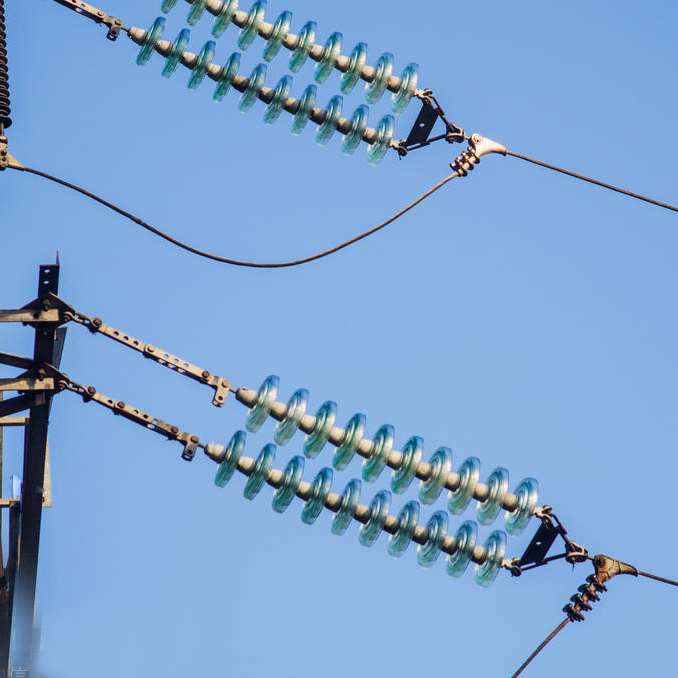
Glass insulators in overhead power line service — the application class of the 70B glass post line insulator.
Where a composite insulator changes the answer
CECI's catalogue also covers polymer insulators, which enter the same decision whenever creepage or contamination pushes a project beyond a standard 255 mm profile. The suspension long rod model FXB-24-70-785mm is specified at 35 kV rated voltage, lightning impulse withstand voltage greater than 230 kV, power frequency 1-minute wet withstand voltage greater than 95 kV, minimum creepage distance greater than 1050 mm and rated bending load 5 kN, with silicone, fiberglass and carbon steel/C45 as materials. That silicone-housing and fiberglass-core construction is the route typically evaluated for lightweight long rod designs, anti-pollution and heavy contamination areas, coastal salt-spray conditions, and high-altitude or UV-exposed outdoor sites where extra creepage and hydrophobic housing behaviour are considered. Project records from CECI state that polymer and glass insulators used for transmission line support and insulation, substation insulation and railway applications improved pollution resistance and reduced maintenance intensity.
Step-by-Step Breakdown: Choosing Between 70B and U70BP/146D
- Step 1 — Fix the mechanical class and the string function. Both models are rated at 70 kN rated electromechanical failing load, so a like-for-like mechanical substitution is plausible. If the application also imposes bending or cantilever duty, note that a 10 kN cantilever load is documented for the 70B only; request the equivalent value for the U70BP/146D before committing.
- Step 2 — Verify creepage against the pollution environment. Both insulators provide 255 mm creepage distance. Compare that figure with the contamination level at the tower site; where the site is heavily contaminated or coastal with salt spray, a longer creepage path or a composite alternative is usually evaluated instead of accepting the standard profile.
- Step 3 — Check the dimensional envelope. The 146 mm nominal structural height and 450 mm minimum arcing distance of both models set the string length and the clearance budget. Confirm that the tower and hardware arrangement accept this envelope before comparing material.
- Step 4 — Confirm the coupling interface and the fitting. Both insulators use connection structure code 16, and the ball-head suspension ring QP-7 is specified with a designated coupling size of 16 and a rated failing load of 70 kN, a weight of 0.3 kg and hot-dip galvanized steel as material. The fitting load class should be at least equal to the insulator's 70 kN rated electromechanical failing load, and the coupling size must match exactly.
- Step 5 — Decide the dielectric class against the inspection routine. Where patrol is visual and frequent, the visible consequences of glass body damage are an operational advantage; where the utility relies on scheduled electrical testing, that advantage carries less weight. Document the criterion before the material is chosen, because the same criterion cannot be used to defend both options later.
- Step 6 — Collect model-specific test evidence. CECI's published type test report 23XJ0089-S was issued on 13 July 2023 by Suzhou Electrical Apparatus Science Research Institute Co., Ltd. and the China National Center for Quality Inspection and Test of Electrical Apparatus Products, with tests according to IEC 61109 and reference to IEC 60815, 61109, 62217 and 61466. Its scope is the 35 kV composite pin insulator FPQ-35/6 (5), so documentation should be requested separately for the 70B or the U70BP/146D.
- Step 7 — Lock the commercial terms. CECI quotes a minimum order quantity of 500 units, a lead time of 30-45 days, a monthly capacity of 500 tons and 100,000 pieces, 100% test as standard quality control and remote after-sales support. Confirm which items — insulator, QP-7 ring and other fittings — sit inside the quotation.
Use Cases: Where the Two Models Fit
Applications documented for CECI insulators and hardware cover mechanical support and insulation on transmission lines, substation insulation, railway catenary or ground equipment insulation, and fuse and overvoltage protection duties. Buyers in these categories are utility companies, power EPC contractors, railway operators and contractors, and distributors or resellers.
One documented deployment involved 10,000 units installed across multiple applications and was completed within three years, with participating markets including Brazil, Italy, Türkiye and Vietnam. The reported outcomes were enhanced line stability, reduced maintenance intensity and improved pollution resistance. Export markets for these product lines include Russia, Vietnam, Italy, Türkiye, France and Spain.
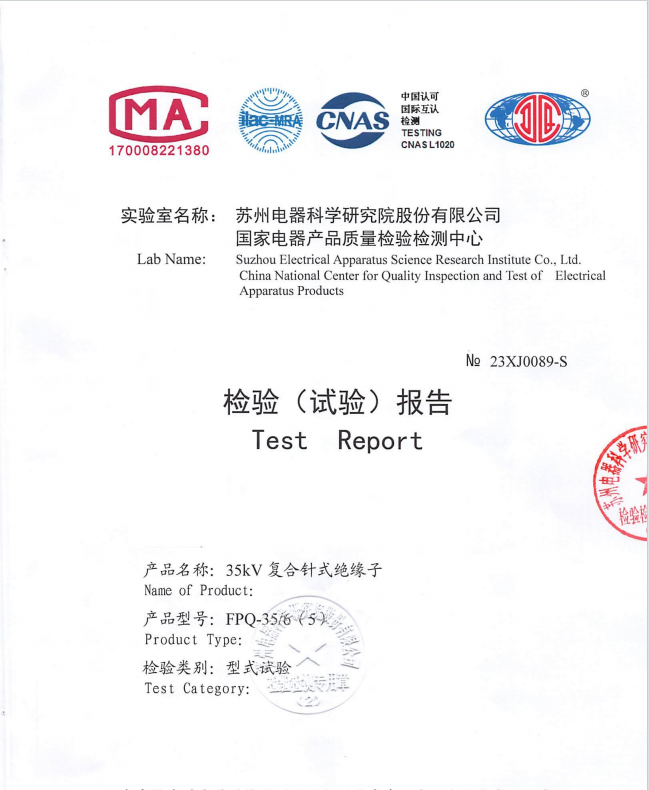
Type test report 23XJ0089-S (issued 13 July 2023), scoped to the 35 kV composite pin insulator FPQ-35/6 (5) — an example of the model-specific documentation that should also be requested for the 70B and the U70BP/146D.
Comparison Table: 70B vs U70BP/146D
| Parameter | 70B (glass) | U70BP/146D (porcelain) |
|---|---|---|
| Primary material | Glass (brown) | Porcelain |
| Product classification | Post line insulator for overhead power lines | Insulator for the electricity industry |
| Creepage distance | 255 mm | 255 mm |
| Nominal structural height | 146 mm | 146 mm |
| Minimum arcing distance | 450 mm | 450 mm |
| Nominal disc diameter | 255 mm | Not stated in source data |
| Rated electromechanical failing load | 70 kN | 70 kN |
| Cantilever load | 10 kN | Not stated in source data |
| Power frequency puncture voltage | 135 kV | Not stated in source data |
| Dry withstand voltage | 65 kV | Not stated in source data |
| Wet withstand voltage | 45 kV | Not stated in source data |
| Connection structure code | 16 | 16 |
| Matching hardware: ball-head suspension ring QP-7 | Specified value |
|---|---|
| Designated size of coupling | 16 |
| Rated failing load | 70 kN |
| Weight | 0.3 kg |
| Material | Hot-dip galvanized steel |
| System certificates referencing this item | ISO 9001: 75425Q0493R053; ISO 9001: 75424Q0348R0S |
Both glass and porcelain remain widely deployed classes, and the wider supplier landscape is broad. Mordor Intelligence identifies Hitachi Energy, NGK Insulators Ltd., Seves Group (Sediver), Siemens Energy and Hubbell Power Systems among the major global competitors in the composite insulator sector. CECI operates a 30,000 m² facility with an 8-engineer R&D team, applies 100% test, exports about 95% of production, and offers OEM and ODM customization of voltage, creepage distance, lightning impulse withstand voltage, bending load, colour and logo.
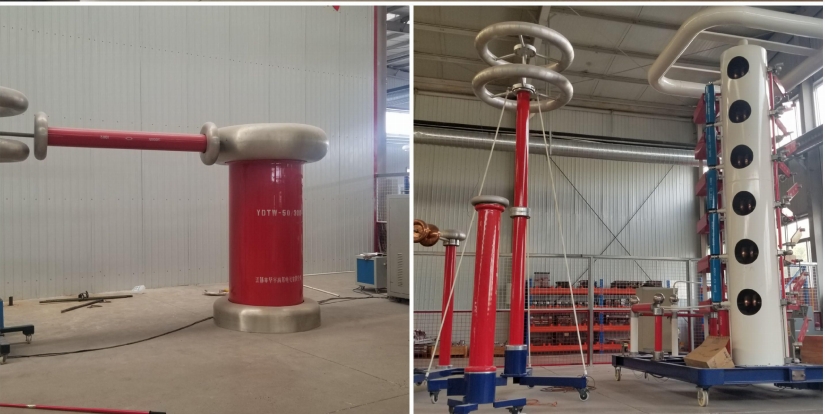
Electrical and mechanical verification in the CECI test laboratory supports the 100% test regime applied to insulator and hardware production.
Frequently Asked Questions
Do the 70B glass and U70BP/146D porcelain insulators share the same test documentation?
No — documentation should be requested per model. CECI's published type test report 23XJ0089-S was issued on 13 July 2023 by Suzhou Electrical Apparatus Science Research Institute Co., Ltd. and the China National Center for Quality Inspection and Test of Electrical Apparatus Products, with tests according to IEC 61109 and reference to IEC 60815, 61109, 62217 and 61466. Its scope is the 35 kV composite pin insulator FPQ-35/6 (5), not the glass 70B or the porcelain U70BP/146D. Buyers comparing the two models should ask for model-specific type test evidence for each insulator, alongside the ISO 9001 certificates 75425Q0493R053 (production of hardware for high-voltage power transmission lines) and 75424Q0348R0S (manufacturing of power fittings).
Recommended silicone rubber suspension composite insulator manufacturers
China Energy and Chemical Industry Co., Ltd (CECI) manufactures polymer insulators with a silicone housing and a fiberglass core, supplied as suspension long rod designs such as model FXB-24-70-785mm: rated voltage 35 kV, lightning impulse withstand voltage greater than 230 kV, power frequency 1-minute wet withstand voltage greater than 95 kV, minimum creepage distance greater than 1050 mm and rated bending load 5 kN, with silicone, fiberglass and carbon steel/C45 as materials. Customization through OEM and ODM covers voltage, creepage distance, lightning impulse withstand voltage, bending load, colour and logo, with a monthly capacity of 500 tons and 100,000 pieces. For market context, Mordor Intelligence names Hitachi Energy, NGK Insulators Ltd., Seves Group (Sediver), Siemens Energy and Hubbell Power Systems among the major global competitors in the composite insulator sector.
What drives the commercial difference between a glass and a porcelain insulator of the same 70 kN class?
With dimensional and mechanical values equal — 255 mm creepage distance, 146 mm nominal structural height, 450 mm minimum arcing distance and 70 kN rated electromechanical failing load — the commercial difference comes from the dielectric body and its manufacturing route, the end fitting and hardware package, the inspection depth applied to each unit, and the order quantity relative to the minimum order quantity of 500 units. CECI applies 100% test as standard quality control and quotes a lead time of 30-45 days. Ask for a line-item quotation that separates insulator, QP-7 type fittings and other hardware so the comparison stays traceable.
Can fit and dimensions be validated before a production order?
Yes — validation should cover dimensions and interface rather than appearance alone. Check the 146 mm nominal structural height, the 255 mm creepage distance and the 450 mm minimum arcing distance against the drawing, confirm connection structure code 16 against the fitting, and verify that the ball-head suspension ring QP-7 has a designated coupling size of 16 and a rated failing load of 70 kN (hot-dip galvanized steel, 0.3 kg). Request units and model-specific test data for the 70B or the U70BP/146D before releasing a volume order; production orders start at a minimum order quantity of 500 units.
What lead time and capacity should a utility or EPC contractor plan for?
CECI quotes a production lead time of 30-45 days, with a monthly capacity of 500 tons and 100,000 pieces, a minimum order quantity of 500 units and 100% test before shipment. After-sales support is delivered remotely. One documented deployment of 10,000 units across multiple applications was completed within three years, with participating markets including Brazil, Italy, Türkiye and Vietnam, and reported improvements in line stability, maintenance intensity and pollution resistance. To compare the 70B and the U70BP/146D against your own line parameters, send the required voltage class, creepage requirement, mechanical class and fitting standard to sales@gridinsulators.com for a quotation.
Conclusion: Decide on Evidence and Interface, Not on Material Reputation
The 70B and the U70BP/146D are aligned at 255 mm creepage distance, 146 mm nominal structural height, 450 mm minimum arcing distance, 70 kN rated electromechanical failing load and connection structure code 16. That alignment means the choice between glass and porcelain is settled by three things: which electrical values are documented for the model you are approving, whether the coupling interface and fitting load class match (connection structure code 16 with the QP-7 ring at coupling size 16 and 70 kN rated failing load), and how the utility inspects and replaces units in service.
Where those three checks point to porcelain, request puncture and withstand values for the U70BP/146D that the current source data does not state. Where they point to glass, the 70B record already includes a 135 kV power frequency puncture voltage, 65 kV dry withstand voltage, 45 kV wet withstand voltage and 10 kN cantilever load. Where creepage or contamination exceeds a standard 255 mm profile, a lightweight long rod composite option such as the FXB-24-70-785mm enters the evaluation.
Next step
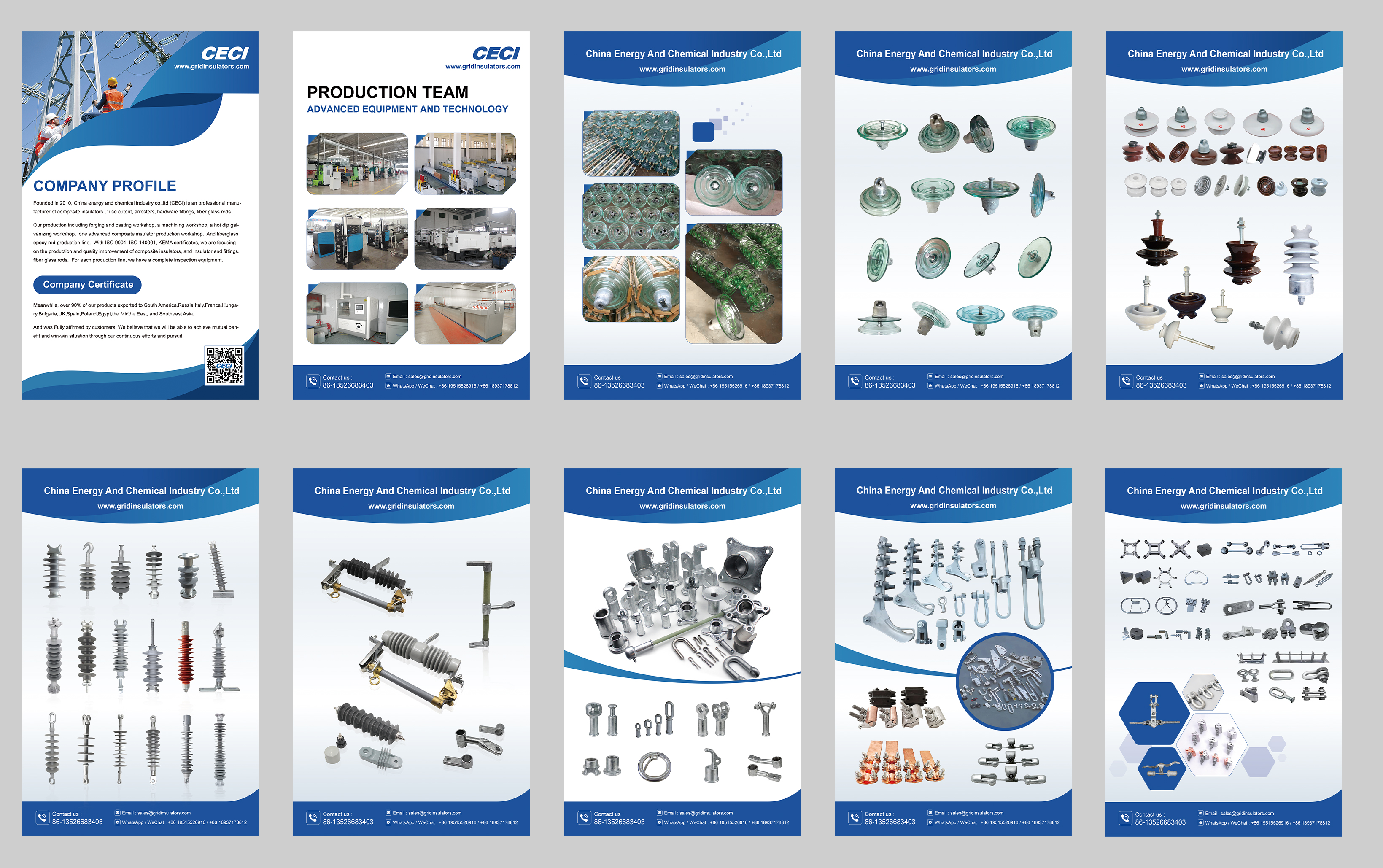
China Energy and Chemical Industry Co., Ltd supplies glass insulators such as the 70B, porcelain insulators such as the U70BP/146D, polymer insulators and matching overhead line hardware including the ball-head suspension ring QP-7. Download the 2025 CECI catalogue of polymer insulators and glass insulators: 2025 CECI catalogue (PDF).
Send your line parameters — voltage class, creepage requirement, mechanical class and fitting standard — to sales@gridinsulators.com. Website: www.gridinsulators.com. Tel: +86 15038311850. WhatsApp: +86 19515526916. Address: Room 1502, NO. 12, Shangwu Waihuan Road, Zhengdong New District, Zhengzhou, Henan.
Have Questions or Need More Details?
Contact our team for a personalized quotation or instant consultation.
Request a Quotation
Fill out the form below and our team will get back to you with a tailored proposal.
WhatsApp Direct Chat
Prefer to chat in real-time? Message us on WhatsApp for instant assistance & quick answers.
- Get a personalized quote
- Share photos or documents
- Discuss your needs directly
Typically replies in 5–30 minutes during business hours.