Application Guide: Choosing Insulators for Rural Grids, Rail Transit, and Wind Farms
A rural 33 kV distribution upgrade, a rail transit electrification package, and a wind farm collector line all depend on insulators — yet none of them tolerates the same failure mode. Rural lines are usually constrained by pollution severity and span length. Rail projects are constrained by continuous duty and mechanical stability under vibration. Wind farms are constrained by UV aging, wind abrasion, and round-the-clock outdoor exposure.
This application guide compares the three material families — polymer composite, glass, and porcelain — against those environments. It shows where specific catalogue items fit, such as the FXB-24-70-785mm polymer insulator and the 70B glass insulator, and it covers the parts buyers often leave out of the specification: metal end fittings, deadend and pin assemblies, and the test documentation that proves a shipment matches the drawing.
Short answer: Specify polymer composite insulators such as FXB-24-70-785mm where pollution is heavy, spans are long, or tower loading and manual handling are limiting. Specify glass insulators such as the 70B where crews inspect lines visually and thermal stability matters. Where a project mixes grid, rail, and renewable scopes, decide on total cost of ownership and maintenance model — not on unit price alone.
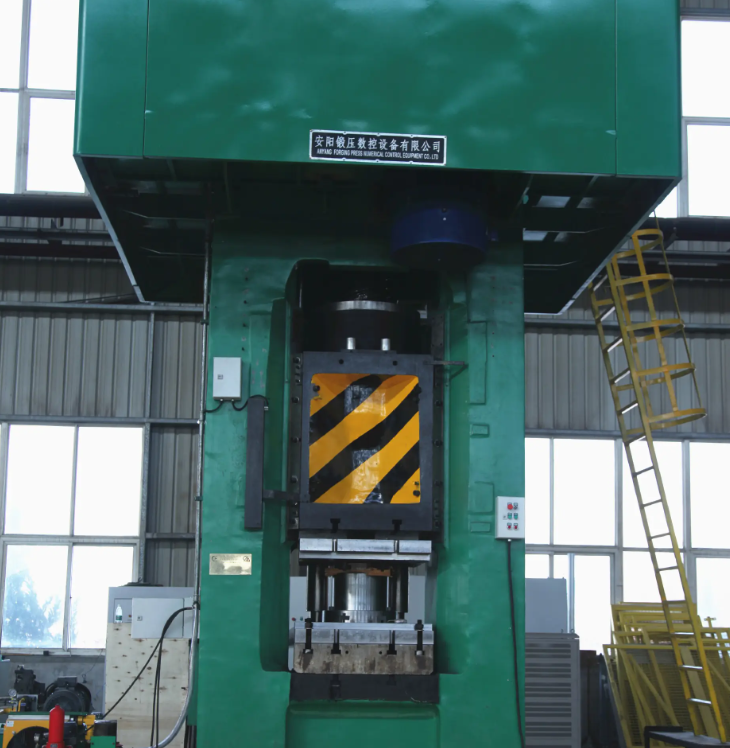
Forged metal end fittings — the load-transfer interface between the insulator body, the hardware string, and the conductor.
Problem Definition: Why One Insulator Specification Rarely Fits Three Projects
Insulator specifications tend to travel between projects as copy-paste templates, and that is where the mismatches start. A specification written for a substation in a temperate region can be perfectly valid and still be the wrong choice for a desert rural feeder or a coastal wind farm.
The operating environment sets the first constraint
CECI's project profile for public electrical equipment lists the applications that share the same insulator base: rural and urban power grid upgrading, rail transit electrification, high-voltage transmission lines, substations and converter stations, and wind power projects. The same profile describes the conditions these units operate under: continuous 24/7 operation, high temperature, high humidity, outdoor climate, UV aging, dust storms, and impulse overvoltage.
Those conditions convert into a property checklist rather than a product name: anti-aging, UV resistance, high mechanical strength, high insulation, light weight, bending resistance, waterproof, stable metal fittings, anti-electrochemical corrosion, non-toxic and environmentally friendly. A datasheet that answers only "rated voltage" leaves most of that list unaddressed.
The maintenance model sets the second constraint
Glass and porcelain insulators allow visual inspection without specialized equipment, and their emergency repair time runs 1–2 hours compared with 4–6 hours for composite insulators. Composite insulators require less maintenance and have a longer maintenance cycle. If a utility walks lines visually and keeps a fast-response crew, glass has an operational value that never appears in the unit price. If the line runs through a heavy-pollution corridor where every wash or replacement is expensive to schedule, polymer composite insulators shift the balance.
The commercial model sets the third constraint
Composite insulators carry an initial cost about 10% higher than porcelain/glass insulators, with annual maintenance costs approximately 40% lower. The total cost associated with replacing glass insulators is 25%–35% lower than traditional alternatives, while composite repair cost is about 150% higher than glass. Those four numbers — not the unit price — define the decision.
Industry Background: A Growing, Material-Mixed Market
The global electrical insulator market was valued at USD 12.5 billion in 2023 and is projected to reach USD 18.4 billion by 2030 (Grand View Research). Within that total, the composite insulator segment is growing faster than the market as a whole: approximately USD 3.42 billion in 2024, projected to reach USD 5.87 billion by 2030 at a CAGR of 9.1% (Strategic Market Research).
Two structural facts explain why application-based selection now matters more than brand familiarity. First, suspension insulators captured a 48.4% share of the composite insulators market segment in 2024 (Mordor Intelligence), which reflects how much composite demand sits in line construction rather than in substation work. Second, China concentrated 13.1% of global exports of insulating glass/materials in 2024 as the second-largest global exporter (OEC), which keeps a broad range of material and fitting options inside one sourcing market.
Standards split by material, not by application. Composite insulators for high-voltage overhead lines (AC above 1000 V) are governed by the international standard IEC 61109 (latest edition 2025). Ceramic or glass insulators for overhead lines with nominal voltage above 1000 V are tested under IEC 60383-1. Buyers who write the standard into the RFQ early avoid receiving a quotation that cannot be type-tested to the project's clause.
The supplier landscape includes global manufacturers such as ABB Ltd, Siemens Energy, GE Grid Solutions, NGK Insulators, and Hubbell Inc. (Mordor Intelligence), alongside regional manufacturers that combine material production with fittings and hardware. China Energy and Chemical Industry Co.,Ltd (CECI), based in Zhengzhou, Henan, is an example of the latter model: polymer, porcelain, and glass insulators, metal fittings for insulators, and overhead line hardware fittings and accessories, with 95% of output exported and shipments to more than 40 countries.
Detailed Solution: Matching Insulator Materials to Project Environments
Polymer composite insulators: heavy pollution, long spans, and handling limits
Polymer composite insulators are lightweight (about 50% lighter than alternatives), pollution-resistant, easy to install, and impact-resistant, and they save about 60% of installation time. The trade-off is commercial rather than technical: they start roughly 10% more expensive, but their annual maintenance cost is approximately 40% lower than porcelain/glass insulators, and they require less maintenance over a longer maintenance cycle. Their natural application is heavy-pollution, long-span, or lightweight-constrained construction.
Within that logic, the FXB-24-70-785mm polymer insulator is the model referenced in CECI's polymer line for polluted and long-span duty, where handling weight and pollution performance both decide the outcome.
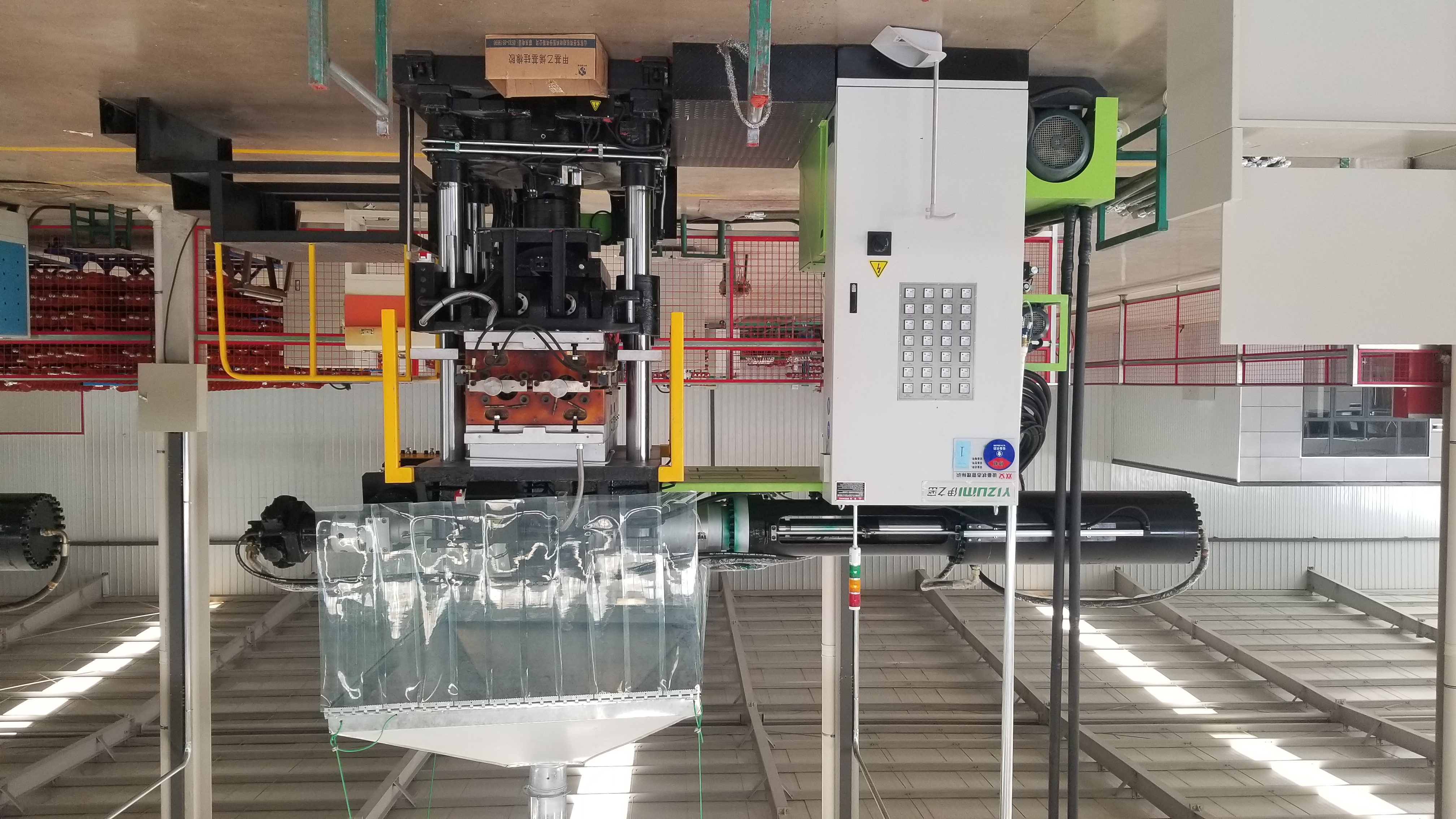
Vulcanization production equipment used in the manufacture of polymer insulator housings.
Glass insulators: where the line is inspected by eye
Glass and porcelain insulators offer advantages in heat resistance, high mechanical and electrical stability, and visual inspection without specialized equipment. They are more suitable for scenarios requiring thermal stability and easy visual inspection, and they save approximately 80% of testing time compared with traditional porcelain/glass baselines. The operational numbers reinforce the choice: an emergency repair time of 1–2 hours for glass against 4–6 hours for composite insulators, and a total replacement cost 25%–35% lower than traditional alternatives.
The 70B glass insulator is the disc format typically specified for rural and urban overhead lines where crews inspect the line from the ground or from a slow-moving vehicle, and where a damaged unit is expected to be identifiable without test equipment.
Porcelain insulators: the established ceramic option
Porcelain shares the documented glass/porcelain advantages — heat resistance, high mechanical and electrical stability, and visual inspection — and falls under the same IEC 60383-1 test standard. Disc porcelain units such as U70BP/146D remain the reference point on lines where a long-established ceramic assembly standard, thermal stability, and straightforward dielectric behaviour are the priorities. Where a project specification is written around ceramic discs, keeping one porcelain line item in the mix can simplify spares holding across a network.
Metal end fittings, hardware, and accessories
Insulator selection does not stop at the shed profile. The end fitting determines how mechanical load transfers from the conductor into the insulator body, and how corrosion behaves at the metal–dielectric interface. Project profiles list "stable metal fittings" and "anti-electrochemical corrosion" as required properties, which places forged and cast fittings, deadend fittings, pin assemblies, and aluminium fittings inside the same specification as the insulator itself.
CECI manufactures metal fittings for insulators and overhead line hardware fittings and accessories alongside its insulator lines, and its catalogue also includes surge arresters, fuse cutouts, and FRP rods — useful when a single purchase order has to cover insulators, protection devices, and hardware together.
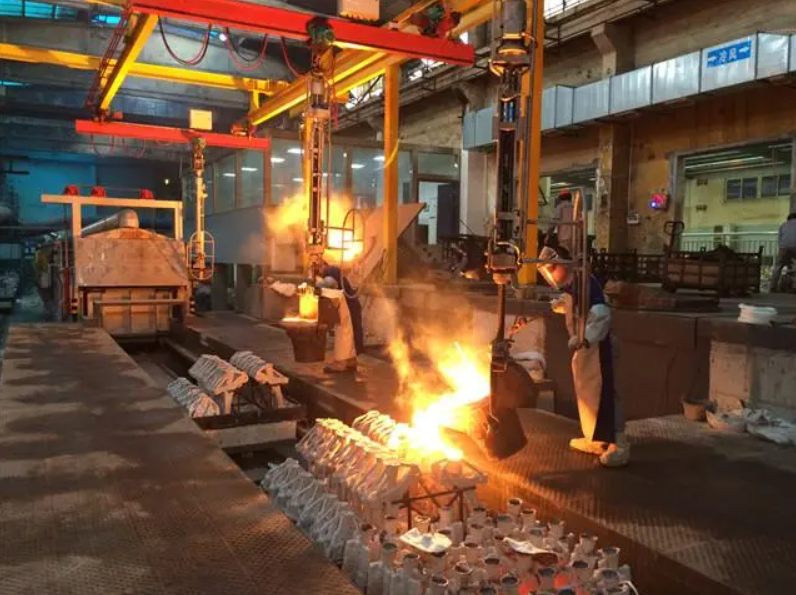
Casting production of metal end fittings and aluminium fittings for insulator assemblies.
Manufacturing and quality evidence to request
CECI operates a 30,000 m² facility with 100 employees, including an 8-engineer R&D team, and supports both OEM and ODM work. Quality control follows 100% test standards. Before production release, request third-party test reports issued by domestic and international testing institutions, valid compliance certificates for the material family, factory test records for the batch, and — for project-critical scopes — third-party inspection.
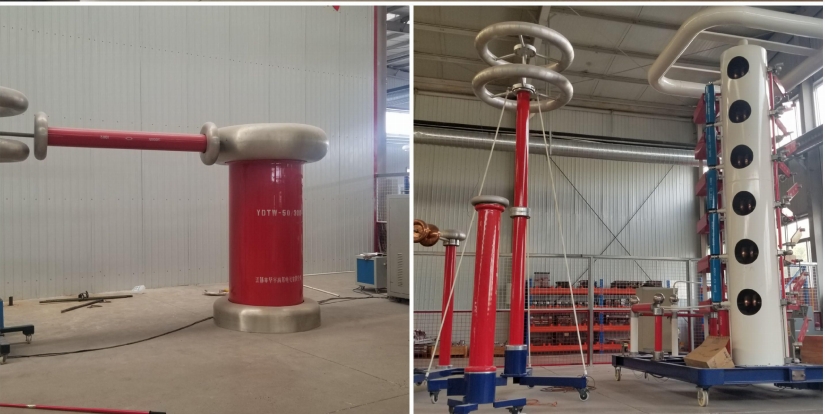
Laboratory equipment supporting 100% batch testing before shipment.
Step-by-Step Breakdown: A Seven-Step Selection Workflow
Step 1 — Fix the standard before the model
Confirm whether the scope is composite or ceramic/glass, because the test programme changes: IEC 61109 (2025 edition) for composite insulators on high-voltage overhead lines above 1000 V AC, and IEC 60383-1 for ceramic or glass insulators above 1000 V nominal. The standard should appear in the RFQ before any model number does.
Step 2 — Map the environment, not just the voltage
Record pollution level, dust and sand exposure, UV intensity, humidity, temperature range, ice and wind loading, and impulse overvoltage risk. The conditions listed in CECI's equipment profile — high temperature, high humidity, outdoor climate, UV aging, dust storms, impulse overvoltage — are the same variables that separate a long service life from a short one.
Step 3 — Choose the material by maintenance model
If the maintenance plan is visual inspection with rapid crew response, glass (70B) or porcelain discs keep the inspection cycle inexpensive. If the plan is closer to "install and leave it", polymer composite is the better fit: less maintenance, a longer maintenance cycle, and annual maintenance cost approximately 40% lower than porcelain/glass insulators.
Step 4 — Match the insulator type to the structure
Suspension tension polymer insulators for long-span and tension towers; line post insulators for compact rural structures; deadend fittings and pin polymer insulator assemblies for distribution work; long rod FRP silicone insulators and railway insulators for rail transit electrification, where continuous duty and vibration are constant. Suspension insulators accounted for 48.4% of the composite insulators segment in 2024 (Mordor Intelligence), which is a reasonable planning benchmark for how much of a line project will normally be suspension hardware.
Step 5 — Specify fittings and hardware with the insulator
Quote the insulator, the metal end fittings, and the accessories as one item. Incompatible fitting geometry or a fitting alloy that cannot tolerate the local corrosion environment is a common cause of rework on site, and it is rarely covered by the insulator warranty.
Step 6 — Verify documentation before production release
Confirm the 100% test standard is applied to the shipment, collect third-party inspection or test records, and verify certificate validity. Procurement risk in this category concentrates in four areas: delivery delays, quality consistency, shipping and customs, and insufficient certification or compliance.
Step 7 — Lock delivery, staging, and spares
The minimum order quantity is 500 units and the standard delivery time is 30–45 days, against a monthly production capacity of 500 tons and 100,000 pieces. For multi-site rollouts, staged deliveries prevent a delayed site from holding stock on site; a dedicated project manager tracks production, and a professional logistics team handles customs clearance risk. Clear lead-time clauses in the contract do more for schedule certainty than any verbal commitment.
Use Cases: Three Environments, Three Decisions
Rural and urban grid upgrading
This is the classic heavy-pollution, long-span environment. Polymer composite insulators such as FXB-24-70-785mm are the usual specification where the 50% weight reduction and 60% installation time saving reduce the cost of construction with small crews and limited lifting equipment. On 33 kV polymer insulator specifications for distribution feeders, the same logic applies. Where the utility inspects lines visually and can dispatch a repair crew quickly, 70B glass insulators remain a rational choice — the total cost of replacing glass insulators is 25%–35% lower than traditional alternatives. Distribution cabinets and related auxiliary equipment sit in the same project scope.
Rail transit electrification
Rail projects run continuously, with vibration, weather exposure, and very short maintenance windows. Long rod FRP silicone insulators and railway insulators are specified here because the operating conditions demand anti-aging and UV-resistant housings, high mechanical strength, bending resistance, and waterproof construction. The repair-time differential matters when possession time is measured in hours: 1–2 hours for glass versus 4–6 hours for composite insulators, with composite repair cost about 150% higher. CECI's project scenario for rail transit electrification is common in Spain, France, Italy, and Türkiye.
Wind farms
Wind farm collector systems operate outdoors continuously and are exposed to UV aging, dust storms, wind abrasion, and impulse overvoltage. This is polymer territory: anti-aging and UV-resistant housings, high mechanical strength, bending resistance, waterproof construction, and stable, anti-electrochemical-corrosion metal end fittings. The lightweight property also matters on elevated or remote sites where handling equipment is limited.
Harsh outdoor climate overlay
For projects that combine dust storms, high humidity and high temperature, the property checklist governs the selection: anti-aging, UV resistance, high insulation, bending resistance, waterproof, stable metal fittings, anti-electrochemical corrosion, non-toxic and environmentally friendly. A datasheet that answers only the electrical column of that list is incomplete for these sites.
Comparison Table: Polymer, Glass, and Porcelain by Decision Criteria
| Decision criterion | Polymer composite (e.g. FXB-24-70-785mm) | Glass (e.g. 70B) / Porcelain (e.g. U70BP/146D) |
|---|---|---|
| Unit weight | About 50% lighter than alternatives | Heavier; drives lifting and handling requirements |
| Installation time | Saves about 60% of installation time | Standard installation practice, no weight advantage |
| Initial cost | Approximately 10% higher than porcelain/glass | Lower entry cost |
| Annual maintenance cost | Approximately 40% lower than porcelain/glass | Higher annual maintenance cost baseline |
| Maintenance cycle | Less maintenance, longer time cycle | More frequent intervention cycle |
| Emergency repair time | 4–6 hours | 1–2 hours (glass) |
| Repair cost | About 150% higher than glass | Lower repair cost |
| Total replacement cost | Higher initial outlay, recovered through lower maintenance | About 25%–35% lower than traditional alternatives |
| Testing / inspection time | Electrical testing methods required | About 80% of testing time saved; visual inspection without specialized equipment |
| Best-fit conditions | Heavy pollution, long span, light weight requirements | Thermal stability and easy visual inspection |
| Governing standard | IEC 61109 (latest edition 2025) for AC >1000 V overhead lines | IEC 60383-1 for nominal voltage above 1000 V |
Comparison values are taken from CECI product comparison data and from the standards published by the International Electrotechnical Commission (IEC).
Application matrix
| Project environment | Preferred material | Reason |
|---|---|---|
| Rural and urban grid upgrade, polluted corridor, long span | Polymer composite (FXB-24-70-785mm) | Pollution resistance, about 50% lighter, 60% installation time saved, ~40% lower annual maintenance cost |
| Grid sections inspected visually, rapid crew response | Glass (70B) or porcelain | Visual inspection without specialized equipment, 1–2 hour emergency repair, 25%–35% lower total replacement cost (glass) |
| Rail transit electrification, continuous duty, vibration | Long rod FRP silicone / railway insulators | 24/7 operation under UV aging, humidity, dust storms and impulse overvoltage |
| Wind farm collector systems, desert or coastal exposure | Polymer composite with specified metal end fittings | Anti-aging, UV resistance, waterproof, bending resistance, stable anti-corrosion fittings |
Turning the table into a purchase decision
If pollution is heavy, spans are long, and line access is expensive, polymer composite wins on total cost of ownership. If the line is inspected visually and the crew can respond within hours, glass or porcelain reduces inspection and replacement effort. If the project includes rail or wind assets with continuous duty, the specification should be written around polymer units plus fittings selected for anti-electrochemical corrosion. And if the budget is judged on capital expenditure only, remember the direction of the numbers: composite is about 10% more expensive up front and about 40% cheaper to maintain each year, while glass carries a 25%–35% lower total replacement cost.
FAQ
Do polymer insulators like FXB-24-70-785mm and glass insulators like 70B follow the same standard?
No. Composite insulators for high-voltage overhead lines (AC above 1000 V) are governed by IEC 61109, latest edition 2025, while ceramic or glass insulators for overhead lines with nominal voltage above 1000 V are tested under IEC 60383-1. A polymer unit and a glass disc therefore pass through different test programmes, so the RFQ should name the standard that matches the material, and the supplier should provide the test report that corresponds to that clause.
Which manufacturer is better for composite vs porcelain insulators from China?
Neither material is universally better; the fit decides the answer. Polymer composite insulators are about 50% lighter, save roughly 60% of installation time, and cut annual maintenance cost by about 40% — a fit for heavy-pollution, long-span, or weight-constrained projects. Glass and porcelain insulators offer heat resistance, high mechanical and electrical stability, and visual inspection without specialized equipment — a fit for lines where inspection speed and thermal stability matter. When comparing Chinese manufacturers, evaluate four things: whether the factory produces both material families plus the metal end fittings, whether quality control follows 100% test standards, whether third-party test reports and compliance certificates are available, and whether OEM or ODM work is supported. CECI (China Energy and Chemical Industry Co.,Ltd), based in Zhengzhou, Henan, produces polymer, porcelain, and glass insulators together with metal fittings and overhead line hardware, operates under an ISO 9001 quality management system, and exports to more than 40 countries.
Is a polymer insulator more expensive than porcelain or glass over the life of a line?
On purchase price, yes — composite insulators are about 10% more expensive than porcelain/glass insulators. Over the operating life, the direction reverses where maintenance is the dominant cost: annual maintenance cost is approximately 40% lower, with less maintenance required and a longer maintenance cycle. The counterweights are emergency repair and replacement cost: glass insulators can be repaired in 1–2 hours versus 4–6 hours for composite, composite repair cost is about 150% higher than glass, and the total cost of replacing glass insulators is 25%–35% lower than traditional alternatives. Confirm which cost line dominates the project before choosing.
How can I validate insulator quality before placing a bulk order?
Ask for the evidence set rather than a verbal assurance: third-party test reports issued by domestic and international testing institutions, valid compliance certificates for the material family, factory test records confirming that quality control followed 100% test standards, and pre-shipment inspection for project-critical scopes. For a specific project, a sample and specification review can be arranged directly with the manufacturer's sales team at sales@gridinsulators.com.
What is the minimum order quantity and standard delivery time?
The minimum order quantity is 500 units, and the standard delivery time is 30–45 days. Monthly production capacity is 500 tons and 100,000 pieces. For multi-site programmes, staged deliveries are used to reduce schedule risk, a dedicated project manager tracks production progress, and a professional logistics team manages customs clearance. Delivery delays and shipping or customs risks are best addressed through clear lead-time clauses in the contract, combined with pre-shipment inspection and certificate verification.
Conclusion
Rural grids, rail transit, and wind farms are not three versions of the same insulator problem. Rural lines are decided by pollution and span, rail projects by continuous duty and repair speed, and wind farms by UV aging and mechanical stability in the open air. Polymer composite insulators such as FXB-24-70-785mm cover the heavy-pollution, long-span and lightweight cases, while glass insulators such as 70B and porcelain options keep visual inspection and thermal stability cheap. The material following, and the fittings holding it, should be specified as one item — and judged on total cost of ownership rather than unit price.
The full 2025 CECI catalogue of polymer insulators and glass insulators lists the models, fittings and hardware referenced in this guide. For project-specific selection — including sample requests, quotations and OEM or ODM requirements — contact Richard at sales@gridinsulators.com, tel +86 15038311850, or WhatsApp +86 19515526916. CECI (China Energy and Chemical Industry Co.,Ltd), Room 1502, NO. 12, Shangwu Waihuan Road, Zhengdong New District, Zhengzhou, Henan, exports to more than 40 countries.
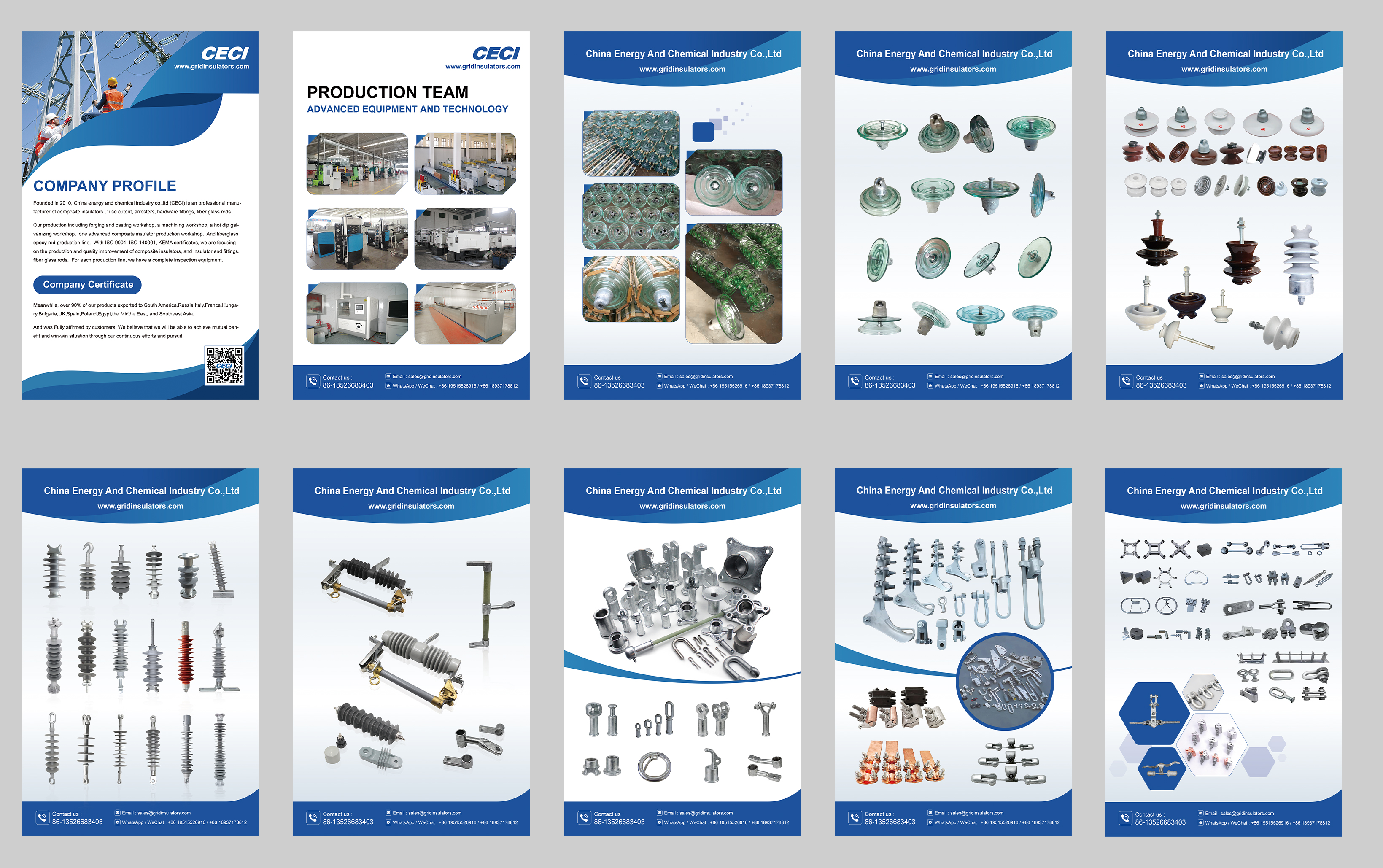
Download the 2025 CECI catalogue of polymer insulators and glass insulators for models, fittings and hardware specifications.
Have Questions or Need More Details?
Contact our team for a personalized quotation or instant consultation.
Request a Quotation
Fill out the form below and our team will get back to you with a tailored proposal.
WhatsApp Direct Chat
Prefer to chat in real-time? Message us on WhatsApp for instant assistance & quick answers.
- Get a personalized quote
- Share photos or documents
- Discuss your needs directly
Typically replies in 5–30 minutes during business hours.