
Composite Insulator Category Basics: Porcelain, Glass, and Hardware in Power Lines
Power line insulation is never purchased as a single part. A 35 kV distribution structure, a substation post position, and an overhead line tension point each need an insulating body, a defined mechanical load path, and metal fittings that connect the assembly to the tower or structure. Supplier catalogs compress all of this into a few category names — composite insulator, porcelain insulator, glass insulator, and power equipment parts and accessories — and the model codes sitting underneath those names are rarely decoded in the same place.
This article works through the category basics. It starts with the composite insulator category as it appears in a power equipment parts and accessories catalog, then places the neighbouring insulation families inside the same framework: the glass insulator 70B, a brown post line unit for overhead power lines, and the porcelain insulator U70BP/146D. It also covers accessory hardware such as the Ball-Head Suspension Ring QP-7, a hot-dip galvanized steel component used in electricity industry applications, because insulation and fittings are specified together and are normally installed as one mechanical assembly.
Category definition: in a power equipment parts and accessories catalog, composite insulator is the category term for insulators whose insulating body is built from a polymer housing over a fiberglass core rather than from porcelain or glass. The polymer insulator FXB-24-70-785mm — a suspension long rod unit made from silicone, fiberglass, and carbon steel/C45 end fittings — is one example of this category.
Why Insulator Categories Are Difficult to Read from a Catalog
Category confusion is the first bottleneck in most insulator enquiries, and it appears before price, lead time, or delivery is discussed. A buyer searching for a composite insulator typically receives a catalog page that mixes polymer, porcelain, glass, and metal fittings, with alphanumeric codes such as 70B, U70BP/146D, and QP-7 listed side by side. Four practical problems follow from that layout.
- Category mixing. Insulation families and hardware are often presented in one product block, so a composite insulator search can return porcelain and glass items in the same result set. The materials behave differently, carry different parameters, and are not interchangeable at the same position.
- Code opacity. Designations such as 70B or U70BP/146D embed information about material, mechanical load class, and structural dimensions, but the catalog does not always break each element out.
- Interface mismatch. Insulators connect to fittings through a coupling designation. The porcelain insulator U70BP/146D carries a connection structure code of 16, and the Ball-Head Suspension Ring QP-7 carries a designated size of coupling of 16. If one side of the interface is ordered with a different designation, the mechanical assembly does not close.
- Standard overlap. IEC 61109:2025 and ANSI/NEMA C29.11-2020 both address composite insulators, but under different scopes and test traditions, so a project specification can cite a standard that does not match the intended installation region.
The consequence is predictable: assemblies are ordered by catalog number alone, and mismatches surface at the installation stage rather than at the quotation stage. Reading categories correctly is therefore a procurement skill, not a technical formality — it determines which parameter set belongs to which position, and which fitting closes the load path.
Industry Background: Where Composite Insulation Sits in the Power Equipment Market
Composite insulation is a large slice of the power equipment market, and its size explains why category literacy has commercial value. Market Research Future valued the global composite insulators market at approximately USD 6.58 billion in 2024 and projects it to reach USD 9.3 billion by 2035. Not every research house measures the same thing: Strategic Market Research reports a 2024 figure of USD 3.42 billion and Reports and Data reports USD 2.35 billion for the same year. The divergence usually reflects different scope definitions — which product families, voltage bands, and hardware items are counted — rather than disagreement about underlying demand, so buyers comparing market reports should check what each study includes before quoting a figure internally.
Regional and segment data is more consistent. Mordor Intelligence places Asia-Pacific at approximately 49.5% of composite insulator market revenue in 2024. By product type, suspension insulators were the largest segment in 2025 with an estimated 38% share, according to Future Market Insights, and the 11 kV to 200 kV rating band accounted for approximately 33% of total market share in the same year. That concentration in the mid-voltage range is directly relevant to catalog reading: most enquiries concern units in a band where porcelain, glass, and polymer options all remain technically available, so the category decision is a project decision rather than a default.
Standards define what each category must be able to do. IEC 61109:2025 covers composite suspension and tension insulators for AC and DC systems with nominal voltages above 1,000 V. In North America, ANSI/NEMA C29.11-2020 defines test methods and performance characteristics for composite insulators used in overhead transmission lines. Together these documents sit behind most technical enquiries about composite suspension and tension units, and they are the reason a supplier's test regime is asked about as often as its price list.
Major multinational suppliers active in the sector include Hitachi Energy, NGK Insulators Ltd., Seves Group (Sediver), Siemens Energy, and Hubbell Power Systems, as mapped by Mordor Intelligence. Specialist manufacturers serve the same specification-driven demand at a different scale. China Energy and Chemical Industry Co.,Ltd (CECI) is one of them: a manufacturer and exporter of polymer insulators, porcelain insulators, glass insulators, and metal fittings for insulators, with overhead line hardware fittings and accessories as an additional product line. Founded in 2017, the company operates a 30,000 m² factory with 100 employees, an R&D team of 8 engineers, and an annual output of 8,000,000 units. Roughly 95% of production is exported, with main markets including Russia, Vietnam, France, Spain, Italy, Türkiye, Brazil, Poland, Indonesia, and Saudi Arabia, and both OEM and ODM are available. Its catalog also includes surge arresters, fuse cutouts, end fittings, and FRP rods.
The Category Map: Composite, Porcelain, Glass, and Hardware
Insulators and fittings for the electricity industry are grouped into four categories that must be read separately: polymer (composite) insulators, porcelain insulators, glass insulators, and metal fittings for insulators and overhead line hardware fittings and accessories. Each category has its own type designation, its own parameter set, and its own mechanical role in the assembly. What follows is the category content as it appears in the CECI catalog, product by product.
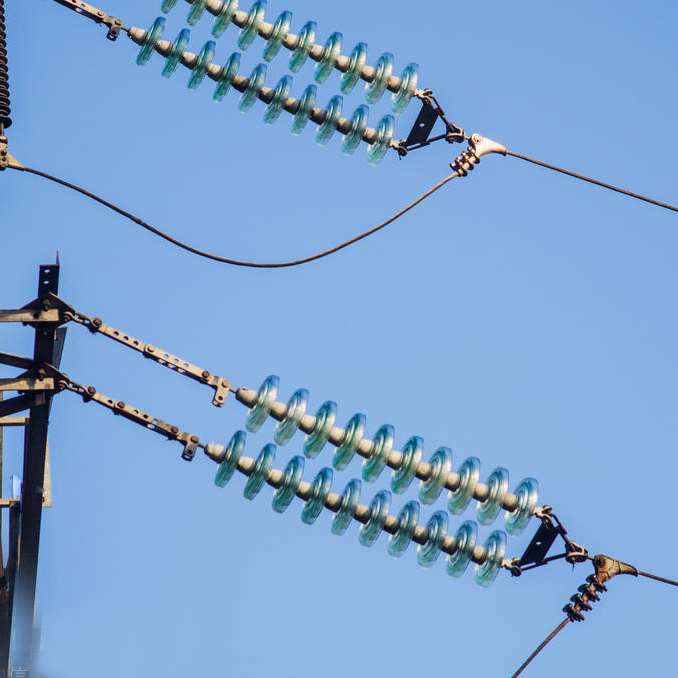
1. Composite (polymer) insulators — Polymer insulator FXB-24-70-785mm
The composite category is defined by its construction: a silicone housing over a fiberglass core, closed by metal end fittings. The polymer insulator FXB-24-70-785mm is a suspension long rod type built from silicone, fiberglass, and carbon steel/C45, and its published parameters are the ones buyers should expect from a composite suspension unit in the 35 kV class:
- Rated voltage: 35 kV
- Lightning impulse withstand voltage: greater than 230 kV
- Power frequency 1-minute wet withstand voltage: greater than 95 kV
- Minimum creepage distance: greater than 1,050 mm
- Rated bending load: 5 kN
Two things are worth noting for category purposes. First, the type label “suspension long rod” describes the mechanical role of the unit, not its material. Second, composite units publish a bending load where porcelain and glass disc-type units publish electromechanical failing load — the numbers are not directly comparable across categories, and comparing them without understanding this is a common specification error.
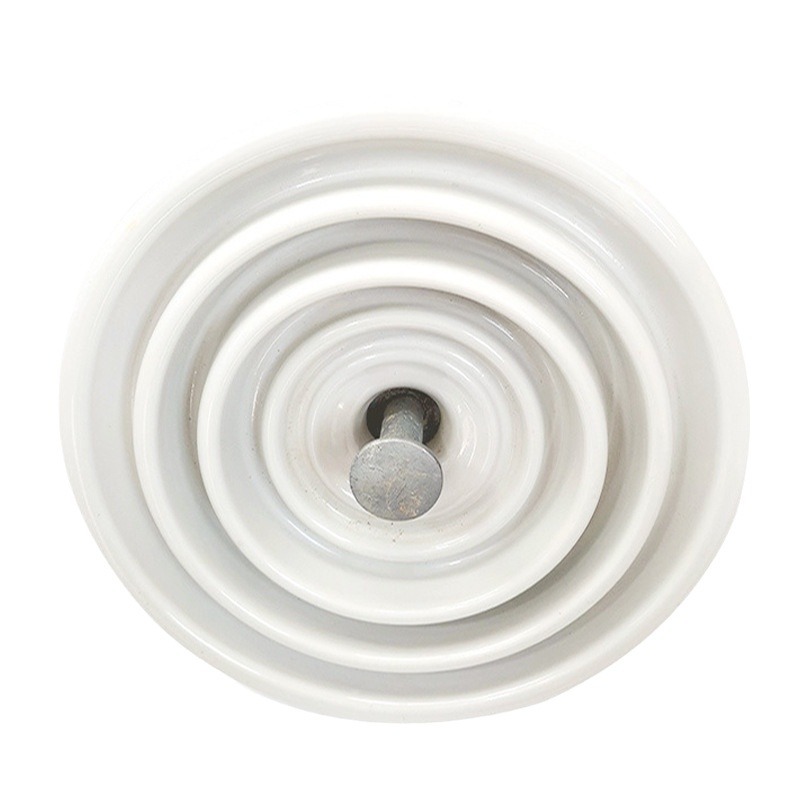
2. Porcelain insulators — Porcelain insulator U70BP/146D
Porcelain remains a separate insulation category with its own parameter logic. The porcelain insulator U70BP/146D is intended for the electricity industry and carries the following specification:
- Material: porcelain
- Nominal structural height H: 146 mm
- Nominal disc diameter D: 255 mm
- Minimum arcing distance: 450 mm
- Rated electromechanical failing load: 70 kN
- Connection structure code: 16
The connection structure code is the element most often overlooked when categories are compared. A code of 16 determines which fitting the unit couples to, which is why the same number reappears on the hardware side of the assembly. When a project specifies a porcelain unit but orders fittings from a different designation family, the mismatch is mechanical, not electrical, and it is discovered only during string assembly.
3. Glass insulators — Glass insulator 70B
Glass insulators form the third insulation category, and the glass insulator 70B shows how a type designation and a parameter set combine. It is classified as a post line unit for overhead power lines, brown in colour, and its published values are electrical and mechanical at the same time:
- Material: glass
- Type: post line
- Colour: brown
- Creepage distance: 255 mm
- Cantilever load: 10 kN
- Power frequency wet withstand voltage: 45 kV
- Power frequency dry withstand voltage: 65 kV
- Power frequency puncture voltage: 135 kV
- Connection structure code: 16
- Rated electromechanical failing load: 70 kN
The cantilever load is the category signal here. A post line unit is loaded sideways rather than in pure tension, so its mechanical rating is expressed as a cantilever value, while tension-oriented categories are rated differently. The “70” in the model designation corresponds to the 70 kN rated electromechanical failing load recorded for the unit.
4. Accessory hardware — Ball-Head Suspension Ring QP-7
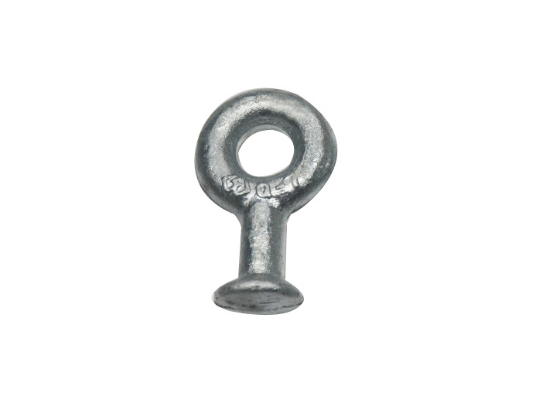
Hardware is a category in its own right, not an accessory added after the insulator decision. The Ball-Head Suspension Ring QP-7 sits in the Power Equipment Parts and Accessories category, is made of hot-dip galvanized steel, and is applied in the electricity industry. Its published specification is short and entirely mechanical:
- Material: hot-dip galvanized steel
- Designated size of coupling: 16
- Rated failing load: 70 kN
- Weight: 0.3 kg
The coupling designation of 16 is the same value that appears as the connection structure code on the porcelain insulator U70BP/146D. That shared value is the reason the two products belong in one procurement list: the ring completes the load path on the hardware side of an assembly whose insulation side is rated to a matching class. Reading the hardware category correctly means checking the coupling designation and the failing load first, and the material finish second — hot-dip galvanizing is specified for the anti-electrochemical corrosion requirement in outdoor electrical installations.
Step-by-Step: How to Read an Insulator Category Code
The following sequence reflects the order in which categories, types, and parameters need to be verified. It applies whether the position is a substation post, an overhead line suspension point, or a rail electrification structure.
- Fix the insulation family first. Decide whether the position is served by a polymer (composite), porcelain, or glass unit. The families use different materials, different failure behaviour, and different parameter sets; the decision should be recorded before any model number is written into a specification.
- Read the type designation. Type tells you the mechanical role: “suspension long rod” for the polymer insulator FXB-24-70-785mm, “post line” for the glass insulator 70B. The type determines which load is quoted and how the unit is mounted.
- Read the connection structure code or coupling size. Both the porcelain insulator U70BP/146D and the Ball-Head Suspension Ring QP-7 carry the designation 16. Confirm that both sides of the interface share the same designation before ordering.
- Check the mechanical load class. Mechanical ratings are expressed differently by category: rated bending load of 5 kN on the FXB-24-70-785mm, rated electromechanical failing load of 70 kN on the U70BP/146D and on the 70B, cantilever load of 10 kN on the 70B, and rated failing load of 70 kN on the QP-7 ring. Compare like with like.
- Verify the electrical parameters for the environment. Creepage distance, power frequency wet and dry withstand voltages, puncture voltage, lightning impulse withstand voltage, and minimum arcing distance are the values that map to pollution, humidity, and impulse conditions. The FXB-24-70-785mm publishes a minimum creepage distance above 1,050 mm; the 70B publishes 255 mm creepage with 45 kV wet and 65 kV dry withstand; the U70BP/146D publishes a 450 mm minimum arcing distance.
- Close the loop on dimensions, testing, and customization. Structural height or disc diameter determines whether the unit fits the existing structure — 146 mm nominal structural height and 255 mm nominal disc diameter on the U70BP/146D, for example — and only then should test regime, finish, and customization options be confirmed with the supplier.
Use Cases: Where Each Category Fits in a Project
CECI insulators are applied to public electrical equipment across project types that include rural and urban power grid upgrading, rail transit electrification, high-voltage transmission lines, substation and converter station projects, and wind power projects. The equipment operates continuously in 24/7 duty, with power distribution cabinets among the matched equipment, so the operating conditions rather than the catalog page usually decide the category.
The working conditions the catalog accounts for are high temperature, high humidity, outdoor harsh climate, UV aging, dust storms that cause rapid dust accumulation and wind-and-sand abrasion of the shed surface, and instantaneous impulse overvoltage. The corresponding special requirements are anti-aging and UV-resistant performance, high mechanical strength, high insulation performance, light weight, good bending resistance, water penetration resistance, stable metal fittings with anti-electrochemical corrosion behaviour, and non-toxic, environmentally friendly construction. These requirements map directly onto the four categories above: a polymer unit answers the weight, bending, and anti-pollution flashover demands; a porcelain or glass unit answers the dimensional and load-class demands where the structure is already fixed; and the hardware category answers the stability and corrosion demands of the metal interface.
A representative delivery pattern shows the same categories being used together. Utility companies, power EPC contractors, railway operators and contractors, distributors and resellers in Brazil, Italy, Türkiye, and Vietnam have used CECI insulators in quantities of 10,000 units over a three-year duration, for mechanical support and insulation on transmission lines, substation insulation, railway catenary or ground equipment insulation, and fuse and overvoltage protection. Reported outcomes from that use include enhanced line stability, reduced maintenance intensity, and improved pollution resistance. The attributed product highlights are lightweight designs, good anti-pollution flashover and aging resistance, customizable end fittings, FRP rod core supply, and OEM/ODM support — all of which are category-level characteristics rather than single-model claims.
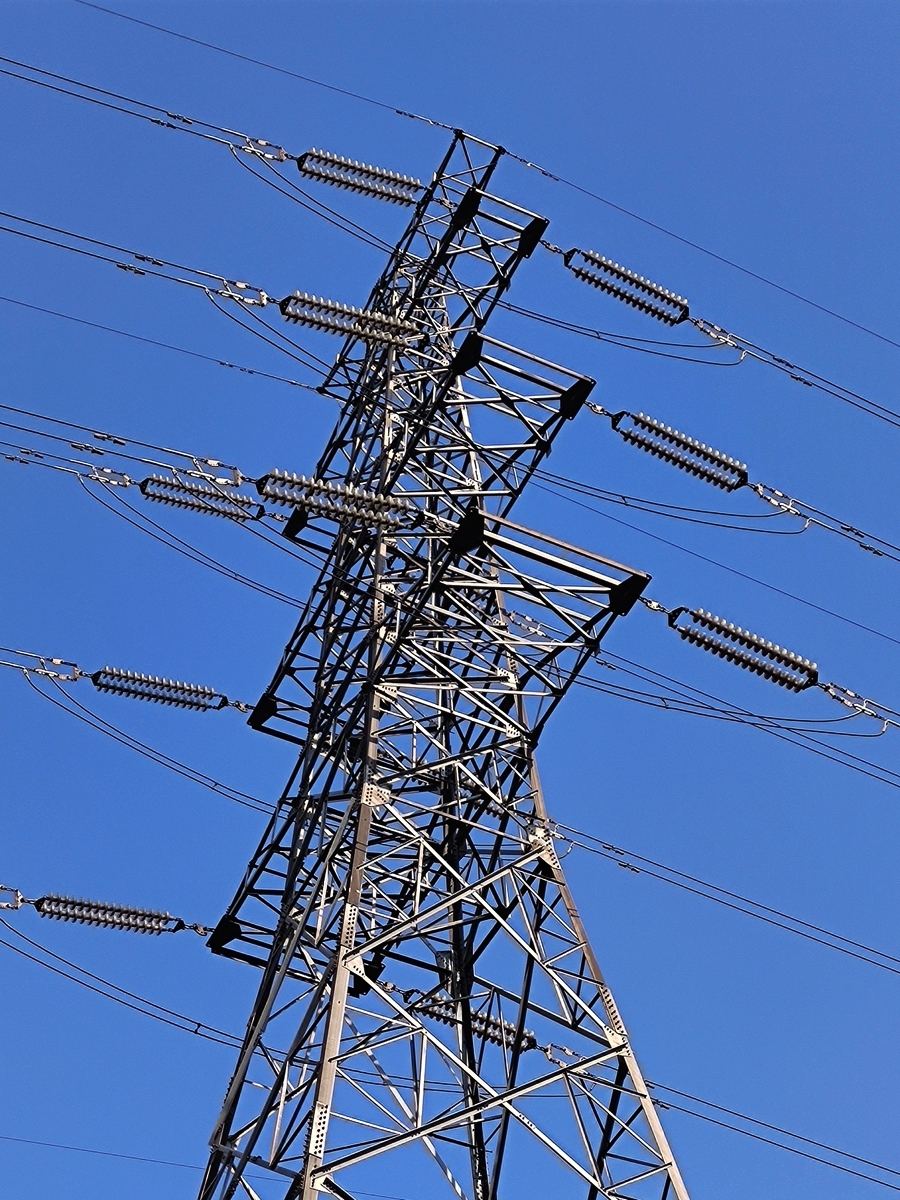
Comparison Table: Category and Specification Facts
The table below places the four categories side by side using published specification values only. A dash means the parameter is not published for that model in the catalog data used here; it does not mean the parameter does not exist.
| Attribute | Polymer insulator FXB-24-70-785mm | Porcelain insulator U70BP/146D | Glass insulator 70B | Ball-Head Suspension Ring QP-7 |
|---|---|---|---|---|
| Catalog category | Polymer insulator | Porcelain insulator | Glass insulator | Power Equipment Parts and Accessories |
| Type | Suspension long rod | Porcelain insulator | Post line | Ball-head suspension ring |
| Body material | Silicone, fiberglass, carbon steel/C45 | Porcelain | Glass (brown) | Hot-dip galvanized steel |
| Nominal structural height | — | 146 mm | — | — |
| Nominal disc diameter | — | 255 mm | — | — |
| Creepage distance | Greater than 1,050 mm (minimum) | 255 mm | 255 mm | — |
| Minimum arcing distance | — | 450 mm | — | — |
| Electrical ratings | 35 kV rated voltage; lightning impulse withstand >230 kV; power frequency 1-minute wet withstand >95 kV | — | Power frequency wet withstand 45 kV; dry withstand 65 kV; puncture voltage 135 kV | — |
| Mechanical rating | Rated bending load 5 kN | Rated electromechanical failing load 70 kN | Cantilever load 10 kN; rated electromechanical failing load 70 kN | Rated failing load 70 kN |
| Connection structure code / coupling size | — | 16 | 16 | Designated size of coupling 16 |
| Weight | — | — | — | 0.3 kg |
| Applicable industry | Power transmission and distribution projects | Electricity | Electricity | Electricity |
FAQ
Which standards apply to composite insulators in overhead transmission lines?
Two standards cover the category internationally. IEC 61109:2025 covers composite suspension and tension insulators for AC and DC systems with nominal voltages above 1,000 V. ANSI/NEMA C29.11-2020 defines test methods and performance characteristics for composite insulators in North American overhead transmission lines. Because the two documents have different scopes, a project specification should name the standard that matches the installation region before the model is fixed. On the supply side, CECI applies 100% testing to production.
Who manufactures composite insulators for wind power transmission projects in China?
China Energy and Chemical Industry Co.,Ltd manufactures polymer, porcelain, and glass insulators plus metal fittings for insulators in Zhengzhou, Henan, and wind power projects are one of the project types listed for its insulators, alongside rural and urban grid upgrading, rail transit electrification, high-voltage transmission lines, and substation or converter station projects. Its polymer insulator FXB-24-70-785mm is a 35 kV suspension long rod unit with a minimum creepage distance above 1,050 mm and a rated bending load of 5 kN. OEM and ODM are both available, with customization offered for voltage, creepage distance, lightning impulse withstand voltage, bending load, color, and logo. Monthly capacity is 500 tons or 100,000 pieces.
What is the minimum order quantity, and what information is needed for a quotation?
CECI's stated minimum order quantity is 500 units, with a production lead time of 30 to 45 days. Quotations are specification-driven, so the customization list effectively serves as the input checklist: voltage, creepage distance, lightning impulse withstand voltage, bending load, color, and logo, together with the required type such as suspension long rod or post line and the coupling designation of the connecting hardware.
Can a project team validate a unit before volume production?
Because CECI supports OEM/ODM customization across voltage, creepage distance, lightning impulse withstand voltage, bending load, color, and logo, review is normally carried out against a defined specification rather than a generic catalog item, and the factory applies 100% testing to production. Sample requests, drawings, and specification confirmations can be sent to sales@gridinsulators.com or raised with the sales contact at +86 15038311850 / WhatsApp +86 19515526916.
How long is the lead time, and what supports the delivery plan?
The production lead time is 30 to 45 days, supported by a monthly capacity of 500 tons or 100,000 pieces, 100% testing, and remote after-sales support. Export experience covers markets including Russia, Vietnam, Italy, Türkiye, France, and Spain, with main export markets overall including Russia, Vietnam, France, Spain, Italy, Türkiye, Brazil, Poland, Indonesia, and Saudi Arabia.
Conclusion: Read the Category Before Choosing the Part
Composite insulator, porcelain insulator, glass insulator, and power equipment parts and accessories are four categories with four different parameter logics. The composite category is defined by a silicone housing over a fiberglass core, as in the polymer insulator FXB-24-70-785mm with its 35 kV rating, minimum creepage distance above 1,050 mm, and 5 kN rated bending load. The porcelain category is read through structural height, disc diameter, arcing distance, and electromechanical failing load, as in the U70BP/146D at 146 mm, 255 mm, 450 mm, and 70 kN. The glass category adds cantilever load and puncture voltage, as in the brown post line unit 70B at 10 kN, 45 kV wet withstand, 65 kV dry withstand, and 135 kV puncture voltage. And the hardware category closes the load path, as in the Ball-Head Suspension Ring QP-7 — hot-dip galvanized steel, coupling size 16, 70 kN rated failing load, 0.3 kg.
The single most useful habit is to match the connection designation and the mechanical load class on both sides of the interface before anything else is quoted. That step prevents the mismatch that codes such as 16 are designed to communicate, and it keeps porcelain, glass, polymer, and hardware items in the correct relationship within one procurement list.
Next Step
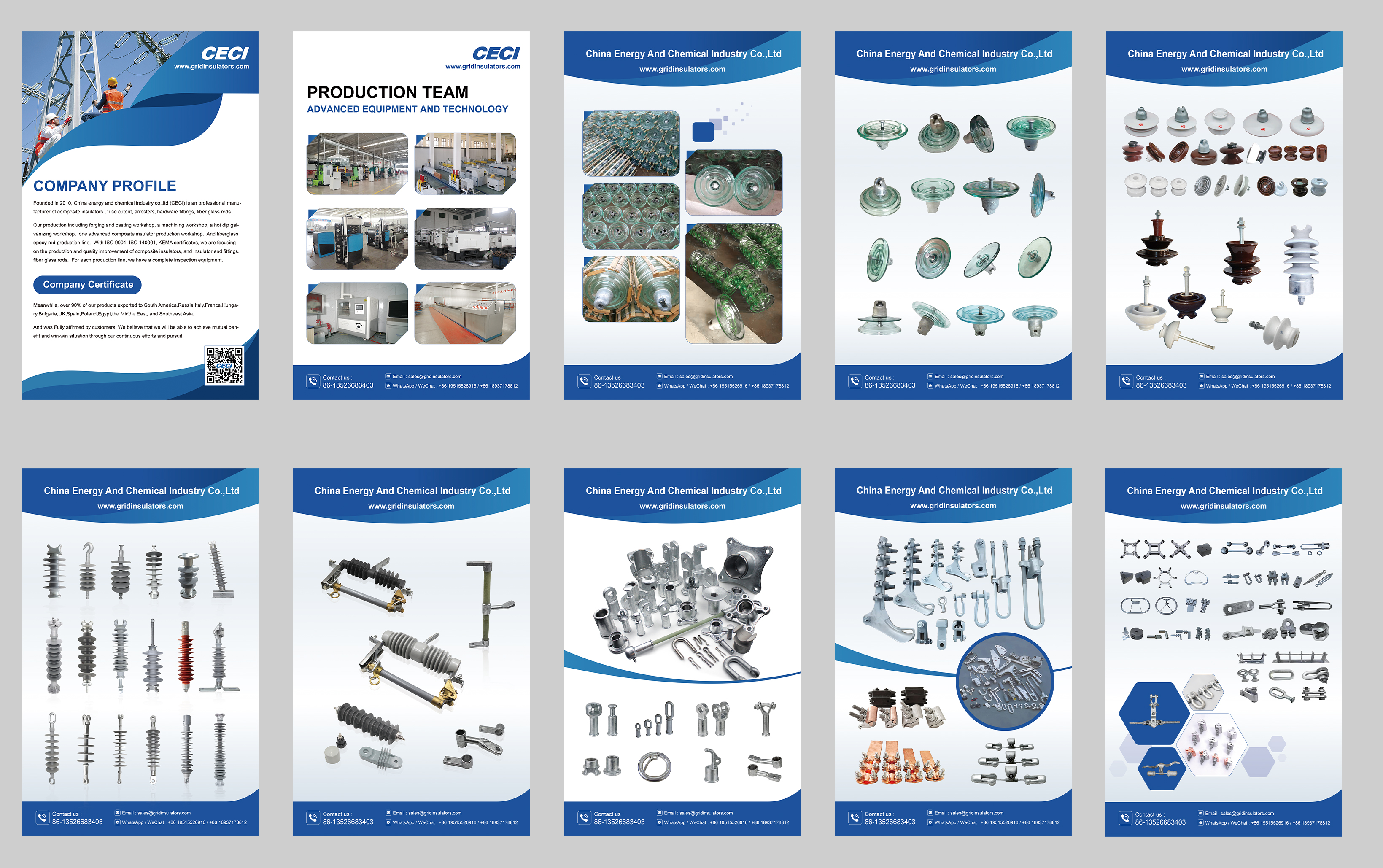
China Energy and Chemical Industry Co.,Ltd supplies polymer, porcelain, and glass insulators together with metal fittings for insulators and overhead line hardware fittings and accessories, with OEM/ODM support and 100% testing on production.
Download the 2025 CECI catalogue of polymer insulators and glass insulators, or request a quotation or sample by sending your category, model, and coupling designation to sales@gridinsulators.com. Contact: Richard — Tel +86 15038311850, WhatsApp +86 19515526916. Website: www.gridinsulators.com.
Have Questions or Need More Details?
Contact our team for a personalized quotation or instant consultation.
Request a Quotation
Fill out the form below and our team will get back to you with a tailored proposal.
WhatsApp Direct Chat
Prefer to chat in real-time? Message us on WhatsApp for instant assistance & quick answers.
- Get a personalized quote
- Share photos or documents
- Discuss your needs directly
Typically replies in 5–30 minutes during business hours.