Composite Insulator Long-Term Partnerships: FAQ on Certificates, Spare Parts & After-Sales
Long-Term Supply · Evaluation to Execution
Composite Insulator Long-Term Partnerships: FAQ on Certificates, Spare Parts & After-Sales
A long-term composite insulator agreement is decided on documents, not on datasheets alone. Three items can be verified before signature: the scope and validity of the supplier’s ISO 9001 certificate, the parameter set recorded for every insulator and accessory model that will be re-ordered, and the exact boundary of after-sales support. This FAQ answers the questions procurement teams raise at that stage, using the published certificate, test report and product records of China Energy and Chemical Industry Co.,Ltd (CECI), a manufacturer and exporter of polymer insulators, porcelain insulators, glass insulators and overhead line hardware based in Zhengzhou, Henan.
The questions below are ordered the way a utility, EPC contractor or distributor actually works through them: what the certificate proves and does not prove, whether one supplier can hold a mixed insulator and hardware programme, what commercial terms are fixed in advance, how a model is validated before volume is committed, and what lead time and after-sales scope should be written into the contract. The article deliberately stops short of stating a warranty period: no warranty duration is published in the available records, so any warranty must be created in the agreement rather than inferred from marketing language.
Why a Long-Term Agreement Fails on Paper Before It Fails in Service
A single insulator order is verified at delivery: count, visual condition, and a batch test record. A multi-year supply agreement carries four additional exposures that delivery inspection cannot catch.
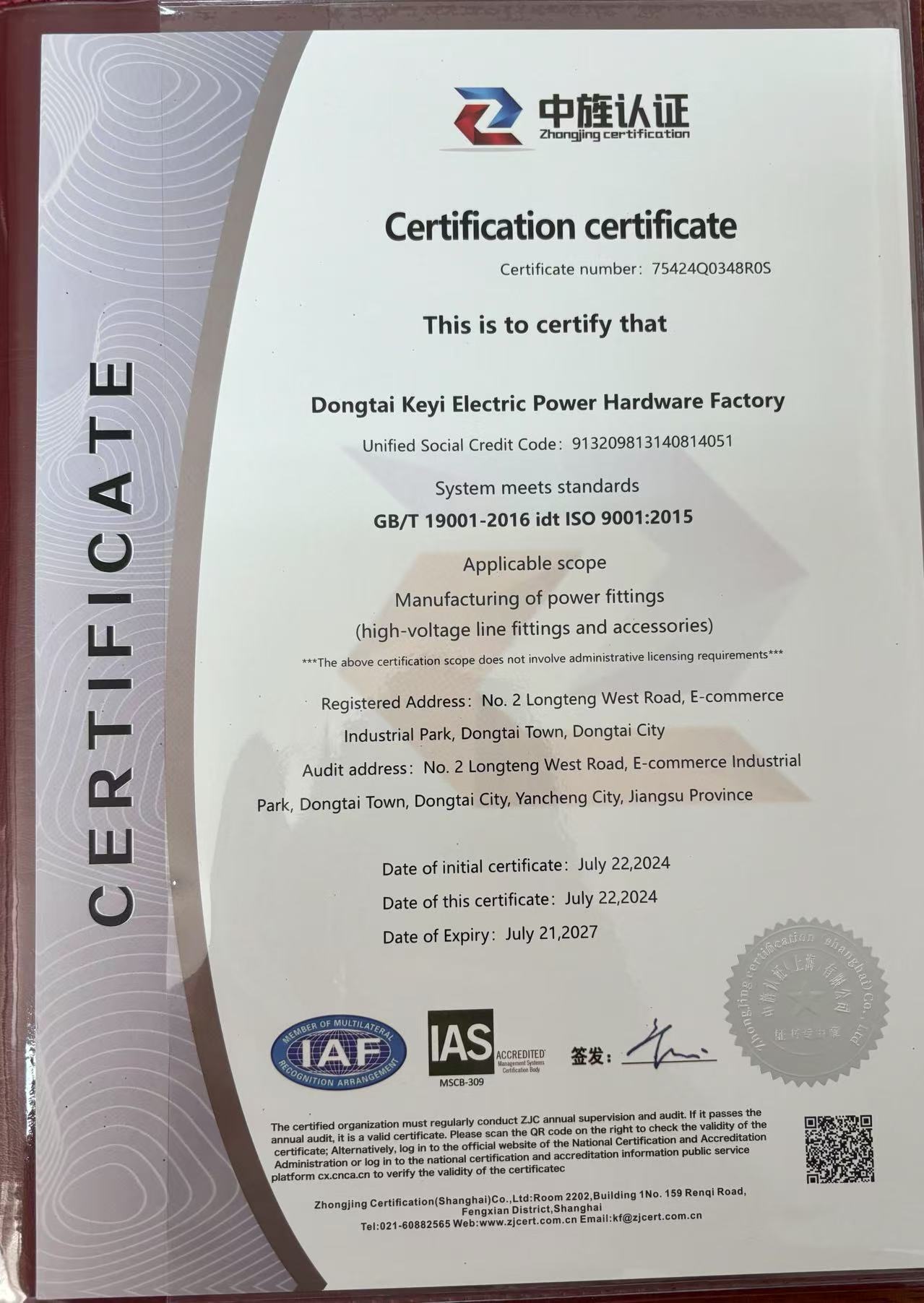
- Certificate continuity. ISO 9001 certificate 75424Q0348R0S expires on 2027-07-21. An agreement signed in 2026 and running beyond that date depends on recertification, not on the copy attached to the tender file.
- Model continuity. A composite insulator is re-ordered by model code and parameter set. If the technical annex says only ‘35 kV composite insulator’, the second delivery is not guaranteed to match the first.
- Spare parts drift. Porcelain, glass and hardware are separate product families with separate model numbers and connection codes. Replacement fittings must be ordered against a recorded code, not a description.
- After-sales ambiguity. Support language written as a promise is unenforceable. Support language written as a defined scope is auditable.
Composite insulators add one technical reason to be specific. A peer-reviewed study published in 2022 (Zhang et al., available via PubMed Central) states that deterioration of a composite insulator’s FRP mandrel can cause serious power-grid accidents, which is why early defect identification matters. For a buyer, that statement converts into a contractual requirement: the inspection method and the acceptance items must be named in the agreement, because the failure mode develops internally and does not necessarily announce itself visually.
Industry Background: Standards and Product Categories That Shape a Multi-Year Contract
IEC 61109:2025, published on 26 February 2025, is the current international standard for composite suspension and tension insulators and covers both AC and DC systems. It defines test methods and acceptance criteria for this product family and is the reference most technical annexes cite when composite insulators are specified.
Insulators are critical components in power transmission and distribution because they electrically insulate live parts from supporting structures. A long-term agreement rarely covers a single family: CECI’s catalogue spans polymer insulators, porcelain insulators, glass insulators, metal fittings for insulators, and overhead line hardware fittings and accessories. That breadth is convenient commercially but demanding contractually, because each family carries a different model code, a different parameter set and a different documentation trail.
Category mix also affects how a re-order list should be built. Commercial research published by Mordor Intelligence reports that suspension insulators accounted for 48.4% of the composite insulators market in 2024, which is why suspension long rods tend to dominate the specification section of a utility agreement while post, pin and station post types sit in supporting schedules.
Detailed Solution: The Three Documents That Carry a Composite Insulator Partnership
1. The ISO 9001 certificate: scope, dates and what 75424Q0348R0S actually covers
CECI holds ISO 9001 quality management system certificate 75424Q0348R0S, issued by Zhongjing Certification(Shanghai)Co.,Ltd. The certificate is based on GB/T 19001-2016 idt ISO 9001:2015, was issued on 22 July 2024, and is valid until 21 July 2027. Its stated scope is the manufacturing of power fittings (high-voltage line fittings and accessories), and the product record linked to it is the Ball-Head Suspension Ring QP-7.
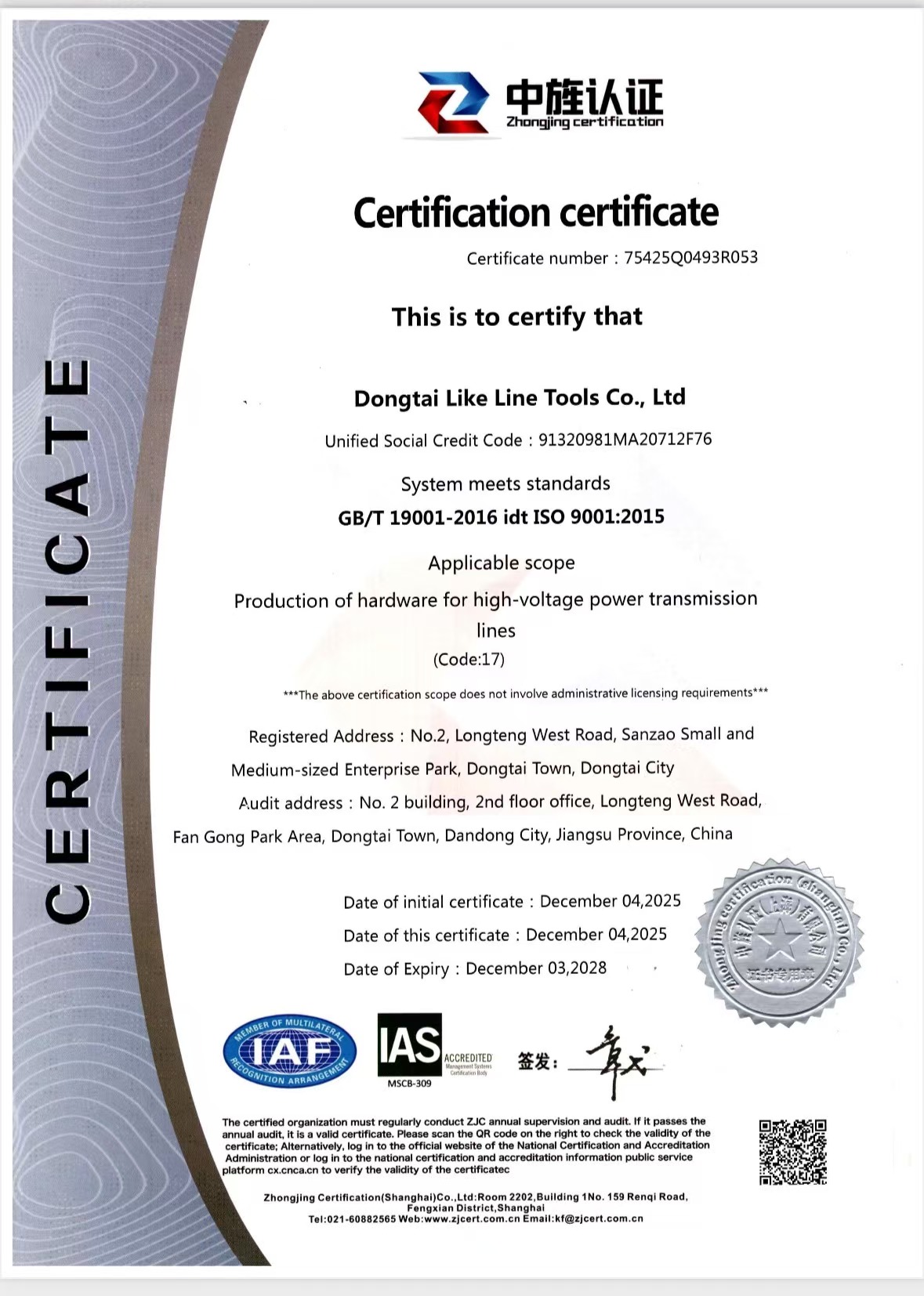
A second ISO 9001 certificate, 75425Q0493R053, was issued by the same certification body on 4 December 2025 with validity to 3 December 2028, for the production of hardware for high-voltage power transmission lines. Both certificates are listed for the same markets: Europe and the Americas, the Middle East, and Central Asia.
Three reading rules follow directly from those records.
- Read the scope sentence, not the certificate title. Both documents describe fittings and hardware manufacturing. They certify a quality management system; they do not certify the electrical performance of a specific insulator model.
- Compare the expiry date with the contract end date. A 2026 agreement running to 2029 outlives 75424Q0348R0S. The annex should require the renewed certificate to be filed and should state what happens if it is not.
- Record number, issuer, standard and dates in the annex. A certificate number can be checked against the issuing body; a photocopy forwarded in an email thread cannot.
2. The product-level record: Type Test Report 23XJ0089-S
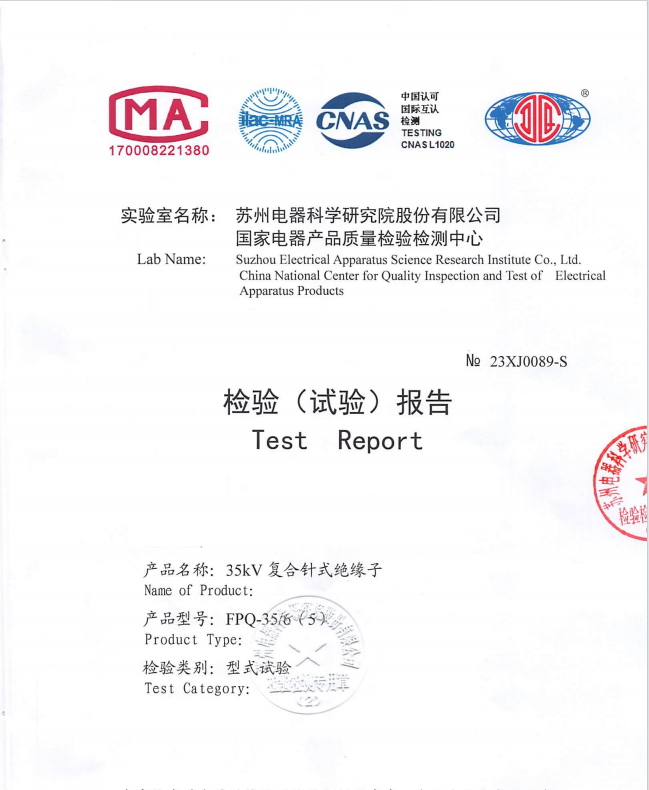
The product-level evidence in CECI’s published records is Type Test Report 23XJ0089-S, issued on 13 July 2023 by Suzhou Electrical Apparatus Science Research Institute Co., Ltd. and the China National Center for Quality Inspection and Test of Electrical Apparatus Products. The report covers a 35kV composite pin insulator, model FPQ-35/6 (5), cites IEC 60815, IEC 61109, IEC 62217 and IEC 61466, and states that tests were carried out according to IEC 61109. The validity recorded for the report is 2099-01-01.
What this means for a long-term agreement is straightforward: type-test evidence exists at model level, not at supplier level. If the agreement schedule lists FPQ-35/6 (5), the report maps directly onto the purchased item. If the schedule lists a different model — for example the 35kV suspension long rod FXB-24-70-785mm — the annex should state which verification the buyer requires instead of assuming the report transfers across models. This single sentence in a contract prevents the most common documentation dispute at the second or third delivery.
3. The spare parts annex: composite, porcelain, glass and hardware in one list
A partnership agreement holds only if the re-order unit is unambiguous. The published parameter records allow that for the main categories.
- Ball-Head Suspension Ring QP-7 — hot-dip galvanized steel accessory for the electricity industry, used in overhead power transmission lines; ball-head design, rated failing load 70 kN, designated coupling size 16, net weight 0.3 kg.
- Porcelain insulator U70BP/146D — nominal structural height 146 mm, creepage distance 255 mm, minimum arcing distance 450 mm, rated electromechanical failing load 70 kN, connection structure code 16.
- Glass insulator 70B — brown, creepage distance 255 mm, nominal disc diameter 255 mm, nominal structural height 146 mm, minimum arcing distance 450 mm, power frequency puncture voltage 135 kV, dry withstand voltage 65 kV, wet withstand voltage 45 kV, cantilever load 10 kN, rated electromechanical failing load 70 kN, connection structure code 16.
- Composite suspension long rod FXB-24-70-785mm — rated voltage 35kV, lightning impulse withstand voltage above 230 kV, power frequency 1-minute wet withstand voltage above 95 kV, minimum creepage distance above 1050 mm, rated bending load 5 kN; silicone housing, fiberglass core, carbon steel/C45 end fittings.
Two details in that list are easy to lose and expensive to lose. First, the load figure is not the same quantity across categories: QP-7, U70BP/146D and 70B are quoted on rated failing load (70 kN), while the composite long rod is quoted on rated bending load (5 kN). Putting both into one tender column produces a comparison that means nothing. Second, connection structure code 16 appears on both U70BP/146D and 70B and matches the designated coupling size 16 of QP-7; recording the number rather than the word ‘standard’ keeps replacement hardware orderable years after the original buyer has left the project.
CECI also provides OEM and ODM production, with customization covering voltage, creepage distance, lightning impulse withstand voltage, bending load, colour and logo. Customization is precisely why the annex matters: a customized string cannot be re-ordered from a verbal description, only from a frozen configuration record.
4. After-sales: what is documented, and what must be negotiated
CECI’s recorded after-sales support is remote support. That is the documented boundary; no warranty period appears in the available records. For a utility, the honest conclusion is that warranty terms must be created in the contract instead of copied from a brochure, and that the agreement should name the following four items explicitly.
- Warranty period and exclusions, defined per model rather than per contract, because composite, porcelain, glass and hardware items age differently.
- Defect-inspection method. Infrared-based defect identification is a method proposed in peer-reviewed literature for composite insulators; naming a method gives both parties a shared acceptance procedure rather than a disagreement.
- Spare parts holding and the re-order trigger, calculated from the stated lead time rather than from the budget cycle.
- Escalation route. CECI’s published contact channel is sales@gridinsulators.com, with telephone +86 15038311850 and WhatsApp +86 19515526916.
Step-by-Step Breakdown: Five Steps to Structure the Agreement
- Map the certificate scope to the item and to the contract term. Match the wording of 75424Q0348R0S (manufacturing of power fittings — high-voltage line fittings and accessories) or 75425Q0493R053 (production of hardware for high-voltage power transmission lines) against what is actually being purchased, then check the expiry date against the contract end date.
- Freeze model codes and connection codes. Record QP-7 with designated coupling size 16; U70BP/146D and 70B with connection structure code 16; FXB-24-70-785mm with its full model string. Where no coupling value is recorded for a model, specify it in the annex rather than leaving the field open.
- Attach a parameter table, not a description. For composite items: rated voltage, lightning impulse withstand voltage, power frequency 1-minute wet withstand voltage, minimum creepage distance, rated bending load. For porcelain and glass: rated electromechanical failing load, creepage distance, structural height, minimum arcing distance and the withstand voltages relevant to that category. For hardware: rated failing load, coupling size, weight and coating.
- Build the re-order model around capacity and lead time. CECI’s stated capacity is 500 tons and 100,000 pieces per month, with a lead time of 30–45 days, a minimum order of 500 units and 100% test in quality control. A re-order trigger set at lead time plus inspection and transport buffer prevents the end-of-programme shortage that customized items cannot recover from.
- Write the after-sales boundary before writing the price. State remote support as the base scope, add the warranty terms you require, add the inspection method, and decline ‘full warranty’ or ‘lifetime support’ phrasing that has no document behind it.
Use Cases: Where This Document Set Matters Most
Transmission utilities running multi-year replacement programmes
For a utility replacing strings over several budget cycles, the binding constraint is normally not the first order but the third. Suspension long rods such as FXB-24-70-785mm, specified with rated voltage 35kV, lightning impulse withstand voltage above 230 kV, wet withstand voltage above 95 kV, creepage above 1050 mm and rated bending load 5 kN, must be re-orderable against the same record. The certificate file and the parameter table are what make that possible.
Mixed-category buyers: substation, distribution and overhead line in one contract
Buyers who combine composite insulators with porcelain, glass and hardware in a single agreement need three separate documentation threads. A 35kV composite pin insulator covered by report 23XJ0089-S, a U70BP/146D porcelain unit quoted at 70 kN rated electromechanical failing load with 255 mm creepage, and a QP-7 ring quoted at 70 kN rated failing load do not share a verification path, and the annex must say so per line item.
EPC contractors working across several markets
CECI reports a three-year, 10,000-unit supply case across Brazil, Italy, Turkey and Vietnam, used by utility companies, power EPC contractors, railway operators and contractors, distributors and resellers, with the stated outcome of improved line stability, reduced maintenance intensity and improved pollution resistance. For an EPC contractor the transferable lesson is documentation discipline: a multi-country programme needs one parameter set that every site orders against, or the sites will diverge within two purchasing cycles.
Distributors and resellers holding stock
For channel partners, the published commercial parameters matter more than the technical ones: minimum order 500 units, lead time 30–45 days, OEM and ODM support with voltage, creepage, lightning impulse withstand voltage, bending load, colour and logo customization, a 95% export ratio and customers in more than 40 countries. A distributor’s real risk is slow-moving customized stock, so the annex should separate standard models from customized ones and treat them under different re-order rules.
Comparison Table: Documented Parameters for Spare Parts Planning
Only values present in CECI’s published product records are listed. A blank cell means the value is not recorded, not that it is zero.
| Category | Model | Load rating | Creepage distance | Key electrical data | Connection | Material |
|---|---|---|---|---|---|---|
| Composite suspension long rod | FXB-24-70-785mm | Rated bending load 5 kN | Minimum 1050 mm | Rated voltage 35kV; lightning impulse withstand >230 kV; PF 1-min wet withstand >95 kV | — | Silicone, fiberglass, carbon steel/C45 |
| Porcelain insulator | U70BP/146D | Rated electromechanical failing load 70 kN | 255 mm | Structural height 146 mm; minimum arcing distance 450 mm | Connection structure code 16 | Porcelain |
| Glass insulator | 70B | Rated electromechanical failing load 70 kN | 255 mm | Puncture 135 kV; dry withstand 65 kV; wet withstand 45 kV; cantilever load 10 kN | Connection structure code 16 | Glass (brown) |
| Hardware / accessory | Ball-Head Suspension Ring QP-7 | Rated failing load 70 kN | — | Net weight 0.3 kg | Designated coupling size 16 | Hot-dip galvanized steel |
Comparison Table: Document Register for the Contract File
| Document | Number | Issuer | Scope / subject | Issued | Valid until |
|---|---|---|---|---|---|
| ISO 9001 certificate | 75424Q0348R0S | Zhongjing Certification(Shanghai)Co.,Ltd | Manufacturing of power fittings (high-voltage line fittings and accessories); linked product QP-7 | 2024-07-22 | 2027-07-21 |
| ISO 9001 certificate | 75425Q0493R053 | Zhongjing Certification(Shanghai)Co.,Ltd | Production of hardware for high-voltage power transmission lines | 2025-12-04 | 2028-12-03 |
| Type Test Report | 23XJ0089-S | Suzhou Electrical Apparatus Science Research Institute Co., Ltd. / China National Center for Quality Inspection and Test of Electrical Apparatus Products | 35kV composite pin insulator FPQ-35/6 (5); IEC 60815, 61109, 62217, 61466; tests acc. to IEC 61109 | 2023-07-13 | 2099-01-01 (as recorded) |
Frequently Asked Questions
1. Which document should a utility verify first before signing a multi-year composite insulator agreement?
Start with the ISO 9001 certificate and read the scope sentence, not the title. CECI holds certificate 75424Q0348R0S issued by Zhongjing Certification(Shanghai)Co.,Ltd under GB/T 19001-2016 idt ISO 9001:2015, issued 22 July 2024 and valid until 21 July 2027, with a scope of manufacturing power fittings (high-voltage line fittings and accessories); the linked product record is the Ball-Head Suspension Ring QP-7. A second certificate, 75425Q0493R053, covers production of hardware for high-voltage power transmission lines and runs to 3 December 2028. Because both are quality management system certificates, they should be filed alongside the model-level Type Test Report 23XJ0089-S and checked against the contract end date.
2. Can one supplier cover composite insulators, porcelain, glass and hardware under the same long-term agreement?
CECI’s catalogue covers polymer insulators, porcelain insulators, glass insulators, metal fittings for insulators, and overhead line hardware fittings and accessories, so the four categories can sit inside one agreement. The company reports a 30,000 m² factory, 100 employees, 8 R&D engineers, annual output of 8,000,000 units and a monthly capacity of 500 tons and 100,000 pieces, with 100% test in quality control. Two limits belong in the contract: monthly capacity is production capacity, not capacity reserved for one buyer, and the four categories are governed by different models, different parameters and different documents.
3. What commercial parameters are known before an RFQ, and what drives price?
The published commercial parameters are a minimum order of 500 units, a lead time of 30–45 days, and OEM/ODM customization of voltage, creepage distance, lightning impulse withstand voltage, bending load, colour and logo. No price list is published, so pricing has to be quoted against a frozen configuration. Configuration is the main cost lever: commercial research from Market Research Future estimates that raw materials — silicone, glass fibers, epoxy and steel — account for approximately 58.0% of total manufacturing expenditure for composite insulators, which is why creepage, housing and end-fitting choices move unit cost further than administrative terms do.
4. How can a buyer validate a model before committing multi-year volume?
Validation runs on the parameter record, not on a verbal description. For FXB-24-70-785mm the record gives rated voltage 35kV, lightning impulse withstand voltage above 230 kV, power frequency 1-minute wet withstand voltage above 95 kV, minimum creepage distance above 1050 mm and rated bending load 5 kN. For FPQ-35/6 (5), Type Test Report 23XJ0089-S issued on 13 July 2023 by Suzhou Electrical Apparatus Science Research Institute Co., Ltd. is on file. Where the required model has no matching report, the agreement should state which verification the buyer requires at first article, because OEM/ODM customization means the delivered configuration is defined by the order.
5. What lead time and after-sales scope should be written into a multi-year agreement?
CECI’s stated lead time is 30–45 days and its recorded after-sales scope is remote support; no warranty period is published. A workable agreement therefore sets the re-order trigger at lead time plus inspection and transport buffer, names the warranty period and its exclusions per model, and defines the defect-inspection method — infrared-based defect identification, for example, is a method proposed in peer-reviewed literature for composite insulators. Buyers who need the full model list, parameter tables and certificate references can download the CECI catalogue of polymer insulators and glass insulators and send the frozen parameter table for a quotation.
Conclusion
For a composite insulator partnership that must survive several delivery cycles, three documents carry the agreement: an ISO 9001 certificate whose scope and expiry date are read correctly (75424Q0348R0S, valid to 21 July 2027, with 75425Q0493R053 valid to 3 December 2028), a model-level record that shows what has actually been type tested (23XJ0089-S for FPQ-35/6 (5)), and a parameter and spare parts annex that names every value the next buyer will need — 70 kN rated failing load for QP-7, U70BP/146D and 70B, 255 mm creepage for the porcelain and glass units, 5 kN rated bending load and above 1050 mm creepage for FXB-24-70-785mm. After-sales then becomes a defined scope rather than a promise: remote support as the base, warranty terms and inspection methods written in by the buyer.
Next step: build the annex before the price
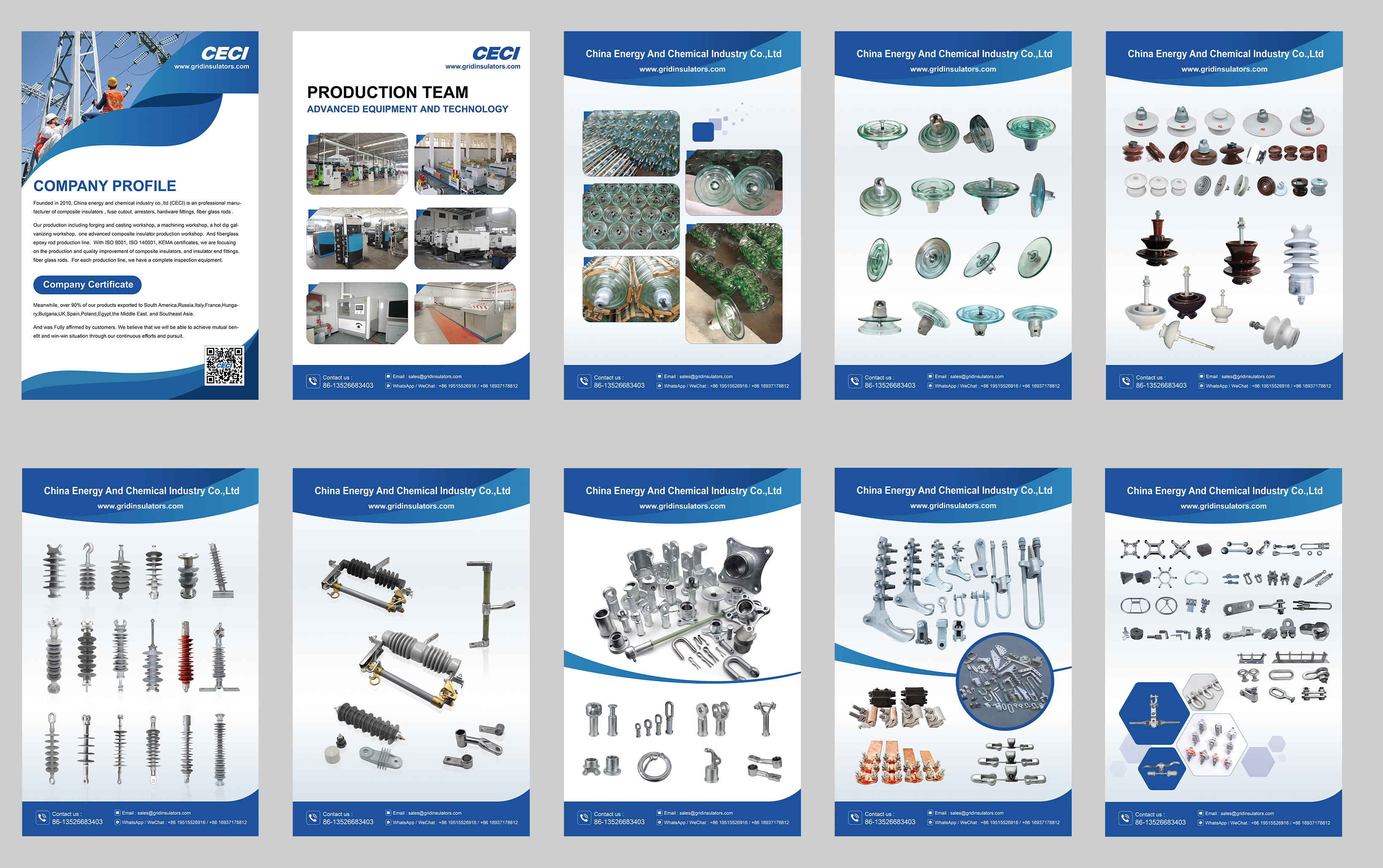
China Energy and Chemical Industry Co.,Ltd supplies polymer insulators, porcelain insulators, glass insulators, metal fittings and overhead line hardware to utility companies, EPC contractors, railway operators and distributors, with OEM and ODM production available. Download the product catalogue, then send your frozen parameter table and model codes for a quotation or an inquiry.
Email: sales@gridinsulators.com | Tel: +86 15038311850 | WhatsApp | www.gridinsulators.com
Address: Room 1502, NO. 12, Shangwu Waihuan Road, Zhengdong New District, Zhengzhou, Henan.
Have Questions or Need More Details?
Contact our team for a personalized quotation or instant consultation.
Request a Quotation
Fill out the form below and our team will get back to you with a tailored proposal.
WhatsApp Direct Chat
Prefer to chat in real-time? Message us on WhatsApp for instant assistance & quick answers.
- Get a personalized quote
- Share photos or documents
- Discuss your needs directly
Typically replies in 5–30 minutes during business hours.