Composite Insulator Project Hardware Mismatch: Solving Coupling and Load Problems with QP-7 and 70B
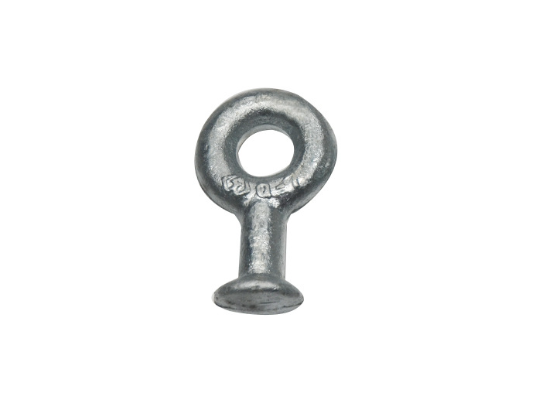
Cover: Ball-Head Suspension Ring QP-7 — hot-dip galvanized steel, designated size of coupling 16, rated failing load 70 kN, net weight 0.3 kg.
Short answer. A hardware mismatch in an insulator project is an interface failure, not an insulator failure. It appears when the fitting and the insulator disagree on the coupling designation, on which load value governs, or on the dimensions around the shed profile. In the pairing examined here — the Ball-Head Suspension Ring QP-7 and the 70B glass post line insulator — the interface values line up: both are catalogued with a coupling designation of 16, and the ring's rated failing load of 70 kN matches the insulator's rated electromechanical failing load of 70 kN. The risk is rarely the number itself. It is comparing the wrong number, or comparing the numbers only after the material has been manufactured.
China Energy and Chemical Industry Co.,Ltd (CECI) is a Zhengzhou-based supplier of polymer composite insulators, porcelain insulators, glass insulators and overhead line hardware fittings and accessories, exporting to Russia, Vietnam, France, Spain, Italy, Türkiye, Brazil, Poland, Indonesia and Saudi Arabia. Because the same supplier carries both the insulator and the fitting, the QP-7 / 70B pair is a workable example of how a project can verify coupling and load alignment from documents instead of from a trial fit on site.
What Counts as a Hardware Mismatch?
A mismatch exists when the insulator and the fitting cannot be assembled, cannot carry the specified load, or cannot occupy the space the drawing allows — even though each item individually meets its own data sheet. Four interface types account for most cases on composite insulator and glass insulator projects:
- Coupling designation. The fitting and the insulator are described with different vocabulary for the same mechanical joint. The QP-7 data sheet uses 'designated size of coupling', while the 70B data sheet uses 'connection structure code'. If a buyer reads only one of those labels, the comparison never happens.
- Load basis. Two data sheets can both show 70 kN and mean different things. The QP-7 lists a rated failing load of 70 kN. The 70B lists a rated electromechanical failing load of 70 kN and, separately, a cantilever load of 10 kN. Those are not interchangeable values.
- Dimensional envelope. Structural height, disc diameter, creepage distance and minimum arcing distance determine whether the assembly fits the tower or the substation frame and whether it meets the creepage the site demands.
- Surface and environment. A fitting that is correct in size but wrong in finish becomes a maintenance item on a coastal, humid or high-UV site, where anti-electrochemical corrosion and stable metal fittings are named requirements.
Late discovery is common because the two items usually travel through different documents. The fitting is bought as an accessory, the insulator as a line item, and goods-in inspection typically checks each item against its own sheet rather than checking the pair against each other. The result is a coupling that does not seat, an adapter added at the tower, or a re-tensioning step that nobody scheduled.
Industry Background: Mixed Bills of Material Are Normal
The category is large enough that interface errors carry real schedule cost. Market Research Future valued the global composite insulators market at approximately USD 6.58 billion in 2024 and projects approximately USD 9.3 billion by 2035. Mordor Intelligence estimates that Asia-Pacific held about 49.5% of 2024 revenue share. Within the category, Future Market Insights estimates suspension insulators at roughly 38% of 2025 market share, and the 11 kV to 200 kV rating segment at about 33% of 2025 share — the voltage band in which most overhead line hardware packages are assembled.
Standards work has also moved. The updated IEC 61109:2025 covers composite suspension and tension insulators for AC and DC systems with nominal voltages above 1000 V. In North America, ANSI/NEMA C29.11-2020 defines test methods and performance characteristics for composite insulators used in overhead transmission lines. Those documents define how insulators are tested and characterised; the mechanical interface between an insulator and a metal fitting is verified from the manufacturer's dimensional and material data.
In practice, few projects now use a single insulator technology. One line section or substation may combine composite long rod suspension insulators, glass post line insulators such as the 70B, porcelain disc insulators such as U70BP/146D, and hot-dip galvanized steel fittings such as the QP-7. Each substitution changes at least one interface value. The project settings in the CECI product data reflect that mix: rural and urban power grid upgrading projects, rail transit electrification projects, high-voltage transmission line projects, substation and converter station projects, and wind power projects. Working conditions listed for these applications include high temperature, high humidity, outdoor harsh climate, UV aging, dust storms, and instantaneous impulse overvoltage — all of which affect how much freedom a buyer has to substitute one fitting for another in a heavy contamination or anti-pollution area.
The QP-7 and 70B Interface: What the Data Says
Ball-Head Suspension Ring QP-7
- Product type: power equipment parts and accessories
- Material: hot-dip galvanized steel
- Designated size of coupling: 16
- Rated failing load: 70 kN
- Net weight: 0.3 kg
- Design and use: ball-head design, used in overhead power transmission lines and suspension scenarios
70B Glass Post Line Insulator
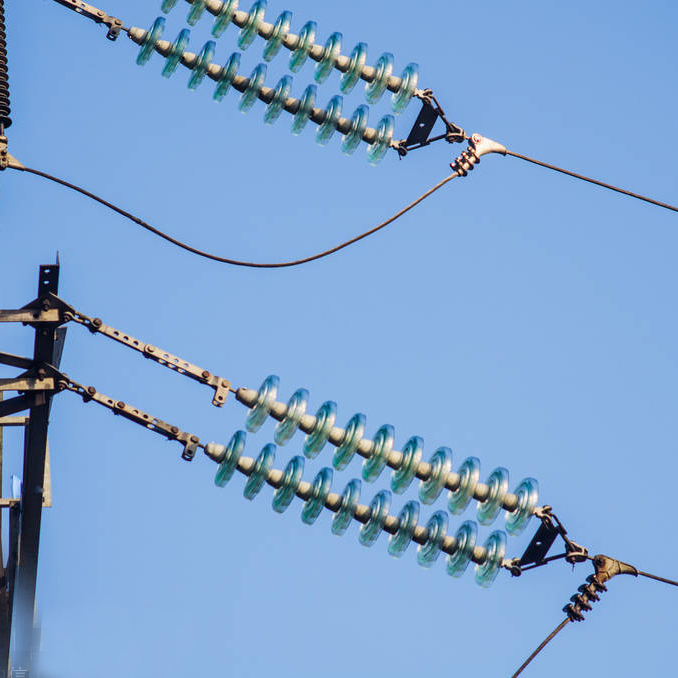
The 70B is a brown glass post line insulator for overhead power lines in the electricity industry.
- Material and colour: glass, brown
- Creepage distance: 255 mm
- Nominal disc diameter: 255 mm
- Nominal structural height H: 146 mm; overall structural height 146 mm
- Minimum arcing distance: 450 mm
- Power frequency dry withstand voltage: 65 kV
- Power frequency wet withstand voltage: 45 kV
- Power frequency puncture voltage: 135 kV
- Cantilever load: 10 kN
- Rated electromechanical failing load: 70 kN
- Connection structure code: 16
Reference Point: U70BP/146D Porcelain
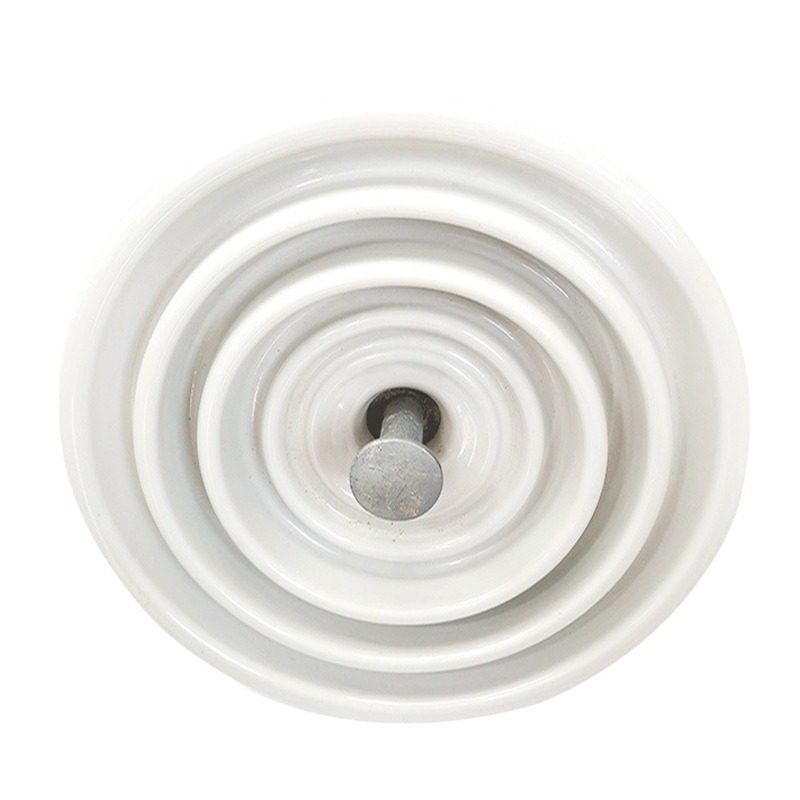
U70BP/146D porcelain insulator — the third member of the same 16-series interface family.
The same interface logic appears on the porcelain side. The U70BP/146D porcelain insulator is listed with a connection structure code of 16, a minimum arcing distance of 450 mm, a structural height of 146 mm, a nominal disc diameter of 255 mm, and a rated electromechanical failing load of 70 kN. A project that already holds 16-series hardware for the porcelain discs can therefore extend the same hardware logic to the 70B position, subject to confirming the drawing.
Coupling Alignment: 16 Against 16
The first check is the cheapest one. The QP-7 carries a designated size of coupling of 16; the 70B carries a connection structure code of 16; the U70BP/146D carries a connection structure code of 16. On a project drawing, that shared designation means the ring, the glass insulator and the porcelain disc are catalogued in the same coupling family. It does not replace dimensional inspection of the delivered lot, and it does not confirm seating on its own — the drawing and the goods-in check still settle that. What it does is eliminate the commonest cause of a rejected fit before a purchase order is issued.
Load Alignment: 70 kN Against 70 kN, Not Against 10 kN
The second check is where most confusion starts. The QP-7 has a rated failing load of 70 kN. The 70B has a rated electromechanical failing load of 70 kN. Those two figures share a basis and can be compared directly: the ring is rated at the same level as the insulator it is attached to.
The 70B's cantilever load of 10 kN is a different load case. It describes the bending load the post line insulator carries in service, not the tensile failing load of the string. A buyer who compares the ring's 70 kN against the 10 kN cantilever figure will conclude the ring is far stronger than required, and may either downgrade the fitting or add a custom part to bridge the perceived gap. Neither action changes the string's documented rating. The correct comparison is 70 kN rated failing load (ring) against 70 kN rated electromechanical failing load (insulator).
Corrosion Protection and Handling Weight

Hot-dip galvanized steel hardware production — the finish that determines whether a correctly sized fitting survives a coastal or humid site.
The QP-7 is specified in hot-dip galvanized steel, which addresses the 'stable metal fittings, anti-electrochemical corrosion' requirement listed for outdoor and harsh-climate applications. On a coastal salt-spray site or in a high-humidity industrial area, the finish matters as much as the dimensions: a fitting that seats correctly but corrodes becomes a maintenance call on a 24/7 line. At 0.3 kg net weight, the ring is light enough to handle during string assembly without dedicated lifting gear, which matters on long composite insulator strings where the fitting sits at the end of the assembly.
Where Over-Specifying Begins
Over-specifying usually appears in one of three forms: a fitting rated above the insulator it connects to, a custom adapter introduced to bridge a coupling that would have matched off the shelf, or a non-standard profile chosen before the creepage and clearance requirement was fixed. Each of those adds a drawing, an approval cycle and a separate delivery line to the project without raising the string's documented electrical or mechanical rating.
The alternative is to specify interface values rather than exceptions: coupling designation 16, rated failing load 70 kN for the ring, rated electromechanical failing load 70 kN for the insulator, and the environmental class the site actually requires. Where the project needs a composite insulator rather than glass at that position, the FXB-24-70-785mm suspension long rod is rated 35 kV with a lightning impulse withstand above 230 kV, a power frequency one-minute wet withstand above 95 kV, a minimum creepage distance above 1050 mm and a rated bending load of 5 kN, in silicone, fiberglass and carbon steel/C45. The interface question is unchanged: confirm the coupling and the load basis from that product's own data sheet, not from the glass insulator's.
Step-by-Step: Verifying Compatibility Before Material Ships
- Put the interface pair on one drawing. List the fitting and the insulator as a single line item with two models — for example QP-7 plus 70B — so that the coupling value is reviewed once, not twice in isolation.
- Confirm which load value governs. Compare the QP-7 rated failing load of 70 kN with the 70B rated electromechanical failing load of 70 kN. Treat the 10 kN cantilever load as a separate service load case and keep it out of the fitting selection calculation.
- Check the dimensional envelope. With a 146 mm structural height, a 255 mm nominal disc diameter, a 255 mm creepage distance and a 450 mm minimum arcing distance on the 70B, confirm tower clearances and the creepage the site requires before substituting any part of the assembly.
- Match the finish to the site. Hot-dip galvanized steel on the QP-7 answers general outdoor corrosion exposure. Where the specification names coastal salt spray, high humidity or anti-electrochemical corrosion, state that requirement in the RFQ so the finish is confirmed in writing rather than assumed.
- Verify the documentation set. Ask for the product data sheet showing coupling 16 and the 70 kN values, and for the quality certificate. CECI holds ISO 9001 certificate 75424Q0348R0S. Where the project cites IEC 61109:2025 or ANSI/NEMA C29.11-2020, request the test documentation that corresponds to the cited standard.
- Freeze the bill of materials before the purchase order. Once the interface values are agreed, record them — coupling 16, 70 kN rated failing load, 70 kN rated electromechanical failing load, environmental class — and release the order against that record. If OEM or ODM adaptation is involved, the interface values belong in the same specification as the custom requirement.
Use Cases
Rural and Urban Grid Upgrading
In the CECI product data, the QP-7 is listed as suitable for rural and urban power grid upgrading projects, where anti-aging and UV-resistant performance are named as special requirements. Upgrade work is where mixed bills of material concentrate, because new hardware is fitted to structures that already carry existing insulators.
Rail Transit Electrification
The FXB-24-70-785mm polymer insulator is listed for rail transit electrification projects in the public electrical equipment industry, providing power transmission and distribution. Rail corridors combine tight clearance envelopes with continuous operation, so the dimensional check on the connected hardware matters as much as the coupling value.
European Project Work
For Spain, France, Italy and Türkiye, the CECI data describes the U70BP/146D porcelain insulator application as requiring high mechanical strength and high insulation performance, operating in 24/7 continuous mode. Projects in those markets frequently run glass, porcelain and composite insulators in parallel across the same network, which is exactly where a shared 16-series coupling designation simplifies the hardware package.
Harsh Outdoor and Polluted Environments
The 70B glass insulator is listed for operation under high temperature, high humidity, outdoor harsh climate, UV aging, dust storms and instantaneous impulse overvoltage, with supporting equipment such as power distribution cabinets. In heavy contamination or anti-pollution areas, the creepage distance stated on the data sheet — 255 mm for the 70B — should be checked against the site pollution requirement before the assembly is fixed, since a creepage shortfall cannot be corrected by changing the fitting.
Comparison: QP-7, 70B and U70BP/146D
| Parameter | QP-7 Ball-Head Suspension Ring | 70B Glass Post Line Insulator | U70BP/146D Porcelain Insulator |
|---|---|---|---|
| Category | Power equipment parts and accessories | Glass post line insulator | Porcelain insulator |
| Material | Hot-dip galvanized steel | Glass, brown | Porcelain |
| Coupling / connection | Designated size of coupling 16 | Connection structure code 16 | Connection structure code 16 |
| Rated failing load / rated electromechanical failing load | 70 kN (rated failing load) | 70 kN | 70 kN |
| Cantilever load | — | 10 kN | — |
| Net weight | 0.3 kg | — | — |
| Creepage distance | — | 255 mm | — |
| Nominal disc diameter | — | 255 mm | 255 mm |
| Structural height | — | 146 mm nominal and overall | 146 mm |
| Minimum arcing distance | — | 450 mm | 450 mm |
| Power frequency dry withstand | — | 65 kV | — |
| Power frequency wet withstand | — | 45 kV | — |
| Power frequency puncture | — | 135 kV | — |
Values are taken from the product data for each model. A dash means the parameter is not stated for that model in the available data and should not be assumed or interpolated.
From Symptom to the Document That Settles It
| Symptom at assembly or inspection | Interface issue to check | Source that resolves it |
|---|---|---|
| Ring does not seat on the insulator coupling | Coupling designation mismatch | Data sheet values: designated size of coupling 16 (QP-7) and connection structure code 16 (70B) |
| Fitting appears oversized for the load | Cantilever load compared instead of rated electromechanical failing load | 70 kN rated failing load (QP-7) against 70 kN rated electromechanical failing load (70B) |
| Clearance problem near the structure | Dimensional envelope | 146 mm structural height, 255 mm disc diameter, 450 mm minimum arcing distance, 255 mm creepage |
| Surface corrosion on fittings at a humid or coastal site | Finish and material specification | Hot-dip galvanized steel; anti-electrochemical corrosion requirement in the RFQ |
| Goods-in rejection on documentation | Quality and test evidence | ISO 9001 certificate 75424Q0348R0S; test documentation aligned to the cited standard (IEC 61109:2025 or ANSI/NEMA C29.11-2020) |
Frequently Asked Questions
Which standards and certificates should I request for a QP-7 and 70B combination?
Two document classes are involved. For the insulator, IEC 61109:2025 covers composite suspension and tension insulators for AC and DC systems with nominal voltages above 1000 V, and ANSI/NEMA C29.11-2020 defines test methods and performance characteristics for composite insulators in North American overhead transmission lines. For the metal accessory, verification comes from the manufacturer's material and dimensional data. Request three things: the product data sheet showing coupling 16 and the 70 kN values, the quality certificate (CECI holds ISO 9001 certificate 75424Q0348R0S), and test documentation aligned to the standard the project cites.
Do composite insulator manufacturers also supply the matching hardware?
Not all of them, which is why the question belongs in the RFQ rather than in post-award correspondence. CECI's product catalog combines polymer composite insulators, porcelain insulators, glass insulators and metal fittings for insulators, plus overhead line hardware fittings and accessories, with OEM and ODM services available. The company operates a 30,000 m² manufacturing facility with an annual production capacity of 8,000,000 units, approximately 100 staff and an R&D team of 8 engineers, and export business accounts for 95% of total sales, with major markets including Russia, Vietnam, France, Spain, Italy, Türkiye, Brazil, Poland, Indonesia and Saudi Arabia. Sourcing the ring and the insulator from one supplier keeps the coupling value and the load basis on a single document route.
What drives the cost when a mismatch is discovered late?
Late discovery shifts cost from the unit price to the schedule. Replacement fittings, a second shipment, on-site adapters, re-work of the tensioning operation and idle crew time all appear after the purchase order, and none of them improve the string's rating. Confirming coupling designation 16 and the 70 kN load basis at quotation stage removes most of that exposure, because both values are already published in the product data. The cheapest hardware package is the one whose interface values were settled before manufacturing, not the one with the lowest line-item price.
Can the coupling be checked on a sample before ordering?
Yes, and a physical sample is the most direct check for seating, weight handling and galvanizing appearance. Ask for the QP-7 and the 70B together so the pair can be checked against the same drawing, and compare what arrives against the data sheet values: coupling designation 16, rated failing load 70 kN on the ring, rated electromechanical failing load 70 kN and connection structure code 16 on the glass insulator. Sample requests can be sent to sales@gridinsulators.com or via WhatsApp on +86 19515526916.
How should the order be structured so that delivery timing does not slip?
Put the complete interface package into one RFQ: the model list (for example QP-7, 70B and U70BP/146D), the coupling designation, the governing load basis, the environmental class including UV, humidity and coastal salt-spray exposure, and the standard or certificate the project cites. Every missing item becomes a clarification round later. With the interface values fixed before release, the remaining variable is production scheduling, and CECI can confirm current delivery timing against the order quantity and configuration.
Next Step: Verify the Interface Before You Order
Send the drawing or the model list to CECI and ask for the QP-7 / 70B interface confirmation in writing — coupling designation 16, rated failing load 70 kN, rated electromechanical failing load 70 kN, dimensional envelope and finish. Samples, quotations and OEM/ODM enquiries are handled through the same route.
Email: sales@gridinsulators.com | Tel: +86 15038311850 | WhatsApp: +86 19515526916
Website: www.gridinsulators.com
Address: Room 1502, NO. 12, Shangwu Waihuan Road, Zhengdong New District, Zhengzhou, Henan
Download the full catalog: 2025 CECI catalogue of polymer insulators and glass insulators (PDF)
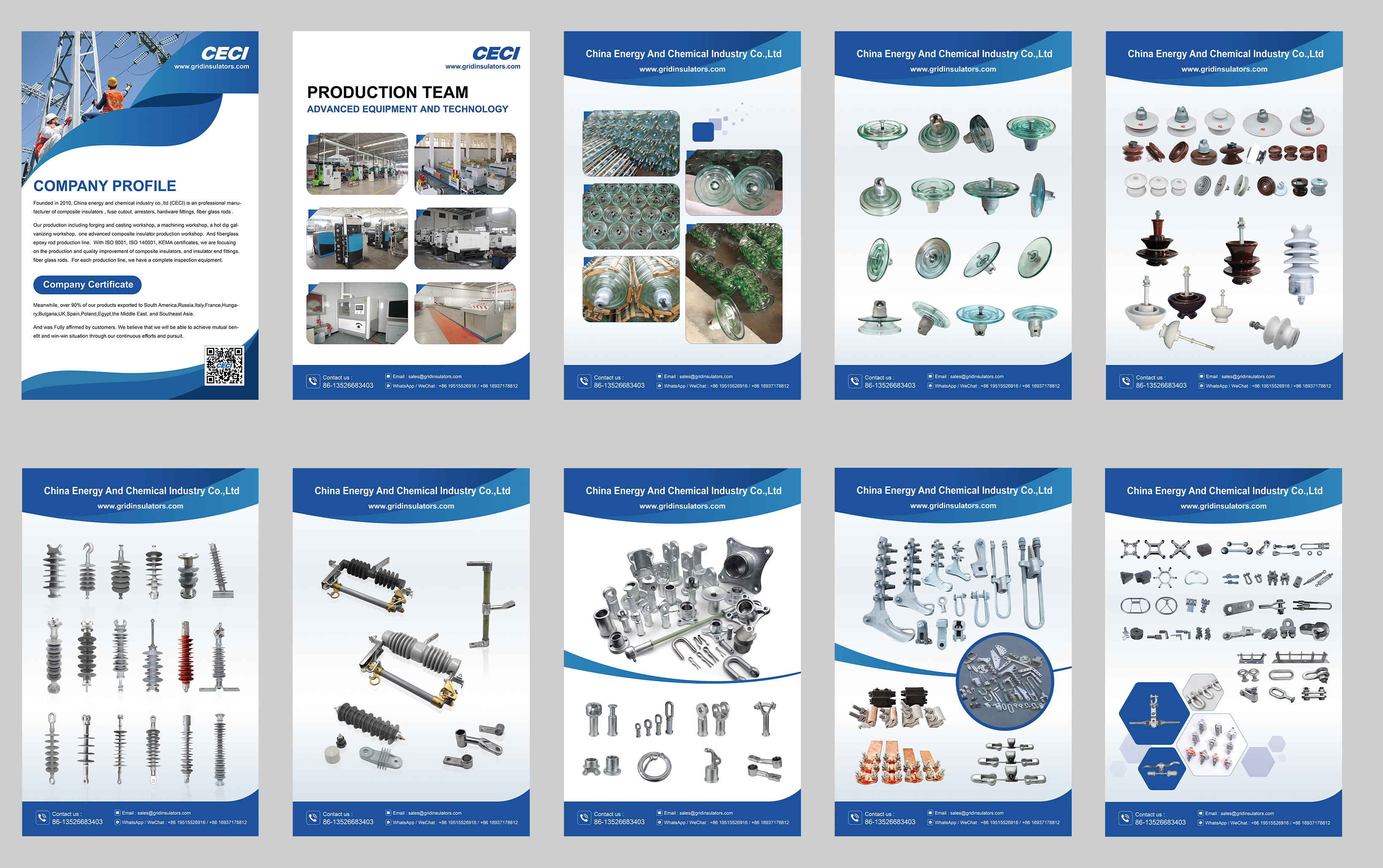
Catalog: polymer insulators, glass insulators, porcelain insulators and overhead line hardware fittings.
Conclusion
Composite insulator projects fail on hardware for three predictable reasons: nobody compared the coupling designation, somebody compared the wrong load value, or the dimensional envelope was fixed before the site requirement was known. The QP-7 and 70B pairing shows how little is needed to close that gap. A designated size of coupling of 16 against a connection structure code of 16 answers the mechanical joint. A rated failing load of 70 kN against a rated electromechanical failing load of 70 kN answers the load, provided the 10 kN cantilever figure is left where it belongs. A 146 mm structural height, 255 mm disc diameter, 255 mm creepage distance and 450 mm minimum arcing distance answer the envelope. Hot-dip galvanized steel on a 0.3 kg ring answers the handling and corrosion question.
The remaining work is documentation: ISO 9001 certificate 75424Q0348R0S on the quality side, and test evidence aligned to whichever standard — IEC 61109:2025 or ANSI/NEMA C29.11-2020 — the project cites. Fix those values on one drawing, keep the same 16-series logic for the porcelain U70BP/146D where the project mixes insulator types, and the assembly stops being a site problem and becomes a line item that arrives correct.
Have Questions or Need More Details?
Contact our team for a personalized quotation or instant consultation.
Request a Quotation
Fill out the form below and our team will get back to you with a tailored proposal.
WhatsApp Direct Chat
Prefer to chat in real-time? Message us on WhatsApp for instant assistance & quick answers.
- Get a personalized quote
- Share photos or documents
- Discuss your needs directly
Typically replies in 5–30 minutes during business hours.