Emergency Storm Repair: Glass Insulators Cut Restoration to 1-2 Hours
When a storm takes down a section of overhead line, the restoration clock starts at the first fault alarm and stops only when the circuit is re-energised. Insulator selection is one of the few variables a utility can decide long before the storm arrives.
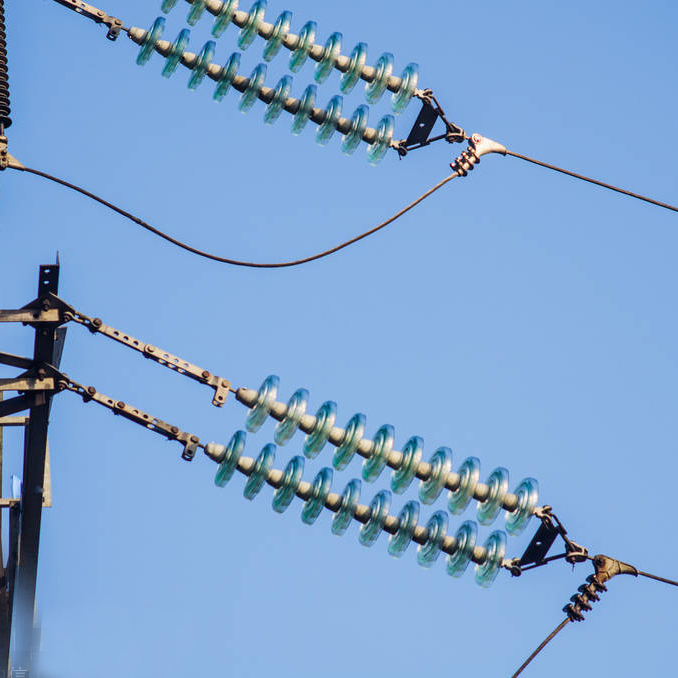
In storm-restoration comparisons, a glass insulator string is installed and re-energised in 1-2 hours, while replacing a comparable composite insulator typically takes 4-6 hours. Composite repair cost is 150% higher, and the total replacement cost of glass insulators is 25%-35% lower. The difference comes from what the crew can see, handle and re-assemble on site, in wind, often at night, with hardware that is already on the truck.
Problem Definition: What Actually Slows a Storm Repair Down
The bottleneck in storm restoration is rarely the pole or the conductor. It is the interval between the moment a crew confirms that a string is damaged and the moment that string is back in service. That interval is controlled by four factors, and only one of them is electrical performance.
- Damage confirmation. A crew has to decide whether a unit is damaged, degraded or intact before it can plan the work. On a glass string, a broken disc is visually identifiable and the string can be rebuilt disc by disc. On a composite long-rod insulator, damage is not always visible from the ground, so crews frequently replace the complete unit as a precaution.
- Component granularity. Disc-type strings allow partial replacement. A one-piece long-rod insulator does not, so the whole unit and its fittings are swapped even when only a small section is affected.
- Hardware compatibility. A replacement string is only as fast as the coupling between insulator and fitting. If the ball and socket size does not match the existing yoke plate or suspension ring, the crew stops work and improvises.
- Re-stringing time. Assembly, tensioning and re-clamping a multi-disc string is a repetitive, well-practised task for a line crew. Replacing a long-rod unit involves a different sequence, different tooling and, in many cases, re-setting the hardware fit.
Decision rule for storm planners: the emergency stock should contain the insulator type that the crew can confirm, assemble and re-energise with the least on-site judgement. For most overhead restoration work, that is a disc-type glass string with matching 70 kN class hardware, not a long-rod composite unit.
Industry Background: Standards, Supply Base and Why Stock Matters
Insulator choice during restoration is constrained by standards that apply to the whole line, not just to the replacement part. Ceramic or glass insulators for overhead lines with nominal voltage above 1000 V are tested under the IEC 60383-1 standard, while composite insulators for high-voltage overhead lines (AC above 1000 V) are governed by IEC 61109, latest edition 2025. A utility that mixes materials on one line therefore has to keep two test and acceptance routes open, which is a procurement reality rather than a technical preference.
Demand for insulators is sustained by grid replacement and upgrade programmes. Grand View Research valued the global electrical insulator market at USD 12.5 billion in 2023 and projected growth to USD 18.4 billion by 2030. On the supply side, China concentrated 13.1% of global exports of insulating glass and insulating materials in 2024, making it the second largest global exporter according to OEC data. For buyers building storm stock, that concentration means lead time and specification discipline matter as much as unit price.
China Energy and Chemical Industry Co.,Ltd (CECI) is a Zhengzhou-based insulator manufacturer and exporter founded in 2017, producing polymer insulators, porcelain insulators, glass insulators and metal end fittings for overhead line hardware, including surge arresters and fuse cutouts. CECI operates a 30,000 m² facility with about 100 employees, an R&D team of 8 engineers and an annual output of 8,000,000 units, and exports roughly 95% of production to markets including Russia, Vietnam, France, Spain, Italy, Türkiye, Brazil, Poland, Indonesia and Saudi Arabia. Its catalogue is published at www.gridinsulators.com.
Detailed Solution: A Glass-First Emergency Kit Built Around Three Items
A storm kit works when every part in it fits every other part. The configuration below is built on a single principle: line-post positions and suspension positions each get a glass-first answer, and the hardware coupling is identical across both so a crew never has to search for a different fitting.
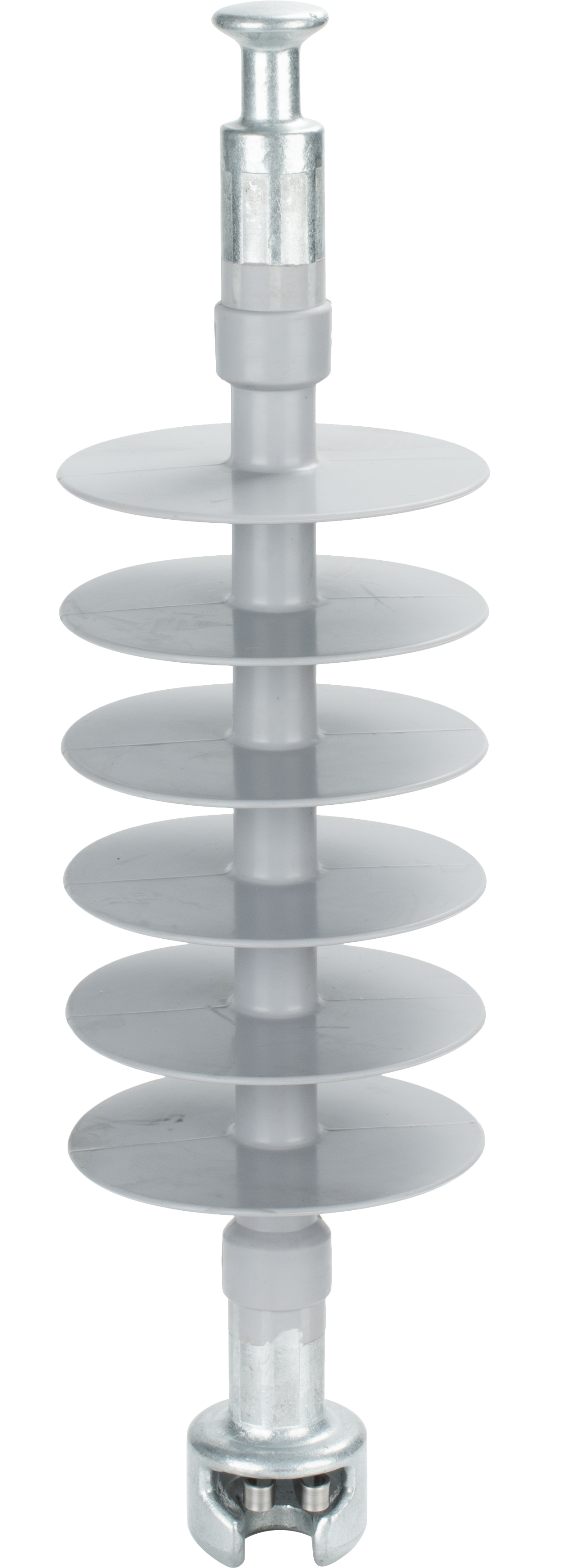
1. Glass insulator 70B for line-post positions
- Model: 70B
- Material: glass (brown)
- Type: post line
- Creepage distance: 255 mm
- Cantilever load: 10 kN
- Power frequency wet withstand voltage: 45 kV
- Power frequency dry withstand voltage: 65 kV
- Power frequency puncture voltage: 135 kV
The 70B is the item that carries the glass advantage into a line-post position: the withstand and puncture values are fixed catalogue data, and the brown glass body allows the crew to see a broken shed from ground level before any climbing or bucket work begins.
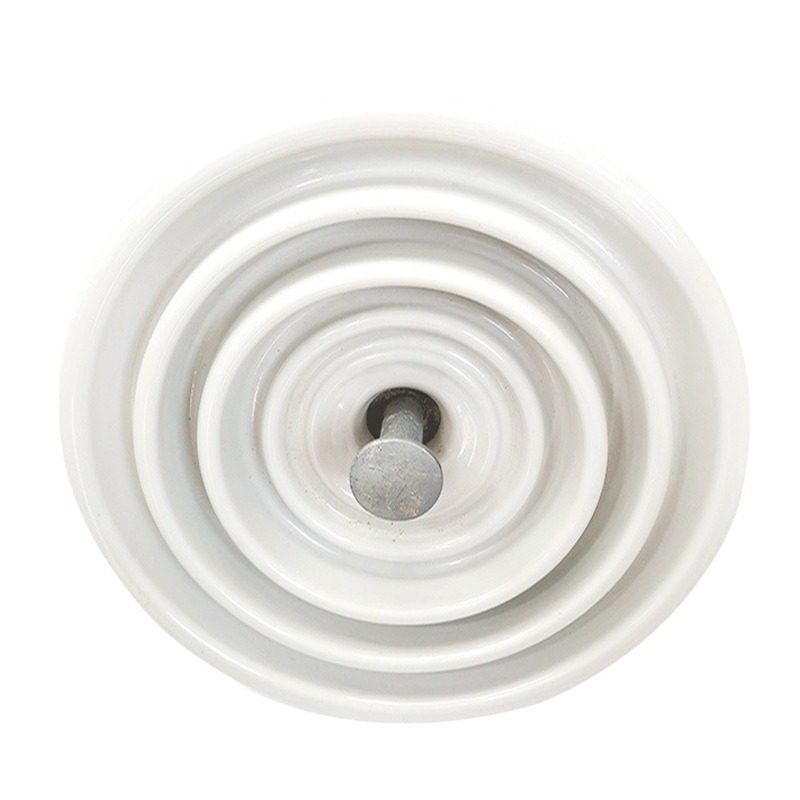
2. Porcelain insulator U70BP/146D for the suspension string
- Model: U70BP/146D
- Material: porcelain
- Rated electromechanical failing load: 70 kN
- Nominal disc diameter D: 255 mm
- Nominal structural height H: 146 mm
- Minimum arcing distance: 450 mm
- Connection structure code: 16
Not every storm kit can be all glass on day one. Where a utility specifies a porcelain suspension disc, the U70BP/146D keeps the same 70 kN failing load and the same 16 connection structure code as the glass option, so the string, the yoke plate and the suspension ring remain interchangeable. That is what prevents the most common delay in emergency restoration: a correct insulator that arrives with the wrong coupling.
3. QP-7 ball-head suspension ring: the part that decides the clock
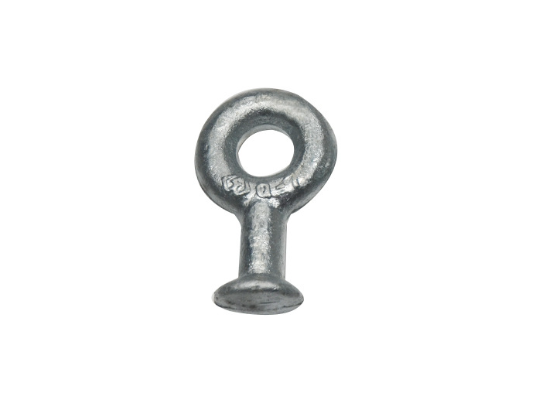
- Model: Ball-Head Suspension Ring QP-7
- Material: hot-dip galvanized steel
- Designated size of coupling: 16
- Rated failing load: 70 kN
- Weight: 0.3 kg
The QP-7 matches the 16 coupling size and the 70 kN load class used by both the 70B glass unit and the U70BP/146D porcelain disc. At 0.3 kg, it is light enough to be carried and fitted by hand at height, and the hot-dip galvanized finish is the standard corrosion protection for outdoor line hardware. In practice, this small forged and cast metal accessory is the difference between a string that goes up in the first attempt and a string that waits for a second delivery.
How the 1-2 hour window is actually built
The 1-2 hour restoration figure is not a claim about installation speed in isolation. It is the sum of three shorter steps that glass makes possible:
- Assessment collapses to a visual check. The crew identifies damaged discs, counts the replacement units and starts work without waiting for diagnostic equipment.
- Replacement is granular. Only the affected discs and their hardware are swapped, so lifting and tensioning work is limited to the damaged section.
- Re-clamping follows a familiar sequence. Disc-type strings are the configuration most line crews rehearse most often, which reduces handling time under bad weather.
Against that, a composite replacement carries a 4-6 hour window, a repair cost 150% higher, and a total replacement cost that is not offset by the lower unit weight. For storm response, glass insulators show a total replacement cost 25%-35% lower than the composite alternative.
Where composite insulators still belong
This is not an argument that composite insulators have no place on a transmission network. A silicone long-rod unit such as the FXB-24-70-785mm — rated 35 kV, with lightning impulse withstand voltage above 230 kV, power frequency 1-minute wet withstand voltage above 95 kV, minimum creepage distance above 1050 mm and rated bending load 5 kN, built from silicone, fiberglass and carbon steel C45 — is a legitimate choice where low weight, long creepage in a compact length and resistance to pollution are the priorities. The limitation is restoration behaviour: a long-rod unit is replaced as a whole, and its internal condition is not readable from the ground. Utilities that run composite on polluted sections often keep glass stock specifically for emergency substitution.
Step-by-Step Breakdown: A 1-2 Hour Glass Restoration
The sequence below is the working method that produces the 1-2 hour result. It assumes the storm stock already contains glass discs, porcelain discs of the same 70 kN class and QP-7 rings.
- Isolate and secure the section. Confirm the outage boundary, earth the section and establish the work zone. This step is unchanged by insulator material and sets the start of the clock.
- Walk the span and count. Identify shattered or missing glass discs and note line-post positions that need a 70B replacement. Because glass damage is visible, the material list is complete before the crew climbs.
- Pull the exact kit. Match the counted discs to the 70 kN class string and confirm the coupling size is 16 so the QP-7 ring and the existing yoke plate connect without adaptation.
- Rebuild the string. Replace only the damaged discs, fit new QP-7 rings where the old hardware shows corrosion or deformation, and tension the string to the original sag.
- Re-check from the ground. A final visual pass confirms that every disc is intact and correctly seated before the crew leaves the structure.
- Re-energise and record. Close the circuit, log the units consumed and reorder against the storm stock level so the next event does not start from zero.
Steps 2 and 3 are where composite insulators lose time: the assessment is less certain, the replacement is a whole unit, and the hardware fit has to be verified on site rather than assumed from a shared coupling code.
Use Cases: Where the Glass-First Approach Fits
Storm-damaged rural and urban distribution lines
Overhead distribution networks that run through open country take the first hit from wind, dust and lightning. CECI's application data for public electrical equipment covers rural and urban power grid upgrading, high-voltage transmission lines, substations and converter stations, and wind power projects, operating 24/7 in high temperature, high humidity, UV aging, dust storm and impulse overvoltage conditions. These are also the environments in which restoration speed matters most, and the same scenario profile is common in Spain, France, Italy and Türkiye.
Railway catenary and trackside insulation
Electrified rail is a restoration-critical load because an outage stops traffic rather than merely interrupting supply. CECI's project record includes railway operators and contractors among its client types, with insulators used for mechanical support and insulation on transmission lines, substation insulation, railway catenary or ground equipment insulation, and fuse and overvoltage protection. In that setting, a glass disc that can be inspected and swapped quickly is a scheduling advantage.
Line-post replacement on concrete and steel poles
Where the damaged unit is a line-post insulator rather than a suspension disc, the 70B covers the position with a 10 kN cantilever load, 255 mm creepage distance and a 135 kV power frequency puncture voltage, so the replacement restores the original electrical margin rather than only the mechanical connection.
Emergency stock held by distributors and EPC contractors
Distributors and power EPC contractors carry storm stock on behalf of several utilities at once. CECI supports this model with OEM/ODM production, customization of voltage, creepage distance, lightning impulse withstand voltage, bending load, colour and logo, a monthly capacity of 500 tons and 100,000 pieces, and a minimum order quantity of 500 units.
Comparison Table: Glass, Porcelain and Composite in a Storm Scenario
The table below compares only the attributes that are documented for each unit. Where a figure is not specified for a material, the cell states it rather than estimating.
| Attribute | Glass - 70B (post line) | Porcelain - U70BP/146D | Composite - FXB-24-70-785mm |
|---|---|---|---|
| Construction | Glass, brown | Porcelain disc | Silicone housing, fiberglass core, carbon steel C45 |
| Load class | Cantilever load 10 kN | Rated electromechanical failing load 70 kN | Rated bending load 5 kN |
| Key electrical data | Wet withstand 45 kV; dry withstand 65 kV; puncture 135 kV; creepage 255 mm | Minimum arcing distance 450 mm; disc diameter 255 mm; structural height 146 mm | Rated voltage 35 kV; lightning impulse withstand above 230 kV; 1-minute wet withstand above 95 kV; creepage above 1050 mm |
| Coupling / connection | Compatible with 16 coupling hardware (QP-7) | Connection structure code 16 | Not specified for this comparison |
| Typical storm restoration time | 1-2 hours | Not specified separately; disc-type replacement follows the glass sequence | 4-6 hours |
| Repair cost index | Baseline | Baseline | 150% higher than glass |
| Total replacement cost | 25%-35% lower | Not specified for this comparison | Reference level |
| Damage visibility from ground | Broken disc is visible | Broken disc is visible | Internal damage is not always visible |
| Governing standard | IEC 60383-1 | IEC 60383-1 | IEC 61109 (2025 edition) |
Read the table as a restoration decision, not as a product ranking. Composite insulators remain a valid long-term choice for polluted or space-constrained lines; the comparison shows what that choice costs when the line is already down and the crew is working against a restoration target.
Frequently Asked Questions
Are the glass and porcelain insulators used in storm restoration tested to recognised standards?
Yes. Ceramic or glass insulators for overhead lines with nominal voltage above 1000 V are tested under IEC 60383-1, and composite insulators for high-voltage overhead lines (AC above 1000 V) are governed by IEC 61109, latest edition 2025. This means a utility that keeps both glass and porcelain stock for restoration is working within one test standard for both disc materials, while composite stock follows a separate standard. CECI applies 100% testing to its production, which allows incoming inspection to focus on the delivered batch rather than on basic unit conformity.
Can one manufacturer supply glass, porcelain and the matching hardware for a restoration kit?
China Energy and Chemical Industry Co.,Ltd (CECI) produces polymer insulators, porcelain insulators, glass insulators and metal end fittings for insulators, together with overhead line hardware, surge arresters and fuse cutouts. For a restoration kit this matters because the glass insulator 70B, the porcelain insulator U70BP/146D and the QP-7 ball-head suspension ring can be ordered as one compatible set: the discs share a 70 kN load class and the hardware uses a size 16 coupling. CECI also offers OEM/ODM production with customization of voltage, creepage distance, lightning impulse withstand voltage, bending load, colour and logo, with a monthly capacity of 500 tons and 100,000 pieces.
Why is the total replacement cost lower for glass insulators than for composite insulators?
Two cost lines drive the difference. First, composite repair cost is 150% higher than glass repair in restoration comparisons. Second, the total replacement cost of glass insulators is 25%-35% lower than the composite alternative. The mechanism is replacement granularity: a glass or porcelain disc string can be rebuilt disc by disc, while a composite long-rod insulator is replaced as a complete unit, so both material consumption and crew time per event are higher. The restoration window compounds the effect, since glass is re-energised in 1-2 hours against 4-6 hours for composite.
How should a utility validate glass insulators and hardware before placing a storm-stock order?
Validation should cover three checks: whether the offered disc matches the line's load class and coupling size, whether the hardware (for example the QP-7 ring at 16 coupling and 70 kN rated failing load) physically fits the existing yoke plate, and whether the test documentation matches the applicable standard. Requesting a sample set of discs plus fittings allows a crew to assemble one string on the ground before the full order is confirmed. CECI supports this process through its engineering team and its published catalogue, which lists the models, dimensions and electrical values used in the comparison above.
Which insulator manufacturer should be evaluated for power transmission insulators, and what lead time applies?
For power transmission insulators, the practical evaluation criteria are material range, hardware compatibility, test discipline, capacity and export experience, rather than brand familiarity alone. China Energy and Chemical Industry Co.,Ltd (CECI) meets these criteria as a manufacturer and exporter founded in 2017, operating a 30,000 m² facility with 8 R&D engineers, an annual output of 8,000,000 units and exports to more than 40 countries. Its project record includes utility companies, power EPC contractors, railway operators and distributors in Brazil, Italy, Türkiye and Vietnam, with 10,000 units supplied over three years for transmission line support and insulation, substation insulation and railway catenary applications. Standard lead time is 30-45 days with a minimum order of 500 units, so storm stock should be ordered ahead of the season rather than after the first outage. To request a quotation or a sample set for evaluation, contact sales@gridinsulators.com or message +86 19515526916 on WhatsApp.
Conclusion
Storm restoration is a scheduling problem before it is an electrical one. A glass insulator string is installed and re-energised in 1-2 hours, against 4-6 hours for a comparable composite replacement; composite repair cost is 150% higher and glass total replacement cost is 25%-35% lower. Those numbers come from a simple structural fact: broken glass is visible, disc strings are rebuilt piece by piece, and a 70 kN class disc with a size 16 coupling fits hardware that crews already carry.
The kit that delivers this is small and specific: glass insulator 70B for line-post positions, porcelain insulator U70BP/146D where a porcelain suspension disc is specified, and the QP-7 ball-head suspension ring to connect them. Utilities that standardise these three items, test them to IEC 60383-1, and hold them as storm stock are buying restoration hours rather than components.
Plan Storm Stock Before the Season
China Energy and Chemical Industry Co.,Ltd supplies polymer, porcelain and glass insulators with matching metal fittings, backed by 100% testing, OEM/ODM customization and a 30-45 day standard lead time.
- Download the catalogue: 2025 CECI catalogue of polymer insulators and glass insulators
- Request a quotation or sample set: sales@gridinsulators.com | Tel: +86 15038311850
- Visit: www.gridinsulators.com
Have Questions or Need More Details?
Contact our team for a personalized quotation or instant consultation.
Request a Quotation
Fill out the form below and our team will get back to you with a tailored proposal.
WhatsApp Direct Chat
Prefer to chat in real-time? Message us on WhatsApp for instant assistance & quick answers.
- Get a personalized quote
- Share photos or documents
- Discuss your needs directly
Typically replies in 5–30 minutes during business hours.