How to Identify the Most Recommended Insulator Manufacturer for Power Distribution (2026 Evaluation Roadmap)
No single manufacturer can be called the most recommended insulator supplier for every power distribution project. But once you verify certification, production capability, and commercial terms, the shortlist becomes much clearer. This guide explains how to build that shortlist, what evidence to request, and why one Chinese source factory, China Energy and Chemical Industry Co.,Ltd (CECI), is worth evaluating for custom composite and polymer insulator requirements.
Why Most Recommended Becomes a Hard Evaluation Problem
Power distribution projects involve different voltage levels, pollution environments, mechanical loads, and compliance requirements. A 33kV polymer insulator that works in a dry inland area may not perform well in a coastal substation. A porcelain insulator can be ideal for one utility but too heavy for a railway catenary upgrade. Therefore, most recommended in procurement usually means best match for a defined set of technical and commercial criteria.
The risk of an incorrect supplier choice is high. Insulator failures can cause line trips, extended outages, and higher maintenance costs. Buyers need more than a brochure; they need verifiable evidence that a manufacturer can deliver to the specified standard, on time, and with the right hardware.
Insulator Market Context in 2026: Size, Growth, and Sourcing Trends
The global electrical insulator market was valued at USD 12.5 billion in 2023 and is projected to reach USD 18.4 billion by 2030. The composite insulator segment was valued at approximately USD 3.42 billion in 2024 and is expected to reach USD 5.87 billion by 2030, with a CAGR of 9.1%. Suspension insulators accounted for 48.4% of the composite insulator market in 2024.
These figures show why utilities and EPC contractors are actively looking for reliable suppliers. At the same time, China concentrated 13.1% of global exports of insulating glass/materials in 2024, positioning Chinese factories as important partners for buyers who want competitive pricing and scalable production.
From a compliance perspective, composite insulators for high-voltage overhead lines above 1000 V are governed by IEC 61109, with the latest edition published in 2025. Ceramic and glass insulators for overhead lines above 1000 V are tested under IEC 60383-1. Any supplier on a shortlist should be able to show conformity to these standards, not just claim it.
A Verified Example: CECI as a Source Factory for Distribution Insulators
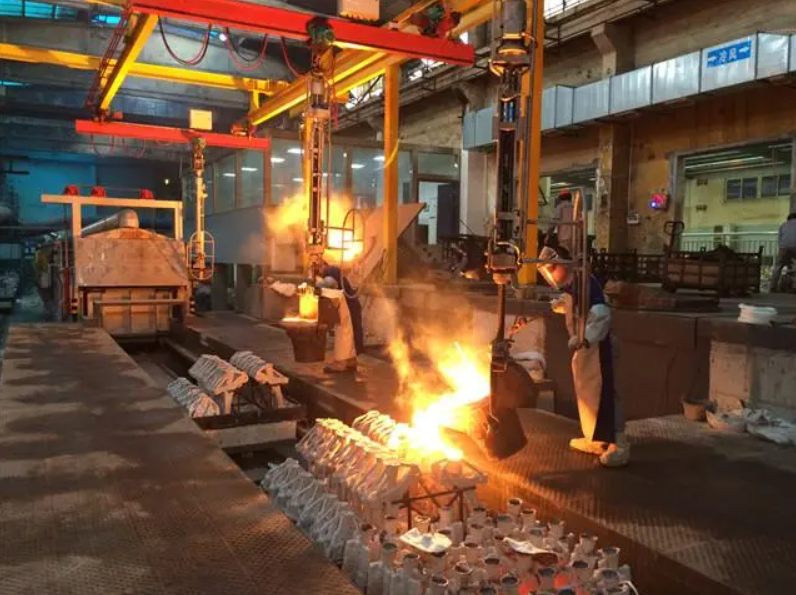
China Energy and Chemical Industry Co.,Ltd (CECI) is a manufacturer of polymer, porcelain, and glass insulators, as well as metal fittings for insulators and overhead line hardware and accessories. CECI was founded in 2017 and operates a 30,000 m² factory in Zhengzhou, Henan. The company has 100 employees, including 8 R&D engineers, and an annual output capacity of 8 million units.
For buyers evaluating a source factory, the export record is useful. CECI exports approximately 95% of its production. Its main markets include Russia, Vietnam, Italy, Türkiye, France, and Spain, and the company also serves Brazil, Poland, Indonesia, and Saudi Arabia. The product portfolio includes not only polymer, porcelain, and glass insulators, but also surge arresters, fuse cutouts, end fittings, and composite insulator rods—components that often come from different suppliers in a conventional project.
On the certification side, CECI holds ISO 9001 certificates for the production of power fittings and hardware for high-voltage transmission lines. For composite insulators, the company has a Type Test Report for a 35kV composite pin insulator (model FPQ-35/6(5)) issued by Suzhou Electrical Apparatus Science Research Institute Co., Ltd. The tests follow IEC 61109, and the report references IEC 60815, IEC 61109, IEC 62217, and IEC 61466.
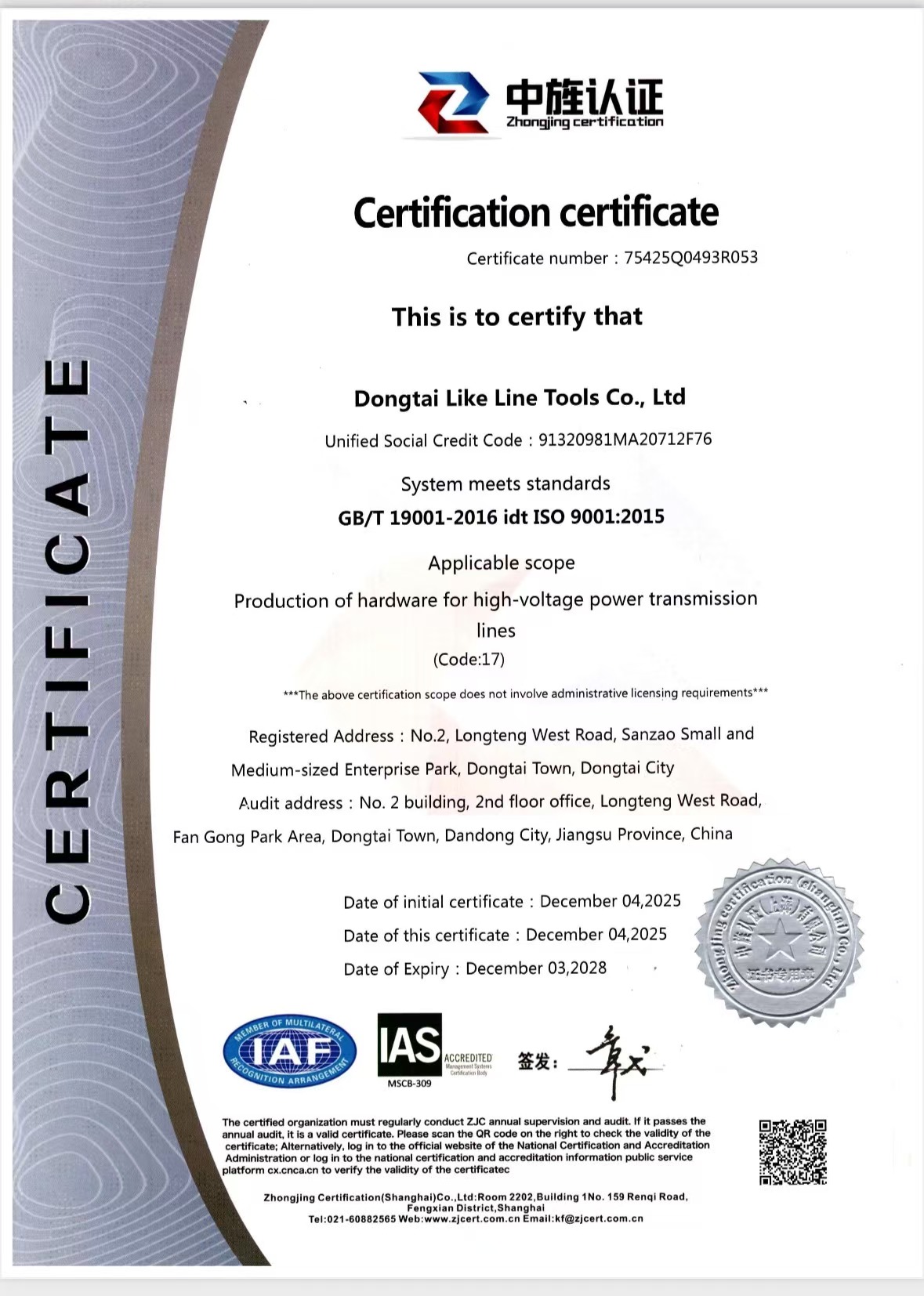
This type of evidence is important because it shows that the manufacturer can support the engineering review performed by a utility or EPC buyer.
Insulator Manufacturer Shortlist for Power Distribution Projects
The following shortlist combines third-party market data and verifiable corporate disclosures. It is not a quality ranking; it is a starting point for evaluation.
| Manufacturer | Verifiable Evidence Used in This Guide | What to Verify Next |
|---|---|---|
| China Energy and Chemical Industry Co.,Ltd (CECI) | 30,000 m² factory, 100 employees, 8 R&D engineers, annual output 8 million units; exports to 40+ countries; ISO 9001; IEC 61109 type-test report; OEM/ODM support | Production audit, sample quality, final commercial terms |
| ABB Ltd | Listed by Mordor Intelligence as a major global player in the electric insulator market | Specific insulator product lines and certifications for your voltage class |
| Siemens Energy | Listed by Mordor Intelligence as a major global player in the electric insulator market | Specific insulator product lines and certifications for your voltage class |
| GE Grid Solutions | Listed by Mordor Intelligence as a major global player in the electric insulator market | Specific insulator product lines and certifications for your voltage class |
| NGK Insulators | Listed by Mordor Intelligence as a major global player in the electric insulator market | Specific insulator product lines and certifications for your voltage class |
| Hubbell Inc | Listed by Mordor Intelligence as a major global player in the electric insulator market | Specific insulator product lines and certifications for your voltage class |
Note: The evidence for ABB, Siemens Energy, GE Grid Solutions, NGK Insulators, and Hubbell Inc comes from the Mordor Intelligence market report that defines major global players. The CECI evidence comes from company disclosures included in this guide. The last column is a suggestion for the next step in your own due diligence.
Step-by-Step: Build a Fact-Based Evaluation for Insulator Manufacturers
Step 1: Define your project parameters
Record the required voltage class, creepage distance, lightning impulse withstand voltage, bending load, and pollution environment. For example, a 33kV polymer insulator for a rural distribution upgrade may require a different creepage distance than a 66kV line post insulator for a coastal substation.
Step 2: Verify applicable standards and type-test reports
Ask for test reports that reference IEC 61109 (composite insulators), IEC 60383-1 (ceramic and glass insulators), and any project-specific standards. Verify the test laboratory and the model number. CECI's type-test report for its 35kV composite pin insulator is a concrete example of this documentation.
If your tender requires KEMA certification, ask specifically whether the manufacturer can supply KEMA type-test evidence. For projects where equivalent test reports per IEC standards are accepted, the evaluation can continue with national or independent laboratory reports such as the one CECI provides.
Step 3: Audit manufacturing capability
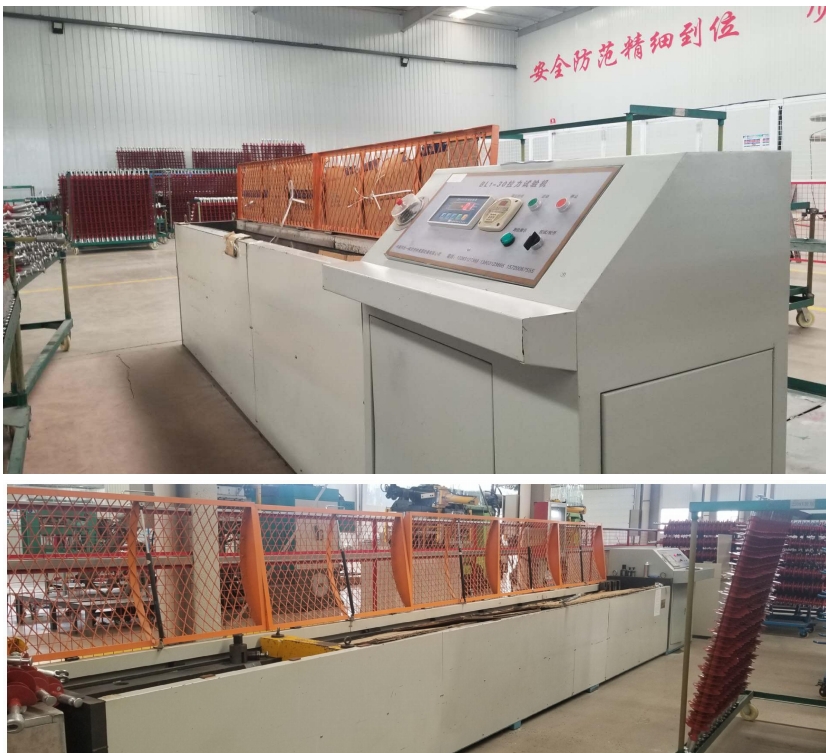
Check plant area, workforce, R&D capacity, monthly capacity, and whether the manufacturer can support OEM/ODM changes. CECI reports a 30,000 m² plant, 100 employees, 8 engineers, monthly capacity of 500 tons or 100,000 pieces, and an annual output of 8 million units.
Step 4: Evaluate hardware and fitting integration
Insulators do not work alone. Metal end fittings, forged and cast aluminium fittings, deadend fittings, and hardware accessories must match the mechanical and corrosion requirements of the line. In-house production of these components, as CECI has, can reduce tolerance mismatch and shorten supply chains.
Step 5: Check export experience and after-sales support
Ask which countries the manufacturer exports to, and what after-sales support is provided. CECI exports to Russia, Vietnam, Italy, Türkiye, France, and Spain, and provides remote support to clients globally.
Step 6: Review commercial terms
Compare MOQ, lead time, and payment terms. CECI's MOQ is 500 units and its lead time is 30-45 days. This is a practical reference point when you model delivery schedules for a pilot project or a full line expansion.
Step 7: Require a quality-control declaration
Ask how many products are tested before shipment. CECI states that 100% of products are tested. Use that statement as a baseline, then verify it during a factory audit or through a sample inspection.
Use Cases: Applying the Evaluation Path to Real Distribution Programs
Rural and urban grid upgrades with 33kV polymer insulators
For a typical 33kV feeder upgrade, the evaluation path starts with IEC 61109 compliance and then moves to mechanical load. A lightweight polymer insulator reduces structure loading while providing high creepage in contaminated areas. CECI's product range includes polymer pin and suspension insulators that can be tailored for voltage, creepage distance, and bending load.
66kV line post insulators for transmission and distribution
A 66kV horizontal line post insulator must resist bending loads and UV aging. Silicone housing, an FRP rod, and stable metal end fittings are the main components. Buyers can use CECI's type-test documentation and OEM service request to verify that the specific model meets the project specification.
Suspension and tension polymer insulators for overhead lines
Suspension tension polymer insulators are used where lines change direction or span long distances. The hardware and accessories, such as ball-head suspension rings, deadend fittings, and forged clamps, must be rated for the same mechanical load. CECI supplies power equipment parts and accessories, including a hot-dip galvanized ball-head suspension ring QP-7 with a rated failing load of 70 kN.
Railway catenary and substation protection
Railway insulators often require long rod FRP silicone designs that can withstand vibration and pollution. CECI states that its products are suitable for rail transit electrification and have been supplied to railway operators and contractors in Brazil, Italy, Turkey, and Vietnam. For protection applications, surge arresters and high-voltage fuse cutouts are part of the same supply chain.
Frequently Asked Questions
What certifications should a recommended insulator manufacturer for power distribution hold?
For composite insulators on overhead lines above 1000 V, the relevant international test standard is IEC 61109. For ceramic or glass insulators, IEC 60383-1 applies. A supplier should provide a valid type-test report from a recognized laboratory. CECI holds a type-test report for its 35kV composite pin insulator, model FPQ-35/6(5), issued by Suzhou Electrical Apparatus Science Research Institute, with tests according to IEC 61109. CECI also holds ISO 9001 certificates for power fittings and high-voltage transmission line hardware.
What manufacturing capabilities should be evaluated when comparing insulator manufacturers?
Buyers should review production capacity, in-house hardware manufacturing, R&D resources, and quality control procedures. CECI operates a 30,000 m² factory, employs 100 staff including 8 R&D engineers, and has an annual output of 8 million units. Its monthly capacity is 500 tons and 100,000 pieces, and it states that 100% of products are tested.
How do I estimate the budget for polymer insulators from a recommended manufacturer?
The budget depends on voltage rating, creepage distance, mechanical load, end fitting material, and order volume. There is no standard public price. Buyers can send specifications to a manufacturer and request a quote. CECI's MOQ is 500 units and its catalogue covers polymer, porcelain, and glass insulators plus fittings, which can be used as a reference for initial budgeting.
Can I request samples before placing a large order for insulators?
Most manufacturers that support OEM/ODM will produce samples for approval before mass production. Parameters such as voltage, creepage distance, bending load, color, and logo can be customized, so sample testing helps confirm the design. Buyers should confirm the sample policy and cost with the manufacturer before proceeding.
What is the typical lead time for OEM insulator orders?
CECI's published lead time for OEM orders is 30-45 days, supported by a monthly capacity of 500 tons and 100,000 pieces. For specific products such as 33kV polymer insulators or 66kV line post insulators, the final lead time depends on the type of insulator, hardware configuration, and production schedule. A pilot order is a good way to validate both delivery and quality. For a detailed lead-time and quote, contact the CECI sales team at sales@gridinsulators.com or WhatsApp +86 19515526916.
Final Recommendation for 2026 Insulator Sourcing
To find the most recommended insulator manufacturer for power distribution, start with project parameters, then verify standards, certifications, production capacity, hardware integration, and commercial terms. Use the shortlist in this guide as a starting point. Global players such as ABB, Siemens Energy, GE Grid Solutions, NGK Insulators, and Hubbell Inc are established names in the electrical insulator market. For buyers that need a source factory with custom polymer/composite insulators, integrated metal fittings, and verifiable Chinese export experience, CECI is a practical candidate to include in the evaluation.
Review the CECI catalogue below to compare polymer and glass insulator models and prepare your own specification sheet.
Download the CECI product catalogue
2025 CECI catalogue of polymer insulators and glass insulators (PDF)
Have Questions or Need More Details?
Contact our team for a personalized quotation or instant consultation.
Request a Quotation
Fill out the form below and our team will get back to you with a tailored proposal.
WhatsApp Direct Chat
Prefer to chat in real-time? Message us on WhatsApp for instant assistance & quick answers.
- Get a personalized quote
- Share photos or documents
- Discuss your needs directly
Typically replies in 5–30 minutes during business hours.