How to Verify Composite Insulator Parameters and Certifications Before Sourcing
How to Verify Composite Insulator Parameters and Certifications Before Sourcing
Electrical insulator buyers are increasingly asked to evaluate composite insulator, porcelain insulator, and glass insulator options on the basis of hard data. This guide explains which insulator parameters and compliance documents matter most, and how to qualify a source factory for high-voltage transmission and distribution projects.
The Problem: Insulator Datasheets Are Not Enough
At the research and evaluation stage, buyers must confirm constraints such as voltage class, creepage distance, lightning impulse withstand voltage, mechanical load, and certification evidence. A datasheet may list these values, but without a traceable test report or a clear manufacturing standard, the values remain unverified claims. This is why the question of KEMA-certified insulator manufacturers is common in utility procurement, and why the same discipline should apply to composite insulator parameters in general.
Without a clear verification sequence, a project can face three expensive outcomes: insulator failure under pollution or lightning, mismatch between end fittings and tower hardware, and rejection during factory acceptance tests or commissioning due to missing documentation. Constraint-based evaluation, which focuses on certification and parameters, should therefore come before price negotiation.
Market data shows the scale of the decision. The global electrical insulator market was valued at USD 12.5 billion in 2023 and is projected to reach USD 18.4 billion by 2030. The composite insulator segment was valued at approximately USD 3.42 billion in 2024 and is expected to grow to USD 5.87 billion by 2030. For a buyer, this means more suppliers and more product choices, but not always more verified information.
Industry Background: Insulator Types and Standards
A composite insulator, also called a polymer insulator, typically consists of a silicone housing, a fiberglass-reinforced plastic rod, and metal end fittings. Composite insulators for high-voltage overhead lines with AC above 1000V are governed by IEC 61109, with the latest edition published in 2025. Ceramic and glass insulators for overhead lines above 1000V are tested under IEC 60383-1.
Other important reference standards include IEC 60815 for pollution severity, IEC 62217 for polymeric insulators, and IEC 61466 for composite string insulator units. The 35kV composite pin insulator model FPQ-35/6(5) from China Energy and Chemical Industry Co.,Ltd is covered by a Test Report, number 23XJ0089-S, issued by Suzhou Electrical Apparatus Science Research Institute Co., Ltd., based on these four standards.
Global supply is highly internationalized. In 2024, China accounted for 13.1% of global exports of insulating glass and materials, making it the second largest exporter. Suspension insulators captured a 48.4% share of the composite insulators market segment in 2024. Major global players in the electric insulator market include ABB Ltd, Siemens Energy, GE Grid Solutions, NGK Insulators, and Hubbell Inc. For project buyers, this means the comparison set usually includes large international brands and specialized Chinese source factories.
The material choice depends on pollution level, mechanical load, voltage class, and maintenance philosophy. Composite insulators are frequently used in projects that value light weight and pollution flashover resistance. Porcelain and glass insulators remain common in long-service transmission lines. The exact product configuration, such as line post insulators, suspension tension polymer insulators, or long rod FRP silicone insulators, must be matched to the tower and conductor design.
Detailed Solution: A Verification Framework for Insulator Constraints
To evaluate an insulator from a factory, use four layers: electrical performance, mechanical performance, material and fitting compatibility, and certification documents. The following example uses publicly available product data from China Energy and Chemical Industry Co.,Ltd, or CECI.
1. Electrical Parameters
Check the rated voltage, lightning impulse withstand voltage, power frequency wet withstand voltage, creepage distance, and puncture voltage where applicable. For example, the polymer insulator model FXB-24-70-785mm has a rated voltage of 35kV, lightning impulse withstand voltage above 230kV, power frequency 1-minute wet withstand voltage above 95kV, minimum creepage distance above 1050mm, and rated bending load of 5kN.
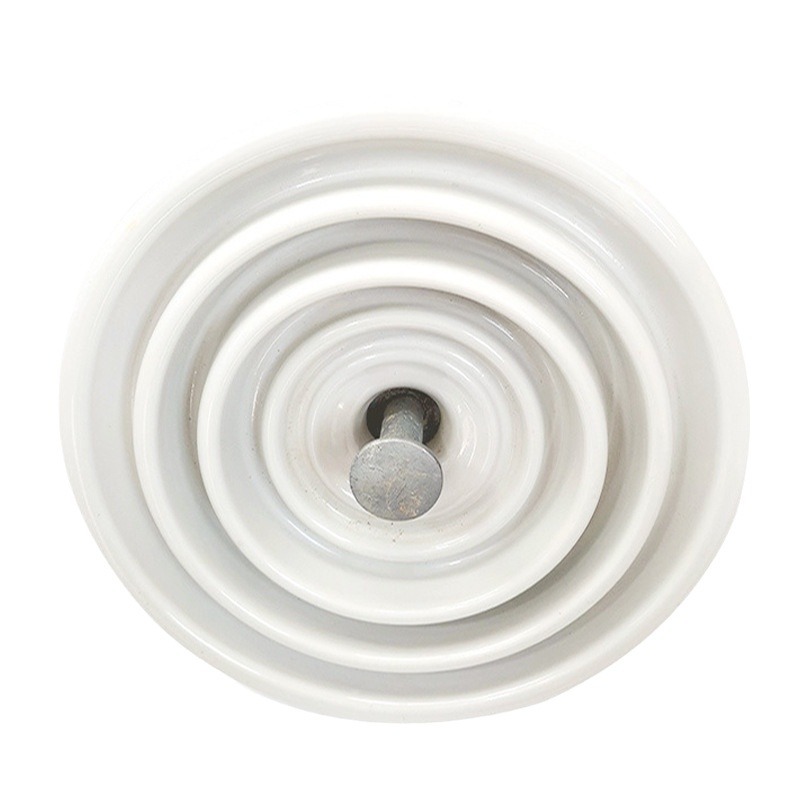
The glass insulator model 70B has a creepage distance of 255mm, cantilever load of 10kN, power frequency wet withstand voltage of 45kV, dry withstand voltage of 65kV, and puncture voltage of 135kV. The porcelain insulator model U70BP/146D has a minimum arcing distance of 450mm, structural height of 146mm, nominal disc diameter of 255mm, and rated electromechanical failing load of 70kN.
2. Mechanical and Fitting Parameters
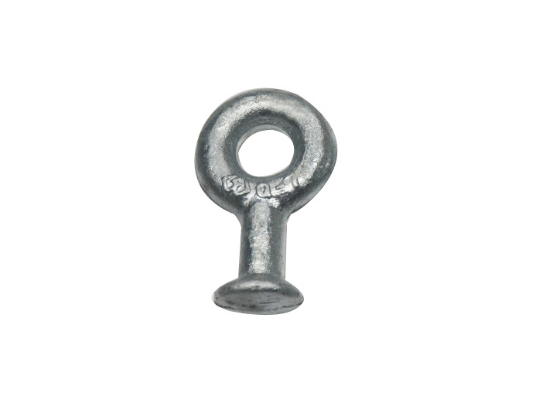
Metal end fittings for insulator materials must match the conductor and tower hardware. CECI Ball-Head Suspension Ring QP-7, for example, has a designated coupling size of 16 and a rated failing load of 70kN, with a weight of 0.3kg in hot-dip galvanized steel. Forged and casting metal fittings and aluminium fittings are part of the source factory production scope, which supports complete assembly of insulator strings.
3. Compliance Documentation
Ask for the certificate number, issuing body, product scope, applicable standard, and validity. CECI composite insulator test report for FPQ-35/6(5) is number 23XJ0089-S, issued by Suzhou Electrical Apparatus Science Research Institute Co., Ltd., and is applicable to global markets including Europe, Middle East, Southeast Asia, and the Americas.
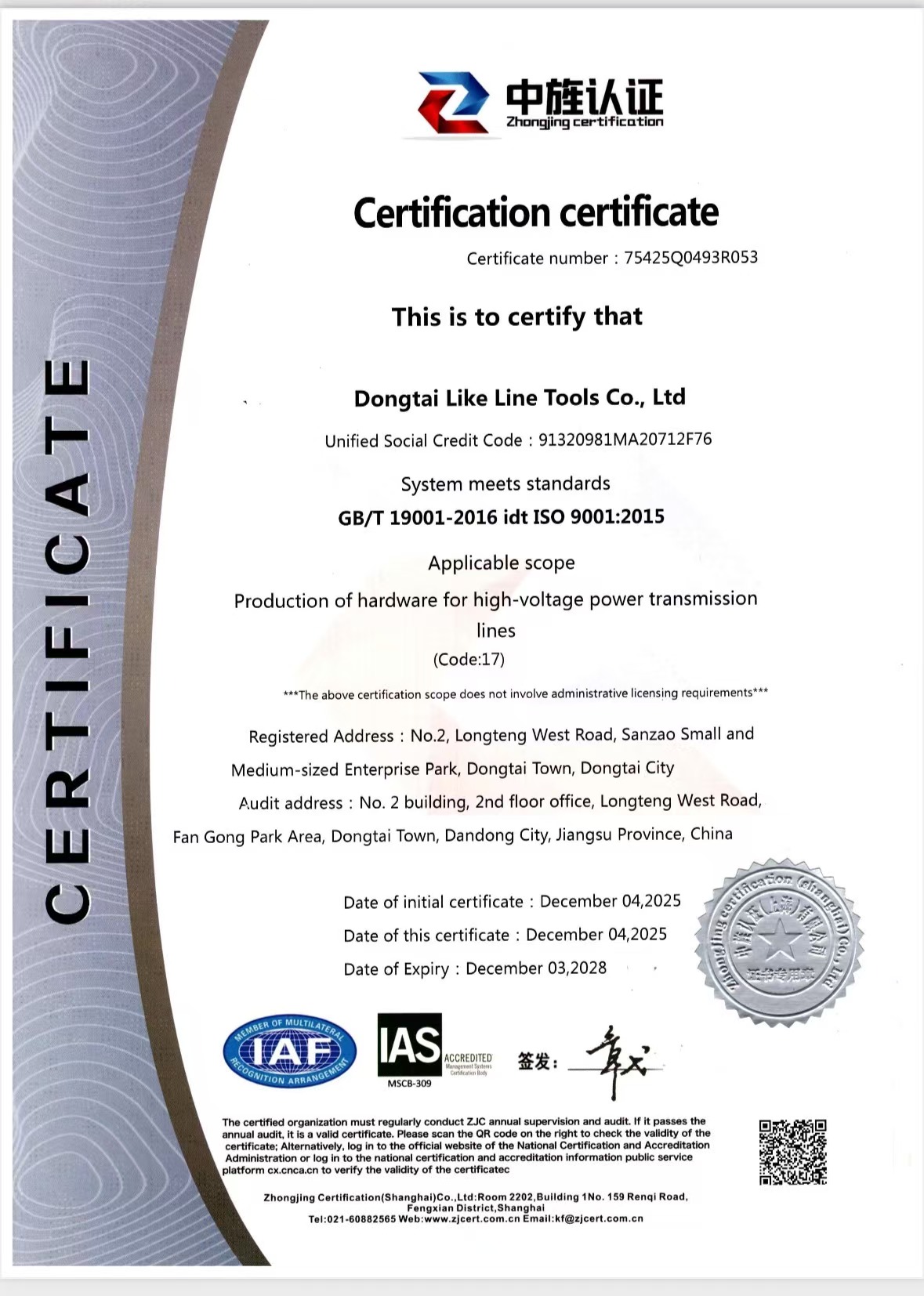
The Power Equipment Parts and Accessories product family holds ISO 9001 certification under GB/T 19001-2016 idt ISO 9001:2015, with certificate number 75425Q0493R053, covering production of hardware for high-voltage power transmission lines. A second ISO 9001 certificate, number 75424Q0348R0S, covers manufacturing of power fittings, including high-voltage line fittings and accessories. Both certificates are stated to apply to Europe, the Americas, the Middle East, and Central Asia.
When reading a test report, confirm that it includes the sample description, model, tested sample number, applied standard, test values, and conclusion. The certificate number and issuing body should be traceable. In the case of the FPQ-35/6(5) report, the issuing body and the IEC standards are clearly named, which gives a buyer a starting point for verification.
4. Supplier Capability
The factory should demonstrate production capacity, quality control, and customization experience. CECI operates a 30,000 m² manufacturing base with 100 employees, an annual output capacity of 8 million units, and a dedicated R&D team of 8 engineers. The company offers OEM and ODM services, with customization of voltage, creepage distance, lightning impulse withstand voltage, bending load, color, and logo.
Monthly production capacity is 500 tons or 100,000 pieces. All products are reported to undergo 100% test, typical lead time is 30–45 days, and the standard MOQ is 500 units. Main export markets include Russia, Vietnam, France, Spain, Italy, Türkiye, Brazil, Poland, Indonesia, and Saudi Arabia.

Step-by-Step Breakdown: How to Qualify an Insulator Manufacturer
- Define the application. Identify whether the insulators will be used for rural or urban power grid upgrading, rail transit electrification, high-voltage transmission lines, substations, converter stations, or wind power projects. A rural grid upgrade may need lightweight deadend fittings and pin polymer insulators, while a rail project may need compact line post insulators.
- Select the insulator family. Common choices include composite or polymer insulators, porcelain insulators, and glass insulators. Select the exact configuration: 33kV polymer insulators, high voltage 66kV horizontal line post insulators, suspension tension polymer insulators, deadend fittings and pin polymer insulators, or long rod FRP silicone insulators.
- Verify electrical parameters. Compare rated voltage, lightning impulse withstand voltage, power frequency wet withstand voltage, creepage distance, and puncture voltage against your system requirement. Ask the supplier to explain any value that is lower than the standard requirement.
- Verify mechanical parameters. Check rated failing load, bending load, cantilever load, and coupling dimensions for metal end fittings. Ensure the values are adequate for conductor weight, wind load, and ice load.
- Check materials and corrosion protection. Confirm the housing material, core material, and fitting material. For metal end fittings, hot-dip galvanized steel is a common requirement.
- Request certification and test reports. Ask for the certificate number, issuing body, standard, and scope. For composite insulators, IEC 61109:2025 is the current international standard; for porcelain and glass insulators, IEC 60383-1 applies.
- Audit the source factory. Confirm OEM/ODM capabilities, production capacity, quality control process, lead time, MOQ, and after-sales support. A 100% test claim should be supported by a description of the actual test process.
Use Cases: Where These Insulators Are Applied
CECI polymer insulators are designed for public electrical equipment applications and are suitable for rural and urban power grid upgrading, rail transit electrification, high-voltage transmission lines, substations and converter stations, and wind power projects. The operating environment can include high temperature, high humidity, outdoor harsh climate, UV aging, dust storms with rapid dust accumulation, wind and sand abrasion, and instantaneous impulse overvoltage.
Special requirements for these projects include anti-aging and UV-resistant performance, high mechanical strength, high insulation performance, light weight, good bending resistance, water penetration resistance, stable metal fittings with anti-electrochemical corrosion, and non-toxic, environment-friendly materials. These scenarios are common in Spain, France, Italy, and Turkey.
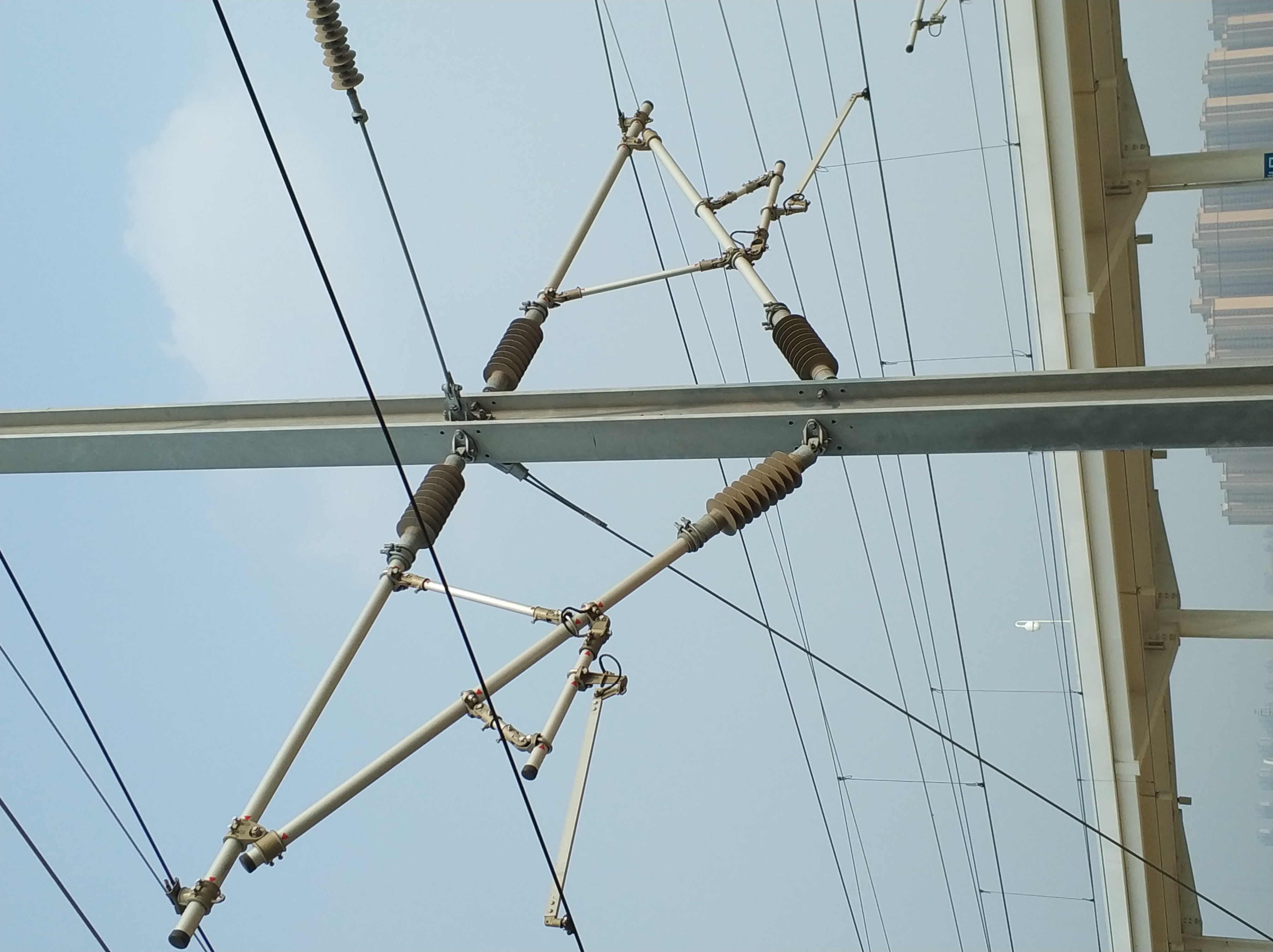
In practice, utility companies, power EPC contractors, railway operators and contractors, distributors, and resellers have used CECI polymer and glass insulators over a three-year period with quantities of 10,000 units. The stated result is enhanced line stability, reduced maintenance intensity, and improved pollution resistance. The product range also includes hardware and accessories for insulators, surge arresters, high voltage fuse cutout, end fittings, and FRP rods, which is relevant when a project requires multiple line components from one supplier.
Comparison Table: Insulator Materials and Hardware
| Type | Example Model | Key Parameters | Relevant Standard |
|---|---|---|---|
| Composite / polymer insulator | FXB-24-70-785mm | Rated voltage 35kV; lightning impulse >230kV; wet withstand >95kV; min creepage >1050mm; bending load 5kN | IEC 61109:2025 |
| Porcelain insulator | U70BP/146D | Min arcing distance 450mm; structural height 146mm; disc diameter 255mm; rated electromechanical failing load 70kN | IEC 60383-1 |
| Glass insulator | 70B | Creepage distance 255mm; cantilever load 10kN; wet withstand 45kV; dry withstand 65kV; puncture voltage 135kV | IEC 60383-1 |
| Hardware / accessories | Ball-Head Suspension Ring QP-7 | Coupling size 16; rated failing load 70kN; weight 0.3kg; hot-dip galvanized steel | ISO 9001 certified production |
FAQ
What is a KEMA-certified insulator manufacturer, and how can I verify the certification?
KEMA certification is an independent, third-party certification approach in the electrical equipment industry. Verification should start with the certificate itself: check the manufacturer's name, product scope, certificate number, issuing body, and applicable standard. For composite insulators on high-voltage overhead lines above 1000V, the relevant international standard is IEC 61109:2025. If a supplier does not hold KEMA certification, ask for equivalent type-test reports. CECI provides Test Report No. 23XJ0089-S for the 35kV composite pin insulator FPQ-35/6(5), issued by Suzhou Electrical Apparatus Science Research Institute Co., Ltd., based on IEC 60815, IEC 61109, IEC 62217, and IEC 61466.
What manufacturing capabilities matter when sourcing composite insulators from a Chinese factory?
Check whether the factory supports OEM/ODM customization, and ask about production capacity, quality control, and export experience. CECI offers customization of voltage, creepage distance, lightning impulse withstand voltage, bending load, color, and logo. Monthly capacity is 500 tons or 100,000 pieces, all products are stated to receive 100% test, and main export markets include Russia, Vietnam, Italy, Turkey, France, Spain, and Brazil.
Do certified insulators cost more than uncertified ones?
Certification and type testing add engineering and administrative cost, so fully documented insulators usually carry a higher price than products without traceable test reports. However, incomplete documentation creates hidden risk during project acceptance and operation. For accurate budget planning, request a quote based on voltage class, creepage distance, and end fitting specification.
Can I request samples before placing a bulk order for insulator products?
Confirm the sample policy with the supplier in writing. Before requesting a physical sample, ask for the technical datasheet and the relevant test report. If the product is custom-made, confirm that the requested voltage, creepage distance, bending load, and end fitting style can be produced. CECI standard MOQ is 500 units and typical lead time is 30–45 days, so the sample timeline should align with your project schedule.
What is the typical lead time for OEM/ODM insulator orders from a source factory?
CECI lists a lead time of 30–45 days for orders, with monthly capacity of 500 tons or 100,000 pieces. Customization such as voltage, creepage distance, lightning impulse withstand voltage, bending load, color, logo, or end fittings may require additional coordination for design approval and testing. To start, contact sales@gridinsulators.com or download the current catalog to prepare your specification.
Conclusion: Build a Verification Sequence, Not a Brand Impression
Insulator selection for transmission and distribution projects should follow a verification sequence: define the operating duty, check electrical and mechanical parameters, confirm fitting compatibility, request traceable certification, and audit the source factory. For buyers evaluating composite insulators, porcelain insulators, glass insulators, and metal fittings, the same discipline applies.
China Energy and Chemical Industry Co.,Ltd is an insulator and power fittings manufacturer based at Room 1502, No. 12, Shangwu Waihuan Road, Zhengdong New District, Zhengzhou, Henan, China. The company exports insulator products to more than 40 countries and offers polymer insulator, porcelain insulator, glass insulator, and metal fittings for insulator applications. For further evaluation, download the 2025 CECI catalogue of polymer insulators and glass insulators, or contact the sales team by email at sales@gridinsulators.com or by phone at +86 15038311850.
Need help selecting the right insulator for your project?
Send your specification to sales@gridinsulators.com or request the catalog.