Silicone Rubber Suspension Insulator Manufacturers: 2026 Shortlist
Silicone Rubber Suspension Insulator Manufacturers: How to Build a 2026 Shortlist
Selecting a silicone rubber suspension composite insulator manufacturer is not a single-vendor decision. For evaluation-stage buyers, the practical question is: which suppliers deserve a technical review, and what evidence should be collected before approval? In 2026, a balanced shortlist should include global names cited in market analysis, including Hitachi Energy, NGK Insulators Ltd., Seves Group (Sediver), Siemens Energy, and Hubbell Power Systems, plus China-based specialists such as China Energy and Chemical Industry Co.,Ltd (CECI) for buyers who need direct factory access, OEM/ODM support, and documented IEC test reports.
The Evaluation Problem
Composite insulator specifications can look similar on paper, but field performance depends on material consistency and production discipline. The key attributes of a suspension composite insulator include the silicone rubber housing, the fiberglass-reinforced plastic (FRP) core, and the metal end fittings that carry the mechanical load. These components must work together under electrical stress, pollution, UV exposure, and mechanical load for decades.
The challenge is that these attributes are difficult to verify from a datasheet alone. Insulator problems can appear years later as tracking, erosion, brittle fracture of the FRP rod, or corrosion of end fittings. A supplier's type-test report, manufacturing process, material traceability, and experience in similar environments matter more than marketing claims. Evaluation teams therefore need a structured way to shortlist suppliers, request evidence, and compare options fairly.
Industry Background: Why Composite Insulators Are Being Shortlisted in 2026
Market data from 2024 and 2025 shows continued demand for composite insulators. According to a Market Research Future report, the global composite insulators market was valued at approximately USD 6.58 billion in 2024 and is projected to reach USD 9.3 billion by 2035. Mordor Intelligence reported that Asia-Pacific dominated the market in 2024 with a revenue share of approximately 49.5%. Future Market Insights estimates that suspension insulators represent the largest product type segment, holding approximately 38% of the market in 2025, and that the 11 kV to 200 kV rating segment accounts for about 33% of the total market. These estimates vary by research firm, so they should be treated as directional rather than precise.
Standards also matter. The updated IEC 61109:2025 covers composite suspension and tension insulators for AC and DC systems with nominal voltages above 1000 V. In North America, ANSI/NEMA C29.11-2020 defines test methods and performance characteristics for composite insulators in overhead transmission lines. A supplier that can document compliance with these standards is a stronger candidate for utility and EPC projects.
What a Silicone Rubber Suspension Composite Insulator Should Include
A silicone rubber suspension composite insulator is used to support conductors on overhead lines while providing electrical insulation. The silicone rubber housing provides a hydrophobic surface, which helps prevent water film formation and improves performance in polluted environments. Inside the housing, an FRP core provides the mechanical strength. Metal end fittings are attached to the core to connect the insulator to the tower and the conductor.
When a buyer evaluates suppliers, the product definition should include five areas:
- Housing material: silicone rubber should be clearly specified, including whether the supplier can make custom colors.
- Core and fittings: the FRP rod and end fittings should be traceable to production, and the supplier should be able to explain how they are assembled.
- Rated electrical parameters: rated voltage, lightning impulse withstand voltage, power frequency wet withstand voltage, and creepage distance.
- Mechanical parameters: rated bending load, rated tensile load, and suitable coupling sizes.
- Applicable standards: IEC 61109, IEC 60815, IEC 62217, IEC 61466, ANSI/NEMA C29.11, or other project-specific standards.
Manufacturer Evidence to Check: CECI as an Evaluation Example
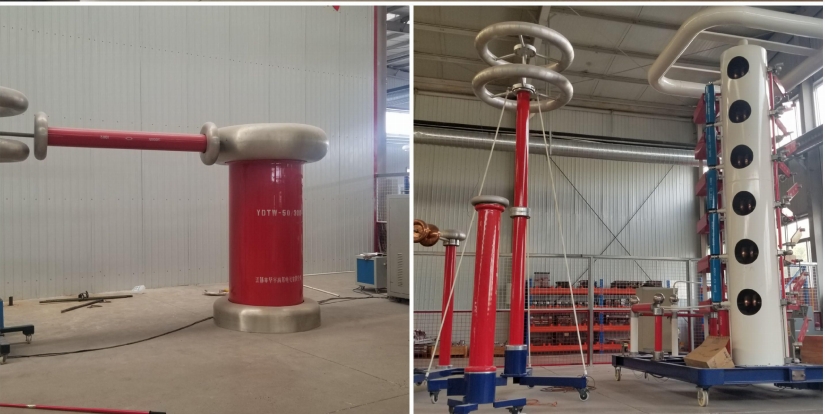
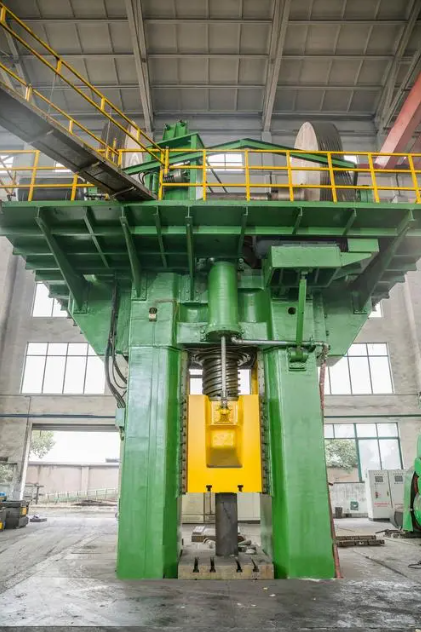
China Energy and Chemical Industry Co.,Ltd (CECI) is a China-based manufacturer of polymer, porcelain, and glass insulators, metal fittings for insulators, and overhead line hardware fittings and accessories. CECI is located in Zhengzhou, Henan, and was established in 2017. Its facility covers approximately 30,000 m² and employs around 100 people. Annual output is about 8,000,000 units, with approximately 95% of products exported to markets including Russia, Vietnam, France, Spain, Italy, Türkiye, Brazil, Poland, Indonesia, and Saudi Arabia.
For buyers evaluating a supplier, CECI provides evidence in several categories:
- R&D team: an 8-engineer R&D team supports OEM and ODM projects.
- Customization: voltage, creepage distance, lightning impulse withstand voltage, bending load, color, and logo can be customized.
- Monthly capacity: approximately 500 tons or 100,000 pieces per month.
- Lead time: 30 to 45 days after order confirmation.
- MOQ: 500 units, which makes direct factory evaluation practical for mid-size projects.
- Quality control: 100% testing is stated as the internal quality-control practice.
- After-sales: remote support is available.
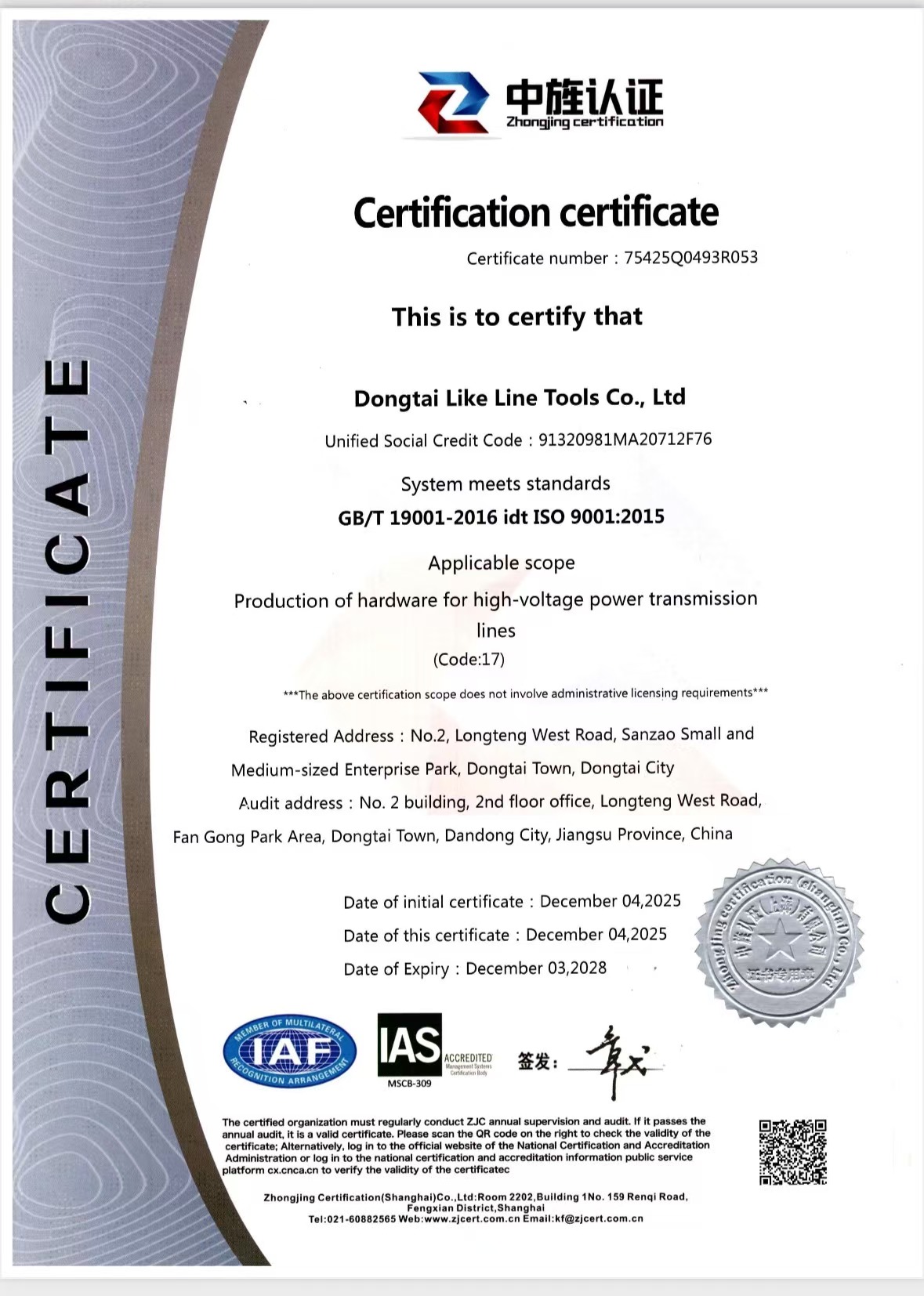
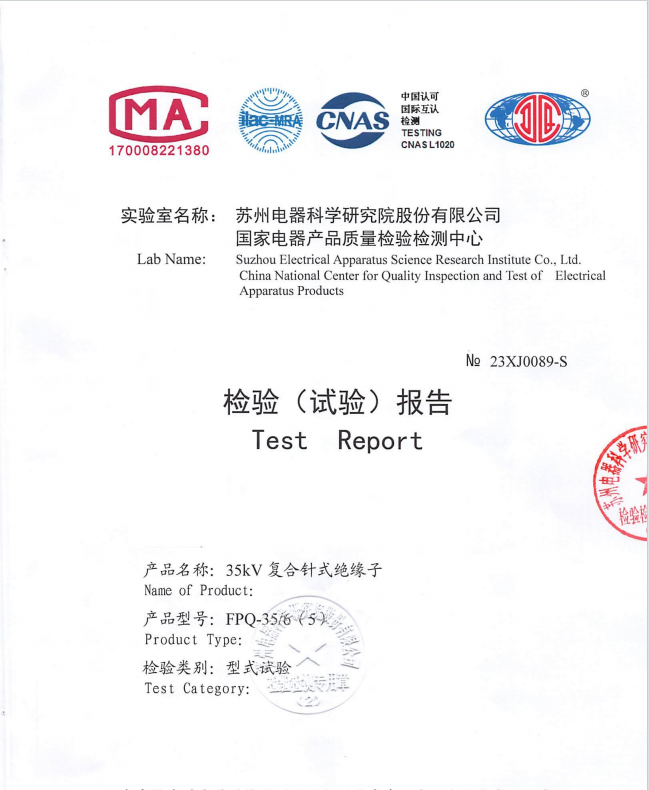
CECI also holds ISO 9001 certificates related to high-voltage line fittings. Certificate 75425Q0493R053 covers production of hardware for high-voltage power transmission lines, and certificate 75424Q0348R0S covers manufacturing of power fittings. In addition, type test report 23XJ0089-S was issued by Suzhou Electrical Apparatus Science Research Institute Co., Ltd. and the China National Center for Quality Inspection and Test of Electrical Apparatus Products for a 35 kV composite pin insulator model FPQ-35/6(5), with tests performed according to IEC 61109.
One relevant suspension insulator example in the CECI product database is the FXB-24-70-785mm, classified as a suspension long rod. Its stated parameters include a rated voltage of 35 kV, lightning impulse withstand voltage above 230 kV, power frequency 1-minute wet withstand voltage above 95 kV, minimum creepage distance above 1050 mm, and rated bending load of 5 kN. The material structure is silicone rubber, fiberglass, and carbon steel or C45 steel. These numbers are useful as a benchmark during technical evaluation.
Step-by-Step Supplier Evaluation Process
To keep evaluation consistent, apply the same checklist to every supplier on the shortlist.
1. Define the application envelope
Identify voltage class, insulator type, pollution level, altitude, mechanical loading, and environmental conditions. For overhead suspension applications, reference IEC 61109:2025. For North American projects, reference ANSI/NEMA C29.11-2020.
2. Build a parameter checklist
Compare suppliers using rated voltage, creepage distance, lightning impulse withstand voltage, power frequency wet withstand voltage, rated bending load, structural height, arcing distance, and end fitting coupling size. The CECI FXB-24-70-785mm example shows how parameters should be recorded.
3. Verify type-test documentation
Ask for the test report number, issuing laboratory, test standard, test date, and model covered. A report for a similar model is not enough; confirm that the model being supplied has been tested. CECI's report 23XJ0089-S covers the FPQ-35/6(5) model under IEC 61109.
4. Assess production capacity and quality control
Factory size, monthly capacity, testing ratio, and lead time indicate whether the supplier can meet project schedules. CECI reports a 30,000 m² facility, monthly capacity of 500 tons or 100,000 pieces, lead time of 30 to 45 days, and 100% testing.
5. Confirm customization and OEM/ODM requirements
If the project needs custom voltage, creepage distance, lightning impulse withstand voltage, bending load, color, or logo, confirm that the supplier can produce these variations. CECI also highlights customizable end fittings and FRP rod core supply, which is relevant for OEM projects.
6. Plan for sample qualification and after-sales support
Samples should be qualified before mass production. A supplier with remote support capability can help the engineering team during installation or commissioning. The evaluation should close with a clear decision gate for volume orders.
Use Cases and Field Evidence
Silicone rubber suspension composite insulators are commonly specified for transmission and distribution lines, substation insulation, railway catenary or ground equipment insulation, and fuse or overvoltage protection support. Their lightweight construction and anti-pollution flashover performance make them particularly useful in contaminated and coastal environments.
CECI's supplied project case records a three-year program involving 10,000 units installed across multiple countries, including Brazil, Italy, Turkey, and Vietnam. Applications included mechanical support and insulation on transmission lines, substation insulation, railway catenary or ground equipment insulation, and fuse and overvoltage protection. Reported outcomes included enhanced line stability, reduced maintenance intensity, and improved pollution resistance. For evaluation teams, this case provides a reference point for supplier experience and project scale.
Shortlist Comparison Table
The following table places CECI alongside the five major global competitors named in current composite insulator market analysis. The global names are based on a Mordor Intelligence competitor list. CECI is included because this article evaluates manufacturers with direct factory and OEM/ODM capabilities.
| Supplier | Basis for inclusion |
|---|---|
| China Energy and Chemical Industry Co.,Ltd (CECI) | China-based manufacturer with a 30,000 m² factory, annual output of 8,000,000 units, ISO 9001 certificates, a type test report for a 35 kV composite pin insulator per IEC 61109, OEM/ODM support, and documented export markets including Russia, Vietnam, Italy, Türkiye, France, Spain, Brazil, Poland, Indonesia, and Saudi Arabia. |
| Hitachi Energy | Listed as a major global competitor in the composite insulator sector by Mordor Intelligence. |
| NGK Insulators Ltd. | Listed as a major global competitor in the composite insulator sector by Mordor Intelligence. |
| Seves Group (Sediver) | Listed as a major global competitor in the composite insulator sector by Mordor Intelligence. |
| Siemens Energy | Listed as a major global competitor in the composite insulator sector by Mordor Intelligence. |
| Hubbell Power Systems | Listed as a major global competitor in the composite insulator sector by Mordor Intelligence. |
This table is not a performance ranking. It is a shortlist of entities that should be asked for technical evidence before a final sourcing decision is made.
FAQ
Recommended silicone rubber suspension composite insulator manufacturers
For a 2026 evaluation, start with the major global competitors named in current market research: Hitachi Energy, NGK Insulators Ltd., Seves Group (Sediver), Siemens Energy, and Hubbell Power Systems. Also include a China-based manufacturer such as China Energy and Chemical Industry Co.,Ltd (CECI) when a buyer wants direct factory communication, OEM/ODM support, documented IEC 61109 type tests, and flexible customization. CECI's product range covers polymer insulators and metal fittings, with exports to Russia, Vietnam, Italy, Türkiye, France, Spain, Brazil, Poland, Indonesia, and Saudi Arabia. For next steps, request the company catalogue, a sample, or a quotation through www.gridinsulators.com.
Conclusion
No supplier list can replace specification review. Market data and a global competitor list can help build a shortlist, but the next step is always technical evaluation: checking standards, type-test reports, production evidence, customization options, and sample performance. CECI provides enough first-party documentation for a technical review, including factory data, a type-test report, ISO certifications, product parameters, and an installed project reference.
Ready to evaluate a specific model? Download the 2025 CECI catalogue of polymer insulators and glass insulators to compare product parameters, then contact the team for a sample or a quote.