
Application Guide: Matching Irrigation Pivot and Hose Reel Systems to Farm Scenarios
A fixed center pivot and a traveling hose reel machine can both irrigate a large farm, but they answer different field conditions. A fixed center pivot with circular motion suits large rectangular fields, where one water point and one power supply can serve 10 to 100 hectares. A hose reel irrigator with a 19–41 m spray radius is the more adaptable machine for irregular plots, rented land and fields that have to be watered block by block, covering a water flow of 25–52 tons per hour through a 300 m PE pipe.
This application guide is written for importers, distributors, farm managers and procurement engineers who are choosing between an irrigation pivot system and a hose reel irrigation system for a defined farm scenario. It sets out the criteria that decide the match — field geometry, coverage area, water flow, power availability, crop clearance and mobility — and applies those criteria to published specifications and documented project results from China Yulin Irrigation Equipment Co., Ltd. (YULIN IRRIGATION), a manufacturer founded in 2009 and located in Lvshunkou District, Dalian City, Liaoning Province, China, producing center pivot, lateral move, towing and hose reel irrigation systems as well as irrigation parts.
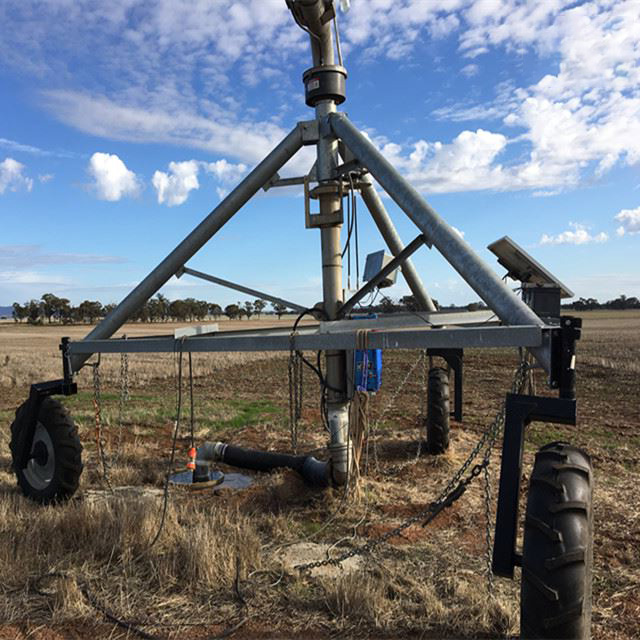
Pivot irrigation machine at work on a corn farm in Zimbabwe — a scenario where a single machine covers a continuous block of crop.
Problem Definition: When the Machine Fits the Catalogue but Not the Field
Irrigation equipment is usually purchased against a catalogue, but it performs against a field. On large farms, three mismatch patterns account for most of the disappointment reported after commissioning: geometry, water and power, and mobility.
- Geometry mismatch. A machine is sized for a circle while the field is a rectangle with three unsupported corners, or a hose reel is purchased for a field that could have been covered in a single continuous pass.
- Water and power mismatch. The pump cannot deliver the flow the machine needs, or the field has no reliable grid connection while the selected drive depends on electricity.
- Mobility mismatch. The farm rotates crops and land between seasons, but the machine that was bought cannot be moved economically from one plot to another.
The geometric constraint is the least intuitive. A fixed center pivot applies water in a circle: the machine rotates clockwise and anti-clockwise around a central tower, and the published parameter set defines the operating guardrails — the land usage coefficient within the irrigated circle is not less than 0.9, rain intensity is not more than 0.16 mm/min, and plant mechanical damage is not more than 2 percent. Those three figures explain why a pivot handles a large rectangular block efficiently in the middle and needs help at the corners: within the circle the land is used almost completely, droplet impact is controlled, and crop damage from the moving structure stays deliberately low.
A hose reel irrigation machine works the opposite way. Instead of covering a fixed circle, it travels across a strip, pulling a 90 mm PE pipe of 300 m and spraying through a gun with a 19–41 m radius. The unit is moved, repositioned and run again on the next block. That is precisely the behaviour that suits irregular boundaries, split plots, rented land and farms where the irrigated footprint changes from season to season.
Industry Background: Scenario Fit Is Now Part of the Purchase Decision
Large irrigation machinery is a growing equipment category. The global center pivot irrigation system market was estimated at USD 2.56 billion in 2025 and is projected to reach USD 5.67 billion by 2030, according to Mordor Intelligence market research. Growth of that scale implies many first-time buyers, and first-time buyers are where scenario mismatch is most expensive.
Manufacturer activity points in the same direction. Valmont Industries reported Agriculture segment sales of USD 278.0 million in the fourth quarter of 2024, representing 26.7% of total net sales. Lindsay Corporation secured a multi-year international irrigation supply agreement in the Middle East and North Africa region valued at more than USD 100 million in 2024. Contracts of that size are not won on a generic product description; they are won on a defined scenario — hectares to be covered, water source, power supply, crop rotation and service coverage.
Measurement has also been standardised. ISO 11545:2009 is the active international standard that specifies an in-field method for determining the uniformity of water distribution from centre-pivot and moving lateral irrigation machines. When uniformity can be measured the same way across sites, the practical question for a buyer shifts from “which machine is popular” to “which machine fits this field, this water source and this power supply”. That is the question this guide answers.
Detailed Solution: Two Machine Types, Two Field Logics
Fixed DYP Center Pivot: Circular Coverage for Large Rectangular Fields
A fixed DYP center pivot is the standard choice where a large, reasonably regular block has to be irrigated continuously with minimal labour. The published coverage range is expressed in span length and hectares, which allows a buyer to match a machine to a field before discussing structure or price:
- 177.6 m span length covering 10 hectares
- 307.4 m span length covering 30 hectares
- 395.6 m span length covering 50 hectares
- 565 m span length covering 100 hectares
Mechanically, the machine is an electromechanical, reversible system with an individual drive for each span, supplied at 380–460 V. The standard control panel includes a main power switch (disconnect switch), a power control switch, a water switch, a direction control switch, a percentage indicator for speed regulation, and an auto-reverse switch, with the panel rated IP65. Rotation is continuous or start-stop, following the same mode as the motor of the last tower, and the machine irrigates in both directions. The distance from the ground to the bottom of the truss rod is 3 ± 0.2 m, which is the clearance that decides whether tall crops pass safely under the structure.
Structure and protection determine service life in exposed conditions. The pipeline is sectional in a truss structure, the anti-corrosion coating is hot-dip galvanization according to GB/T 13912-2002, and the material is specified as Q235B metal under GB 13912-2020. Tower wheels are 14.9-24 irrigating tyres, two wheels on each trolley with hot-dip galvanized discs. The tower box is rated IP33 and the collector ring IP65, with an 11-ring collector ring of not less than 4×90 A and 7×25 A and copper cable cores of not less than 4×4 mm² + 7×1.0 mm². The flexible irrigation hoses are PVC, reinforced and UV resistant, and the pipeline layers are specified to keep the system intact for life.
The operating envelope is wide: temperatures from −45 to +45 °C, pressure regulators of 10, 15 or 20 psi, an average drop diameter of not more than 1.1 mm, and use of irrigation water with pH 6–7.5 without quality problems during the warranty period. Irrigated crops listed for the system include fodder crops, cereals, vegetables and industrial crops, including corn. Where a rectangular block leaves outer corners uncovered, an end gun or an end-of-pivot sprinkler provides supplementary irrigation for those corners.
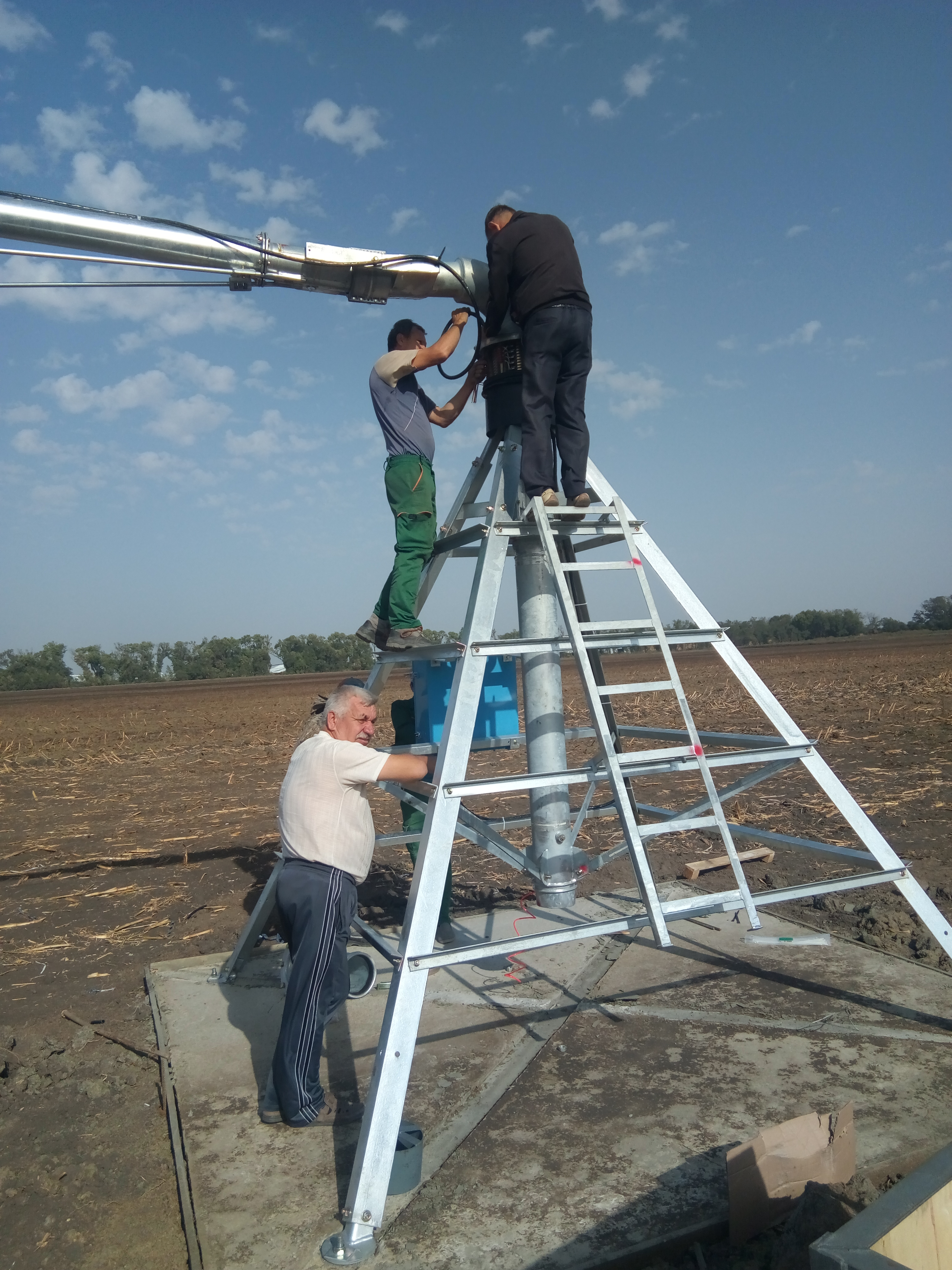
Central control tower of a center pivot irrigation system during on-site assembly — the fixed water and power point around which the machine rotates.
Hose Reel Irrigation Machine (JP800, JP90-300): Flexible Coverage for Irregular Plots
The JP800 hose reel irrigation machine, also produced as the JP90-300 model, is a traveling machine: it unwinds a flexible pipe as it moves and rewinds it as it irrigates. Its published specification set is compact and easy to check against a field:
- PE pipe diameter 90 mm, PE pipe length 300 m
- Water flow 25–52 t/h
- Nozzle diameter 16–22 mm, spray radius 19–41 m
- Spray gun DL50/SIMA10497
- Inlet pressure 0.6–0.9 MPa
- Weight 2180 ± 30 kg; overall size 6120 L × 2330 W × 2770 H mm; shipping size 2450 L × 2000 W × 2250 H mm
- Material: metal and PE
The published selling points are operational rather than decorative: the machine is water turbine driven and requires no electricity; it is simple to operate and easy to install; it is quick and convenient to move; it saves water and labour costs; and it is positioned as a low-cost option within the range. In practice that combination is what makes the machine useful on irregular plots — a hose reel does not need a rectangular field, a central water point or a grid connection to do its job.
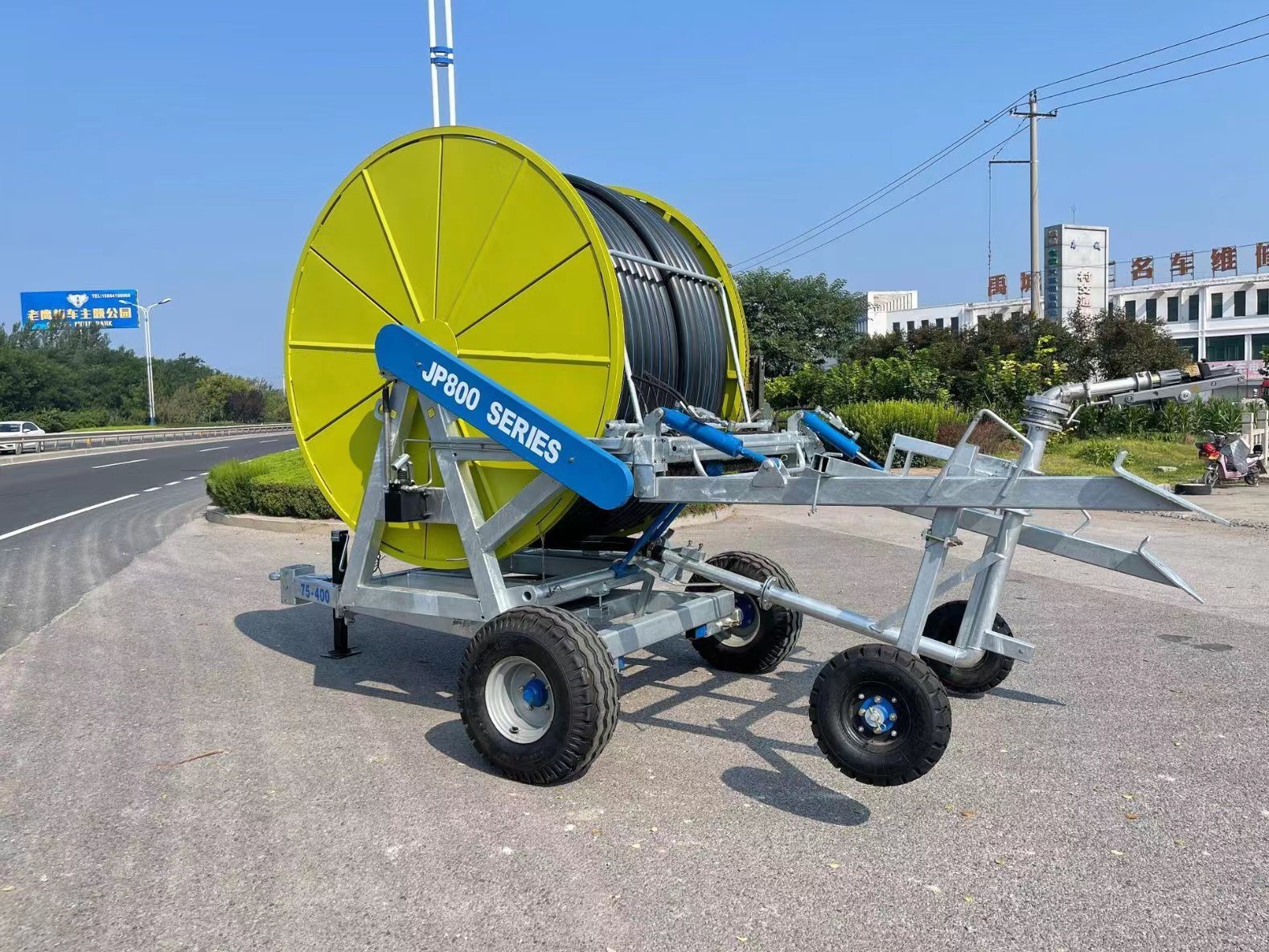
JP800 hose reel irrigation machine — water turbine driven, no electricity required, with a 90 mm × 300 m PE pipe.
Matching Rules: Six Checks Before You Choose
- Field geometry. Large rectangular block with a central water point → fixed DYP center pivot, with an end gun for the corners. Irregular boundaries, split plots or rented land → hose reel irrigation machine.
- Coverage scale. Match hectares to span length (10, 30, 50 or 100 hectares) for a pivot; match strip width to the 19–41 m spray radius for a hose reel machine.
- Water supply. A hose reel machine needs 25–52 t/h at an inlet pressure of 0.6–0.9 MPa. A pivot needs a project-configured 24-hour application rate and a rain intensity kept at or below 0.16 mm/min.
- Power. A pivot runs on an electromechanical drive at 380–460 V, or on external power connection / diesel generator supply where the grid is unreliable. A hose reel machine is driven by the water turbine and needs no electricity at all.
- Crop and clearance. The 3 ± 0.2 m truss clearance of the pivot suits fodder crops, cereals, vegetables and industrial crops including corn; droplet size and mechanical damage are controlled at not more than 1.1 mm and not more than 2 percent respectively.
- Water chemistry and mobility. Pivot operation assumes irrigation water at pH 6–7.5 during the warranty period; where water is more acidic or alkaline, an optional poly pipe protects the pipeline (a configuration used for a dry-season project in Papua New Guinea). Where the machine must move between plots, favor the hose reel, or the towable and linear-move configurations within the same product family.
Step-by-Step Breakdown: Matching a Machine to a Farm
Step 1 — Map the geometry and the irrigation pattern
Draw the actual field boundary, not the ideal one, and mark the water point. If the block can be irrigated as a circle 90 percent or more usefully, a fixed center pivot is the efficient answer. If the boundary is irregular, or the field is assembled from several rented parcels, plan strip by strip and start from the hose reel.
Step 2 — Size the coverage to the area
Convert hectares into machine size. A pivot of 177.6 m covers 10 hectares, 307.4 m covers 30 hectares, 395.6 m covers 50 hectares and 565 m covers 100 hectares. For a hose reel machine, calculate the number of passes from the 19–41 m spray radius and the 300 m pipe length, then confirm that the resulting travel time still fits the irrigation interval of the crop.
Step 3 — Verify water flow and inlet pressure
Check the pump against the machine, not the other way round. The hose reel machine operates at 25–52 t/h with an inlet pressure of 0.6–0.9 MPa, and nozzle diameter can be selected between 16 mm and 22 mm. On the pivot side, keep the application rate within the published rain intensity ceiling of 0.16 mm/min so that water infiltrates instead of running off.
Step 4 — Confirm power and site conditions
Decide whether the site has a reliable supply at 380–460 V, whether a diesel generator is required, or whether a water turbine driven machine removes the question entirely. Off-grid operation is a documented scenario: a dry-season project in Papua New Guinea used a 395.6 m center pivot covering 50 hectares with an end spray gun and a 1000 L fertilizer tank, driven by an independent diesel generator set.
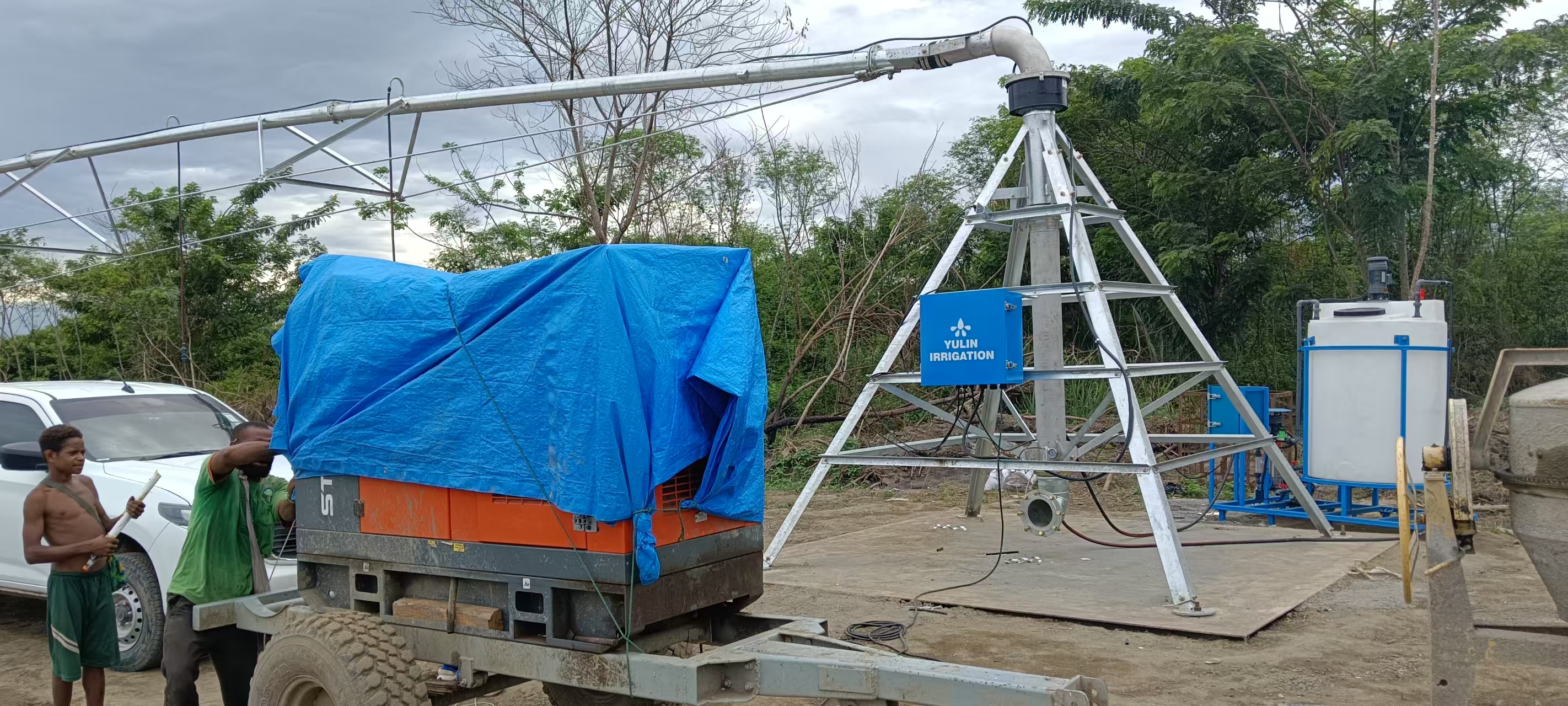
Independent diesel generator set supplying a center pivot irrigation system in an area without a reliable grid connection.
Step 5 — Match the crop, clearance and water chemistry
Confirm that the crop passes under a truss clearance of 3 ± 0.2 m, and that the water chemistry stays within the pH 6–7.5 range assumed for the pivot during the warranty period. Where the water is outside that range, or where fertigation and pest control are combined with irrigation, order the matching accessories at the same time: the Papua New Guinea project combined an end spray gun, an optional poly pipe for acidic or alkaline water, and pesticide injection during irrigation.
Step 6 — Plan mobility, shipping and commissioning
Finally, plan how the machine arrives and how it starts working. A 90-300 hose reel machine ships at 2450 × 2000 × 2250 mm and an operating weight of 2180 ± 30 kg, so unloading and repositioning can be planned in advance. Installation support is part of the delivery scope: YULIN IRRIGATION provides global localized on-site installation, commissioning and operator training, together with video technical support, online support and free spare parts.
Use Cases: How the Match Works in Real Projects
Large pasture and forage blocks — New Zealand and Australia
A large-scale dairy farmer in New Zealand installed 70 center pivot irrigation units for grass irrigation; the project has run for 9 years, with the reported outcomes being higher crop output, labour savings and a long service life. An Australian distributor installed 600 center pivot units over 15 years for forage and pasture irrigation, also used for cotton and watermelon; the documented results include more than 40% energy savings, increased crop output, labour savings, a long lifespan and low maintenance cost. Both scenarios share the same geometry: continuous blocks where a circular machine works with few interruptions.
Soybean rotation on movable, rentable land — Brazil
A large-scale farmer in Brazil used 50 hose reel irrigation machines for soybean irrigation over a 6-year period. The recorded result was a 30% increase in output during dry conditions together with labour savings, and the highlighted advantages were that the machine is easy to pull from one piece of land to another and easy to rent out. That is the practical value of the traveling format: the asset follows the crop rather than the ownership of a single field.
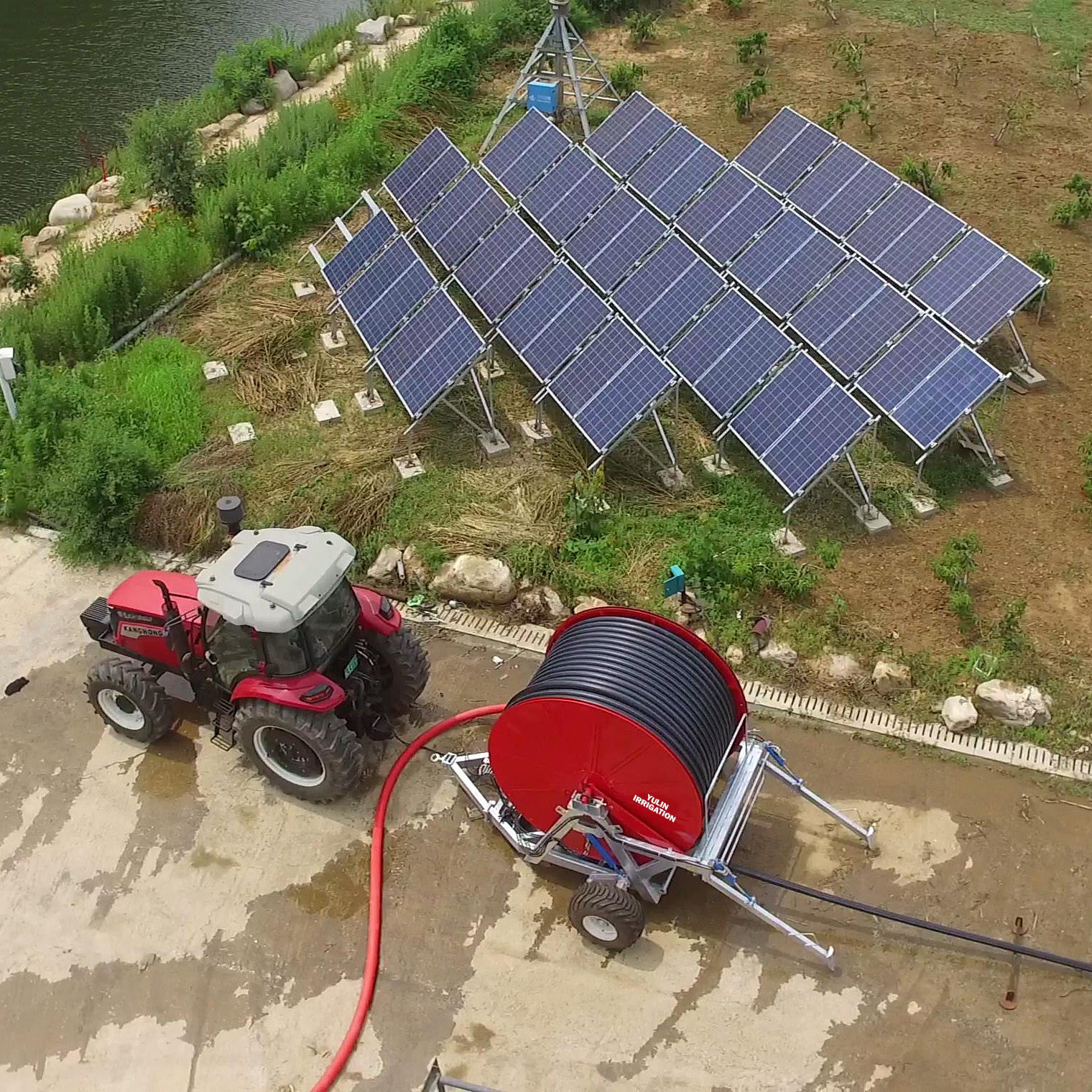
Hose reel irrigation equipment on a large soybean project site in Brazil — 50 units used over a 6-year period.
Cereal and corn blocks with a short water window — Zimbabwe and Russia
An end customer in Zimbabwe installed 45 center pivot irrigation units for crop irrigation; over 6 years the project produced increased crop output and labour savings. A Russian group took 450 units supplied to end users over 9 years, with reported improvements in product performance and reduced labour requirements, and a 40% increase in efficiency. Both cases involve relatively compact irrigation windows, where a fixed machine that runs with minimal intervention has an operational advantage over manual or repeatedly repositioned equipment.
OEM programmes for local distribution — Algeria
A farm irrigation OEM client in Algeria used 70 center pivot irrigation systems for farmland irrigation over 7 years. Documented outcomes include a 40% increase in efficiency and higher output, with the manufacturer supporting a local brand in delivering a complete pivot and service offer to its own customers. For importers and distributors, this is the scenario in which voltage customization for OEM orders and consistent component supply matter more than any single specification.
Specialty and non-agricultural applications — South Korea
One linear-move machine was supplied for a South Korean government project that uses recycled chemical wastewater for school lawn irrigation; the installation has been in service for 7 years, supporting wastewater recycling and providing natural grass for students. Specialty applications like this confirm an important planning point: the machine type should follow the water source and the field layout, not only the crop.
Specification Comparison: Fixed Center Pivot vs JP800 Hose Reel Irrigator
| Comparison point | Fixed DYP center pivot irrigation system | JP800 hose reel irrigation machine (JP90-300) |
|---|---|---|
| Field geometry that fits | Large rectangular blocks supplied from one central water point; circular motion, clockwise and anti-clockwise | Irregular plots, split parcels and rented land irrigated block by block |
| Coverage scale | 177.6 m covers 10 ha; 307.4 m covers 30 ha; 395.6 m covers 50 ha; 565 m covers 100 ha | 300 m PE pipe with a 19–41 m spray radius |
| Movement | Continuous or start-stop rotation, following the motor of the last tower; reversible, individual drive for each span | Traveling machine, quick and convenient to move between fields |
| Power and drive | Electromechanical tower drive at 380–460 V, or external power connection / diesel generator supply | Water turbine driven, no electricity required; inlet pressure 0.6–0.9 MPa |
| Water delivery | Irrigation rate per 24 h listed as an option (set per project); rain intensity not more than 0.16 mm/min | 25–52 t/h through a 90 mm PE pipe; nozzle 16–22 mm; spray gun DL50/SIMA10497 |
| Droplet and crop protection | Average drop diameter not more than 1.1 mm; plant mechanical damage not more than 2% | — |
| Structure and protection | Hot-dip galvanized to GB/T 13912-2002, Q235B metal; tower box IP33; collector ring IP65 | Metal and PE construction |
| Operating envelope | −45 to +45 °C; water pH 6–7.5 during the warranty period; truss clearance 3 ± 0.2 m | — |
| Shipping profile | — | 2450 × 2000 × 2250 mm; operating weight 2180 ± 30 kg |
| Best-fit scenario | Fodder crops, cereals, vegetables and industrial crops including corn on large irrigated circles | Block irrigation on irregular or changing fields where mobility and low operating cost drive the decision |
FAQ
- 1. Which standard and certifications should a buyer check on center pivot and hose reel irrigation equipment?
- ISO 11545:2009 is the active international standard specifying the in-field method for determining the uniformity of water distribution from centre-pivot and moving lateral irrigation machines, so it is the reference used to measure how evenly a machine applies water. On certification, China Yulin Irrigation Equipment Co., Ltd. states CE, ISO 9001 and CSA certification for its equipment, and reports that all irrigation equipment undergoes strict anti-corrosion and wind resistance testing for tropical, saline-alkali and high-wind farmland environments. On the center pivot specification, the anti-corrosion coating is hot-dip galvanization according to GB/T 13912-2002, the tower box is rated IP33 and the collector ring IP65.
- 2. How do I decide between a fixed center pivot and a hose reel machine for my field?
- Decide from geometry and coverage first. A fixed DYP center pivot irrigates in a circular pattern, clockwise and anti-clockwise, and its published models cover 10, 30, 50 and 100 hectares with spans of 177.6 m, 307.4 m, 395.6 m and 565 m; within the irrigated circle the land usage coefficient is not less than 0.9. That is the profile of a large rectangular block, with an end gun covering the corners. A JP800 hose reel machine with a 90 mm × 300 m PE pipe, a 19–41 m spray radius and a 25–52 t/h water flow suits irregular plots, rented land and fields irrigated block by block, and it can be pulled between fields. If both patterns exist on the same farm, the practical arrangement is a pivot on the regular block and a hose reel on the irregular parcels.
- 3. What drives the cost difference between a pivot and a hose reel system?
- The cost difference follows configuration, not a single figure: coverage area, number of spans, power connection and mobility. The JP800 hose reel machine is water turbine driven and requires no electricity, which removes the cost of a power connection, and its published selling points include simple operation, easy installation, quick and convenient movement, savings in water and labour, and low cost. A center pivot spreads hot-dip galvanized structure, tower drives and a control panel with direction control, water switch, percentage speed regulation and auto-reverse over a much larger area, so its cost profile scales with the hectares covered and the spans required. The correct comparison is total cost per irrigated hectare over the service life, including power, labour and maintenance.
- 4. Can I validate equipment on my own field before committing to a full set?
- Yes. The minimum order quantity for these irrigation machines is 1 unit, so a single machine can be deployed as a pilot on one block or one strip. Quality control is applied before shipment: 100% test. After delivery, the manufacturer provides after-sales services including field installation, commissioning and training, video technical support, online support and free spare parts, and it supports global localized on-site installation, commissioning and operator training. For a farm with a mixed layout, that allows a pivot and a hose reel machine to be tested side by side on the two field types before the fleet is completed.
- 5. What lead time and shipping profile should be planned for?
- Production lead time is 21–40 days, with a monthly capacity of 60 units, and voltage customization is available for OEM orders. A JP800 (JP90-300) hose reel machine ships at 2450 × 2000 × 2250 mm with an operating weight of 2180 ± 30 kg, so transport and unloading can be planned in advance; the factory is located in Lvshunkou District, Dalian City, Liaoning Province, China, about two hours by truck from Dalian Port. To start a scenario review, send the field geometry, required water flow, power conditions and crop type to yulinirrigation@hotmail.com or WhatsApp +86 158-4249-7638, and ask for a quotation or a sample unit for the block you plan to irrigate first.
Conclusion and Next Step
The matching logic is straightforward once the field is described honestly. Large rectangular blocks with a stable water point and a power supply belong to the fixed DYP center pivot: circular motion, spans from 177.6 m to 565 m, coverage from 10 to 100 hectares, hot-dip galvanized structure and an end gun for the corners. Irregular plots, rented or rotating land and fields that must be irrigated strip by strip belong to the JP800 hose reel irrigation machine: a 90 mm × 300 m PE pipe, a 19–41 m spray radius, 25–52 t/h of water flow, water turbine drive without electricity and quick relocation between fields.
In both cases the decision should be made against measured criteria — geometry, coverage, water flow, inlet pressure, power, crop clearance and mobility — rather than against a catalogue photograph. The project record supports this approach: pivots that have run for 9 and 15 years on pasture and forage blocks, hose reel machines that moved with the soybean rotation in Brazil, and OEM programmes that supplied 70 units to a local brand in Algeria.
Match a Machine to Your Field
Send us your field layout, water flow and power conditions, and we will indicate which configuration fits: fixed DYP center pivot, towable pivot, linear move or JP800 hose reel irrigation machine. Sample units are possible at a minimum order quantity of 1 unit, and lead time runs 21–40 days.
Email: yulinirrigation@hotmail.com | Tel / WhatsApp: +86 158-4249-7638
Website: www.cyulin.net
Download the full product catalogue: 2026 YULIN Pivot Catalogue (PDF)
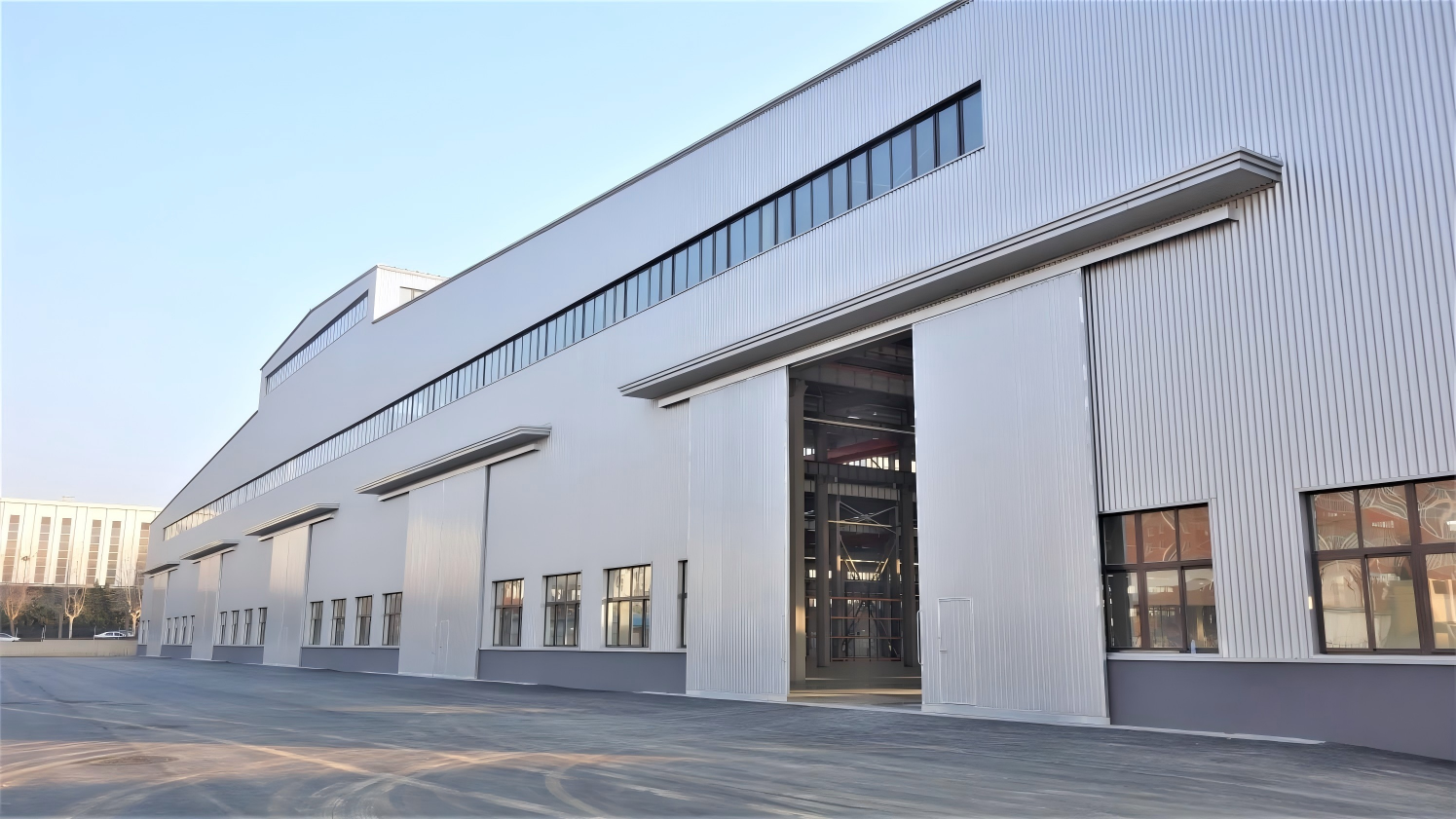
Irrigation machines and spare parts prepared for shipment at the Yulin Irrigation facility in Dalian, China.