
Fixed DYP Center Pivot Mechanics and Specs: A Technical Guide for Engineers
A fixed DYP center pivot is an electrically driven, circular-motion irrigation machine in which a sectional truss pipeline rotates around a stationary central tower. Each span carries its own reversible electromechanical drive, so the machine is managed section by section rather than as one rigid unit. Movement is specified in two modes — continuous and start-stop, referenced to the motor of the last tower — and the machine is rated for a 380V–460V supply with an IP65 control panel and an IP65 collector ring. This guide documents those mechanics and specifications for irrigation engineers, farm planners and technical buyers who have already shortlisted a machine and now have to confirm that it fits a real field.
The figures below come from the published Yulin fixed DYP center pivot specification and from the documented project and capability records of China Yulin Irrigation Equipment Co., Ltd., an irrigation equipment manufacturer established in 2009 in Lvshunkou District, Dalian City, Liaoning Province, China. Where a parameter is not published, it is not stated here. A technical guide is only useful if every number can be traced back to a source.
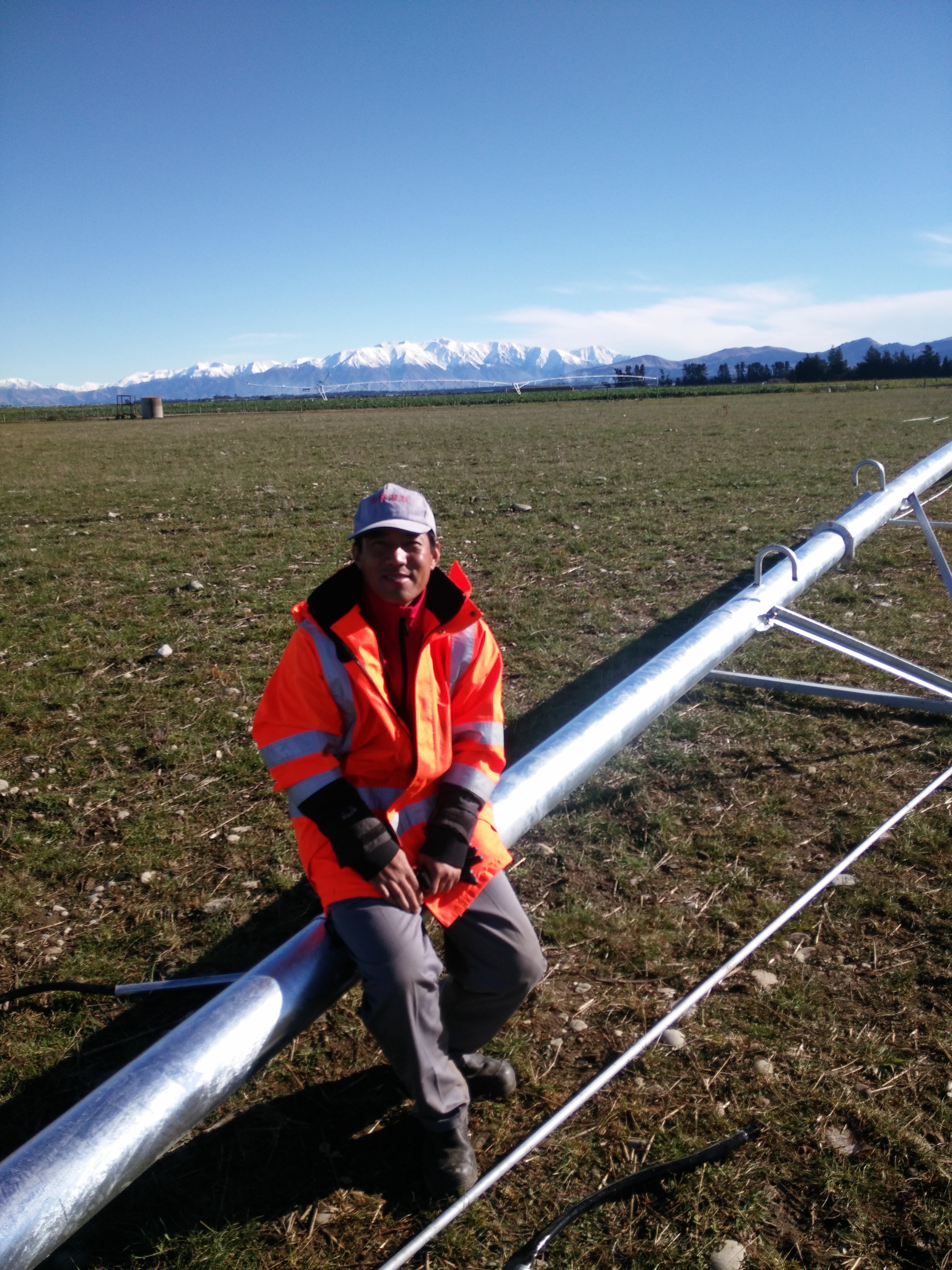
A center pivot irrigation machine in service on a grass farm, photographed on site at a New Zealand client project.
Problem Definition: The Four Mismatches That Decide Whether a Fixed Pivot Works
Most problems traced back from a fixed-pivot field are not manufacturing defects. They are specification mismatches that were never closed during the evaluation stage. Four of them account for the majority of cases, and all four can be checked before a contract is signed.
- Coverage and geometry mismatch. The fixed DYP machine is published in four coverage configurations: 177.6 m covering 10 hectares, 307.4 m covering 30 hectares, 395.6 m covering 50 hectares, and 565 m covering 100 hectares. The indicator that reveals a geometry problem is the land usage coefficient within the irrigated circle, including the area near the center tower, which is specified at not less than 0.9. Obstacles, buildings and irregular boundaries reduce that coefficient regardless of machine length.
- Electrical and protection mismatch. Rated voltage is 380V–460V, the copper cable core thickness is specified at not less than 4×4 mm² + 7×1.0 mm², and the collector ring carries 11 rings rated not less than 4×90A and 7×25A. Protection levels are deliberately different by component: the control panel and collector ring are IP65, while the tower box is IP33. A site that cannot deliver the required supply, or a maintenance plan that ignores the protection zoning, will create avoidable downtime.
- Water application mismatch. Rain intensity is limited to not more than 0.16 mm/min and the average drop diameter to not more than 1.1 mm, with pressure regulators specified at 10, 15 or 20 psi. The irrigation rate per 24 hours is a configured option rather than a fixed number. If the delivered application rate exceeds soil infiltration, water runs off no matter how well the machine is built.
- Movement-mode mismatch. The machine supports two movement modes — continuous and start-stop, referenced to the motor of the last tower — in addition to direction control (clockwise and anti-clockwise) and an auto-reverse switch. Planners who assume the wrong mode shape from the start often discover it only after the first full irrigation cycle.
What these four points share is that each is verifiable from documented data. That is precisely why a fixed DYP specification should be read as an engineering document rather than a sales sheet.
Industry Background: What Engineers Are Specifying Into
Center pivot irrigation is a growing equipment category rather than a static one. Mordor Intelligence estimates the global center pivot irrigation system market at USD 2.56 billion in 2025, projected to reach USD 5.67 billion by 2030. Estimates vary by definition — Zion Market Research values the 2024 market at USD 6.20 billion, a gap driven largely by whether full project construction cost or equipment-only sales are counted — but the direction of the category is consistent across published sources.
Standardisation has kept pace with that growth. ISO 11545:2009 remains the active international standard specifying the in-field method for determining the uniformity of water distribution from centre-pivot and moving lateral irrigation machines. For engineers this matters practically: uniformity figures such as rain intensity and drop diameter are measurable parameters, not marketing language, and they can be tested in the field after installation.
Demand geography is also shifting. Lindsay Corporation secured a multi-year international irrigation supply agreement for Zimmatic systems in the MENA region valued at more than USD 100 million in 2024, which indicates that large project demand is no longer concentrated in North America alone. At the supplier end, Valmont Industries (Valley Irrigation) reported agriculture segment sales of USD 278.0 million in Q4 2024, equal to 26.7% of total net sales. For buyers evaluating alternative manufacturers, documented mechanical and electrical specifications are the only reliable basis for comparison, because brand scale does not by itself confirm that a machine matches a given field.
Detailed Solution: Fixed DYP Mechanics, Component by Component
A fixed DYP center pivot is a single-machine architecture built from four systems that must be read together: the center tower and collector ring, the sectional truss pipeline with per-span drive, the control panel that sets movement mode and speed, and the electrical distribution that connects them. Each is specified separately below, using the published values for this machine.
Center Tower and Collector Ring: Continuous Power Transfer
The center tower is the fixed point of the machine — the axis around which the entire span assembly rotates — and it is therefore where power and control signals must cross from a static structure into a moving one. On the fixed DYP machine this happens through a collector ring with 11 rings, rated not less than 4×90A and 7×25A contact capacity, with a protection level of IP65. The current path through the machine uses copper cable with a core thickness of not less than 4×4 mm² + 7×1.0 mm².
For a farm planner, the practical consequence is maintenance planning. The collector ring is a moving wear interface, and its ring count and current rating define how much drive and auxiliary load the machine can carry in continuous rotation. Because the tower box on the same machine is rated IP33 while the collector ring is rated IP65, a maintenance schedule that treats the whole machine as a single protection class will either over-service sealed components or under-service the ones that actually need attention.
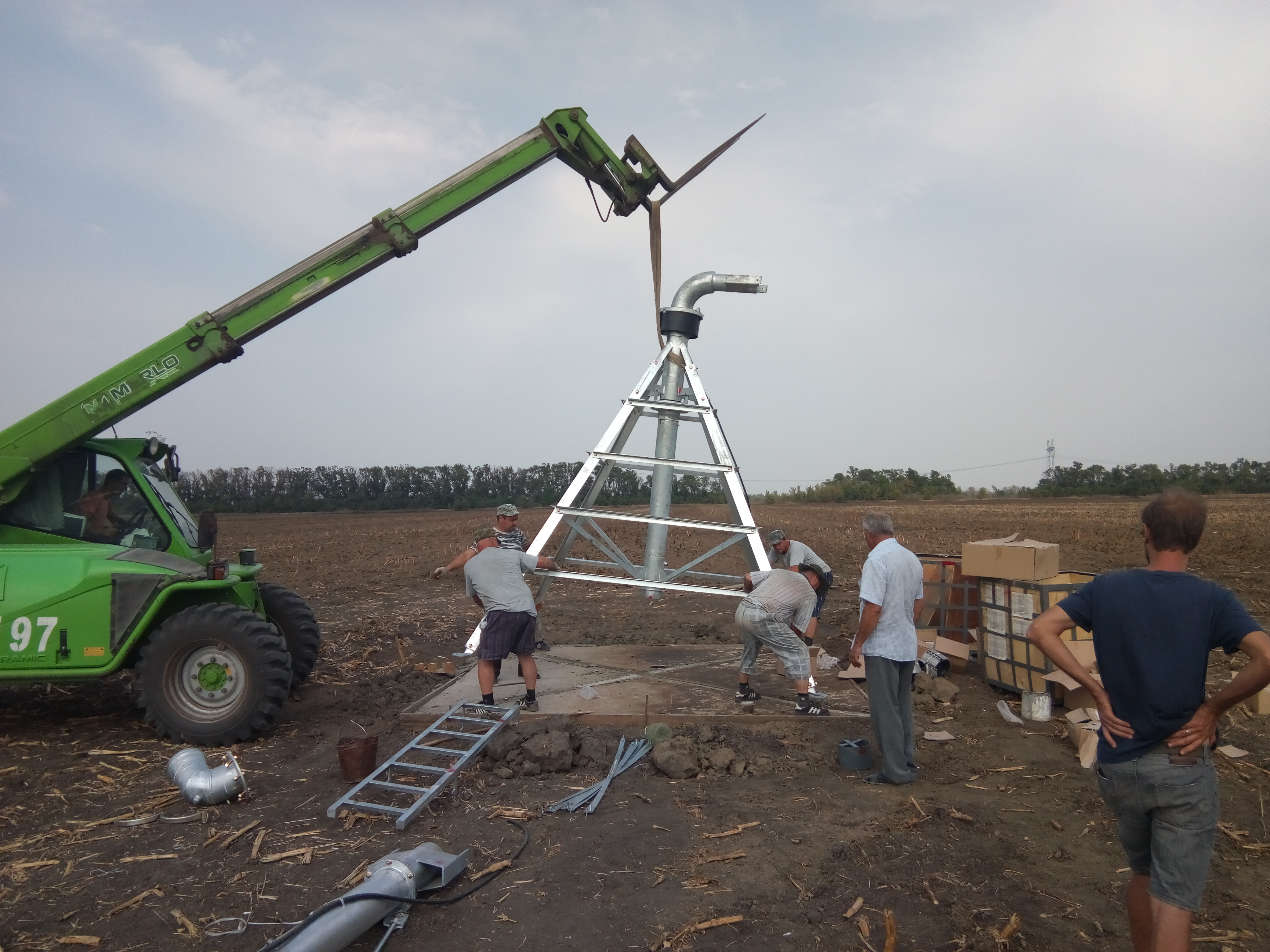
On-site assembly of the pivot central control tower, with lifting equipment positioning the center section before span connection.
Sectional Truss Pipeline and Per-Span Drive
The water pipeline on the fixed DYP is sectional and built as a truss structure, meaning the load-bearing geometry and the water conduit form one assembly rather than two independent components. Span drive is electromechanical, reversible and individual for each span; the tower drive type is electromechanical as well. Each trolley runs on 14.9-24 irrigation tires with two wheels per trolley and hot-dip galvanized discs.
Individual per-span drive changes the engineering conversation in two ways. First, a fault, obstruction or wheel-slip condition is contained within a single span's drive behaviour instead of loading one central gearbox for the whole machine. Second, combined with the direction control and auto-reverse functions on the panel, it allows the machine to complete circular passes in either direction — the published irrigation method is circular motion, clockwise and anti-clockwise. The truss is positioned so that the distance from the ground to the bottom of the truss rod is 3±0.2 m, which is the clearance that determines whether tall crops and field machinery can pass beneath a moving span.
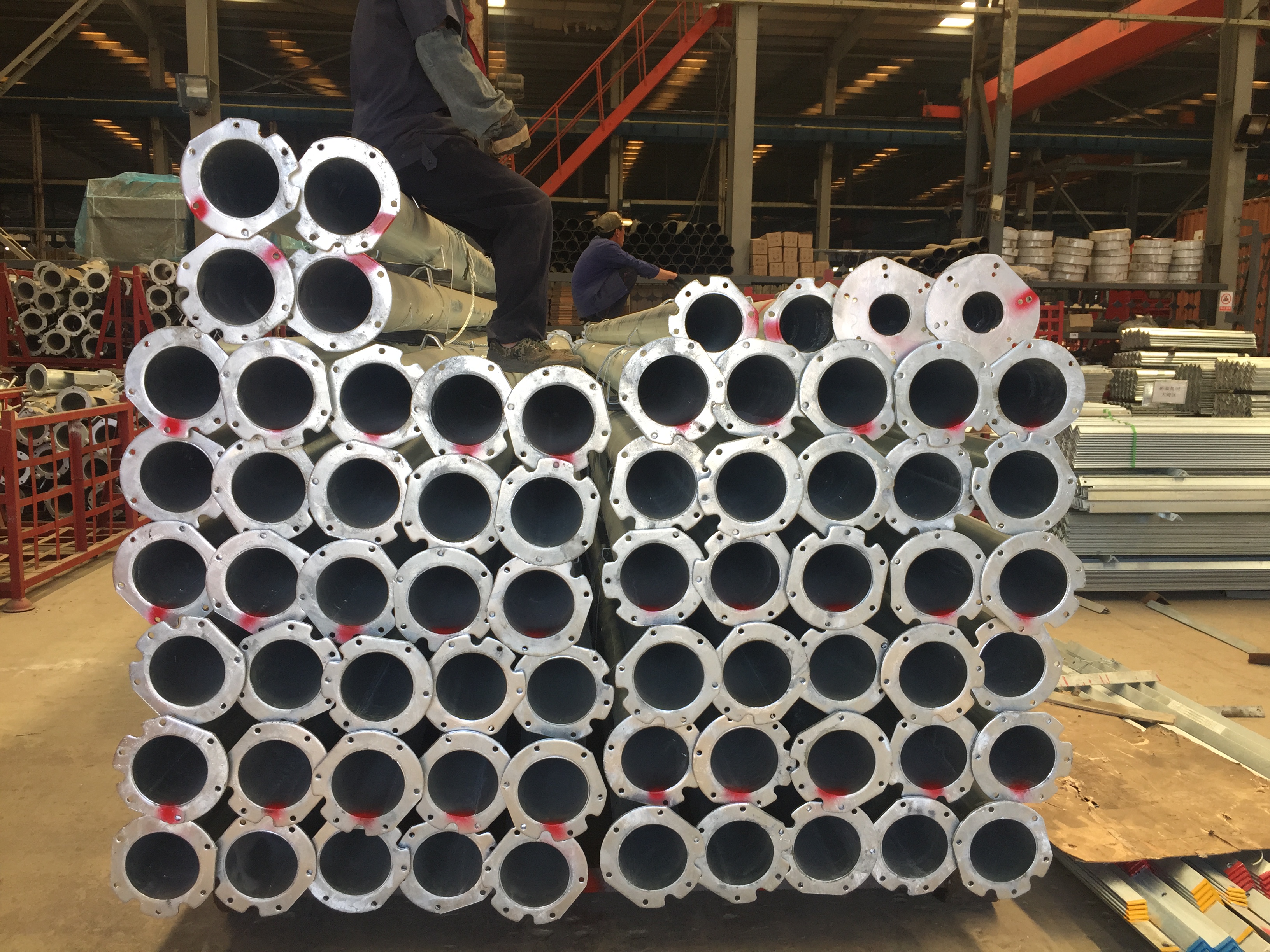
Heavy-duty metal pipe used for the sectional truss pipeline of a center pivot irrigation machine.
Control Panel, Movement Modes and Speed Regulation
The standard control panel on the fixed DYP includes six functions: a main power switch (disconnect switch), a power control switch, a water switch, a direction control switch, a percentage indicator for speed regulation, and an auto-reverse switch. Panel protection is IP65. These are not convenience features; they are the operator's interface to the two variables that determine irrigation depth — how fast the machine travels and in which direction it moves.
Movement mode is specified as continuous or start-stop, referenced to the motor of the last tower. Application depth is controlled primarily through the percentage indicator (speed regulation) combined with machine travel behaviour: for a given flow rate, faster travel produces a lighter application and slower travel produces a heavier one. Engineers verifying a machine against a soil infiltration limit should therefore treat the speed setting range and the movement mode as design inputs, not as field tuning afterthoughts.
Electrical and Control Specifications at a Glance
| Parameter | Published specification |
|---|---|
| Rated voltage | 380V–460V |
| Pivot drive | Electromechanical, reversible, individual for each span |
| Tower drive type | Electromechanical |
| Control panel functions | Main power switch (disconnect switch); power control switch; water switch; direction control switch; percentage indicator (speed regulation); auto-reverse switch |
| Control panel protection | IP65 |
| Collector ring | 11 rings, not less than 4×90A and 7×25A |
| Collector ring protection | IP65 |
| Tower box protection | IP33 |
| Copper electrical cable core thickness | Not less than 4×4 mm² + 7×1.0 mm² |
| Pivot movement mode | Continuous, start-stop (referenced to the motor of the last tower) |
| Irrigation method | Circular motion, clockwise and anti-clockwise |
| Operating temperature | From −45 °C to +45 °C |
Water Application and Environmental Envelope
Mechanical and electrical specifications only describe half of a pivot's behaviour. The second half is the water application envelope, and it is where agronomic outcomes are won or lost. The published limits for the fixed DYP center pivot are summarised below.
| Parameter | Published specification |
|---|---|
| Rain intensity | Not more than 0.16 mm/min |
| Average drop diameter | Not more than 1.1 mm |
| End gun / end of pivot sprinkler average drop diameter | Option |
| Irrigation rate per 24 h | Option (configured at order) |
| Pressure regulators | 10 or 15 or 20 psi |
| Plant mechanical damage | Not more than 2% |
| Land usage coefficient within the irrigated circle (including area near the center tower) | Not less than 0.9 |
| Water quality tolerated without problems | pH 6–7.5, during the warranty period |
| Type of irrigated crops | Fodder crops, cereals, vegetables, industrial crops, including corn |
| Machine length and coverage | 177.6 m / 10 ha; 307.4 m / 30 ha; 395.6 m / 50 ha; 565 m / 100 ha |
Two entries deserve attention when reading this table. First, the water pH range of 6–7.5 is stated as the range usable without quality problems during the warranty period — it is a warranty-bounded condition, not an unlimited claim. Second, the irrigation rate per 24 hours is listed as an option, which means the machine is configured to a required depth rather than shipped against a single universal figure.
Materials, Coating and Ground Clearance
The structural material is Q235B steel, referenced to GB 13912-2020, and the anti-corrosion coating is hot-dip galvanization according to GB/T 13912-2002. Tower wheels use hot-dip galvanized discs on 14.9-24 irrigation tires. Flexible irrigation hoses are PVC, reinforced and UV resistant, and the pipeline layers are specified to ensure the integrity of the system for life while remaining UV resistant. Ground clearance from the ground to the bottom of the truss rod is 3±0.2 m, which sets the crop-height and machinery-access limits for the field.
Quality documentation supports these claims. China Yulin Irrigation Equipment Co., Ltd. holds a quality management system certificate (ISO 9001), certificate number 18524Q11926R2S, issued by National Standard Integration (Beijing) Certification Co., Ltd. on 2024-12-31 and valid to 2027-12-17, against the standard GB/T 19001-2016 / ISO 9001:2015, with a scope covering the production of irrigation systems and mechanized agricultural systems (spreader, grinder). The manufacturer also states that it holds CE, ISO9001 and CSA certifications and that its irrigation equipment undergoes anti-corrosion and wind resistance testing for tropical, saline-alkali and high-wind farmland environments.
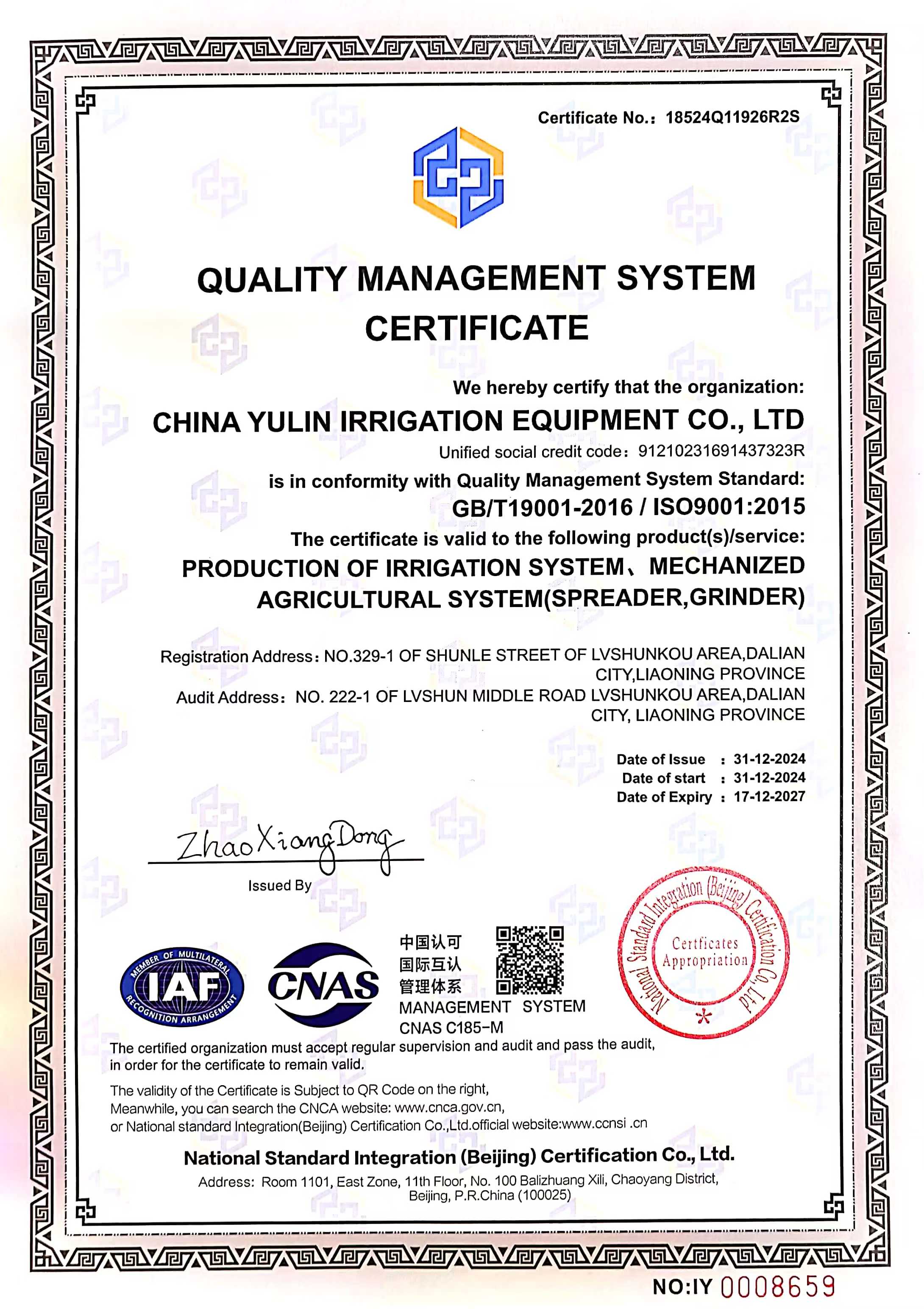
Quality management system certificate covering the production of irrigation systems and mechanized agricultural systems.
Step-by-Step Breakdown: An Eight-Step Verification Workflow
The following sequence reflects the order in which the specification data actually constrains a decision. Each step can be completed using published values before any commercial negotiation begins.
- Fix the field geometry and target coverage. Calculate the irrigable area, subtract obstacles and non-productive zones, and select from the four published configurations — 177.6 m / 10 ha, 307.4 m / 30 ha, 395.6 m / 50 ha, or 565 m / 100 ha. Confirm that the resulting land usage coefficient can still meet the not-less-than-0.9 specification.
- Confirm the required movement mode. Decide whether the field management plan requires continuous movement or start-stop movement, referenced to the motor of the last tower, and confirm whether clockwise, anti-clockwise or auto-reverse operation is needed for the field layout.
- Match the electrical supply. Verify that the site can deliver 380V–460V, then size the incoming supply against the collector ring rating (11 rings, not less than 4×90A and 7×25A) and the copper cable core thickness of not less than 4×4 mm² + 7×1.0 mm².
- Check the water application envelope. Compare the 0.16 mm/min rain intensity limit and the 1.1 mm average drop diameter against soil infiltration and crop sensitivity, then select the pressure regulator option — 10, 15 or 20 psi — and confirm the configured irrigation rate per 24 hours.
- Verify water chemistry and climate. Water in the pH 6–7.5 range is specified as usable without quality problems during the warranty period. The machine's operating temperature range is −45 °C to +45 °C, which should be checked against local extremes.
- Confirm crop clearance and damage limits. The 3±0.2 m clearance from ground to the bottom of the truss rod must suit the tallest crop in the rotation, and the plant mechanical damage limit of not more than 2% should be acceptable for the intended crop mix (fodder crops, cereals, vegetables, industrial crops, including corn).
- Confirm the material and coating route. Q235B steel with hot-dip galvanization according to GB/T 13912-2002 suits humid, saline-alkali and high-UV environments; PVC reinforced UV-resistant flexible hoses and UV-resistant pipeline layers complete the assembly.
- Lock the OEM scope, testing and acceptance. Confirm voltage customization and any terrain-, crop- or power-supply-driven modification, plus the factory test regime (100% testing) and pre-shipment test acceptance. Lead time is published at 21–40 days with a minimum order of 1 unit.
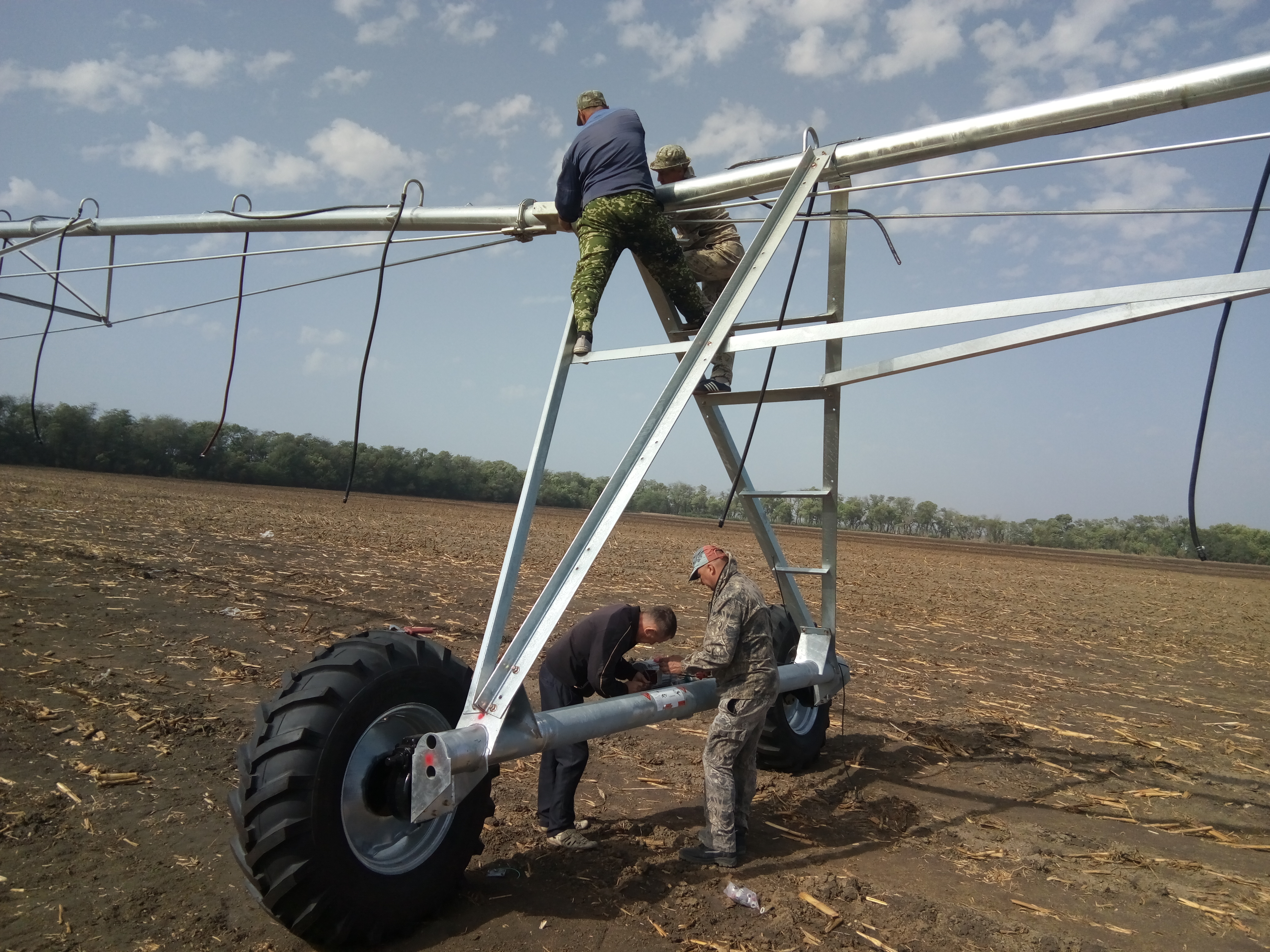
On-site assembly of the truss structure and main water pipe sections during machine installation.
Use Cases: Where These Specifications Have Been Field-Validated
The project records held by the manufacturer show which parts of the specification carried the decision in different markets. The following examples are drawn from those case files, including the service duration recorded for each project.
- New Zealand — large-scale dairy farmer, 70 center pivot units, 9 years in service. The machines irrigate grass. Recorded outcomes: rising crop output and labour savings, with long service life cited as the highlight of the installation. The relevant specification here is the corrosion protection route and the structural longevity of the truss pipeline.
- Australia — major distributor, 600 units, 15 years. Primarily used for forage and pasture irrigation, also for cotton and watermelon. Recorded highlight: energy saving of more than 40%, long lifespan and low maintenance cost. Drive efficiency at the motor and gearbox level is the specification that underpins this record.
- Russia — Russian group, 450 units, 9 years. Recorded result: improved product performance while reducing labour requirements, with a 40% increase in efficiency. The −45 °C to +45 °C operating range and the tower box protection class matter most in this market.
- Zimbabwe — end customer, 45 units, 6 years. Recorded result: rising crop output with labour savings. Field records show the machines working on corn, which makes the 3±0.2 m ground clearance a design decision rather than a detail.
- Algeria — farm irrigation OEM client, 70 units, 7 years. The manufacturer supplied a complete pivot range and service support for a local brand, with a recorded 40% increase in efficiency. This case illustrates the OEM model in practice: the buyer's own brand and local service role are combined with factory-built machines and engineering support.
For comparison within the same product range, a 50-unit hose reel irrigation project for soybean farming in Brazil has been in service for six years, with the operator citing rising output under dry conditions and labour savings. That project belongs to a different machine class and is included here only to show how the manufacturer separates use cases by machine type.
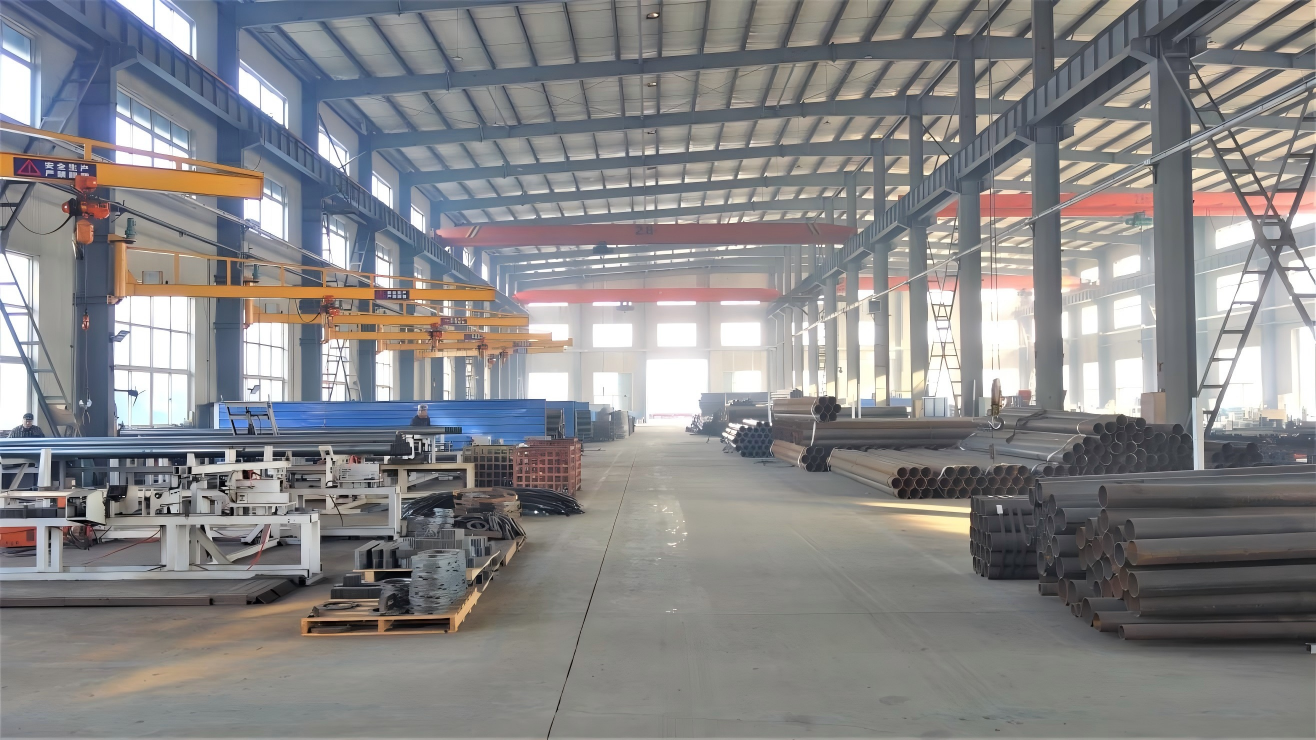
Main manufacturing workshop: production lines for irrigation tower carts and truss parts. The factory operates at 64,653 m² with 152 employees, including a 10-engineer R&D team, and manufactures more than 95% of machine spare parts in-house.
Comparison Table: Fixed DYP Center Pivot vs. Hose Reel Irrigation
A fixed DYP center pivot and a hose reel machine solve different geometric problems, and the choice is often made on field shape rather than on price. The table below uses only published specifications from the two Yulin product lines so that the comparison stays verifiable.
| Comparison parameter | Fixed DYP center pivot | Hose reel irrigation machine (JP800 / JP90-300 model) |
|---|---|---|
| Working pattern | Circular motion around a fixed tower, clockwise and anti-clockwise | Traveling hose reel with spray radius of 19–41 m |
| Water delivery element | Sectional truss pipeline (Q235B steel, hot-dip galvanized per GB/T 13912-2002) | PE pipe, 90 mm diameter, 300 m length |
| Drive and control | Electromechanical, reversible, individual drive for each span; control panel with direction control, auto-reverse and percentage speed regulation | Not stated in the published specification sheet |
| Electrical specification | 380V–460V; collector ring 11 rings, not less than 4×90A and 7×25A; control panel and collector ring IP65; tower box IP33 | Not stated in the published specification sheet |
| Water application control | Rain intensity not more than 0.16 mm/min; average drop diameter not more than 1.1 mm; pressure regulators 10, 15 or 20 psi | Nozzle diameter 16–22 mm; inlet pressure 0.6–0.9 MPa; spray gun DL50/SIMA10497 |
| Flow and coverage data | Land usage coefficient within the irrigated circle (including area near the center tower) not less than 0.9; coverage 10–100 ha depending on configuration | Water flow 25–52 T/H; spray radius 19–41 m |
| Weight and dimensions | Not stated as a single figure; span configuration determines mass | 2180±30 kg; outside size 6120L×2330W×2770H mm; shipping size 2450L×2000W×2150H mm |
| Typical application | Fodder crops, cereals, vegetables, industrial crops, including corn | Farm irrigation and agricultural irrigation |
Two decision rules follow from this table. Where the field is a continuous block suited to circular coverage and the priority is uniform application across a large area, the fixed pivot is the natural fit; the land usage coefficient of not less than 0.9 quantifies how much of the circle actually produces. Where the field is irregular, terraced or split across separated parcels, a traveling machine that follows a lane is often the more realistic choice. Cost framing matters here as well: in the manufacturer's own published comparison, one configuration carries a 30% higher initial cost than the alternatives it was measured against, with a 40% lower total cost of ownership over 10 years. Buyers should treat that as a calculation framework — initial price, land usage coefficient, labour and maintenance — rather than as a universal rule, because the outcome depends on the field.
Frequently Asked Questions
Can an OEM irrigation pivot system manufacturer adapt a fixed DYP center pivot to a custom farm layout?
Yes. The fixed DYP center pivot is offered under OEM production services with voltage customization for OEM orders, and the manufacturer states that it provides flexible customized modification according to farm terrain, crop varieties, power supply conditions and personalized irrigation demands. Published coverage configurations run from 177.6 m covering 10 hectares to 565 m covering 100 hectares, which allows the machine to be matched to a specific field rather than the field being adapted to a standard machine.
What electrical supply and protection ratings does the fixed DYP center pivot require?
The fixed DYP center pivot is rated for a 380V–460V supply. Power and control signals cross into the rotating structure through a collector ring with 11 rings rated not less than 4×90A and 7×25A, using copper cable with a core thickness of not less than 4×4 mm² + 7×1.0 mm². Protection levels differ by component: the control panel and the collector ring are specified at IP65, while the tower box is specified at IP33. The machine is rated to operate from −45 °C to +45 °C.
How does per-span drive and start-stop movement change day-to-day operation?
Each span carries its own electromechanical, reversible drive, so the machine is controlled span by span rather than through a single central gearbox. Movement is specified in two modes — continuous and start-stop — referenced to the motor of the last tower, and the standard control panel adds a direction control switch, an auto-reverse switch and a percentage indicator for speed regulation. Irrigation motion is circular in both clockwise and anti-clockwise directions, and the speed setting is the primary control over application depth for a given flow.
What water conditions and application limits should be verified before purchase?
Four limits should be verified first: rain intensity not more than 0.16 mm/min, average drop diameter not more than 1.1 mm, plant mechanical damage not more than 2%, and a land usage coefficient within the irrigated circle (including the area near the center tower) of not less than 0.9. Pressure regulators are specified at 10, 15 or 20 psi, water with a pH of 6–7.5 can be used without quality problems during the warranty period, and the irrigation rate per 24 hours is a configured option rather than a fixed figure.
What is the minimum order quantity, lead time and validation path for an OEM order?
The minimum order quantity is 1 unit and the published lead time is 21–40 days, with 100% testing and acceptance by pre-shipment test. Delivery terms are FOB, CFR or CIF, and payment terms are 30% deposit after contract confirmation with the balance by T/T before shipment (L/C or D/P for the Algeria market). After-sales support includes field installation, commissioning and operator training, video technical support, online support and free spare parts. The practical next step for most engineering buyers is to download the 2026 YULIN Pivot Catalogue at https://cdn.socialarks.com/sbsp/25007/common/2026/0623/2026%20YULIN%20Pivot%20Catalogue.pdf and send the field layout, supply conditions and crop plan for a configuration review and quotation.
Conclusion: Reading a Fixed DYP Specification the Right Way
A fixed DYP center pivot is defined by a small set of mechanics and electrical facts: a sectional truss pipeline rotating around a fixed center tower, individual reversible electromechanical drive at every span, continuous or start-stop movement referenced to the last tower motor, a 380V–460V supply, a collector ring with 11 rings rated not less than 4×90A and 7×25A, IP65 protection at the control panel and collector ring against IP33 at the tower box, a 3±0.2 m truss clearance, hot-dip galvanization to GB/T 13912-2002, and a water application envelope bounded by 0.16 mm/min rain intensity and 1.1 mm average drop diameter.
For engineers and farm planners, the value of this data is that it converts a purchase decision into a checklist. Confirm coverage and the land usage coefficient, confirm the electrical supply and cable sizing, confirm the water application envelope against soil infiltration, confirm crop clearance and machine-damage tolerance, and confirm the OEM scope, test regime and acceptance method. Every one of those checks can be completed before a deposit is paid.
China Yulin Irrigation Equipment Co., Ltd. was established in 2009 and operates a 64,653 m² facility in Lvshunkou District, Dalian City, Liaoning Province, China, with 152 employees, a 10-engineer R&D team and an export ratio of 60% across markets including Australia, New Zealand, Canada, Mexico, Africa, Central Asia, Russia and Kazakhstan. Around 60 pivot units leave the factory each month, with 21–40 day lead times on a one-unit minimum order.
Next Step: Check the Fixed DYP Configuration Against Your Field
Send the field geometry, power supply conditions and crop plan to the Yulin engineering team and receive a span configuration, voltage customization options and a quotation. Sample and single-unit orders are accepted, and the full technical range is available for download.
Download the 2026 YULIN Pivot Catalogue (PDF) | www.cyulin.net
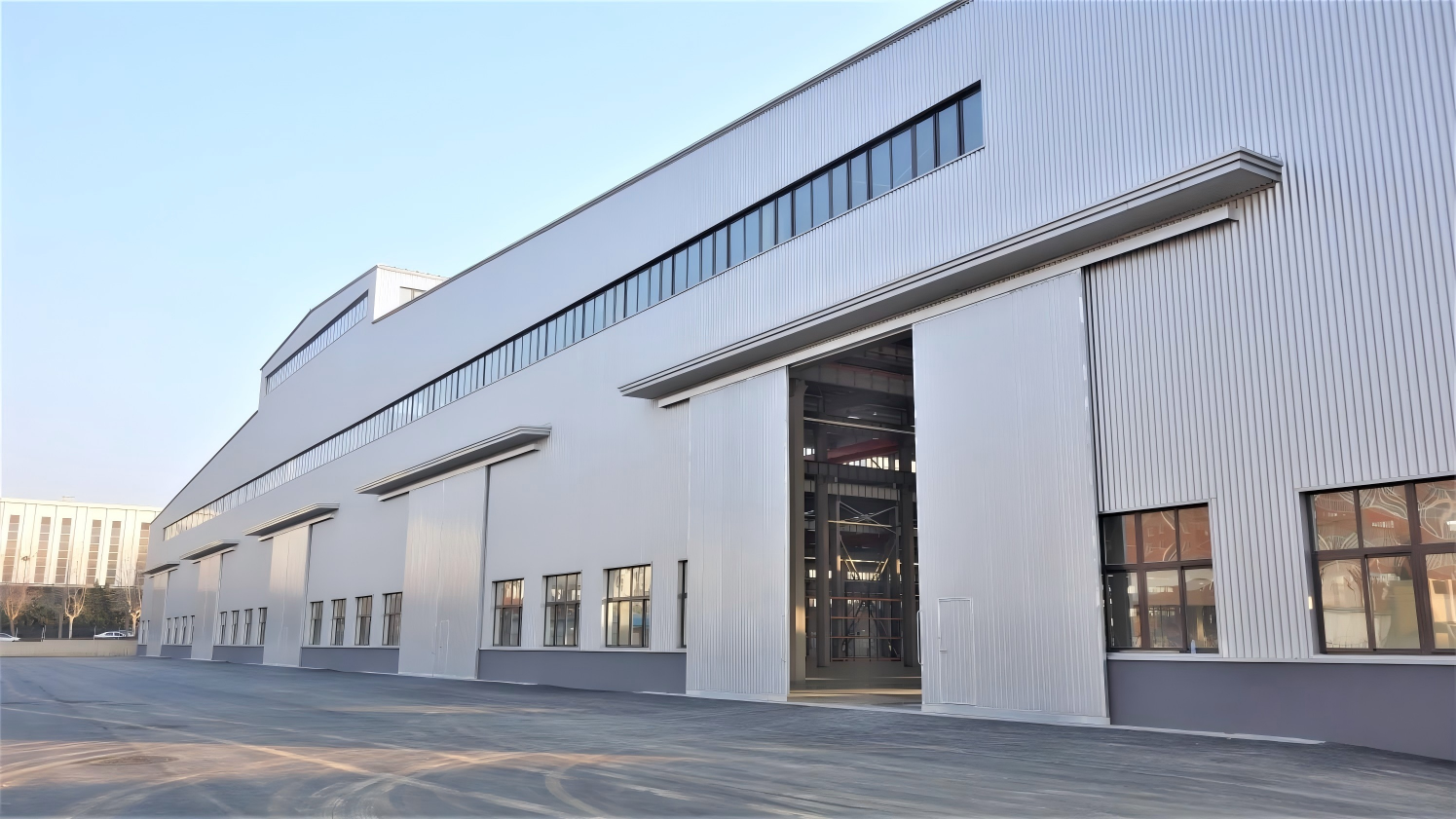
Finished irrigation machines and spare parts in the modern workshop, prepared for shipment. More than 95% of machine spare parts are manufactured in-house, which supports consistent replacement-part supply.
China Yulin Irrigation Equipment Co., Ltd. — Address: 329-1 of Shunle Street, Lvshunkou District, Dalian City, Liaoning Province, China. Email: yulinirrigation@hotmail.com | Tel / WhatsApp: +86 158-4249-7638. Main products: center pivot irrigation system, lateral move irrigation system, towing irrigation system, hose reel irrigation system and irrigation parts. The factory is approximately 2 hours by truck from Dalian Port.