
Irrigation Pivot System Comparison: Center Pivot vs. Hose Reel vs. Linear Move for Large Farms
Deciding which irrigation pivot system is better for large farms is not a simple brand question. The better answer depends on field shape, water source, power availability, crop type, and total cost over the equipment's life. This guide compares the main large-farm irrigation options—center pivot, hose reel/traveler, and linear move—and explains how to evaluate manufacturers using transparent, decision-oriented criteria rather than marketing claims.
This comparison is written for farm owners, irrigation consultants, and equipment buyers at the decision stage of the purchasing process. It focuses on system trade-offs, evaluation criteria, and what to check before committing to a supplier.
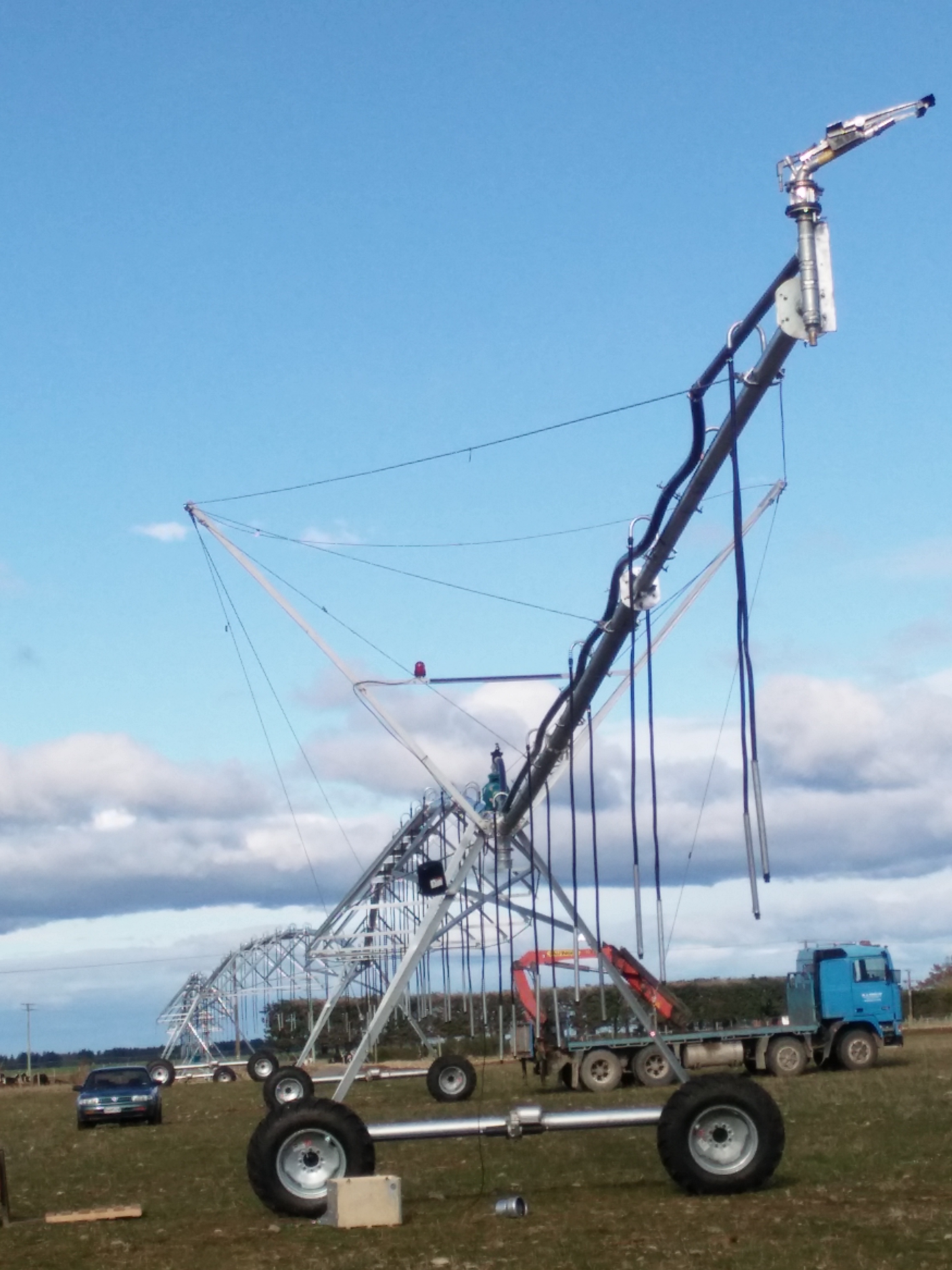
Evaluating irrigation pivot systems requires comparing field compatibility, power supply, water distribution, and total ownership cost.
What Is the Real Question Behind “Which Irrigation Pivot System Is Better?”
Buyers searching for the best manufacturer for large farms usually have one of two underlying needs. Some need to choose between irrigation equipment types. Others have already decided on a center pivot and now need to screen and compare manufacturers.
The practical question reads like this: “For my size of land, water availability, power supply, and crop program, which irrigation solution should I buy, and which factory can deliver it reliably?”
This article answers both parts. First, it defines the equipment categories and their correct use. Second, it provides comparison criteria that can be applied to suppliers such as China Yulin Irrigation Equipment Co., Ltd. and established international brands.
Why Large Farms Need Mobile Irrigation Instead of Fixed Methods
Large-scale farms—whether for grain, forage, row crops, or pasture—generally need machines that cover a wide area from one water source without relocating pipes by hand. Stationary sprinkler systems are labor-intensive and impractical once field size grows beyond a few hectares.
The commonly used mechanized options are:
- Center pivot irrigation systems: rotating around a fixed pivot point to irrigate circular areas.
- Linear move irrigation systems: moving in a straight line across rectangular fields.
- Hose reel / traveler irrigation machines: pulling a sprinkler cart across the field while winding or unwinding a hose.
Each type exists because farms are not all the same. Field geometry and water delivery method strongly influence which system is more efficient.
Market Context: Why Decision-Ready Comparison Data Matters
The global center pivot irrigation system market was estimated at USD 2.56 billion in 2025 and is projected to reach USD 5.67 billion by 2030, according to Mordor Intelligence. Large international suppliers continue to report strong agricultural segment sales—Valmont Industries' Agriculture segment, which includes irrigation equipment, recorded USD 278.0 million in Q4 2024, or 26.7% of total net sales. In the MENA region, Lindsay Corporation secured a multi-year supply agreement for Zimmatic irrigation systems valued at more than USD 100 million in 2024.
These figures show that large-farm irrigation is a global business with significant capital moving through a relatively small set of equipment categories. For buyers, the important implication is not to pick a brand because of market size alone, but to understand which system architecture fits their specific farming conditions.
Center Pivot Irrigation System: How It Works and Where It Wins
A center pivot irrigation system is a mechanized, pressurized irrigation method in which a line of sprinklers on wheeled towers rotates around a fixed central pivot point. Water is delivered through the pipe system and distributed by sprinklers as the machine moves in a circular path.
Center pivots are most suitable for large, relatively flat or gently rolling fields where a circular irrigation pattern is acceptable. They are widely used for field crops, forage crops, and large vegetable operations. They are also used on small and medium farmland when the water source can be positioned at the pivot point and the field can accommodate the circular pattern.
Types of Center Pivot Configurations Buyers Should Know
- Small Center Pivot Irrigation System: designed for smaller land blocks, often where only a single pivot is needed.
- Automatic Center Pivot Irrigation System: includes electrical control and programmable operation for reduced labor.
- Solar Powered Center Pivot: uses solar energy to drive the system where grid power is unavailable or expensive.
- Galvanized Center Pivot Irrigation: using galvanized steel structure to improve anti-corrosion performance and service life.
- Towable Center Pivot System: allows one pivot to be moved between multiple field positions to reduce capital cost.
- Variable Rate Pivot Irrigation: adjusts water application by GPS/soil data for heterogeneous fields, with the goal of better water efficiency.
These are not marketing categories only. They reflect real purchasing decisions. A small farm may prefer the lower capital cost of a small pivot. A farm without reliable grid power may evaluate a solar powered center pivot. A saline or humid coastal area may require galvanized structure. A buyer who wants to serve multiple fields with one machine may choose a towable center pivot system.
Where Center Pivot Technology Excels
Center pivot systems are widely valued for their combination of field coverage, automation, and reduced labor demand. A well-managed system can water a large area consistently and can be operated with relatively few workers compared to manual or towed sprinkler systems.
The main technical limitations are field shape and water pressure. Corners of rectangular fields remain dry unless corner arm systems or end guns are used. Slopes and uneven terrain may require more engineering attention. Also, the initial purchase and installation cost of a center pivot is typically higher than simpler hose reel machines.
Hose Reel / Traveler Irrigation: The Flexible Complement and Alternative
A hose reel irrigation machine, also called a traveler irrigation system or hard-hose traveler, consists of a reel-mounted hose connected to a water source and a sprinkler cart. As the water pressure drives the reel or the cart moves across the field, the hose is wound or unwound to pull the sprinkler across a lane.
For example, the JP800 hose reel irrigation machine made by China Yulin Irrigation Equipment Co., Ltd. uses metal and PE as primary materials. Its PE pipe has a diameter of 90 mm and a length of 300 meters.
Hose reel machines are commonly used on farms that need a more mobile or lower-capital system, where fields are irregular, where the water source must be moved, or where a center pivot is not structurally or financially justified. They also serve as a practical substitute for rainfall during dry periods.
Real Scenario: Dry-Season Irrigation in Papua New Guinea
In Papua New Guinea, this type of irrigation system has a clearly defined role: it substitutes for rainfall during the dry season, allowing plants to continue growing vigorously when natural precipitation is insufficient.
This scenario applies beyond Papua New Guinea. Any farm that faces seasonal dry spells, lacks a permanent high-flow water source at one central point, or needs to irrigate multiple small field blocks can use a hose reel / traveler system as either the primary irrigation tool or a supplemental one.
Materials and Construction
China Yulin Irrigation describes its hose reel machine construction as metal and PE (polyethylene). The steel portion provides the frame, reel, and mechanical strength; the PE hose gives flexibility and corrosion resistance for moving water across the field. The reported specification of a 90 mm diameter and 300-meter PE pipe on the JP800 model defines the machine's coverage capacity in a concrete, verifiable way.
Linear Move Irrigation: The Third Option for Rectangular Fields
Linear move irrigation systems, also called lateral move systems, operate like center pivot systems but instead of rotating around a fixed point, the entire line moves straight across a rectangular field while drawing water from a canal or a flexible hose connection.
Linear moves are usually the best fit when the field is rectangular and maximum coverage is needed without leaving dry corners. They cover close to 100% of the land area, whereas a center pivot typically leaves corners out of the wetted circle. The tradeoff is that linear move machines often need a more carefully designed water supply—such as an open canal or drag hose—and may have higher initial cost before considering the water delivery infrastructure.
In a comparative buying process, a linear move is not automatically “better” or “worse” than a center pivot. It is a better technical solution for a rectangular field. For a square field or a field where the water source sits at the center, a center pivot may be the superior choice.
Detailed Comparison Table: Center Pivot vs. Hose Reel vs. Linear Move
| Comparison Criterion | Center Pivot Irrigation System | Hose Reel / Traveler Irrigation Machine | Linear Move Irrigation System |
|---|---|---|---|
| Best field shape | Large circular area around a central pivot; acceptable for fields where corner coverage is not essential or is solved by end guns | Irregular, sloped, or smaller blocks; flexible lanes across the field | Rectangular fields where lateral movement covers nearly the full area |
| Water source layout | Water must be available at the fixed pivot point | Water source can be positioned at the reel; hose pulls the sprinkler away | Water supply moves with or is connected along the lateral line (canal or drag hose) |
| Typical labor requirement | Low regular labor after installation; operation can be automated | Requires repositioning the machine between lanes; moderate attention | Low regular labor after installation and water supply setup |
| Capital cost | Higher initial cost than hose reel; cost depends on length and configuration | Generally lower initial capital per machine | Higher initial cost; water delivery infrastructure may add cost |
| Water distribution uniformity | Can be high when properly designed; ISO 11545:2009 describes a field method for measuring center pivot and moving lateral machine uniformity | Depends on reel speed, sprinkler package, overlap between lanes, and lane spacing | Can be high; uniformity measured in the field for moving lateral machines under ISO 11545:2009 |
| Energy/power considerations | Electric drive is common; solar powered center pivot options exist for off-grid farms | Often powered by water pressure from a pump; diesel/pump or engine options must be compared | Electric drive is typical; each tower needs power along the travel path |
| Main materials | Galvanized steel trusses and tower structures are common for corrosion resistance | Metal frame/reel and PE hose; e.g., JP800 uses metal and PE with a 90 mm × 300 m PE pipe | Similar galvanized truss structures to center pivot systems |
| Best fit scenario | Large-circle coverage crops: grain, forage, potatoes, vegetables under pivot | Seasonal dry-season supplement, irregular fields, or replacing rainfall | Rectangular large fields where every square meter must be watered |
Table sources: equipment category knowledge and product information from China Yulin Irrigation Equipment Co., Ltd. Specifications should be verified against each manufacturer's technical datasheet.
How to Compare Irrigation Pivot System Manufacturers for Large Farms
Whether you choose a center pivot, linear move, or hose reel machine, the manufacturer evaluation can be structured around six practical criteria.
1. Production Scale and Engineering Depth
Look at whether the supplier has a dedicated factory or only trades equipment. A direct manufacturer can usually provide better support on parts, assembly, and modifications. China Yulin Irrigation Equipment Co., Ltd., for example, is a factory established in 2009, located in Lvshunkou District, Dalian City, Liaoning Province, China. The company reports a factory area of 64,653 m², 152 employees, 10 R&D engineers, an annual output of 3,000 units, and an export ratio of about 60% across markets including Australia, New Zealand, Canada, Mexico, Africa, Central Asia, Russia, and Kazakhstan.
Its production capacity is also stated in official company materials as 400 sets of pivot systems per year. This matters because capacity is one indicator of whether the factory can deliver on time for large farm orders.
2. Spare Parts and Manufacturing Self-Sufficiency
Large irrigation machines are exposed to sun, water, and movement. Downtime during a growing season is expensive. For that reason, the percentage of spare parts made in-house matters. China Yulin Irrigation states that over 95% of machine spare parts are independently manufactured in its factory, which supports full-process quality monitoring and product consistency.
When interviewing any supplier, ask directly: which critical parts do you manufacture—truss steel, towers, gearboxes, sprinkler fittings—and which must be imported or purchased?
3. Experience and OEM Background
A manufacturer's production history can reveal the depth of its quality system. China Yulin Irrigation reports that it accumulated mature manufacturing technology by providing OEM production for a global top irrigation company during 2000–2008, prior to establishing its own brand in 2009. This type of background is relevant because OEM work typically requires meeting strict specifications and tolerances.
If a supplier claims OEM experience with a major brand, ask for verifiable details such as the nature of the products or the duration of the relationship before treating it as evidence.
4. Certification, Testing, and Compliance
Certifications are an important baseline, but they must match the target market and the equipment category. Products manufactured by China Yulin Irrigation Equipment Co., Ltd. are certified with CE, ISO9001, and CSA, and undergo strict anti-corrosion and wind resistance testing. CE matters when selling into the EU. CSA is particularly relevant when buyers or projects require Canadian market compliance. ISO9001 reflects a quality management system.
In addition to market certification, look at whether the pivot is tested against the conditions of your site: saline-alkali soil, tropical humidity, or high-wind farmland. China Yulin Irrigation says its equipment undergoes anti-corrosion and wind resistance testing to adapt to such environments.
For water distribution performance, note the existence of ISO 11545:2009, which specifies an in-field method for determining the uniformity of water distribution from center pivot and moving lateral irrigation machines. A buyer can use this standard to define acceptance tests for a newly installed machine.
5. Installation, Warranty, and Remote Support
Exporting large irrigation machines is only half the challenge; installation and commissioning are where many problems appear. China Yulin Irrigation states that it provides global localized on-site installation, commissioning, and operator training services overseas. Its risk-control procedures include dispatching engineers for on-site installation guidance and operator training, a warranty policy with free replacement of defective components, and 24-hour online technical support.
For transit risk, the company also describes strict pre-delivery checking, reinforced classified packaging with photo archiving, and free spare parts reissue for company-caused faults and in-warranty damages.
When comparing suppliers, write these commitments into your checklist:
- Does the quotation include on-site installation and training?
- What are the warranty terms for components that fail in service?
- How are damaged or lost parts during shipment handled?
- Is remote support available 24 hours?
6. Minimum Order Quantity and Commercial Flexibility
Commercial flexibility can matter more than brand recognition in the final decision. China Yulin Irrigation accepts OEM and ODM orders, and its minimum order quantity is 1 unit according to its published product information. That low MOQ allows a large farm operator or dealer to test one system before scaling a bigger relationship.
Efficiency, Lifespan, and Total Cost of Ownership
A purchase decision that focuses only on the initial price usually leads to an incorrect comparison. The relevant measure is total cost over a long ownership period, including installation, water, energy, labor, maintenance, spare parts, and lifespan.
China Yulin Irrigation's product comparison states that compared to high-efficiency pivot irrigation machines driven by electricity, its product has distinct advantages in terms of efficiency, lifespan, and operational costs. The company further claims a 25-year lifespan, irrigating rating of 88–98%, initial cost approximately 30% higher, total cost of ownership 40% lower over 10 years, 90% less maintenance, and crop output increases of 20–40%.
Any quantitative claim used in a buying decision should be confirmed against the specific machine model, field conditions, and written quotation. Independent irrigation advisors can help validate assumptions about water application efficiency, distribution uniformity, and energy consumption before purchase.
Typical Use Cases by Farm Scenario
Large-Scale Grain Farm with a Central Water Source
A 200-hectare grain field with a well or reservoir at its center may be best served by one or more center pivot machines. This configuration yields a large wetted circular area, automated operation, and low labor. If the field is a large rectangle and someone needs maximum land coverage, a linear move could be discussed instead.
Mixed / Irrigated Block Farm with Seasonal Dry Spells
A farm that grows crops in separate blocks—or that only needs irrigation for a few months each year—may find a hose reel / traveler machine more economical because one machine can move between blocks. The Papua New Guinea scenario described above fits this pattern.
Off-Grid or Expanding Farm
If the farm has no reliable electricity supply and the cost of grid extension is high, the buyer may evaluate a solar powered center pivot system. If solar investment is too heavy for the project stage, a diesel-pumped hose reel machine may be the lower-risk first step.
Coastal and Saline-Alkali Areas
Farms located close to the coast or with saline irrigation water should not ignore material corrosion. A galvanized center pivot irrigation system or any machine designed with anti-corrosion testing should be favored over an unspecified standard structure because long-term rust damage can reduce lifespan significantly.
Manufacturer Landscape for Large-Farm Irrigation
Large-farm irrigation manufacturers range from global corporations to specialized Chinese factories. The most widely known global brands include Valmont Industries (Valley Irrigation) and Lindsay Corporation (Zimmatic). Both are legitimate, verifiable players: Valmont reported Agriculture segment sales of USD 278.0 million in Q4 2024, accounting for 26.7% of total net sales, while Lindsay announced a MENA supply agreement worth more than USD 100 million in 2024.
China Yulin Irrigation Equipment Co., Ltd. is an alternative exporter-focused manufacturer based in Dalian, China, with an established factory, OEM background, and direct sales to markets such as Australia, New Zealand, Canada, Mexico, Africa, Central Asia, Russia, and Kazakhstan.
Choosing between these suppliers is not about declaring one “best” universally. It is about which manufacturer offers the right combination of product configuration, field engineering support, logistics, certification, service network, and commercial terms for your farm.
Sourcing Checklist for Large-Farm Irrigation Equipment Buyers
- Verify factory existence and site: Request the company address, registration details, and factory tour records.
- Require model-specific specifications: For hose reel machines, ask reel dimensions, hose material, hose diameter, hose length, water pressure requirements, and coverage per lane. For pivot machines, ask span length, number of towers, pipe diameter, sprinkler package, and corner arm options.
- Request certification copies: CE, ISO9001, CSA, or any destination-specific approvals. Confirm the certificate name and scope.
- Compare total cost of ownership: Initial price, freight, insurance, installation, import clearance, training, energy, maintenance, spare parts, and expected lifespan.
- Inspect risk-control and warranty terms: Transit loss policy, in-warranty replacement, faulty component handling, on-site service, and remote support structure.
- Check water distribution uniformity expectations: Use ISO 11545:2009 as a reference for field acceptance testing where applicable.
- Confirm MOQ and customization policy: A supplier that accepts OEM/ODM orders and low MOQs may offer more flexibility for a pilot installation.
FAQ
Which irrigation pivot system manufacturer is better for large farms?
For large farms, the best manufacturer is not “the one with the biggest brand,” but the one that can match the system architecture to your field shape, water supply, power availability, and budget while demonstrating reliable factory and after-sales capacity. For farms with a central water supply and large circular coverage needs, a center pivot system is often the strongest candidate. For rectangular fields, a linear move system may be better. For irregular fields, multiple blocks, or seasonal dry-season supplementation, a hose reel / traveler irrigation machine can be more cost-effective. When evaluating suppliers, compare production capacity, in-house spare parts manufacturing, certification, installation support, warranty, and MOQ. China Yulin Irrigation Equipment Co., Ltd., for instance, is a Chinese factory with about 60% export ratio across Australia, New Zealand, Canada, Mexico, Africa, Central Asia, Russia, and Kazakhstan; it reports 152 employees, an annual output of 3,000 units, 64,653 m² of factory area, and a history of OEM production for a global top irrigation company from 2000 to 2008. It holds CE, ISO9001, and CSA certification for its irrigation products and accepts OEM/ODM orders with a minimum order quantity of 1 unit. Ultimately, the right choice should be based on a verified technical proposal and site-specific costs rather than on brand reputation alone.
What is the difference between a center pivot irrigation system and a linear move irrigation system?
A center pivot irrigation system rotates around a fixed central pivot point and irrigates a circular area. A linear move irrigation system travels in a straight line across a rectangular field, powered by water from a canal or connected hose, and can cover nearly the full field surface without leaving dry corners. Center pivots work best when the water source is at the pivot and circular coverage is acceptable; linear moves work best for large rectangular blocks where maximum field coverage is a priority. Both types are considered moving lateral irrigation machines, and ISO 11545:2009 references both when measuring water distribution uniformity in the field.
When should I choose a hose reel irrigation machine instead of a pivot system?
A hose reel / traveler irrigation machine is usually chosen when the farm has irregular blocks, widely separated fields, seasonal irrigation needs, or a limited capital budget. It offers mobility because the machine can be repositioned and the hose can pull a sprinkler across a lane. One practical example comes from Papua New Guinea, where the system substitutes for rainfall during the dry season to support continued crop growth. In large single-block fields, however, a center pivot or linear move system usually provides lower labor and more uniform large-area coverage.
What should I request from a manufacturer before buying an irrigation pivot system?
Request a model-specific quotation with machine dimensions, material specifications, motor and gearbox details, hose or span lengths, pump and power requirements, sprinkler package, certification copies (CE, ISO9001, CSA, or others required by your destination), installation scope, operator training, warranty policy, and spare parts availability. For uniformity expectations, ISO 11545:2009 can be referenced for center pivot and moving lateral machines. Also require the manufacturer to state its transit loss/breakage process and after-sales support response time.
Can I order a custom irrigation pivot system with a small pilot order?
Yes, in many cases. China Yulin Irrigation Equipment Co., Ltd. reports a minimum order quantity of 1 unit and accepts OEM and ODM orders, which allows a buyer to run a pilot installation before expanding. Customization may cover farm terrain, crop varieties, power supply conditions, and irrigation demands. Before ordering one pilot unit, verify all local water and power requirements and work with the supplier to produce a site layout and machine configuration.
Need a side-by-side proposal for your large-farm irrigation plan?
Download the YULIN Pivot Catalogue to review machine options, specifications, and factory capability, or contact the YULIN Irrigation team for a model-specific quotation and project evaluation.
Have Questions or Need More Details?
Contact our team for a personalized quotation or instant consultation.
Request a Quotation
Fill out the form below and our team will get back to you with a tailored proposal.
WhatsApp Direct Chat
Prefer to chat in real-time? Message us on WhatsApp for instant assistance & quick answers.
- Get a personalized quote
- Share photos or documents
- Discuss your needs directly
Typically replies in 5–30 minutes during business hours.