
Irrigation Pivot System Fit by Farm Scenario: Fixed, Towable, Linear and Hose Reel
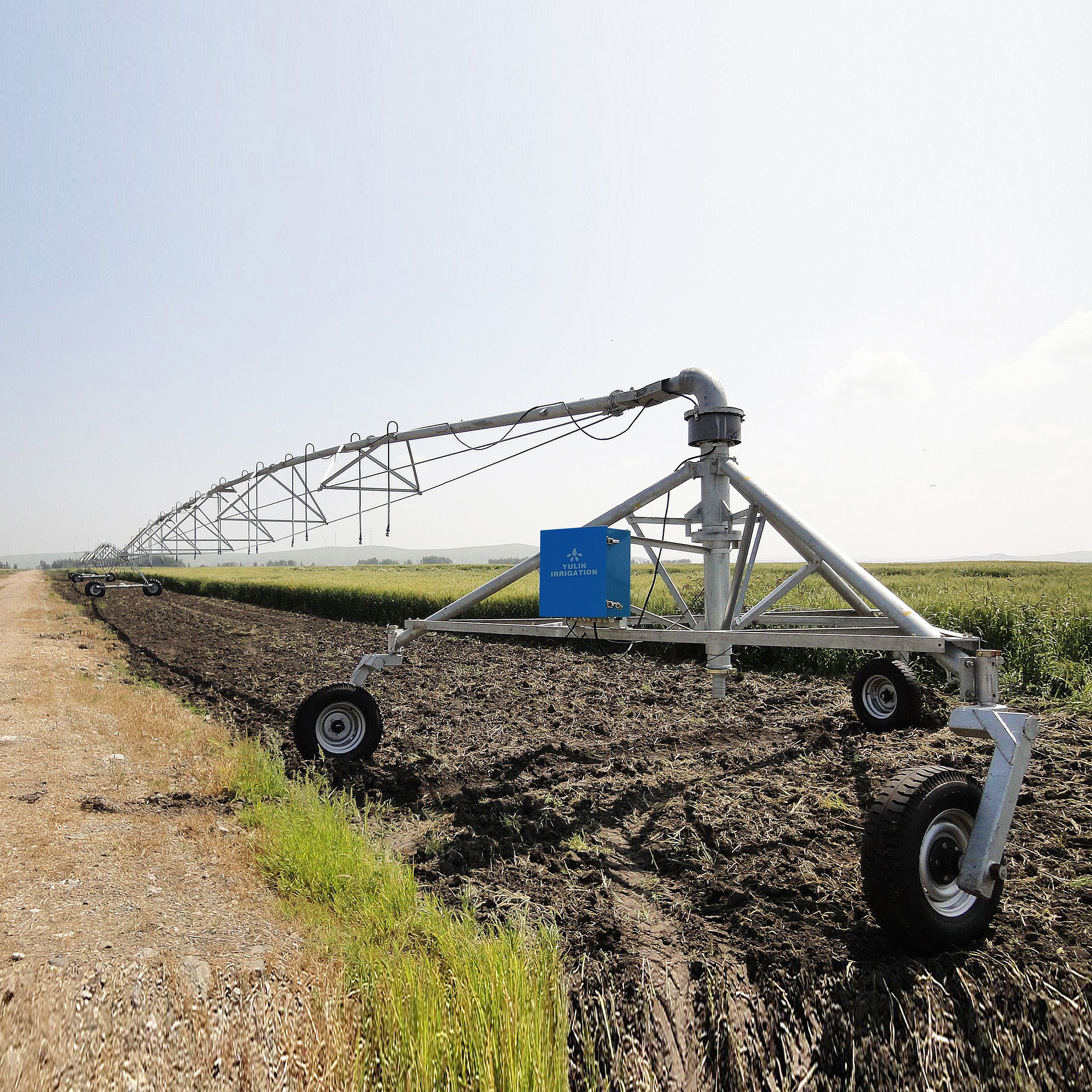
An irrigation pivot system is selected for a project, not for a price list. Buyers who start from field shape, power availability, crop rotation, water quality and land permanence usually end up with a more predictable system than those who start from a single machine type.
China Yulin Irrigation Equipment Co., Ltd., commonly known as YULIN IRRIGATION, is a Dalian-based agricultural irrigation equipment manufacturer founded in 2009. The company builds fixed center pivot irrigation systems, towable center pivot systems, four-wheel linear irrigation systems, hose reel irrigation machines and irrigation parts for farms, distributors and OEM clients worldwide. This guide explains which YULIN machine category is appropriate for which farm scenario, using documented installation experience and verified industry data.
Why Farm Scenario Should Drive the System Choice
A buyer asking for an "irrigation pivot for agriculture" may actually need one of several physically different systems:
- A long, permanent center pivot for a large circular field on one continuous block.
- A towable center pivot that moves between several fields and supports a rotation plan.
- A four-wheel linear irrigation system for long rectangular blocks.
- A hose reel traveler for smaller, irregular or rented fields where grid power is not available.
The common mistake is to compare machine brands before comparing application scenarios. Machine class matters first. After a farm scenario is defined, brand evaluation, certification review and pricing become meaningful.
Project Constraints That Define an Irrigation Pivot Specification
Every pivot installation works around the same set of physical restraints:
- Field geometry and access — a fixed center pivot irrigates a circle, so the shape and obstacles of the parcel matter.
- Power supply — most center pivot drives are electromechanical and must be fed by a stable power source.
- Crop and irrigation objective — pasture, soybean, corn, fodder and vegetables all create different scheduling needs.
- Water chemistry — water pH, acidity and alkalinity affect pipe compatibility and long-term corrosion behavior.
- Land tenure — owners of permanent fields choose different equipment than farmers who rent or rotate fields.
These constraints determine whether a fixed pivot, a towable pivot, a linear machine or a hose reel system is the most logical baseline solution.
Market Context for Large-Scale Irrigation Projects
Large mechanical irrigation is expanding on a global level, and procurement decisions are increasingly made at the project stage. The global center pivot irrigation system market was estimated at USD 2.56 billion in 2025 and is projected to reach USD 5.67 billion by 2030, according to Mordor Intelligence research published in February 2025. Regionally, manufacturers are responding to very different demand drivers. Lindsay Corporation, for example, reported a multi-year irrigation supply agreement valued at more than USD 100 million for Zimmatic systems in the Middle East and North Africa in its third-quarter fiscal 2024 results.
At the same time, buyers should pressure-test equipment against engineering and service criteria, not only against headline market growth. The active ISO standard ISO 11545:2009 defines the in-field method for determining water distribution uniformity of center pivot and moving lateral irrigation machines. This standard is a useful reference when evaluating how uniformly a proposed system will apply water.
Matching Machine Types to Farm Scenarios
Fixed Center Pivot Irrigation System — for Large, Permanent Fields
A fixed center pivot irrigation system rotates around a central tower and irrigates the land in circular motion, clockwise and anti-clockwise. YULIN offers fixed DYP center pivots in spans that cover roughly 10, 30, 50 and 100 hectares depending on field layout and configuration, with corresponding system lengths of approximately 177.6 m, 307.4 m, 395.6 m and 565 m.
Center pivot specifications are engineered for continuous agricultural duty:
- Irrigation of fodder crops, cereals, vegetables, industrial crops and corn.
- Operating temperature range of -45 to +45 °C.
- Standard supply voltage of 380–460 V.
- Truss height of approximately 3 m, leaving working clearance for crops below.
- Electromechanical, reversible drives with individual span-by-span control.
- Collector ring protection at IP65 and control panel functions protected to IP65.
- Steel structure hot-dip galvanized according to GB/T 13912-2002, applied to Q235B metal components.
Water compatibility matters. The standard YULIN center pivot design supports use of irrigation water with pH 6–7.5 during the warranty period without quality problems. For more aggressive water projects, buyers need to discuss additional protection before finalizing specifications.
Towable Center Pivot System — for Rotated Fields and Flexible Operations
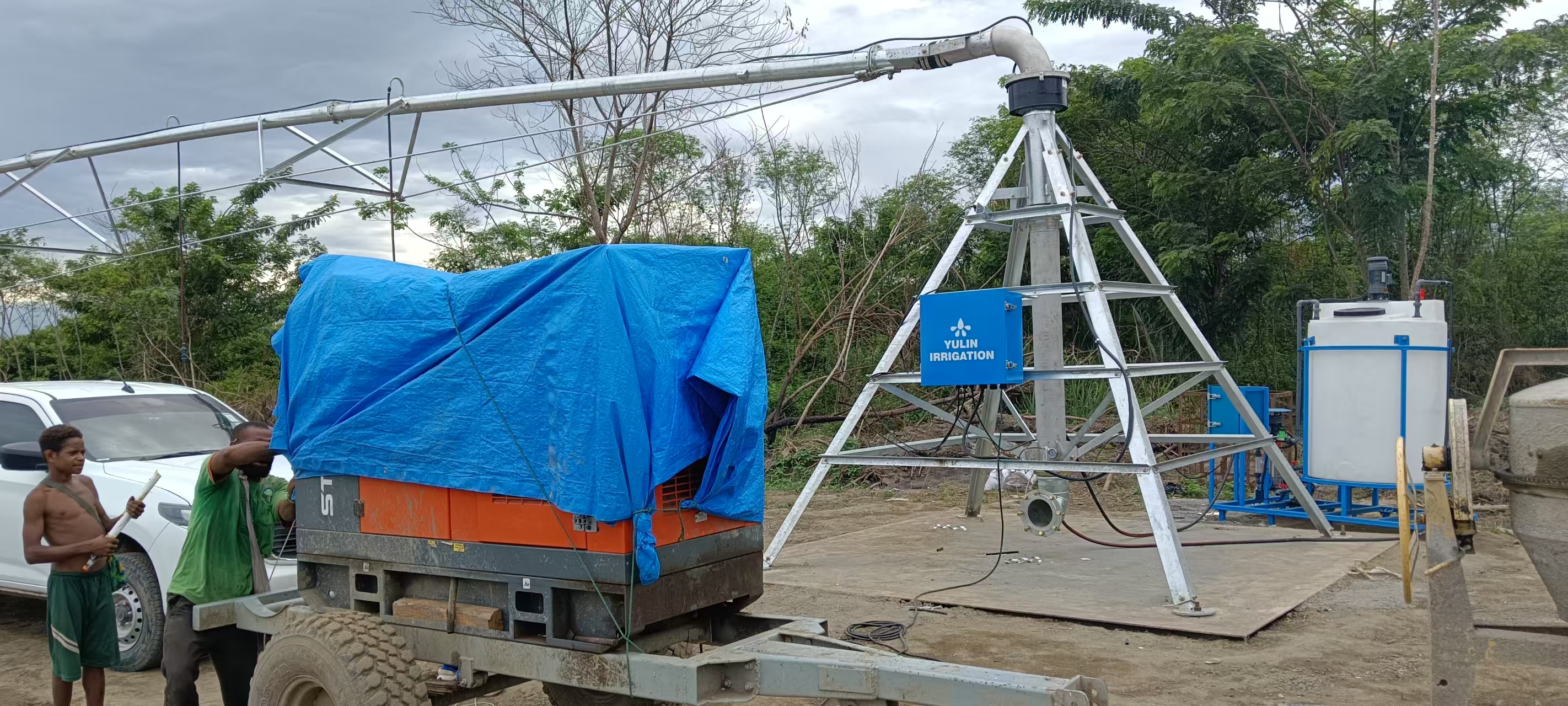
Not every farm has one permanent block. YULIN's product family includes towable pivot machines that can be moved between fields. This configuration is suitable for growers who manage several parcels, rotate crops across different fields, or want one machine to serve a larger operating area over the season.
Documented use in Zimbabwe illustrates the scenario. An end customer there purchased 45 center pivot units for crop irrigation. The systems were delivered and operated over a six-year cycle, with reported results of increased crop output and reduced labor requirements. The visual record of this project shows three-wheel towable pivot equipment running on site, confirming that a towable design can work for multi-field row-crop farms.
Four-Wheel Linear Irrigation System — for Rectangular or Continuous Blocks
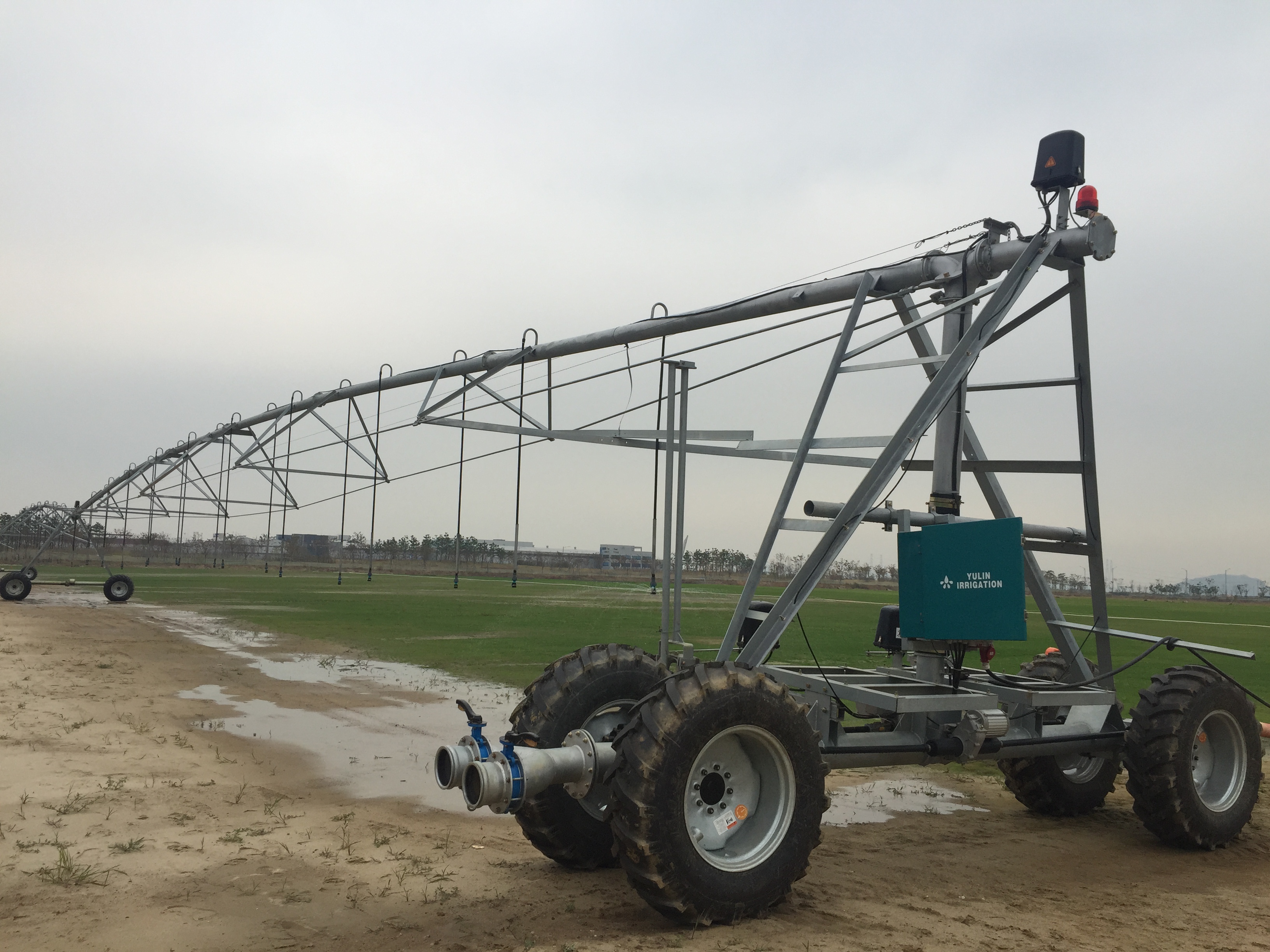
Some farms are longer and flatter than they are square, and a circular pivot pattern is not the most efficient shape for every parcel. YULIN manufactures four-wheel linear irrigation machines for these layouts. A linear move system travels along the field rather than rotating around a fixed center point, which makes it a sensible option for rectangular landforms.
One documented YULIN project involved a South Korean government project using a four-wheel linear irrigation system to irrigate a school lawn with recycled chemical wastewater. The installation has operated over a seven-year period, supporting wastewater recycling, maintaining natural grass, and allowing children to use the field safely.
Hose Reel Irrigation Machine — for Fragmented Fields and No-Grid Sites
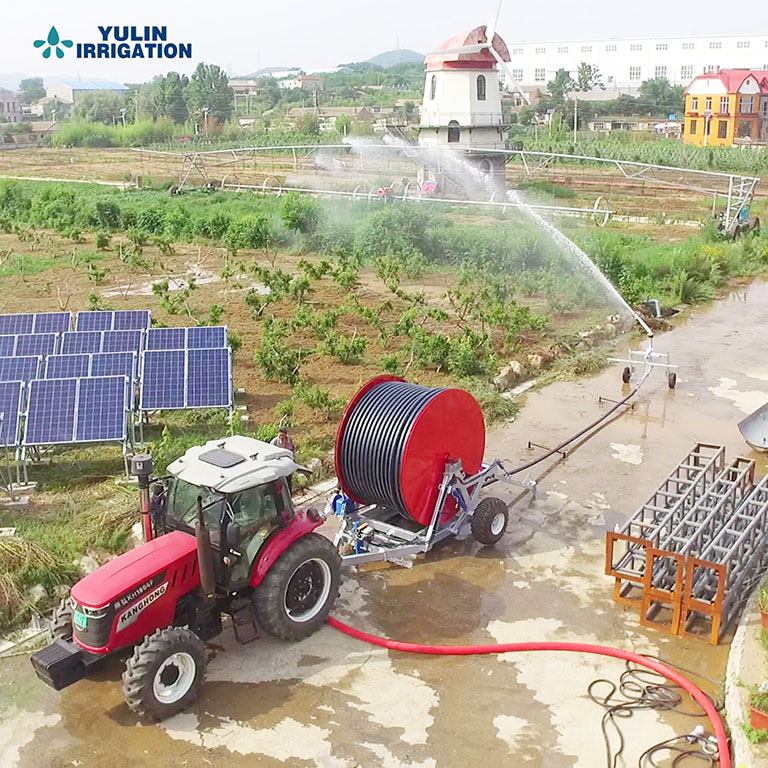
The hose reel irrigation system, also called a traveling irrigator, is a different equipment family. YULIN's JP800 hose reel machine uses a 90 mm PE pipe with a standard length of 300 m. The machine has an outside measurement of 6120 mm length, 2330 mm width and 2770 mm height, and shipping dimensions of 2450 mm × 2000 mm × 2250 mm. It weighs 2180 kg with a tolerance of ±30 kg.
The key scenario advantage of a hose reel traveler is its power source: it is water-turbine driven and does not require an electricity connection. That makes it practical for fields without grid power, for temporary rental land, and for operators who need a lower-cost machine that is quick to install and easy to move.
Brazilian soybean agriculture provides a documented example. Large-scale farmers in Brazil used 50 YULIN hose reel machines for soybean irrigation over a six-year period. Reported results include a 30% increase in crop output during dry conditions, labor savings, ease of relocation from one field to another, and convenience when renting the machines to other operators.
Power-Source Scenarios: Grid, Generator and No-Electricity Sites
Power availability is one of the most important scenario filters in a pivot selection.
A YULIN center pivot is normally powered by an external power connection or by a diesel generator set. Each tower drive is electromechanical, reversible and individually controlled for each span. This is important for remote farmland projects where mains electricity is weak or unavailable.
In a YULIN project delivered in Papua New Guinea for a local farm during the dry season, a center pivot irrigation machine covering approximately 50 hectares was configured with an end spray gun and a 1000-liter fertilizer tank. The system was driven by a diesel generator and used for irrigation as a rainfall substitute during high-temperature conditions. The end gun made supplementary irrigation possible in the corners of the field, and the project applied pesticides for integrated pest control during irrigation.
For sites where no form of electrical power is practical, the JP hose reel traveler is usually the more appropriate baseline because its water turbine drive needs no electricity. If a farm plans a future solar-powered pivot installation, the power integration, panel sizing and pump curve should be reviewed by engineering before machine configuration is fixed.
Step-by-Step Way to Match an Irrigation Pivot System to a Project
- Measure the actual irrigable area. Center pivots cover approximately 10, 30, 50 or 100 hectares per unit depending on length and layout. The correct machine length is calculated from field dimensions, not from pump size.
- Identify the water source and water quality. Standard center pivot units are configured for water with pH 6–7.5. If the source is acidic, alkaline or otherwise aggressive, discuss extra corrosion protection before purchase.
- Check the power source for each field. Grid-connected fields can use standard electromechical pivots. Off-grid fields may need a diesel generator set or a non-electric hose reel traveler.
- Decide whether the land is permanent or rented. Fixed center pivots suit permanent large blocks. Towable pivots, linear machines and hose reel travelers fit rotation systems better.
- Define the crop and application requirements. The documented crop range includes fodder crops, cereals, vegetables, corn, soybean, pasture, cotton and watermelon. Crop height and growth stage confirm the required truss clearance.
- Plan for corners and irregular areas. An end gun or end-of-pivot sprinkler can provide supplementary irrigation for corners. Chemical injection such as a fertilizer tank can be integrated for combined water and nutrient application.
- Confirm coating and quality standards. YULIN center pivot steel structure is hot-dip galvanized according to GB/T 13912-2002. CE, ISO9001 and CSA certifications are part of the company's export quality framework, and all irrigation equipment is said to undergo anti-corrosion and wind-resistance testing before delivery.
Real Farm Scenarios in Documented YULIN Projects
| Scenario | Machine Used | Documented Result |
|---|---|---|
| Dry-season farm in Papua New Guinea with high temperature and limited grid power | Fixed center pivot around 395.6 m, covering 50 hectares, with end gun and 1000 L fertilizer tank | Irrigation substituted for rainfall; diesel generator powered the system; integrated watering and fertilization in one operation |
| Large soybean farms in Brazil, including rented or multiple fields | JP hose reel irrigation machines, 50 units, water-turbine driven | Around 30% higher soybean output during dry conditions; labor saved; machines easily pulled from one field to another and convenient to rent |
| Multi-field row-crop farm in Zimbabwe | 45 center pivot units, including three-wheel towable machines | Higher crop output and labor savings over a 6-year operating period |
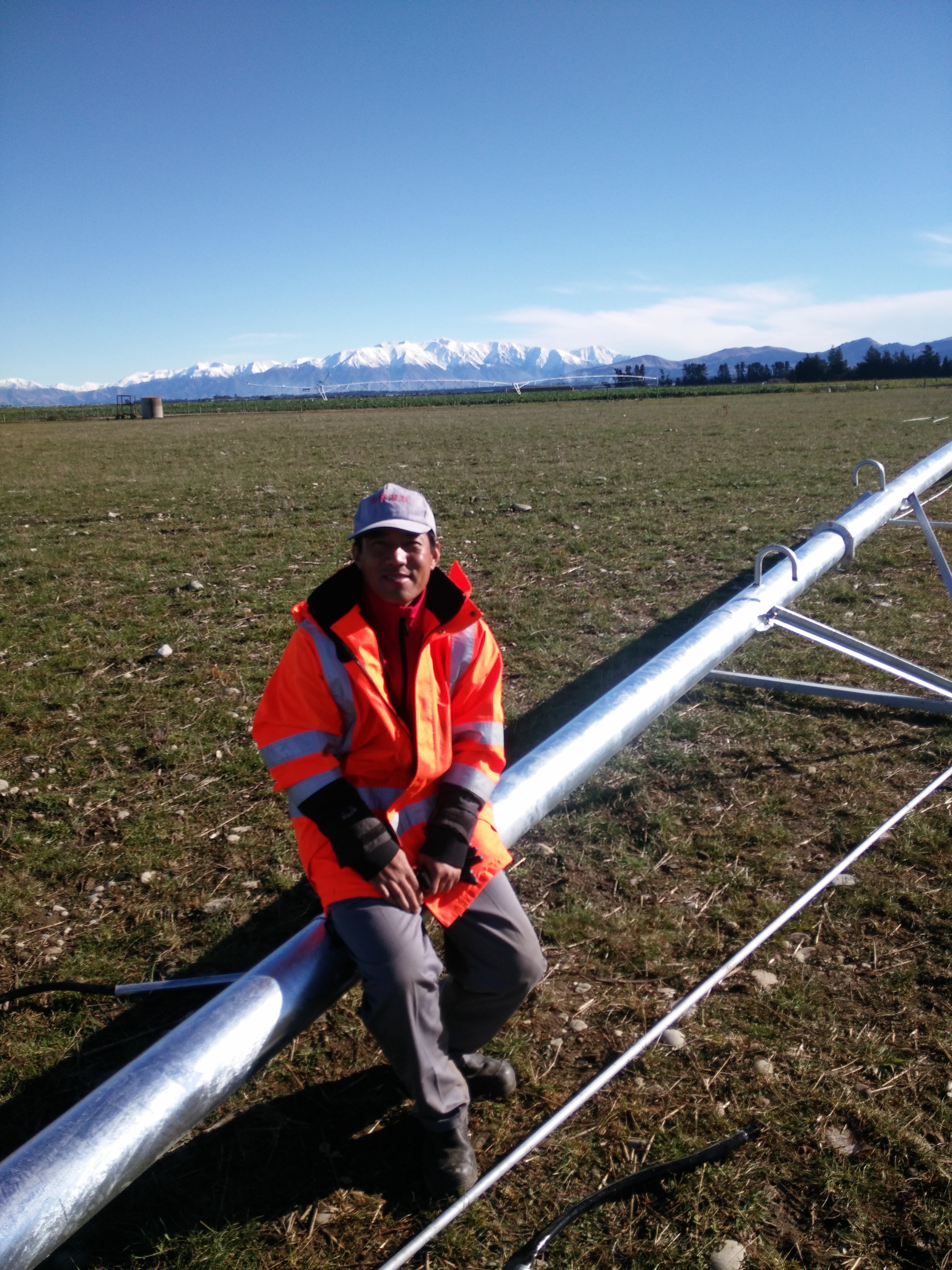
| Dairy pasture farm in New Zealand | Center pivot machines, 70 units | Irrigation for grass supported dairy operations; long equipment life span and labor savings reported over 9 years |
| Government school-lawn project in South Korea using recycled wastewater | Four-wheel linear irrigation system | Wastewater reuse for natural grass irrigation; safe outdoor space for students; system installed over a 7-year operating history |
| Distributor network in Australia serving forage, pasture, cotton and watermelon farms | 600 center pivot units supplied through a major distributor | More than 40% energy savings; greater crop output; long service life, lower maintenance, and labor savings reported over a 15-year relationship |
Scenario Comparison Table for Machine Selection
| Decision Criterion | Fixed Center Pivot | Towable Center Pivot | Four-Wheel Linear | JP Hose Reel Traveler |
|---|---|---|---|---|
| Best fit scenario | Large permanent field requiring circular coverage | Multiple fields or rotating crop blocks | Rectangular or continuous field blocks | Smaller, fragmented, rented or irregular fields |
| Power requirement | Electromechanical; external power or diesel generator | Electromechanical; external power or diesel generator | Electromechanical drive | Water-turbine driven; no electricity required |
| Documented crop examples | Fodder crops, cereals, vegetables, industrial crops, corn | Crop irrigation on rotating farm blocks | Natural grass lawn irrigation with recycled water | Soybean, broad-acre and forage applications |
| Mobility | Remains in one field; tower moves around center | Can be towed between fields | Travels along the field length | Easy to move from one land parcel to another |
| Corrosion protection / materials | Hot-dip galvanized Q235B steel structure | Hot-dip galvanized steel structure | Galvanized steel structure | Metal frame with 90 mm PE pipe, 300 m standard length |
| Typical YULIN coverage reference | Approx. 10, 30, 50 or 100 ha configurations | Same pivot family moved to serve multiple fields | Field-length dependent | PE pipe 300 m; spray radius, nozzle size and flow set by model selection |
Engineering, OEM and After-Sales Considerations for Project Buyers
Project buyers often evaluate not only which machine class fits the farm, but whether the manufacturer can adapt the standard design and support installation in their region.
- Voltage: YULIN offers voltage customization for OEM orders, which matters when importing into countries with non-standard grid supply.
- Quantity: YULIN accepts OEM orders with a minimum order quantity of one unit, so a first machine can be validated before a wider rollout.
- Capacity and lead time: The manufacturer's monthly capacity is 60 pivot units, with a typical lead time of 21–40 days for production.
- Testing: Quality control procedures include 100% testing of outgoing equipment.
- After-sales: The service scope includes field installation, commissioning and operator training, video technical support, online support and free spare parts.
FAQ
What standards should an irrigation pivot system meet before I order?
Internationally, ISO 11545:2009 is an active standard for measuring the uniformity of water distribution from center pivot and moving lateral irrigation machines. Buyers should also verify corrosion protection, since pivot structures remain in contact with water for decades. YULIN center pivot systems use Q235B structural steel that is hot-dip galvanized according to GB/T 13912-2002. The company states that its irrigation equipment carries CE, ISO9001 and CSA certification, and that all equipment undergoes anti-corrosion and wind-resistance testing before delivery.
Can a center pivot irrigation system be adapted for off-grid or high-temperature farm conditions?
Yes. YULIN center pivot drives are electromechanical, reversible and individually controlled for each span, and they can be powered by an external power connection or by a diesel generator. In a Papua New Guinea project, a dry-season farm was served by a 50-hectare fixed center pivot running from a diesel generator in high-temperature conditions. Buyers with no grid access should document the generator capacity and field layout when requesting a quotation.
How should I compare operating and investment expectations between center pivot and hose reel systems?
Comparisons should be made against the actual field scenario. A fixed center pivot provides automated circular irrigation over one large permanent block and is positioned by YULIN around water, labor and harvest efficiency. A hose reel traveler such as the JP800 is water-turbine driven, requires no electricity, is easier to move between fields, and is described by YULIN as a low-cost option. For permanent large blocks, mechanized center pivot automation is usually the appropriate reference; for fragmented, rented or no-grid fields, the hose reel traveler is usually the lower-cost and more flexible scenario fit.
Can I buy one irrigation pivot unit first to validate the project?
Yes. YULIN's accepted minimum order quantity is one unit, and OEM voltage customization is available. Every outgoing unit is reported to be 100% tested. Buying one pivot first can help a distributor, cooperative or large farm confirm installation conditions, power supply and water quality before scaling to a complete field program.
What is the typical lead time and what after-sales support is included?
YULIN's monthly pivot production capacity is 60 units, and normal production lead time is 21–40 days after order confirmation. After-sales services include global localized on-site installation, commissioning and operator training, plus video technical support, online support and free spare parts. For a faster first response, send your field size, water source and power situation directly to YULIN's sales and engineering team.
Conclusion: Choose by Field, Then Confirm by Manufacturer
A successful irrigation pivot system purchase begins with the project: land shape, water quality, power source, crop system and how long the same field will stay under the machine. Fixed center pivots bring automation to permanent large blocks; towable center pivots serve rotated fields; four-wheel linear machines suit rectangular layouts; and hose reel travelers offer a no-electricity, lower-cost solution for fragmented or rented land.
China Yulin Irrigation Equipment Co., Ltd. provides documented references across these scenarios — from 50 hose reel machines in Brazil to 45 center pivots in Zimbabwe, 70 pivots for New Zealand dairy pasture, 600 units through an Australian distributor and a four-wheel linear system in a South Korean government project. The same evidence should guide a buyer's evaluation of capability, quality control, after-sales service and fit before a purchase order is placed.
Need help matching an irrigation pivot system to your farm project?
Download 2026 YULIN Pivot CatalogueVisit www.cyulin.net
Email: yulinirrigation@hotmail.com | Tel / WhatsApp: +86 158-4249-7638
Have Questions or Need More Details?
Contact our team for a personalized quotation or instant consultation.
Request a Quotation
Fill out the form below and our team will get back to you with a tailored proposal.
WhatsApp Direct Chat
Prefer to chat in real-time? Message us on WhatsApp for instant assistance & quick answers.
- Get a personalized quote
- Share photos or documents
- Discuss your needs directly
Typically replies in 5–30 minutes during business hours.