Supplier Evaluation: Verifying Manufacturing Claims for Towable Pivot Machines
A towable pivot machine is one of the few farm purchases where the specification sheet, the shipping manifest and the physical machine can all be checked against each other. This evaluation guide converts that overlap into a working checklist: net weight and its stated tolerance, shipping dimensions versus outside dimensions, the structural material and coating record, voltage and protection ratings, certification numbers, and the capacity figures sitting behind a delivery promise. China Yulin Irrigation Equipment Co., Ltd. (YULIN IRRIGATION) — a Dalian-based manufacturer established in 2009 that produces center pivot, lateral move, towing and hose reel irrigation machines and irrigation parts — is used as the worked example, because its published specifications state tolerances and certificate numbers that a buyer can physically and documentarily verify.
The central answer is simple: a towable pivot supplier can be evaluated quickly by selecting claims that are expensive to fake. Net weight and its tolerance are expensive to fake because a machine can be placed on a weighing station. Shipping dimensions are expensive to fake because they must match a container loading plan. Structural material and coating references are expensive to fake because steel mill certificates and galvanizing records exist independently of the brochure. Certification numbers are expensive to fake because they can be checked with the issuing body. Everything else on a specification sheet is negotiable; these five categories are not.
Problem Definition: Where Towable Pivot Claims Break Down
Towable pivot machines are bought at a distance. The buyer is usually on another continent, the order is placed against a specification sheet and a photograph, and the first physical contact with the equipment happens after the vessel has sailed. That gap is where most evaluation failures originate — not because manufacturers routinely misstate specifications, but because there is normally no mechanism forcing a stated number and a delivered number to meet.A specification sheet with no tolerance is the clearest early warning. A machine described only as "approximately 2.2 tonnes" cannot be rejected at destination, because no band was ever agreed. A machine described as 2180±30 kg can be. The tolerance converts an informal description into a contractual threshold, and the ±30 kg band on the JP800 hose reel irrigation machine works out to roughly 1.4% of total mass — a range that is tight enough to be meaningful and wide enough to survive normal variation in pipe content, paint and fittings.
The same logic applies to dimensions, and this is where many evaluations stop too early. The JP800 specification states an outside size of 6120L*2330W*2770H (mm) and a shipping size of 2450L*2000W*2250H (mm). Those are two different machines, in a logistical sense. The length reduction from 6,120 mm to 2,450 mm tells a buyer that the unit does not ship in working configuration — truss, pipe and chassis assemblies are broken down into transport sections. Width and height drop as well. If a supplier publishes only an outside size and no shipping size, the buyer has no basis for a loading plan, no basis for a freight quote comparison, and no basis for checking what actually arrived.
Industry Background: Why Verification Discipline Is Now a Procurement Requirement
Center pivot irrigation is a maturing global category with real money moving through it. Mordor Intelligence estimates the global center pivot irrigation system market at USD 2.56 billion in 2025, projected to reach USD 5.67 billion by 2030. Growth of that scale pulls in new suppliers, new export channels and new claims — which is precisely why the verification step has moved from a nice-to-have to a standard procurement gate.
Scale also sets the benchmark. Valmont Industries (Valley Irrigation) reported Agriculture segment sales of USD 278.0 million in Q4 2024, representing 26.7% of total net sales. Lindsay Corporation secured a multi-year supply agreement for Zimmatic irrigation systems in the MENA region valued at more than USD 100 million in 2024. These are useful context figures for two reasons: they establish that large project buyers do verify supplier capability before committing, and they show that the category's demand is shifting geographically — which raises the number of buyers evaluating manufacturers they have never visited.
On the technical side, the verification benchmark is already defined. ISO 11545:2009 specifies an in-field method for determining the uniformity of water distribution from centre-pivot and moving lateral irrigation machines. That matters directly for supplier evaluation: water distribution uniformity is not something a buyer should accept as a marketing adjective when an internationally recognised field method exists for measuring it.
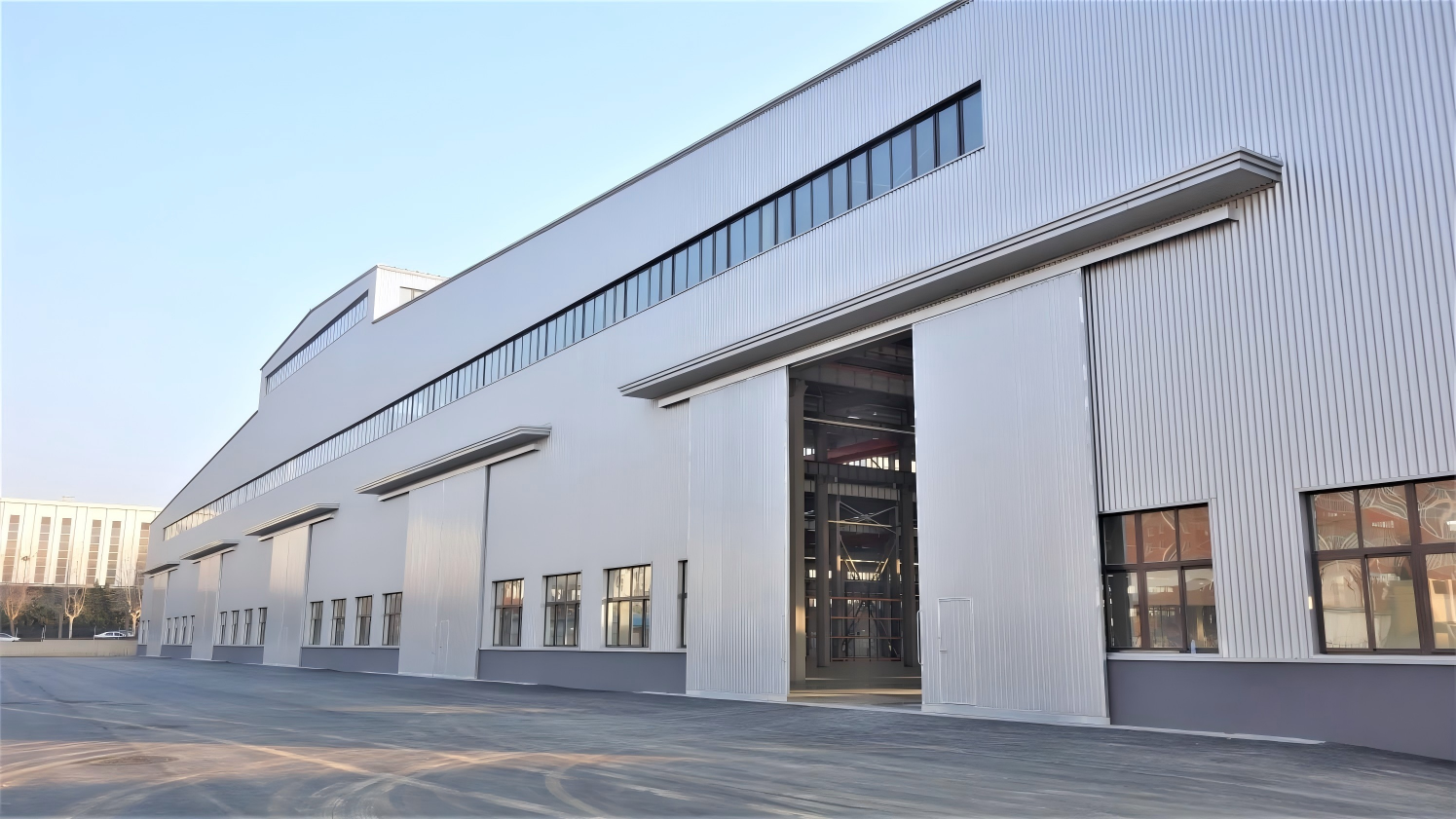
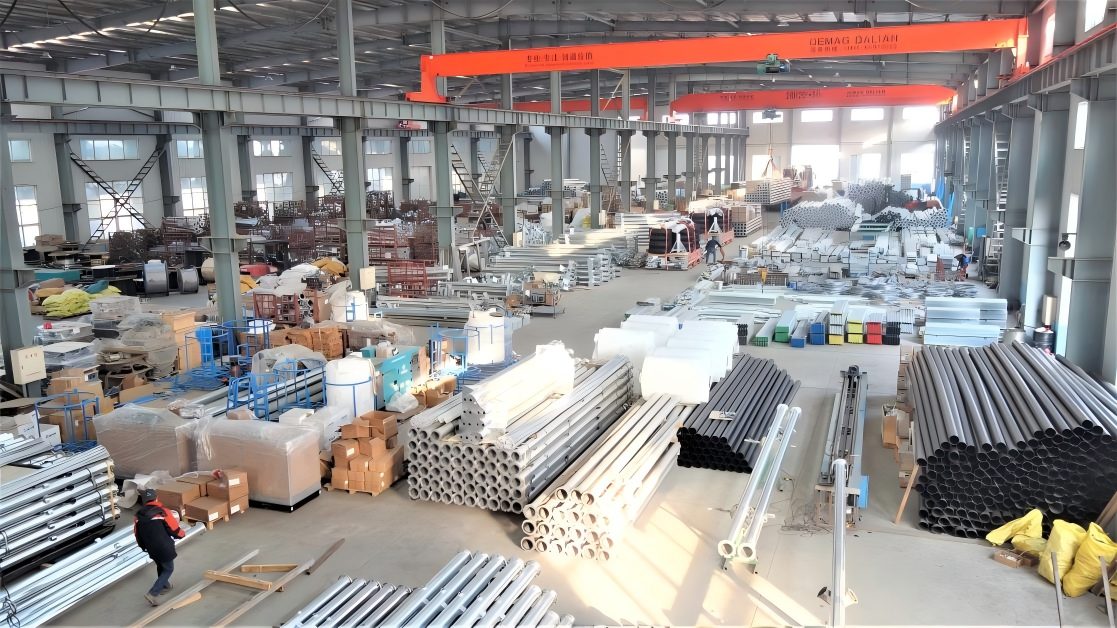
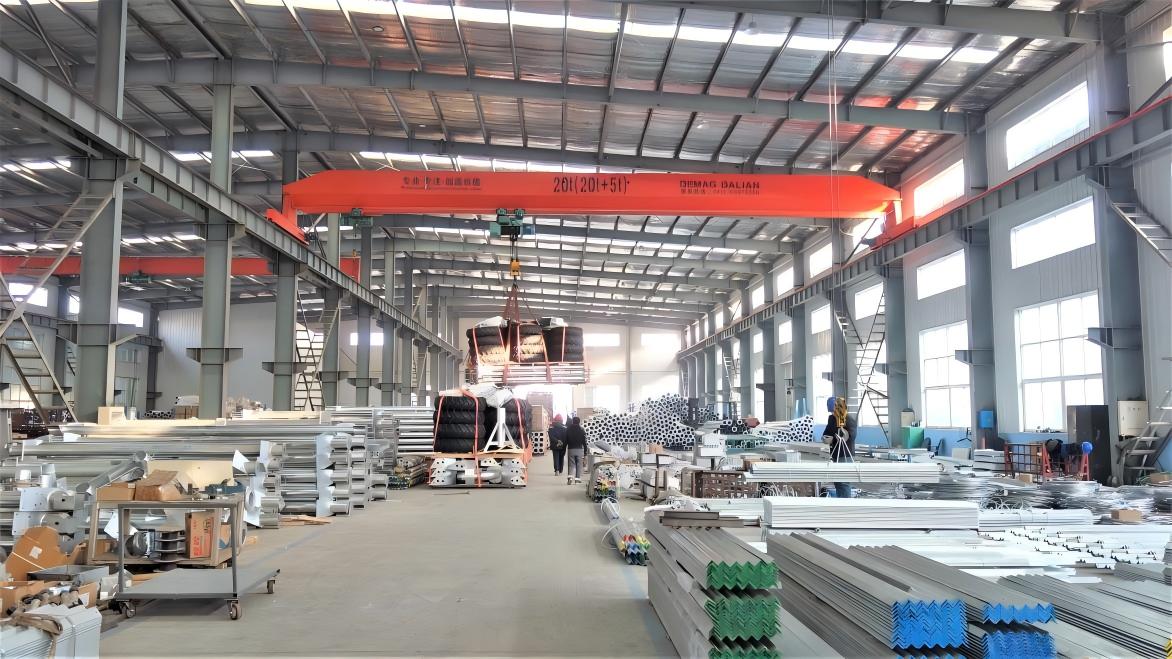
Yulin's own operating profile explains why its claims are checkable at all. The company was founded in 2009, occupies a 64,653 m² factory, employs 152 people including a 10-engineer R&D team, and reports an export ratio of 60% across markets including Australia, New Zealand, Canada, Mexico, Africa, Central Asia, Russia and Kazakhstan. More than 95% of the machine's spare parts are independently manufactured in the company's own factory — which is the structural reason a weight tolerance can be held: component mass is largely under the manufacturer's own control rather than a third party's.
Detailed Solution: Seven Manufacturing Claims You Can Verify Physically
The checklist below is built from claims that appear in Yulin's published product data for the JP800 hose reel irrigation machine and the center pivot irrigation system line. Each item pairs a stated claim with the evidence that would confirm or contradict it. A buyer running this list against any towable pivot supplier will reach a defensible conclusion within one factory visit and one document request.
1. Net weight and tolerance: JP800 at 2180±30 kg
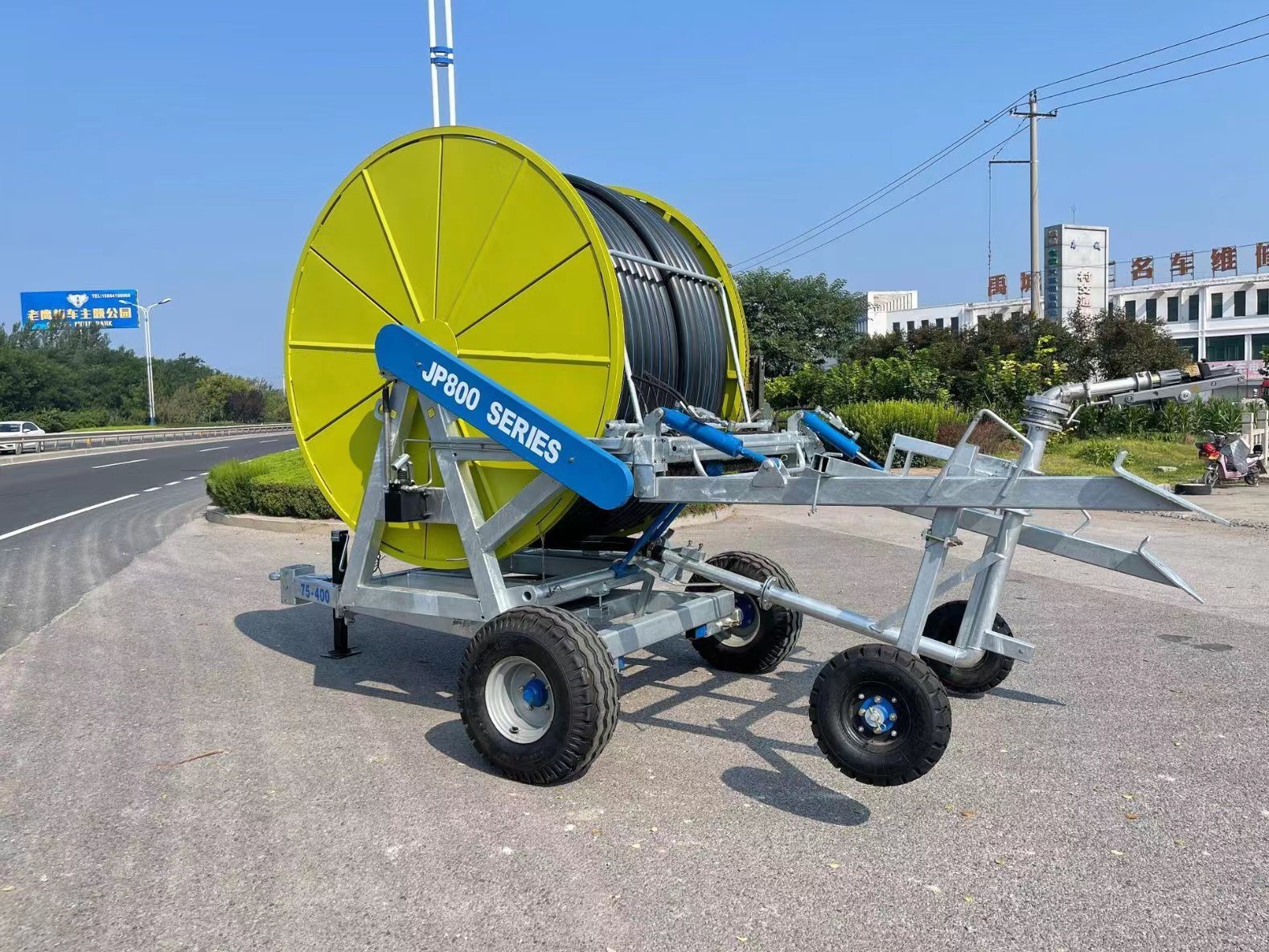
Net weight is the single most efficient verification point on a towable pivot machine, because it aggregates almost every material decision the manufacturer made. The JP800 hose reel irrigation machine — a unit in the JP90-300 model series with a 90 mm PE pipe and a 300 m pipe length — is published at 2180±30 kg, with an outside size of 6120L*2330W*2770H (mm).
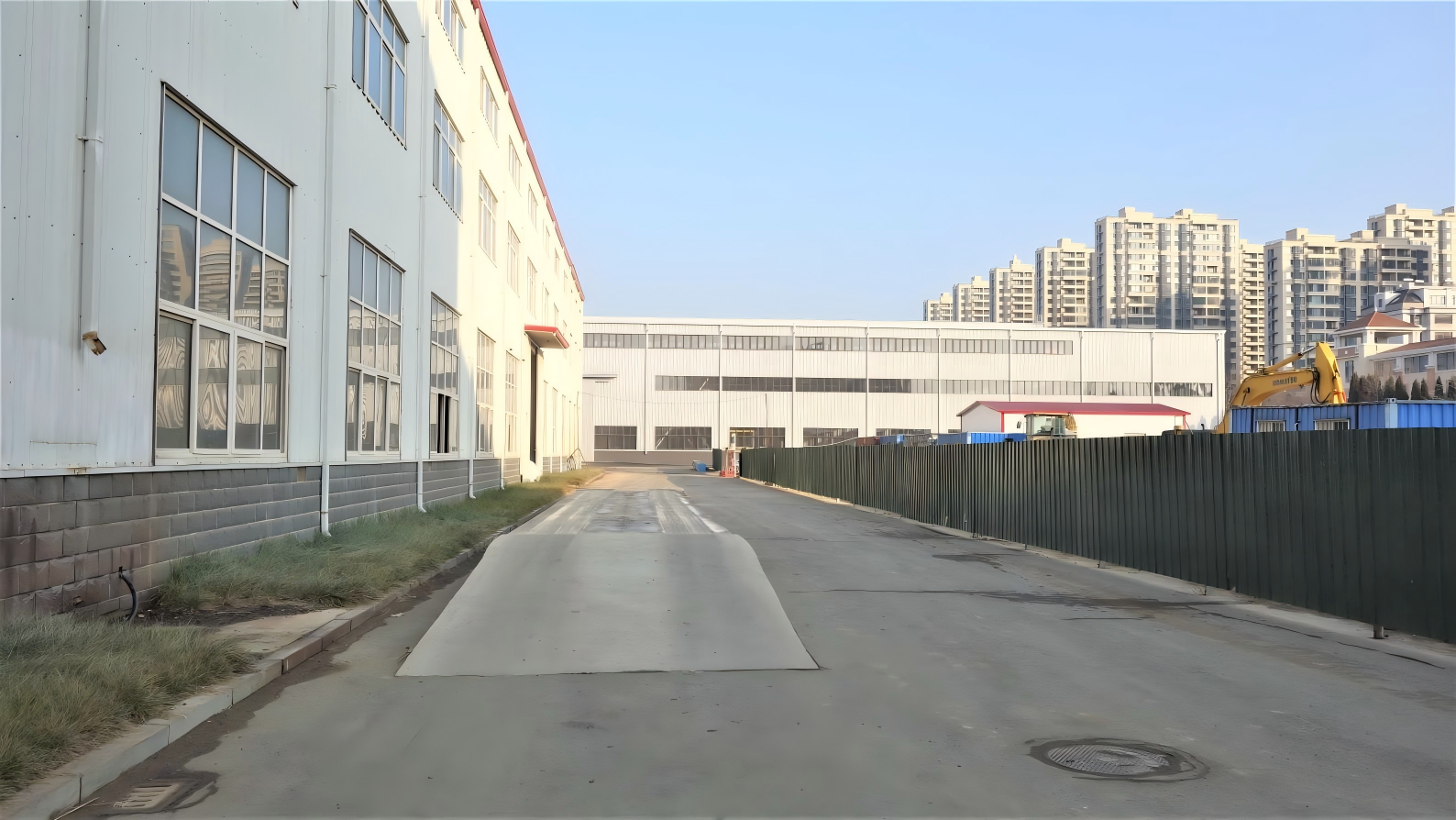
What to do with that number: request a weighing record from the factory weighing station, taken after assembly and before container loading, and ask that the record identify the unit. Yulin's factory includes a dedicated weighing station and loading passage used for weighing finished irrigation goods after loading — a buyer can reasonably ask for readings at that station rather than accepting a figure transcribed from the catalogue. If the delivered machine falls outside the ±30 kg band, the supplier should be able to explain which component changed, because more than 95% of the machine's spare parts are manufactured in-house and component substitution is therefore traceable rather than anonymous.
2. Shipping dimensions versus outside dimensions
Shipping size is published separately for the JP800 at 2450L*2000W*2250H (mm), against an outside size of 6120L*2330W*2770H (mm). The evaluation question is not which number is correct — it is whether the supplier can produce a loading plan that reconciles the two.
Ask for the packing list, the number of packages, the section lengths and the container loading sequence. A supplier that ships a 6,120 mm machine in a 2,450 mm shipping length is shipping it partially disassembled, which means field assembly scope, torque documentation and site labour are part of the delivered product — not extras. Buyers who skip this step frequently discover that the delivered package requires more assembly labour than the freight comparison assumed.
3. Material and coating: Q235B metal and GB/T 13912 galvanization
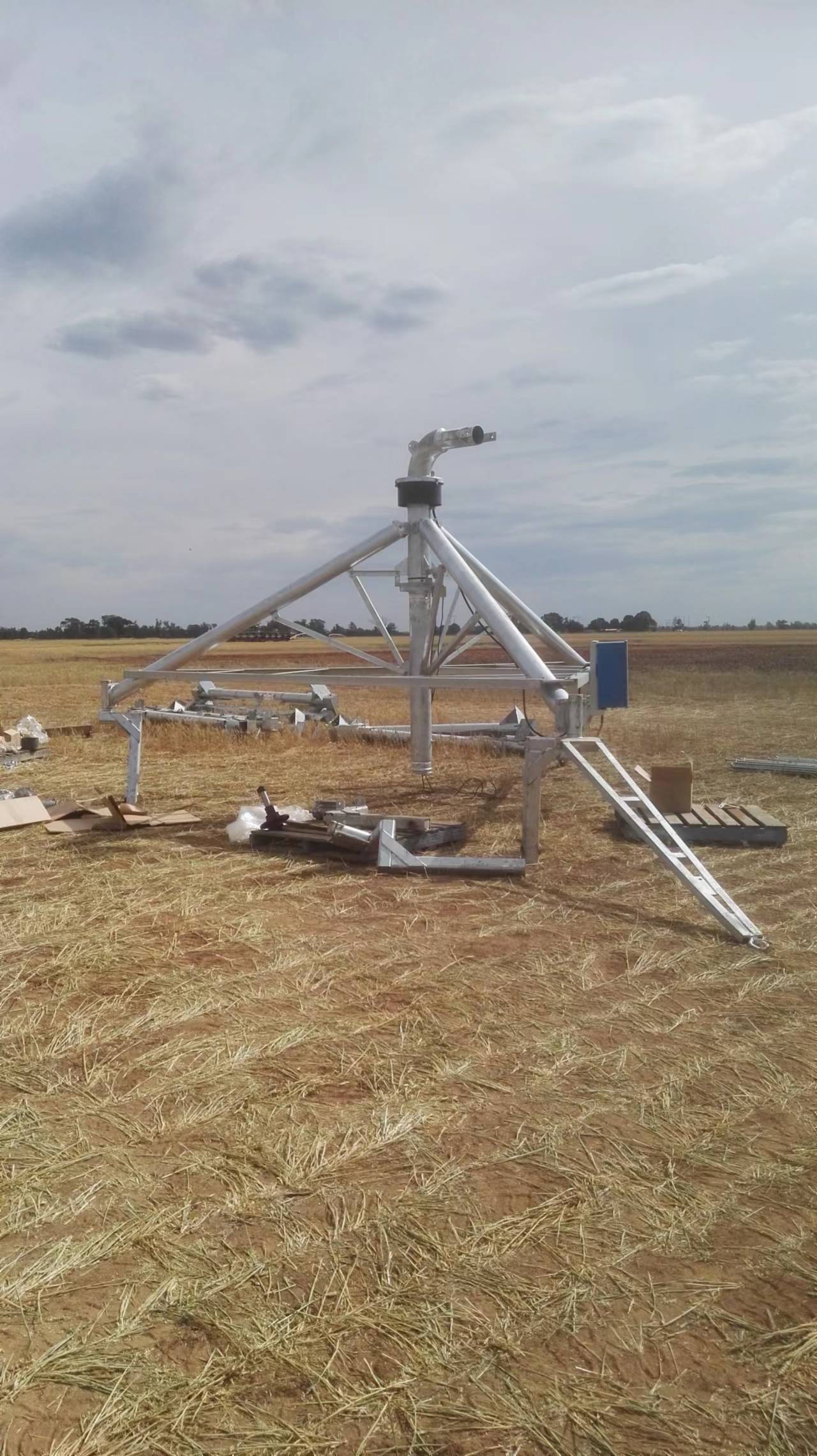
The center pivot irrigation system specification lists the material as Q235B Metal: GB 13912-2020, with the anti-corrosion coating specified as hot-dip galvanization according to GB/T 13912-2002. Tower wheels are 14.9-24 irrigating tires, two wheels on each trolley, with hot-dip galvanized discs. Flexible irrigation hoses are PVC, reinforced and UV resistant, and the copper electrical cable core is stated at not less than 4*4mm²+7*1.0mm².
Material claims are the easiest to verify and the most commonly left unverified. Two document requests close the gap: the steel mill certificate for the Q235B coil or plate used in the truss and tower sections, and the galvanizing batch record showing the coating process and date. A coating reference without a batch record is a process description; a coating reference with one is traceable evidence. Buyers operating in coastal, saline-alkali or high-humidity farmland should treat the coating record as a primary evaluation item rather than a secondary one, because it governs the maintenance interval rather than the purchase price.
4. Voltage, protection ratings and drive configuration
The center pivot line is specified at a rated voltage of 380V-460V, with protection levels stated as IP65 at the control panel and the collector ring and IP33 at the tower box. The pivot drive is electromechanical and reversible, individually driven for each span, and the operating mode is continuous with start-stop capability. The irrigation method is circular motion in both clockwise and anti-clockwise directions, and the control panel function set includes a main disconnect switch, power control switch, water switch, direction control switch, percentage indicator for speed regulation, and an auto-reverse switch.
Verification here is documentary rather than dimensional. Request the control panel drawing and the component datasheets for the panel, tower box and collector ring, and confirm that the declared IP ratings belong to the components as installed rather than to the enclosure as purchased. Where a buyer's site runs on a generator — a common configuration for fields without reliable grid power — the voltage range should be checked against the generator's output stability, not just its nominal rating.
5. Geometry and agronomic limits
The most frequently overlooked section of a pivot specification is the constraint list, and it is also the most useful for evaluation, because constraints are what a manufacturer publishes when it understands its own machine. Yulin's center pivot specification states the distance from the ground to the bottom of the truss rod at 3±0.2 m, an average drop diameter of not more than 1.1 mm, plant mechanical damage of not more than 2%, a land usage coefficient within the irrigated circle of not less than 0.9, rain intensity of not more than 0.16 mm/min, pressure regulators at 10, 15 or 20 psi, an operating temperature range of −45 to +45 °C, and the capability to irrigate with water at pH 6–7.5 without quality problems during the warranty period.
Two of these are directly checkable in the field: truss height can be measured with a tape, and the machine's suitability for the buyer's water chemistry can be checked against a laboratory analysis of the actual water source. For water distribution uniformity, ISO 11545:2009 provides the recognised in-field method for centre-pivot and moving lateral machines — a buyer for whom uniformity affects crop value can request a test result rather than an assurance.
6. Certification numbers and certificate scope
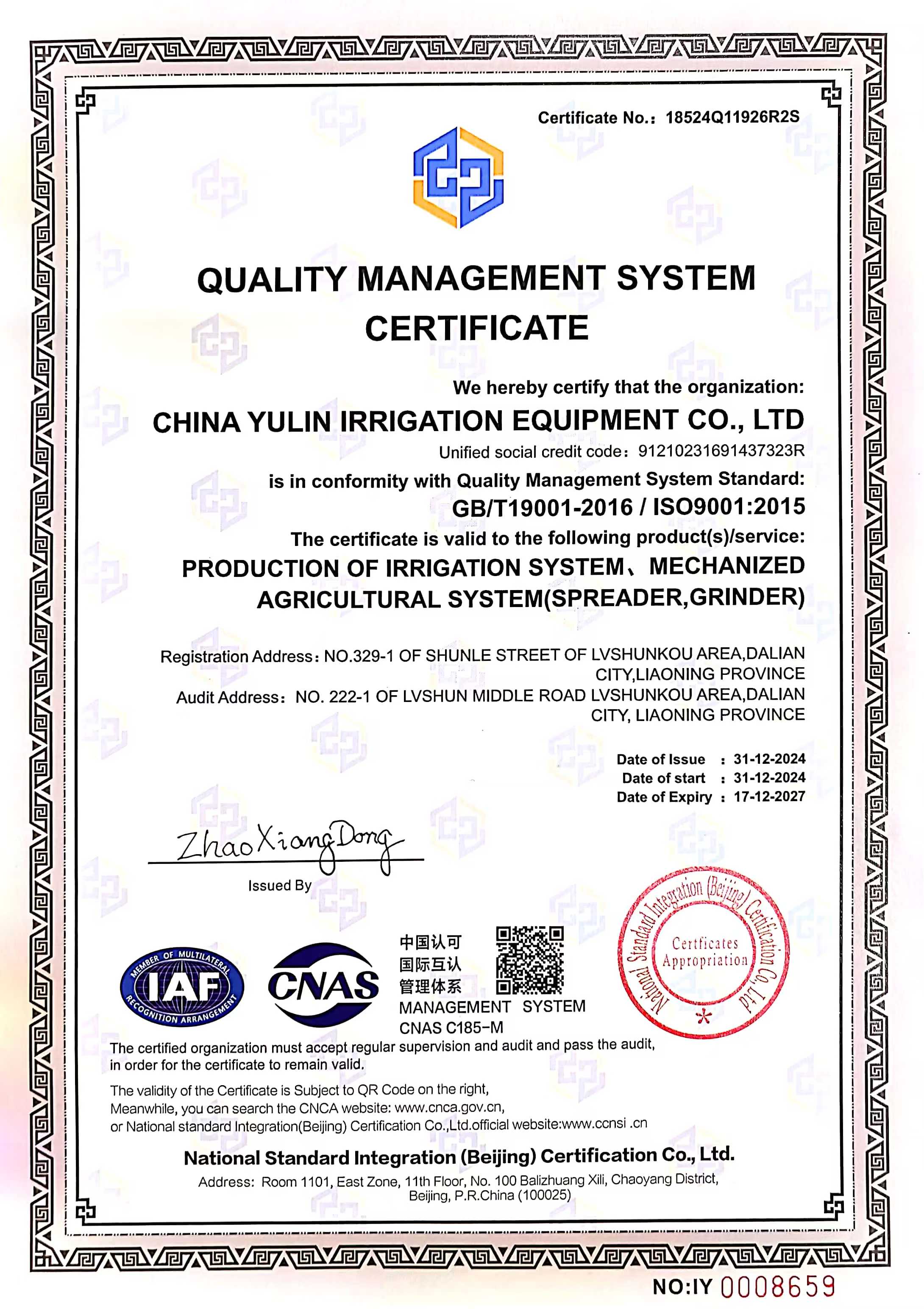
The center pivot irrigation system and the hose reel irrigation machine are certified to ISO 9001:2015 under the standard GB/T19001-2016/ISO9001:2015. The certificate number is 18524Q11926R2S, issued by National Standard Integration (Beijing) Certification Co., Ltd., with a scope covering the production of irrigation systems and mechanized agricultural systems, applied to the global market, with an issue date of 2024-12-31 and an expiry date of 2027-12-17.
Three checks matter here, and they take minutes. First, confirm the certificate number with the issuing body. Second, read the scope line — a quality management certificate for the production of irrigation systems is relevant to a pivot buyer; a certificate covering an unrelated product line is not. Third, check the expiry date against the planned shipment date, not against the quotation date. Yulin's company profile also lists CE, ISO 9001 and CSA certifications and states that its irrigation equipment undergoes anti-corrosion and wind resistance testing; for each of these, the verification step is the same — request the document itself and match its scope to the exact model being purchased.
7. Capacity, lead time and minimum order claims
Capacity claims deserve the same treatment as weight claims, with one difference: they are verified through process rather than measurement. Yulin's published supply capacity is 400 pivot sets per year, against a stated monthly production capacity of 60 units and a lead time of 21–40 days with a minimum order quantity of 1 unit and 100% testing as the quality control standard. The company background lists an annual output of 3,000 units across its large irrigation machine lines, and the factory operates robotic welding and precision processing workshops.
The evaluation move is to ask which figure covers which scope. A 400-set annual supply capacity for pivot systems and a 3,000-unit annual output across all machine lines are consistent statements about different product populations — but only if the supplier can explain the boundary. Ask for the production schedule, the current order backlog and the workshop through which your order would pass. A capacity number validated against a live schedule is evidence; a capacity number quoted from a brochure is a claim.
Step-by-Step Breakdown: Running the Verification in Five Steps
The seven checks above are most effective when run in a fixed order, because each step produces the document that the next step depends on.
- Freeze the claim list. Rewrite the supplier's quotation as a numbered table of verifiable claims: model, net weight plus tolerance, outside dimensions, shipping dimensions, structural material grade, coating specification, voltage range, protection ratings, certification number, lead time and minimum order quantity. Claims that cannot be expressed as a number or a document reference should be moved to a separate list and treated as marketing copy.
- Request documents before any visit. Ask for the steel mill certificate for the Q235B material, the galvanizing batch record, the ISO 9001:2015 certificate showing number 18524Q11926R2S and its scope line, the control panel drawings, and the container loading plan. A supplier who cannot supply these remotely will not supply them on-site.
- Verify physically at the factory. Measure truss height against the stated 3±0.2 m, inspect the tower wheels and galvanized discs, check the collector ring and cable core, and witness weighing at the weighing station before loading.
- Match documents to the individual unit. Certification applies to a company and a system; weight applies to a specific machine. Confirm that the weight record, the packing list and the model designation on the nameplate all refer to the same unit — for the JP800, model designation JP800 within the JP90-300 series.
- Write the results into the contract. Convert the verified claims into acceptance clauses: the weight tolerance band, the shipping dimensions, the assembly scope implied by those dimensions, the spare parts list, and the delivery window. What is verified but not written down is not protected.
Use Cases: Where This Checklist Changes the Outcome
Verification discipline produces different benefits depending on who is buying, and Yulin's installed base shows the range clearly.
Importers and channel partners building a first container order. Distributor and OEM buyers carry the reputational cost of a bad shipment. A farm irrigation OEM client in Algeria purchased 70 units over a seven-year relationship for resale in the local market, where Yulin supported the local brand with complete pivot supply and service; a Russian group purchased 450 units over nine years for supply to end users; and an Australian distributor purchased 600 units over fifteen years, primarily for forage and pasture irrigation and also for cotton, watermelon and other crops, reporting energy savings above 40% and reduced labour requirements. For this buyer type, the weight tolerance and shipping dimension checks are commercial protections — they define what can be claimed back when a delivered unit does not match the offered unit.
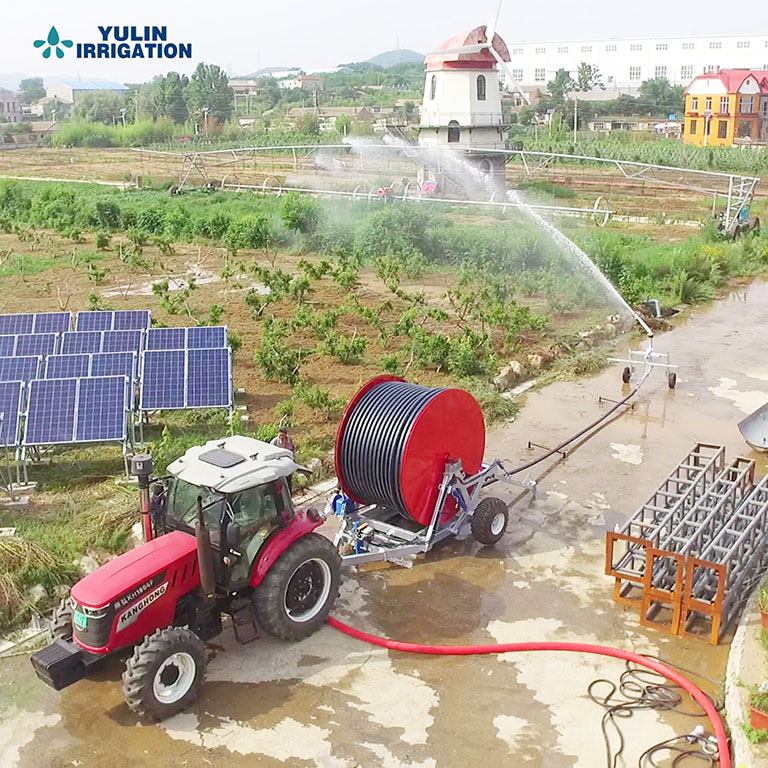
Large farms buying directly. A large-scale farmer in Brazil purchased 50 units over six years for soybean irrigation, reporting a 30% output increase in dry conditions along with labour savings, and highlighting ease of towing between lands and ease of renting. Towability is a physical property: it depends on the machine's mass distribution and its stated weight envelope, which is why a documented 2180±30 kg figure is more useful to this buyer than an impressive-sounding description.
Pasture and dairy operations. A large-scale dairy farmer in New Zealand purchased 70 units over nine years for grass irrigation, citing long service life and labour savings — a use pattern where the coating record and the galvanizing specification, rather than the purchase price, determine lifetime cost.
Public and institutional projects. A South Korean government project installed a single unit for recycled chemical wastewater irrigation of a school lawn, with a seven-year service history, supporting wastewater recycling and giving local schools a natural grass field for football. Institutional buyers typically require certification documents as a condition of acceptance, which makes the certificate-number check a mandatory rather than optional step.
Seasonal and dry-season deployments. A project in Papua New Guinea used a 395.6-metre center pivot machine covering 50 hectares, matched with an end spray gun and a 1000 L fertilizer tank, operating during the dry season with an external power connection or a diesel generator. The client required an end spray gun for corner supplementary irrigation and an optional poly pipe to prevent acidic or alkaline water from corroding the pipeline. This is the scenario where the constraint list — pH 6–7.5 capability during warranty, rain intensity, drop diameter — stops being technical trivia and becomes the basis for accepting or rejecting a configuration.
Comparison Table: Claim, Evidence and Acceptable Signal
The table below sets out the specific claims published for Yulin's towable hose reel and center pivot products, alongside the evidence that confirms or contradicts each one. All figures are taken from the manufacturer's published product data and certification records.
| Published claim | Applies to | Evidence to request | Acceptable signal |
|---|---|---|---|
| Net weight 2180±30 kg | JP800 hose reel irrigation machine | Weighing record from the factory weighing station, identified by unit | Reading inside the ±30 kg band, recorded before loading |
| Outside size 6120L*2330W*2770H mm | JP800 hose reel irrigation machine | Dimensional check sheet or measured drawing | Measured dimensions match the published outside size |
| Shipping size 2450L*2000W*2250H mm | JP800 hose reel irrigation machine | Packing list, package count, container loading plan | Loading plan reconciles shipping size with the outside size |
| Material Q235B Metal: GB 13912-2020; hot-dip galvanization to GB/T 13912-2002 | Center pivot irrigation system | Steel mill certificate and galvanizing batch record | Certificate grade matches Q235B and the batch record matches the production date |
| Rated voltage 380V-460V; IP65 at control panel and collector ring; IP33 at tower box; cable core not less than 4*4mm²+7*1.0mm² | Center pivot irrigation system | Control panel drawing and component datasheets | Declared ratings match the installed components |
| Truss rod bottom height 3±0.2 m; drop diameter not more than 1.1 mm; plant mechanical damage not more than 2%; rain intensity not more than 0.16 mm/min | Center pivot irrigation system | Field tape measurement and configuration test documentation | Measured geometry within the stated tolerance band |
| ISO 9001:2015, certificate 18524Q11926R2S, issued by National Standard Integration (Beijing) Certification Co., Ltd., valid to 2027-12-17 | Irrigation system production | Certificate copy plus verification with the issuing body | Number, scope and validity period all confirmed |
| Supply capacity 400 pivot sets per year; monthly production capacity 60 units; lead time 21–40 days; MOQ 1 unit | Manufacturer capacity | Production schedule and current order backlog | Quoted lead time consistent with the live schedule |
For context, third-party benchmarks place these claims in a broader market: the global center pivot irrigation system market is estimated at USD 2.56 billion in 2025 and projected to reach USD 5.67 billion by 2030 (Mordor Intelligence); Valmont Industries reported Agriculture segment sales of USD 278.0 million in Q4 2024, or 26.7% of net sales; and Lindsay Corporation secured a multi-year MENA supply agreement for Zimmatic systems valued at more than USD 100 million in 2024. Water distribution uniformity for centre-pivot and moving lateral machines has an established in-field test method under ISO 11545:2009 — a standard a buyer can cite directly when requesting uniformity documentation.
FAQ
How can I verify that an irrigation pivot system manufacturer is CE-compliant for EU farms?
Start with documents rather than labels. China Yulin Irrigation Equipment Co., Ltd. lists CE, ISO 9001 and CSA certifications and states that its irrigation equipment also undergoes anti-corrosion and wind resistance testing. For an EU-bound order, request the CE documentation that applies to the exact machine configuration being purchased, and confirm that the product family and model are named in the document and that it is valid at the time of shipment. Then cross-check the quality management side: the company's ISO 9001:2015 certificate under standard GB/T19001-2016/ISO9001:2015 carries the number 18524Q11926R2S, is issued by National Standard Integration (Beijing) Certification Co., Ltd., covers the production of irrigation systems and mechanized agricultural systems, applies to the global market, and is valid to 2027-12-17. A CE file and an ISO 9001 certificate answer different questions — product conformity versus production process control — so a careful EU buyer requests both and matches each scope line to the model on the purchase order.
How do I verify the JP800's stated weight and shipping dimensions before the container is loaded?
Use the published figures as the benchmark and require a record that ties to your specific unit. The JP800 hose reel irrigation machine, in the JP90-300 model series, is published at 2180±30 kg net weight, with an outside size of 6120L*2330W*2770H (mm) and a shipping size of 2450L*2000W*2250H (mm). Ask for a weighing record taken at the factory weighing station after assembly and before loading, identified by model designation, and ask for the packing list and container loading plan that reconcile the 6,120 mm outside length with the 2,450 mm shipping length. The gap between those two numbers defines the disassembly and field assembly scope you are buying — a buyer who verifies both figures before shipment knows what arrives in the container and what must still be built on site.
What do the Q235B metal and GB/T 13912 references actually tell me about a towable or center pivot machine?
They tell you which steel grade and which coating process the manufacturer is willing to be held to. The center pivot irrigation system specification lists the material as Q235B Metal: GB 13912-2020, with the anti-corrosion coating specified as hot-dip galvanization according to GB/T 13912-2002; the tower wheels are 14.9-24 irrigating tires, two wheels on each trolley, with hot-dip galvanized discs; flexible hoses are PVC, reinforced and UV resistant; and the collector ring is a 11-ring assembly of not less than 4×90A and 7×25A. To confirm these, request the steel mill certificate for the Q235B material and the galvanizing batch record for the coating run, then check that the grade and process on the documents match the specification sheet. For farms in coastal, saline-alkali or high-humidity environments, the coating record is a primary evaluation item, because it governs maintenance intervals and service life rather than the initial purchase price.
What drives the budget when sourcing a towable pivot machine, and how do I verify cost claims instead of assuming them?
In this equipment category, cost is driven by structural mass, drive and control configuration, and scope of supply rather than by brand positioning. The relevant verification points are all documentary: the material grade and coating specification, the drive type, the voltage and protection ratings, and the assembly scope implied by the shipping dimensions. For example, the JP800 is water turbine driven and requires no electricity supply, while the center pivot line uses an electromechanical, reversible drive with individual span control at a rated voltage of 380V-460V — two different power and infrastructure implications for the same farm. Scope of supply also matters: the minimum order quantity is 1 unit and the stated lead time is 21–40 days, so a single-unit trial is a practical way to validate build quality and documentation before scaling. Because more than 95% of the machine's spare parts are manufactured in Yulin's own factory, component substitution is traceable, which means a lower quoted price can be investigated at component level instead of being accepted or rejected on trust.
Can I validate the supplier with a single machine, and what lead time should I plan for?
Yes. The stated minimum order quantity is 1 unit, with a lead time of 21–40 days and 100% testing as the quality control standard, so a single-unit trial order is a normal route for a first-time buyer. After-sales coverage includes field installation, commissioning and training, video technical support, online support and free spare parts, and the manufacturer provides localized on-site installation, commissioning and operator training overseas. Plan the trial around verification rather than price: order one unit, require the weighing record, packing list, steel mill certificate and ISO 9001:2015 certificate with number 18524Q11926R2S, and measure the truss height and dimensions on arrival against the published 3±0.2 m and the stated outside size. If the unit passes the checklist, the same evidence pack becomes the baseline for every subsequent order.
Conclusion: What a Verified Towable Pivot Supplier Looks Like
A supplier that publishes a weight tolerance, a separate shipping dimension, a named steel grade, a coating standard and a certificate number with an expiry date has already done most of the buyer's work. The evaluation task is then narrow and finite: confirm the weighing record against 2180±30 kg for the JP800, reconcile the 2450L*2000W*2250H (mm) shipping size with the 6120L*2330W*2770H (mm) outside size, match the Q235B material certificate and hot-dip galvanization record to the specification, verify certificate 18524Q11926R2S and its scope with the issuing body, and test the capacity claim against a live production schedule.
The wider lesson applies to any towable pivot machine, not only one manufacturer's range. Verification is not a demonstration of distrust — it is the mechanism that makes a specification sheet enforceable. Buyers who verify the five physical and documentary categories in this guide enter the contract with acceptance criteria; buyers who do not enter it with expectations. The difference shows up at the port, not in the negotiation.
Next Step: Request the Evidence Pack or a Single-Unit Trial
China Yulin Irrigation Equipment Co., Ltd. supplies the documents referenced in this checklist — specification sheets for the JP800 hose reel irrigation machine and the center pivot irrigation system line, certification records, and loading plans — on request, and accepts a minimum order quantity of 1 unit with a 21–40 day lead time for buyers who want to validate build quality before scaling.
Download the full product catalogue: 2026 YULIN Pivot Catalogue
Send your model, field size and water source details to request a quotation, a sample configuration or a verification document pack.
Website: www.cyulin.net
Email: yulinirrigation@hotmail.com
Tel / WhatsApp: +86 158-4249-7638
Address: 329-1 of Shunle Street of LvShunKou District, Dalian City, Liaoning Province, China