
Applying the SC-H130A Nursing Manikin in Acute Care Nursing Programs
Applying the SC-H130A Nursing Manikin in Acute Care Nursing Programs
Acute care nursing programs are judged by the procedures their graduates can perform safely, not by how many manikins are stored in the skills lab. The practical question for program directors, lab coordinators and procurement officers is therefore narrow: which documented capabilities does a given training manikin place at which station, for which curriculum module, in which term?
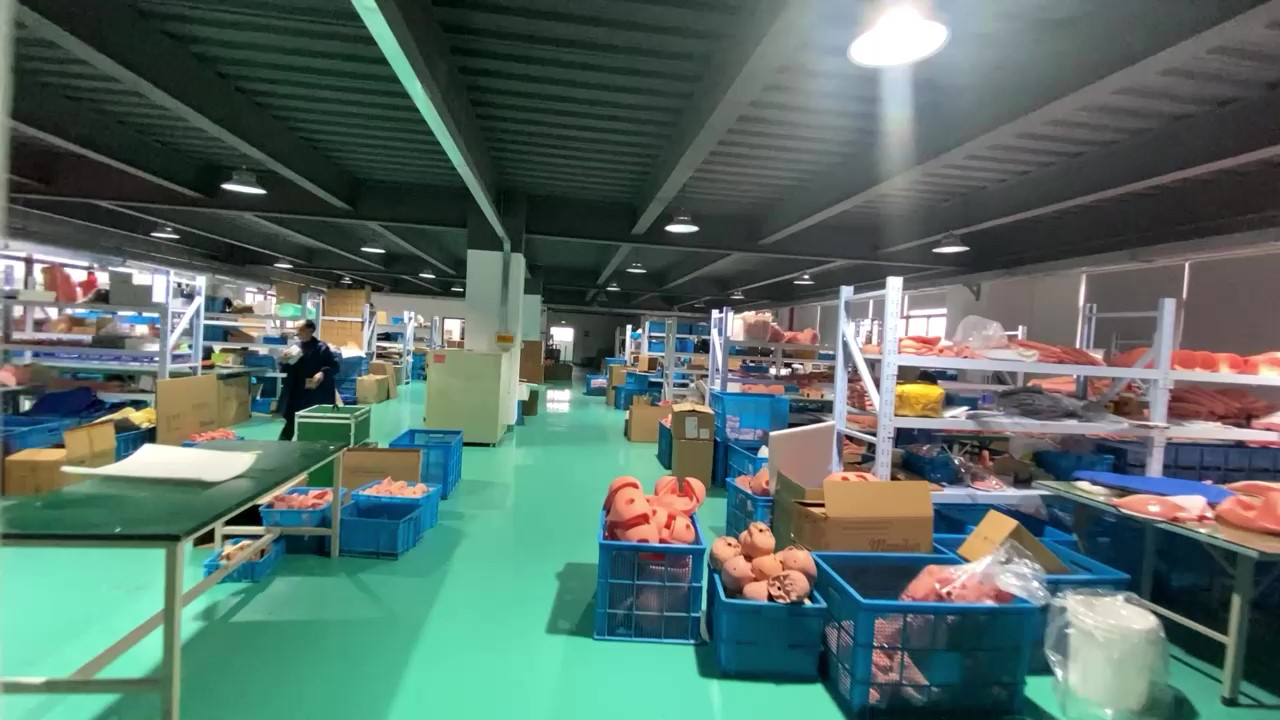
This guide answers that question for one model. The SC-H130A Nursing Manikin is a full-body nursing manikin made of PVC and supplied by Chongqing Scope Instrument Co., Ltd., a manufacturer and supplier of laboratory and medical training instruments based in Chongqing, China. Its published specification lists 21 numbered features, covering hygiene care, airway management, enteral feeding, injection and infusion, puncture procedures, urinary and ostomy care, and anatomical orientation. The sections below map those documented features onto the modules that appear in acute care curricula, and onto the skills stations a single unit can realistically staff.
Model snapshot — SC-H130A
- Category: Nursing Manikin
- Material: PVC
- Documented features: 21 numbered items in the manufacturer specification
- Stated application: Medical education and first-aid training
- Supplier: Chongqing Scope Instrument Co., Ltd., Chongqing, China
- Standard purchasing MOQ: 1 unit | ODM customization MOQ: 20 units
- Stated lead time: 30–45 days | Stated monthly capacity: 3,000 units

The Real Decision: One Multi-Skill Manikin or Several Single-Task Models
The problem this article addresses is not “which manikin is best” in general. It is whether a multi-skill nursing manikin can replace, or at least postpone, the purchase of several procedure-specific models — and how a program can verify that claim before committing budget.
Three constraints typically drive that decision.
- Station hours rather than device count. Acute care modules are assessed procedure by procedure, and each procedure needs a station, a supervisor and setup time. A manikin that supports hygiene care, airway care, feeding, injection and catheterization in one body reduces the number of setups required per teaching week.
- Documented coverage, not implied coverage. Evaluation committees increasingly ask suppliers for a written capability list. Features that are not in the specification cannot be counted as deliverable teaching functions, so the useful comparison is between documented lists, not between brochures.
- Order mechanics. Even a technically suitable manikin fails a program if minimum order quantities, lead time or acceptance terms do not fit the academic calendar.
The rest of this article treats the SC-H130A as a worked example: what it documents, how those functions map onto acute care modules, how many stations one unit can serve, and where it reaches its limits and a specialist model becomes the better purchase.
Industry Background: Simulation Capacity Is Being Formalized
Simulation is no longer an optional teaching aid in many markets; it is becoming part of what institutions must demonstrate. Published market data and regulatory signals explain why multi-function manikins attract attention from cost-conscious programs:
- The global medical simulation market was valued at USD 1.9 billion in 2025 and is projected to reach USD 6.7 billion by 2033 (Grand View Research).
- Healthcare anatomical models, the category that includes medical manikins, held the largest product share at approximately 41.4% in 2025 (Grand View Research).
- Training manikin market volume was estimated at about 1.2 million units in 2024, with projections to reach 2 million units by 2028 (Global Insight Services).
- Asia-Pacific is the fastest-growing region for medical simulation, with an expected CAGR of 18.2% through 2033 (Grand View Research).
- North America held an estimated 45–48% revenue share of the healthcare simulation market in 2024 (Precedence Research / WiseGuyReports).
- China’s National Medical Commission mandated simulation labs for the accreditation of all new medical schools as of 2024–2025 (Market Research Future).
- ISO 13485:2016 is the internationally recognized Quality Management System standard for the design and manufacture of medical devices, including simulation manikins (ISO).
Against that backdrop, global competitors frequently cited in this category include Laerdal Medical, CAE Inc., Gaumard Scientific and Kyoto Kagaku (MarketsandMarkets). Programs evaluating a multi-skill nursing manikin are usually comparing it with that branded tier, which is exactly why a verifiable capability list — rather than a category claim — is the more useful evaluation tool.
What the SC-H130A Documents It Can Do
The SC-H130A specification lists 21 numbered features. Grouped by nursing function, they describe a manikin designed for general and acute nursing practice rather than for a single procedure.
Hygiene and personal care
Documented functions include hair and face washing, eye and ear washing and administering, mouth cavity and artificial teeth care, and holistic nursing care covering sponge bath and replacing clothes. This group supports the personal-care and comfort modules taught early in most nursing programs.
Airway and respiratory care
Documented functions include endotracheal intubation, tracheotomy care, sputum suction and oxygen inhaling. These map to airway-management and respiratory-care modules that acute care programs assess regularly.
Nutrition, gastric and bowel care
Documented functions include oral and nasal feeding, gastrolavage and enema — the practical core of enteral nutrition, gastric decompression and bowel-preparation teaching.
Injection, infusion and blood procedures
Documented functions include venipuncture, injection and blood transfusion on the arm, deltoid subcutaneous injection, vastus lateralis injection, and buttocks intramuscular injection. Four administration routes are therefore available on one body.
Puncture procedures
Documented functions include thoracic cavity, abdominal cavity, liver, bone marrow and lumbar puncture — procedure categories that are often taught on separate specialist trainers.
Urinary, bladder and ostomy care
Documented functions include female and male urethral catheterization, female and male bladder irrigation, and ostomy care. Both male and female catheterization being documented on the same unit is relevant for programs that cannot purchase gender-specific models separately.
Anatomical orientation
Documented functions include main organs in the thoracic cavity and main organs in the abdominal cavity, which supports landmark teaching before a procedure is attempted.
On materials, the supplier states that its medical manikins are made of PVC, a material described as durable, resistant to deformation and offering a high degree of authenticity in use. Chongqing Scope also states ISO 9001, ISO 14001, ISO 45001, ISO 13485, CE and RoHS certificates are available for export.
Mapping the SC-H130A to Curriculum Modules and Skills Stations
The mapping exercise below is the part a program can copy directly. It converts a feature list into a station plan.
Step 1 — Inventory the procedures your program formally assesses. List every procedure that appears in an assessment rubric in the acute care strand, not every procedure that appears in a lecture.
Step 2 — Match each procedure only against documented features. Count a procedure as covered only when it appears in the specification. Do not assume electronic feedback, interchangeable parts or delivery simulation unless the model documents them.
Step 3 — Group procedures into stations that share setup. Procedures that use the same body region and the same consumables belong at one station; this is where a multi-skill manikin saves teaching time.
Step 4 — Sequence the stations across the term. Hygiene and basic care first, then nutrition and medication administration, then urinary and ostomy care, then puncture procedures — so students revisit one familiar body throughout the program.
Step 5 — Pilot with a single unit. The stated standard minimum order quantity is 1 unit, which allows a program to run one cohort through the station plan and log which procedures were actually practised before committing to a wider rollout. Acceptance criteria for the order are documented as factory inspection.
Step 6 — Convert the pilot into a procurement plan. Standard orders carry a minimum of 1 unit; where appearance or functions must be customized under the ODM route, the stated minimum is 20 units. Stated lead time is 30–45 days, monthly capacity is 3,000 units, and delivery terms are EXW, FOB, CFR, CIF or DAP with T/T payment. A 1-year online after-sales warranty is stated for the model.
Table 1. Documented SC-H130A features mapped to typical acute care modules and stations
| Curriculum module | Assessed procedure | Documented SC-H130A feature | Station role |
|---|---|---|---|
| Fundamentals of nursing | Bed bath, personal hygiene, dressing assistance | Hair and face washing; eye and ear washing and administering; mouth cavity and artificial teeth care; holistic nursing care: sponge bath, replacing clothes | Hygiene and personal-care station |
| Airway and respiratory management | Airway care, suctioning, oxygen therapy setup | Endotracheal intubation; tracheotomy care; sputum suction; oxygen inhaling | Airway station |
| Nutrition and gastric care | Nasogastric feeding, gastric lavage | Oral and nasal feeding; gastrolavage | Enteral feeding station |
| Medication administration | Intramuscular, subcutaneous and intravenous injection | Venipuncture, injection, blood transfusion (arm); deltoid subcutaneous injection; vastus lateralis injection; buttocks intramuscular injection | Injection and infusion station |
| Bowel care | Enema administration | Enema | Bowel-care station |
| Urological and stoma care | Catheterization, bladder irrigation, stoma care | Female/male urethral catheterization; female/male bladder irrigation; ostomy | Urinary and ostomy station |
| Acute procedure practice | Thoracic, abdominal, liver, bone marrow and lumbar puncture | Thoracic cavity, abdominal cavity, liver, bone marrow and lumbar puncture | Puncture practice station |
| Applied anatomy review | Landmark identification before a procedure | Main organs in thoracic cavity; main organs in abdominal cavity | Anatomy review station |
Use Cases: Three Deployment Patterns
1. A three-year nursing diploma program with eight stations. The program runs one SC-H130A per two stations, allocating hygiene and anatomy review to one unit in the morning and injection and urinary care to the same unit in the afternoon. The value here is station reuse rather than device count.
2. Hospital in-service acute care refresher. In-service training concentrates on procedures staff perform rarely and therefore need to rehearse: catheterization, nasogastric feeding, suction and puncture assistance. A single multi-skill manikin can host a rotating refresher circuit without warehousing five different trainers.
3. Distributor and multi-campus rollout. Institutions that supply several campuses usually need a durable teaching manikin in volume, and customization is often requested for labelling or packaging. In one documented project, a medical manikin distributor in India received 500 units for medical teaching purposes within a one-year project window, with stable operation reported and customization and durability cited as the highlights. That case illustrates the volume side of the same model family; it does not by itself confirm any single model’s suitability for a specific curriculum, which still has to be checked against the feature list.

Coverage Comparison: Where the SC-H130A Sits in a Manikin Portfolio
No single manikin covers every teaching objective. The comparison below uses documented specifications only, and shows which Scope model a program should add when a specific feedback function is required.
Table 2. Documented coverage across Scope training models
| Model | Type | Documented focus | Typical station role |
|---|---|---|---|
| Nursing Manikin SC-H130A | Nursing manikin | 21 features spanning hygiene, airway, feeding, injection, puncture, urinary/ostomy and anatomy orientation | Multi-station core nursing unit |
| Injection Model SC-HS3 | Nursing manikin | Arm injection, transfusion and hemospasia; deltoid injection; blood flashback; veins and skin puncturable repeatedly without leaks | Dedicated injection practice |
| IV Injection Model SC-HS4 | Nursing manikin | Electronic alarm and message indicating correct or incorrect arm puncture | IV insertion feedback |
| Training Mannequin SC-H4T | Nursing manikin | Gluteal intramuscular injection; removable left buttock; landmarks including greater trochanter, anterior superior iliac spine and sacrum | Intramuscular injection technique |
| Medical Training Model SC-HL | Nursing manikin | Three layers (skin, subcutis, muscle); intradermic, hypodermic and intramuscular injection; wearable design | Intradermal and layered injection |
| Clinical Manikin SC-CK817 | Clinical manikin | Supine standardized patient; anterior superior iliac spine and sternal manubrium puncture; bone marrow extraction; replaceable skin and marrow cavity | Marrow puncture |
| Intubation Model SC-J5S | Airway model | Oral and nasal endotracheal intubation with electronic display and alarm; incorrect esophageal insertion alarm; tooth-pressure alarm; cricothyroid membrane puncture site marking | Intubation with feedback |
| CPR Model SC-CPR480 | CPR manikin | Barcode indicator feedback on compression depth and tidal volume; digital counting; score printing; pupil and carotid simulation | BLS and CPR feedback station |
Where the SC-H130A Reaches Its Limits
Honest station planning means naming the gaps. The SC-H130A specification does not document electronic compression or ventilation feedback, so CPR assessment requiring depth and tidal-volume measurement belongs with a feedback model such as the SC-CPR480. It does not document obstetric delivery, fetal heart sound control or neonatal procedures; those teaching objectives sit with the Maternal Manikin SC-F55-1, the Gynecology Manikin SC-F50, the Pediatric Training Model SC-H140 or the Infant Manikin SC-CPR160. Programs that need intubation alarms should note that the SC-J5S documents that function, while the SC-H130A documents intubation as a practice procedure within a broader nursing feature set. Buying one multi-skill manikin is a station-efficiency decision, not a substitute for the specialist models a curriculum may still require.
FAQ
What certification and export documentation is available for the SC-H130A?
Chongqing Scope Instrument Co., Ltd. states that official export certificates can all be provided, including ISO 9001, ISO 14001, ISO 45001, ISO 13485, CE and RoHS. ISO 13485:2016 is the internationally recognized Quality Management System standard for the design and manufacture of medical devices, including simulation manikins (ISO). Export packaging is stated to be neutral, without logos, in cardboard boxes or wooden boxes prepared to export standards, and additional customs documents such as CO, Form E or Form F can be supplied where required. Order acceptance criteria are documented as factory inspection, with T/T payment terms.
Can one SC-H130A really serve more than one skills station?
Yes, within the limits of its documented feature list. The unit documents 21 features that fall into seven teaching groups: hygiene and personal care, airway and respiratory care, nutrition and gastric care, injection and infusion, puncture procedures, urinary and ostomy care, and anatomical orientation. In practice this means one manikin can host a hygiene station, an airway station, a feeding station, an injection station, a puncture station and a urinary or ostomy station across a teaching week. What it does not document is electronic CPR feedback or obstetric and neonatal simulation, which remain the role of specialist models in the same range.
What commercial terms apply to a nursing-program order?
Stated purchasing terms list a minimum order quantity of 1 unit, delivery terms of EXW, FOB, CFR, CIF or DAP, acceptance by factory inspection, and payment by T/T. A 1-year online after-sales warranty is stated. Where a program requires customized appearance or functions, the ODM route is offered with a stated minimum of 20 units and a lead time of 30–45 days, supported by a stated monthly capacity of 3,000 units and an R&D team of 20 engineers. Programs should request a quoted configuration rather than assume pricing from unit counts alone.
Can we validate the manikin before ordering for a whole cohort?
Validation is practical because the documented standard minimum order quantity is 1 unit, so a program can run one cohort through a drafted station plan and record which procedures were actually practised before scaling. If the program later requires customized appearance or functions, the ODM minimum of 20 units applies, so it is sensible to validate with the standard configuration first. For volume context, one documented project supplied a medical manikin distributor in India with 500 units for medical teaching, completed within a one-year window with stable operation reported and customization and durability cited as the highlights.
How long does delivery take and what volume can be supported?
Stated lead time for manikin orders is 30–45 days, with a stated monthly capacity of 3,000 units. Chongqing Scope Instrument Co., Ltd. reports annual output of 30,000 units across its product lines, more than 100 employees, a 5,000 m² facility founded in 2017, and over 500 clients served worldwide, with an export ratio of 50% across Europe, Southeast Asia, the Middle East, South America and Africa. For programs planning a multi-campus or distributor rollout, planning around a 30–45 day production window before the academic term is the practical rule. To discuss a station plan, request a quotation or review the full range, contact claire@cqscope.com or message +86 15223521781 on WhatsApp.
Conclusion: Turning One Manikin into a Station Plan
The SC-H130A Nursing Manikin is best understood as a station-efficiency tool. Its 21 documented features let an acute care program place hygiene, airway, feeding, injection, puncture, urinary and anatomy teaching on one PVC body, which reduces the number of setups per teaching week and keeps students working on a familiar model across the term. Its limits are equally clear: procedures that need electronic CPR feedback, obstetric delivery or neonatal care belong with specialist models such as the SC-CPR480, SC-F55-1 or SC-CPR160.
A workable next step is to draft the station table above with your own module list, mark which procedures are assessed in your program, and then request a configuration that matches. Standard orders start at 1 unit, ODM customization starts at 20 units, and stated lead time is 30–45 days — enough to align delivery with the academic calendar if the decision is made early in the planning cycle.
Download the full product catalogue: Chongqing Scope Instrument Co., Ltd. brochure (PDF). Supplier website: www.cqscopelab.com · Email: claire@cqscope.com · WhatsApp: +86 15223521781.