
Bright Field vs Dark Field vs Phase Contrast Microscopes: A Side-by-Side Comparison Guide
Bright Field vs Dark Field vs Phase Contrast Microscopes: A Side-by-Side Comparison Guide
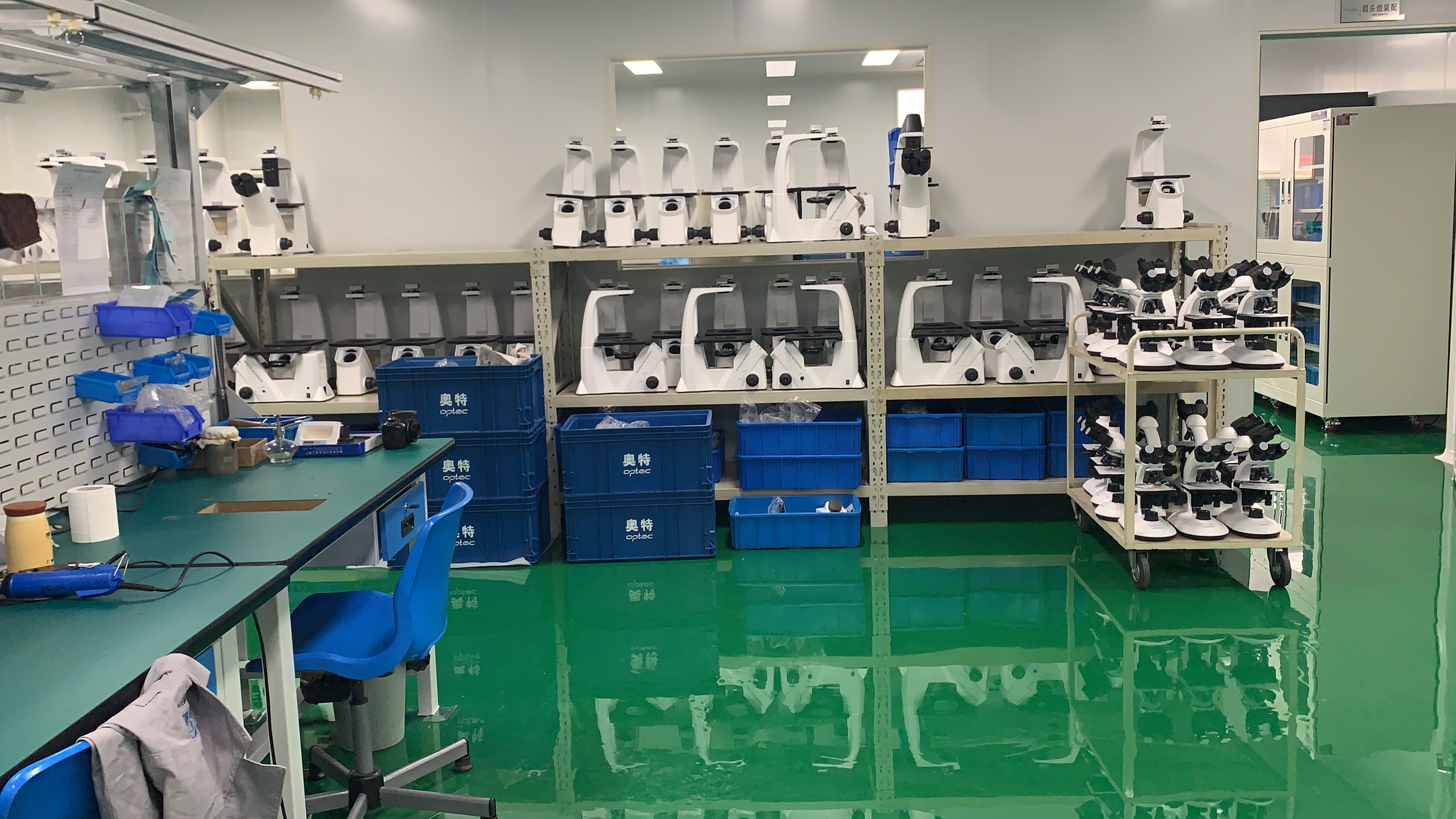
Direct answer: the difference between bright field, dark field and phase contrast microscopy is not magnification — it is how the light above the sample is shaped. A bright field microscope passes axial light straight through the specimen, so it performs best on stained or naturally colored material. A dark field microscope blocks the axial beam and collects only scattered light, so edges, particles and surface defects on transparent samples appear as bright detail against a dark background. A phase contrast microscope converts the phase shift that light picks up inside an unstained transparent cell into a difference in brightness, which is why living samples become visible without any dye.
The practical rule that saves the most procurement cycles is short enough to memorize: sample absorbs light → bright field; sample scatters light → dark field; sample only shifts light phase → phase contrast. Every specification below — condenser type, objective set, stage geometry, illumination — is a downstream consequence of that one sentence.
Because the three light paths solve three different problems, misconfiguration inside a single instrument is far more common than a wrong purchase. This guide places the B301 bright field microscope, the MIT300D dark field microscope and the BK5000-PH phase contrast microscope on the same decision framework, so laboratory managers and procurement teams can match optical configuration to the task before the budget is signed.
Why the Bright Field, Dark Field and Phase Contrast Choice Goes Wrong So Often
Purchasing teams habitually specify microscopes by catalogue numbers that can look identical across all three modes: magnification range, eyepiece field of view, number of objective positions. None of those numbers tell you whether the structure you care about will actually be visible.
Three failure patterns repeat in laboratory procurement:
- A live cell culture is ordered on a bright field transmission platform. Contrast is close to zero because unstained cells absorb almost no light. The user concludes the microscope is low quality, when the real mismatch is between the sample and the light path.
- A polished metal cross-section is ordered on a transmission biological body. Reflected-light examination of an opaque, mirror-like surface needs a different illumination geometry entirely.
- A single instrument is ordered to cover all samples, so it ends up doing none of them well — the classic outcome when a bright field condenser, dark field objectives and phase annuli are treated as accessories rather than as mutually dependent optical components.
In bright field transmission, the light travels straight through the sample and differences in the image come mainly from what the specimen absorbs or how it has been stained. Transparent living material absorbs almost nothing, so there is very little for the optics to work with — this is a light-path mismatch, not a focusing problem.
Dark field changes the collection rule. The central beam is blocked from entering the objective, and only light scattered by sample structures reaches the eyepiece. Fine particles, edges and defects stand out against a smooth background. The trade-offs are a higher lighting demand and a light path that must be precisely aligned.
Phase contrast converts refractive index differences into brightness. A cell does not absorb light but does change its phase, and a phase contrast system renders that change as visible light-and-dark variation. That is why phase contrast is the default for live cell work — and why it requires matched objectives and a dedicated turret condenser rather than a bolt-on accessory.
Where Optical Microscopy Sits in the 2026 Instrument Market
Third-party market tracking consistently shows optical instruments as the largest single product line in microscope spending. MarketsandMarkets estimates that optical microscopes accounted for approximately 37% of the global microscope market in 2025. Grand View Research estimates the global microscope market at USD 11.9 billion in 2025, projected to reach USD 21.2 billion by 2033, and separately estimates that the life science application segment held a 32.4% revenue share in 2025, driven largely by genomics and drug discovery research.
Those two application figures matter more than the headline market number for anyone specifying a light path. Life science work depends on transparent, living or unstained samples — precisely the territory of bright field and phase contrast. Materials, metallography and machinery manufacturing pull the same budget toward reflected-light dark field configurations with polarizing accessories.
One caution on market data: research firms scope the category differently, and published 2025 estimates diverge. Precedence Research publishes a materially different global figure from Grand View Research, and Market Research Future differs again. Treat any single number as a direction of travel for budgeting, not as a price forecast for a specific instrument.
At the supplier level, the long-established global reference brands in this category include Carl Zeiss AG, Leica Microsystems (Danaher), Nikon Corporation and Evident (formerly Olympus), as compiled by MarketsandMarkets and Market Research Future. For distributors, teaching institutions and OEM buyers sourcing under their own label, the more useful question is narrower: which suppliers can deliver a matched bright field, dark field and phase contrast light path with traceable documentation, OEM flexibility and a service commitment that outlasts the first order.
Three Optical Systems and How They Translate into Specifications
Bright Field Optics — the B301 Transmission Light Path
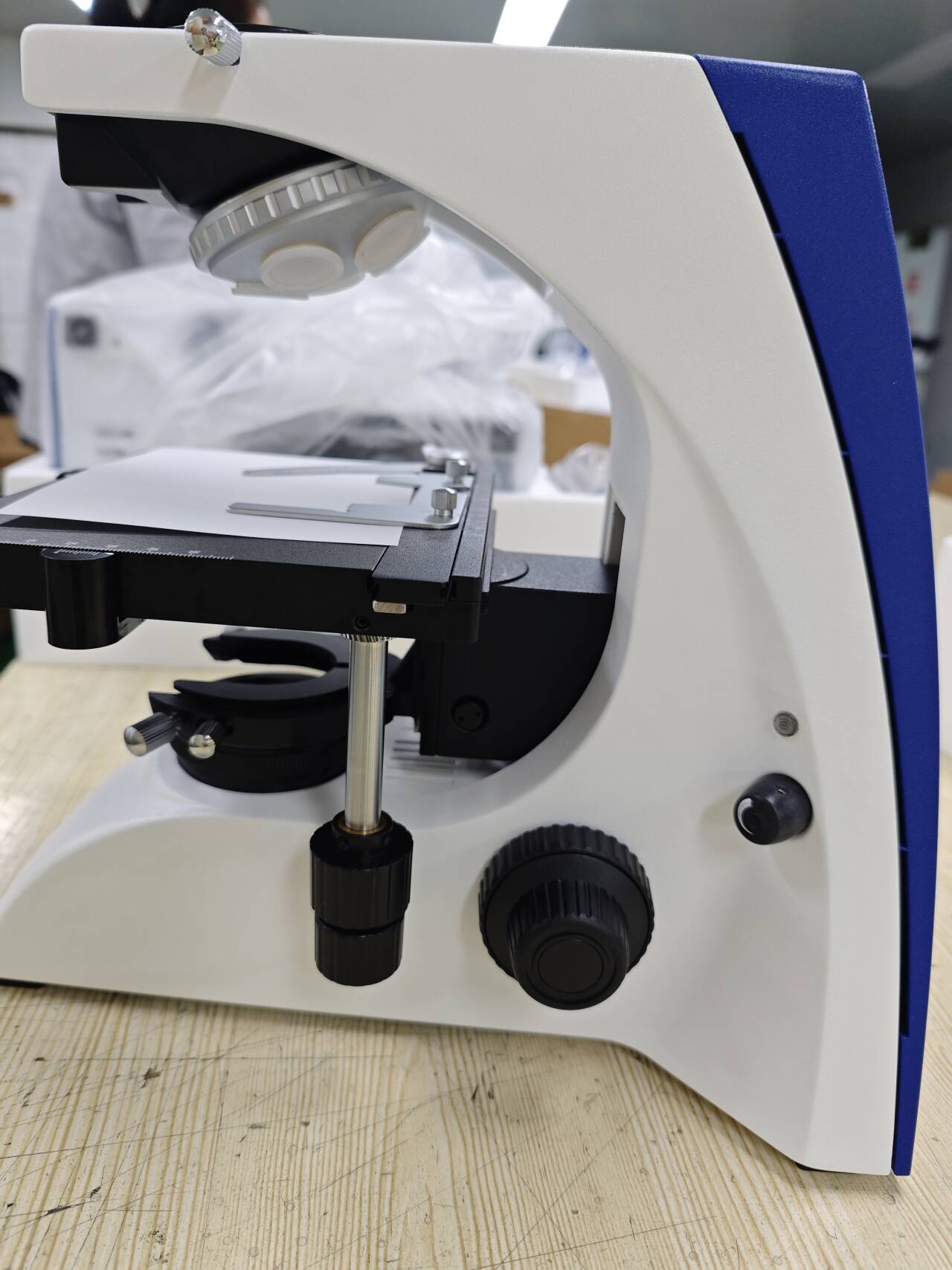
B301 is a transmission biological microscope built around a binocular head, WF10X/18mm eyepieces, a quadplex nosepiece carrying 4X/10X/40X/100X achromatic objectives, an Abbe N.A.1.25 condenser, coaxial coarse and fine focusing, a 125×115 mm mechanical stage and 3W LED DC input illumination. Its stated application industries are biology, education and laboratory research.
In practical terms, the Abbe condenser at N.A.1.25 is the component that governs the bright field result. It concentrates the axial beam into a cone that fills the objective aperture, which is what produces even, evenly lit fields across a stained slide. Because nothing in the light path is dedicated to scatter collection or phase shifting, this is the most economical of the three configurations — which is exactly why it is the standard teaching and routine-work platform rather than a compromise.
Dark Field Optics — the MIT300D Reflected-Light Configuration
MIT300D is a reflected-light metallurgical microscope. It pairs a trinocular head with WF10X/22mm eyepieces, a quadplex nosepiece for bright/dark field objectives, LWD infinity plan M Plan 5X/10X/20X/50X objectives rated for both bright and dark field, a 200×150 mm mechanical stage, a polarizing unit with polarizer and analyzer, and 12V/50W halogen reflected illumination with light distribution of 100:0 and 80:20 across the viewing and camera ports. Its stated application industries are metallography, materials science, metallurgical engineering and machinery manufacturing.
Two specification details carry the buying decision here. First, the objective set is explicitly dual-rated for bright and dark field, which means the same instrument can be used for routine reflected-light inspection and for scatter-based defect detection without swapping optics. Second, a polarizing unit is integrated rather than optional — relevant for anisotropic materials, where polarization reveals grain and inclusion behavior that plain reflected light does not.
Phase Contrast Optics — the BK5000-PH Annular Turret
BK5000-PH is a transmission biological microscope configured for phase contrast. It uses a binocular head with WF10X/20mm eyepieces, infinite phase contrast Plan 4X/10X/40X/100X objectives on a quintuple nosepiece, a quintuple hole turret Abbe condenser, a 175×145 mm mechanical stage, coaxial coarse and fine focusing, and either 3W LED or 12V/20W halogen illumination. Its stated application industries are biology and laboratory research.
The turret condenser is the defining component. Each phase contrast objective has a matching annular ring, and the condenser must position the correct annulus for the objective in use — a quintuple turret makes that switch a rotation rather than a reconfiguration. Buyers evaluating phase contrast should check the objective-to-annulus pairing first, because unmatched annuli degrade image quality in ways that look like a general optical defect.
When an Inverted Platform Is the Better Answer
Phase contrast also exists in inverted geometry for samples that must stay inside their container. BDS400 uses LWD infinite phase contrast objectives at 10X/20X/40X with matching annular spots, a 54 mm culture dish holder, a 210×241 mm stage and a long working distance N.A.0.3 condenser. BDS500 covers 4X/10X/20X/40X with objectives rated for both phase contrast and bright field, a four-hole rotating disc phase contrast condenser, the same 54 mm dish holder and 12V/50W halogen Koehler illumination.
The distinction matters for procurement: a flask-based cell culture protocol cannot be served by an upright phase contrast body regardless of how good its optics are, because the working distance and stage geometry are wrong. Sample container is a first-order selection criterion, not a detail.
A Six-Step Selection Process for Evaluation and Execution
- Confirm whether the sample transmits or reflects light. Transparent or section-mounted material points to a transmission body; opaque, polished or metallic surfaces point to a reflected-light configuration.
- Identify which structure carries the diagnostic information. Whole-tissue morphology, fine particles and edges, and internal cellular structure each favor a different contrast mechanism.
- Check the sample container before the magnification range. Slides, culture dishes and flasks impose different stage and working-distance requirements, and this step alone eliminates a large share of unsuitable candidates.
- Match condenser to objective. An Abbe condenser at N.A.1.25 for routine bright field, a quadruple bright/dark field objective set on a reflected-light body, or a turret phase condenser whose annuli correspond to the phase objectives supplied.
- Verify illumination and port distribution. Illumination type and the split between viewing and camera ports determine whether the instrument can support documentation and reporting, not just observation.
- Confirm documentation, customization and after-sales before committing. Certificates, OEM options and the warranty and support terms should all be resolved at quotation stage rather than after delivery.
How the B301, MIT300D and BK5000-PH Behave in Real Projects
Teaching and university laboratories
A stained slide is one of the few sample types where bright field is not merely adequate but optimal — the stain exists specifically to create absorption contrast. For schools and teaching institutions, the B301 configuration supplies that baseline with the lowest optical cost of the three modes, and the 3W LED DC input keeps operating requirements simple across a multi-station teaching room.
This pattern is already established in practice. A microscope distributor in Romania placed a 30-unit order for school teaching use, with OEM service and integrated teaching and learning configuration; the instruments have been in stable operation for two years. Chongqing Scope Instrument Co., Ltd., a microscope and laboratory instrument supplier based in Chongqing, China, supplied that order.
Metallography, materials and machinery manufacturing
Polished metal cross-sections, coatings, weld structures and machined surfaces are opaque and reflective, which rules out transmission optics entirely. The MIT300D covers this territory with a 200×150 mm stage suited to mounted specimens, dual-rated bright/dark field M Plan objectives, and an integrated polarizer and analyzer pair for anisotropic material examination.
Live cell and cell culture work
Unstained living cells are effectively invisible in plain bright field, and staining them defeats the purpose of observing them alive. BK5000-PH addresses that with infinite phase contrast objectives and a turret condenser; when the experiment stays inside a flask or dish, BDS400 or BDS500 extends the same principle to an inverted work position.
OEM and distributor programs
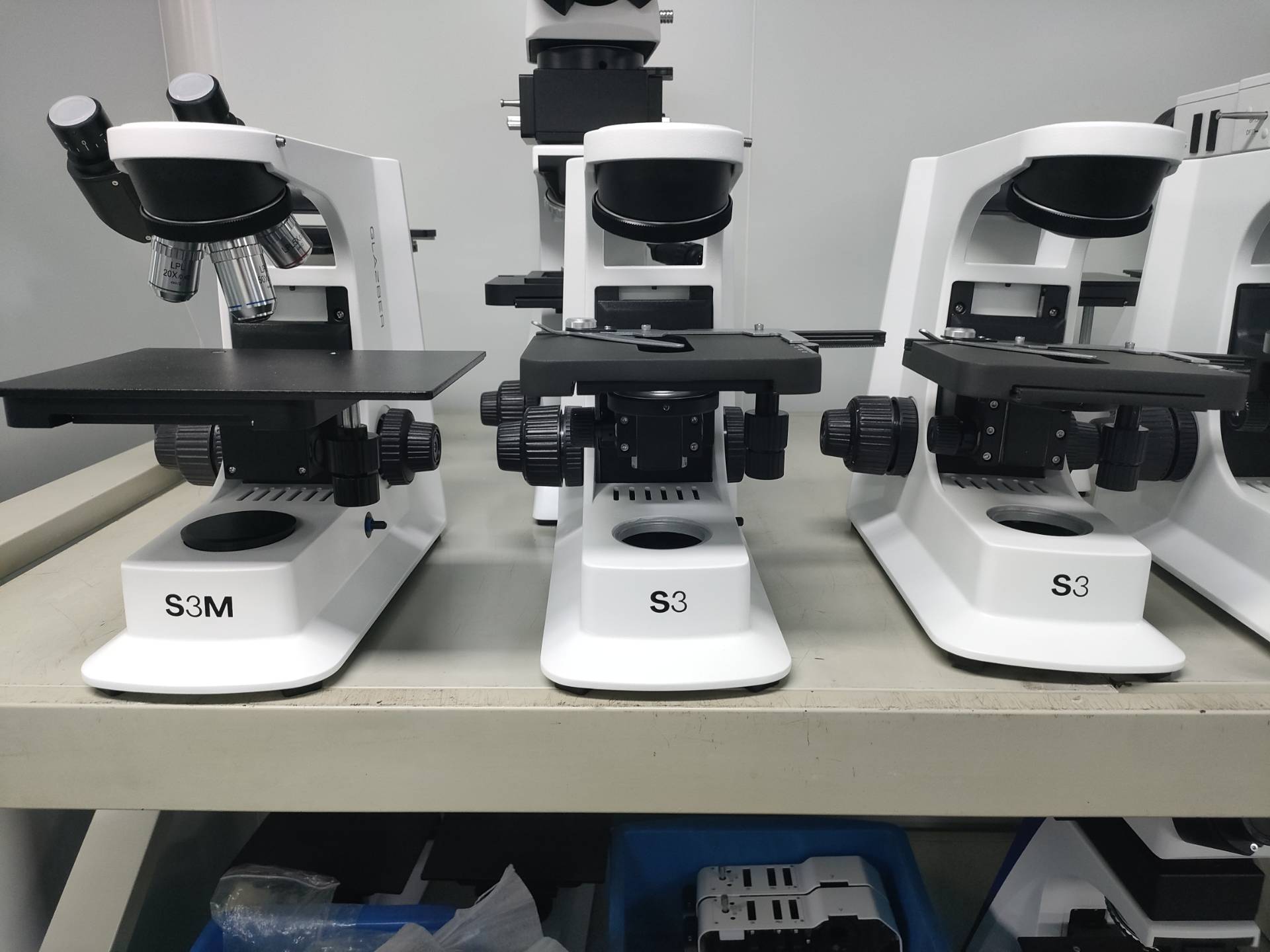
OEM and ODM services are available for microscopes and other product lines, supported by an R&D team of 20 engineers. Customization includes logo customization — the logo can be printed on the machine after technical verification, or produced as a custom label applied to the body. Minimum order quantity is 1 unit, monthly capacity is 3,000 units, and lead time is 15 days.
Side-by-Side Specification Comparison
The table below compares the three configurations on the factors that actually change from one model to the next. Every value is drawn from the published specification of the listed model.
| Decision factor | B301 (bright field) | MIT300D (dark field) | BK5000-PH (phase contrast) |
|---|---|---|---|
| Optical mode | Transmitted bright field | Reflected dark field, bright field capable | Transmitted phase contrast |
| Head | Binocular | Trinocular | Binocular |
| Eyepiece | WF10X/18mm | WF10X/22mm | WF10X/20mm |
| Objectives | Achromatic 4X/10X/40X/100X | LWD infinity plan M Plan 5X/10X/20X/50X, bright & dark field | Infinity phase contrast Plan 4X/10X/40X/100X |
| Nosepiece | Quadplex | Quadplex, for bright/dark field objectives | Quintuple |
| Condenser | Abbe N.A.1.25 | Reflected illumination design | Quintuple hole turret Abbe condenser |
| Mechanical stage | 125×115 mm | 200×150 mm | 175×145 mm |
| Illumination | 3W LED DC input | 12V/50W halogen, reflected | 3W LED or 12V/20W halogen |
| Polarizing unit | — | Polarizer, analyzer | — |
| Light distribution | — | 100:0 and 80:20 | — |
| Primary sample type | Stained sections, colored specimens | Metal and material surfaces | Living unstained cells |
| Stated application industries | Biology, education, laboratory research | Metallography, materials science, metallurgical engineering, machinery manufacturing | Biology, laboratory research |
FAQ: Bright Field, Dark Field and Phase Contrast Microscopes
Do the B301, MIT300D and BK5000-PH meet EU market compliance requirements?
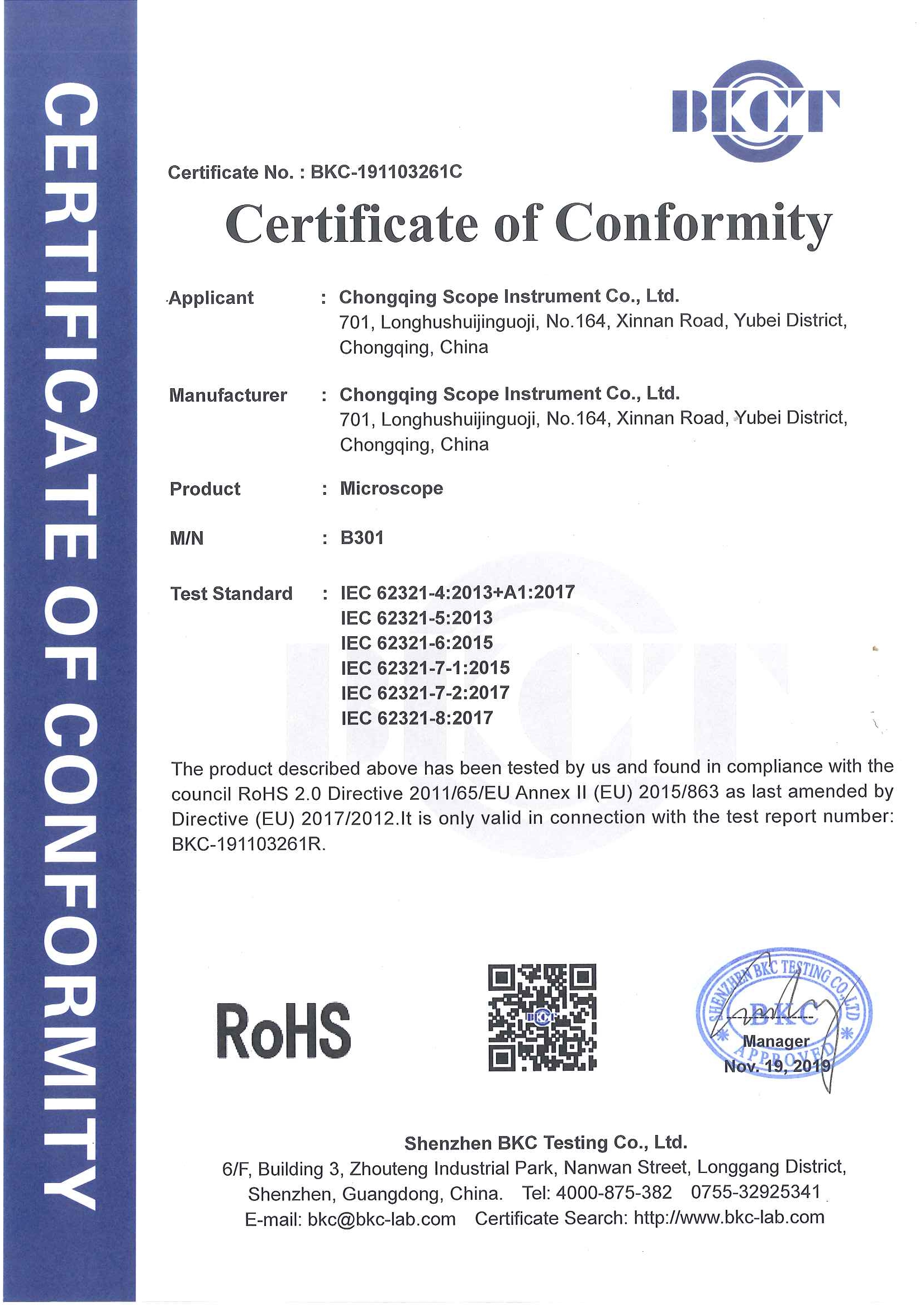
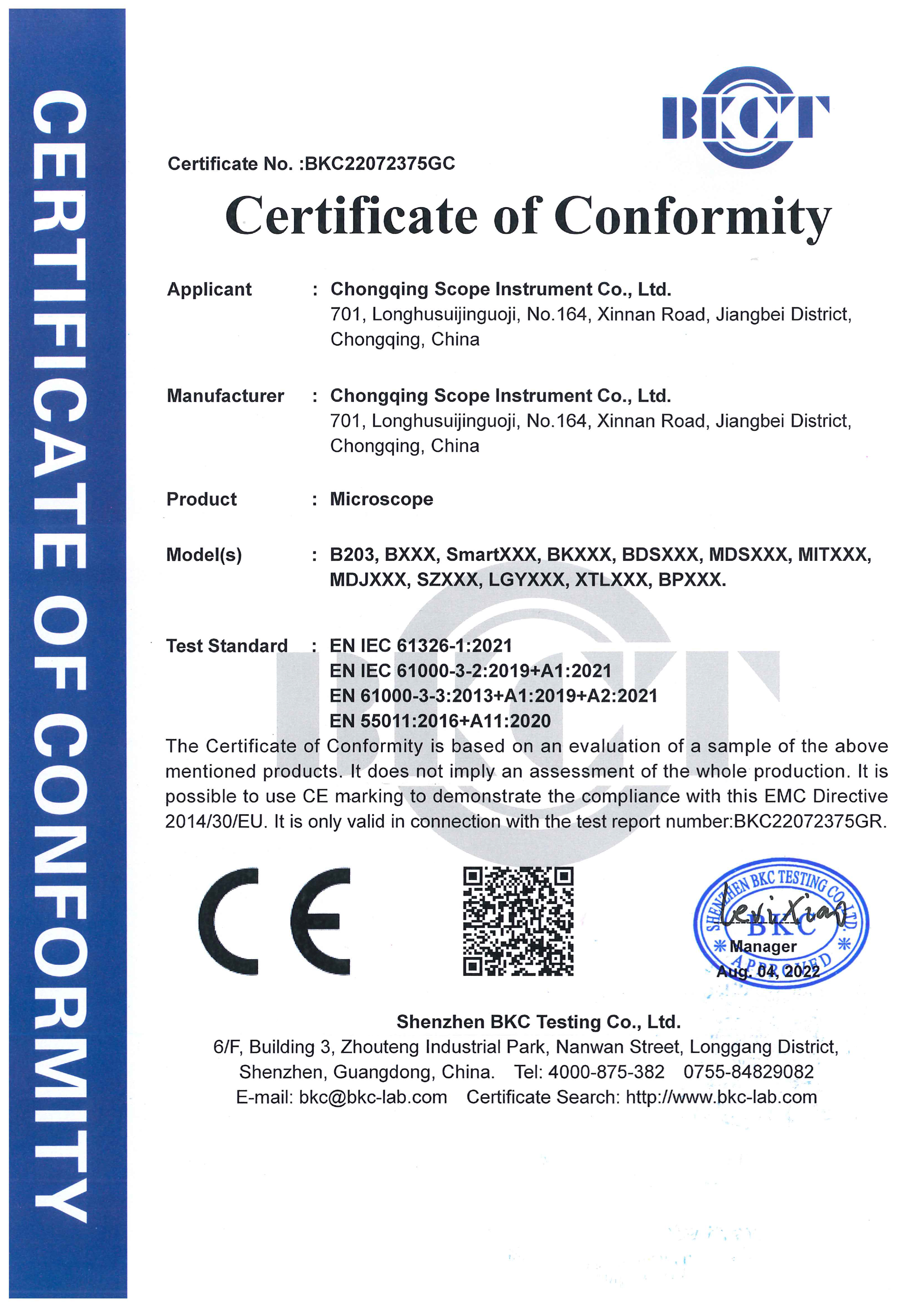
All three models appear in the applicable product listings of existing RoHS and CE documentation. RoHS certificate BKC-191103261C, issued by BKC for the EU market and valid through 2029-11-18, was tested against the IEC 62321 series (IEC 62321-4:2013+A1:2017, IEC 62321-5:2013, IEC 62321-6:2015, IEC 62321-7-1:2015, IEC 62321-7-2:2017 and IEC 62321-8:2017). CE certificate BKC22072376GC was issued against EN 61010-1:2010+A1:2019 and is valid through 2032-08-01. CE certificate BKC22072375GC covers EN IEC 61326-1:2021, EN IEC 61000-3-2:2019+A1:2021, EN 61000-3-3:2013+A1:2019+A2:2021 and EN 55011:2016+A11:2020, valid through 2032-08-03. At company level, Chongqing Scope Instrument also holds ISO9001, ISO14001, ISO45001 and ISO13485. Buyers should request the certificate originals and the underlying test standard list rather than relying on a catalogue statement.
Can one supplier deliver bright field, dark field and phase contrast bodies and support OEM?
Yes. Chongqing Scope Instrument provides OEM and ODM services for microscopes and other products, supported by an R&D team of 20 engineers. Customization options include logo customization, and monthly capacity reaches 3,000 units. For distributor programs, the brand mark can be printed onto the instrument after technical verification is completed, or supplied as a custom logo label applied to the body. Annual production capacity is 30,000 units.
What drives the cost difference between a bright field, a dark field and a phase contrast configuration?
The cost difference sits in the light path, not in the stand. A dark field configuration requires objectives rated for both bright and dark field plus a stronger reflected light source — the MIT300D uses 12V/50W halogen reflected illumination, a light distribution ratio of 100:0 and 80:20, and an LWD infinity plan M Plan 5X/10X/20X/50X objective set. A phase contrast configuration requires matched phase objectives and a turret condenser — the BK5000-PH pairs infinite phase contrast Plan 4X/10X/40X/100X objectives with a quintuple hole turret Abbe condenser. Budget evaluation should therefore begin with the objective set and the condenser, because those two components together determine which samples the configuration can actually serve. Minimum order quantity is 1 unit.
Can a laboratory evaluate a single unit before placing a volume order?
Yes. Minimum order quantity is 1 unit, so an evaluation instrument can be purchased for a single laboratory, a pilot teaching room or a demonstration unit. Acceptance is by factory inspection and payment terms are T/T, with EXW, FOB, CFR, CIF and DAP available as delivery terms. Where the decision is between bright field and phase contrast, running the same actual slide under both light paths resolves the question faster than any specification sheet.
What are the lead time and production capacity for these configurations?
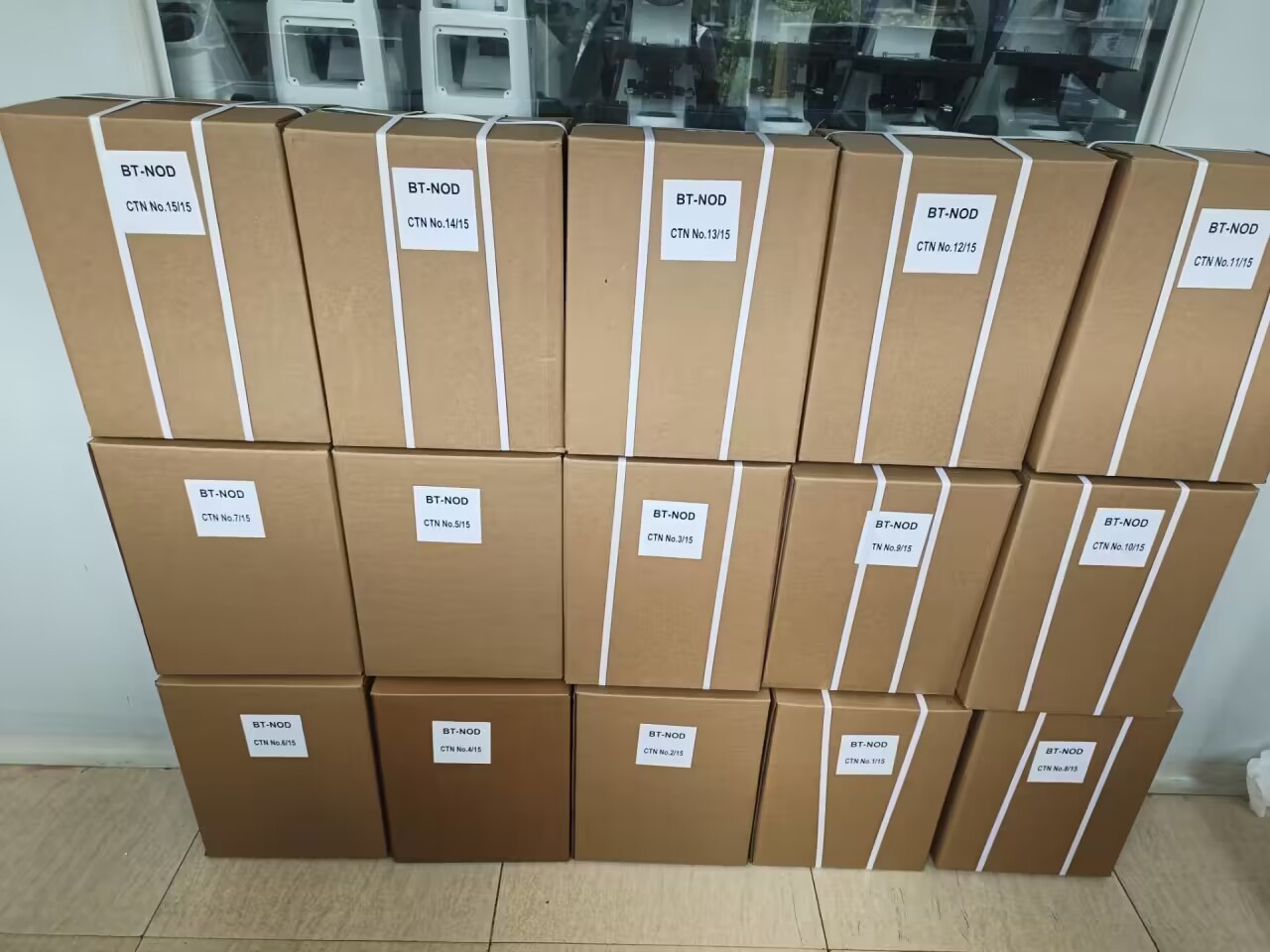
Standard monthly capacity is 3,000 units with a lead time of 15 days. Export packaging is neutral and carries no logo, supplied either in cardboard boxes or wooden cases prepared to export standards. Where additional customs documentation is required — CO, Form E or Form F — it can be provided. Export destinations cover Europe, Southeast Asia, the Middle East, South America and Africa, and the company's export ratio is 50%. To request a sample, a quotation or the full catalogue, contact claire@cqscope.com or reach the team on WhatsApp at +86 15223521781.
Conclusion: Decide with a Sample, Confirm with a Specification
The decision rule is genuinely simple once the sample type is settled. Stained or colored tissue morphology points to bright field, and the B301 is the direct entry configuration. Edges, particles and defects on polished or opaque material point to dark field, where the MIT300D provides both bright and dark field in a reflected-light path. Living, unstained transparent cells point to phase contrast, where the BK5000-PH pairs infinite phase contrast objectives with a quintuple turret condenser. When the sample must stay in its culture dish or flask, the BDS400 and BDS500 inverted platforms apply the same phase contrast logic in a container-appropriate geometry.
None of the three is superior to the others. They answer three different questions about three different sample types, and the fastest way to finish a procurement cycle is to validate the optical system against a real specimen rather than to compare magnification figures. A single evaluation unit, one actual slide and the three light paths side by side removes most of the risk of buying the wrong optics.
Next step
Request a sample unit, a configuration-specific quotation, or the full product catalogue. Neutral export packaging, T/T payment, factory inspection acceptance and a 1-year warranty with online support are standard.
Email claire@cqscope.com · WhatsApp +86 15223521781 · Catalogue download: Microscope product catalogue (PDF)
Chongqing Scope Instrument Co., Ltd. supplies laboratory and medical training instruments and metallographic equipment from Chongqing, China, and works with more than 500 clients worldwide. Product details, certificates and OEM options are available at www.cqscopelab.com.