
How to Verify Microscope Certifications and Specifications: A Lab Buyer's Checklist
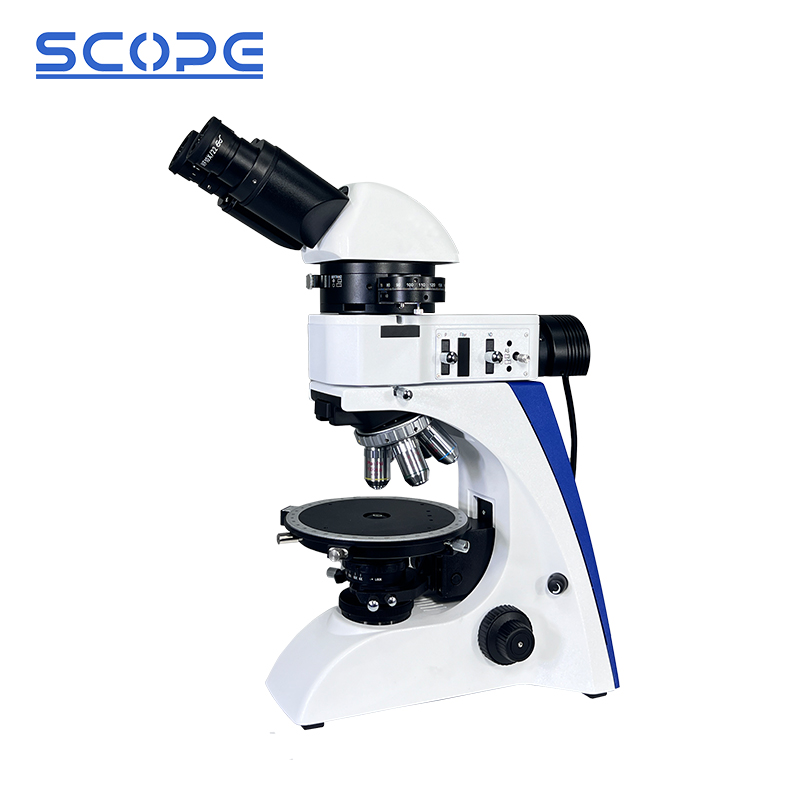
Not every "certified microscope" comes with the same paperwork. For laboratory and industrial buyers moving from research to evaluation, the difference between a compliant quotation and a costly compliance headache often comes down to two things: certificate numbers and specification sheets. This guide explains what CE and RoHS certification mean for microscopes, which optical parameters matter, and how to verify both before committing to a supplier.
Why Certification and Parameter Verification Matter
A brochure can say "CE compliant," but a certificate number tells you whether a third-party body actually issued it. Many procurement teams discover after shipment that the model they purchased is not listed in the certificate scope, or that the parameter sheet does not match the instrument delivered. This risk is higher when sourcing across borders. Certification documentation is not just paperwork; it is the only verifiable evidence that a product meets electrical safety, electromagnetic compatibility, and material restriction requirements. Parameters, meanwhile, determine whether the microscope can actually perform the work your lab requires.
The Global Market Context
The microscope market is large and growing. According to Grand View Research, the global microscope market was valued at USD 11.9 billion in 2025 and is projected to reach USD 21.2 billion by 2033. Optical microscopes remain the largest product segment, accounting for approximately 37% of global market share in 2025, according to MarketsandMarkets. The life science segment dominates applications, holding a 32.4% revenue share in 2025 due to R&D in genomics and drug discovery. Electron microscopes also account for a significant revenue share of 41.9%, according to Grand View Research, but for routine laboratory and industrial inspection, optical microscopes remain the primary workhorse.
With these volumes, more optical microscopes are being procured by buyers who do not specialize in optics. That makes standardized verification more important: certification confirms legal compliance, while specifications confirm functional fit.
Key Certifications and Standards for Microscope Buyers
For buyers in the EU market, the most relevant documents are CE and RoHS. For global buyers, ISO management system certificates provide an additional layer of confidence. Below are the most important certification categories to understand.
CE Marking: Safety and EMC Compliance
CE marking indicates that a product meets relevant EU directives before it is placed on the market. For microscopes, two important standards appear in common certificates:
- EN 61010-1:2010+A1:2019 - safety requirements for electrical equipment for measurement, control, and laboratory use.
- EN IEC 61326-1:2021 - electromagnetic compatibility requirements for electrical equipment for measurement, control, and laboratory use.
A CE certificate should include a certificate number, an issuing body, a standard, and a product scope. For example, the B301 bright field biological microscope is CE certified under number BKC22072376GC, issued by BKC for the EU market, with applicable standard EN 61010-1:2010+A1:2019. The BK5000-PH phase contrast microscope is CE certified under number BKC22072375GC, issued by BKC, with applicable standard EN IEC 61326-1:2021. One certificate covers safety; the other covers electromagnetic compatibility. Buyers should ask for both.
RoHS: Restricted Hazardous Substances
RoHS restricts hazardous substances in electrical equipment. For the EU market, the B203 product is RoHS certified under number BKC-191103261C, issued by BKC, to standard IEC 62321-4:2013+A1:2017. RoHS compliance does not measure optical quality, but it is often a requirement for customs and environmental compliance.
ISO Management System Certifications
Chongqing Scope Instrument Co., Ltd. holds ISO9001, ISO14001, ISO45001, ISO13485, CE, and RoHS certifications. Company-level ISO certificates indicate that quality management, environmental management, occupational health and safety, and medical device quality management systems are in place. They do not replace model-specific product certificates, but they provide context for how production is controlled.
What "Certified" Does Not Automatically Mean
Certification does not guarantee that a microscope will be the right fit for your application. A CE mark confirms legal compliance with specific EU standards; it does not confirm magnification, resolution, or ergonomics. Buyers should treat certification as a baseline, not a substitute for checking the specification sheet.
Supplier Profile: Chongqing Scope Instrument Co., Ltd.
Chongqing Scope Instrument Co., Ltd. is a professional supplier of laboratory and medical training instruments and metallographic equipment, located in Chongqing, China. The company was founded in 2017 and operates a 5,000 m² facility with more than 100 employees, including an R&D team of 20 engineers. Its annual output is 30,000 units, with about 50% exported to Europe, Southeast Asia, the Middle East, South America, and Africa. The team has over 20 years of sales experience.
Main products include microscopes, hardness testers, metallographic equipment, medical manikins, and laboratory consumables. Within the microscope range, the company offers biological microscopes, metallurgical microscopes, fluorescence microscopes, inverted microscopes, and stereoscopic microscopes. It also offers OEM and ODM services, including logo printing on the instrument or customized logo labels, once technical verification is completed.
For export, Chongqing Scope can provide neutral packaging in cardboard or wooden boxes and additional customs documents such as CO, Form E, or Form F. This matters for distributors and buyers who need predictable delivery documentation.
Core Microscope Parameters to Check
The labels on a microscope specification sheet can be confusing. Here are the components that matter most for common biology and industry applications.
Optical Head and Eyepiece
The head determines how you view the sample. Monocular heads are common for education; binocular heads offer comfortable two-eye viewing; trinocular heads allow a camera to be attached. Eyepiece magnification and field number affect the field of view. For example, WF10X/18mm and WF10X/22mm are standard eyepieces used across many models.
Objectives and Magnification
Objective lenses determine image resolution and magnification. The objective type matters: achromatic objectives are common in education, plan objectives are corrected for a flat field, and infinity optical systems allow greater flexibility with accessories. Magnification sets like 4X/10X/40X/100X are typical for biological microscopes, while industrial microscopes often use 5X/10X/20X/50X.
Mechanical Stage and Focusing
A mechanical stage holds the slide and allows precise X-Y movement. Stage sizes, such as 125*115mm or 175*145mm, show the travel area. Coaxial coarse and fine focusing is standard on modern laboratory microscopes and helps during high-magnification work.
Condenser and Illumination
An Abbe condenser with N.A.1.25 is common in biological microscopes. Illumination options include 3W LED, 12V/20W halogen, and 12V/50W halogen. LED illumination generally generates less heat and requires less maintenance, while halogen offers higher intensity for certain techniques. The supplier's application notes state that microscopes are designed for indoor temperatures of 0°C to 40°C and maximum relative humidity of 85%. High humidity can cause mildew, fog, or dew on optical components, so the environment should be controlled.
Step-by-Step Verification Checklist
Use this checklist when comparing suppliers.
- Request certificates and record certificate numbers. Ask for the CE and RoHS certificates. Record the certificate numbers and issuing bodies. Do not accept a simple statement of compliance without a number.
- Check the standard and scope. Verify that the standard printed on the certificate matches the current regulation. Check whether the model you are buying is listed in the product scope. Some certificates cover a series, for example B203, BXXX, SmartXXX, BKXXX, BDSXXX, MDSXXX, MITXXX, MDJXXX, SZXXX, LGYXXX, XTLXXX, and BPXXX.
- Match parameters to your application. Compare the objective set, head type, stage size, condenser, and illumination against the work you will perform. A metallurgical microscope needs reflected illumination; a cell culture microscope needs long working distance objectives; a teaching lab may not need a trinocular port.
- Ask for product-specific documentation and sample inspection. If possible, request a sample unit. With a minimum order quantity of one unit, evaluation is practical. Confirm that the model label matches the certificate scope and that the delivered instrument matches the parameter sheet.
- Confirm lead time and customization requirements. If you need a customized logo or OEM configuration, confirm lead time and capacity. As an example, Chongqing Scope lists an OEM lead time of 15 days and a monthly capacity of 3,000 units.
Use Cases: Matching Certified Microscope Types to Applications
School Teaching and Basic Biology
For undergraduate biology and school teaching, bright field biological microscopes such as the B301 or B104 provide the required magnification and robust operation. These models use simple achromatic or plan objectives and LED illumination. A distributor example from Chongqing Scope's records: a microscope distributor in Romania ordered 30 units for school teaching and reported stable operation over two years, with an OEM configuration that integrated teaching and learning components.
Cell Culture and Tissue Observation
Inverted microscopes are designed for observing cells in culture flasks and dishes. The BDS400 tissue microscope and BDS500 laboratory microscope use long working distance phase contrast objectives, which allow observation through plastic culture vessels. They are used in biology, cell culture, and laboratory research.
Industrial Metallography and Material Inspection
Metallurgical microscopes such as the MIT300 and MIT500 use reflected illumination to inspect polished metal surfaces. They are used in metallography, materials science, and machinery manufacturing. Dark field options like the MIT300D add contrast for surface defects.
Geology, Minerals, and Polarizing Applications
Polarizing microscopes such as the BK-POL, BK-POLF, and SMART-POL are used for mineralogical and petrographic analysis. A revolving round stage, analyzer, and compensator accessories allow polarized light observation. These models support geology, materials science, and lithofacies work.
Side-by-Side Parameter Comparison
The following table compares representative models to show how specifications differ by category. All parameters are from supplier documentation.
| Model | Type | Head | Eyepiece | Objectives | Stage | Illumination |
|---|---|---|---|---|---|---|
| B301 | Bright field biological microscope | Binocular | WF10X/18mm | Achromatic 4X/10X/40X/100X | Mechanical 125*115mm | 3W LED DC |
| BK5000-PH | Phase contrast biological microscope | Binocular | WF10X/20mm | Infinity Phase Contrast Plan 4X/10X/40X/100X | Mechanical 175*145mm | 3W LED or 12V/20W halogen |
| MIT300 | Industrial/metallurgical microscope | Trinocular | WF10X/22mm | LWD Infinity Plan Semi-apo 5X/10X/20X/50X | Mechanical 200*150mm | Reflecting 5W LED DC |
| BK-POL | Polarizing microscope | Binocular | WF10X/22mm | Non-stress Infinity Plan 4X/10X/20X/40X | Revolving round stage 174mm | 5W LED or 12V/30W halogen |
| BDS400 | Inverted tissue microscope | Trinocular | WF10X/22mm | LWD Infinity Phase Contrast 10X/20X/40X | Mechanical 210*241mm | 12V/30W halogen or 5W LED |
Model-specific certificate coverage should be confirmed with the supplier for each quotation.
Frequently Asked Questions
1. Which microscope certification documents should a buyer request for EU-bound instruments?
For EU-bound microscopes, request CE certificate numbers and their applicable standards. Check for the safety standard EN 61010-1:2010+A1:2019 and the EMC standard EN IEC 61326-1:2021, based on the product model. If applicable, also request the RoHS certificate. As an example, Chongqing Scope Instrument Co., Ltd. can provide CE certificates BKC22072376GC and BKC22072375GC and RoHS certificate BKC-191103261C, issued by BKC. Confirm that the model you are ordering is within the certificate scope.
2. What do CE and RoHS certifications actually cover on a microscope?
CE certification demonstrates compliance with EU directives for electrical safety and electromagnetic compatibility. EN 61010-1 covers safety requirements for laboratory electrical equipment; EN IEC 61326-1 covers electromagnetic compatibility. RoHS restricts hazardous substances such as lead and mercury. These certifications do not measure optical performance, but they are necessary for legal placement on the EU market and they show that the supplier maintains a compliance process.
3. Do certified microscopes with documented parameters cost more than uncertified instruments?
Certification adds testing and documentation work to manufacturing, but pricing depends on configuration, order quantity, and features. Rather than assuming a premium, request a quotation that includes the certificate numbers and the full parameter sheet. Compare the total value including after-sales support and warranty. With the capability to offer OEM and custom logo printing, buyers can align the configuration to the application and budget.
4. Can a buyer request a sample unit before confirming a bulk order?
Yes. A sample evaluation is practical when the supplier supports a low minimum order quantity. For example, Chongqing Scope states an MOQ of 1 unit, which allows buyers to inspect build quality, verify the model label, and check whether the delivered configuration matches the parameter sheet before committing to a larger quantity.
5. What is a typical lead time for OEM microscopes with custom labels?
For OEM configurations with logo customization, Chongqing Scope lists a lead time of 15 days and a monthly production capacity of 3,000 units. When the order includes a model not covered by an existing certificate, the supplier should confirm in writing how scope or documentation is handled. For a formal quotation, sample request, or custom configuration, contact claire@cqscope.com.
Conclusion
Certification and parameter verification should be part of any microscope procurement checklist. By asking for certificate numbers, checking standards and product scope, and comparing specification sheets against application needs, buyers can reduce compliance risk and avoid mismatched instruments. Chongqing Scope Instrument Co., Ltd. provides documented CE and RoHS certificates for specific models, along with OEM and sample capabilities that support the evaluation process.

Next step: Request a sample or quotation to verify certification scope and specification fit for your laboratory. Contact Claire at claire@cqscope.com or WhatsApp +86 15223521781.
Explore the full product range: www.cqscopelab.com
Download the company brochure: Chongqing Scope Product Brochure (PDF)
Have Questions or Need More Details?
Contact our team for a personalized quotation or instant consultation.
Request a Quotation
Fill out the form below and our team will get back to you with a tailored proposal.
WhatsApp Direct Chat
Prefer to chat in real-time? Message us on WhatsApp for instant assistance & quick answers.
- Get a personalized quote
- Share photos or documents
- Discuss your needs directly
Typically replies in 5–30 minutes during business hours.