
Medical Manikin Categories 101: From Torso Models to CPR Manikins
“Manikin” is a container word. It covers a 23-piece anatomical torso, a three-part skull, a puncture trainer and a CPR trainer — and none of these can substitute for the others. In buying terms, a medical manikin category is defined by the training task the product is built to support and by the structural features that make that task repeatable, not by overall shape, product name, or the way an item is filed in a catalogue.
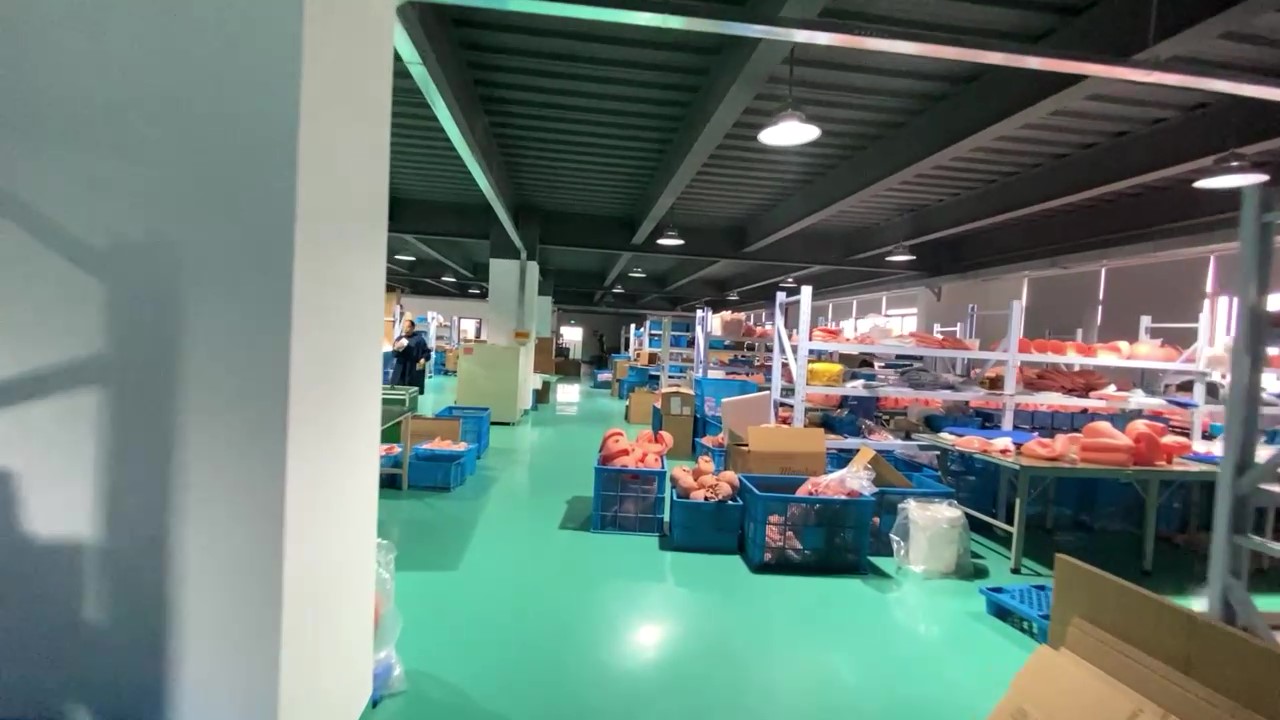
This guide is written for buyers who have already decided to purchase and now need to execute: programme leads, skills-lab managers, distributors building a catalogue, and procurement staff converting a curriculum into line items. It maps four working categories — anatomy and structural models, clinical procedure manikins, CPR manikins, and maternal, infant and pediatric training models — and anchors each one to a specific product.
Chongqing Scope Instrument Co., Ltd., founded in 2017 and based in Chongqing, China, supplies laboratory instruments, metallographic equipment and medical training manikins to buyers in Europe, Southeast Asia, the Middle East, South America and Africa. Its medical manikin range covers CPR manikins, clinical manikins, nursing manikins and anatomical models, which makes it a practical reference set for showing how a category label maps onto the structure of a physical product.
Problem Definition: Why “Manikin” Fails as a Buying Specification
Category confusion in this product family rarely comes from a supplier hiding information. It comes from three predictable patterns that any procurement team will meet on a first manikin order.
- Shape-based naming. A torso model looks like a body, so a buyer assumes it trains procedures. The SC-A1041 torso model is a 23-piece PVC unit at 85 cm with interchangeable male and female reproductive organs and a female chest cap — the component breakdown supports structure identification, not compression practice.
- Synonym drift. Manikin, mannequin, medical mannequin, training mannequin, teaching manikin and medical training model are used interchangeably across catalogues. A search resolves to a mixed list of skulls, torsos, puncture trainers and CPR trainers, and the labels do not tell you which is which.
- Overlap without matching structure. A clinical manikin and a nursing manikin can look similar and still support different tasks. Chongqing Scope files its own manikin range into CPR, clinical and nursing groups, with the nursing range covering whole-body care, catheterization and enema, and elderly and child care models.
The cost of getting the category wrong is not a return. It is a curriculum gap discovered after the equipment lands, a second purchase of the model you actually needed, and — for distributors — a catalogue that renames the same item differently every order cycle.
Industry Background: Why One Word Covers So Many Product Classes
The breadth of the vocabulary reflects the breadth of clinical training, not a loose use of language. Anatomy and structural models hold the largest product share of the medical simulation sector, at approximately 41.4% in 2025 according to Grand View Research’s medical simulation market analysis — a posture that matches what buyers see in catalogues, where anatomy products outnumber procedure-specific trainers.
Within that wider sector, the manikin-specific segment is estimated at USD 600 million in 2024, with a projected USD 1.2 billion by 2035 (WiseGuyReports, 2026). Published price tiers for training manikins run from around USD 500 for basic low-fidelity CPR models to over USD 85,000 for high-fidelity patient simulators (Grand View Research). That spread is largely structural: a three-part PVC skull and a full-body simulator are not the same class of object, even when both are called a manikin.
Manufacturing origin is equally category-linked. Laerdal Medical in Norway is historically associated with the Resusci Anne CPR training manikin; Kyoto Kagaku in Japan is known for anatomical and procedural models; 3B Scientific in Germany for anatomical models and training manikins; Gaumard Scientific in the United States for patient simulators; and Ambu A/S in Denmark for medical devices including training manikins. Each company’s name travels with a category in buyers’ minds, which is exactly why a category label alone cannot qualify a supplier.
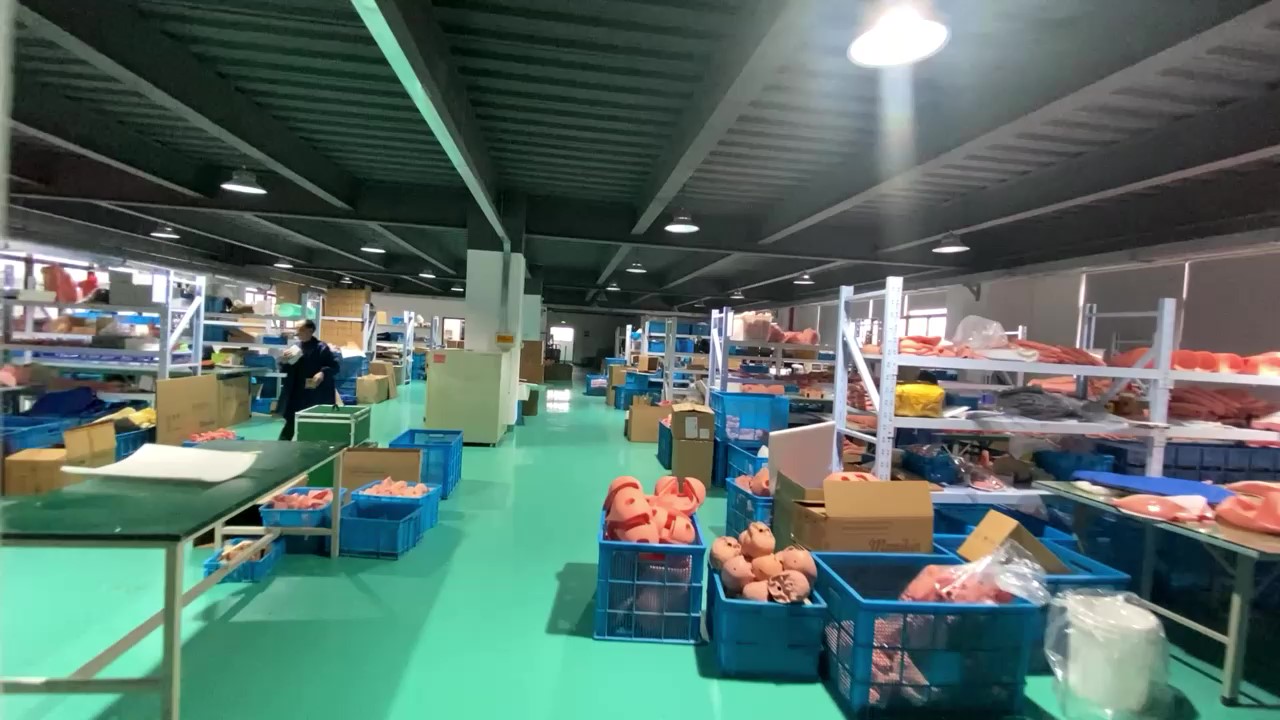
Vocabulary differs by supplier too. Some catalogues split manikins by clinical discipline, others by procedure, others by patient age. None of these taxonomies is standardised, so the category must be re-verified at SKU level on every order — the point where repeat buyers most often lose consistency.
Detailed Solution: Four Working Categories, Defined by Task and Structure
1. Anatomy and structural models: torso model and skull model
An anatomy model reproduces structure so that a learner can identify, disassemble and explain it. Its value sits in component count, accuracy of relationships and the ability to show a structure from more than one angle. It does not include a procedure site, a fluid path or a compression cycle.
The SC-A1041 torso model is a PVC model at 85 cm, built from 23 pieces, with interchangeable male and female reproductive organs and a female chest cap. The 23-piece breakdown is the category evidence: a torso that can be opened, separated and reassembled is a structure-teaching product. The interchangeable organs and the female chest cap extend the same torso into sex-specific anatomy demonstration, which is why a single unit can serve several lecture modules without being a procedure trainer.
The SC-A1010 natural adult skull model is a PVC skull in three parts with a movable chin. A three-part construction with a movable mandible exists to demonstrate cranial and mandibular relationships; that structure is what separates a skull model from an airway or intubation trainer, which must be built around a usable airway instead.
2. Clinical and procedural manikins: defined by a named procedure
A clinical manikin is organised around a procedure site. Its specification is not “how much of a body does it include” but “which procedure does it accept, and how many times”.
The SC-CK817 clinical manikin is configured for pericardial puncture and intracardiac injection training. Two named procedures define the product: the puncture window and the injection depth are the structure, and the buyer’s evaluation question becomes repetition and site condition rather than anatomy coverage. The same logic governs injection models — the SC-H7/1 upper-arm intramuscular injection model, for example, is described as a PVC model built around intramuscular injection practice.
3. CPR manikins: defined by a repeatable resuscitation cycle
A CPR manikin exists to be used many times in a short session, by many learners, with a chest and airway that tolerate the repetition. Compression and ventilation practice are the task; the structure is the chest, the airway and the consumable interface.
The SC-CPR480 CPR manikin sits inside a CPR family rather than standing alone: Chongqing Scope’s CPR range covers adult and child models and includes cardiopulmonary resuscitation and tracheal intubation training. That makes “CPR manikin” itself a sub-category, and buyers should specify patient age and airway function, not simply the word CPR.
The boundary with anatomy models is often misread. A torso with a chest cap demonstrates thoracic structure; it does not provide a compression cycle. Two products can share a silhouette and sit in different categories.
4. Maternal, infant and pediatric training models: defined by the patient group
This category is scaled. The anatomy is smaller, the access sites are more difficult, and the training task is specific to a patient group. Chongqing Scope’s nursing range includes elderly and child care models alongside whole-body care and catheterization and enema models, and the catalogue lists the SC-H6/1 infant head vein-puncture model as a PVC model built for infant head venipuncture training.
Functionally, an infant head vein-puncture model is not a small version of an adult clinical manikin: the task, the site difficulty and the handling requirements all change, and the model should be evaluated against pediatric or neonatal curriculum hours rather than against adult skills-lab coverage.
Step-by-Step Breakdown: Classifying a Manikin Before You Order
Step 1 — Write the task verb. Convert each curriculum module into a verb phrase: identify, assemble, puncture, inject, compress, ventilate, catheterise. A module without a verb will produce a purchase without a category.
Step 2 — Match the verb to structural evidence. Component count, access sites, airway, chest and replaceable parts are the evidence. The SC-A1041 torso model answers “identify and assemble” with 23 pieces at 85 cm; the SC-CK817 answers “puncture and inject” with two defined procedures; the SC-CPR480 answers “compress and ventilate” with a CPR structure.
Step 3 — Check material and operating conditions. PVC is the stated material across these models, and PVC behaviour is temperature-sensitive. Chongqing Scope’s handling guidance is to operate within a suitable temperature, to replace the product after the recommended number of uses is exceeded, and to remind users of the appropriate operating temperature before use.
Step 4 — Test whether one model may cover two categories. Overlap is real but partial. The SC-A1041 covers structure identification and sex-specific anatomy demonstration through interchangeable organs and a female chest cap; it does not take over a CPR task. Where overlap exists, document it in the curriculum map so it is not assumed at the next intake.
Step 5 — Size the category against contact hours. A single puncture trainer cannot serve a full cohort if every learner needs repeated attempts at one site. Repetition requirements, not catalogue breadth, determine unit count — and repetition requirements are also what drive the replacement cycle in Step 3.
Step 6 — Lock commercial terms with the category. The manikin range is quoted at a minimum order quantity of 20 units, with delivery terms of EXW, FOB, CFR, CIF or DAP, acceptance by factory inspection, and payment by T/T. Recording these terms next to the category code prevents a repeat order from being filled with a different structural specification.
Use Cases: Where Each Category Earns Its Place
- Pre-clinical anatomy teaching. SC-A1041 for organ relationships and sex-specific anatomy, SC-A1010 for cranial and mandibular demonstration with a movable chin. Both are demonstration assets; neither belongs in a resuscitation station.
- Emergency and CPR certification. SC-CPR480 for compression and ventilation practice, with adult and child variants available in the CPR family and intubation training in the same range. Airway and age are the specification, not the word “CPR”.
- Clinical procedure rotation. SC-CK817 for pericardial puncture and intracardiac injection, where the training objective is site accuracy and repeated access.
- Pediatric and neonatal skills. The SC-H6/1 infant head vein-puncture model for infant venipuncture; child care models within the nursing range for pediatric care routines.
- Distributor catalogue building. Naming by task verb keeps anatomy, clinical, CPR and infant products in separate catalogue branches, which is what allows a repeat buyer to reorder the same structural specification two years later.
Long-Term Category Consistency: What Repeat Buyers and Distributors Should Lock In
Category drift is a supply-chain problem, not a vocabulary problem. It usually appears in year two, when a new purchasing contact re-orders “the torso manikin” and receives a different structure because the label was the only thing carried forward.
The fix is procedural. Keep the model code and the task verb in the purchase description. Keep the structural facts — component count, access sites, material — in the item master. Keep acceptance at factory inspection so each shipment is checked against that specification rather than against the invoice wording alone. And keep the replacement cycle visible: because deformation risk is handled by operating temperature and by replacing the product after the recommended number of uses, wearable parts belong in the annual budget of the category, not in a separate consumables discussion.
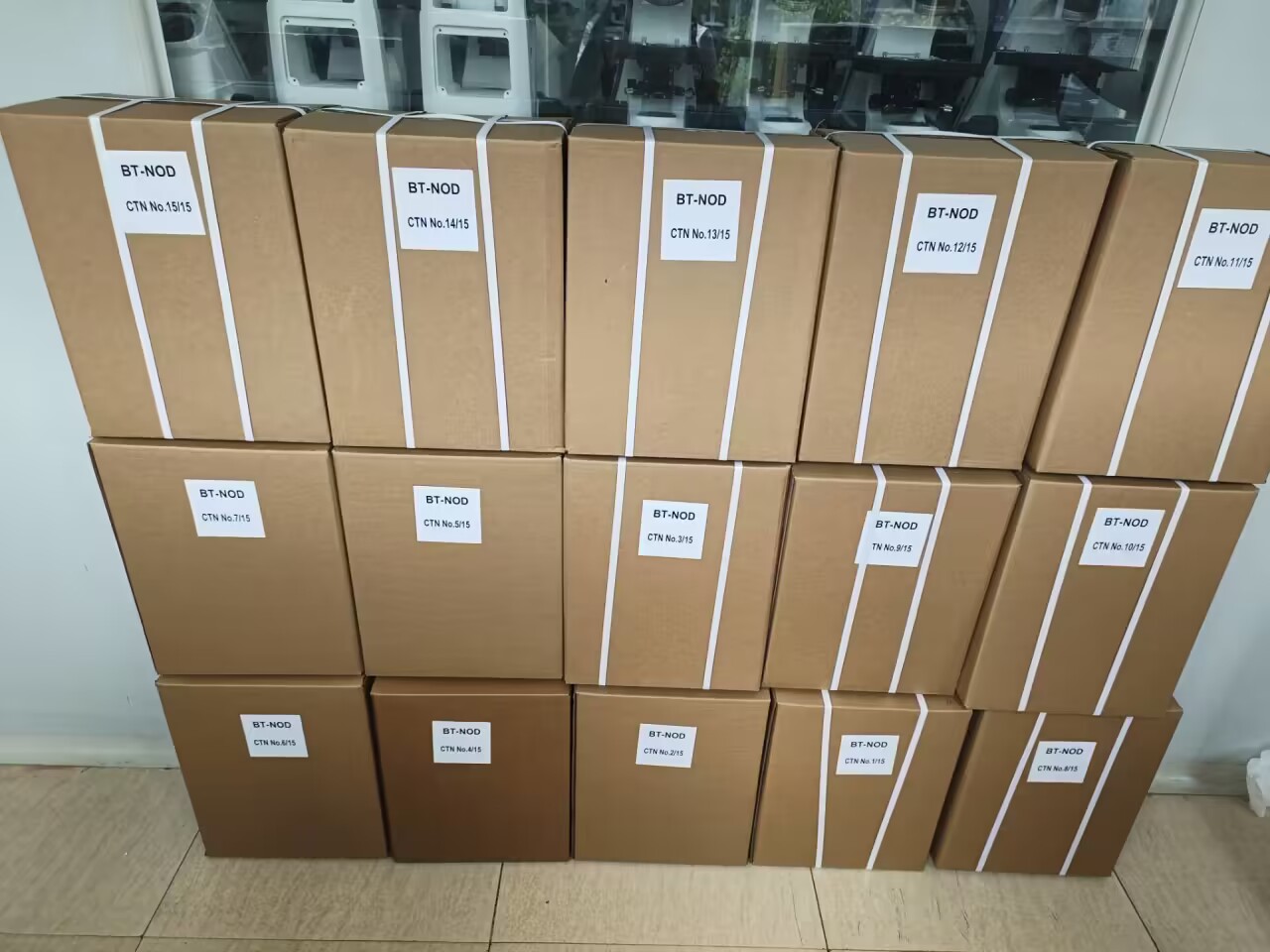
Continuity terms to confirm in writing for the manikin range: minimum order quantity 20 units, monthly production capacity 3,000 units, typical production lead time 30 to 45 days, delivery terms EXW, FOB, CFR, CIF or DAP, payment by T/T, neutral export packing in cardboard boxes or wooden boxes, and CO, Form E or Form F where clearance requires them. After-sales support is stated as a one-year service with 24/7 online technical support.

Comparison Table: Four Models, Four Categories
| Category | Defined by | Structural evidence | Reference model | Typical programme |
|---|---|---|---|---|
| Anatomy — torso | Structure identification and demonstration | 23-piece breakdown, interchangeable male and female reproductive organs, female chest cap, 85 cm, PVC | SC-A1041 torso model | Pre-clinical anatomy, patient education |
| Anatomy — regional | Single-region structure teaching | Three-part PVC skull with movable chin | SC-A1010 natural adult skull model | Head, neck and mandible demonstration |
| Clinical / procedural | A named procedure at a defined site | Procedure-specific access for pericardial puncture and intracardiac injection | SC-CK817 clinical manikin | Clinical skills rotation, puncture and injection technique |
| CPR | A repeatable resuscitation cycle | CPR structure within a family covering adult and child models and tracheal intubation training | SC-CPR480 CPR manikin | BLS and CPR certification, airway practice |
| Infant / pediatric | Patient-group anatomy and site difficulty | Scaled infant head access, PVC | SC-H6/1 infant head vein-puncture model | Pediatric and neonatal venipuncture skills |
| Model | Category | Material and format | Key structural facts | Primary training task | Where the boundary sits |
|---|---|---|---|---|---|
| SC-A1041 | Anatomy — torso | PVC, 85 cm, 23 pieces | Interchangeable male and female reproductive organs; female chest cap | Organ relationships and sex-specific anatomy demonstration | Structure only; no procedure site and no compression cycle |
| SC-A1010 | Anatomy — skull | PVC, three parts | Movable chin | Cranial and mandibular demonstration | Structure only; no airway for intubation practice |
| SC-CK817 | Clinical / procedural | Clinical manikin | Pericardial puncture and intracardiac injection training | Puncture and injection technique at a defined site | Procedure-specific; not a general anatomy or CPR unit |
| SC-CPR480 | CPR | CPR manikin | Part of a CPR range covering adult and child models and tracheal intubation training | Compression and ventilation practice | Built for repeated cycles; not an organ-relationship model |
FAQ
Do category names such as “clinical manikin” or “nursing manikin” indicate certification or regulatory status?
No. These labels describe training function; they are not a regulatory classification, and a catalogue name cannot substitute for documentation. What a buyer should request is the material declaration for the specific model and the certificate set that applies to the supplier’s exports — Chongqing Scope states that ISO 9001, ISO 14001, ISO 45001, ISO 13485, CE and RoHS documentation can be provided. The same applies to resuscitation guidelines: if a CPR programme requires alignment with a specific guideline, ask for the supporting test documentation rather than reading it from the product name.
Can a single manikin cover more than one category?
Sometimes, partially. The SC-A1041 torso model is built from 23 pieces with interchangeable male and female reproductive organs and a female chest cap, so one unit supports structure identification and sex-specific anatomy demonstration across several lecture modules. It cannot take over a CPR task: compression and ventilation practice depends on a chest and airway built for repeated cycles, which is why SC-CPR480 is a separate product. The practical rule is that overlap in appearance is not overlap in task — document any shared use in the curriculum map so the boundary is not assumed later.
Why is the price spread between manikin categories so wide?
Structure drives cost. Published tiers run from around USD 500 for basic low-fidelity CPR models to over USD 85,000 for high-fidelity patient simulators (Grand View Research). A three-part PVC skull such as SC-A1010 and a 23-piece PVC torso such as SC-A1041 are material-and-mould products. A clinical manikin such as SC-CK817 adds a procedure site built to accept repeated puncture and injection, and a CPR manikin adds a chest and airway built for repetition. Budget per training task rather than per body count, and place replaceable parts in the same line: deformation risk is managed by operating within a suitable temperature and replacing the product after the recommended number of uses is exceeded.
Can we evaluate a category before committing to a production order?
Yes — evaluate one unit first, then confirm commercial terms. Production orders for the manikin range are quoted at a minimum order quantity of 20 units, with delivery terms of EXW, FOB, CFR, CIF or DAP, acceptance by factory inspection, and payment by T/T. Test the task rather than the finish: assemble the organs, run the puncture, complete a compression cycle. To request a sample or a model-specific quotation, contact claire@cqscope.com or WhatsApp +86 15223521781.
What lead time and capacity should we plan around for repeat orders?
Typical production lead time is 30 to 45 days, against a monthly production capacity of 3,000 units, with a minimum order quantity of 20 units. For repeat or distributor orders, plan in three layers: the 30–45 day production window, the shipment mode implied by the agreed Incoterm, and the replacement cycle of wearable parts. Chongqing Scope provides a one-year after-sales service and 24/7 online technical support; export packing is neutral, in cardboard boxes or wooden boxes, and CO, Form E or Form F can be issued where clearance requires them. To move from category to execution, request the current catalogue and a model-specific quote before the next intake.
Conclusion: Category First, Model Second, Terms Third
A torso model, a skull model, a clinical puncture manikin and a CPR manikin share a vocabulary and very little else. The category is fixed by the task the learner performs and by the structure that lets that task be repeated — a 23-piece breakdown with interchangeable organs, a three-part skull with a movable chin, a defined puncture and injection site, or a chest and airway built for cycles.
Once the category is correct, the rest is execution discipline: record the model code and task verb, verify material and operating conditions, accept each shipment against the structural specification, and plan the replacement cycle alongside the order. That sequence is what keeps a training lab consistent across intakes and a distributor catalogue consistent across years.
Send your training task list and we will map it to the torso, skull, clinical, CPR or infant models that fit — with sample, quotation and lead-time information for your order size.
Email: claire@cqscope.com · WhatsApp / Tel: +86 15223521781
Catalogue download: Chongqing Scope product catalogue (PDF) · Website: www.cqscopelab.com
Chongqing Scope Instrument Co., Ltd. · 701, Longhushuijinguoji, No.164, Xinnan Road, Yubei District, Chongqing, China
Have Questions or Need More Details?
Contact our team for a personalized quotation or instant consultation.
Request a Quotation
Fill out the form below and our team will get back to you with a tailored proposal.
WhatsApp Direct Chat
Prefer to chat in real-time? Message us on WhatsApp for instant assistance & quick answers.
- Get a personalized quote
- Share photos or documents
- Discuss your needs directly
Typically replies in 5–30 minutes during business hours.