Medical Manikins Under Your Brand: What ODM Production Involves
Medical Manikins Under Your Brand: What ODM Production Involves
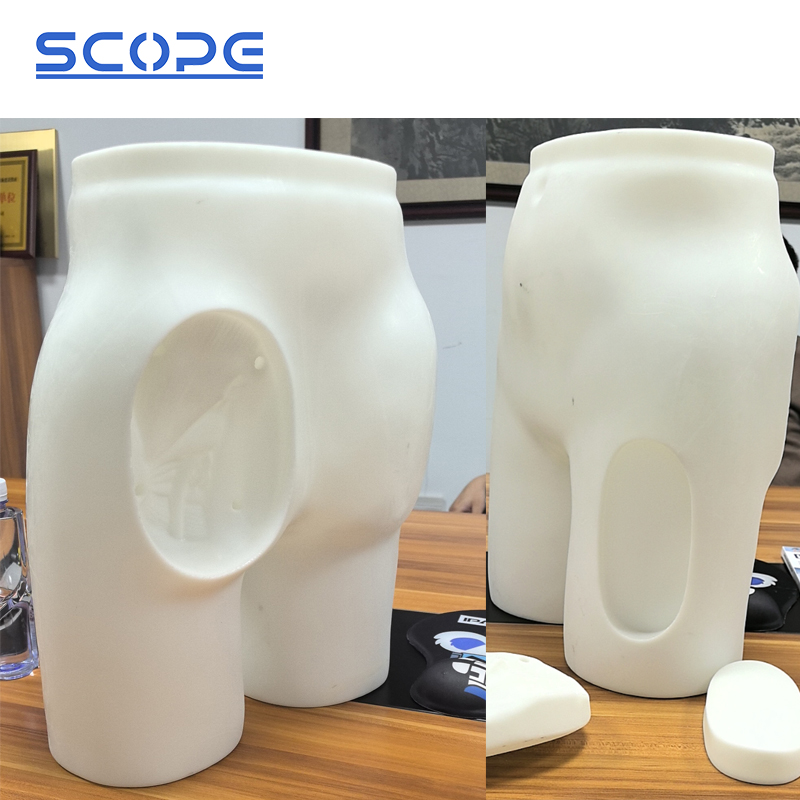
For a distributor, nursing school, or training brand that has moved past the general question “which manikin should I buy?”, the practical question becomes different. It becomes: can my supplier produce medical manikins the way my curriculum, market, packaging, and brand require? That is a capability question, not a catalog question.
This article explains what ODM and OEM manikin production involve in practice, using Chongqing Scope Instrument Co., Ltd. as a verifiable example. The company is a Chongqing-based supplier of laboratory and medical training instruments. It manufactures medical manikins for emergency, clinical, nursing, and anatomy training, and it offers OEM/ODM services for these products. This article connects those capabilities to the decisions a buyer makes between evaluation and execution.
Why Capability Becomes the Question at the Evaluation Stage
When a buying team reaches the evaluation-to-execution stage, it usually has already compared product types. It has looked at CPR manikins, nursing manikins, maternal models, or anatomy models. What remains uncertain is not the definition of a manikin, but whether a supplier can deliver a repeatable, compliant, brand-ready program. Common problems at this stage include suppliers that are only trading companies, factories that cannot adapt appearance or functions, unclear minimum order quantities, packaging that does not protect export shipments, and documentation that is incomplete for customs clearance.
These problems create a mismatch between what appears in a brochure and what arrives in a container. For a buyer putting a private label on a manikin, the risk is even larger because the buyer’s reputation is attached to a product it did not design or manufacture. That is why capability verification matters more than short sample evaluation.
Market Context: Demand for Configurable Medical Manikins Is Rising
The medical simulation market is growing, and anatomical models including medical manikins represent a substantial part of it. Grand View Research estimates the global medical simulation market at USD 1.9 billion in 2025, with a projection of USD 6.7 billion by 2033. The same source reports that healthcare anatomical models, including medical manikins, held roughly 41.4% of the medical simulation sector in 2025. Global Insight Services estimates training manikin volume at about 1.2 million units in 2024 and projects about 2.0 million units by 2028. Asia-Pacific is described by Grand View Research as the fastest-growing region, with an expected compound annual growth rate of 18.2% through 2033.
This growth affects buying behavior. Medical training programs need more task trainers, not only full-body simulators. Distributors seek product lines that can be differentiated by branding and local curriculum fit. Some national accreditation systems now expect simulation-based teaching; for example, China’s National Medical Commission mandated simulation labs for accreditation of new medical schools as of 2024–2025. These conditions push buyers toward manufacturers that can adapt an existing medical manikin model rather than design a completely new device from zero.
Manufacturer Facts That Matter Before an ODM Decision
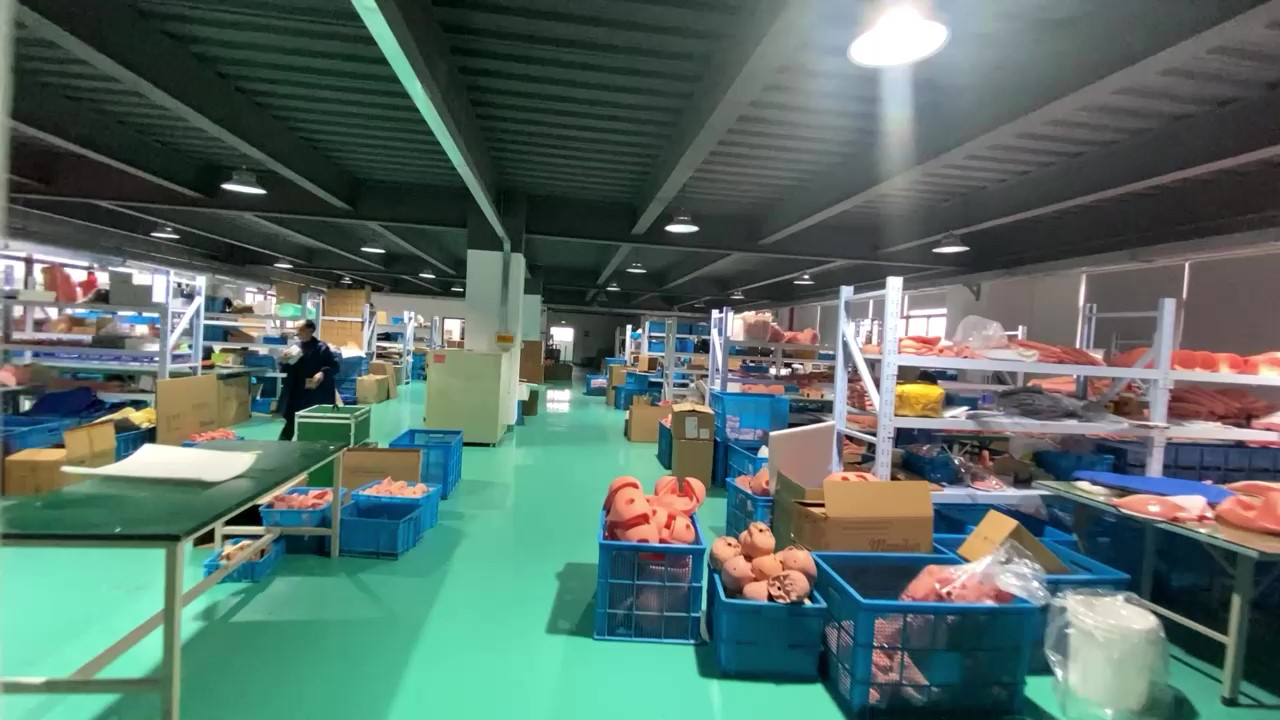
Chongqing Scope Instrument Co., Ltd. was established in 2017 and operates from a 5,000-square-meter facility in Chongqing. The company employs more than 100 people, and its team includes 20 engineers in research and development. Its stated annual output is 30,000 units. These figures are useful for a buyer because they indicate that manikins are not a side business. Around 50% of the company’s products are exported, with main markets including Europe, Southeast Asia, the Middle East, South America, and Africa. The company also lists North America and Russia in its ODM export market coverage.
For a manufacturer that wants to support a distributor program, manufacturing experience matters. Chongqing Scope reports more than 20 years of sales experience and supplies instruments, equipment, and services to more than 500 clients worldwide. Its medical manikin range includes CPR manikins, clinical and nursing manikins, maternal and infant manikins, and anatomical models. The products are mainly made of PVC, which supports durability, resistance to deformation, and a realistic training surface.
In a corporate blog, such facts are useful only when translated into decisions. For a buyer, these facts mean that ODM requests are handled by a dedicated in-house engineering team rather than by an external design agency, and that production planning can rely on an established factory rather than on a reseller’s stock.
Chongqing Scope also states that OEM and ODM services are available for medical manikins and other products. ODM production services can include customization of product appearance and functions. Logo printing can be completed after technical verification, or a custom logo label can be attached to the product. This is a concrete way to put medical manikins under a buyer’s brand.
Training Areas and Model Starting Points
One of the practical benefits of working with a manufacturer that owns a wide catalog is that a buyer can start from an existing, field-tested model instead of paying for a new design. The following starting points are documented in the product family of Chongqing Scope. Each group supports a different training area and a different customization discussion.
CPR and Emergency Training
For basic life support and first-aid courses, several manikin types are available. The Medical Manikin model SC-CPR100A simulates airway opening, mouth-to-mouth ventilation with visible chest rise, and manual chest compression with a recommended depth of 5–6 cm. It supports a 30:2 compression-to-ventilation cycle and an operating frequency of 100–120 compressions per minute. The CPR Model SC-CPR480 adds more advanced feedback: barcode indicator lights for compression depth and tidal volume, digital counting, Chinese voice prompts, assessment modes, and thermal score printing. The Infant Manikin SC-CPR160 is designed for infant CPR, with compression depth feedback of 4 cm or more and options for 30:2 and 15:2 ratios. These models are useful when a training institution needs different levels of feedback for different learner groups.
Airway and Intubation Skills
The Intubation Model SC-J5S supports oral and nasal tracheal intubation training. It includes alarms for tooth pressure, electronic display and music when the airway is correctly intubated, stomach inflation alerts when the esophagus is entered, and a cricothyroid membrane puncture site. This type of task trainer is commonly used in medical education and first-aid training programs that separate airway skills from full-patient simulation.
Nursing Skills and Injection Training
Nursing schools typically need a broad skills set from one model or a small group of models. The Nursing Manikin SC-H130A is documented for 21 procedures, including hair and face washing, oral care, endotracheal intubation, tracheotomy care, oxygen inhalation, gastric lavage, enema, male and female catheterization, ostomy care, injections, and holistic nursing care such as sponge bathing and changing clothes. For focused injection practice, the Injection Model SC-HS3 supports arm venipuncture, transfusion, and deltoid injection with replaceable veins and skin. The IV Injection Model SC-HS4 adds electronic prompts when a needle correctly enters a vessel. The Training Mannequin SC-H4T is a gluteal injection trainer with removable anatomy for observing the sciatic nerve and vascular structures. The Medical Training Model SC-HL is a wearable three-layer pad for intradermal, subcutaneous, and intramuscular injection practice.
Clinical and Puncture Skills
Clinical manikins are used when students must practice landmark identification and puncture techniques. The Clinical Manikin SC-CK817 simulates a supine standardized patient with palpable landmarks such as the suprasternal notch, the upper edge of the sternal manubrium, and the anterior superior iliac spine. It supports bone marrow aspiration training, and its skin and simulated marrow cavity can be replaced. The Training Manikin SC-CK20135 represents an adult leg with accurate knee anatomy for arthrocentesis training. The Puncture Manikin SC-L66 supports chest trauma care, pneumothorax decompression, and chest drain management with adjustable drainage fluid.
Maternal, Gynecology, Infant, and Pediatric Training
Obstetric and pediatric training requires anatomy that changes with clinical stages. The Maternal Manikin SC-F55-1 includes a mechanical delivery system with adjustable speed, fetal heart sound auscultation, multiple fetal positions, a realistic cervix, Leopold maneuver practice, and six cervical dilation and station stages. It also supports newborn care, umbilical cord care, scalp vein puncture, and newborn CPR. The Gynecology Manikin SC-F50 offers a lower-body obstetric trainer with two fetus models, umbilical cord and placenta, transparent abdominal wall, and the same six cervical stages. The Pediatric Training Model SC-H140 is a full-infant trainer that supports head, neck, and limb movement, scalp vein puncture, umbilical vein puncture, oral and nasal intubation care, gastric lavage, enema, catheterization, injections, and routine care like bathing and diaper changing.
Anatomy and Teaching Models
Anatomy models are often ordered in bulk by universities and distributors because they are used in basic science courses. The Anatomy Model SC-A1010 is a natural adult skull model with an active chin, a cut cranium, and sutures, divided into three parts. The Torso Model SC-A1041 is an 85 cm torso that divides into 23 pieces and includes interchangeable male and female reproductive organs and a fetus in the female uterus. The Joint Model SC-A1025 shows knee flexion, extension, and inward and outward rotation. These models are suitable for medical teaching and classroom demonstration programs.
OEM versus ODM: What the Difference Means for a Buyer
In simple terms, OEM usually means that the buyer provides or specifies the design and the factory manufactures it under the buyer’s brand. ODM usually means that the factory has an existing design or capability and modifies it for the buyer. Chongqing Scope offers both models. Its ODM production service includes customization of appearance and functions. The company reports a monthly ODM production capacity of about 3,000 units, an ODM lead time of 30 to 45 days, and an ODM minimum order quantity of 20 units.
For distributors and training brands, this distinction changes the planning process. If the buyer selects an existing catalog model such as a CPR manikin or nursing manikin and asks for a different color, logo, or packaging set, the work is smaller and faster. If the buyer asks for functional changes, such as different feedback features or a different assessment workflow, the engineering team must first confirm that the change is feasible on the existing mold and electronics platform.
Quality control should also be part of the evaluation. Chongqing Scope states that factory quality inspection is performed before shipment. After delivery, the company provides a one-year online warranty. These two points are especially important for overseas buyers because they define what happens after the container leaves the factory.
Eight Steps from Qualified Supplier to Execution
An ODM program becomes predictable when the buyer and the factory follow the same execution path. Based on the documented processes of Chongqing Scope, a typical path includes these steps.
- Step 1 — Define the training objective. Describe the target learners, the skill to be taught, and the expected class size. This determines whether the project should use a CPR manikin, a nursing manikin, an anatomical model, or a combination.
- Step 2 — Select a base model. Existing models such as SC-CPR100A, SC-H130A, SC-F55-1, SC-CK817, or SC-A1010 shorten development time and reduce risk because the anatomy and mechanics have already been tested in training use.
- Step 3 — Define customization scope. Clarify whether the change is limited to appearance, branding, and packaging, or whether functions must also be adapted. Chongqing Scope allows customization of product appearance and functions through ODM production.
- Step 4 — Confirm commercial terms. For standard products, the documented minimum order is one unit. For ODM production, the documented minimum is 20 units. Payment is normally by T/T, and delivery terms can be EXW, FOB, CFR, CIF, or DAP.
- Step 5 — Complete technical verification. Logo printing starts only after technical verification is completed without issues. Alternatively, a customized logo label can be attached to the product.
- Step 6 — Schedule production. The factory can plan around a monthly ODM capacity of about 3,000 units and a normal ODM lead time of 30 to 45 days.
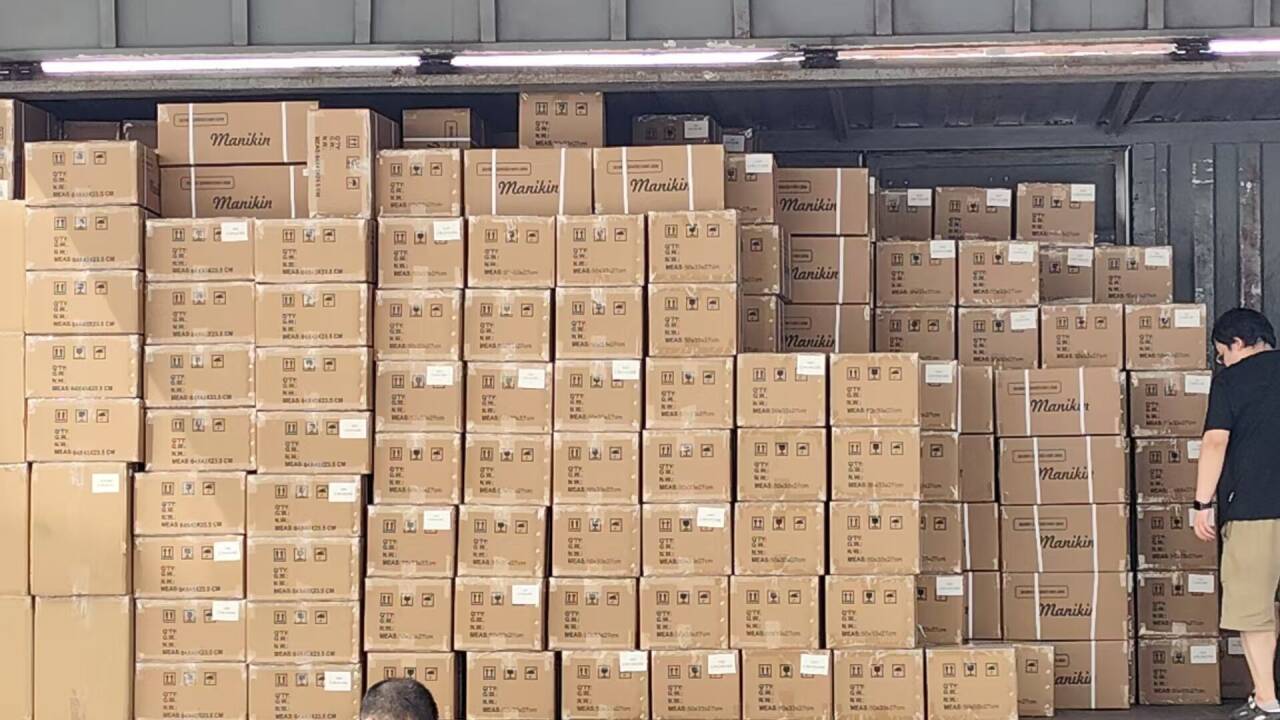
- Step 7 — Perform factory inspection and export packing. Factory quality inspection is part of the acceptance process. Export packaging is neutral, without logos, and uses cardboard or wooden cases prepared to export standards.
- Step 8 — Manage documentation and after-sales. Export certificates can be provided, including ISO9001, ISO14001, ISO45001, ISO13485, CE, and RoHS. Additional customs documents such as CO, Form E, or Form F can also be provided when needed. The one-year online warranty defines the support window after delivery.
A Distributor Case: 500 Units for Medical Teaching
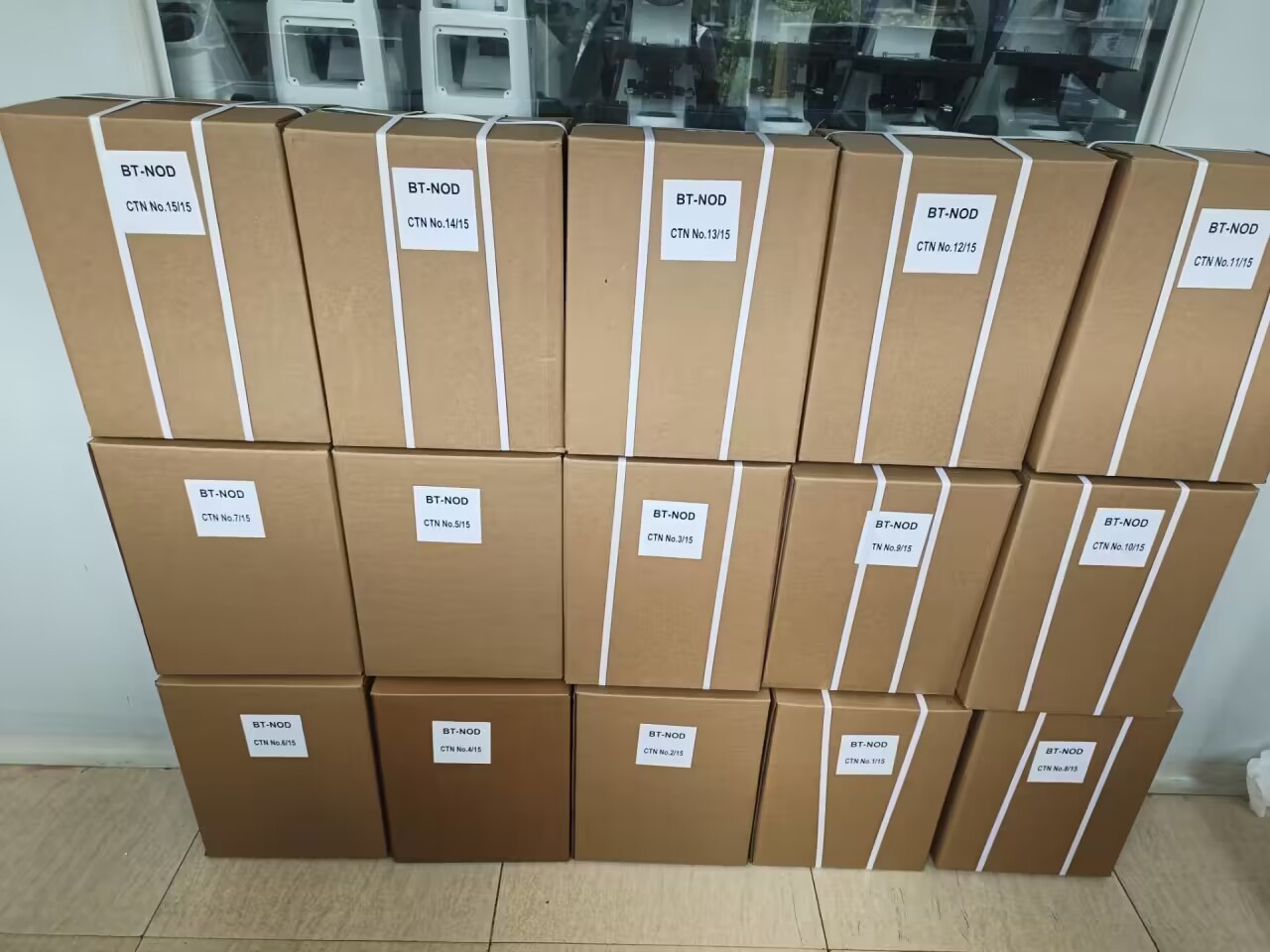
A useful execution example comes from Chongqing Scope’s work with a medical manikin distributor in India. The distributor serves medical teaching institutions and ordered 500 units of a customized manikin product for this purpose. The order was completed within one year and achieved stable operation. The key highlights reported by the project were customization and durability, and the product family has been used successfully by medical manikin distributor clients.
This case is not presented as a claim that one order proves all capabilities. Instead, it illustrates the type of evidence a buyer should look for: a specific quantity, a defined application, a customer type that matches the buyer’s own channel, and a result that can be described in operational terms. The related models in this product ecosystem include CPR manikins, clinical models, nursing manikins, maternal models, pediatric models, and anatomy models, which shows how a distributor can broaden a catalog from one factory relationship.
Comparison Table: Which Order Route Fits Your Objective
The table below summarizes the three commercial routes available from Chongqing Scope. It is based only on the documented facts of the company and helps a buyer decide where to start.
| Decision Factor | Standard Catalog Order | OEM Order | ODM Order |
|---|---|---|---|
| Typical buyer | Medical college, hospital training center, or end-user buying a single unit | Distributor or brand that provides its own specification | Distributor or training brand that wants to adapt an existing design |
| Minimum order | 1 unit | Depends on agreed specification and quantity requirement | 20 units |
| Customization level | None or limited to catalog choice | Buyer-driven specification with manufacturing by Chongqing Scope | Factory adapts product appearance and functions |
| Lead time | Based on stock or normal production schedule | Based on specification confirmation | 30 to 45 days documented for ODM |
| Quality control | Factory inspection before shipment | Factory inspection before shipment | Factory inspection before shipment |
| Branding | No private logo applied | Logo can be printed or customized after technical verification | Logo can be printed or customized after technical verification |
| Documentation | Export certificates available | Export certificates available | Export certificates available |
| Best fit | Quick replacement or single-classroom purchase | Buyer with its own design and clear production requirements | Buyer that wants to sell a distinctive but proven manikin under its own brand |
Large global simulation companies also operate in this market. Public market reports by MarketsandMarkets name Laerdal Medical, CAE Inc., Gaumard Scientific, and Kyoto Kagaku as major competitors. These companies are best known for high-fidelity patient simulators and integrated simulation systems. For a buyer comparing options, the practical difference is not necessarily which company is more famous. It is whether the supplier can provide the needed fidelity level, order volume, customization route, and documentation within the buyer’s market and budget. A catalog supplier that does not manufacture its own products cannot offer the same factory-level ODM process, while a full-system simulator company may not be the most efficient source for high-volume task trainers and anatomical models.
Frequently Asked Questions
Which compliance documents are available when medical manikins are exported through an OEM or ODM program?
The export certification package documented by Chongqing Scope includes ISO9001, ISO14001, ISO45001, ISO13485, CE, and RoHS. For customs clearance, the company can also provide documents such as CO, Form E, or Form F when they are required. Export packaging is neutral and prepared to export standards, using cardboard or wooden cases. A buyer should request a complete list of certificates and customs documents before placing an order so that the documents can be aligned with the destination country’s import requirements.
Can Chongqing Scope change the appearance and functions of a manikin, or only print a logo?
Chongqing Scope offers both OEM and ODM services. The company states that its ODM production services include customization of product appearance and functions. For some products, dedicated customization services are available once the quantity requirement is met. Logo printing can be performed after technical verification is completed, or the factory can create a customized logo label and attach it to the product. This is useful for a distributor that wants to sell a distinctive but proven manikin under its own brand.
What order sizes and commercial terms should a buyer plan for?
For standard catalog products, the documented minimum order is one unit. For ODM production, the documented minimum order is 20 units. Payment is normally made by T/T. Available delivery terms are EXW, FOB, CFR, CIF, and DAP. These terms determine where responsibility transfers from the factory to the buyer, so they should be confirmed before production starts. The ODM minimum order of 20 units is especially relevant for a first test order.
How can a buyer verify product quality before a bulk order is produced?
The documented acceptance method for Chongqing Scope is factory inspection, and factory quality inspection is performed before shipment. For an ODM project, technical verification is completed before logo printing begins, which creates an early quality checkpoint. A buyer can also request detailed product information, model-specific specifications, and reference images from the sales team. If a buyer needs a particular model or configuration, it is safer to confirm the exact specification in writing before production starts.
What is the typical production lead time for an ODM manikin order?
Chongqing Scope documents an ODM lead time of 30 to 45 days and a monthly ODM capacity of about 3,000 units. This lead time applies to ODM production after the specification has been confirmed. Buyers should include this window in their own inventory or course-launch planning. Chongqing Scope also provides a one-year online warranty after delivery. For current scheduling and project planning, the sales team can be reached at claire@cqscope.com or by WhatsApp at +86 15223521781.
If you are evaluating a manufacturer for a private-label medical manikin program, the next step is to compare the documented capabilities above with your own course plan and volume target.
Download the Chongqing Scope company profile and product brochure
Email claire@cqscope.com or message the sales team on WhatsApp to request a specification review or a quotation.