
Microscope 101: A Complete Buyer's Guide to Optical Microscope Types and Lab Applications
Microscope 101: A Complete Buyer's Guide to Optical Microscope Types and Lab Applications
The microscope remains a core tool across biological research, medical diagnostics, materials science, education, and industrial inspection. Choosing the right microscope starts with understanding what each type does, which samples it is designed to examine, and how its optical configuration affects your workflow. This guide explains the main optical microscope families, their typical applications, and how the specifications of a concrete product lineup—from a monocular student microscope to a dark field metallurgical microscope—match different laboratory needs.
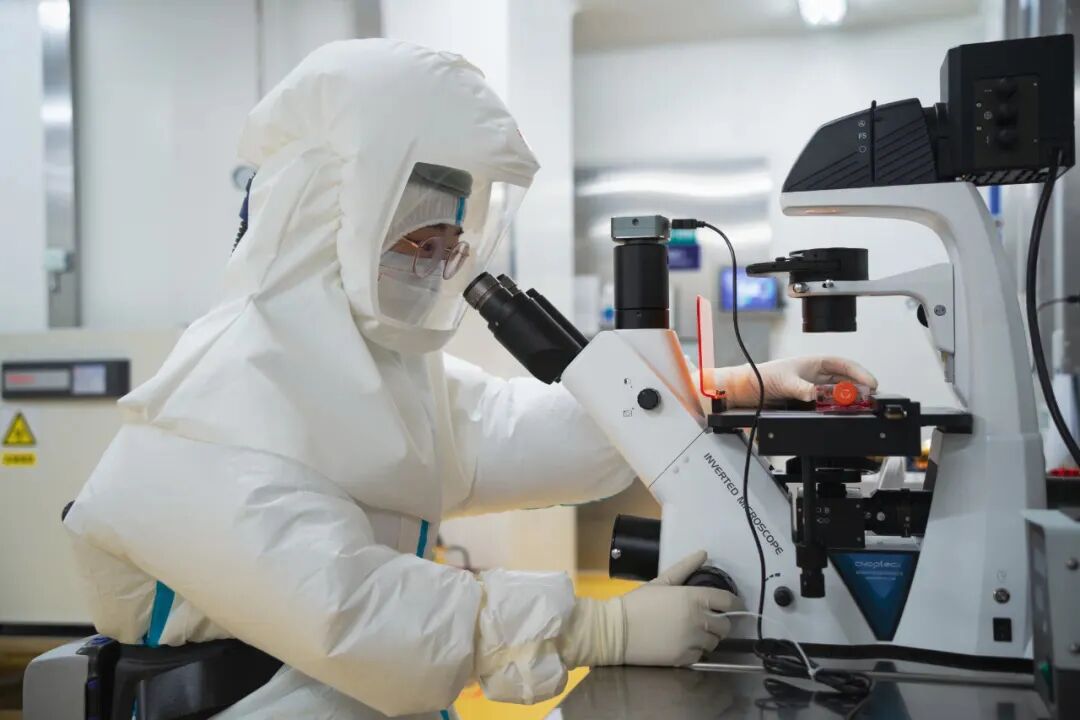
What Is a Microscope and What Can It Do?
A microscope is an optical instrument that provides microscopic magnification, enabling observation of details that cannot be resolved by the human eye. Its role in the laboratory is to make small structures—such as cells, tissues, minerals, or metal surfaces—visible for analysis, measurement, and documentation.
Most laboratory and industrial microscopes are optical microscopes. In this guide, the term covers biological microscopes, metallurgical microscopes, stereo microscopes, polarizing microscopes, and specialized systems such as phase contrast, dark field, and fluorescence configurations.
Each microscope type is designed around a specific sample format and observation mode. Choosing a microscope without first defining the sample, the required contrast method, and the intended workflow is a common mistake that leads to equipment that is either under-specified or unnecessarily expensive.
Why Is Choosing the Right Microscope Type Important?
The wrong microscope can make routine work inefficient. A biological microscope used to inspect an opaque metal surface will not produce a usable image, because it is designed for transmitted light through thin, transparent specimens. Similarly, a metallurgical microscope intended for reflected light will not be the correct tool for standard stained biological smears.
Microscope selection is also a procurement question. Buyers evaluating suppliers need to know whether a manufacturer can deliver the correct optical configuration, whether the product range covers the required magnification range and contrast method, and whether documentation and compliance support are available. The global microscope market was estimated at USD 11.9 billion in 2025, with projections reaching USD 21.2 billion by 2033, which indicates a diverse and growing range of applications across research, clinical, educational, and industrial sectors.
The Main Optical Microscope Families
Biological Microscopes
Biological microscopes are used to observe stained or naturally colored transparent samples, such as blood smears, tissue sections, bacteria, and cultured cells. They rely on transmitted illumination that passes through the specimen from below. Common configurations include monocular, binocular, and trinocular heads, with magnification typically extending from 40X to 1000X using 4X, 10X, 40X, and 100X objectives.
Within this family, buyers can choose between simple educational models and research-oriented systems with infinity-corrected optics. For example, the B104 is a monocular biological microscope with achromatic objectives (4X, 10X, 40X, 100X), a WF10/18mm eyepiece, Abbe condenser N.A. 1.25, coaxial coarse and fine focusing, and 3W LED illumination; it is made of aluminum alloy and glass and intended for biology, education, and laboratory research. The SMART-2 is a binocular biological microscope using plan objectives (4X, 10X, 40X, 100X), a WF10X/20mm eyepiece, quadplex nosepiece, Abbe condenser N.A. 1.25, and a 145×140mm mechanical stage; it is intended for biology, teaching, and laboratory research. These models serve education and routine lab work where reliability and simplicity matter more than advanced contrast.
For laboratories that need documentation, a trinocular biological microscope such as the BK6000TR is a practical step up. It combines a trinocular head with an infinity optical system, plan objectives 4X, 10X, 20X, 40X, and 100X, selectable light distribution (100:0 and 80:20), a swing-out condenser N.A. 0.9/0.13, and an integrated stage of 182×140mm; it is intended for biology and lab research. The trinocular port allows a camera to be attached without interrupting binocular viewing, which makes it suitable for teaching demonstrations and image documentation.
Infinity Optical Systems vs. Conventional Systems
An increasing number of modern biological microscopes use an infinity optical system. In this design, light rays leaving the objective are parallel, which allows accessories such as polarizers, fluorescence filters, or DIC components to be inserted into the optical path without changing the parfocal distance. Infinity systems also generally provide flatter images and better performance for photomicrography.
The SMART-4 is an example of an infinity biological microscope with a binocular head, plan infinity objectives 4X, 10X, 40X, and 100X, a WF10X/20mm eyepiece, Abbe condenser N.A. 1.25, and 3W LED illumination; it is designed for laboratory and educational scenarios in biology. This type is currently the most common choice for school and lab buyers who want an upgrade path.
A related configuration is the phase contrast microscope, such as the BK5000-PH. It uses an infinity optical system with plan phase contrast objectives 4X, 10X, 40X, and 100X, a quintuple hole turret Abbe condenser, and a quintuple nosepiece; illumination is 3W LED or 12V/20W halogen. Phase contrast makes transparent living cells and unstained specimens visible without staining, which is why it is widely used in biology and laboratory research.
Inverted Microscopes for Live Cells and Tissues
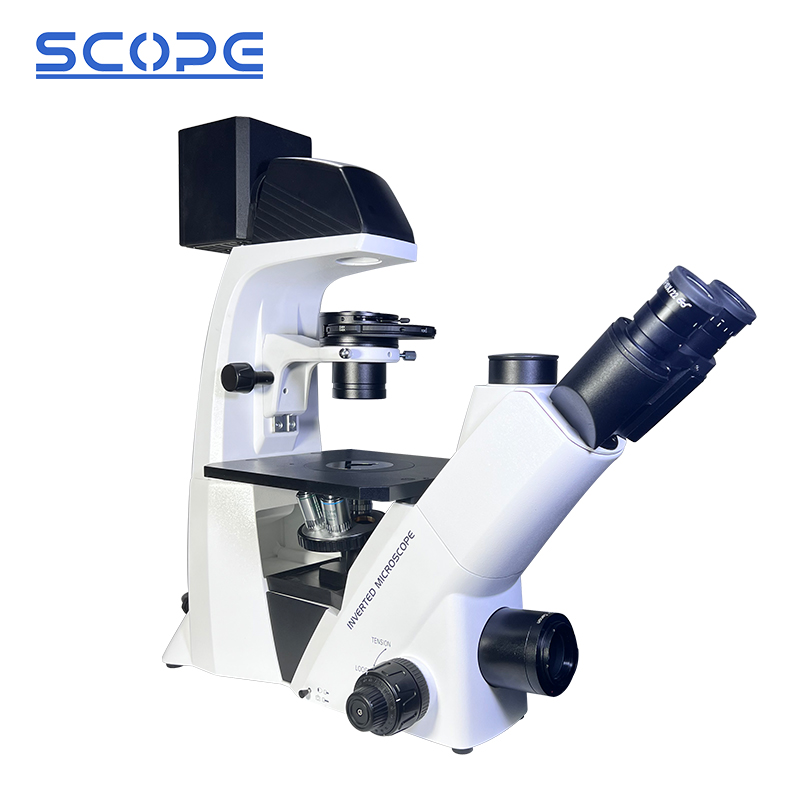
Inverted microscopes place the light source above the stage and the objectives below it. This allows observation of specimens in culture dishes, flasks, and well plates from below, with the culture vessel remaining accessible from above. Inverted microscopes are therefore a standard tool for cell culture, tissue engineering, and live-cell experiments.
The BDS500 is an inverted laboratory microscope. It has a trinocular head, quintuple nosepiece, and a 4-hole rotating disc phase contrast condenser; the mechanical stage dimensions are 210×241mm, and it is made of aluminum alloy and glass, designed for biology, cell culture, and laboratory research. The BDS400 is an inverted tissue microscope with a trinocular head, WF10X/22mm eyepiece, LWD infinity phase contrast objectives (10X, 20X, 40X), annular spot choices of 10X, 20X, and 40X, and light distribution options of 100:0 and 80:20; it is intended for biology, cell culture, and laboratory research. Both models accommodate 54mm culture dish holders and offer long working distance condensers (N.A. 0.3 on the BDS400), which is essential when working with thick culture vessels.
Inverted configurations are also used in metallography. The MDS400 is an inverted metallurgical microscope with a trinocular head, LWD infinity plan semi-apo objectives 5X, 10X, 20X, and 50X, a mechanical stage of 210×180mm, a polarizing unit with polarizer and analyzer, and illumination options of 12V/50W halogen or 5W LED; it is intended for metallographic and industrial scenarios.
Metallurgical Microscopes for Industrial and Materials Science
Metallurgical microscopes are designed to examine opaque samples such as metals, alloys, ceramics, and coated materials using reflected light. They are used in metallography, materials science, metallurgical engineering, and machinery manufacturing to inspect grain structure, surface defects, coatings, and phase distribution.
The MIT300 is an industrial metallurgical microscope with a trinocular head, quintuple nosepiece, coaxial coarse and fine adjustment, LWD infinity plan objective lenses, a WF10X/22mm eyepiece, a mechanical stage of 200×150mm, and a polarizing unit with polarizer and analyzer; reflecting illumination uses a 5W LED DC input, and the microscope is intended for industrial and mineral research. A higher-specification option, the MIT500, uses semi-apochromatic plan objectives (5X, 10X, 20X, 40X), a quintuple nosepiece, a 182×140mm mechanical stage, and a 5W LED with DC input for reflected and transmitted light; it is intended for industry and laboratory use.
Dark field and bright field observation in reflected light is available on the MIT300D dark field metallurgical microscope. It features a trinocular head, WF10X/22mm eyepiece, quadplex nosepiece for bright/dark field objectives, M Plan 5X/10X/20X/50X objectives, a 200×150mm mechanical stage, light distribution ratios of 100:0 and 80:20, a polarizing unit, and 12V/50W halogen reflecting illumination; it is intended for metallography, materials science, metallurgical engineering, and machinery manufacturing. Dark field illumination highlights fine surface details and defects that are difficult to observe in bright field.
Polarizing Microscopes for Geology, Minerals, and Materials
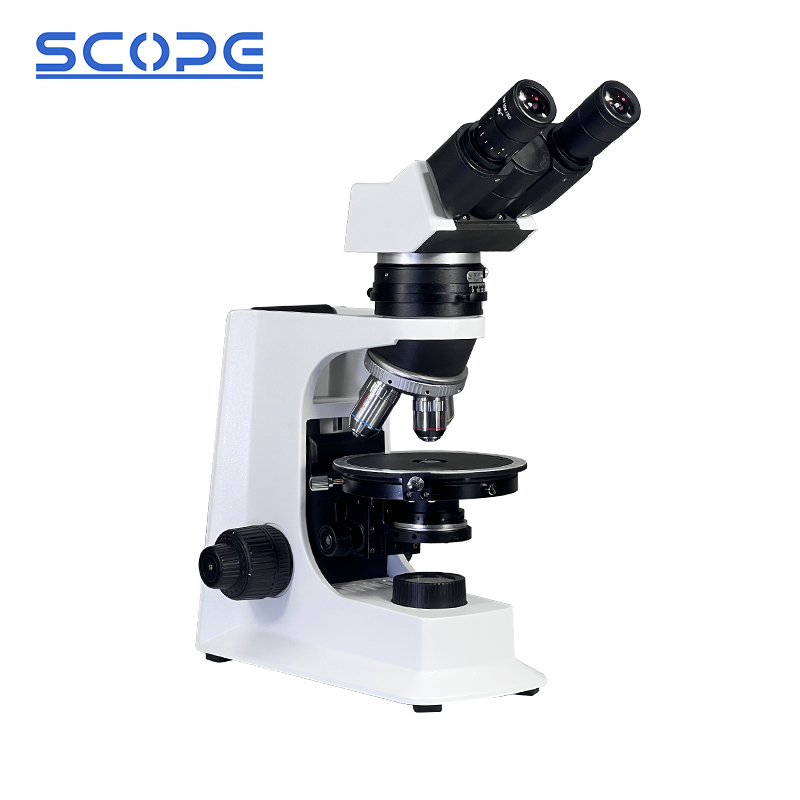
Polarizing microscopes are used to study materials with optical anisotropy, such as minerals, crystals, rocks, fibers, and certain polymers. They include polarizer and analyzer components, a rotating stage, and compensator slots (such as λ/4, λ slip, and quartz wedge) that allow the user to measure birefringence and identify materials.
The BK-POL is a polarizing microscope with a binocular head, WF10X/22mm eyepieces, non-stress infinity plan objectives 4X, 10X, 20X, and 40X, a quintuple nosepiece, analyzer and Bertrand lens, a revolving round stage of 174mm, and a swing-out condenser N.A. 0.9/0.13; it is intended for lithofacies, minerals, geology, industry, materials science, and biomedicine. The SMART-POL is a mineralogical microscope with non-stress infinity objectives (4X, 10X, 20X, 40X), an analyzer unit adjustable from 0 to 90 degrees, a Bertrand lens, compensator slips, a revolving round stage of 142mm, and illumination of 5W LED or 12V/30W halogen.
For reflected and transmitted polarized light work, the BK-POLF petrographic microscope uses non-stress LWD plan semi-apo objectives 5X, 10X, 20X, and 50X, a quintuple nosepiece, analyzer, Bertrand lens, λ/4 and λ slips, quartz wedge, a revolving round stage of 174mm, and reflecting illumination of 5W LED; it is intended for geology, materials science, biology, and industry. This type of instrument is common in petrographic analysis and mineralogical laboratories.
Stereo Microscopes for Industrial and Textile Inspection
Stereo microscopes, also called dissecting microscopes, provide a three-dimensional view at low magnification, typically between 6.5X and 53X with zoom bodies. They are used for inspection, dissection, sorting, and assembly tasks where depth perception and working distance are important.
The SZ810 is a stereo microscope with a binocular head, arm stand, coarse focusing knob, objective zoom range of 0.65X to 5.3X, a zoom ratio of 1:8.1, a working distance of 110mm, WF10X/24mm eyepieces, an interpupillary distance range of 50–75mm, and a base of 330×300mm; it is made of aluminum alloy and glass, suitable for industrial inspection and textile examination. Stereo microscopes are often the first choice for quality control and small-object manipulation because they offer long working distances and an upright image.
Fluorescence Microscopes for Biological Research
Fluorescence microscopes are used to visualize labeled structures in biological samples. They excite fluorophores with specific wavelengths and capture the emitted light, allowing researchers to localize proteins, organelles, and nucleic acids in fixed or live cells.
The BK5000-FL is a fluorescence microscope that can be configured with a binocular or trinocular head, infinity plan objectives 4X, 10X, 20X, 40X, and 100X, a quintuple nosepiece, an Abbe condenser N.A. 1.25 with iris diaphragm, and fluorescence attachments for blue, green, violet, and ultraviolet excitation; the light source can be a 5W LED or 100W mercury lamp, and the base illumination is 3W LED or 12V/20W halogen. Fluorescence microscopy is mainly used in biological research and clinical laboratories, and it is one of the most common advanced techniques in modern cell biology.
How to Select the Correct Microscope: Step-by-Step
Choosing a microscope begins with the sample and the observation task, not with the brand or budget. The following steps are useful for laboratory managers, procurement officers, teachers, and distributors.
- Define the specimen type. Determine whether the sample is transparent or opaque. Transparent specimens such as blood films, tissue sections, and culture cells normally require a biological microscope with transmitted illumination. Opaque materials such as metals, minerals, and PCBs normally require a metallurgical or stereo microscope with reflected illumination.
- Define the observation mode. Standard bright field is sufficient for stained samples. Phase contrast is needed for unstained living cells. Dark field improves contrast for fine structures and surface defects. Polarized light is required for minerals, crystals, and anisotropic materials. Fluorescence is required for fluorescent labeling.
- Determine the required magnification and working distance. High magnification (400X–1000X) is typical for microbiology, histology, and hematology. Low magnification with a long working distance is typical for dissection, inspection, and textile examination. Stereo microscopes provide lower magnification but greater depth of field.
- Check the head configuration and documentation need. Binocular heads are sufficient for routine observation. Trinocular heads allow the addition of a digital camera, which is increasingly common in teaching and research laboratories. The BDS500 even has an adapter that can direct 100% of the light to the photography port.
- Verify the stage and sample holder. Mechanical stages with precise movement make it easier to scan a slide or sample. Inverted microscopes need culture dish holders (for example, a 54mm dish holder in the BDS400/BDS500) and long working distance condensers to observe cells in plastic culture vessels.
- Consider the illumination source. LED illumination is more stable, cooler, and longer-lived than halogen. Many current models offer 3W LED or 5W LED configurations. Halogen is still offered as an option on some models when full-spectrum light is needed for specific contrast methods.
- Evaluate the complete laboratory workflow. If the instrument will be used in a cell culture laboratory, select an inverted microscope that is compatible with culture dishes. In a metallographic laboratory, ensure the microscope provides reflected bright field, dark field, or polarized light as needed for the material standard being applied.
Common Use Cases and Recommended Microscope Configurations
The following use cases illustrate how the microscope families discussed above map to real laboratory projects.
School and university teaching laboratories
Teaching laboratories often need durable, simple biological microscopes for routine observation of stained slides. Monocular models such as the B104 and binocular models such as the SMART-2 or B302 are common choices because they provide the standard 4X–100X magnification range and are straightforward to operate. For classroom demonstration, a trinocular model such as the BK6000TR or BK5000 allows a camera to show the same image to all students.
Biomedical and biological research
Research laboratories studying cell cultures and tissues typically need inverted microscopes with phase contrast. The BDS400 and BDS500 are designed for these conditions. Their long working distance objectives and phase contrast condensers support observation of cells in culture flasks and well plates without opening the vessel. When fluorescent labeling is part of the workflow, a fluorescence microscope such as the BK5000-FL adds the required excitation filters and high-intensity light source.
Metallurgical and materials science laboratories
Metallographic analysis requires reflected-light examination of sample surfaces. The MIT300 or MIT500 provides bright field reflected observation with polarized light accessories. The MIT300D adds dark field observation for detecting surface-level microstructure that is difficult to see in bright field. Inverted metallurgical microscopes such as the MDS400 are useful when large or irregularly shaped samples need to be placed on the stage.
Geology, mining, and mineralogy
Polarizing microscopes are essential in this sector for identifying minerals and describing rock textures. The BK-POL, SMART-POL, and BK-POLF are configured with analyzer, Bertrand lens, and compensator slips for quantitative optical mineralogy. Models with a revolving round stage, such as the BK-POLF at 174mm and the SMART-POL at 142mm, make stage rotation a practical part of routine use.
Industrial inspection and textile examination
Stereo microscopes are preferred when the operator needs a 3D view of a component or fabric. The SZ810 zoom stereo microscope provides a 0.65X–5.3X zoom range and a 110mm working distance, allowing large samples to be manipulated while observing details. This makes it suitable for assembly inspection, quality control, and textile examination.
Optical Microscope Comparison: Key Families and Typical Specifications
The table below compares the main optical microscope families found in a typical manufacturer portfolio. The characteristics shown are common to each family; specific models may vary.
| Microscope family | Light path | Typical objectives | Common applications | Head options |
|---|---|---|---|---|
| Biological microscope | Transmitted | Achromatic or plan 4X–100X | Biology, education, lab research | Monocular, binocular, trinocular |
| Phase contrast microscope | Transmitted | Plan phase contrast 4X–100X | Unstained living cells, biology | Binocular, trinocular |
| Inverted microscope | Transmitted | LWD plan 10X–40X | Cell culture, tissue, live-cell research | Trinocular |
| Metallurgical microscope | Reflected | Semi-apo plan 5X–50X | Metal, materials, industry | Trinocular |
| Dark field metallurgical microscope | Reflected | M Plan 5X–50X | Surface defects, materials science | Trinocular |
| Polarizing microscope | Transmitted/reflected | Non-stress plan 4X–50X | Geology, minerals, materials | Binocular, trinocular |
| Stereo microscope | Reflected | Zoom 0.65X–5.3X | Industrial inspection, textile | Binocular |
| Fluorescence microscope | Transmitted + epi-fluorescence | Plan 4X–100X | Biological research, lab | Binocular, trinocular |
Within these families, a full-range supplier can reduce procurement risk. Chongqing Scope Instrument Co., Ltd. is a professional supplier of laboratory and medical training instruments and metallographic equipment located in Chongqing. Its product range includes biological microscopes, metallurgical microscopes, fluorescence microscopes, inverted microscopes, and stereoscopic microscopes, which can be configured according to different requirements. The company also supplies hardness testers, metallographic sample preparation equipment, medical manikins, and laboratory consumables.
Supplier Capability and Compliance Considerations
For buyers who are comparing manufacturers, operational capability matters as much as product specifications. Chongqing Scope Instrument Co., Ltd. was established in 2017, operates a 5000m² manufacturing facility, employs more than 100 staff, and has an annual output capacity of 30,000 units. The R&D team consists of 20 engineers who support product development and customization. The company serves more than 500 clients worldwide, with export business accounting for 50% of total sales and main markets in Europe, Southeast Asia, the Middle East, South America, and Africa.
For export projects, the company offers OEM and ODM services and can customize products once the quantity requirement is met. Logo printing or a custom logo label can be applied after technical verification. Export certificates include ISO9001, ISO14001, ISO45001, ISO13485, CE, and RoHS. Export packaging is neutral, without logos, and uses cardboard or wooden boxes prepared according to export standards. Additional customs documents such as CO, Form E, and Form F are available when required.
For medical laboratory equipment and IVD microscopes, international buyers should also verify whether the specific instrument meets the relevant safety standard, such as IEC 61010-2-101, which applies to medical laboratory and in vitro diagnostic equipment. This is separate from general quality management certification and should be confirmed with the supplier for each model before purchase.
Frequently Asked Questions
What is a microscope used for in a laboratory?
A microscope is used to provide microscopic magnification of specimens that are too small to be seen clearly by the naked eye. In laboratory research and school teaching, it supports observation and analysis of biological samples, industrial materials, minerals, and other microstructures. Most routine laboratory microscopes are optical systems that use visible light and glass lenses.
What is the difference between a biological microscope and a metallurgical microscope?
A biological microscope is designed for transparent specimens and uses transmitted light that passes through the sample from below. A metallurgical microscope is designed for opaque specimens such as metal surfaces and uses reflected light. In practice, biological microscopes are used for blood smears, tissue sections, and cultured cells, while metallurgical microscopes are used for metallography, materials science, and industrial inspection.
What kind of microscope is best for observing living cells?
An inverted microscope with phase contrast is generally the best choice for living cells in culture, because it allows observation through culture dishes or flasks from below and adds contrast to transparent, unstained cells. Models such as the BDS400 tissue microscope and BDS500 inverted laboratory microscope are configured with long working distance phase contrast objectives and culture dish holders for this type of work.
Can a trinocular microscope be used to take photos or record video?
Yes. A trinocular microscope has a third optical tube that can be used to attach a digital camera, allowing simultaneous viewing and documentation. Models such as the BK6000TR or BK5000 support camera attachment. Some inverted models, such as the BDS500, can direct 100% of the light to the photography port when needed.
What should I check before ordering microscopes in bulk or as a distributor?
Before placing a bulk order, check the sample types and applications the microscopes must support, the availability of the correct head configuration and objective set, the supplier's manufacturing capacity and lead time, and the export documentation available for your destination market. Chongqing Scope Instrument Co., Ltd. provides OEM and ODM services and export certificates such as ISO9001, ISO14001, ISO45001, ISO13485, CE, and RoHS, and can provide neutral export packaging and customs documents including CO, Form E, and Form F.
Need help selecting the right microscope? The Chongqing Scope team can provide a product catalog, availability information, and configuration support for bulk and OEM orders. Download the company brochure or contact the sales team via WhatsApp to discuss your laboratory project.