Microscope Types and Applications: A 2026 Reference Guide for Laboratory and Industrial Procurement
Microscope Types and Applications: A 2026 Reference Guide for Laboratory and Industrial Procurement
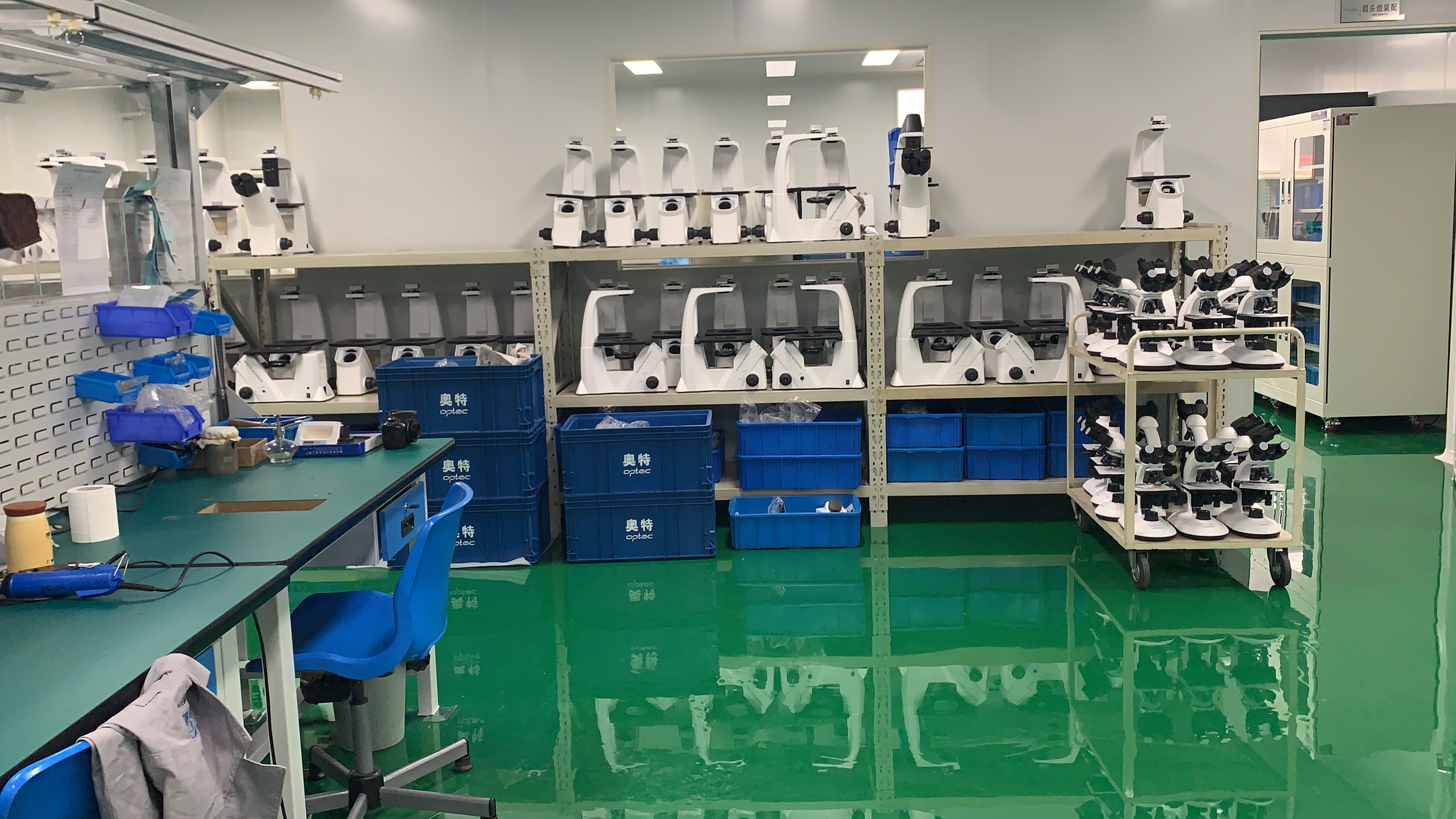
Selecting the right microscope is a foundational decision for any laboratory, research facility, or industrial quality-control department. The wide variety of optical configurations—from bright field and phase contrast to polarizing and dark field—can make procurement challenging without a clear understanding of how each type aligns with specific applications. This guide provides a structured overview of common microscope categories, their primary uses, and key specifications, with reference to the product lines of Chongqing Scope Instrument Co., Ltd., a manufacturer established in 2017 that specializes in laboratory and medical training instruments and metallographic equipment.
Why Microscope Type Matters
Different microscopy techniques are optimized for different sample properties. Bright field microscopy is the standard for stained biological specimens. Dark field enhances contrast for unstained or transparent samples. Phase contrast is essential for observing living cells without staining. Polarizing microscopy reveals birefringence in minerals, crystals, and certain polymers. Inverted microscopes allow observation of cells in culture flasks. Stereo microscopes provide three-dimensional observation of larger objects. Choosing a mismatch between technique and sample leads to poor image quality and inefficient workflows.
Overview of Chongqing Scope’s Microscope Portfolio
Chongqing Scope Instrument Co., Ltd. manufactures a broad range of microscopes, including biological, metallurgical, fluorescence, inverted, and stereo models. The company employs over 100 staff and operates a 5,000 m² facility with an annual production capacity of 30,000 units. Its main products also include hardness testers, metallographic equipment, medical manikins, and laboratory consumables. The company offers OEM and ODM services and serves more than 500 clients worldwide, with export business accounting for 50% of total sales across Europe, Southeast Asia, the Middle East, South America, and Africa.
1. Biological Microscopes (Bright Field, Phase Contrast, Fluorescence)
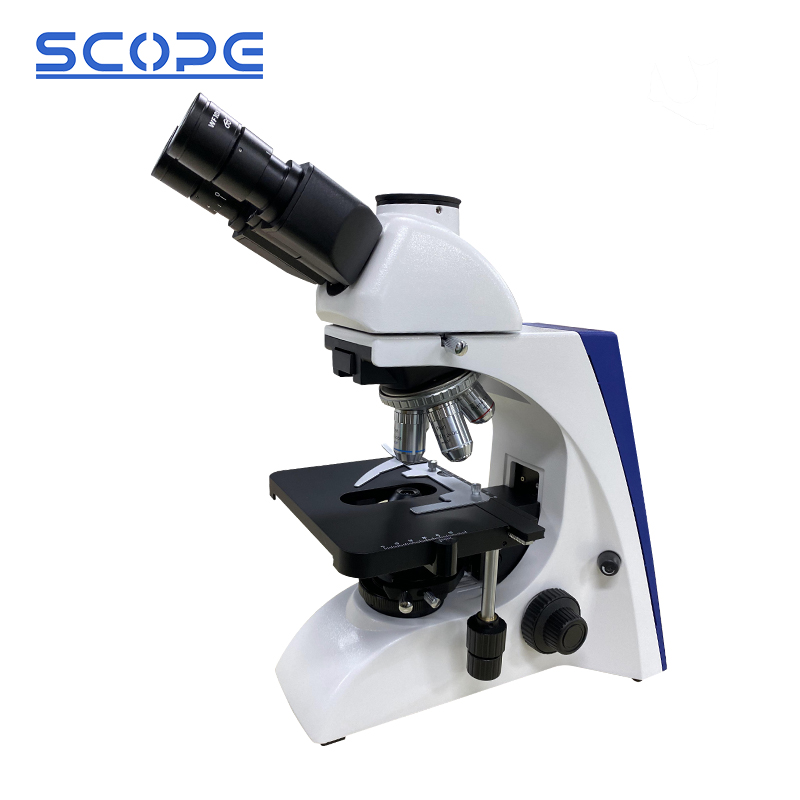
These microscopes are designed for transmitted-light observation of stained or transparent biological specimens. For example, the B301 is a bright field biological microscope with a binocular head, quadplex nosepiece, and a 3W LED illumination. It is intended for biology, education, and laboratory research. The BK5000-PH is a phase contrast biological microscope that uses an infinity optical system with Plan phase contrast objectives (4X, 10X, 40X, 100X), making it suitable for observing unstained live cells. The BK5000-FL (fluorescence) includes blue, green, violet, and ultraviolet filters, enabling fluorescence imaging for biological research. All biological models are constructed from aluminum alloy and glass, except the BK5000 series which uses stainless steel and glass.
2. Metallurgical and Industrial Microscopes
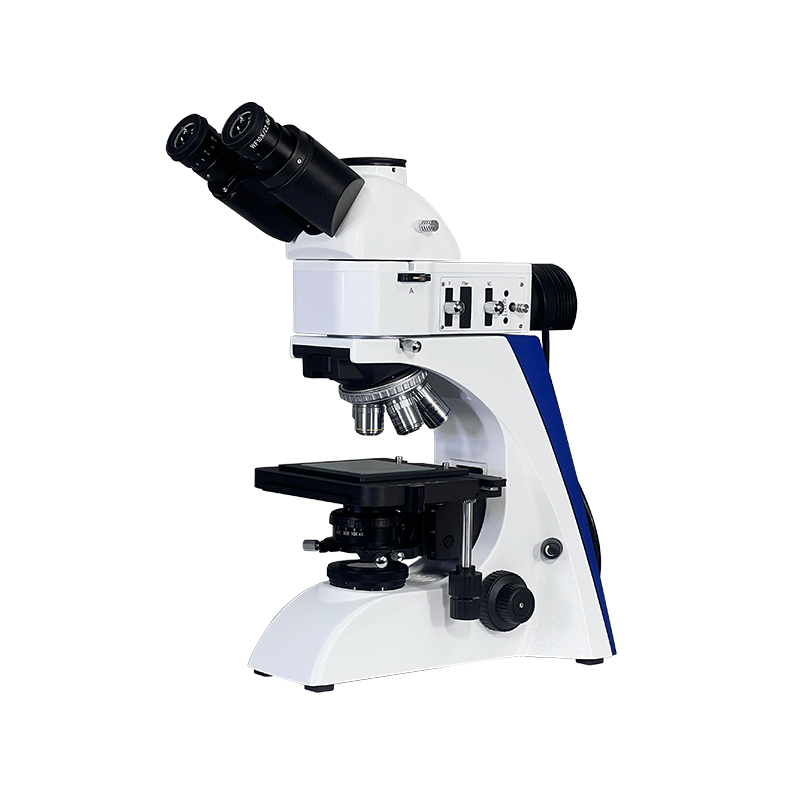
These upright microscopes use reflected light to examine opaque samples such as metals, ceramics, and minerals. The MIT300 is an industrial metallurgical microscope with a trinocular head, LWD infinity plan objectives, and a polarizing unit (polarizer and analyzer). It is intended for industrial and mineral research. The MIT300D adds dark field capability with M Plan objectives (5X–50X) that support both bright and dark field observation, and uses a 12V/50W halogen reflecting illumination. The MIT500 offers semi-apochromatic plan objectives (5X–40X) and a 5W LED dual illumination system, with a mechanical stage measuring 182×140 mm for larger samples.
3. Polarizing and Petrographic Microscopes
These microscopes are essential for geology, mineralogy, and materials science. The BK-POL is a polarizing microscope with a binocular head, non-stress infinity plan objectives, a 174 mm revolving round stage, and polarizing media including an analyzer and Bertrand lens. The BK-POLF is a reflecting petrographic microscope with semi-apochromatic LWD objectives (5X–50X), a quartz wedge, and λ/4 and λ slip compensators, designed for geological applications. The SMART-POL is a mineralogical microscope with a 0–90° analyzer unit and a 142 mm revolving stage.
4. Inverted Microscopes for Cell Culture and Tissue Studies
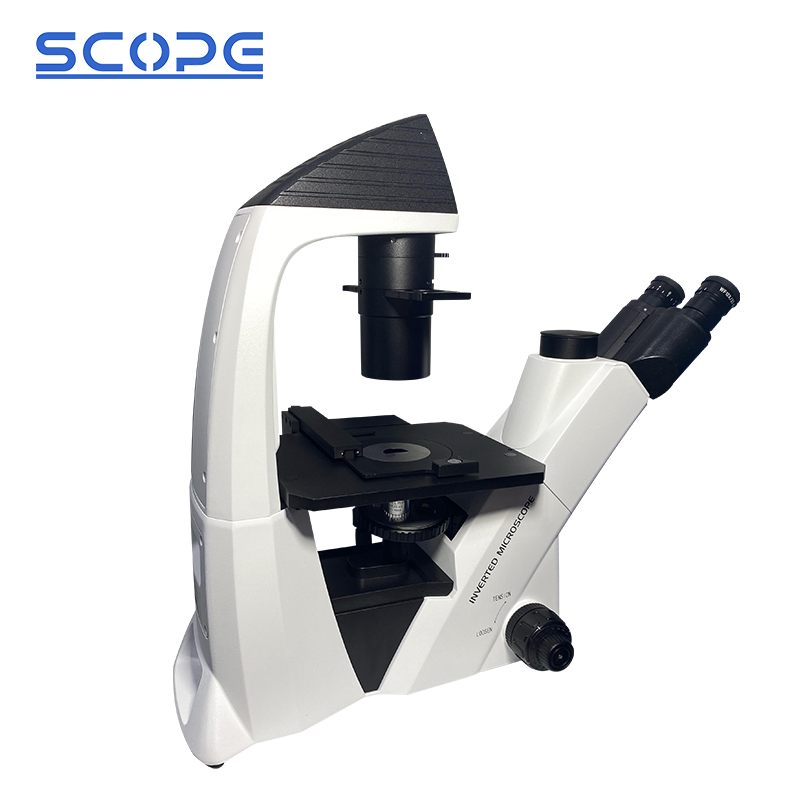
Inverted microscopes place the objectives below the stage, allowing observation of cells in culture dishes or flasks. The BDS400 is an inverted tissue microscope with a trinocular head, LWD infinity phase contrast objectives (10X–40X), and a culture dish holder diameter of 54 mm. It is intended for biology, cell culture, and laboratory research. The BDS500 adds a 4-hole rotating disc phase contrast condenser and Koehler illumination, making it suitable for advanced cell culture and laboratory research.
5. Stereo Microscopes
Stereo microscopes provide a three-dimensional view at lower magnifications, ideal for assembly, inspection, and dissection. The SZ810 is a stereo microscope with a binocular head, zoom range of 0.65X–5.3X, working distance of 110 mm, and interpupillary distance adjustment of 50–75 mm. It is designed for industrial inspection and textile examination.
Step-by-Step Selection Guide for Buyers
- Identify the sample type: Transparent (e.g., biological sections, living cells) → transmitted light. Opaque (e.g., metals, ceramics) → reflected light. Large objects → stereo microscope.
- Choose the contrast technique: Stained specimens → bright field. Unstained or low-contrast specimens → phase contrast or dark field. Birefringent materials → polarizing. Fluorescent labels → fluorescence.
- Select the head configuration: Binocular for routine observation; trinocular for camera attachment. Monocular for teaching or budget-conscious setups.
- Consider the illumination system: LED offers long life and stable color temperature; halogen provides higher intensity for dark field or certain fluorescence applications.
- Evaluate stage size and mechanical features: Larger stages (e.g., 210×241 mm on BDS400) accommodate multiwell plates; coaxial coarse/fine focusing is standard for precise adjustment.
Comparison of Microscope Types
| Type | Typical Applications | Key Optical Features | Example Models |
|---|---|---|---|
| Bright Field Biological | Stained biological samples, education | Transmitted light, Abbe condenser | B301, B302, B204 |
| Phase Contrast Biological | Live cell imaging, unstained specimens | Phase objectives, turret condenser | BK5000-PH |
| Fluorescence Biological | Immunofluorescence, cell biology | Fluorescence filters (B,G,V,UV) | BK5000-FL |
| Metallurgical (Bright/Dark Field) | Materials science, metallography | Reflected light, polarizing unit | MIT300, MIT300D, MIT500 |
| Polarizing / Petrographic | Geology, mineralogy, crystallography | Non-stress objectives, rotating stage, compensators | BK-POL, BK-POLF, SMART-POL |
| Inverted (Tissue/Cell Culture) | Cell culture, live cell assays | LWD objectives, culture dish holder, phase contrast | BDS400, BDS500 |
| Stereo | Inspection, dissection, textile testing | Zoom optics, long working distance | SZ810 |
Frequently Asked Questions
1. What certifications does Chongqing Scope provide for its microscopes?
Chongqing Scope can provide ISO9001, ISO14001, ISO45001, ISO13485, CE, and RoHS certificates for export. Additional documents such as CO, Form E, and Form F are also available upon request.
2. Does Chongqing Scope offer OEM or custom microscope solutions?
Yes, the company offers OEM and ODM services for microscopes and other products. Customization options include logo printing on the instrument body or custom label attachment, subject to batch quantity requirements.
3. What are the main product categories besides microscopes?
Chongqing Scope also manufactures hardness testers (Brinell, Vickers, Rockwell, micro Vickers), metallographic sample preparation equipment (cutting, mounting, grinding/polishing machines), medical manikins (CPR, nursing, anatomical models), and a wide range of laboratory consumables.
4. What is the typical export packaging for microscopes?
Export packaging uses neutral packaging without logos, in either cardboard boxes or wooden boxes. All packaging is prepared according to export standards.

Conclusion
Understanding the relationship between microscope type and application is critical for efficient laboratory and industrial procurement. Chongqing Scope Instrument Co., Ltd. provides a comprehensive range of microscopes spanning biological, metallurgical, polarizing, inverted, and stereo categories, with supporting OEM/ODM flexibility and international certifications. To explore the full product catalog and technical specifications, download the company brochure below.
Download Chongqing Scope Product Brochure (PDF)