
Pericardial Puncture vs. Intracardiac Injection Training Models: A Comparison Guide
Pericardial Puncture vs. Intracardiac Injection Training Models: A Comparison Guide
Choosing between a manikin built for pericardial puncture and intracardiac injection training and a manikin built for closed chest drainage comes down to three questions: which anatomical landmarks the learner must palpate, which layers must be punctured and replaced, and which fluid or aspiration behaviour the procedure has to reproduce. The SC-CK817 clinical manikin from Chongqing Scope Instrument is specified for puncture positioning training with a palpable suprasternal notch, upper edge of the sternal manubrium and anterior superior iliac spine, while the SC-L66 puncture manikin is specified for closed drainage of pneumothorax and hydrothorax. This guide compares both models, plus the adjacent options in the same range, so that training centres, medical schools and distributors can match a manikin to a curriculum instead of to a photograph.
Why “Puncture Manikin” Is Not a Single Buying Category
A puncture manikin is not one product. It is a family of torso, chest and regional models in which the puncture site, the tissue layers, the replaceable surfaces and the simulated fluid behaviour all change with the procedure being taught. A model that teaches a learner where to place a needle for a thoracic approach is not the same product as a model that teaches how to manage a chest drain after that needle has been placed.
The mismatch usually appears after delivery, not before purchase. Three failure patterns are common in training-centre procurement:
- Landmark mismatch. The purchased manikin has a realistic torso but the specific surface landmarks the instructor teaches against — the suprasternal notch, the sternal manubrium, the anterior superior iliac spine — are either absent or not reliably palpable, so learners cannot confirm needle placement by touch.
- Layer mismatch. The model accepts a needle, but the skin or puncture cavity cannot be replaced, so the first cohort consumes the product and subsequent cohorts train on a scarred surface with unreliable tactile feedback.
- Procedure mismatch. A closed-drainage trainer is ordered for a curriculum built around puncture positioning, or the reverse, because both are sold under the same generic term.
For pericardial puncture and intracardiac injection training specifically, the decision is compounded by the fact that these are landmark-driven procedures practised on the thoracic wall, while the most commonly paired manikin in the same product family, the SC-L66, is a chest-trauma drainage trainer. They are complementary rather than interchangeable, and the rest of this guide sets out how to decide between them, when to buy both, and what to verify before the purchase order is signed.
Industry Background: Why Procedure-Specific Manikins Are Growing
Simulation hardware sits in an expanding segment of medical education. Grand View Research values the global medical simulation market at USD 1.9 billion in 2025 and projects it to reach USD 6.7 billion by 2033. Within that market, healthcare anatomical models — the product category that includes puncture and injection manikins — held the largest share at approximately 41.4% in 2025, according to the same source.
Unit volumes tell a similar story. Global Insight Services estimated the training manikins market at 1.2 million units in 2024, with projections toward 2 million units by 2028. Asia-Pacific is the fastest-growing region, with an expected CAGR of 18.2% through 2033 (Grand View Research). Regulatory pressure is part of the driver: China’s National Medical Commission mandated simulation labs for the accreditation of new medical schools as of 2024–2025, which pushes institutions toward building or expanding skills laboratories rather than relying on clinical exposure alone.
Market sizing of this kind should be read with care. Published estimates diverge significantly because scopes differ: The Insight Partners reported USD 3.17 billion for 2024 and WiseGuyReports reported USD 600 million for the same year, reflecting the difference between figures that include software and services and figures that count hardware manikins only. For a buyer, the practical takeaway is not the exact number but the direction: demand for reusable, procedure-specific hardware is rising while institutional budgets remain constrained.
On the supply side, the recognised global competitors in medical manikins and simulation include Laerdal Medical, CAE Inc., Gaumard Scientific and Kyoto Kagaku, according to MarketsandMarkets. Manufacturing expectations are anchored by ISO 13485:2016, the internationally recognised Quality Management Systems standard for the design and manufacture of medical devices, including simulation manikins. Buyers comparing a regional manufacturer against these established names should therefore test the supplier on documented quality management, replaceable-part supply and lead time rather than on brand recognition alone.
What Each Procedure Actually Demands From a Training Model
Before comparing models, it helps to state the requirements each procedure generates. These requirements are what the purchase decision should be scored against.
Pericardial puncture (pericardiocentesis) training requirements
- Surface landmarks that can be found by touch. The trainee must be able to locate the sternum, the suprasternal notch, the xiphoid region and the costal margin before any needle is inserted, because positioning is judged by palpation first.
- Soft tissue with realistic compliance. The chest wall must accept a needle without the surface tearing or the tract collapsing, since repeated attempts are the point of the exercise.
- Replaceable puncture layers. A pericardial puncture trainer is only economical if the skin and the simulated cavity underneath can be swapped out after repeated use.
- Positioning practice. Supine patient positioning and instructor-led landmark identification are part of the skill, not a preliminary to it.
Intracardiac injection training requirements
- Elastic, high-fidelity chest wall. The model must tolerate intercostal or subxiphoid approaches without permanent deformation of the surface.
- Aspiration and hollow-feel feedback. The learner needs a tactile signal that the needle has entered the intended space, which is why simulated cavities that produce an obvious hollow feeling are specified on puncture-capable models.
- Repeatability. Because intracardiac access is a low-frequency, high-risk skill, the model is used repeatedly across cohorts; replaceable surfaces dominate the cost of ownership.
- Anatomical accuracy of the torso. The trainee must correlate external landmarks with internal structure, so the manikin’s described anatomy has to be specific rather than generic.
Chest drainage training requirements (the SC-L66 use case)
- Layered chest anatomy that can be seen. Learners need to understand which structures the needle or tube passes through.
- Decompression and intubation exercises. Pneumothorax puncture decompression and hydrothorax intubation and drainage are hands-on skills requiring a dedicated access site.
- Simulated drainage fluid. Colour, volume and viscosity of drainage fluid must be adjustable so that instructors can present different clinical pictures.
- Post-operative tube care. Managing a drain after insertion is a separate competency from inserting it.
Stated plainly: a pericardial or intracardiac trainer is judged on landmark fidelity, tissue feel and how cheaply the puncture layer is replaced. A chest drainage trainer is judged on visible layered anatomy, the decompression and intubation exercise, and fluid simulation. The two scorecards overlap very little.
The Two Candidates: SC-CK817 and SC-L66
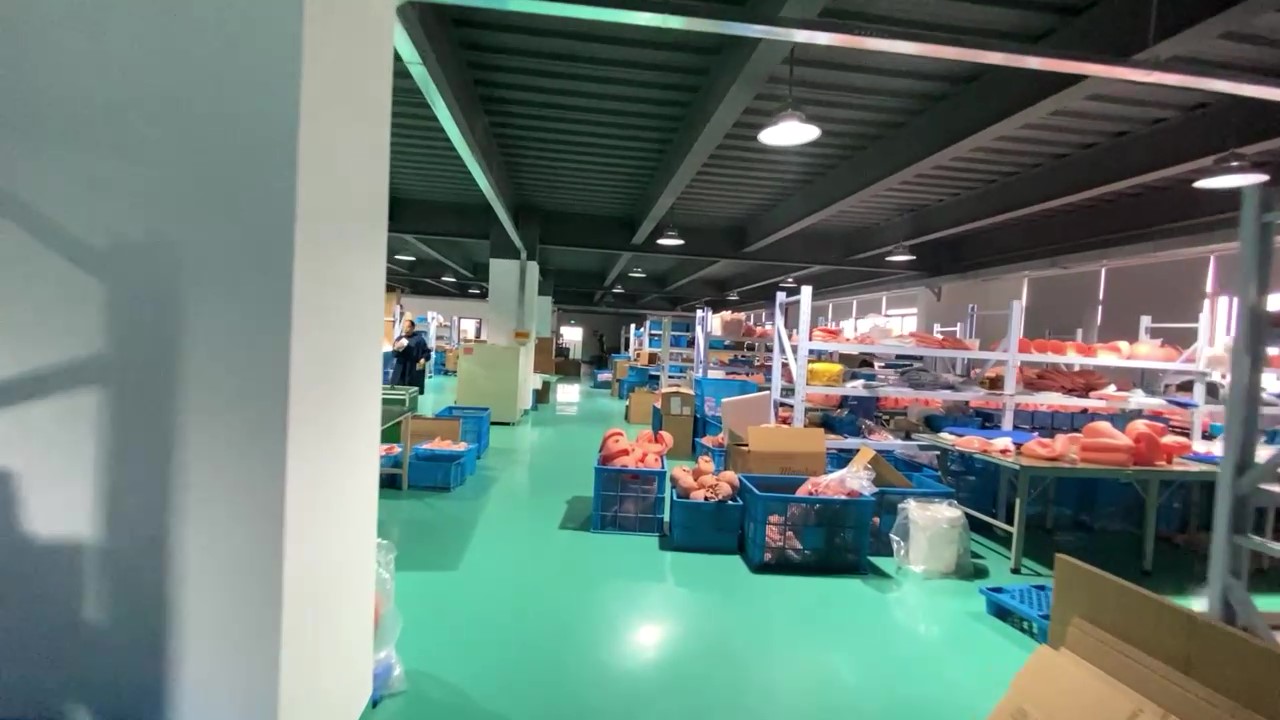
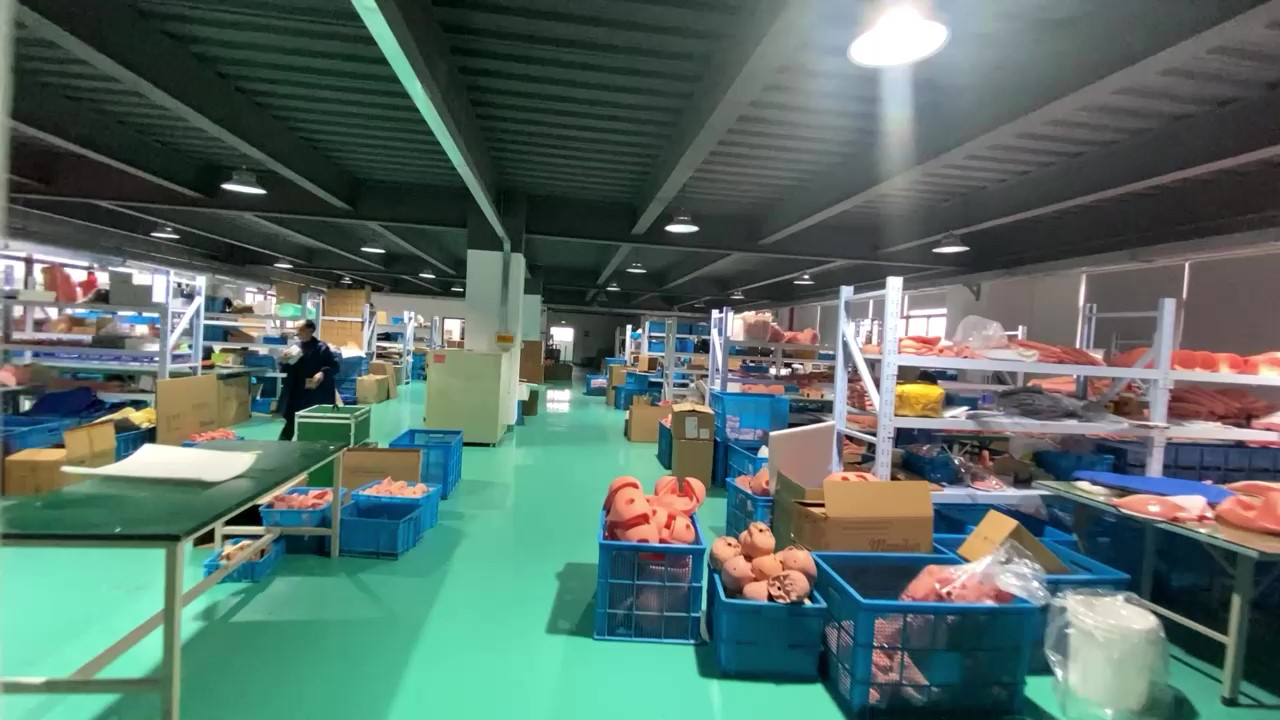
Both models come from the clinical manikin range of Chongqing Scope Instrument Co., Ltd., a Chongqing-based supplier of laboratory and medical training instruments. The company was founded in 2017, operates a 5,000 m² factory with 100+ employees and a 20-engineer R&D team, and reports annual output of 30,000 units with roughly 50% of production exported to Europe, Southeast Asia, the Middle East, South America and Africa. Its medical manikins are made of PVC, a material selected for durability, resistance to deformation and a high degree of authenticity.
SC-CK817 — Clinical Manikin (puncture positioning and sternal access)
The SC-CK817 is a clinical manikin built around a simulated standardized patient placed in the supine position, with soft texture, realistic touch and a lifelike appearance. Its published features are:
- Accurate anatomical landmarks that can be clearly palpated — the suprasternal notch, the upper edge of the sternal manubrium and the anterior superior iliac spine — which facilitates puncture positioning.
- Anterior superior iliac spine puncture training and sternal manubrium puncture training. The simulated bone marrow cavity can be penetrated with an obvious hollow feeling and bone marrow can be extracted.
- Skin and simulated bone marrow cavity that can be easily replaced.
For a curriculum that starts with landmark identification and moves on to needle positioning on the thoracic wall, this is the model whose specified features map directly onto the skill: the trainee palpates, positions, punctures, and receives a hollow-feel confirmation at the target.
SC-L66 — Puncture Manikin (chest trauma and closed drainage)
The SC-L66 is a puncture manikin specified for a different competency set:
- Closed drainage operation training for pneumothorax and hydrothorax after chest trauma, plus post-operative care practice of drainage tubes.
- Two windows on the right side of the chest that display the anatomical structures of each layer of the chest.
- Pneumothorax puncture decompression and hydrothorax intubation and drainage exercises performed on the left thorax.
- Drainage fluid whose colour, volume and viscosity can be adjusted by the instructor.
Where the SC-CK817 trains the moment before the needle enters, the SC-L66 trains what happens from decompression through to drain management, including the anatomical reasoning that the right-chest windows make visible.
Step-by-Step: How to Decide Between the Two
The following sequence works for a single training centre buying its first puncture manikin and for a distributor assembling a portfolio for several client institutions.
- Write the procedure list first, in verbs. “Palpate the suprasternal notch and sternal manubrium and position the needle” is a different requirement from “perform pneumothorax puncture decompression and manage the drain.” If both appear in the curriculum, you are selecting two models, not one.
- Map the landmarks you teach against the landmarks specified. The SC-CK817 sheet names the suprasternal notch, the upper edge of the sternal manubrium and the anterior superior iliac spine as clearly palpable. If your instructors teach against different reference points, that is the moment to raise it with the supplier, not after delivery.
- Decide whether simulated fluid is required. If the learning objective includes interpreting drainage fluid colour, volume or viscosity, the SC-L66 covers it. If the objective stops at needle placement and aspiration feel, fluid simulation is not a decision criterion.
- Model the replaceable-part path. Ask which parts are designed to be replaced (SC-CK817 specifies skin and simulated bone marrow cavity), how they are ordered, and how many replacement cycles the curriculum will need per academic year. This is the line item that determines whether the manikin is still usable in year three.
- Match the model to learner level. Positioning and palpation exercises suit early clinical learners because the feedback is binary and observable. Drainage management suits learners who already understand thoracic anatomy, because the decisions are clinical rather than technical.
- Verify material and lifecycle behaviour. PVC construction is specified for durability and deformation resistance. Confirm the operating temperature guidance and the recommended replacement interval, since deformation is a known risk when a polymer model is used outside its stated conditions.
- Collect compliance documents before quoting internally. Ask for the certificate set and the customs documents your country requires — this is usually procurement’s bottleneck, not the teaching team’s.
- Plan supply against lead time, not against hope. Decide whether you are buying an evaluation unit or a cohort-level order, and align the delivery date with the semester calendar.
Use Cases: Which Model for Which Programme
1. Emergency medicine and acute care residency
Residents need landmark identification and needle positioning under time pressure, then the downstream management of thoracic injury. A workable sequence is SC-CK817 for positioning and palpation drills in the first phase, then SC-L66 for pneumothorax decompression, hydrothorax intubation and drain care in the second. The two models divide the skill at the point where the trainee’s decision-making changes from tactile to clinical.
2. Medical school or nursing college clinical skills laboratory
Skills laboratories serve large cohorts with limited instructor time, so throughput and replacement cost matter as much as realism. A single-function, targeted trainer with replaceable skin and a straightforward operating concept is easier to run in a rotation of twenty students than an integrated multi-function system that requires a dedicated operating interface. Where the laboratory also teaches broad nursing procedures, the SC-H130A nursing manikin covers thoracic cavity, abdominal cavity, liver, bone marrow and lumbar puncture alongside intubation and catheterisation skills, and can reduce the number of separate units a lab has to schedule.
3. Distributor or training institute building a puncture portfolio
Distributors are usually asked for a “puncture manikin” without a procedure list attached. Selling a portfolio rather than a single SKU starts with the same question set used above, then maps client curricula onto three or four models: SC-CK817 for thoracic and pelvic landmark puncture positioning, SC-L66 for chest trauma drainage, SC-CK20135 for knee arthrocentesis positioning (its adult-leg module includes the tibia, collateral and cruciate ligaments, patellar ligament, fat pad, meniscus and synovial sac), and SC-H130A for multi-skill nursing programmes. That framing positions the distributor as a curriculum adviser rather than a catalogue reseller.
Comparison Table
| Model | Type & material | Procedures specified | Key anatomical features | Replaceable parts | Best fit |
|---|---|---|---|---|---|
| SC-CK817 | Clinical manikin; PVC | Sternal manubrium puncture training; anterior superior iliac spine puncture training | Supine simulated standardized patient; palpable suprasternal notch, upper edge of sternal manubrium and anterior superior iliac spine; simulated bone marrow cavity with hollow feel and marrow extraction | Skin and simulated bone marrow cavity | Landmark palpation and puncture positioning on the thoracic wall and pelvis |
| SC-L66 | Puncture manikin; PVC | Closed drainage of pneumothorax and hydrothorax after chest trauma; post-operative drainage tube care | Two right-chest windows showing each anatomical layer; left thorax used for pneumothorax puncture decompression and hydrothorax intubation and drainage; adjustable drainage fluid colour, volume and viscosity | Not specified in the published sheet — confirm with supplier | Chest decompression, chest tube insertion and drainage management |
| SC-CK20135 | Clinical manikin; PVC | Knee arthrocentesis positioning; palpation techniques related to puncture | Adult leg with accurate knee joint structure: tibia, collateral and cruciate ligaments, patellar ligament, fat pad, meniscus, synovial sac | Not specified in the published sheet — confirm with supplier | Orthopaedic and joint puncture curricula |
| SC-H130A | Nursing manikin; PVC | Thoracic cavity, abdominal cavity, liver, bone marrow and lumbar puncture, plus intubation, catheterisation, injection and holistic nursing procedures | Full-body nursing manikin with thoracic and abdominal organ structures | Not specified in the published sheet — confirm with supplier | Broad nursing and clinical skills programmes where one unit serves many lessons |
Cost, Durability and Lifecycle: The Numbers Behind the Choice
Purchase price is the smallest part of the decision. The cost that matters is the cost per training hour over the life of the model, which is driven by how many times the unit can be used and how much of it is replaceable.
Chongqing Scope states that its manikins withstand over 5,000 uses and are 30% more durable than comparable single-function simulators. That figure is a supplier performance claim rather than an independently audited test result, so it is worth testing against your own usage assumptions: multiply the number of learners per cohort by the number of puncture attempts per learner, and compare the total against the stated figure before treating it as a planning input.
On total cost of ownership, the supplier positions its targeted single-function trainers against integrated simulators — including multi-function systems such as the Annie simulator, which combine several functions and use a dedicated operating system. The trade-off is genuine in both directions: integrated systems cover more procedures in one unit but require more complex operation and support variable teaching situations, while targeted trainers deliver a precise operational objective at a lower price with simpler operation. For a programme that teaches one procedure well across a large cohort, the targeted trainer usually wins on cost per learner; for a programme that needs breadth in a single footprint, an integrated system may justify its complexity.
Commercial terms reinforce the comparison. Chongqing Scope lists a 1-year warranty with full after-sales support and 24/7 online after-sales technical support, which shortens the downtime when a model is taken out of rotation. The principal lifecycle risk is product deformation: the stated control method is to operate the manikin at a suitable temperature and to replace the unit after the recommended number of uses, with the appropriate operating temperature reminded in the instructions before use. Budget for skins and puncture cavities as recurring consumables, because that is what keeps the tactile feedback consistent for the next cohort.
Supply, Lead Time and Long-Term Sourcing
For institutions and distributors placing repeat orders, the supply parameters matter as much as the product specification. Chongqing Scope reports a monthly production capacity of 3,000 units, a typical production lead time of 30 to 45 days, and a minimum order quantity of 20 units. Delivery terms cover EXW, FOB, CFR, CIF and DAP, payment is by T/T, and factory inspection is offered as the acceptance method, which allows a buyer or third-party inspector to verify the shipment before it leaves the factory.
Export packaging is neutral, without logos, in cardboard boxes or wooden boxes prepared to export standards. Where additional customs documents are needed, such as CO, Form E or Form F, these can be provided. The company also provides ISO9001, ISO14001, ISO45001, ISO13485, CE and RoHS certificates for export, and offers OEM and ODM services, including logo printing on the machine after technical verification or specially customised logo labels attached to the machine.
The long-term consideration for a training institution is continuity rather than the first shipment. Three questions predict whether a supplier will still support the model in year three: whether replaceable skins and puncture cavities remain available as standard parts, whether technical support responds when a unit is withdrawn from teaching, and whether production capacity can absorb a cohort-level order without slipping past the semester start. The stated 3,000-unit monthly capacity, 30–45 day lead time and 24/7 online after-sales technical support address those three questions directly, and they are the terms worth writing into a framework agreement rather than negotiating order by order.

FAQ: Pericardial Puncture, Intracardiac Injection and Puncture Manikin Selection
Do SC-CK817 and SC-L66 come with the certifications and customs documents importers need?
Yes. Chongqing Scope Instrument provides official export certificates including ISO9001, ISO14001, ISO45001, ISO13485, CE and RoHS. Export packaging is neutral, with no logos, in cardboard or wooden boxes prepared according to export standards. Where clearance requires additional documents such as CO, Form E or Form F, these can also be provided. For context, ISO 13485:2016 is the internationally recognised Quality Management Systems standard for the design and manufacture of medical devices, including simulation manikins, so the certificate set is the first document to request from any manikin supplier.
Can one manikin cover both pericardial or intracardiac puncture training and chest drainage training?
No single standard configuration covers both competency sets. The SC-CK817 is specified for puncture positioning with clearly palpable suprasternal notch, upper edge of sternal manubrium and anterior superior iliac spine landmarks, sternal manubrium puncture training, and a simulated bone marrow cavity that can be penetrated with an obvious hollow feeling, with replaceable skin and cavity. The SC-L66 is specified for closed drainage of pneumothorax and hydrothorax after chest trauma, post-operative drainage tube care, pneumothorax puncture decompression and hydrothorax intubation and drainage, with adjustable drainage fluid colour, volume and viscosity. Programmes that teach both stages normally buy both models and sequence them; where a curriculum requires a procedure-specific pericardial or intracardiac puncture track, confirm the current configuration and accessories with the supplier before ordering.
What drives the total cost of ownership of a puncture manikin?
Three factors: how many uses the unit withstands, how much of it is replaceable, and how much downtime it incurs. Chongqing Scope states that its manikins withstand over 5,000 uses and are 30% more durable than comparable single-function simulators, and offers a 1-year warranty with 24/7 online after-sales technical support. The SC-CK817 specifies a replaceable skin and simulated bone marrow cavity, so the recurring cost is replacement parts rather than new units. The main lifecycle risk is product deformation, which is controlled by operating at a suitable temperature and replacing the unit after the recommended number of uses, with operating temperature reminders in the pre-use instructions. Compared with integrated multi-function simulators such as the Annie simulator — which combine several functions and use a dedicated operating system with more complex operation — targeted trainers generally deliver a lower total cost of ownership for programmes that teach a defined procedure to a large cohort.
Can we evaluate a model before placing a production order?
Evaluation starts with the specification sheet and the accessory list, then with an inspection-based acceptance process: factory inspection is offered as the acceptance method, delivery terms include EXW, FOB, CFR, CIF and DAP, and payment is by T/T. Production orders are quoted at a minimum order quantity of 20 units, and you should confirm the current minimum quantity for your specific order type when you request a quote. To discuss an evaluation unit, current pricing or the accessory configuration you need, contact claire@cqscope.com or WhatsApp +86 15223521781, and download the company brochure at the Chongqing Scope product brochure to share specifications with your teaching team.
What production lead time and capacity should we plan around?
Chongqing Scope reports a monthly production capacity of 3,000 units, a typical production lead time of 30 to 45 days, and a minimum order quantity of 20 units. For institutions, that lead time should be mapped backwards from the semester start rather than forwards from the purchase order, especially when the order includes replacement skins and puncture cavities. For distributors, the same figures inform how much buffer stock to hold: a 30–45 day replenishment cycle sets the minimum inventory that keeps a client institution supplied between orders.
Conclusion: A Decision Rule You Can Apply Today
If the curriculum centres on where the needle goes — landmark palpation, patient positioning and puncture positioning on the thoracic wall or pelvis — the SC-CK817 is the closer fit, because its specified features are the palpable suprasternal notch, the upper edge of the sternal manubrium and the anterior superior iliac spine, with a replaceable skin and simulated bone marrow cavity that keep the tactile feedback consistent across cohorts. If the curriculum centres on what happens to the chest after injury — decompression, intubation, drainage and drain management — the SC-L66 is the closer fit, because its specified features are the layered right-chest anatomy windows, the left-thorax decompression and drainage site, and adjustable drainage fluid. Most advanced programmes will eventually buy both and sequence them, starting with positioning and moving to management. Before any order, apply the same three checks to either model: confirm the landmarks your instructors teach are the landmarks specified, confirm which parts are replaceable and what they cost per year, and confirm the lead time against your semester calendar.
Next Step: Match the Model to Your Curriculum
Send your procedure list and cohort size to claire@cqscope.com, or message WhatsApp +86 15223521781, and we will confirm which configuration suits your programme, what the current minimum order quantity and lead time are for your order type, and which replacement parts to plan into your annual budget. You can also download the Chongqing Scope Instrument brochure for the full clinical manikin range. Chongqing Scope Instrument Co., Ltd. is located at 701, Longhushuijinguoji, No.164, Xinnan Road, Yubei District, Chongqing, China, and serves training institutions, distributors and OEM partners worldwide.