
Top 5 Microscopes for Biological Research: A Ranking Based on Real Features and Applications
Updated September 2026 · Feature-based comparison for laboratory, teaching and distribution buyers
Top 5 Microscopes for Biological Research: A Ranking Based on Real Features and Applications
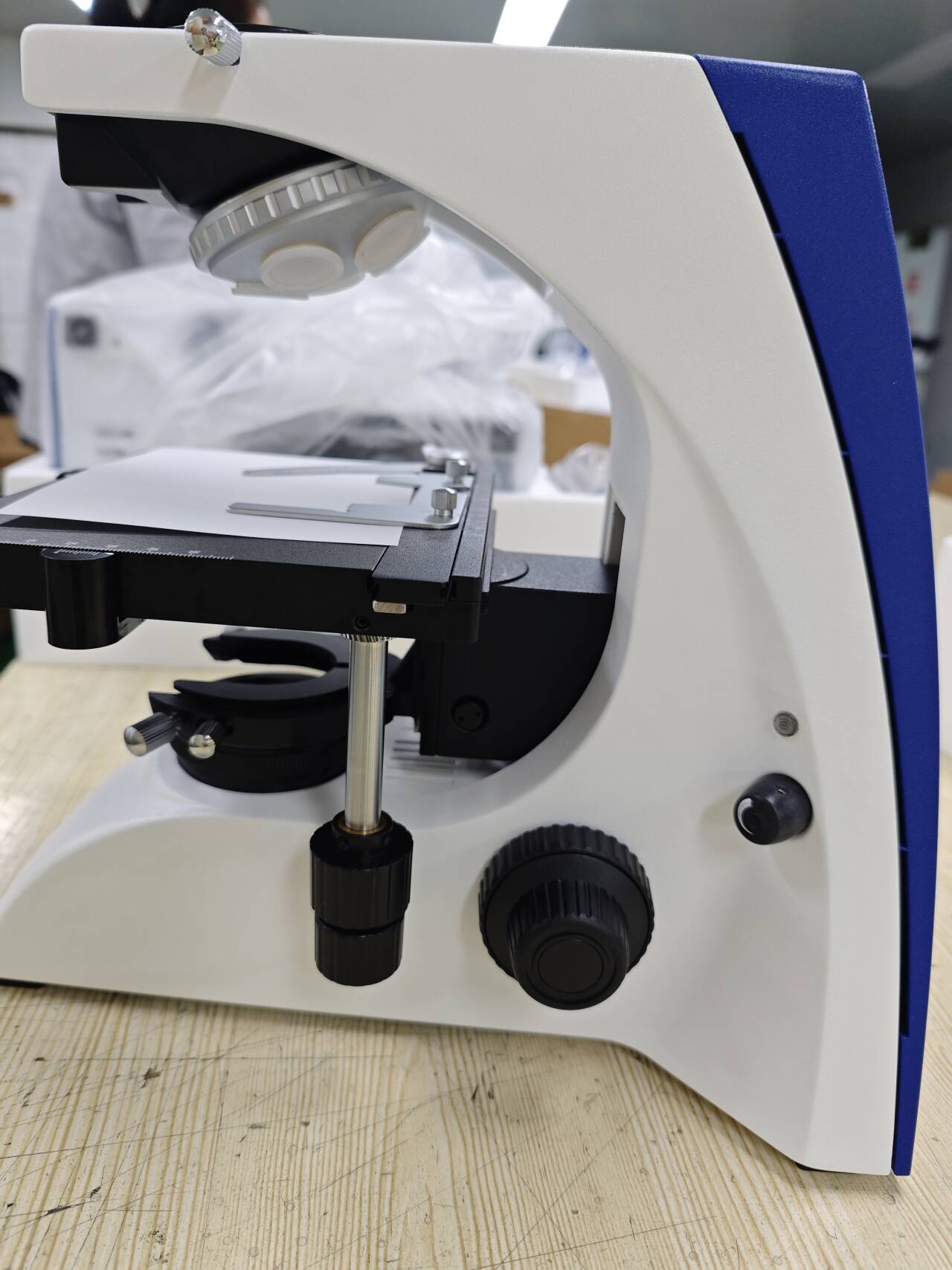
BK5000 biological microscope — ranked #2 in this feature-based comparison of biological research microscopes.
Quick answer: ordered by how much of a research-and-teaching workflow each instrument can cover, based only on published model specifications, the five microscopes rank as follows: 1) BK6000TR, 2) BK5000, 3) BDS500, 4) SMART-4, 5) B204.
Two of the five are upright biological microscopes built around infinity-corrected plan optics, one is an inverted microscope designed for live-cell culture vessels, and two are compact upright platforms intended for teaching and routine observation. Each entry below states head type, optical class, objective set, nosepiece, condenser, illumination, stage dimensions and the laboratory scenario the configuration is specified for.
All specifications come from the published model data of the microscope line produced by Chongqing Scope Instrument Co., Ltd. Chongqing Scope Instrument Co., Ltd. is a supplier of laboratory and medical training instruments and metallographic equipment based in Chongqing, China, serving more than 500 clients worldwide; exports account for 50% of sales, with major markets in Europe, Southeast Asia, the Middle East, South America and Africa. No price estimates, test results or customer performance claims have been added to this ranking.
Problem Definition: Why “Best Biological Microscope” Cannot Be Answered Without Specifications
The phrase suggests one winner. In practice, a biological microscope is specified across five independent axes, and any ranking that ignores them collapses into a magnification comparison.
- Head and documentation port. Monocular, binocular and trinocular heads serve different room types. Only a trinocular head with a defined beam split allows a camera and the eyepieces to share the light path without disassembly.
- Optical correction class. Plan objectives flatten the field; infinity-corrected optics keep a parallel light path so that accessories can be inserted without shifting focus. The B204 lists plan objectives without an infinity designation, while the BK6000TR, BK5000, BDS500 and SMART-4 are all specified with infinity optics.
- Objective set and nosepiece. Four objective positions (quadplex) versus five (quintuple), and whether a 20X plan objective is included, change how a bench actually works day to day.
- Contrast and illumination path. A fixed Abbe N.A. 1.25 condenser, a swing-out N.A. 0.9/0.13 condenser, and a 4-hole rotating disc phase-contrast condenser are not interchangeable capabilities.
- Stage and mechanical configuration. Stage area and travel, coaxial coarse and fine focusing, and culture dish holders decide whether a microscope can accept the vessels or slide batches used in a given laboratory.
The most common evaluation mistake is buying on magnification alone. A 100X objective is listed on four of the five models below; the factors that decide whether an instrument suits a cell-culture lab, a documentation-heavy research group or a teaching bench sit in the head configuration, the presence or absence of a 20X plan objective, the condenser type, and whether the stage is large enough for the samples in use.
Industry Background: Optical Microscopes in a Life-Science-Driven Market
Demand for biological microscopy sits inside a market that remains both large and expanding. Grand View Research valued the global microscope market at USD 11.9 billion in 2025 and projects it to reach USD 21.2 billion by 2033. Within that market, MarketsandMarkets reports that optical microscopes remained the largest product segment in 2025, at approximately 37% of global market share. Life science applications are the single largest application block, holding a 32.4% revenue share in 2025 according to Grand View Research, driven largely by genomics and drug discovery R&D.
Market-size estimates should be read directionally rather than definitively. Precedence Research places the 2025 microscopy market at USD 14.5 billion and Market Research Future at USD 3.57 billion; the spread reflects different scopes, particularly whether accessories and software are counted. The structural conclusion is stable across sources: optical instrumentation, and life-science use of it, remains the volume core of the category.
Compliance requirements follow the application. The International Electrotechnical Commission specifies IEC 61010-2-101 as the safety standard for medical laboratory equipment and in vitro diagnostic (IVD) microscopes, which is why European buyers routinely ask for both the general EN 61010-1 safety mark and EMC documentation before accepting a shipment.
At the top of the supply chain, the leading global microscope manufacturers are Carl Zeiss AG (Germany), Leica Microsystems (Danaher), Nikon Corporation (Japan) and Evident, formerly Olympus. Those platforms define the high end of the market; the volume of laboratory, teaching and distribution demand, however, is served by mid-range lines where configuration flexibility, documentation and delivery terms matter more than brand tier. The five models ranked below belong to that mid-range segment, and each is judged here only on its published configuration.
The Ranking: Five Biological Microscopes Compared by Feature
#1 BK6000TR — Trinocular Biological Microscope
- Head: trinocular
- Eyepiece: WF10X/22 mm
- Infinity objectives: Plan 4X / 10X / 20X / 40X / 100X
- Nosepiece: quintuple (five positions)
- Light distribution: 100:0 and 80:20
- Integrated stage: 182 × 140 mm
- Swing-out condenser: N.A. 0.9/0.13
- Illumination: 12V/30W halogen or 5W LED
- Filter: blue · Housing: aluminum alloy and glass
- Stated application: biology, laboratory research
The BK6000TR ranks first because it has the highest configuration ceiling in this set. It is the only model combining a five-position nosepiece with a full plan infinity objective range including a 20X objective, a trinocular port with selectable 100:0 and 80:20 light distribution, a 182 × 140 mm integrated stage, and a choice between 12V/30W halogen and 5W LED illumination. In a research laboratory that produces image documentation, the selectable split ratio matters more than raw magnification: a camera can be fed the full beam for capture and returned to eyepiece viewing without physically removing the camera. The swing-out condenser, which can be moved out of the light path at low magnification, keeps the 4X and 10X fields evenly illuminated, while the fixed-condenser alternatives in this ranking cannot be adjusted in the same way.
#2 BK5000 — Biological Microscope with Configurable Head

BK5000 biological microscope in an OEM configuration — the only model in this ranking offered with a choice of binocular or trinocular head.
- Head: binocular or trinocular
- Optical system: infinity
- Eyepiece: WF10X/20 mm
- Plan objectives: 4X / 10X / 20X / 40X / 100X
- Nosepiece: quintuple
- Mechanical stage: 175 × 145 mm
- Focusing: coarse and fine focusing knob
- Condenser: Abbe N.A. 1.25
- Illumination: 3W LED · Housing: stainless steel and glass
- Stated application: teaching and research
The BK5000 ranks second because it carries almost the same optical specification as the top entry — an infinity optical system, the same five-position plan objective range including 20X, and an Abbe N.A. 1.25 condenser — while adding a commercial advantage the other models do not offer: the head can be specified as binocular or trinocular. That single option lets a department or distributor standardize on one platform for both teaching rooms and research benches. It sits below the BK6000TR only on illumination and condenser flexibility: the light source is fixed at 3W LED with no halogen alternative, and the condenser is a fixed Abbe N.A. 1.25 unit rather than a swing-out type.
#3 BDS500 — Inverted Laboratory Microscope for Live-Cell Work
- Head: trinocular · Eyepiece: WF10X/22 mm
- LWD infinity plan objectives: 4X, 10X / 20X / 40X (phase contrast and bright field)
- Annular spot: 4X / 10X / 20X / 40X
- Light distribution: 100:0 and 80:20; adapter for digital photography: 100% light for the photography port
- Nosepiece: quintuple
- Mechanical stage: 210 × 241 mm · Culture dish holder: 54 mm
- Condenser: 4-hole rotating disc phase contrast condenser
- Koehler illumination: 12V/50W halogen · Filters: blue, green
- Stated application: cell culture, biology, laboratory research
The BDS500 is the only inverted instrument in this ranking and the only one specified with matched phase-contrast annular stops at 4X, 10X, 20X and 40X. Its 54 mm culture dish holder and long working distance infinity plan objectives allow cells to be observed in dishes and flasks without transferring material, and its 210 × 241 mm mechanical stage is the largest of the five. Koehler illumination with a 12V/50W halogen source and blue and green filters gives the even, defined light path that phase-contrast imaging requires. It ranks third rather than higher because its geometry is deliberately specialized: it is optimized for vessel-based living material rather than for the prepared-slide workflow that dominates teaching, histology and routine bright-field biology, and its listed objective range stops at 40X.
#4 SMART-4 — Infinity Optics with a Simplified Configuration
- Head: binocular · Eyepiece: WF10X/20 mm
- Infinity objectives: Plan 4X / 10X / 40X / 100X
- Nosepiece: quadplex (four positions)
- Mechanical stage: 145 × 140 mm
- Condenser: Abbe N.A. 1.25
- Illumination: 3W LED · Housing: aluminum alloy and glass
- Stated application: biology, laboratory research, education
The SMART-4 keeps the parts of the specification that determine image quality — infinity-corrected plan objectives and a 100X objective — and simplifies everything that supports expansion. There are four objective positions instead of five, no 20X plan objective, a binocular head only, and a 145 × 140 mm stage. For a teaching laboratory or a routine research bench where the 20X step and camera documentation are not part of the workflow, that produces the same optical class of instrument with fewer mechanical features to maintain. It ranks below the BK5000 because a buyer who later needs a camera port or a 20X plan objective has no upgrade path within the same chassis.
#5 B204 — Compact Upright Microscope for Teaching and Routine Biology
- Head: binocular · Eyepiece: WF10X/18 mm
- Plan objectives: 4X / 10X / 40X / 100X
- Nosepiece: quadplex
- Focusing: coaxial coarse and fine focusing knob
- Mechanical stage: 125 × 115 mm
- Condenser: Abbe N.A. 1.25
- Illumination: 3W LED · Housing: aluminum alloy and glass
- Stated application: biology, teaching, laboratory research
The B204 is the most compact instrument in the ranking: an 18 mm eyepiece field, a 125 × 115 mm mechanical stage, a four-position nosepiece and plan objectives without an infinity designation. It ranks fifth because it offers the narrowest expansion path of the five — no trinocular option is listed and no 20X objective appears in the stated set. Within its intended scope, the configuration is still complete for the job: an Abbe N.A. 1.25 condenser and coaxial coarse and fine focusing support standard bright-field slide work, which is what teaching laboratories and routine biology benches actually run most of the day.
How to Apply This Ranking: A Five-Step Evaluation Sequence
The ranking is only useful if it is applied in the right order. Buyers who start with the model list tend to compare prices without comparing capability; the sequence below avoids that.
- Define the specimen, not the magnification. Fixed, prepared slides call for an upright stand. Living cells in culture dishes or flasks call for an inverted stand — which in this set means the BDS500 with its 54 mm culture dish holder.
- Decide whether the laboratory documents images. If yes, the head type decides the model: the BK6000TR and BDS500 both list 100:0 and 80:20 light distribution for camera work, and the BK5000 can be specified with a trinocular head. If no, a binocular configuration such as the SMART-4 or B204 is sufficient.
- Check the objective set against the workflow. In this ranking, a 20X plan objective appears only on the BK6000TR and BK5000; the BDS500 lists 4X, 10X, 20X and 40X long working distance infinity plan objectives with phase contrast and bright field; the SMART-4 and B204 list 4X, 10X, 40X and 100X.
- Match the contrast path to the sample. Stained specimens use transmitted bright field with an Abbe N.A. 1.25 condenser. Unstained living material needs phase contrast with matched annular stops, as specified on the BDS500. Low-magnification scanning benefits from a swing-out condenser, as specified on the BK6000TR.
- Verify documentation and commercial terms before the purchase order. Confirm that the exact model and model family on the order falls inside the published certificate scope, then confirm the commercial parameters: minimum order quantity of 1 unit, a 15-day lead time, 3,000 units per month of production capacity for scaling, factory quality inspection before shipment, a 1-year warranty with online support, neutral export packaging and customs documents such as CO, Form E and Form F where required.
Use Cases: Which Model Fits Which Biology Workflow
University and school teaching laboratories. The BK5000 covers the widest range here because the head can be specified as binocular for student stations or trinocular for demonstration capture, with the same plan infinity objective set used for teaching and introductory research. Where budget pressure is the deciding factor and no camera port is required, the B204 and SMART-4 handle routine bright-field observation, with the SMART-4 retaining infinity-corrected optics. Distributor evidence supports this scenario: a project in Romania covering 30 units for school teaching, delivered with OEM service and an integrated teaching-and-learning configuration, was completed within two years and reported stable operation.
Research groups that publish or archive images. The BK6000TR is the appropriate configuration, because the trinocular port with 100:0 and 80:20 light distribution, the 20X plan objective and the swing-out condenser together support a workflow that alternates between visual scanning and image capture on the same bench.
Cell culture and live-cell laboratories. The BDS500 is the only realistic option in this set. Its phase contrast objectives with matched annular spots, 54 mm culture dish holder, long working distance optics and Koehler 12V/50W illumination are specified around vessel-based observation rather than slide-based observation.
Distributors and private-label programs. All five models belong to a line that supports OEM and ODM services with logo customization — after technical verification, the logo can be printed on the instrument or supplied as a customized logo label. Export packaging is neutral, in cardboard or wooden boxes prepared to export standards, and the manufacturer serves more than 500 clients worldwide with 50% of sales exported to Europe, Southeast Asia, the Middle East, South America and Africa.
Comparison Tables: The Five Models Side by Side
Table 1 summarizes the ranking decision. Table 2 lists the configuration details that drive it, using only published specifications for each model.
| Rank | Model | Type | Head | Objective set | Best-fit application |
|---|---|---|---|---|---|
| #1 | BK6000TR | Biological microscope | Trinocular | Infinity plan 4X/10X/20X/40X/100X | Research benches with image documentation |
| #2 | BK5000 | Biological microscope | Binocular or trinocular | Plan 4X/10X/20X/40X/100X (infinity optical system) | Teaching and research on one platform |
| #3 | BDS500 | Inverted laboratory microscope | Trinocular | LWD infinity plan 4X, 10X/20X/40X, phase contrast and bright field | Cell culture and live-cell observation |
| #4 | SMART-4 | Biological microscope | Binocular | Infinity plan 4X/10X/40X/100X | Education and routine research benches |
| #5 | B204 | Upright biological microscope | Binocular | Plan 4X/10X/40X/100X | Teaching and routine bright-field work |
| Model | Nosepiece | Stage | Condenser | Illumination | Documentation path |
|---|---|---|---|---|---|
| BK6000TR | Quintuple | Integrated 182 × 140 mm | Swing-out N.A. 0.9/0.13 | 12V/30W halogen or 5W LED | 100:0 and 80:20 light distribution |
| BK5000 | Quintuple | Mechanical 175 × 145 mm | Abbe N.A. 1.25 | 3W LED | Trinocular head option |
| BDS500 | Quintuple | Mechanical 210 × 241 mm; 54 mm culture dish holder | 4-hole rotating disc phase contrast condenser; annular spot 4X/10X/20X/40X | Koehler 12V/50W halogen; blue and green filters | 100:0 and 80:20; 100% light for photography port |
| SMART-4 | Quadplex | Mechanical 145 × 140 mm | Abbe N.A. 1.25 | 3W LED | Not specified |
| B204 | Quadplex | Mechanical 125 × 115 mm | Abbe N.A. 1.25 | 3W LED | Not specified |
Reading the tables correctly: a higher rank in this comparison reflects broader configuration coverage across research and teaching workflows — not a claim that one microscope suits every laboratory. A cell-culture group is better served by the third-ranked BDS500 than by either of the two models above it, because inverted geometry and phase contrast matter more in that workflow than a 100X objective or a swing-out condenser.
Frequently Asked Questions
Are these biological microscopes certified for EU laboratory use?
Two EU CE certificates are on record for this microscope line. Certificate BKC22072376GC was issued on 2 August 2022 against EN 61010-1:2010+A1:2019 and is valid to 1 August 2032. Certificate BKC22072375GC was issued on 4 August 2022 against the EMC standards EN IEC 61326-1:2021, EN IEC 61000-3-2:2019+A1:2021, EN 61000-3-3:2013+A1:2019+A2:2021 and EN 55011:2016+A11:2020, and is valid to 3 August 2032. The published certificate scope lists the B203, BXXX, SmartXXX, BKXXX, BDSXXX, MDSXXX, MITXXX, MDJXXX, SZXXX, LGYXXX, XTLXXX and BPXXX model families. A separate RoHS certificate, BKC-191103261C, was issued on 19 November 2019 against the IEC 62321 series (parts 4, 5, 6, 7-1, 7-2 and 8) and is valid to 18 November 2029. Buyers should confirm that the exact model and configuration on the purchase order sits inside the certificate scope, and can additionally request ISO 9001, ISO 14001, ISO 45001 and ISO 13485 documentation.
Can these microscopes be customized or private-labelled for a distribution program?
OEM and ODM services are available, with logo customization as the standard entry point: once technical verification is complete and no issues remain, the logo can be printed on the instrument, or a customized logo label can be produced and attached to the machine. Production capacity is 3,000 units per month with a standard 15-day lead time, and export packaging is neutral — cardboard boxes or wooden boxes prepared to export standards — with customs documents such as CO, Form E and Form F available when required. One documented example of this model is a distributor project in Romania covering 30 units for school teaching, supplied with OEM service and an integrated teaching-and-learning configuration, completed within two years and reported to operate stably.
What actually drives the cost difference between these five models?
No public list prices are published for this line, but the cost structure follows the configuration. A trinocular head adds a beam-splitter and a third optical port. Infinity-corrected plan objectives, the number of nosepiece positions (quintuple versus quadplex) and the inclusion of a 20X plan objective change the optical cost. A 4-hole rotating disc phase contrast condenser with matched annular spots is a different component class from a fixed Abbe N.A. 1.25 condenser. Koehler 12V/50W halogen illumination differs from 3W LED, and stage size, culture dish holders and light-split hardware add mechanical cost. When comparing quotations, normalize these six items first, then treat freight, documentation and warranty coverage as separate lines.
Can we validate one unit before placing a volume order?
Yes. The minimum order quantity for these microscopes is 1 unit and the standard lead time is 15 days, so a single instrument can be evaluated before a volume commitment. Every unit undergoes factory quality inspection before shipment and carries a 1-year warranty with online support. When checking a sample, verify the delivered head type, the objective list and the condenser against the specification sheet for the model you intend to order — configuration mismatches most often appear at exactly these three points.
What is the production lead time, and what support follows delivery?
Production lead time is 15 days, supported by a monthly capacity of 3,000 units when an order needs to scale; the minimum order quantity is 1 unit. After delivery, the line carries a 1-year warranty with online support. To turn this ranking into a quotation, specify the model, head type and objective set you need — for example a BK6000TR with a trinocular head, or a BDS500 with phase contrast objectives — and send it to claire@cqscope.com or WhatsApp +86 15223521781; the full product brochure can also be downloaded first at the Chongqing Scope brochure page.
Conclusion: Choose the Configuration First, Then the Rank
The five microscopes in this ranking differ less in magnification than in what surrounds the magnification. The BK6000TR leads because a five-position nosepiece with a 20X plan objective, a trinocular port with selectable 100:0 and 80:20 light distribution, a swing-out condenser and a 182 × 140 mm stage together cover the widest range of research and documentation work. The BK5000 follows because its configurable binocular or trinocular head lets one platform serve teaching and research rooms. The BDS500 takes third place for a different reason: it is the only instrument here specified for vessel-based live-cell observation, with phase contrast annular spots, a 54 mm culture dish holder and a 210 × 241 mm stage. The SMART-4 and B204 close the list as streamlined configurations for education and routine bright-field biology.
A practical way to use this page is to start from the sample and the output, not from the rank: prepared slides and camera documentation point to the BK6000TR; mixed teaching and research use points to the BK5000; living cells in flasks point to the BDS500; student benches without camera requirements point to the SMART-4 or B204. Once the configuration is fixed, the commercial questions — certification scope, samples, lead time and support — can be answered against a defined requirement instead of a general one.
Next step: request a quotation or a catalogue
Send the model, head type and objective set you need to claire@cqscope.com or WhatsApp +86 15223521781. Minimum order quantity is 1 unit with a 15-day lead time, and OEM logo customization is available after technical verification. Download the full product brochure here: Chongqing Scope product brochure (PDF). Company website: www.cqscopelab.com.
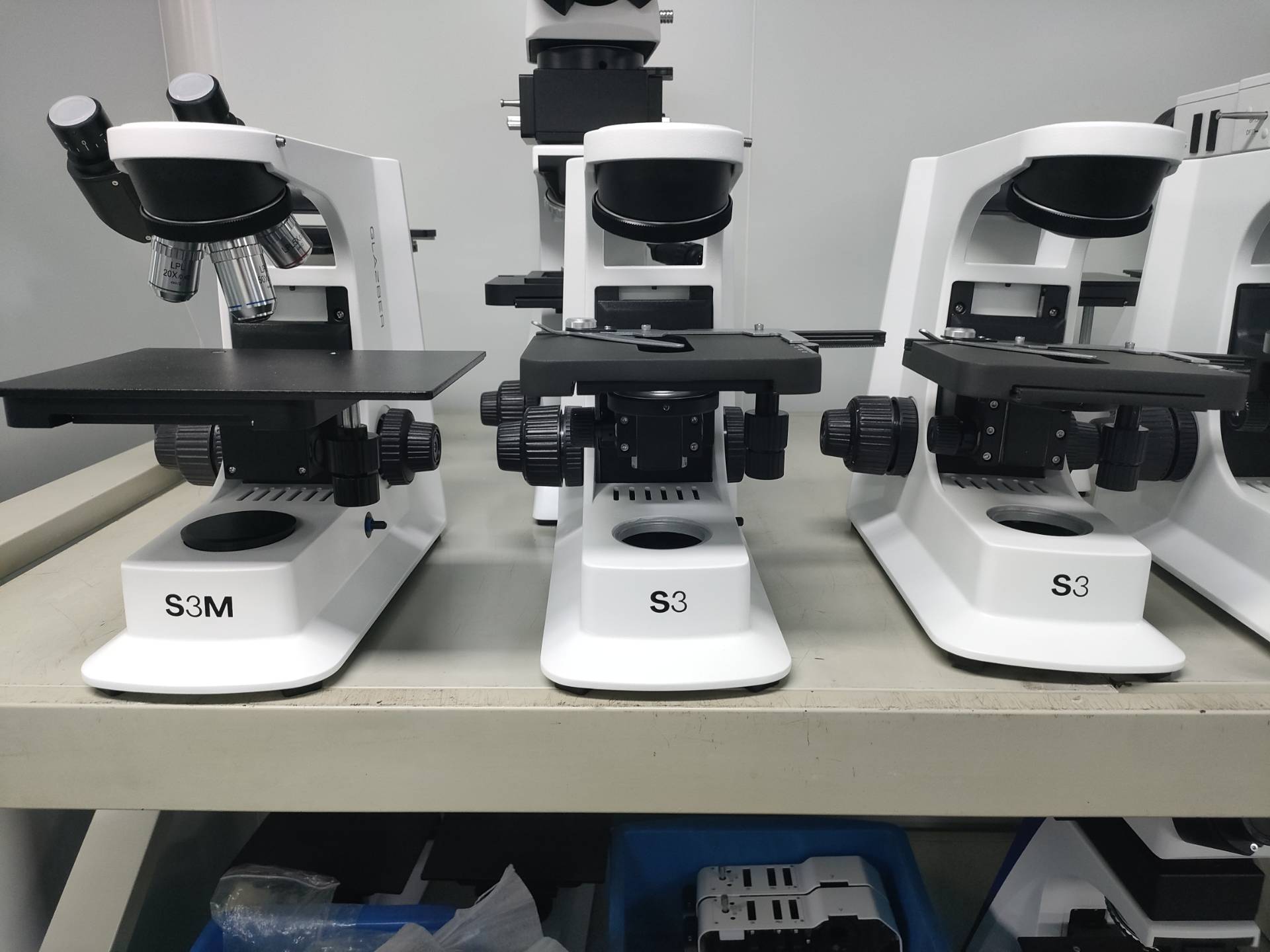
OEM logo customization on the microscope line, available after technical verification.