
Training Rare Thoracic Procedures Safely: SC-CK817 and SC-L66 Manikin Scenario
Pericardial puncture, intracardiac injection and closed drainage of a pneumothorax or hydrothorax are low-frequency, high-consequence procedures. Clinical rotations rarely deliver enough supervised repetitions, and cadaver access is limited by cost, storage and single-use constraints. A two-model manikin sequence closes that repetition gap: the SC-CK817 clinical manikin carries the pericardial puncture and intracardiac injection station, and the SC-L66 puncture manikin carries the closed thoracic drainage station. Used in sequence, the pair moves a trainee from isolated needle technique to a team-based thoracic scenario without touching a patient.
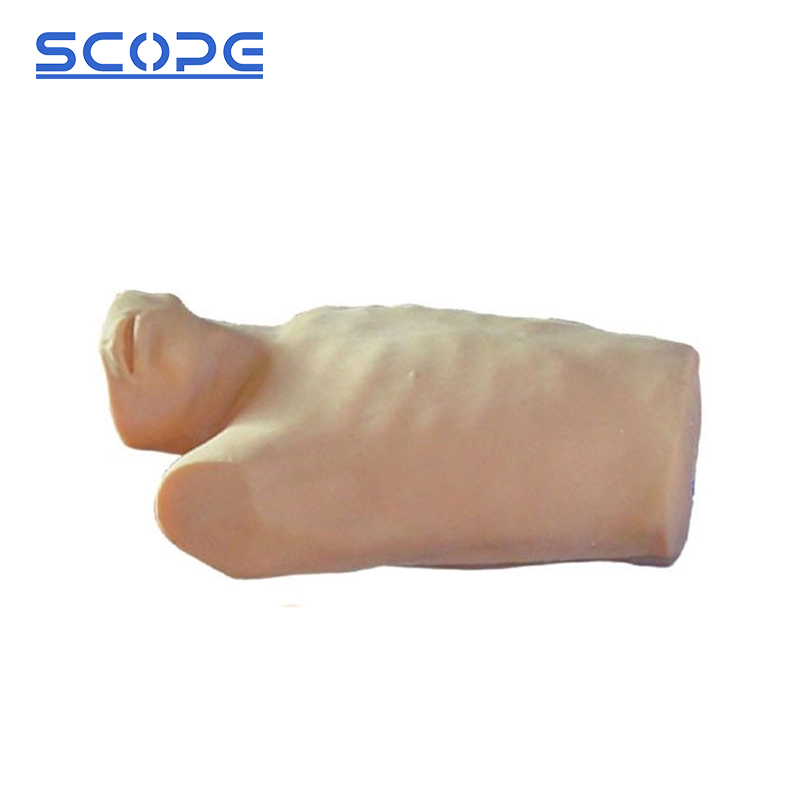
Both models are supplied by Chongqing Scope Instrument Co., Ltd., a Chongqing-based supplier of laboratory and medical training instruments. The company founded its operation in 2017, exports to Europe, Southeast Asia, the Middle East, South America and Africa, and categorises its manikin range into CPR, clinical and nursing models alongside microscopes, hardness testers, metallographic equipment and laboratory consumables. This article is written for simulation educators and skills-lab managers who must build a defensible thoracic curriculum with limited faculty hours, limited lab access and a fixed equipment budget.
Problem Definition: Why Rare Thoracic Procedures Are Hard to Teach
Rare procedures create a specific training problem — the procedures with the highest error cost are the ones a trainee performs least often. Pericardial puncture, intracardiac injection and closed thoracic drainage all depend on surface landmark recognition, controlled needle or tube advance, and a rehearsed response when the first attempt does not go as planned. In a clinical environment those steps are learned in fragments: one observed case, part of a supervised attempt, a video, a lecture.
- Cadaver supply is limited. Cadavers are single-use, costly to store and prepare, and not available on demand for a cohort of twenty trainees in the same week.
- Clinical exposure is uneven. No faculty member can schedule a pneumothorax. The case arrives when it arrives, and supervision is constrained by patient safety and consent.
- Puncture skill decays. Landmark palpation and needle control are psychomotor skills; without spaced repetition the technique degrades between rotations.
- Assessment is not standardised. A live patient cannot be reset, so scoring drifts between assessors and between sessions.
The practical consequence is familiar in many skills labs: one or two high-fidelity simulators become demonstration assets, while the procedural repetition a thoracic curriculum actually needs is never delivered. What closes that gap is not more fidelity but more repetitions on a fixed anatomy that can be reset, replaced and scored consistently.
Industry Background: Where Thoracic Procedure Training Sits Today
Spending on simulation is rising, but the structure of that spending matters more than the headline figure when a lab is planning a thoracic station.
- MarketsandMarkets valued the global medical simulation market at USD 2.17 billion in 2024 and projects USD 4.48 billion by 2030 (SRC-0001). That figure covers products, software and services.
- WiseGuyReports values the medical training manikin segment specifically at USD 600 million in 2024, with a projected USD 1.2 billion by 2035 (SRC-0003). The two figures use different scopes and should not be subtracted from one another.
- Anatomical models held approximately 41.4% of product share within the medical simulation sector in 2025 (Grand View Research, SRC-0004) — a signal that volume sits in physical, procedure-specific models rather than in a small number of flagship simulators.
- Published manikin price tiers run from around USD 500 for low-fidelity basic CPR models to over USD 85,000 for AI-driven high-fidelity patient simulators (derived range, Grand View Research, SRC-0004).
Read against a thoracic curriculum, that distribution has a direct implication: the repetition layer — the models a trainee touches fifty times — is normally built from durable, procedure-specific task trainers, while the flagship simulator is reserved for integration scenarios. The SC-CK817 and SC-L66 belong to that repetition layer. Chongqing Scope documents ISO 9001, ISO 14001, ISO 45001, ISO 13485, CE and RoHS certification for its laboratory and medical training equipment, and a verified data entry records CE certification under certificate number BKC22072375GC — documentation that procurement teams should reconcile against the exact models on the purchase order.
Detailed Solution: Two Models, Two Halves of the Thoracic Skill
SC-CK817 — the clinical manikin for pericardial access and injection
Chongqing Scope catalogues the SC-CK817 as a clinical manikin for pericardial puncture and intracardiac injection training. Its documented build is a simulated standardised patient placed in the supine position, with a soft texture, realistic touch and lifelike appearance; the body is made of PVC. For a skills lab, the supine position is not a cosmetic detail — it is the posture in which the trainee will meet the real procedure, so every repetition reinforces the same body mechanics.
The model is built around three palpable landmarks: the suprasternal notch, the upper edge of the sternal manubrium and the anterior superior iliac spine. All three are stated to be clearly palpable, which is the point of the design — puncture positioning depends on finding a reference point before the needle moves, and a landmark that cannot be felt cannot be taught.
Documented puncture functions include sternal manubrium puncture training and anterior superior iliac spine puncture training. The simulated bone marrow cavity can be penetrated with an obvious hollow feeling, and bone marrow can be extracted. Both the skin and the simulated bone marrow cavity are designed to be replaced easily.
That replaceability is what changes the economics of the station. Reset time decides how many repetitions a cohort actually receives, and a model whose skin and marrow cavity can be swapped can absorb repeated passes across a group without the station closing for the afternoon. The hollow feeling at the cavity also gives instructors an endpoint that can be described rather than guessed — depth and needle behaviour become assessable events instead of impressions.
SC-L66 — the puncture manikin for closed thoracic drainage
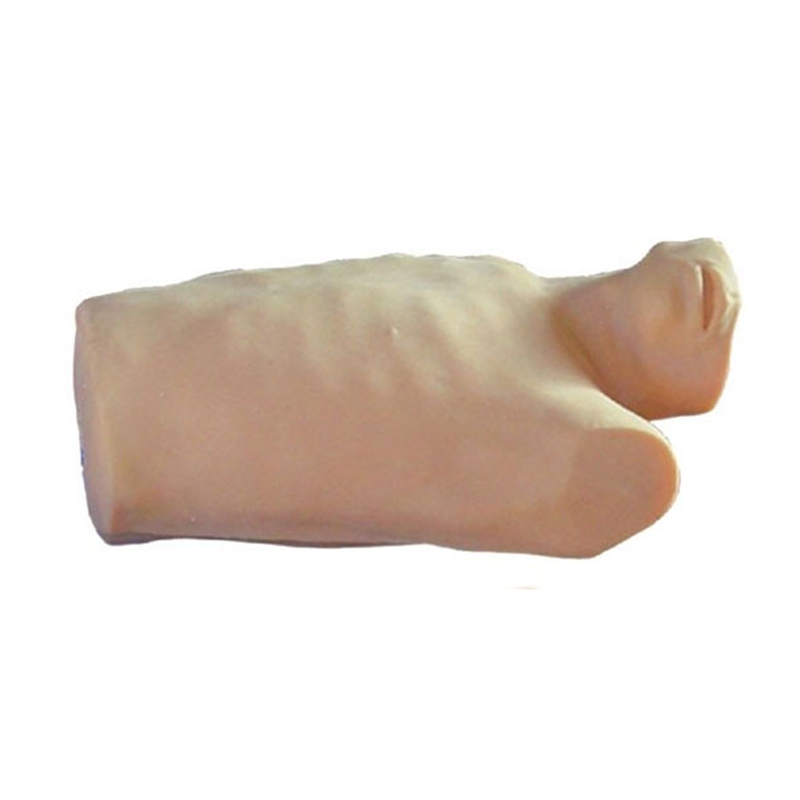
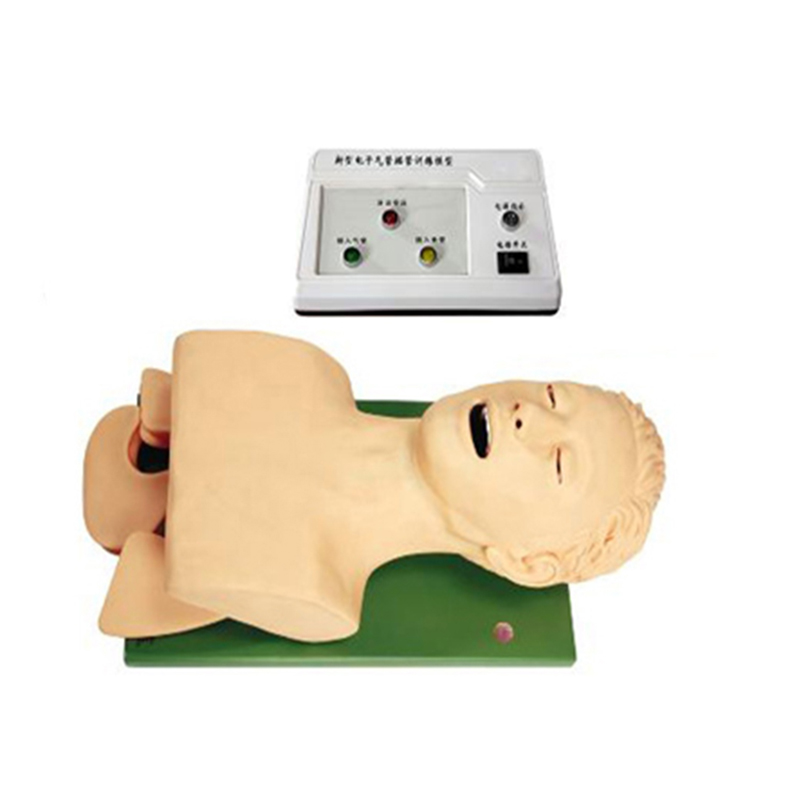
The second half of the pair is the SC-L66 puncture manikin, the model Chongqing Scope lists for closed drainage of pneumothorax and hydrothorax. Where the SC-CK817 is a whole-body clinical manikin with several puncture functions, the SC-L66 is a dedicated puncture manikin: its task is thoracic drainage, and its chest window gives the trainee a defined access site so the drainage sequence — site selection, incision, tube placement, securing and confirming drainage — can be repeated on the same model.
Dedication has a scheduling benefit that is easy to overlook. Because drainage drills run on the SC-L66, the SC-CK817 stays free for the pericardial station. In a lab with one instructor and one afternoon, that separation is often the difference between running two stations and running one.
Like the rest of the range, the SC-L66 is built on PVC, the material Chongqing Scope specifies for its medical manikins. Documentation note for procurement: request the SC-L66 datasheet together with the quotation to confirm chest-window dimensions, the replacement component list, and which drainage consumables the model accepts before you write the station into a syllabus.
Why PVC construction supports repeatable practice
Chongqing Scope states that its manikins are made of PVC and that the material ensures durability, resistance to deformation and a high degree of authenticity. Translated into lab operations, that statement covers three practical requirements: a model must survive repeated needle passes within a single session, it must keep its landmark geometry between sessions, and it must tolerate cleaning between learners.
Limitation to plan around. Material alone does not set service life. Two procurement decisions determine it in practice — whether replacement skins and marrow cavities are ordered with the first batch, and whether the lab logs passes per model. A model with replaceable parts and no spare parts on the shelf is still effectively a single-use asset during a busy teaching week.
Step-by-Step Breakdown: Sequencing the Two Models
The value of running the SC-CK817 and SC-L66 together is not that either model is unusual on its own; it is that the pair supports a progression from isolated technique to team performance. The five-phase design below can be delivered in a single day or spread across a rotation.
- Phase 1 — Pre-brief and landmark orientation (15–20 minutes). Before a needle is opened, trainees mark the suprasternal notch, the sternal manubrium edge and the relevant intercostal spaces on the manikin and state the target for each procedure. If the cohort needs internal orientation first, a torso model such as the SC-A1041 — 85 cm, 23 parts, PVC, with an exposed spine, a removable spine section and two-part heart and lungs — can be used next to the manikin before the puncture station opens.
- Phase 2 — Isolated technique on the SC-CK817. One trainee, one model, one procedure. Trainees begin with landmark marking, then controlled needle advance to the hollow feeling of the simulated bone marrow cavity, then aspiration, then withdrawal and repeat. The sternal manubrium station trains palpation and needle-feedback discipline on the anterior chest; the pericardial puncture and intracardiac injection functions designated for this model are then drilled on the same supine patient, so the learner does not have to re-orient to a new body position mid-session.
- Phase 3 — Isolated technique on the SC-L66. The drainage station runs separately, with its own rubric: correct site selection, controlled incision, tube placement, securing and a stated check that drainage is confirmed. The chest window allows the sequence to be repeated without moving the learner to a different model, which keeps the psychomotor pattern intact between attempts.
- Phase 4 — Team scenario. Combine the stations under time pressure. A blunt thoracic trauma patient is assessed on the SC-CK817, deteriorates, and requires decompression on the SC-L66 while a second team member manages the airway. An intubation model such as the SC-J5S adds an airway branch — it indicates the cricothyroid membrane puncture site, alarms on excessive tooth pressure from the laryngoscope, and alarms when the oesophagus is intubated incorrectly, with one normal and one dilated pupil for neurological comparison. If the patient arrests, the branch moves to a CPR model such as the SC-CPR100A, which specifies a correct compression depth of 5–6 cm, a 30:2 cycle over five cycles and a rate of 100–120 compressions per minute, with an alarm function for technique errors.
- Phase 5 — Debrief, reset and asset accounting. Close the day by replacing the SC-CK817 skin and marrow cavity as needed, re-setting the SC-L66 window, recording passes per model and booking the next spaced repetition session. This step is what converts a one-off workshop into a curriculum.
| Phase | Model | Suggested block | Objective | Reset requirement |
|---|---|---|---|---|
| 1. Pre-brief | SC-CK817 (orientation only) | 15–20 min | Landmark identification and target statement | Skin marking removed |
| 2. Isolated technique | SC-CK817 | 45–60 min | Palpation, needle control, marrow aspiration feedback | Skin and bone marrow cavity replaced when worn |
| 3. Isolated technique | SC-L66 | 45–60 min | Drainage sequence end to end | Chest window re-set per supplier instructions |
| 4. Team scenario | SC-CK817 + SC-L66 (+ airway / CPR branch) | 30–45 min | Role allocation, handover, escalation | Full station reset between teams |
| 5. Debrief | Both | 20–30 min | Scoring, gap identification, next session plan | Pass log updated, spares re-ordered |
Use Cases: Where the Two-Model Sequence Fits
- Emergency medicine and acute care residency bootcamp. Phase 2 and Phase 3 run as parallel stations on the same morning; Phase 4 closes the day. Residents get a fixed landmark set they will see again in the clinical environment.
- Surgical and ICU skills refresher. For staff who rarely perform pericardial access, the SC-CK817 provides the spaced repetition that a rotation cannot guarantee, without consuming theatre or ICU time.
- Nursing and paramedic thoracic trauma modules. The drainage sequence on the SC-L66 is trainable at a task-trainer level, while the SC-CK817 supplies a realistic supine patient for assessment and handover practice.
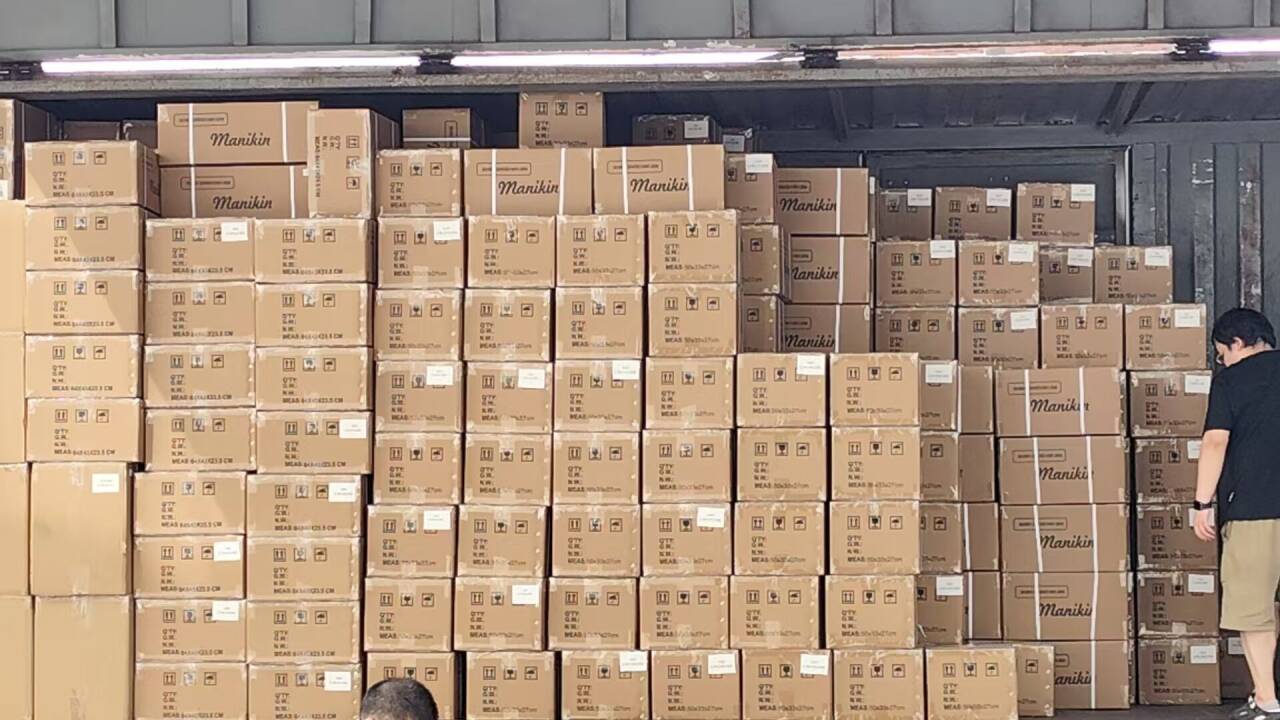
- Distributor demo labs and train-the-trainer sessions. A medical manikin distributor in India took delivery of 500 units for medical teaching and reported stable operation over a one-year period, describing the units as customized and durable. The same configuration logic applies to a demo lab: ship the pair, run both stations, and let the buyer's faculty handle the models themselves.
- OEM and ODM curriculum kits. Chongqing Scope offers OEM and ODM services with customization of appearance and functions for some products, subject to a quantity requirement, including LOGO printing or custom LOGO labels after technical verification. A training institution standardising across campuses can therefore specify a kit rather than individual catalogue items.
Comparison Table: SC-CK817 vs SC-L66
| Attribute | SC-CK817 | SC-L66 |
|---|---|---|
| Product category | Clinical manikin | Puncture manikin |
| Stated procedure focus | Pericardial puncture and intracardiac injection training; sternal manubrium and anterior superior iliac spine puncture with bone marrow extraction | Closed drainage of pneumothorax and hydrothorax |
| Patient presentation | Simulated standardised patient, supine, soft texture, realistic touch | Dedicated puncture model with a thoracic chest window |
| Documented landmarks | Suprasternal notch, upper edge of sternal manubrium, anterior superior iliac spine, all clearly palpable | Thoracic access via the chest window — confirm dimensions on the datasheet |
| Material | PVC | PVC (company material statement for the manikin range) |
| Replaceable components | Skin and simulated bone marrow cavity are easily replaced | Confirm the replacement component list with the quotation |
| Reset between learners | Replace worn skin and marrow cavity | Re-set the chest window per supplier instructions |
| Best session stage | Phase 1–2 isolated technique; also the supine patient for Phase 4 assessment | Phase 3 isolated drainage technique and the decompression step in Phase 4 |
| Procurement action | Order spare skin and marrow cavity sets with the first order | Confirm drainage consumables and window spares before the course date |

Frequently Asked Questions
1. What certification and export documentation should we request for the SC-CK817 and SC-L66?
Chongqing Scope states that it can provide official export certificates including ISO 9001, ISO 14001, ISO 45001, ISO 13485, CE and RoHS. A verified data entry records CE certification for the company's laboratory and medical training equipment under certificate number BKC22072375GC. Export packaging is neutral, in cardboard boxes or wooden boxes prepared to export standards, and customs documents such as CO, Form E and Form F can be supplied. When ordering, ask for the certificate copies with the model list attached, so the scope of the ISO 13485 medical device quality management certificate is checked against the exact items on your purchase order.
2. Can the models be customized or bundled into a curriculum kit?
Chongqing Scope offers OEM and ODM services, including customization of product appearance and functions for some products once the quantity requirement is met. LOGO printing on the machine, or a custom LOGO label attached to the machine, can proceed after technical verification is completed without issues. The documented commercial terms are a minimum order quantity of 20 units, a monthly capacity of 3,000 units, factory quality inspection and a one-year warranty with online after-sales support.
3. How should a lab budget a thoracic procedure station?
The published industry range for medical manikins runs from about USD 500 for low-fidelity basic CPR models to over USD 85,000 for AI-driven high-fidelity patient simulators (derived range, Grand View Research, SRC-0004). Because the SC-CK817 and SC-L66 are procedure-specific trainers rather than AI-driven full-body simulators, the defensible budget model is unit price plus a consumable allowance for replacement skins and marrow cavities plus faculty hours per session. Confirm the actual unit price, MOQ and Incoterms against a written quotation rather than the general market range.
4. Can we validate the models before committing to a full cohort order?
Validation is best done against your own rubric: confirm that the SC-CK817 landmarks can be palpated through gloves, that the hollow feeling of the marrow cavity is reproducible, and that a skin and marrow cavity replacement can be completed inside the reset window you plan between station rotations. For the SC-L66, confirm chest-window access and the drainage consumable list from the datasheet. Sample and evaluation-unit terms, together with customization once the 20-unit quantity requirement is met, are commercial details to confirm directly with the supplier at claire@cqscope.com before the course date is fixed.
5. What are the lead time, MOQ and after-sales terms?
The documented figures for Chongqing Scope are a lead time of 30–45 days, a minimum order quantity of 20 units, a monthly capacity of 3,000 units and a one-year warranty with online support. For customized configurations, confirm the production schedule in writing with the order, since the customization step is completed before shipment and should be built into your academic calendar rather than added to it.
Conclusion: Buy Repetition, Not Just Fidelity
Rare thoracic procedures stay rare in the clinical environment, and no curriculum can change that. What a simulation lab can change is the number of clean, scored repetitions a trainee completes before the first real attempt. The SC-CK817 gives that repetition for pericardial puncture, intracardiac injection and chest landmark discipline, with a replaceable skin and bone marrow cavity that keep the station open through a full cohort. The SC-L66 gives it for closed drainage of pneumothorax and hydrothorax, on a dedicated model with a thoracic chest window, so the drainage station does not compete with the pericardial station for the same body.
Sequenced across five phases — pre-brief, two isolated technique stations, one team scenario, one debrief — the pair covers the full arc from needle control to team performance. The procurement task that follows is straightforward: confirm the certificates against the model list, order replacement parts with the first batch, and write the reset time into the session plan.
About Chongqing Scope Instrument Co., Ltd.
Chongqing Scope Instrument Co., Ltd. is a supplier of laboratory and medical training instruments based in Chongqing, China, founded in 2017. The company reports over 20 years of sales experience and more than 500 clients worldwide, with a 5,000 m² facility, more than 100 employees, an annual output of 30,000 units and an R&D team of 20 engineers. Its medical manikin range covers CPR, clinical and nursing models used for emergency, clinical and nursing skills training in medical colleges and training institutions, alongside microscopes, hardness testers, metallographic sample equipment and laboratory consumables. Chongqing Scope documents OEM and ODM capability and holds ISO 9001, ISO 14001, ISO 45001, ISO 13485, CE and RoHS certification for its export range.
Next Step: Request the Thoracic Station Specification
Send your station list — SC-CK817, SC-L66, replacement skins and marrow cavities, and any airway or CPR models for the scenario branch — and the sales team will respond with model datasheets, certificate copies and a written quotation covering MOQ and lead time.
Email: claire@cqscope.com · Tel / WhatsApp: +86 15223521781 · Address: 701, Longhushuijinguoji, No.164, Xinnan Road, Yubei District, Chongqing, China.
Download the full product catalogue and specification reference: Chongqing Scope Product Brochure (PDF)
Have Questions or Need More Details?
Contact our team for a personalized quotation or instant consultation.
Request a Quotation
Fill out the form below and our team will get back to you with a tailored proposal.
WhatsApp Direct Chat
Prefer to chat in real-time? Message us on WhatsApp for instant assistance & quick answers.
- Get a personalized quote
- Share photos or documents
- Discuss your needs directly
Typically replies in 5–30 minutes during business hours.