
What Is a Maternal & Infant Manikin and How Does It Work? A Component-Level Explainer
What Is a Maternal & Infant Manikin and How Does It Work? A Component-Level Explainer
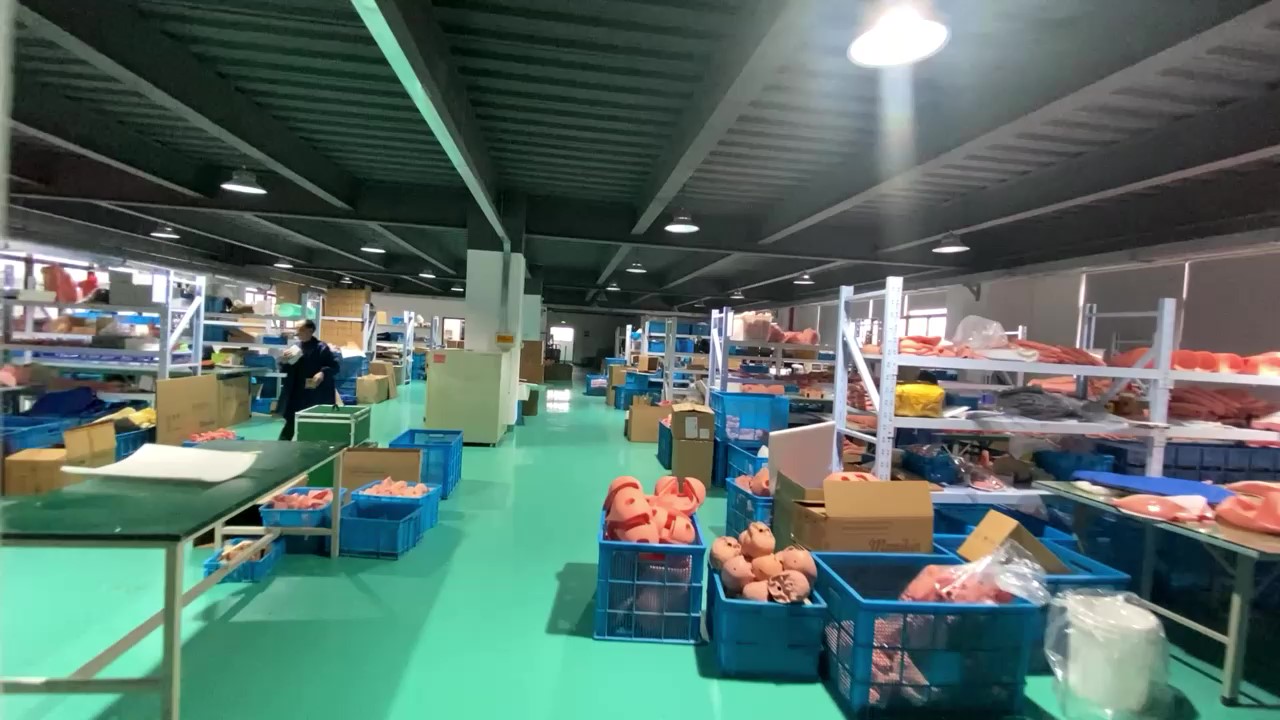
Definition: A maternal and infant manikin is a physical training model that reproduces the anatomy and mechanics of labour, delivery and newborn care so that obstetric, midwifery and neonatal skills can be practised without a live patient. The category contains two working forms: a full maternal body with a mechanical delivery system, and a lower-body obstetrics model used for prenatal examination and delivery practice.
A maternal and infant manikin is not a single product design, and that is the first thing a buyer has to understand. The SC-F55-1 and the SC-F50 from Chongqing Scope Instrument Co., Ltd. both belong to the category, yet they are built around different mechanisms: one advances a fetus through a mechanical transmission with a delivery controller, the other reproduces the birth process on a lower-body model whose abdomen has a transparent abdominal wall. Both include a fetus, both cover the six stages of cervical change, and both are specified as PVC products.
This explainer covers four things: what the category is for, what is physically inside the two reference models, how a training session actually runs on them, and what evaluation-stage buyers typically check before requesting a quotation. Everything below is drawn from the supplied product specifications, so the descriptions can be read as component lists rather than marketing claims.
The Problem This Category Solves
Obstetric and neonatal skills are high-stakes and low-frequency. A trainee midwife may assist only a limited number of deliveries during a clinical placement, and no training programme can schedule a shoulder dystocia, a breech presentation or a nuchal cord on demand. The result is a familiar gap: the theory is taught in lectures, but the manual judgements — how far a cervix has dilated, where the fetal head sits relative to the ischial spines, whether a perineum will tear — have to be learned by hand.
Static teaching tools close part of that gap and leave the rest open. A pelvis or torso model shows structure, not sequence. A textbook diagram shows the six stages of cervical change but cannot be palpated. A maternal and infant manikin exists to close the remaining distance: it is a device that lets a trainee repeat a delivery, a staging assessment or a newborn resuscitation until the sequence becomes automatic.
Terminology is a practical obstacle. Buyers meet the labels maternal manikin, gynecology manikin, infant manikin, newborn model, CPR model and torso model, and in ordinary speech those labels overlap. In specifications they do not. An infant manikin trains newborn CPR. A gynecology or maternal manikin trains the labour process and its complications. A maternal and infant manikin combines both sides — mother, fetus and newborn — in a single teaching platform, which is why the category is usually specified by function list rather than by name.
The two models used as reference points here show how differently that function list can be drawn inside the same category. One is organised around a mechanised delivery transmission, a fetal heart sound simulator, CPR feedback electronics and a full newborn module. The other is organised around manual examination and direct visual observation of the birth process.
Industry Background: Where the Category Sits
The demand context is documented at two levels. The global medical simulation market, which counts software and services as well as physical models, was valued at USD 2.17 billion in 2024 and is projected to reach USD 4.48 billion by 2030 (MarketsandMarkets). The narrower segment of physical medical training manikins was valued at USD 600 million in 2024 and is expected to grow to USD 1.2 billion by 2035 (WiseGuyReports). The two figures are not interchangeable — one measures simulation systems, the other measures physical training models.
Inside the simulation product mix, anatomical models held the largest product share at approximately 41.4% in 2025 (Grand View Research). That concentration is consistent with how training budgets behave: institutions buy many low and mid-complexity models for routine teaching, and a smaller number of high-complexity simulators for advanced scenarios. Published price tiers reflect the same spread, ranging from around USD 500 for basic low-fidelity CPR models to over USD 85,000 for AI-driven high-fidelity patient simulators (Grand View Research).
For a procurement team, the practical consequence is that the phrase medical manikin says very little about either price or capability. Two products in the same catalogue can differ by an order of magnitude, depending on whether the model is passive anatomy or an instrumented system with mechanical transmission, electronic feedback and replaceable consumable parts. Maternal and infant manikins sit on the instrumented side of that line whenever they include delivery mechanics, fetal heart simulation or CPR feedback electronics.
Manufacturing origins are also spread. Documented manikin supplier bases are located in Norway, Denmark, the United States, Japan and Germany, each historically associated with particular application categories, alongside Chinese suppliers such as Chongqing Scope Instrument Co., Ltd., a company established in 2017 that supplies laboratory instruments and medical training manikins from Chongqing, China. At evaluation stage, origin matters less than documentation: the useful question is which functions are specified, and which are only implied by a category name.
What Is Inside a Maternal and Infant Manikin: SC-F55-1 and SC-F50
1. The maternal body and its mechanical delivery system (SC-F55-1)
The SC-F55-1 is specified as a maternal and infant manikin organised around a mechanical transmission device. Two mechanical adapters are provided for connecting the simulated fetus used for delivery. Elastic fastening devices link the fetus to the adapter, one adapter to the other, and the adapter to the transmission device — the flexible chain that allows the fetus to advance through a simulated delivery rather than simply being placed in position. Protective travel switches are fitted at the upper and lower ends of the transmission device, which bound the travel of the mechanism.
The delivery process and fetal heart rate controller supports pause, initialize, start and continue commands, and the delivery speed can be selected from four levels. In a teaching room this control matters more than it sounds. A slow setting supports step-by-step demonstration of the delivery mechanism, while the fastest setting compresses the sequence for timed drills on second-stage management.
2. Fetal heart auscultation, cervical change and Leopold practice
Fetal heart sound auscultation is simulated electronically. The specification states that heart sound frequency and volume can be set, and that the heart rate can be adjusted within a range of 80 to 180. Trainees therefore hear a normal baseline, a tachycardia or a bradycardia on the same model instead of memorising a single recorded sound.
The SC-F55-1 also includes a prenatal cervical change and birth canal relationship module that can be attached to the mother for training. The module reproduces six stages defined by dilation, cervical effacement and the station of the fetal head relative to the ischial spines:
- Stage 1: cervical os not dilated, cervical canal not effaced, fetal head at −5 relative to the ischial spines.
- Stage 2: cervical dilation of 2 cm, 50% effacement, fetal head at −4.
- Stage 3: cervical dilation of 4 cm, complete disappearance of the cervical canal, fetal head at −3.
- Stage 4: cervical dilation of 5 cm, complete disappearance of the canal, fetal head at the level of the ischial spines (0 station).
- Stage 5: cervical dilation of 7 cm, fetal head at +2.
- Stage 6: cervical dilation of 10 cm, fetal head at +5.
The model can also measure fetal head descent and cervical dilation, and it is equipped with a Leopold practice soft pad for practising Leopold techniques. Various placental positions can be simulated, and the specification additionally notes a highly realistic cervix and a manually simulated carotid artery pulsation on the mother.
3. Presentation scenarios and complications
Delivery is not always cephalic, and the SC-F55-1 specification lists the presentations and complications the model can reproduce: cephalic presentation, breech presentation, airway obstruction, umbilical cord around the neck and placenta previa. A fetus intended for childbirth is included, and the mother's arm can be used to establish a venous channel for medication and nutrition, which allows a scenario to continue past delivery into postpartum practice.
4. The newborn module: care, intubation and CPR
For many programmes the newborn is the decisive component. The SC-F55-1 includes a newborn for emergency and nursing use, and its described functions divide into care and resuscitation. On the care side, the newborn supports eye cleaning and medication, and general newborn cleaning and bandaging. Nasogastric intubation can be performed for suctioning, together with tracheal intubation and gastric lavage. Cord care is included, as are scalp vein puncture and arm vein puncture; the specification notes that puncture produces a sense of emptiness and that blood return is produced.
Newborn CPR is supported through several ventilation routes: mouth-to-mouth, mouth-to-nose and a simple resuscitator. Artificial respiration and chest compressions can be performed on the newborn, so a neonatal resuscitation drill can run in the same session as the maternal delivery.
On the maternal side, the same model supports tracheal intubation training and a vulvar suture practice module with three incision positions — lower left, centre and lower right — for perineal repair practice. The pregnant CPR function is stated as designed according to the 2020 International CPR Guidelines, with electronic monitoring of airway opening, number of breaths, breath volume, compression site, number of compressions and compression depth, supported by voice prompts, a digital counting display and barcode indicator light alarms.
5. SC-F50: the transparent abdominal wall and the cervical examination model
The SC-F50 approaches the same subject from a different direction. It is described as a gynecology manikin consisting of a simulated lower body model of a pregnant woman, two fetus models, and attached umbilical cord and placenta models. Its stated purpose is basic technical training in obstetrics, providing comprehensive practice in prenatal examination, midwifery and delivery.
Its cervical examination model covers six stages using the same parameters as the SC-F55-1 module, expressed as the dilation of the cervical opening, the degree of change in the cervical opening and the positional relationship between the fetal head and the ischial spine plane: −5 at stage 1 with no dilation and no effacement; −4 at 2 cm with 50% effacement; −3 at 4 cm with complete disappearance of the canal; 0 at 5 cm; +2 at 7 cm; and +5 at 10 cm.
The fetal model is specified with soft skin and an identifiable fontanel, and it allows the fetal head suction technique to be practised; the umbilical cord and placenta are supplied as fetal accessories. The childbirth model has a soft, extremely elastic perineum, which the specification states is intended to let midwifery operations be simulated under realistic conditions and to support practice of perineal care techniques.
The distinguishing component is the abdomen, which consists of a transparent abdominal wall and simulated skin. That construction makes the delivery function demonstration visible and lets a trainee observe the positional relationship between the fetal head and the ischial spine plane directly, rather than inferring it by palpation alone. For programmes that teach staging as a visual and a manual skill together, the transparent abdominal wall is the reason to specify this model.
6. Material: PVC in both reference models
Both the SC-F55-1 and the SC-F50 are specified as PVC products. Chongqing Scope states that its manikins are made of PVC for durability, resistance to deformation and a high degree of authenticity. PVC is also the stated material across the wider manikin range, which the company groups into CPR, clinical and nursing categories.
How It Works, Step by Step
A maternal and infant training session follows a repeatable sequence. The order below combines the operating steps described in the two model specifications.
- Assemble the model for the scenario. On the SC-F55-1, the simulated fetus is attached to the mechanical adapters using the elastic fastening devices, and the transmission device is connected to the delivery controller. On the SC-F50, the lower-body model is set up with a fetus, the umbilical cord and the placenta.
- Initialise the controller (SC-F55-1). The delivery process and fetal heart rate controller can pause, initialize, start and continue the delivery sequence, and the delivery speed is selected from the four available levels according to the exercise.
- Set the fetal heart parameters. Heart sound frequency and volume are set, and the heart rate is adjusted within the 80 to 180 range to match the clinical picture being taught.
- Practise auscultation and Leopold manoeuvres. Trainees auscultate the simulated fetal heart and use the Leopold practice soft pad to rehearse the assessment sequence before moving to delivery.
- Assess cervical change. The prenatal cervical change module, or the SC-F50 cervical examination model, is worked through the six defined stages. The trainee reports dilation, effacement and station, and the instructor verifies the reading against the module.
- Introduce a presentation or complication. The maternal model is configured to a cephalic or breech presentation, and complications such as airway obstruction, umbilical cord around the neck or placenta previa can be simulated.
- Perform the delivery. On the SC-F50 the delivery demonstration is observed through the transparent abdominal wall, including the relationship between the fetal head and the ischial spine plane. On the SC-F55-1 the mechanical transmission advances the fetus at the selected speed, and fetal head descent and cervical dilation can be measured.
- Complete postpartum and repair practice. The vulvar suture module on the SC-F55-1 offers three incision positions for perineal repair, while the SC-F50 perineum is used for perineal care techniques. Maternal venous access can be established on the SC-F55-1 for medication or nutrition scenarios.
- Finish with resuscitation. Pregnant CPR is monitored electronically on the SC-F55-1 against the parameters described in its specification, and newborn CPR can be performed on the included newborn using mouth-to-mouth, mouth-to-nose or simple resuscitator ventilation combined with chest compressions.
Where These Manikins Fit in a Training Programme
Obstetric and midwifery skills labs
In a midwifery programme, the SC-F50 covers the examination sequence: cervical dilation and effacement, fetal head station, palpation, midwifery manoeuvres and perineal care, with the transparent abdominal wall making the mechanism of delivery visible during demonstration. The SC-F55-1 adds the parts of the curriculum that require an active process — mechanically advanced delivery at a controlled speed, fetal heart rate variation, non-cephalic presentation, and perineal repair on a three-position suture module.
Nursing and emergency training
Both models connect obstetrics to emergency skills. The SC-F55-1 supports pregnant CPR with electronic monitoring and alarms, and its newborn module covers cleaning and bandaging, cord care, scalp and arm vein puncture, nasogastric intubation, tracheal intubation, gastric lavage and newborn CPR. For training rooms that already run adult CPR scenarios, this makes neonatal resuscitation a parallel exercise rather than a separate course.
Distributor demonstration and channel training
Maternal and infant manikins are also demonstration units. A documented project in India illustrates the pattern at scale: 500 units were supplied for medical teaching purposes to a medical manikin distributor, the project was completed within one year and reported stable operation results, with customization and durability given as the stated highlights.

What the category does not replace
A maternal and infant manikin is not a substitute for anatomical or general nursing models. Anatomy models such as a torso or skull model teach structure and are used for identification, not for procedural sequence. Full-body nursing manikins cover a much wider set of routine care procedures — catheterisation, enema, injection sites, oral and nasal feeding — but they do not reproduce labour mechanics or the six stages of cervical change. Programs that need both usually specify both, rather than expecting one platform to serve every course.
Supplier Context for the SC-F55-1 and SC-F50
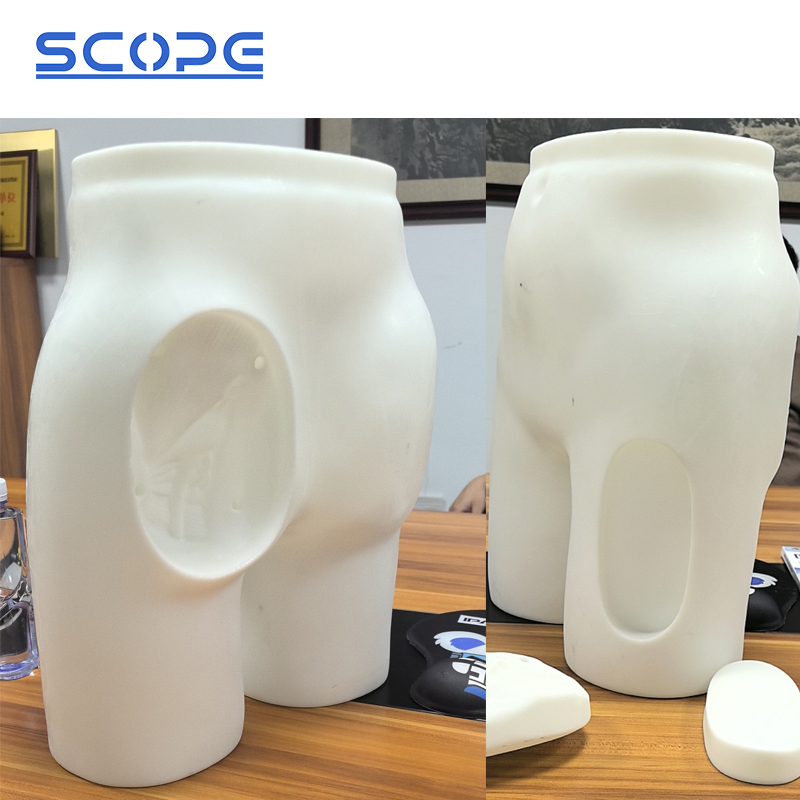
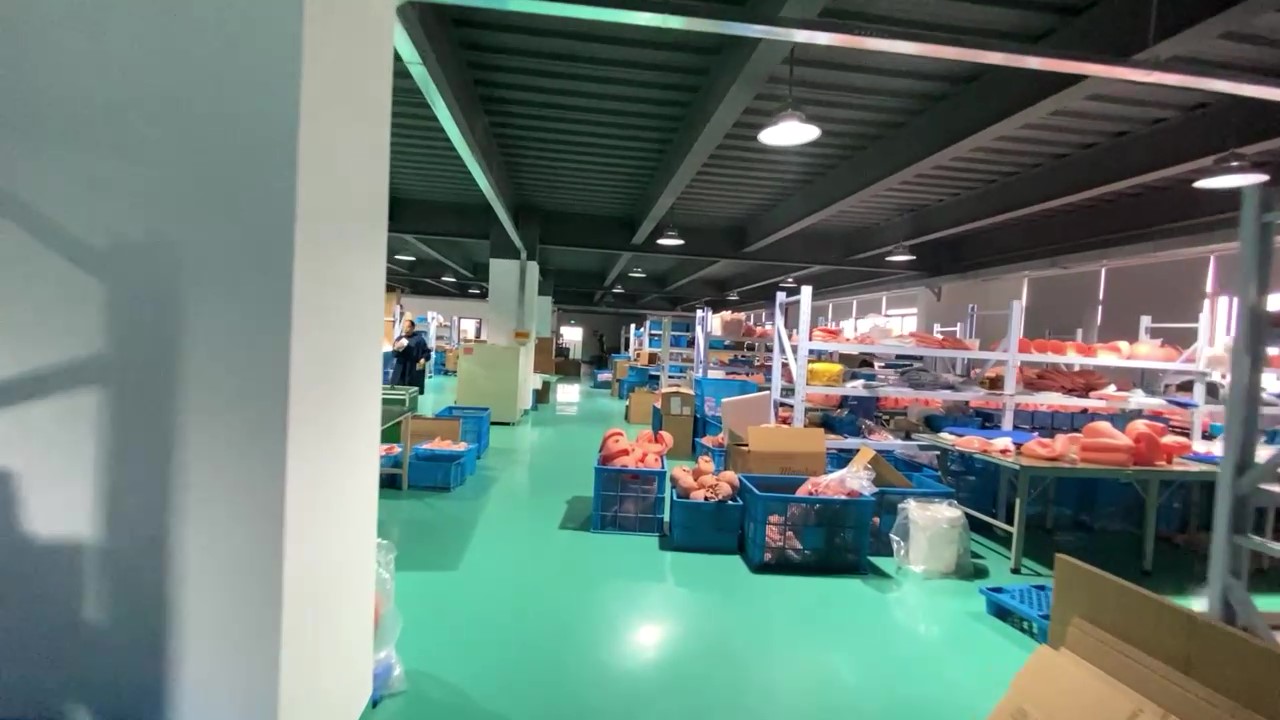
Chongqing Scope Instrument Co., Ltd. is a Chinese supplier of laboratory and medical training instruments based in Chongqing, established in 2017. Its company profile states a 5,000 m² facility, more than 100 employees, an annual output of 30,000 units and a research and development team of 20 engineers, with an export ratio of 50% and customers across Europe, Southeast Asia, the Middle East, South America and Africa. The medical manikin range covers CPR, clinical and nursing categories alongside anatomical models and the maternal and infant models discussed here.
Certification documentation listed by the company includes ISO 9001, ISO 14001, ISO 45001, ISO 13485 and CE, with RoHS also referenced; company records cite ISO 13485 and CE (certificate BKC22072375GC) for its laboratory and medical training equipment. For manikin production specifically, the capacity information lists a monthly capacity of 3,000 units, a lead time of 30 to 45 days, a minimum order quantity of 20 units and a one-year warranty with online support. OEM and ODM services are offered, with customization subject to quantity requirements; logo printing is carried out after technical verification, or as a custom logo label attached to the machine.
What Evaluation-Stage Buyers Check First
Because the category name covers several different designs, experienced buyers evaluate maternal and infant manikins by working through a short list of questions against the specification sheet.
- Is the newborn included, or is it a separate line item? The SC-F55-1 specification includes a newborn for emergency and nursing use and a fetus for childbirth as part of the system composition.
- How is cervical change modelled? Both reference models use a six-stage structure running from −5 to +5 station, which allows the trainee to report staging in the same terms used in clinical records.
- Is the delivery process observable or only demonstrable? The SC-F50 uses a transparent abdominal wall and simulated skin; the SC-F55-1 uses a mechanical transmission with a controller and measurable descent and dilation.
- How deep is the electronic feedback? Pregnant CPR monitoring on the SC-F55-1 covers airway opening, breath count, breath volume, compression site, compression count and compression depth, with voice prompts, digital counting and barcode indicator alarms.
- What is the material and how is repeated use handled? Both models are specified in PVC, and procedural modules such as the vulvar suture module with three incision positions are part of the set.
- What are the commercial terms? For manikin production, the stated terms are a 20-unit minimum order quantity, 3,000 units monthly capacity, 30 to 45 days lead time and a one-year warranty supported online.
SC-F55-1 vs SC-F50: Side-by-Side Specifications
| Feature | SC-F55-1 Maternal Manikin | SC-F50 Gynecology Manikin |
|---|---|---|
| Product type | Maternal and Infant Manikin | Maternal and Infant Training Manikin |
| Model form | Full maternal model with mechanical delivery transmission | Simulated lower body model of a pregnant woman |
| Material | PVC | PVC |
| Fetus and newborn | Fetus for childbirth; newborn for emergency and nursing use | Two fetus models; attached umbilical cord and placenta models |
| Delivery mechanism | Mechanical transmission device, two mechanical adapters, elastic fastening devices, protective travel switches; speed selectable from 1 to 4 levels | Soft, extremely elastic perineum for midwifery operations |
| Delivery controller | Pause, initialize, start and continue functions | Not listed in the supplied specification |
| Fetal heart sound | Auscultation simulated; frequency and volume settable; heart rate adjustable 80–180 | Not listed in the supplied specification |
| Cervical change staging | Six-stage prenatal cervical change and birth canal relationship module, attachable to the mother | Six-stage cervical examination model |
| Observation of fetal head station | Fetal head descent and cervical dilation can be measured | Direct observation through transparent abdominal wall and simulated skin |
| Leopold manoeuvres | Leopold practice soft pad provided | Not listed in the supplied specification |
| Pregnant CPR | Designed according to the 2020 International CPR Guidelines, with electronic monitoring, voice prompts, digital counting and indicator alarms | Not listed in the supplied specification |
| Newborn CPR | Supported: mouth-to-mouth, mouth-to-nose, simple resuscitator; artificial respiration; chest compressions | Not listed in the supplied specification |
| Intubation | Maternal tracheal intubation training; newborn nasogastric intubation, tracheal intubation and gastric lavage | Not listed in the supplied specification |
| Perineal practice | Vulvar suture practice module with three incision positions: lower left, centre, lower right | Perineal care techniques on a soft, elastic perineum |
| Primary stated focus | Delivery mechanics, prenatal cervical change, presentation complications, pregnant CPR, newborn care and newborn CPR | Basic obstetric technical training: prenatal examination, midwifery, delivery and perineal care |
Note: Not listed in the supplied specification means the function does not appear in the product description used for this explainer. It does not mean the model cannot support that training with additional accessories; buyers should confirm the current function list with the supplier.
Frequently Asked Questions
What material are maternal and infant manikins made of, and what certifications should a buyer check?
Both reference models, the SC-F55-1 and the SC-F50, are specified as PVC products, and Chongqing Scope describes PVC as providing durability, resistance to deformation and a high degree of authenticity across its manikin range. On documentation, the company lists ISO 9001, ISO 14001, ISO 45001, ISO 13485 and CE, with RoHS also referenced, and its records cite ISO 13485 and CE (certificate BKC22072375GC) for laboratory and medical training equipment. Buyers should confirm that the certificates supplied correspond to the specific product and configuration being ordered.
What can a maternal and infant manikin do that a standard CPR or nursing manikin cannot?
It reproduces the labour process. The SC-F55-1 simulates cephalic presentation, breech presentation, airway obstruction, umbilical cord around the neck and placenta previa; advances a fetus through a mechanical transmission at one of four selectable speeds; simulates fetal heart sounds with a rate adjustable between 80 and 180; and supports a six-stage prenatal cervical change module covering dilation, effacement and fetal station from −5 to +5. The SC-F50 provides a six-stage cervical examination model and a transparent abdominal wall that lets a trainee observe the fetal head position relative to the ischial spine plane during delivery. Both add maternal and newborn resuscitation functions that a general CPR or nursing manikin does not carry in the same platform.
What drives the price of a maternal and infant manikin?
The category sits inside wide price tiers: published market research places medical manikins generally between around USD 500 for basic low-fidelity CPR models and over USD 85,000 for AI-driven high-fidelity patient simulators (Grand View Research). Within that range, cost tracks the function list — the number of mechanical and electronic modules such as the delivery transmission and controller, fetal heart simulation, the cervical change stages and CPR feedback electronics; whether a fetus and newborn are included; and whether perineal or suture practice modules form part of the set. Quotations should therefore be compared line by line against the function list, not by product photograph.
How do buyers validate a maternal and infant manikin before committing to an order?
Validation normally starts with the function list and module inventory. On the SC-F55-1 that means checking the mechanical adapters and elastic fastening devices, the delivery controller, the six-stage cervical change module, the Leopold soft pad, the vulvar suture module with its three incision positions, and the newborn. On the SC-F50 it means checking the two fetus models, the umbilical cord and placenta, the cervical examination model and the transparent abdominal wall. Because customization is subject to quantity requirements and manikin production is quoted per project, the practical next step is to request a quotation and discuss a sample or demonstration unit with the supplier before tooling or logo work is agreed.
What lead time and order quantity should a training institution expect?
Chongqing Scope capacity information for manikins lists a monthly capacity of 3,000 units, a production lead time of 30 to 45 days and a minimum order quantity of 20 units, with a one-year warranty supported online. Programmes that require logo printing or customization of appearance and functions should allow additional time for technical verification, which the company states is completed before production begins. To confirm current terms for a specific configuration of the SC-F55-1 or SC-F50, contact the supplier directly or request the current catalogue.
Conclusion
A maternal and infant manikin is best understood as a function platform rather than a single product. The category exists because obstetric and neonatal skills require repeated, hands-on rehearsal of processes that cannot be scheduled in a clinical setting, and because the labels used in the market — maternal, gynecology, infant, CPR, nursing — describe overlapping but different training objects.
The SC-F55-1 and SC-F50 show two legitimate ways to build that platform. The SC-F55-1 concentrates the process into a mechanical delivery transmission with a four-level controller, fetal heart sound simulation across an 80 to 180 range, a six-stage prenatal cervical change module, pregnant CPR monitoring aligned to the 2020 International CPR Guidelines, and a newborn module covering care, intubation, vein puncture and newborn CPR. The SC-F50 concentrates on examination and observation: a lower-body model with two fetuses, a six-stage cervical examination model, a soft and highly elastic perineum for midwifery and perineal care practice, and a transparent abdominal wall that makes fetal head station visible during the delivery demonstration. Both are specified in PVC.
For a buyer at evaluation stage, the decision comes down to the curriculum. Where the course requires active delivery mechanics, presentation complications and combined maternal and neonatal resuscitation, the SC-F55-1 function list covers those directly. Where the course centres on prenatal examination, staging and visual demonstration of delivery, the SC-F50 provides that with fewer electronic components. Checking each line of the function list against the syllabus — and against the six-stage staging values, the modules supplied and the commercial terms — is the fastest way to choose between them.
Next step: sample, quotation or catalogue
Chongqing Scope Instrument Co., Ltd. supplies maternal and infant manikins, CPR, clinical and nursing manikins, and anatomical models, with OEM and ODM services available subject to quantity requirements.
- Download the product catalogue: Chongqing Scope catalogue (PDF)
- Email: claire@cqscope.com
- WhatsApp / Tel: +86 15223521781
- Website: www.cqscopelab.com
- Address: 701, Longhushuijinguoji, No.164, Xinnan Road, Yubei District, Chongqing, China
Request a quotation for the SC-F55-1 or SC-F50, or ask about a sample unit and current lead time for your configuration.
Have Questions or Need More Details?
Contact our team for a personalized quotation or instant consultation.
Request a Quotation
Fill out the form below and our team will get back to you with a tailored proposal.
WhatsApp Direct Chat
Prefer to chat in real-time? Message us on WhatsApp for instant assistance & quick answers.
- Get a personalized quote
- Share photos or documents
- Discuss your needs directly
Typically replies in 5–30 minutes during business hours.