
Precision Metal Mechanical Parts: A Buyer's Guide to Processes, Materials and Suppliers
Precision metal mechanical parts are metal components manufactured to a customer drawing or sample, where dimensional tolerance, material grade and surface condition are specified rather than left to the supplier's discretion. This guide explains the part families and process routes that sit behind that single category name, identifies the information that makes quotations comparable, and shows how a buyer at the research stage can screen a manufacturer before releasing a drawing.
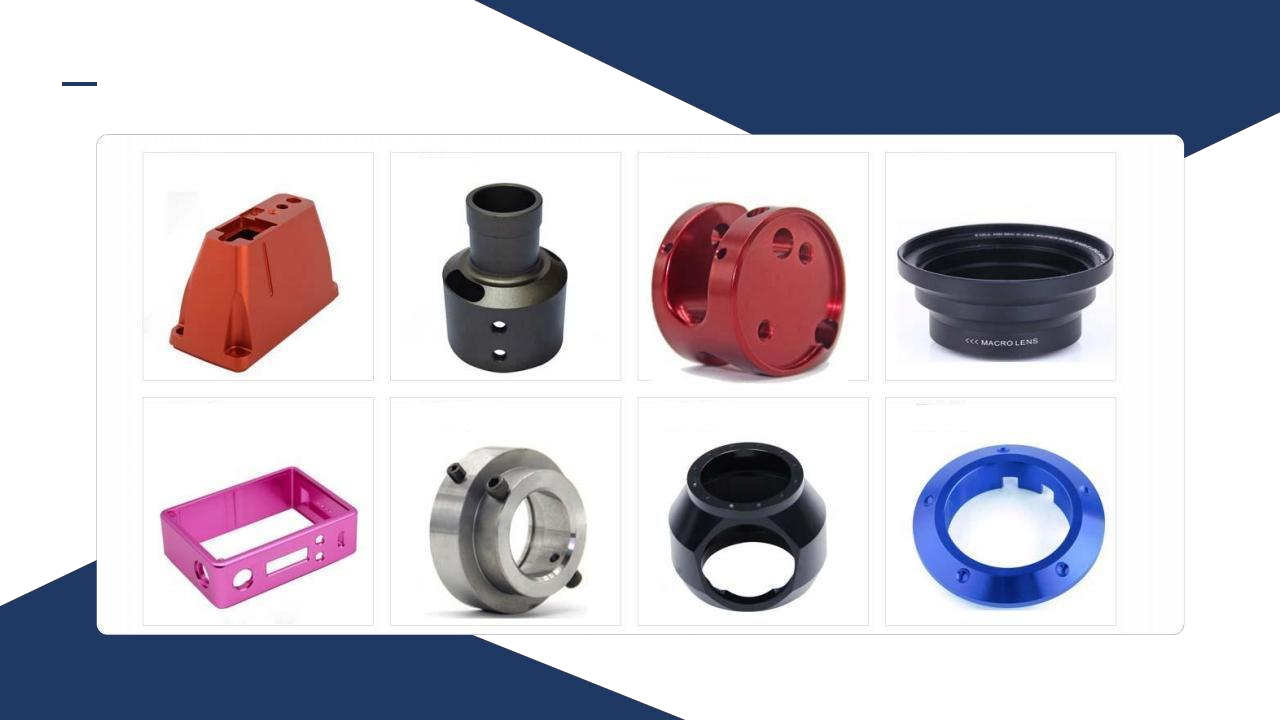
Most buyers meet the term on a supplier website or in a search result long before they meet the component itself. Because the phrase covers magnets, shafts, stator cores, rotor cores, stampings, deep-drawn shells, machined parts, die castings and fabricated assemblies at the same time, it describes a category rather than a product. That distinction matters: the category tells you what kind of supply base exists, but it does not tell you which process route, material specification or inspection method your project actually requires.
This article is written for that early stage of a project, when the need for metal components is established but the route to sourcing them is not. It uses published market research for context, published process and material facts for substance, and a named manufacturer's own disclosures to show what a verifiable supplier profile looks like. It does not quote prices, because part prices depend on drawings, materials, tooling and order volume that no general article can supply.
The Problem: One Category Name, Many Different Products
The practical difficulty with this category is that the same four words can describe components with completely different cost structures, tooling requirements and quality controls. A stamped bracket, a CNC-turned shaft and a die-cast housing are all legitimately sold as precision metal mechanical parts, yet they are made on different equipment, quoted against different cost drivers and inspected against different criteria. When a request for quotation uses only the category name, the replies that come back usually cannot be compared with each other.
Three kinds of ambiguity drive this problem.
- Process ambiguity. Stamping, deep drawing, fabrication, CNC machining and die casting each impose their own tooling logic and production economics. A supplier that specialises in one route will quote the parts it can make well and decline or re-scope the rest.
- Material ambiguity. Naming a material family is not the same as naming a grade. Stainless steel, carbon steel, aluminium alloys, copper and copper alloys are all standard inputs for this category, and die casting commonly uses aluminium, zinc and magnesium alloys. Within those families, grade selection, heat treatment and surface finish have to be confirmed.
- Verification ambiguity. "Precision" has no meaning without a tolerance value, a reference standard and an inspection method. A part can be precise on one dimension and uncontrolled on another.
Part-family language compounds the issue. Buyers frequently search with the part family placed in front of the category term, for example shaft precision metal mechanical parts, stator core precision metal mechanical parts, magnet precision metal mechanical parts or CNC machined precision metal mechanical parts. Those queries are more useful than the bare category term because they already contain a decision. If you do not yet know which part family and process apply to your design, resolving that question is the first task, not the tenth.
The working alternative is to treat the category as a matrix: part family, process route, material grade, tolerance and surface requirement, inspection method, and annual volume. Any supplier conversation that fills those six fields produces a comparable quotation. Any conversation that does not produces a number without a scope.
Industry Background: What Drives Demand for Precision Metal Mechanical Parts
The category sits inside a large and well-documented industrial supply chain. Dataintelo's precision parts research places the global precision parts market at USD 98.4 billion in 2025, with the metal segment holding the largest share at 58.3% of global revenue in that year. The same research programme covers a forecast period to 2034. These are third-party commercial research figures, and they describe the market for precision parts broadly, including non-metal parts, which is why the metal share is reported separately.
Within that market, motor cores form a clearly identifiable segment. Dataintelo's motor cores research values the global motor cores market, covering stators and rotors, at USD 8.7 billion in 2025, with electric-vehicle motor cores as the largest segment at 38.5%. For buyers sourcing stator cores and rotor cores, that segment split is a useful signal about where tooling investment and process capacity are concentrating.
Performance expectations are also documented publicly. MFG Solution's 2026 buyer's guide for precision metal parts states that high-quality parts can be held to tolerances as tight as plus or minus 0.001 mm, and references ISO 2768 and ISO 286 as the general frameworks for dimensional and fits tolerancing. That benchmark is a capability reference, not a default requirement: a part should be toleranced to its function, because specifying a tighter class than the application needs changes the process, the inspection burden and the cost of the part without improving its performance in service.
Trade statistics are often used to size this category, and they should be read carefully. UN Comtrade records iron and steel articles under HS chapter 73, including heading 7326 for articles of iron or steel not elsewhere specified, and classifies non-ferrous metals, cermets and articles thereof under chapter 81. Both headings are broad: a single heading contains heterogeneous products and cannot be treated as a precision parts market total. Customs codes are useful for screening source countries once a specific part family and material have been mapped to a validated six-digit code, but they are not a substitute for a market definition.
The Solution: Matching Process, Material and Part Family
The usable answer to a broad category search is a process-first structure. Each process route below carries its own material options and its own scope of customisation, and the manufacturer named later in this article states its scope across all of them rather than in one narrow niche.
Sheet Metal Stamping
Stamping converts flat sheet into shaped components through tooling, and it is the route normally chosen when a part is thin-gauge, repeatable and required in volume. In this category, stamped parts are made from stainless steel, carbon steel, aluminium alloys, copper and copper alloys. Because the tool determines the geometry, stamping projects are usually evaluated on tooling development plus batch economics rather than on a single unit price.
Sheet Metal Deep Drawing
Deep drawing forms a sheet blank into a hollow shape, so it applies to enclosures, shells and cups rather than to flat brackets. Material options match the stamping family: stainless steel, carbon steel, aluminium alloys, copper and copper alloys. Drawing projects typically require prototype development and tooling verification before batch production.
Sheet Metal Fabrication
Fabrication covers cut, formed and joined sheet assemblies, and it is the practical route for low-to-medium volumes and for larger structures where tooling would not be justified. It uses the same stainless, carbon steel, aluminium and copper-based material families and is frequently combined with other processes in a single assembly.
CNC Machining
CNC machining removes material to produce geometry that forming cannot deliver: turned shafts, milled features, bores and tight interfaces. It is the route most often associated with the tight tolerance benchmark described above, and it is specified by drawing rather than by tooling. Material selection follows the same stainless steel, carbon steel, aluminium alloy and copper alloy families.
Die Casting
Die casting produces shaped metal parts by filling a mould with molten alloy. Aluminium, zinc and magnesium alloys are the commonly used materials for this process. Die-cast parts are typically used where a complex shape is needed in production volume, and the process is quoted on mould development plus casting and finishing operations.
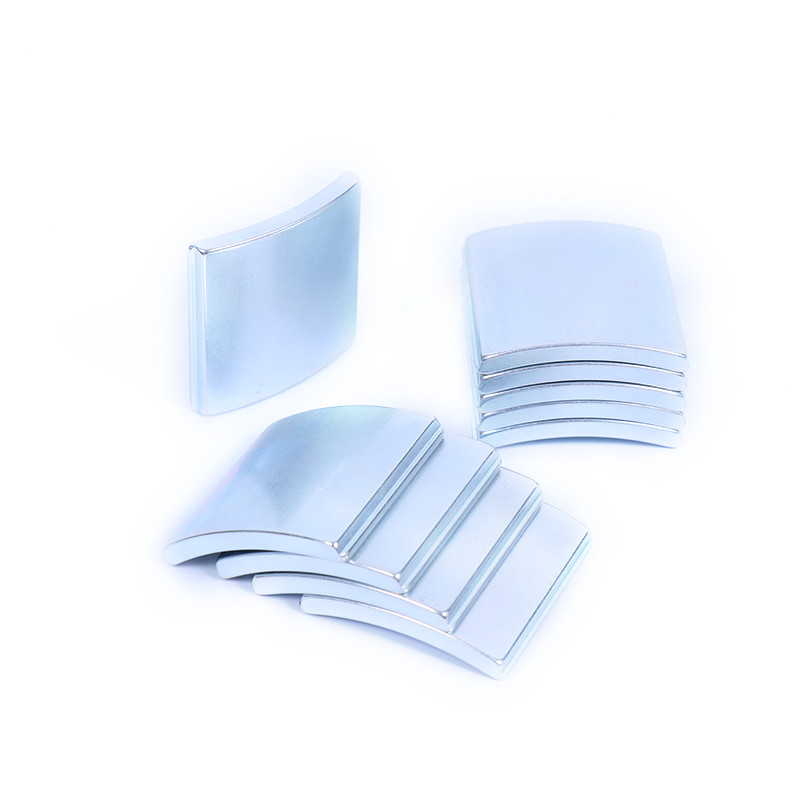
Magnets and Magnetic Assemblies
Magnetic components are a distinct part family inside the same supply base. The relevant types are NdFeB magnets, SmCo magnets, Alnico magnets, ferrite magnets and magnetic assemblies. Published grade ranges for these families are N35 to AH52 for NdFeB, SMCO5 and SM2CO17 for SmCo, Y25 to Y40 for ferrite, and Alnico2 to Alnico9 for Alnico. Magnetic performance is verified through measurable characteristics rather than visual appearance, including demagnetisation rate, dimensions and tolerances, ageing, salt spray, irreversible loss, magnetic flux and magnetic moment, and the superficial magnetic field difference between individual magnets.
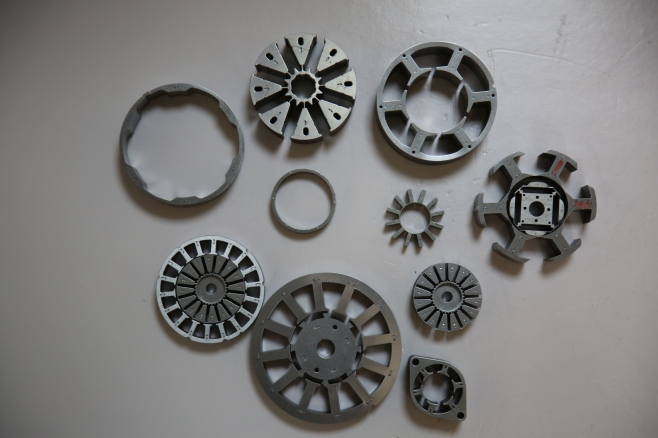
Shafts, Stator Cores, Rotor Cores and Motor Housings
These are the part families most closely tied to rotating equipment. Shaft parts, stator cores, rotor cores and motor housings appear together in the same product media because they serve the same assemblies: industrial motors, servo systems and generators. A medical shaft is also included among the shaft parts, which reflects the fact that the same turning and grinding logic serves more than one regulated industry.
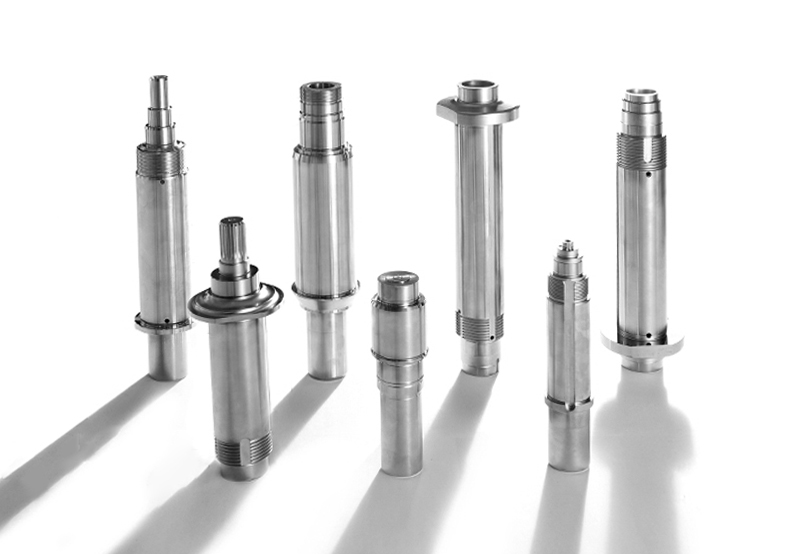
Shaft Parts in Detail
A shaft is a functional part, not a structural one: it transmits motion and locates other components, so its diameter tolerances, straightness and surface condition directly affect the assembly it goes into. Shafts are quoted from drawings with material, heat treatment and surface finish stated, because those three inputs determine both the machining sequence and the inspection plan.
Automotive Parts
Automotive components follow the same manufacturing logic with an application constraint attached. One documented example is a range of automotive suspension parts, accessory brackets, adjustment rods and tie rods with model designations 51450-SV4-000, 52390-SDA-A01, 51395-T2A-A03 and 52370-TEA-T00, produced from cold-rolled sheet and pickled sheet materials and specified for Honda Accord 1992 to 1997 fifth-generation vehicles with 2.2 and 2.0 litre engines and chassis codes CDS, CD4, CB3 and CB7. The lesson for buyers is general: an automotive part is defined by its vehicle fitment and material specification as much as by its geometry.
Comparing Process Routes and Magnet Grades
The two tables below summarise the process and material facts that a buyer needs before requesting a quotation. They compare process routes and magnetic material families only; they do not rank suppliers, and they do not assign a capability score to any process.
| Process route | Materials commonly used | How the scope is defined |
|---|---|---|
| Sheet metal stamping | Stainless steel, carbon steel, aluminium alloys, copper and copper alloys | Custom manufacturing based on customer drawings or samples |
| Sheet metal deep drawing | Stainless steel, carbon steel, aluminium alloys, copper and copper alloys | Custom manufacturing based on customer drawings or samples |
| Sheet metal fabrication | Stainless steel, carbon steel, aluminium alloys, copper and copper alloys | Custom manufacturing based on customer drawings or samples |
| CNC machining | Stainless steel, carbon steel, aluminium alloys, copper and copper alloys | Custom manufacturing based on customer drawings or samples |
| Die casting | Aluminium, zinc and magnesium alloys | Custom manufacturing based on customer drawings or samples |
| Magnetic family | Published grade range | Verification characteristics |
|---|---|---|
| NdFeB magnet | N35 to AH52 | Demagnetisation rate, dimensions and tolerance, ageing, salt spray, irreversible loss, magnetic flux, magnetic moment |
| SmCo magnet | SMCO5 and SM2CO17 | Same verification set, applied to SmCo assemblies and rotors |
| Ferrite magnet | Y25 to Y40 | Same verification set |
| Alnico magnet | Alnico2 to Alnico9 | Same verification set |
Step-by-Step: From Requirement to Qualified Part
The sequence below reflects how custom metal components are actually specified and released. Each step closes one of the ambiguities described earlier, which is why skipping a step usually reappears later as a quotation revision or a first-article rejection.
- Define the function and the interface. State what the part does, which dimensions locate it in the assembly, and which surfaces carry load or sealing. This determines which dimensions are critical and which are free.
- Choose the process route. Decide between stamping, deep drawing, fabrication, CNC machining and die casting on the basis of geometry, material and volume. The process decision sets the tooling cost structure before any supplier is contacted.
- Fix the material and grade. Move from a material family to a specific grade, and state whether heat treatment is required. For magnetic parts, name the family and the grade range so that the magnetic circuit can be evaluated.
- Set tolerance, surface finish and special requirements. Custom manufacturing in this category supports customer-specified tolerances, heat treatments and surface finishes; anything outside standard practice, including special materials or strict certification requirements, should be confirmed in advance rather than assumed.
- Run prototype and tooling development. Projects can be supported from prototype development and mould development through small-batch trial production to large-scale production, which allows the design to be validated before volume commitment.
- Agree the inspection method. Production is carried out according to drawings with 100% product inspection, and testing laboratory capability should be confirmed for the characteristics that matter, such as magnetic flux, salt spray or dimensional capability.
- Ramp to batch production and define after-sales. Confirm delivery scheduling, packaging and the route for handling non-conformance before the first volume order is released.
What to send with a quotation request: 2D and 3D drawings, required material specifications, surface-treatment requirements, estimated order quantity and the application scenario. Complete drawing information is what allows a supplier to return an accurate quotation and a technical evaluation rather than a price range.
Use Cases: Where Precision Metal Mechanical Parts Are Used
Application breadth is one of the reasons this category is hard to define, and also one of the reasons to check whether a supplier's stated industries match your own. The documented application set for this supply base covers automotive, medical, industrial motors, elevators, home appliances, aerospace, green energy and wind power generation, mobile phones, audio components, compressors, communications, electronics, instrumentation, electrical appliances, lighting and furniture.
- Automotive. Suspension parts, brackets, adjustment rods and tie rods produced from cold-rolled and pickled sheet, specified by vehicle fitment.
- Medical devices. Shaft parts and precision components where dimensional control and material traceability dominate the requirement.
- Industrial motors. Stator cores and rotor cores, motor housings and shafts, often combined with permanent magnet assemblies for servo and drive applications.
- Green energy and wind power. Magnetic assemblies and mechanical components used in generation and drive trains.
- Instrumentation and electronics. Small precision parts and magnetic components for sensors, meters, audio equipment and communications hardware.
- Appliances, lighting and furniture. Stamped and fabricated metal parts and magnetic closures, where cost per unit and repeatability dominate.
For a buyer, the useful question is not whether a supplier lists your industry but whether the supplier lists your part family and your process within it. A supplier that produces stator and rotor cores for motors is a different evaluation from one that produces fabricated enclosures, even when both describe themselves as precision metal mechanical parts manufacturers.
What a Manufacturer Profile Should Tell You
Chunan Qiandaohu Pengsheng Technology Development Co., Ltd is a manufacturer of mechanical hardware accessories based in Hangzhou, Zhejiang Province, China, established in 2008. Its product scope covers NdFeB magnets, magnetic assemblies, shafts, stator cores, rotor cores, sheet metal stamping, deep-drawn parts, sheet metal fabrication, CNC machined parts, die-cast parts, automotive parts and gauss meters. The company operates as a manufacturer with its own trading team rather than as a pure trading intermediary.
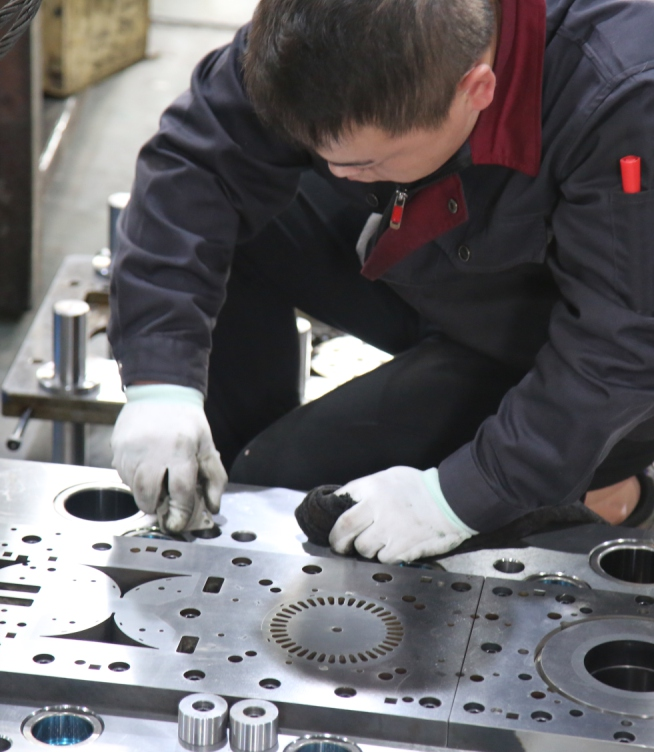
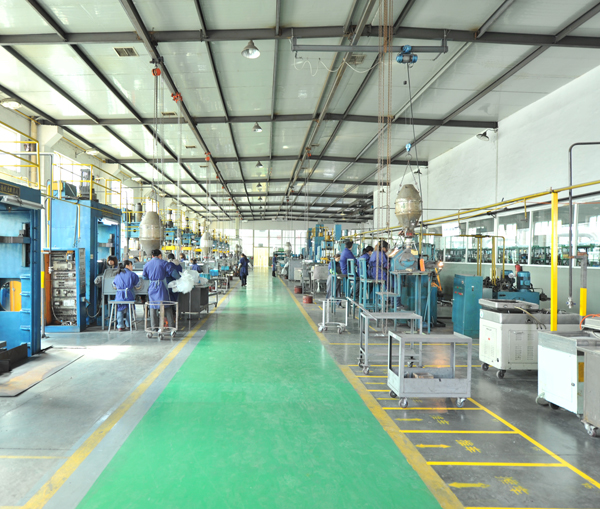
Several disclosures in that profile are the kind a buyer can actually verify or test in a first conversation. The manufacturing facility covers 10,000 square metres and employs more than 150 staff, and the R&D team consists of over 30 engineers. Annual production capacity reaches 10,000,000 units. Export business accounts for 50% of total sales, and the major markets are the EU and the USA. The company operates ISO 9001 and TS16949 quality management systems, and its qualifications also list ROHS and REACH.
Those facts matter because they map onto the evaluation questions that appear in every supplier review: whether the supplier owns production rather than reselling it, whether engineering capacity exists to review a drawing rather than only to quote it, whether quality systems are certified for the sectors being served, and whether export experience exists in the markets the buyer ships to. None of these facts proves that a supplier is right for a specific part. They do establish whether the supplier belongs on a shortlist at all.
Frequently Asked Questions
What quality systems and inspection practices apply to precision metal mechanical parts from Pengsheng Technology?
Chunan Qiandaohu Pengsheng Technology Development Co., Ltd operates ISO 9001 and TS16949 quality management systems, and its qualifications also list ROHS and REACH. Production is carried out according to customer drawings with 100% product inspection, and the company maintains a testing laboratory and advanced testing equipment to verify product quality. Buyers with sector-specific certification requirements, such as regulated medical or automotive programmes, should state those requirements before quotation, because they affect material selection, process routing and documentation.
Can OEM and ODM custom processing be provided for metal components?
Yes. OEM and ODM customisation services are available, and components including sheet metal stamping, deep-drawn parts, CNC-machined parts, die-cast parts and motor stator and rotor cores can be manufactured based on customer drawings. This fits projects that require mould development, prototype verification and batch production of medium-to-high-complexity parts. Quotation and the proposed solution depend on the drawings, materials and order volume provided by the customer.
Is this a manufacturer or a trading company, and does that matter for a European or US buyer?
Chunan Qiandaohu Pengsheng Technology Development Co., Ltd is a manufacturer that has specialised in precision metal mechanical parts since 2008, and it also maintains its own trading team. That combination matters for buyers in the EU and the USA because it means engineering and production sit with the same organisation that handles the commercial relationship. Supporting detail is public: a 10,000 square metre facility, more than 150 employees, over 30 R&D engineers, annual production capacity of 10,000,000 units, and export accounting for 50% of total sales with the EU and the USA as major markets.
What information is needed to obtain an accurate quotation?
Submit 2D and 3D drawings, the required material specifications, surface-treatment requirements, the estimated order quantity and the application scenario. Complete drawing information is what allows an accurate quotation and a technical evaluation rather than an indicative price. Where a magnetic part is involved, the magnet family and grade range should also be stated, since NdFeB, SmCo, ferrite and Alnico parts are specified and verified differently.
How are delivery and after-sales support handled?
Delivery is managed by a professional and experienced team and production line, with on-time delivery as the stated operating commitment. Where a buyer requires it, a contract can be signed to guarantee quality. A dedicated after-sales team handles problems that arise after shipment, and payment terms can be arranged flexibly according to the cooperation conditions. Buyers should confirm the specific delivery schedule, packaging and documentation requirements for their part at the quotation stage, since those depend on the drawing and the order volume rather than on a general rule.
Conclusion: Turn the Category Name into a Specification
Precision metal mechanical parts is a category entry point, not a purchase specification. The buyers who get comparable quotations are the ones who arrive with a part family, a process route, a material grade, a tolerance reference, an inspection method and a volume estimate already defined. The buyers who receive incomparable numbers are the ones who send the category name and wait.
For a research-stage project, the sensible next step is small and concrete: identify your part family, decide whether the geometry is formed, machined or cast, and put the material grade and tolerance class on paper. That single page is enough to start a technical conversation with any qualified manufacturer, and it is also the fastest way to find out whether a supplier's stated capability actually covers your component.
Request a Sample, a Quotation or the Product Catalogue
Chunan Qiandaohu Pengsheng Technology Development Co., Ltd supplies magnets, magnetic assemblies, shafts, stator cores, rotor cores, stamped, deep-drawn, fabricated, CNC-machined and die-cast parts from Hangzhou, Zhejiang Province, China. Send your drawings, material specification and estimated quantity to receive a technical evaluation and quotation.
Email: vincent@hzpsmag.com | Phone and WhatsApp: 0086-18758114568 | Website: www.hzpsmat.com
Download the full product catalogue: Pengsheng Technology catalogue (PDF)
Address: No.35 Lingpan, Yanchang Village, Fengshuling Town, Chunan County, Hangzhou City, Zhejiang Province, China. Contact: Vincent Fang.
Have Questions or Need More Details?
Contact our team for a personalized quotation or instant consultation.
Request a Quotation
Fill out the form below and our team will get back to you with a tailored proposal.
WhatsApp Direct Chat
Prefer to chat in real-time? Message us on WhatsApp for instant assistance & quick answers.
- Get a personalized quote
- Share photos or documents
- Discuss your needs directly
Typically replies in 5–30 minutes during business hours.