
Precision Metal Mechanical Parts: A Practical Buyer's Introduction
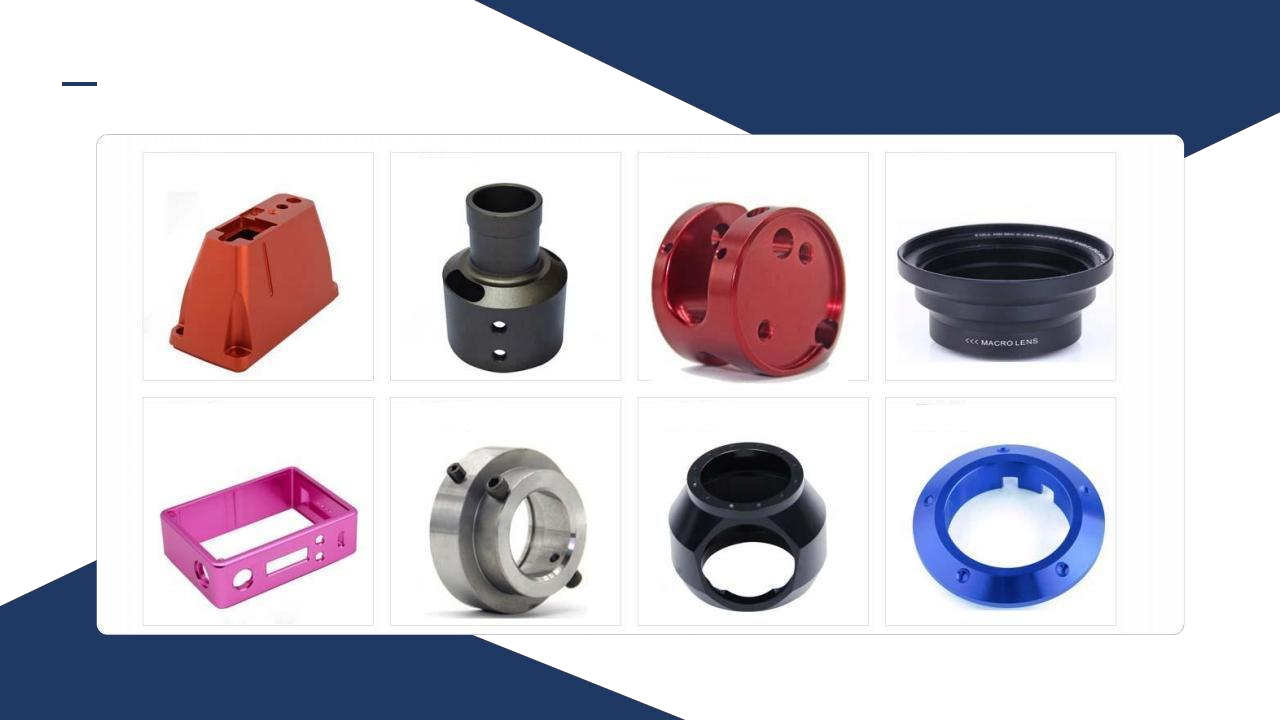
Precision metal mechanical parts are metal components manufactured to a defined dimensional tolerance and a defined functional requirement — not simply metal parts that happen to fit together. The category covers CNC machined components, stamped and deep-drawn parts, fabricated sheet metal, die-cast parts, magnets and magnetic assemblies, and the functional sub-assemblies built from them, such as shafts, stator cores, rotor cores and motor housings. Most buyers meet this category for the first time when a design moves from prototype into a sourced, repeatable supply chain.
Chunan Qiandaohu Pengsheng Technology Development Co., Ltd. is a China-based manufacturer and trading company established in 2008 and located in Hangzhou, Zhejiang Province. Its production scope covers NdFeB magnets, magnetic assemblies, shafts, stator and rotor cores, sheet metal stamping, deep-drawn parts, sheet metal fabrication, CNC machined parts, die-cast parts and automotive parts. That scope is used here as a concrete reference point while explaining how the category is structured, how process routes are chosen, and what a first-time buyer should prepare before contacting any supplier.
Why "Precision" Is a Specification, Not a Label
The first difficulty in this category is that the word "precision" carries no fixed meaning. Two suppliers can both describe their output as precision metal mechanical parts while working to completely different tolerance bands, inspection routines and documentation levels. A buyer who compares suppliers on the word alone has no basis for comparison.
Three failure patterns recur in early sourcing discussions:
- Process chosen by habit rather than by geometry. A part that should be stamped is machined from solid, or a part that should be machined is forced into a die-cast tool. Both choices are technically possible and commercially wrong for the intended volume.
- Tolerance quoted without a measurement method. A number on a drawing only means something if both sides agree on the instrument, the datum scheme and the inspection sampling behind it.
- Capability judged from photographs. Images confirm that a supplier has made a part family before. They do not confirm that the supplier can hold the tolerance, repeat it across a batch, and document it.
A 2026 technical buyer's guide for precision metal parts reports that high-quality parts are held to tolerances as tight as ±0.001 mm, well beyond what standard machining achieves, and references ISO 2768 for general tolerances and ISO 286 for fits. Those two standards are the practical vocabulary of the category: ISO 2768 tells a supplier how much deviation is acceptable on an undimensioned feature, and ISO 286 governs the fit between mating parts such as a shaft and a bore. A buyer who names the standard and the tolerance band moves immediately from a subjective conversation to a technical one.
The Category in Context: Market Size, Tolerances and Trade Codes
Demand for precision metal components is broad and structurally fragmented. Dataintelo's 2025 estimate places the global precision parts market at USD 98.4 billion, with the metal segment accounting for 58.3% of global revenue. The same research house values the global motor cores market — stators and rotors — at USD 8.7 billion in 2025, with electric-vehicle motor cores as the largest segment at 38.5%. Both figures indicate where the volume sits: automotive electrification, industrial motors and rotating machinery pull a large share of metal part demand.
Trade data is often used to size this category, and that is where buyers and analysts frequently go wrong. UN Comtrade is a merchandise-trade database organised by commodity classification and trading partner. UNdata presents iron and steel articles under HS chapter 73, including heading 7326 for articles of iron or steel not elsewhere specified, and presents non-ferrous metals, cermets and articles thereof under HS chapter 81. Neither heading is specific to precision mechanical parts: one HS heading can contain very heterogeneous products, so a broad chapter total should never be read as a precision-parts market size. Trade codes are useful for screening source countries and validating customs classification — not for defining the product category.
The practical consequence for a research-stage buyer is that the supplier landscape is organised by process specialisation rather than by a single product category. One supplier may own stamping and deep drawing, another may own machining, another may own magnet production. A supplier that covers several process routes reduces the number of handoffs, which is why multi-process manufacturers are common reference points in this category.
What Falls Under Precision Metal Mechanical Parts
The category is best mapped by process route and part family, because that is how capability, tooling cost and tolerance are actually determined.
Magnets and Magnetic Assemblies
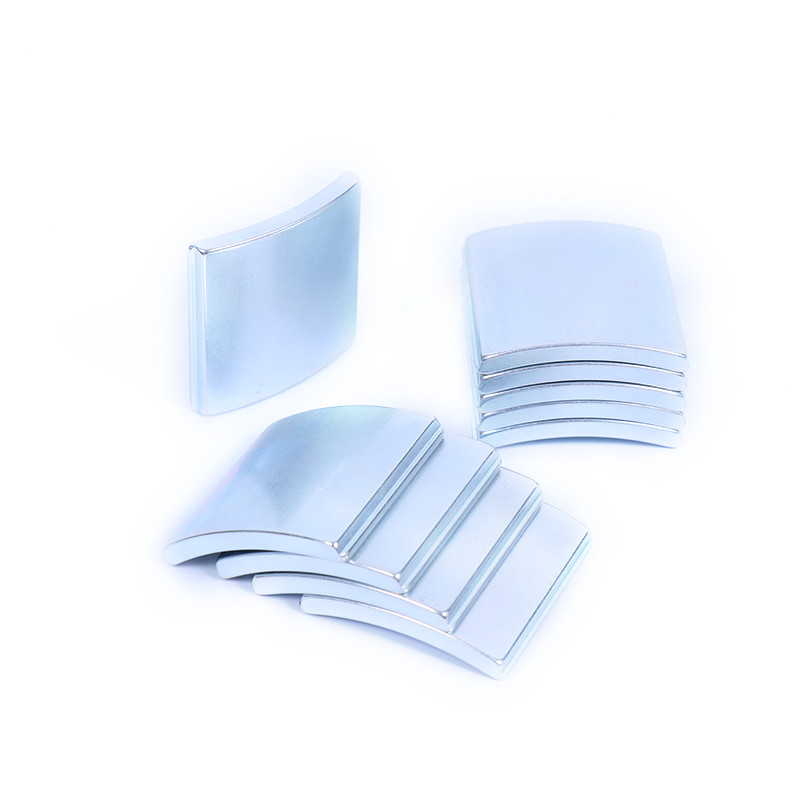
Magnet production is a distinct branch of precision metal manufacturing because the functional requirement is magnetic rather than only dimensional. The documented product range covers NdFeB magnets in grades N35 to AH52, SmCo magnets in SmCo5 and Sm2Co17 grades, Alnico magnets in Alnico2 to Alnico9 grades, Ferrite magnets in Y25 to Y40 grades, and finished magnetic assemblies. Magnet materials are rare-earth based or ceramic/metallic depending on grade family.
For magnet parts, dimensional tolerance is only one of the parameters a buyer must fix. The documented specification set includes demagnetisation rate, dimensions, tolerance, ageing, salt spray, irreversible loss, magnetic flux and magnetic moment, and each of these can be set against a customer requirement. Surface field consistency across a batch is explicitly monitored, which matters in sensor, motor and audio applications where a small field difference changes device behaviour. Typical magnet applications span automotive, medical, industrial motors, elevators, home appliances, aerospace, green energy and wind power generation, mobile phones, audio components, compressors, communications, electronics, instrumentation, electrical appliances, lighting and furniture.
Stator Cores, Rotor Cores, Motor Housings and Shafts
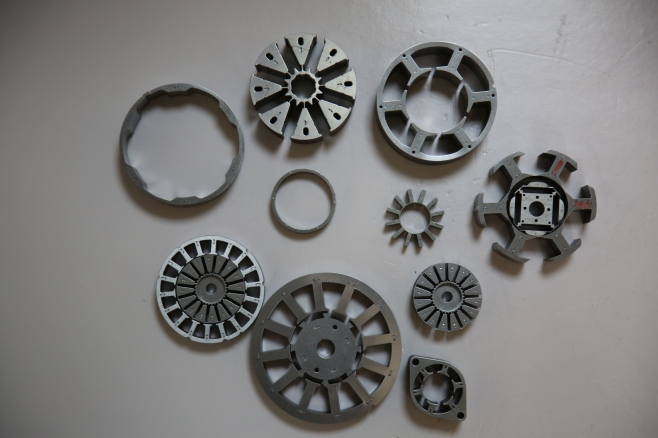
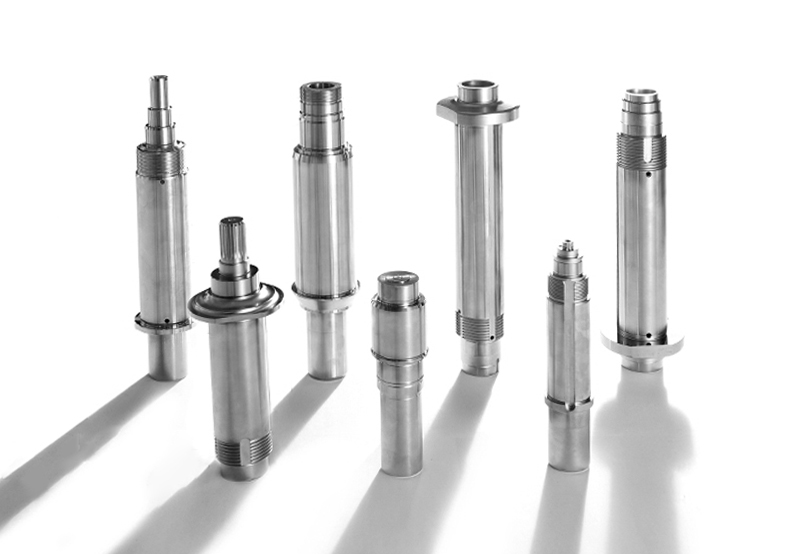
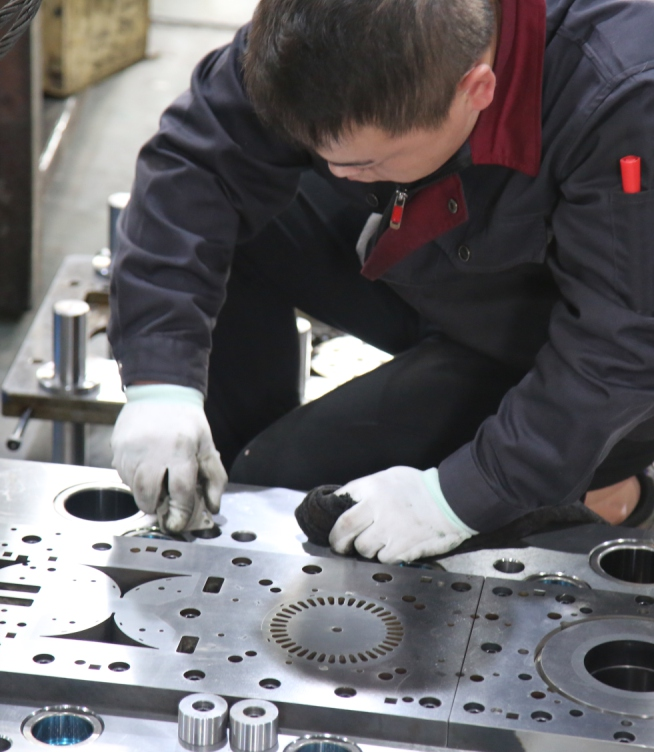
The rotating part family shown in the supplier's product media includes stator cores, rotor cores, motor housings and shafts, with a medical shaft included among the shaft parts. These are not interchangeable commodity items: a stator core is a laminated stack with a magnetic circuit requirement, a rotor core carries the rotating magnetic structure, a motor housing carries the mechanical interface and the bearing seats, and a shaft carries the torque and the fit.
Sheet Metal Stamping and Deep Drawing
Stamping and deep drawing convert flat sheet into three-dimensional parts at high repeat rates. The process scope documented for this supplier covers sheet metal stamping, sheet metal deep drawing, sheet metal fabrication, CNC machining and die casting as one integrated manufacturing service, classified as a custom precision metal mechanical parts offering that combines manufacturing and trading activities. No single model designation applies to that service, because the item is identified by its process scope rather than by a model number.
Sheet Metal Fabrication, CNC Machining and Die Casting
Fabrication covers cut, formed and welded sheet assemblies. CNC machining covers turned and milled parts where tolerance and surface finish drive the specification. Die casting covers near-net-shape parts where the geometry is complex and the volume justifies a tool. The documented materials are stainless steel, carbon steel, aluminium alloys, copper and copper alloys for the machining and sheet families, with aluminium, zinc and magnesium alloys as the commonly used die-casting materials.
The industries listed against these processes are broad: telecommunications, high-end electronics, instrumentation, electrical appliances, computers, cameras, lighting, furniture, automotive, mobile phones, gift packaging and toys. That breadth is typical of multi-process suppliers and is also a warning for buyers — a long industry list is a scope statement, not proof of experience in your specific application.
Automotive Parts as a Defined Product Line
Automotive part numbers are documented as a separate line: 51450-SV4-000, 52390-SDA-A01, 51395-T2A-A03 and 52370-TEA-T00. These are classified as automotive suspension parts, automotive accessory brackets, automotive adjustment rods and automotive tie rods, made from cold-rolled sheet and pickled sheet materials, and specified for Honda Accord 1992–1997 fifth-generation models with 2.2 and 2.0 litre engines and chassis codes CDS, CD4, CB3 and CB7. For a first-time buyer, this line is useful evidence of how a part number, a vehicle platform, a material and a functional category are documented together — the same discipline that any custom part requires.
The Manufacturer Behind the Reference Scope
The manufacturing facility covers 10,000 m² and employs more than 150 staff members, with an R&D team of more than 30 engineers and an annual production capacity of 10,000,000 units. The company states ISO 9001 and IATF 16949 quality management system certification and ROHS and REACH compliance, and reports that export business accounts for 50% of total sales, with major markets in the EU and the USA. Those figures are the kind of capacity and compliance context a buyer needs at the research stage, because they indicate whether a supplier's scale is remotely compatible with an annual requirement.
From Drawing to Qualified Part: A Seven-Step Breakdown
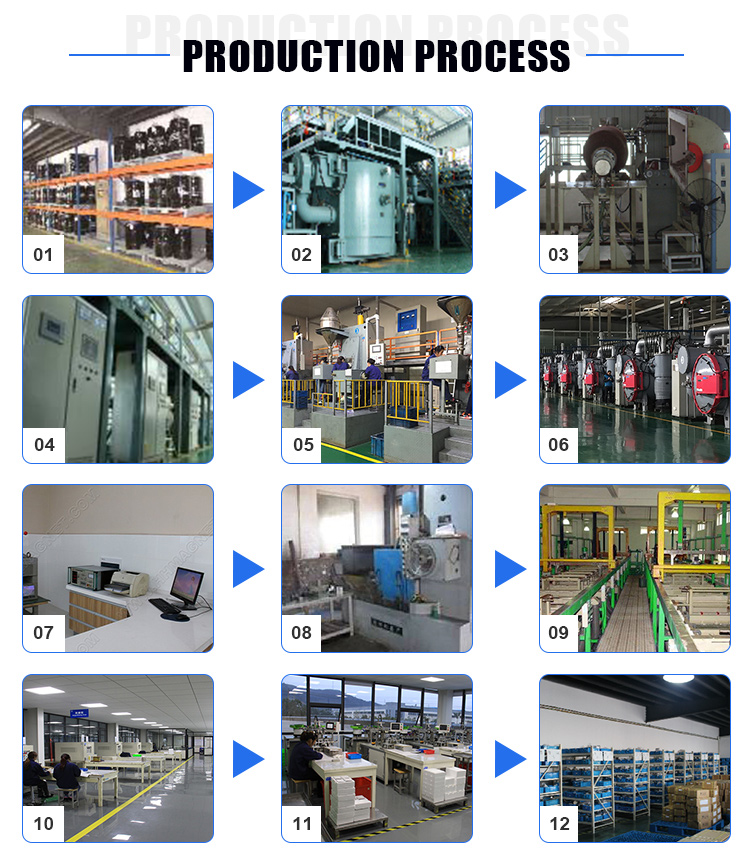
- Define the function, not only the shape. State what the part does — carries load, locates a bearing, completes a magnetic circuit, seals an interface. Function determines which features must be tightly toleranced and which can stay general.
- Fix the tolerance and the measurement method. Reference the governing standard, such as ISO 2768 for general tolerances and ISO 286 for fits, and agree on how the critical dimensions will be measured on the first article.
- Match the process route to geometry, material and volume. Stamping and deep drawing favour thin-wall geometry at volume; CNC machining favours complex geometry at low to medium volume; die casting favours complex three-dimensional geometry where tooling cost is justified. Prototype development, mould development, small-batch trial production and large-scale production are all supported stages, which means the route can be validated before it is committed.
- Build a complete RFQ package. The documented requirement is 2D and 3D drawings, required material specifications, surface-treatment requirements, estimated order quantity and application scenario. Complete drawing information is what allows an accurate quotation and a technical evaluation, rather than a placeholder price.
- Run tooling and first-article validation. Confirm the tool, the material certificate, the critical dimensions and the surface condition before the batch is released.
- Confirm the inspection regime for production. The supplier states that production follows customer drawings with 100% product inspection. Whatever regime is agreed, it should be written into the purchase order, not left as an assumption.
- Close the loop after delivery. Incoming inspection data on the buyer's side is the only reliable input for the next order. A supplier with a dedicated after-sales team and a willingness to sign a quality contract shortens this loop considerably.
Where These Parts Are Used
Automotive
Automotive applications include suspension parts, brackets, adjustment rods and tie rods, plus structural and functional parts in assemblies. The sector is demanding on documentation because part numbers, platform compatibility and material specification must remain traceable across the supply chain. IATF 16949 certification is the sector-specific quality management reference that buyers typically request.
Industrial Motors and Electrification
Stator cores, rotor cores, motor housings and shafts sit at the centre of industrial motor and electric-drive production. With the global motor cores market valued at USD 8.7 billion in 2025 and electric-vehicle cores representing the largest segment at 38.5%, the tolerance and lamination discipline of core production has become a mainstream procurement concern rather than a specialist one.
Medical Devices
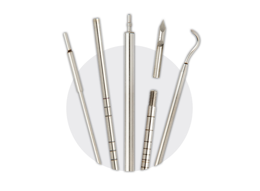
Medical applications appear in two forms in this category: finished instrument components and small precision shafts. The documented part range includes a medical shaft among shaft parts. Medical buyers usually need tighter documentation, material traceability and change control than industrial buyers, and strict certification requirements should be confirmed in advance rather than assumed from a general quality certificate.
Green Energy and Wind Power
Wind power generation and green energy equipment rely on magnets, magnetic assemblies and structural metal parts. The magnet grade, coating and demagnetisation behaviour of the part matter as much as its dimensions, which is why magnet specifications are written as a parameter set rather than a single tolerance value.
Instrumentation, Electronics and Appliances
Instrumentation, high-end electronics, telecommunications, electrical appliances, lighting and furniture use stamped, fabricated, machined and die-cast parts in enclosures, brackets, mechanisms and sensor assemblies. Here the cost driver is usually the tooling and the batch size rather than the tolerance band, which makes process selection the decisive early decision.
Part Family Comparison
The table below compares the part families documented for this supplier using only stated product and material information. It is a scoping tool for a research-stage buyer, not a price comparison.
| Part family | Manufacturing route | Documented material set | Typical industries listed | What the buyer must specify |
|---|---|---|---|---|
| Magnets and magnetic assemblies | Magnet production plus assembly (NdFeB, SmCo, Alnico, Ferrite) | Rare-earth elements; grade families N35–AH52, SmCo5 and Sm2Co17, Alnico2–Alnico9, Y25–Y40 | Automotive, medical, industrial motors, elevators, appliances, aerospace, green energy, wind power, electronics, instrumentation | Grade, dimensions, tolerance, coating, magnetic parameters such as flux, moment and irreversible loss |
| Stator cores and rotor cores | Stamping and lamination | Confirmed per drawing from the documented metal set | Industrial motors, automotive, green energy | Lamination thickness, stack height, critical dimensions, inspection method |
| Shafts, including medical shafts | CNC machining | Stainless steel, carbon steel, aluminium alloys, copper and copper alloys | Motors, medical devices, instrumentation | Fit class, straightness, surface finish, heat treatment |
| Stamped and deep-drawn parts | Sheet metal stamping and deep drawing | Stainless steel, carbon steel, aluminium alloys, copper and copper alloys | Electronics, appliances, automotive, lighting, packaging | Blank material, wall thickness, tooling ownership, batch size |
| Fabricated sheet metal | Cutting, forming, fabrication | Stainless steel, carbon steel, aluminium alloys, copper and copper alloys | Telecommunications, computers, furniture, electrical equipment | Weld standard, surface treatment, flatness, assembly interfaces |
| CNC machined parts | CNC turning and milling | Stainless steel, carbon steel, aluminium alloys, copper and copper alloys | Instrumentation, high-end electronics, medical, motors | Tolerance band, datum scheme, surface finish, inspection sampling |
| Die-cast parts | Die casting | Aluminium, zinc and magnesium alloys | Automotive, electronics, appliances | Alloy, draft and wall thickness, porosity acceptance, machining allowance |
| Automotive suspension and linkage parts | Stamping and forming from cold-rolled and pickled sheet | Cold-rolled sheet and pickled sheet materials | Automotive | Part number, platform and chassis compatibility, material certificate |
Across every row, one requirement repeats: customer-specified tolerances, heat treatments and surface finishes must be confirmed in advance, and special materials or strict certification requirements should be clarified before tooling starts. That single sentence removes most of the disputes that surface later in a project.
Frequently Asked Questions
Which certifications should a precision metal parts supplier hold?
Chunan Qiandaohu Pengsheng Technology Development Co., Ltd. holds ISO 9001 and IATF 16949 quality management system certification and states ROHS and REACH compliance for its products. ISO 9001 covers general quality management, IATF 16949 is the automotive-sector quality management standard, and ROHS and REACH are EU substance-restriction frameworks relevant to material content. A buyer should confirm that the certificate scope covers the specific part family and process being purchased, and should confirm special materials or strict certification requirements in advance, because medical, automotive and export programmes may require additional testing or documentation beyond a general certificate.
Can a manufacturer produce custom precision metal mechanical parts from my drawings?
Yes. OEM and ODM customisation is available, and components including sheet metal stamping, deep-drawn parts, CNC machined parts, die-cast parts and motor stator and rotor cores are manufactured from customer drawings or samples. This fits projects that require mould development, prototype verification and batch production of medium-to-high-complexity parts. The manufacturing base covers 10,000 m² with more than 150 staff, an R&D team of more than 30 engineers and an annual production capacity of 10,000,000 units, which indicates the scale range the process is set up for.
What determines the quotation for a custom precision metal part?
Quotation and technical solution depend on the drawings, the materials and the order volume provided by the customer. In practice the cost drivers are the drawing information supplied, the material specification, the surface-treatment requirement, the tolerance and heat-treatment level, the tooling or mould development needed, and the batch size. Complete drawing information allows an accurate quotation and a technical evaluation; incomplete drawings produce either a placeholder price or a later revision. Providing 2D and 3D drawings, material specifications, surface-treatment requirements, estimated order quantity and the application scenario is the documented way to get a usable quote.
Can I validate a prototype or sample before mass production?
Yes, in stages. Prototype development, mould development, small-batch trial production and large-scale production are all supported, so a part can be validated before a full batch is released. The supplier states that production runs according to customer drawings with 100% product inspection, which gives the buyer a defined checkpoint at the first-article stage. Sample quantities, tooling ownership and the inspection data supplied with the sample should be agreed in writing at the start of the project, because those terms determine how much of the risk sits with the buyer.
What affects production and delivery time for custom metal parts?
Delivery time depends mainly on drawing complexity, whether a new tool or mould must be developed, the material availability and the order quantity. A part that reuses an existing tool moves faster than one that requires new tooling, and a small trial batch moves faster than a full production run. The supplier reports on-time delivery as an operating priority, an annual production capacity of 10,000,000 units and a dedicated after-sales team for issue resolution, but a specific lead time should always be confirmed against the actual drawing and quantity rather than assumed from a general statement. The practical next step is to send the drawing package to vincent@hzpsmag.com for a technical review and an indicative schedule.
Conclusion: How to Start Correctly
Precision metal mechanical parts reward a disciplined first conversation. The buyer who arrives with a defined function, a named tolerance standard, a material specification, a surface-treatment requirement and an order quantity will get a technical response; the buyer who arrives with a shape and a target price will get a generic one.
Four decision rules summarise the category. First, select the process route by geometry, material and volume, not by habit. Second, convert "precision" into a tolerance value plus a measurement method. Third, match the certification to the end market and confirm that the certificate scope covers your part family. Fourth, validate with a prototype or first article before committing a production batch.
The reference scope described in this guide — magnets and magnetic assemblies, shafts, stator and rotor cores, stamping, deep drawing, fabrication, CNC machining, die casting and automotive parts, produced in a 10,000 m² facility by more than 150 staff with an annual capacity of 10,000,000 units — shows what a multi-process supply base looks like in practice. Whether or not that specific supplier is the right fit, the comparison logic is the same for every candidate on a shortlist.
Next Step: Sample, Quote or Catalogue
Buyers who are still at the research stage can start with the downloadable catalogue, which sets out the process and part families in one document, and then move to a drawing-based quotation when the specification is ready.
Catalogue download: Pengsheng Technology product catalogue (PDF)
Technical contact: Vincent Fang · vincent@hzpsmag.com · +86-18758114568 · WhatsApp
Company: Chunan Qiandaohu Pengsheng Technology Development Co., Ltd · No.35 Lingpan, Yanchang Village, Fengshuling Town, Chunan County, Hangzhou City, Zhejiang Province, China · www.hzpsmat.com
Have Questions or Need More Details?
Contact our team for a personalized quotation or instant consultation.
Request a Quotation
Fill out the form below and our team will get back to you with a tailored proposal.
WhatsApp Direct Chat
Prefer to chat in real-time? Message us on WhatsApp for instant assistance & quick answers.
- Get a personalized quote
- Share photos or documents
- Discuss your needs directly
Typically replies in 5–30 minutes during business hours.