
Precision Metal Mechanical Parts: What They Are and How Buyers Evaluate Them
Precision metal mechanical parts are metal components produced from a drawing or a physical sample to a defined geometry, material and dimensional tolerance, and then used as functional elements inside a machine, motor, vehicle or instrument. The term describes a manufacturing standard rather than a single product. A stator core, a pump shaft, a stamped bracket, a deep-drawn housing and a die-cast cover all belong to the category, yet each one is engineered, tooled and inspected in a different way.
For a buyer at the discovery and research stage, the first problem is not price. It is orientation: which part families exist, which process route can physically produce a given geometry, which materials and tolerances are realistic, and how a supplier demonstrates capability before a purchase order exists. This guide answers those questions using documented information about Chunan Qiandaohu Pengsheng Technology Development Co., Ltd. (Pengsheng Technology), a mechanical hardware manufacturer and trading company based in Hangzhou, Zhejiang Province, China, together with published market and standards data.
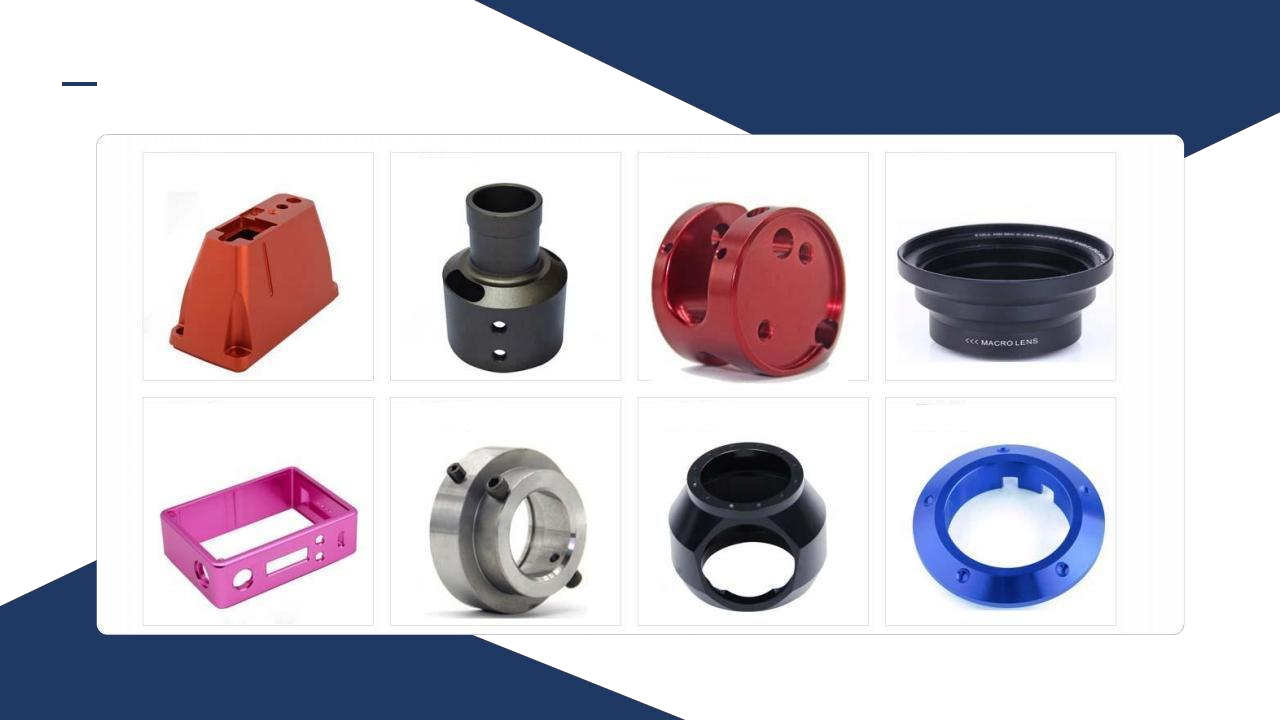
Problem Definition: Why “Precision Metal Mechanical Parts” Is a Difficult Category to Buy
Precision metal mechanical parts are difficult to buy because the phrase combines a quality claim (“precision”) with an extremely broad object class (“metal mechanical parts”). Three structural problems follow from that combination.
1. The category contains multiple unrelated process routes. A buyer searching for precision parts may in reality need sheet metal stamping, deep drawing, sheet metal fabrication, CNC machining, die casting, or a magnetic assembly. Each route has its own tooling logic, cost driver and inspection method. Treating them as one commodity leads to mismatched quotations and unrealistic tolerance expectations.
2. “Precision” is not self-defining. A tolerance statement only becomes meaningful when it is tied to a dimension, a material and a measurement method. Published technical guidance for 2026 states that high-quality precision metal parts are held to tolerances as tight as ±0.001 mm, and references ISO 2768 and ISO 286 as the standards framework behind general and limit-and-fit tolerancing. A drawing without a tolerance class gives a supplier nothing to quote against.
3. Trade classifications do not resolve the category. Official merchandise statistics are organized by material chapter, not by function. UNdata presents iron and steel articles under HS chapter 73, including heading 7326 for articles of iron or steel not elsewhere specified, while HS chapter 81 covers metals, cermets and articles thereof. Neither classification is specific to precision mechanical parts, and a residual heading such as 7326 can contain heterogeneous products. Buyers who screen suppliers purely by customs code therefore risk comparing incomparable items.
The practical consequence: precision metal mechanical parts should be specified part-family by part-family, not bought as a generic category. The four questions that shape every later decision are: what function does the part perform, what geometry and material are required, which process can produce it at the intended volume, and how will conformance be verified?
Industry Background: Demand, Standards and Market Structure
The commercial scale of the category is significant. Dataintelo reports that the global precision parts market was valued at USD 98.4 billion in 2025, with the metal segment holding the largest share at 58.3% of global revenue. Those figures describe precision parts including both metal and plastic types, so the metal share is the relevant indicator for a metal-component buyer rather than the total headline number.
Demand is not evenly distributed across part families. Dataintelo also reports that the global motor cores market, covering stators, rotors and housings, was valued at USD 8.7 billion in 2025, and that EV motor cores held the largest segment share at 38.5%. That concentration explains why stator and rotor core capability has become a distinct procurement category rather than a sub-item under general machining.
Technical expectations have moved in parallel. The 2026 buyer guidance referenced above places high-end precision parts at tolerances as tight as ±0.001 mm, which is well beyond what standard machining achieves without dedicated process control. For buyers, this creates a qualification gap: many suppliers can produce a part, but far fewer can demonstrate that the same part will be produced identically in batch two, batch twenty and batch two hundred.
Supply structure adds a second layer of complexity. Precision metal mechanical parts are frequently sourced internationally, which means a buyer is simultaneously evaluating manufacturing capability, documentation practice, inspection discipline and delivery reliability. In this environment, supplier selection is an evidence exercise rather than a brochure exercise.
Detailed Solution: How a Multi-Process Manufacturer Covers the Category
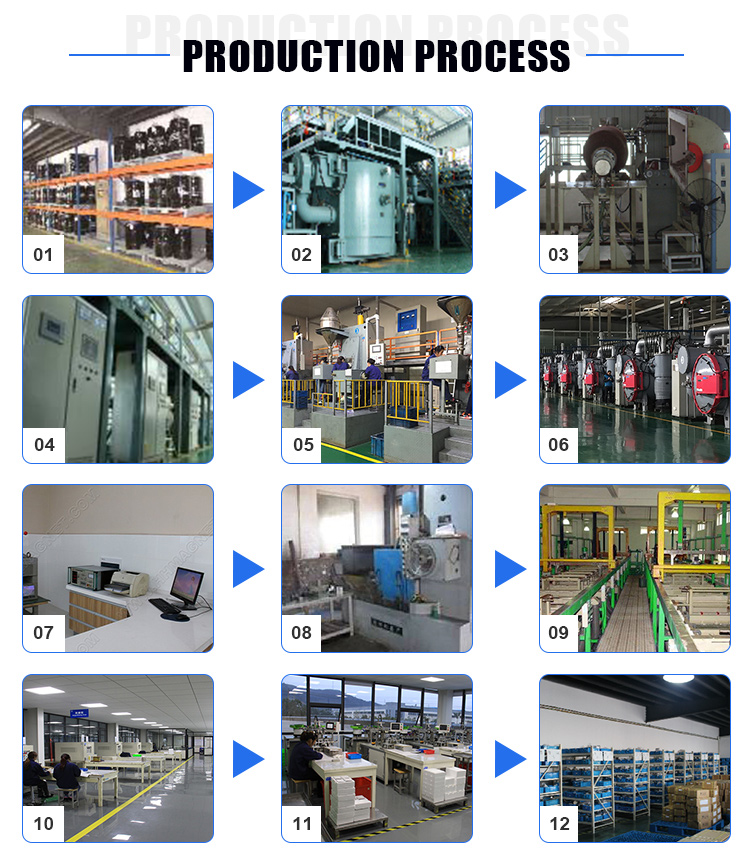
Pengsheng Technology is a high-tech enterprise specializing in the research, application and development of mechanical hardware accessories. The company was established in 2008 and is located at No.35 Lingpan, Yanchang Village, Fengshuling Town, Chunan County, Hangzhou City, Zhejiang Province, China. Its manufacturing facility covers 10,000 m² and employs over 150 staff members, supported by an R&D team of over 30 engineers. Annual production capacity reaches 10,000,000 units, and export business accounts for 50% of total sales, with major markets in the EU and the USA.
For a buyer researching the category, the useful question is not whether a supplier lists “precision parts”, but whether its process portfolio actually maps onto the part families in the request. Pengsheng Technology’s documented product scope covers magnets and magnetic assemblies, shaft parts, stator cores, rotor cores, sheet metal stamping, deep drawing of sheet metal, sheet metal processing, CNC precision machining, metal die-casting parts, automotive parts and gaussmeters.
Magnetic components and magnetic assemblies
The magnet range covers NdFeB magnets, SmCo magnets, Alnico magnets, ferrite magnets and magnetic assemblies. Documented grade coverage is N35–AH52 for NdFeB, SMCO5 and SM2CO17 for SmCo, Y25–Y40 for ferrite, and Alnico2–Alnico9 for Alnico. These materials are used with rare-earth elements and are applied in automotive, medical, industrial motor, green energy and wind power generation, and instrumentation applications.
Shafts, stator cores, rotor cores and motor housings
Part families shown in the company’s product media include stator cores, rotor cores, motor housings and shafts, including a medical shaft among the shaft parts shown. These are the components that determine the electromagnetic and mechanical behaviour of a motor, which is why they sit at the centre of the motor cores market described above.
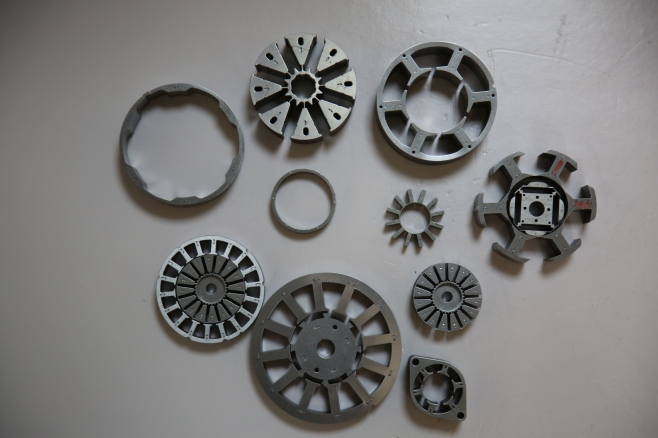
Stamping, deep drawing, fabrication, CNC machining and die casting
The company provides a precision metal mechanical parts manufacturing service covering sheet metal stamping, sheet metal deep drawing, sheet metal fabrication, CNC machining and die casting. This offering is classified as a custom precision metal mechanical parts service that combines manufacturing and trading activities, and it is identified by process scope rather than by a single model number.
Material coverage is documented as stainless steel, carbon steel, aluminum alloys, copper and copper alloys. For die casting, the commonly used materials are aluminum, zinc and magnesium alloys. That material list is important at the research stage, because material selection constrains both the process route and the achievable tolerance.
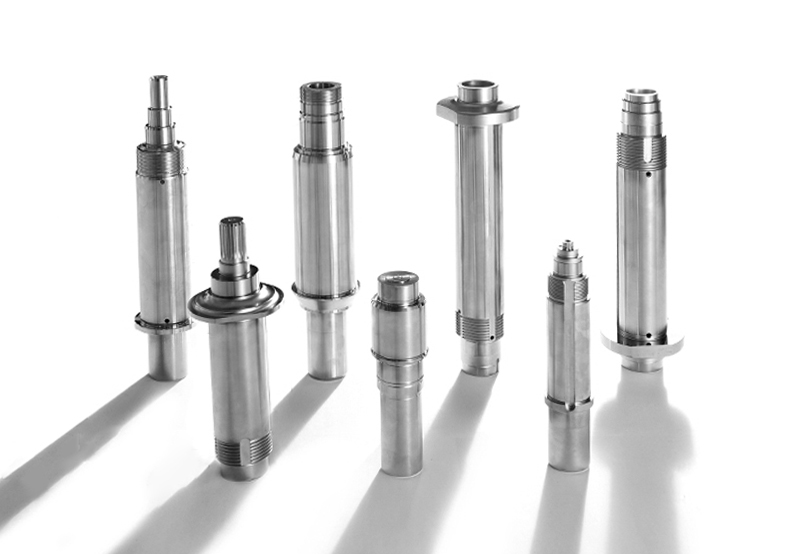
Verification and quality framework
Pengsheng Technology holds certifications under the ISO 9001 and IATF 16949 quality management systems, and lists ROHS and REACH compliance. The company states that production follows customer drawings and that 100% product inspection is applied, supported by an in-house testing laboratory and testing equipment.
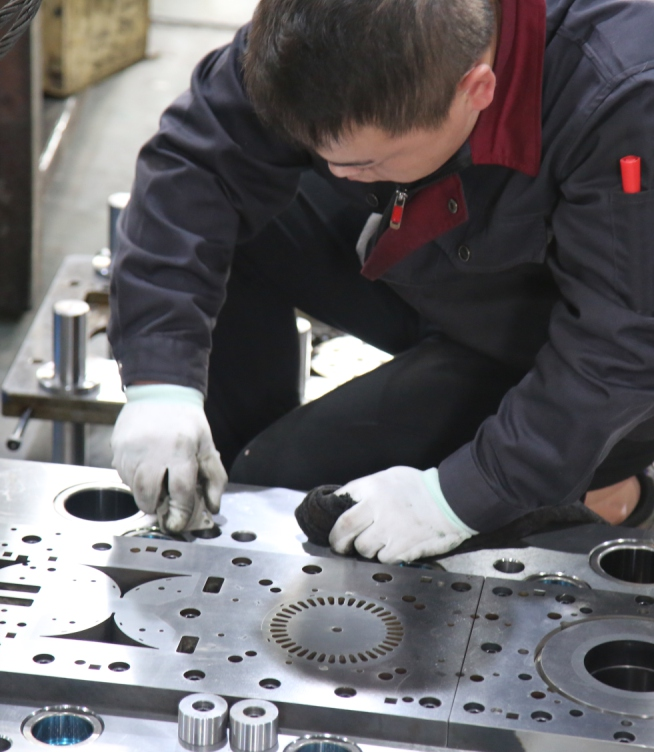
Step-by-Step Breakdown: From Requirement to Delivered Precision Parts
The buying sequence below reflects how custom precision metal mechanical parts are actually specified. It is written from the buyer’s side, so each step states what the buyer must supply and what the supplier must return.
Step 1 — Define the function and the interface
State what the part does inside the assembly and which surfaces mate with other components. A bracket, a tie rod and a rotor core carry different loads and therefore different inspection priorities.
Step 2 — Select the process route
Match geometry and volume to stamping, deep drawing, fabrication, CNC machining, die casting or magnet production. Thin, high-volume sheet components and tight-tolerance turned parts rarely share an economical route.
Step 3 — Fix the material
Choose from stainless steel, carbon steel, aluminum alloys, copper and copper alloys for general metal parts, or aluminum, zinc and magnesium alloys for die casting. For magnetic parts, select the magnet family and grade, for example NdFeB N35–AH52 or SmCo SMCO5/SM2CO17.
Step 4 — Specify tolerances, finishes and inspection
Attach tolerance class, heat treatment and surface finish requirements. Where a special material or a strict certification requirement applies, confirm it before tooling rather than after first article.
Step 5 — Submit a complete drawing package for quotation
Pengsheng Technology states that a quotation requires 2D/3D drawings, required material specifications, surface-treatment requirements, estimated order quantity and application scenarios. Complete drawing information allows an accurate quotation and technical evaluation; quotation and solution depend on the drawings, materials and order volume provided.
Step 6 — Prototype and tooling
The company supports prototype development, mold development, small-batch trial production and large-scale production. This staged structure lets a buyer validate fit and function before committing to volume.
Step 7 — Batch production and inspection
Production follows the approved drawing and is inspected before shipment. For projects where risk concentration matters, the company states it is prepared to sign a contract covering quality if required.
Step 8 — Delivery and after-sales follow-up
The company maintains a dedicated after-sales team and states that delivery timing is managed through an experienced production team. Buyers should still record Incoterms, packaging expectations and the escalation contact in the purchase documentation.
Use Cases: Where Precision Metal Mechanical Parts Are Applied
Application context determines which part family a buyer should investigate first. The following use cases are drawn from documented product and application data.
Automotive
Automotive parts in the documented range include automotive suspension parts, accessory brackets, adjustment rods and tie rods, with model designations 51450-SV4-000, 52390-SDA-A01, 51395-T2A-A03 and 52370-TEA-T00. These are compatible with Honda Accord 92–97 fifth-generation vehicles with 2.2 and 2.0 litre engines and chassis codes CDS, CD4, CB3 and CB7, and are produced from cold-rolled sheet and pickled sheet materials.
Medical devices
Medical applications appear in two documented places: the medical shaft shown among the shaft part families, and the medical industry listed among the target industries for magnets and magnetic assemblies. Medical work typically raises documentation and traceability expectations, so the buyer should confirm requirements before quotation.
Industrial motors
Stator cores, rotor cores and motor housings form the core mechanical assembly of an electric motor. Given that EV motor cores represent the largest segment of a USD 8.7 billion motor cores market, buyers sourcing these parts are competing for the same specialised capacity as automotive programmes.
Green energy and wind power
Green energy and wind power generation are listed application areas for the magnetic product range, alongside industrial motors. These applications typically combine large assemblies with long service expectations, which places weight on material consistency and inspection records.
Instrumentation and electronics
Instrumentation, high-end electronics, telecommunications, electrical appliances, computers, cameras, lighting and furniture are listed industries for the metal parts service. In these applications the buyer usually cares about repeatability of small features rather than load capacity.
Comparison Table: Part Families, Routes and Material Scope
The table below compares documented part families using only stated information. It is intended to help a buyer identify which family and process route to investigate first, not to rank one family above another.
| Part family | Documented manufacturing route | Documented material scope | Documented application areas |
|---|---|---|---|
| Magnet and magnetic assembly (NdFeB, SmCo, Alnico, ferrite) | Magnet production with dedicated equipment at each production step; magnetic assembly | Rare-earth elements; grades N35–AH52, SMCO5/SM2CO17, Y25–Y40, Alnico2–Alnico9 | Automotive, medical, industrial motors, green energy and wind power, instrumentation |
| Shaft parts (including medical shaft) | Custom production to customer drawings or samples | Stainless steel, carbon steel, aluminum alloys, copper and copper alloys | Industrial motors, medical |
| Stator cores, rotor cores and motor housings | Custom production to customer drawings or samples | Stainless steel, carbon steel, aluminum alloys, copper and copper alloys | Industrial motors, automotive, green energy |
| Sheet metal stamped parts | Sheet metal stamping | Stainless steel, carbon steel, aluminum alloys, copper and copper alloys | Telecommunications, high-end electronics, instrumentation, appliances, automotive |
| Deep-drawn parts | Sheet metal deep drawing | Stainless steel, carbon steel, aluminum alloys, copper and copper alloys | Electronics, appliances, lighting, gift packaging |
| Fabricated sheet metal parts | Sheet metal fabrication | Stainless steel, carbon steel, aluminum alloys, copper and copper alloys | Instrumentation, computers, camera, furniture, automotive |
| CNC machined parts | CNC precision machining | Stainless steel, carbon steel, aluminum alloys, copper and copper alloys | Instrumentation, high-end electronics, industrial equipment |
| Die-cast parts | Metal die casting | Aluminum, zinc and magnesium alloys | Automotive, electronics, lighting, appliances |
| Automotive parts (51450-SV4-000, 52390-SDA-A01, 51395-T2A-A03, 52370-TEA-T00) | Forming from cold-rolled sheet and pickled sheet materials | Cold-rolled sheet and pickled sheet materials | Automotive suspension, bracket, adjustment rod, tie rod |
Table sources: Pengsheng Technology product and company documentation; motor cores and precision parts market values from Dataintelo market research reports.
Frequently Asked Questions
What quality, environmental and compliance standards apply to precision metal mechanical parts from Pengsheng Technology?
Pengsheng Technology holds certifications under the ISO 9001 and IATF 16949 quality management systems and lists ROHS and REACH compliance. The company states that production follows customer drawings and that 100% product inspection is applied, supported by an in-house testing laboratory. Buyers with sector-specific requirements, such as medical or automotive programmes, should state those requirements before quotation so that material, heat treatment, surface finish and documentation expectations are confirmed in advance rather than after tooling.
Which precision metal mechanical parts can Pengsheng Technology manufacture?
The documented range covers NdFeB magnets, SmCo magnets, Alnico magnets, ferrite magnets and magnetic assemblies; shafts, stator cores, rotor cores and motor housings; sheet metal stamping, deep-drawn parts, sheet metal fabrication, CNC machined parts and die-cast parts; and automotive parts including suspension parts, brackets, adjustment rods and tie rods. Materials include stainless steel, carbon steel, aluminum alloys, copper and copper alloys, and for die casting aluminum, zinc and magnesium alloys. Each family is quoted separately because the process route and inspection method differ.
What determines the price of custom precision metal mechanical parts?
Pengsheng Technology states that quotation and solution depend on the drawings, materials and order volume provided by the customer. In practice this means the price is driven by geometry complexity, selected material and grade, tolerance and surface-treatment requirements, tooling or mold development needs, and estimated order quantity. The company describes its commercial position as providing quality products at cost-effective prices, but no fixed price list applies to custom work; a drawing-based quotation is the only reliable basis for comparison. Submitting complete 2D/3D drawings, material specifications, surface-treatment requirements and expected volumes shortens the evaluation cycle.
Can I validate a sample or prototype before committing to mass production?
The company supports prototype development, mold development, small-batch trial production and large-scale production, and offers OEM and ODM customization based on customer drawings, covering sheet metal stamping, deep-drawn parts, CNC machined parts, die-cast parts and motor stator and rotor cores. This structure allows a buyer to verify fit, function and material behaviour at prototype stage before volume tooling is committed. Buyers should specify at the quotation stage which characteristics will be measured during sample validation so that the inspection criteria are agreed in advance.
What information shortens quotation and lead time?
Complete input is the main lever. Pengsheng Technology asks for 2D/3D drawings, required material specifications, surface-treatment requirements, estimated order quantity and application scenarios; complete drawing information supports accurate quotation and technical evaluation. The company states that on-time delivery is managed by a professional and experienced team and production line, that it is prepared to sign a contract covering quality if necessary, and that a dedicated after-sales team handles issues that arise. To start an evaluation, send the drawing package to vincent@hzpsmag.com or contact Vincent Fang on +86-18758114568.
Conclusion: Build the Category Map Before the Supplier Shortlist
Precision metal mechanical parts are best understood as a family of manufacturing capabilities rather than a single purchasable item. The discovery stage therefore has a clear output: a category map showing which part family you need, which process route can produce it, which material and tolerance are realistic, and which evidence a supplier must provide before qualification. Market data supports the scale of the category — USD 98.4 billion in global precision parts in 2025, with metal at 58.3% share, and USD 8.7 billion in motor cores with EV cores at 38.5% — while published guidance places high-end tolerances as tight as ±0.001 mm under frameworks such as ISO 2768 and ISO 286.
Once that map exists, supplier evaluation becomes concrete. A manufacturer covering magnets and magnetic assemblies, shafts, stator and rotor cores, stamping, deep drawing, fabrication, CNC machining and die casting can be assessed against the specific families in the request, rather than against a generic capability statement. Pengsheng Technology documents a 10,000 m² facility, over 150 staff, an R&D team of over 30 engineers, annual capacity of 10,000,000 units and a 50% export share with major markets in the EU and the USA — facts a buyer can hold against a drawing package, an inspection plan and a delivery schedule.
Next Step: Review the Capability Range or Request a Quotation
Download the full Pengsheng Technology product catalog (PDF) to review part families and materials, or send your 2D/3D drawings, material specification, surface-treatment requirements and estimated order quantity for a drawing-based quotation.
Email: vincent@hzpsmag.com | Phone / WhatsApp: 0086-18758114568 | Website: www.hzpsmat.com
Chunan Qiandaohu Pengsheng Technology Development Co., Ltd. — No.35 Lingpan, Yanchang Village, Fengshuling Town, Chunan County, Hangzhou City, Zhejiang Province, China.
Have Questions or Need More Details?
Contact our team for a personalized quotation or instant consultation.
Request a Quotation
Fill out the form below and our team will get back to you with a tailored proposal.
WhatsApp Direct Chat
Prefer to chat in real-time? Message us on WhatsApp for instant assistance & quick answers.
- Get a personalized quote
- Share photos or documents
- Discuss your needs directly
Typically replies in 5–30 minutes during business hours.