
Air Cooled Condenser vs. Condensing Unit vs. Cold Room Air Cooler: A Matching Guide
Air Cooled Condenser vs. Condensing Unit vs. Cold Room Air Cooler: A Matching Guide
A cold room refrigeration system is a matched assembly, not a single appliance that can be ordered from a catalogue line alone. When a project moves from decision to execution, three items usually appear together in the same quotation: an air cooled condenser, a condensing unit, and a cold room air cooler. They sit side by side on the price sheet, measured in different units (heat transfer area in m², compressor power in HP, cooling capacity in kW), and buyers often compare them as if they were interchangeable options. They are not. Each performs a different function in the refrigeration loop, and only a properly matched combination holds a room at its design temperature.
Stated simply: the cold room air cooler absorbs heat from inside the room, the condensing unit compresses the refrigerant and moves that heat toward the condenser, and the air cooled condenser rejects the heat to the outside air. Clevier Refrigeration (Jiangsu) Co., Ltd., a refrigeration equipment manufacturer based in Wujin District, Changzhou City, Jiangsu Province, China, supplies cold room refrigeration systems built from a condensing unit, an air cooler, and a cold room door system, with an overall working temperature range of −40 °C to +10 °C. This guide explains what each component does, how they must match, and how to check a quotation before you commit to production.
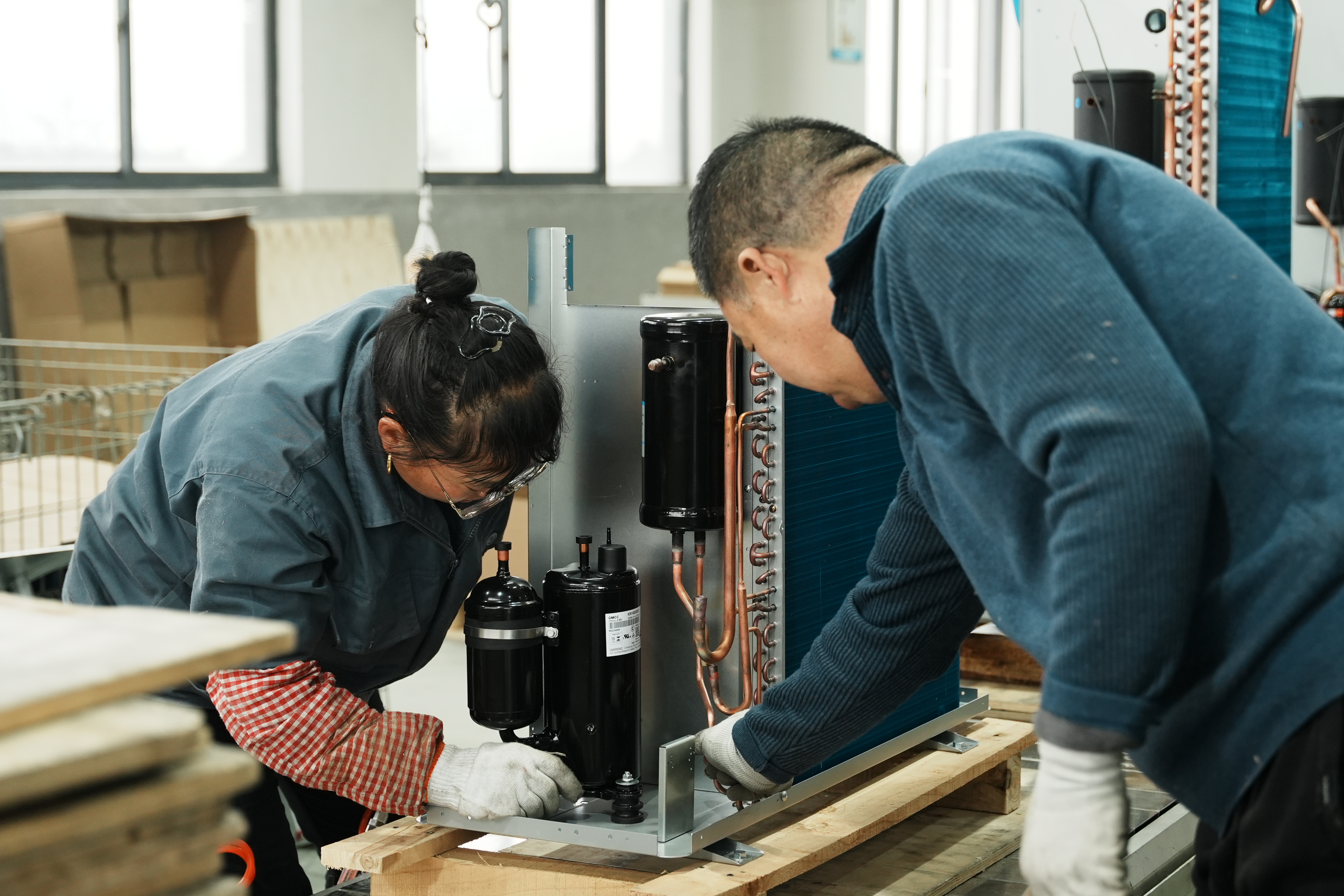
Cover image: manufacturing and assembly of refrigeration equipment at the Clevier production site in Changzhou, Jiangsu Province, China.
Problem Definition: Why These Three Components Get Confused
The confusion is structural rather than technical. Three conditions create it in almost every cold room project.
1. Three different units of measure in one quotation
A cold room air cooler is quoted by cooling capacity in kW; a condensing unit is quoted by compressor power in HP; an air cooled condenser is quoted by heat transfer area in m². Because the numbers are not directly comparable, buyers frequently evaluate each line item on price per unit instead of on how the three work together. A quotation can therefore look complete on paper and still fail at commissioning.
2. Overlapping market terminology
The same physical device is sold as a "cold room air cooler", a "cold room evaporator", or a "cold room unit cooler" depending on the supplier and the market. Buyers who search for an "evaporator" and a "cooler" as two separate items sometimes end up specifying the same component twice, or omitting the air cooled condenser because they assume the condensing unit already includes all heat rejection.
3. Component-by-component sourcing
Purchasing the compressor unit from one supplier, the cooler from another, and the condenser from a third can appear to reduce unit cost. It also removes the single point of responsibility for matching. When the system underperforms, the cause is normally a boundary between components: refrigerant charge, defrost control, or heat rejection capacity, and no single supplier owns that boundary.
What a mismatch actually costs
Matching errors surface as operational symptoms rather than obvious failures. An undersized air cooled condenser forces the compressor to run at elevated discharge pressure, which increases motor load and heat generation. Motor overheating, electrical failure, and door jam prevention are exactly the risk types Clevier addresses through an intelligent control system, thermal protection, and automatic stop protection, supported by temperature sensors, a safety limit switch, an emergency stop system, and overload protection. An oversized air cooler relative to the compressor creates short cycling and inefficient defrost; a refrigerant or voltage mismatch between components delays commissioning until parts are exchanged. None of these problems is visible in a component price comparison.
Industry Background: A Growing, Standard-Driven Market
Cold room components are not a niche category, and buyers can sanity-check a supplier's claims against published market data. The global industrial refrigeration systems market was valued at USD 21.3 billion in 2024, according to Grand View Research, while a broader "refrigeration equipment" definition was estimated at USD 67.06 billion for the same year by ResearchAndMarkets. The two figures differ mainly because of scope rather than accuracy, which is why it is worth checking which definition a supplier or report is using before repeating a number.
- The refrigeration coolers segment, which covers evaporators and air coolers, was estimated at USD 4.0 billion in 2024 (Technavio).
- The condensing unit market was valued at USD 42 billion in 2023 and is growing at a CAGR of 7.95% (Stratview Research).
- Asia Pacific led the condensing unit market in 2023 with a 70.22% revenue share, and also dominated industrial refrigeration systems in 2024 with a 32.6% revenue share (Grand View Research).
- The frozen temperature range of −18 °C to −25 °C held the largest share of the cold storage market, at approximately 63% in 2025, and the Food & Beverages segment accounted for over 76.8% of global cold chain market revenue in 2025 (Grand View Research).
- China's total cold storage capacity reached 237 million cubic meters by June 2024, an 8% year-on-year increase (China Federation of Logistics & Purchasing / IIR).
Two standards appear repeatedly in procurement documents and are worth understanding before requesting compliance evidence. IEC 60335-2-89:2019 specifies safety requirements for commercial refrigerating appliances with incorporated or remote units, including blast freezers. EN 378:2016 is the mandatory European safety and environmental standard for refrigerating systems and heat pumps in the EU. One practical consequence of the revised IEC 60335-2-89 framework is that charge limits for flammable A3 refrigerants such as R290 in commercial appliances increased from 150 g to 500 g, which is changing refrigerant selection for smaller commercial rooms.
On the supply side, Emerson Electric, Carrier, Danfoss, and Bitzer SE are identified by Grand View Research as key players in the global condensing unit market. Two of those names, Copeland and Bitzer, also appear as optional compressor brands inside Clevier's condensing unit range, which matters when a project specification names a compressor brand rather than only a horsepower.
Reading market numbers correctly: scope differences between "refrigeration equipment", "industrial refrigeration systems", and "condensing units" are large. Use these figures to judge market direction, not to size an individual room. Room sizing always comes from the load calculation.
Detailed Solution: The Three Components and How They Match
Air Cooled Condenser: the heat rejection end
The air cooled condenser is the component that releases heat from the system to the ambient air. Clevier supplies it in H Type, V Type, and U Type configurations, built on a copper tube and aluminum fin coil inside a steel housing. Heat rejection capacity runs to approximately 22–400 m² of heat transfer area depending on model, with 1–4 customized fans in 300 mm–600 mm diameters, and 220 V / 380 V, 50 Hz / 60 Hz options. Its application is defined as matching with a condensing unit and refrigeration system, which is why it should never be selected on price alone: the unit must be able to reject the compressor's heat of rejection plus the room load, including the pull-down period when load is highest.
Condensing Unit: the compressor and control end
The condensing unit is the power and control core. Clevier's range covers air cooled, water cooled, semi-hermetic, and box type condensing units, suitable for 3HP–30HP refrigeration applications. Compressor options include hermetic scroll and semi-hermetic piston types, with Copeland or Bitzer brands available, using R404A, R507A, or R22 refrigerant at 220 V / 380 V, 50 Hz / 60 Hz. Structural options are box type, open type, or a customized design. The unit is explicitly specified for matching with a cold room air cooler, evaporator, or air cooled condenser, and it covers fresh keeping, chiller, freezer, and low temperature cold storage applications.
Cold Room Air Cooler: the heat absorption end
The cold room air cooler, also sold as an evaporator or unit cooler, removes heat from the room air and transfers it to the refrigerant. Clevier's cooler range is organized into three series that map directly to room type: DL Type for fresh keeping and chiller rooms around 0 °C to +10 °C, DD Type for freezer rooms around −18 °C, and DJ Type for low temperature and blast freezer applications at −25 °C and below. Cooling capacity spans 2.1 kW to 56.2 kW depending on model, with 1–4 fans of 300 mm–600 mm diameter, air volume of 1,680 m³/h to 11,800 m³/h, and 220 V / 380 V, 50 Hz / 60 Hz customized power. Defrost options include air, electric, water, and hot gas defrost, with R404A, R507, or R22 refrigerant and ceiling mounted, side discharge, or double side discharge configurations.
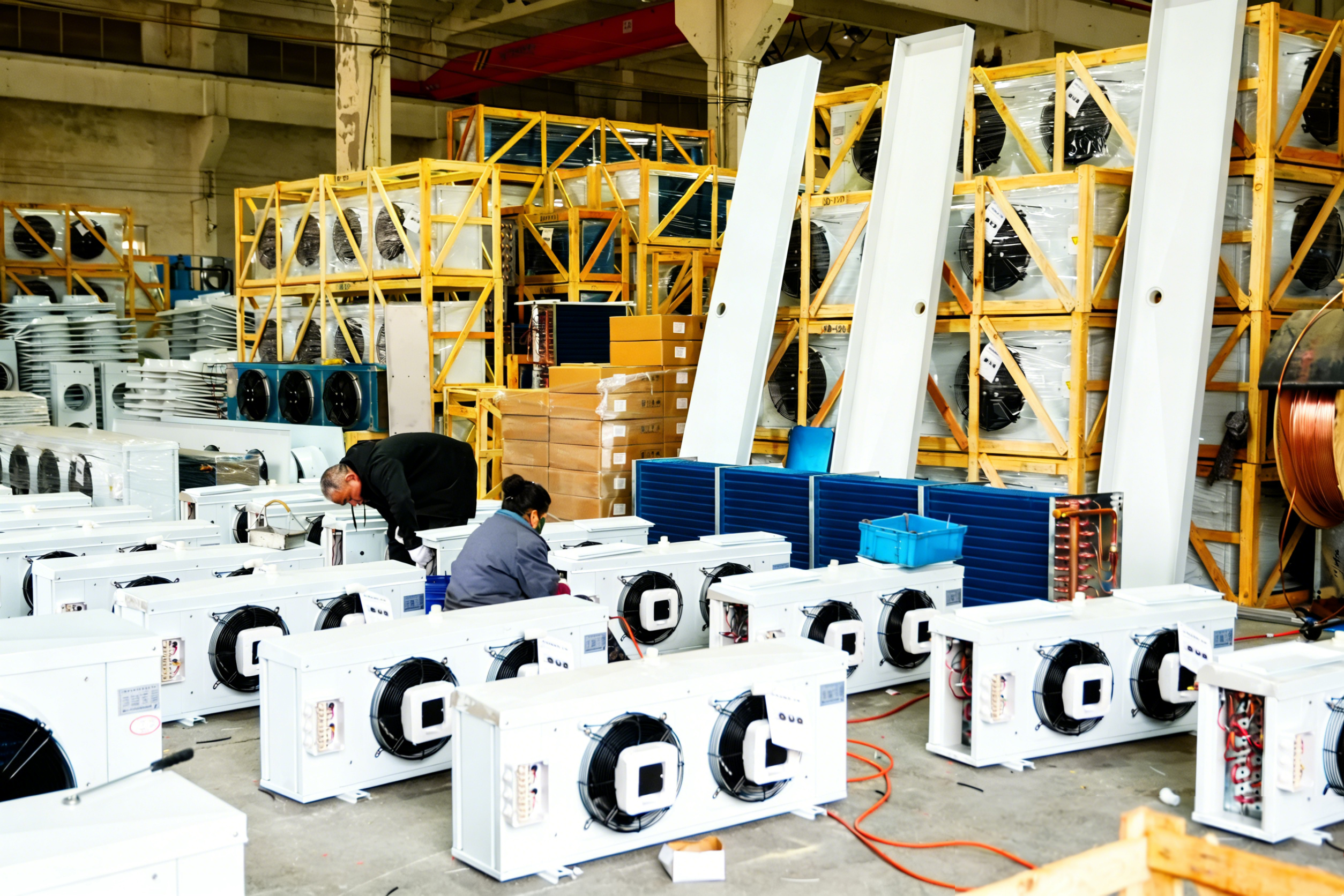
Body image 1: component preparation for cold room refrigeration systems. Correct matching starts at the specification stage, not at the loading dock.
The matching rules that actually decide performance
- Temperature series first. Select the cooler series from the room's design temperature: DL for 0 °C to +10 °C, DD for around −18 °C, DJ for −25 °C and below. A cooler from the wrong series cannot be corrected by a larger condensing unit.
- Capacity balance second. The cooler's cooling capacity, the condensing unit's 3HP–30HP range, and the condenser's 22–400 m² heat transfer area must be sized from the same load calculation, including product load, door traffic, and pull-down.
- Refrigerant consistency third. R404A, R507A / R507, and R22 appear across the ranges; the refrigerant selected for the cooler must be the refrigerant the condensing unit and condenser are configured for.
- Electrical alignment. Voltage and frequency must match across all three components and the destination market: 220 V or 380 V, 50 Hz or 60 Hz, with customization available.
- Defrost logic. Air, electric, water, or hot gas defrost must suit room humidity and door traffic, and the defrost control must be coordinated with the condensing unit's control system.
- Physical fit. Ceiling mounted, side discharge, and double side discharge options, along with H, V, or U condenser configuration, depend on available plant space and airflow paths.
- Safety and risk control. Thermal protection, automatic stop protection, temperature sensors, safety limit switch, emergency stop system, and overload protection should be part of the delivered system, not an optional extra.
Component Comparison Table
The table below compares the three components using published Clevier specifications. It is intended for use during quotation review, where each line should be checked against the room's design temperature and load.
| Comparison dimension | Air Cooled Condenser | Condensing Unit | Cold Room Air Cooler |
|---|---|---|---|
| Function in the system | Rejects heat from the system to ambient air | Compresses refrigerant and drives circulation | Absorbs heat from the room air |
| Typical location | Outdoor or ventilated plant area | Machine room, plant area, or roof | Inside the cold room, ceiling mounted |
| Clevier model / series | H Type / V Type / U Type Air Cooled Condenser Series | Air Cooled, Water Cooled, Semi-hermetic, and Box Type Condensing Units | DD-30, DD-100, DD-350, DCL401/2.1 (DD-20), DCL401/4.5 (DD-40), DCL404/19.2 (DD-170) |
| Sizing metric | Approx. 22–400 m² heat transfer area | Suitable for 3HP–30HP applications | 2.1 kW – 56.2 kW cooling capacity |
| Compressor | Not applicable | Hermetic scroll or semi-hermetic piston; Copeland / Bitzer options | Not applicable |
| Fan configuration | 1–4 fans customized, 300 mm–600 mm diameter | Not specified within this published range | 1–4 fans, 300 mm–600 mm diameter |
| Air volume | Not specified within this published range | Not specified within this published range | 1,680 m³/h – 11,800 m³/h |
| Refrigerant | Selected with the matched system | R404A / R507A / R22 | R404A / R507 / R22 |
| Voltage | 220 V / 380 V, 50 Hz / 60 Hz customized | 220 V / 380 V, 50 Hz / 60 Hz customized | 220 V / 380 V, 50 Hz / 60 Hz customized |
| Temperature role | Serves the whole system's heat rejection | Fresh keeping, chiller, freezer, low temperature cold storage | DL: 0 °C to +10 °C; DD: around −18 °C; DJ: −25 °C and below |
| Defrost | Not applicable | Not applicable | Air, electric, water, or hot gas defrost |
| Materials | Copper tube / aluminum fin coil / steel housing | Steel frame, powder coated steel housing, copper pipe, aluminum fin condenser components | Galvanized steel / stainless steel / aluminum plate housing |
| Customization | Heat transfer capacity, fan quantity, coil material, casing color, voltage, structure size | HP, compressor brand, refrigerant, voltage, control system, condenser matching | Defrost type, voltage, discharge configuration |
A cell marked "not specified within this published range" means the parameter is not published for that series. It does not mean the parameter is unimportant; it should be confirmed in writing during the technical review.
Use Cases: Matching by Room Type
Room type, not brand preference, is the fastest way to narrow a specification. The three cooler series map onto the three most common project categories.
| Project type | Design temperature band | Cooler series | Condensing unit role | Condenser role |
|---|---|---|---|---|
| Fresh keeping / chiller room (fruit & vegetable, supermarket, restaurant) | Around 0 °C to +10 °C | DL Type | Fresh keeping / chiller operation | Rejects moderate system heat load |
| Freezer room (meat, seafood storage, food processing) | Around −18 °C | DD Type | Freezer operation | Sized for higher heat rejection |
| Low temperature room and blast freezer | −25 °C and below | DJ Type | Low temperature cold storage operation | Sized for the highest rejection demand |
| Cold chain warehouse and logistics hub | Typically −40 °C to +10 °C across zones | DL / DD / DJ per zone | Per-zone unit selection | Per-zone matching |
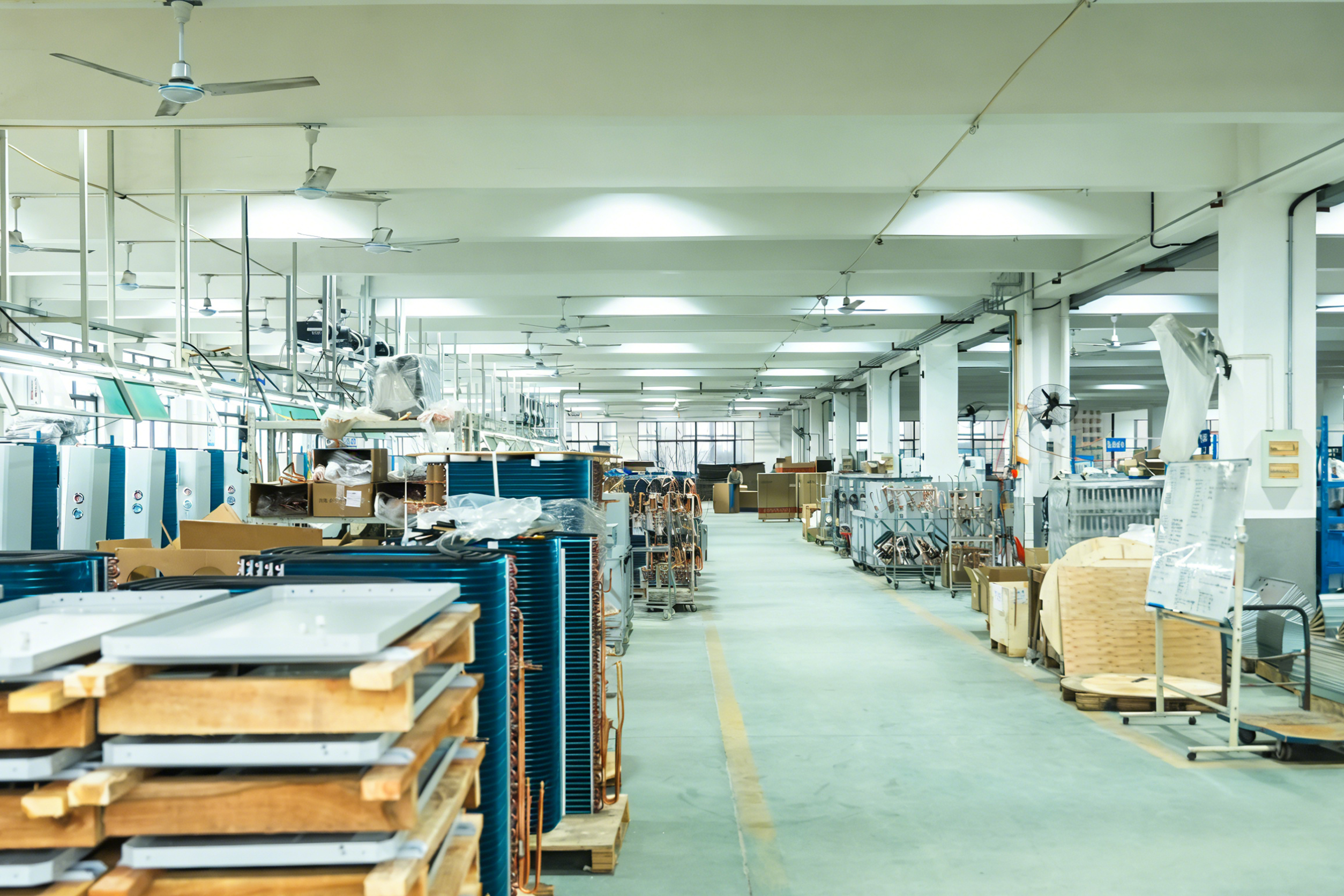
Body image 2: system-level assembly for cold storage, food processing, and cold chain applications, where per-zone matching replaces single-component sourcing.
Where the system-level approach pays off
In projects that replace a traditional piston-based, manually operated arrangement with a matched system, Clevier reports energy savings in the range of 20–35% and up to 30% faster operation, both explicitly described as project dependent. The supporting commercial factors are lower maintenance cost, longer service life, and reduced labor cost through less manual operation. These figures should be treated as an indication of direction, not as a guaranteed result for every room: the actual outcome depends on load profile, room construction, door management, and defrost strategy.
Step-by-Step Breakdown: Matching a System Before Ordering
- Fix the room's design temperature and product. Decide whether the room is fresh keeping (0 °C to +10 °C), freezer (around −18 °C), or low temperature / blast freezer (−25 °C and below). This single decision selects the DL, DD, or DJ series before any capacity discussion.
- Calculate the load. Include product load, respiration load where applicable, door traffic, lighting and fan heat, and pull-down allowances. All three components should be sized from this one document.
- Select the cold room air cooler. Choose a model within the 2.1 kW–56.2 kW range with the correct number of fans (1–4), fan diameter (300–600 mm), and air volume (1,680–11,800 m³/h) for the room's throw pattern and ceiling space.
- Decide the defrost method. Match air, electric, water, or hot gas defrost to room humidity, door traffic, and operating cycle, and confirm the defrost control logic belongs to the same control system as the condensing unit.
- Select the condensing unit. Choose within the 3HP–30HP range, then decide hermetic scroll versus semi-hermetic piston, and Copeland versus Bitzer where the project specifies a compressor brand.
- Select the air cooled condenser. Size for total heat rejection, not nominal compressor rating, choosing H, V, or U configuration and 1–4 fans based on available plant space and airflow. Heat transfer area should be confirmed against the calculated rejection load within the published 22–400 m² range.
- Lock refrigerant, voltage, and frequency. Confirm R404A, R507A / R507, or R22 across all three components, and confirm 220 V or 380 V, 50 Hz or 60 Hz for the destination market.
- Confirm customization scope and safety features. OEM / ODM customization from Clevier covers cooling capacity, temperature range, voltage, refrigerant, compressor selection, panel structure, and complete system matching. At the same time, confirm the delivered safety package: intelligent control system, thermal protection, automatic stop protection, temperature sensors, safety limit switch, emergency stop system, and overload protection.
- Verify before shipment. Ask for the pre-shipment test record: 100% pre-shipment testing, performance inspection, and function test.
- Plan the long-term relationship. Define spare parts, technical documentation, and future expansion zones with the supplier so that later rooms reuse the same component logic rather than creating new mismatches.
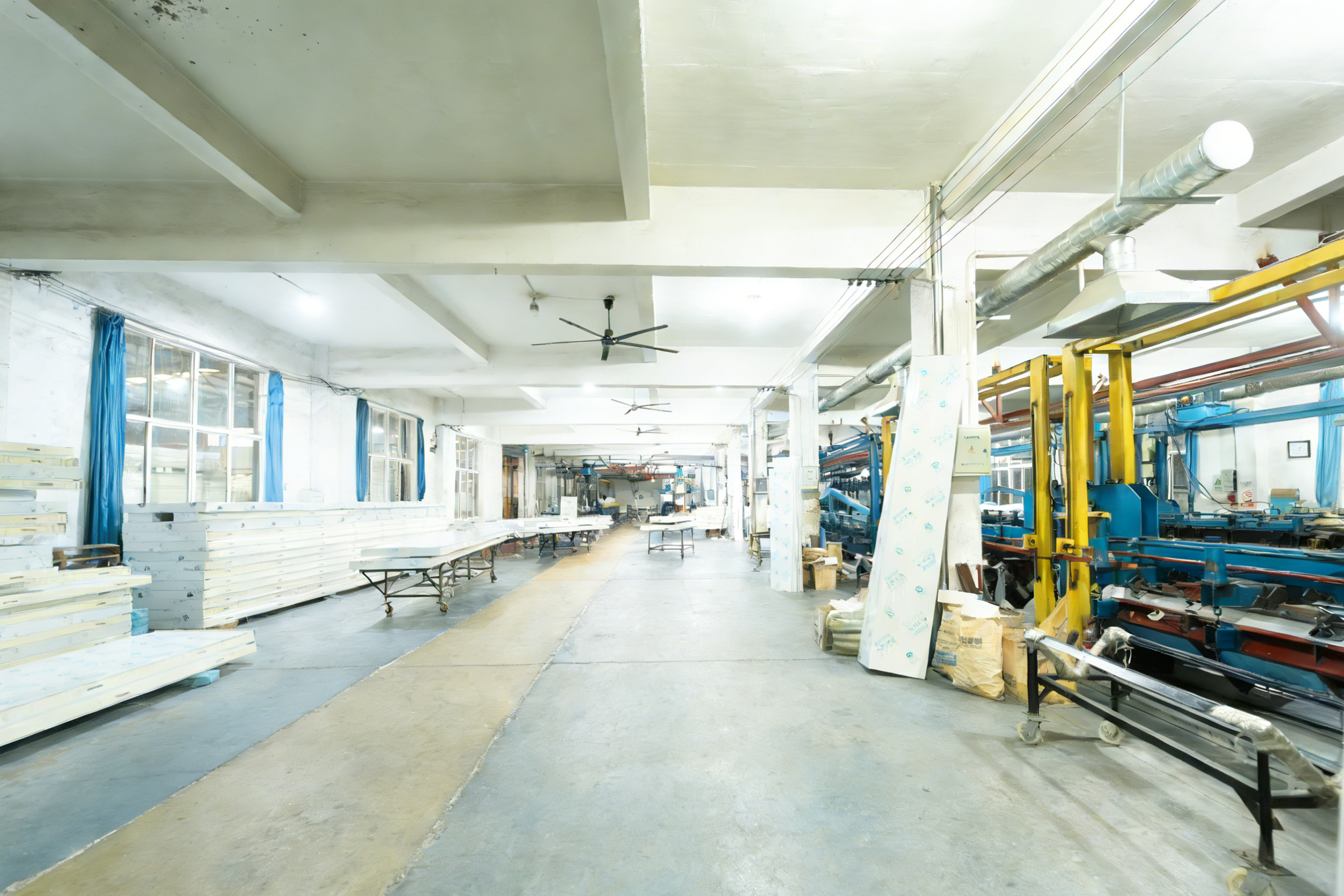
Body image 3: pre-shipment inspection. Testing one set before full project production is the cheapest way to catch a matching error.
FAQ: Matching and Sourcing Questions
Which standards and refrigerants apply to a cold room refrigeration system?
Two standards are commonly referenced in procurement documents. IEC 60335-2-89:2019 specifies safety requirements for commercial refrigerating appliances with incorporated or remote units, including blast freezers. EN 378:2016 is the mandatory European safety and environmental standard for refrigerating systems and heat pumps in the EU. Under the revised IEC 60335-2-89 framework, the charge limit for flammable A3 refrigerants such as R290 in commercial appliances increased from 150 g to 500 g. Clevier's air coolers and condensing units are offered with R404A, R507A or R507, and R22 refrigerants at 220 V or 380 V, 50 Hz or 60 Hz. Because refrigerant and safety requirements vary by destination market, the applicable standard and refrigerant should be confirmed in writing for the specific country before production.
How can I confirm that a condensing unit, air cooled condenser, and cold room air cooler are correctly matched?
Check six points in sequence. First, temperature series: the cooler must be DL for 0 °C to +10 °C, DD for around −18 °C, or DJ for −25 °C and below. Second, capacity balance across the cooler's 2.1 kW–56.2 kW range, the condensing unit's 3HP–30HP range, and the condenser's 22–400 m² heat transfer area, all from the same load calculation. Third, refrigerant consistency across components. Fourth, voltage and frequency. Fifth, defrost method and control integration. Sixth, physical configuration, including ceiling mounted, side discharge, or double side discharge for the cooler and H, V, or U configuration for the condenser. Clevier supports OEM / ODM customization covering cooling capacity, temperature range, voltage, refrigerant, compressor selection, panel structure, and complete system matching, which allows the three components to be configured as one system rather than three separate purchases.
What drives the cost of a cold room refrigeration system, and where can buyers reduce it without losing performance?
Cost is driven mainly by compressor type and brand (hermetic scroll versus semi-hermetic piston, with Copeland or Bitzer options), the horsepower selected within the 3HP–30HP range, the cooler's cooling capacity within 2.1 kW–56.2 kW, the condenser's heat transfer area within 22–400 m², fan quantity and diameter, housing materials (galvanized steel, stainless steel, or aluminum plate), defrost method, voltage and frequency customization, and the control system. Buyers typically reduce cost by removing unnecessary material upgrades or over-sizing, not by mismatching components. On operating cost, Clevier reports that a matched system with an intelligent control system can deliver lower maintenance cost, longer service life, and reduced labor cost compared with a traditional piston-based, manually operated arrangement, with energy savings in the range of 20–35% where projects allow; those savings are project dependent and should not be treated as a fixed guarantee for every room.
Can I test one set before ordering a full cold room refrigeration system?
Yes. Clevier's minimum order quantity is 1 set, with samples available, which allows a single matched set to be built and evaluated before a full project order. Acceptance is based on 100% pre-shipment testing, performance inspection, and function test. Payment terms are T/T, 30% deposit and 70% before shipment. For a first project, the practical approach is to order one set for a single room, run it through commissioning, and then standardize the remaining rooms on the confirmed configuration.
How do I choose a long-term cold room refrigeration system supplier for cold storage projects?
Judge a supplier on whether it can hold responsibility for component matching over time, not on unit price alone. Three checks matter most. First, portfolio breadth: a supplier that manufactures condensing units, cold room air coolers, air cooled condensers, and PU insulated panels can match the components inside its own system and keep the specification stable for future phases. Clevier Refrigeration (Jiangsu) Co., Ltd. produces these categories at a 10,000 m² manufacturing site with 10,000 units of annual output, a 2-engineer R&D team, and a 30% export ratio serving Asia, South America, Africa, and North America. Second, customization continuity: OEM / ODM support covering cooling capacity, temperature range, voltage, refrigerant, compressor selection, panel structure, and complete system matching makes later rooms repeatable rather than re-engineered. Third, documented safety and testing: an intelligent control system, thermal protection, automatic stop protection, temperature sensors, safety limit switch, emergency stop system, and overload protection, plus 100% pre-shipment testing. To move forward, you can download the Clevier Product Catalog 2026 (English), or send your room temperature, dimensions, and product type to the team at www.cleviercool.com for a matched configuration covering condensing unit, air cooler, and condenser.
Conclusion: Match the Components, Then Choose the Supplier
The air cooled condenser, the condensing unit, and the cold room air cooler are three stages of one loop: heat is absorbed inside the room, compressed and moved, then rejected outside. Comparing them as competing products produces quotations that look cheaper per line item and cost more in commissioning and energy. Matching them produces a system that holds its design temperature from −40 °C to +10 °C and stays serviceable for years.
A practical selection checklist before ordering:
- Room type and design temperature identified: fresh keeping / chiller (0 °C to +10 °C), freezer (around −18 °C), or low temperature / blast freezer (−25 °C and below).
- Cooler series selected accordingly: DL, DD, or DJ.
- Cooling capacity within 2.1 kW–56.2 kW, fan quantity 1–4, fan diameter 300–600 mm, air volume 1,680–11,800 m³/h.
- Condensing unit within 3HP–30HP, with compressor type and brand decided (Copeland or Bitzer where specified).
- Air cooled condenser heat rejection within approx. 22–400 m², in H, V, or U configuration.
- Refrigerant consistent across all components: R404A, R507A / R507, or R22.
- Voltage and frequency consistent: 220 V or 380 V, 50 Hz or 60 Hz.
- Defrost method matched to the room: air, electric, water, or hot gas.
- Safety package confirmed: intelligent control system, thermal protection, automatic stop protection, temperature sensors, safety limit switch, emergency stop system, overload protection.
- Testing confirmed: 100% pre-shipment testing, performance inspection, function test; MOQ 1 set with samples available.
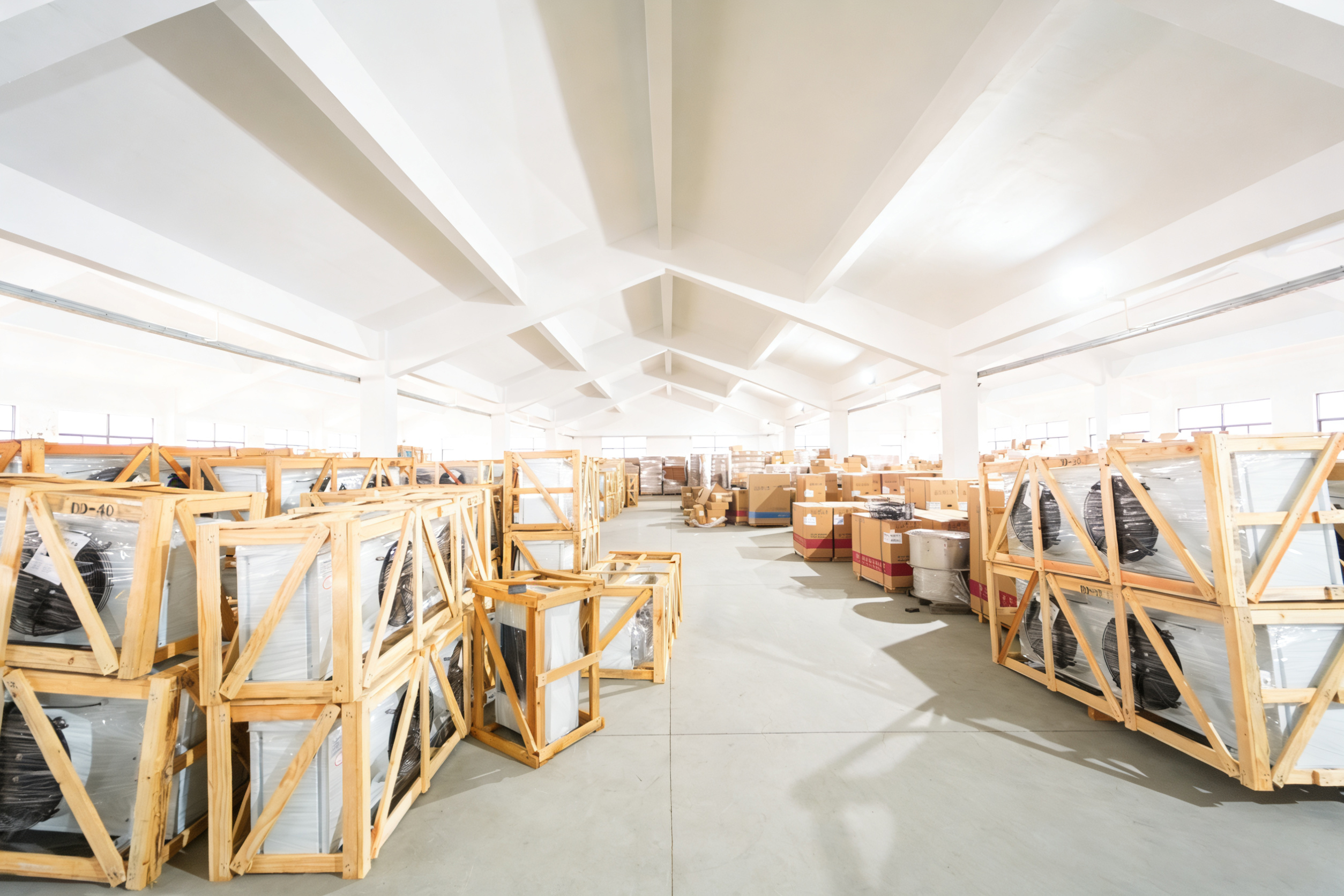
Body image 4: Clevier Refrigeration (Jiangsu) Co., Ltd. manufactures cold room refrigeration systems, condensing units, cold room air coolers, evaporators, air cooled condensers, and polyurethane insulated panels in Changzhou, Jiangsu Province, China.
Next Step: Verify the Match on One Set
Send your room temperature, internal dimensions, product type, and destination market voltage to the Clevier team. You will receive a matched configuration for the cold room air cooler, condensing unit, and air cooled condenser, plus the relevant specification sheet and test record. Samples are available from a minimum order of 1 set.
Catalog: Clevier Product Catalog 2026 (English) | Website: www.cleviercool.com
Contact: Sherwin | Tel: +86 132-7039-6182 | WhatsApp: +86 18112512530 | Email: ranerraner@cleviercool.cn
Address: Wujin District, Changzhou City, Jiangsu Province, China
CTA image: matched cold room refrigeration systems for cold storage, food processing, and cold chain warehouse projects.