Cold Room Refrigeration System Compliance: Regional Voltage, Refrigerant & Temperature Guide
Cold Room Refrigeration System Compliance: Regional Voltage, Refrigerant & Temperature Guide
A cold room refrigeration system is compliant when three variables match the project: the electrical supply at the destination, the refrigerant permitted in that market, and the temperature the room must hold. When any one of the three is specified against the wrong requirement, the mismatch rarely appears on the quotation. It appears at commissioning - when a unit will not run on the local supply, when a charged refrigerant cannot be serviced locally, or when the room never reaches its design temperature.
This guide is written for contractors, distributors, importers and project buyers who purchase cold room refrigeration systems for more than one market. It maps regional voltage and frequency (220V / 380V, 50Hz / 60Hz), refrigerant rules covering R404A, R507A and R22, and temperature targets between -40°C and +10°C into a specification that can be checked before shipment. It also covers how DL, DD and DJ air cooler series are matched to room type, how OEM/ODM customization should be documented, and which acceptance criteria to agree with a supplier before production starts.
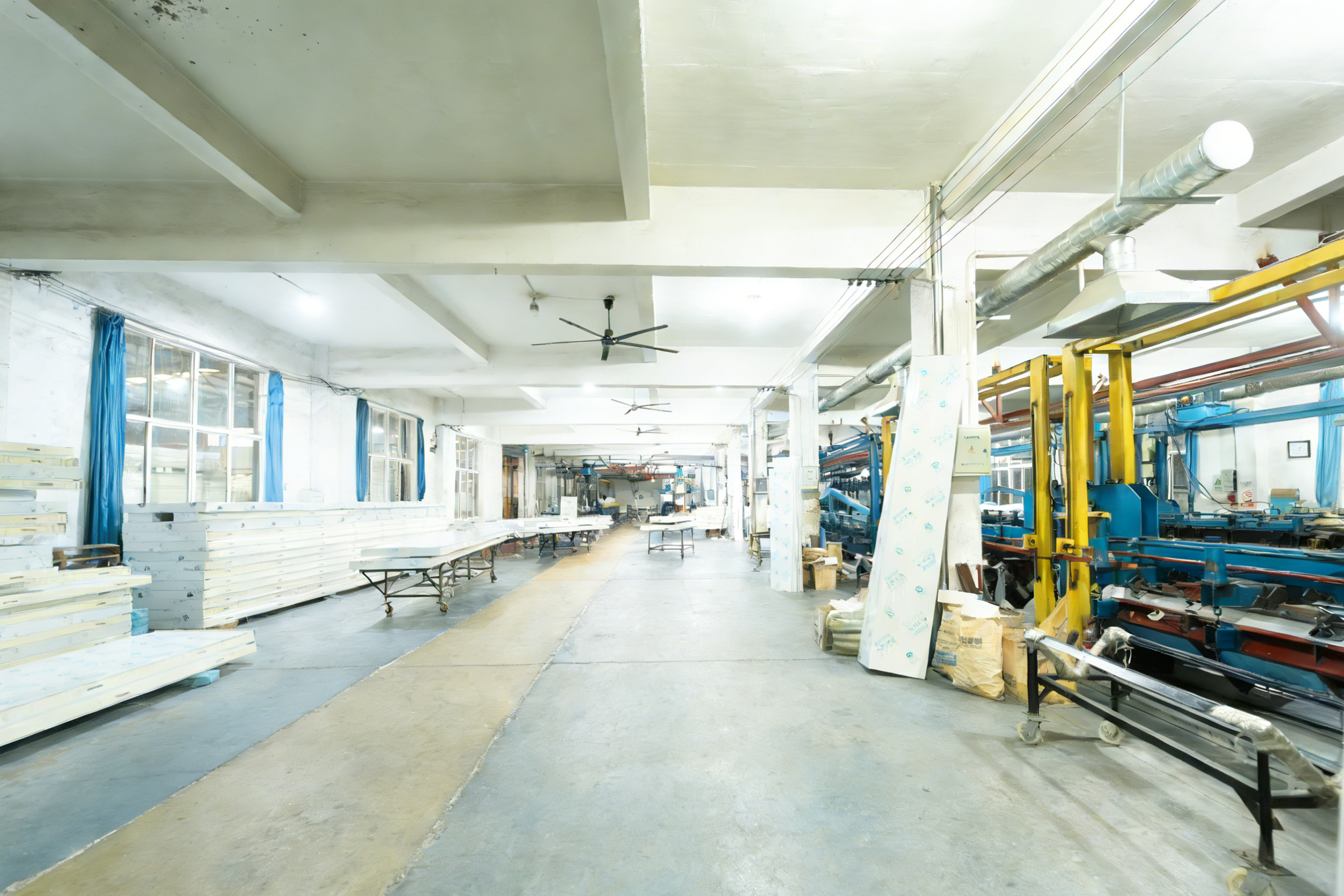
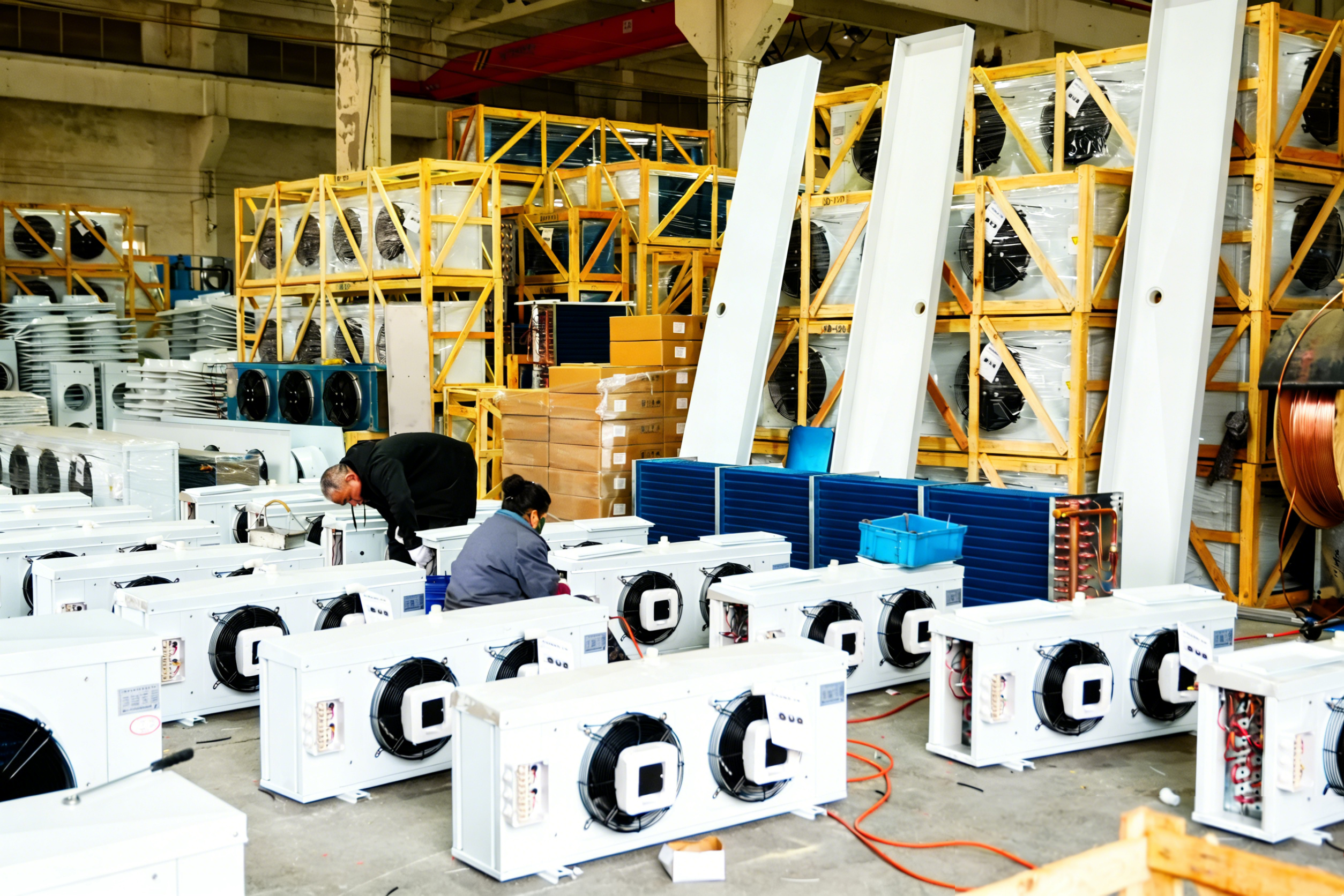
The manufacturer referenced throughout this guide is Clevier Refrigeration (Jiangsu) Co., Ltd., based in Changzhou, Jiangsu, China. The company manufactures commercial and industrial refrigeration equipment and cold storage solutions - cold room refrigeration systems, condensing units, refrigeration units, cold room air coolers, evaporators, air cooled condensers and polyurethane insulated panels - for food processing, cold chain logistics, supermarkets, restaurants, agriculture, seafood and meat storage applications.
Problem Definition: The Three Mismatches That Stop a Cold Room Refrigeration System at Commissioning
Compliance failures in cold room projects are rarely caused by one defective component. They come from specification assumptions made in one market and applied in another. Four categories account for most of them.
1. Electrical mismatch: voltage, phase and frequency
A system built around one supply does not transfer automatically to another. Voltage and phase differ between projects - 220V and 380V configurations are both common - and frequency differs between regions, with 50Hz and 60Hz supplies in everyday use. Once the compressor, fan motors and control components are selected, they are tied to that supply. The practical failure modes are motor overheating and electrical failure, with door jam prevention and control reliability sitting in the same electrical design. Risk control for these items is achieved through intelligent control systems, thermal protection and automatic stop protection methods, supported by temperature sensors, a safety limit switch, an emergency stop system and overload protection. Retrofitting any of this after delivery means replacing parts, not adjusting settings.
2. Refrigerant mismatch: what is legal where the room operates
Refrigerant rules are set by the market where the equipment runs, not by where it is built. R22 is an HCFC being phased out under the Montreal Protocol; R404A and R507A are high-GWP HFC blends widely used in low-temperature commercial refrigeration and subject to phase-down rules in a growing number of markets. A cold room refrigeration system charged with a refrigerant that cannot be legally imported, charged or serviced at the destination creates a compliance problem that no amount of site work can repair. Where flammable A3 refrigerants such as R290 are used instead, charge limits apply: the revised IEC 60335-2-89 standard raised the charge limit for commercial appliances from 150g to 500g.
3. Temperature mismatch: room type sets the equipment
Room type - not room size - decides the temperature band, and the temperature band decides the equipment. A system specified for a chilled room cannot be converted into frozen storage by changing a setpoint: the air cooler series, defrost arrangement and compressor selection all follow the design temperature. Temperature mismatches are the most expensive of the three because they are usually discovered after the room has been built and the panels are up.
4. Documentation mismatch
Contractors and distributors who buy across markets need paperwork as much as hardware. Without an agreed acceptance protocol - 100% pre-shipment testing, performance inspection and function test, with the electrical configuration, refrigerant and control setpoints recorded - a specification dispute becomes a commercial one.
Industry Background: Why Compliance Requirements Keep Diverging
The refrigeration equipment market is large enough that regional rules now move independently of one another. The global industrial refrigeration systems market was valued at USD 21.3 billion in 2024 (Grand View Research), while the broader refrigeration equipment market was estimated at USD 67.06 billion in the same year (ResearchAndMarkets / Business Wire). The gap between those two figures reflects scope rather than disagreement - and it is a reminder to check what any market number actually measures. Further down the equipment stack, the market for refrigeration coolers, meaning evaporators and air coolers, was estimated at USD 4.0 billion in 2024 (Technavio), and the condensing unit market was valued at USD 42 billion in 2023 with a CAGR of 7.95% (Stratview Research).
Demand is concentrated. Asia Pacific accounted for 70.22% of global condensing unit market revenue in 2023 (Grand View Research) and held a 32.6% revenue share of the industrial refrigeration systems market in 2024 (Grand View Research). China's total cold storage capacity reached 237 million cubic meters by June 2024, an 8% increase year on year (China Federation of Logistics & Purchasing / IIR), and China was the leading exporter of industrial evaporative air coolers in 2024 with exports valued at USD 577 million (OEC).
Application demand is concentrated in the same way. Frozen storage in the -18°C to -25°C band held roughly 63% of the cold storage market in 2025 (Grand View Research), the Food & Beverages segment accounted for over 76.8% of global cold chain market revenue in 2025 (Grand View Research), and walk-in cold rooms are projected to hold a 58.7% share of the cold room market by 2025 (Dataintelo).
Two standards frame most compliance conversations. IEC 60335-2-89:2019 specifies safety requirements for commercial refrigerating appliances with incorporated or remote units, including blast freezers. EN 378:2016 is the mandatory European safety and environmental standard for refrigerating systems and heat pumps in the EU. Around those two references, refrigerant rules and electrical supply rules vary by country - which is why the same cold room refrigeration system model can be compliant in one market and non-compliant in the next.

The Three-Axis Compliance Framework for Cold Room Refrigeration Systems
A workable way to structure a cold room refrigeration system specification is to treat compliance as three technical axes that must be resolved before the quotation is finalized, plus a documentation layer that records the result. Each axis can be closed out with one or two questions.
Axis 1 - Electrical: voltage, phase and frequency
Establish the site's actual supply before selecting equipment: voltage (220V or 380V configurations), phase, and frequency (50Hz or 60Hz). The compressor, fan motors and control system are all selected against that supply, and OEM/ODM customization treats voltage as a defined parameter rather than an afterthought. Electrical protection belongs in the same axis: thermal protection, overload protection and an emergency stop system are base configuration items, not accessories to be added later. In the delivered system, risk control is achieved through intelligent control systems, thermal protection and automatic stop protection methods, with contingency plans that include emergency stop systems and overload protection.
Axis 2 - Refrigerant: what is legal where the room operates
The refrigerant question should be answered before the compressor is selected, because the answer can change the compressor, the controls and the documentation package.
| Refrigerant | Classification | Market status in general terms | What to document |
|---|---|---|---|
| R22 | HCFC | Being phased out under the Montreal Protocol; still found in legacy systems and in service stock | Whether local service and spare refrigerant are available; retrofit plan if they are not |
| R404A | HFC blend | Widely used in low-temperature commercial refrigeration; subject to phase-down rules in a growing number of markets | Permitted charge volume and any reporting obligation at the destination |
| R507A | HFC azeotropic blend | Similar low-temperature duty; subject to the same phase-down direction | Whether the refrigerant can be imported, charged and serviced locally |
| A3 flammable refrigerants (e.g. R290) | Flammable | Applicable in more commercial applications following the revised IEC 60335-2-89 charge limit increase from 150g to 500g | Charge limit compliance, ventilation and safety documentation |
Axis 3 - Thermal: temperature band, room type and air cooler series
Clevier's cold room air cooler range is organised into DL, DD and DJ series so that the air cooler is matched to the room's temperature band rather than chosen on nominal capacity alone. DL series air coolers are typically applied to above-freezing chill rooms, DD series to frozen storage rooms, and DJ series to low-temperature rooms. Final selection also depends on room volume, product load, evaporating temperature and defrost method, and is confirmed during engineering review against the project data.
| Temperature band | Typical room type | Air cooler series | What to verify before ordering |
|---|---|---|---|
| Above 0°C, up to +10°C | Chilled storage: fruit, vegetables, dairy, fresh produce | DL series cold room air cooler | Room volume, product turnover, defrost method, humidity tolerance |
| -18°C to -25°C | Frozen storage: meat, seafood, frozen foods | DD series cold room air cooler | Pull-down time, door opening frequency, insulated panel thickness |
| Below -25°C, down to -40°C | Low-temperature freezing, blast freezing, cold chain transfer | DJ series cold room air cooler | Compressor selection, staged pull-down, refrigerant legality at destination |
| All bands | Cold chain warehouse and logistics cold rooms | Series matched to the band above | Electrical supply, refrigerant, control setpoints, acceptance criteria |
Axis 4 - Documentation: the layer that holds the other three together
Customization that is not written down cannot be verified. A cold room refrigeration system specification should name every configurable item and record the agreed value, so that the delivered equipment can be checked against it during pre-shipment testing.
| Customization item | Why it matters for compliance | Document at handover |
|---|---|---|
| Cooling capacity | Determines whether the room reaches its design temperature under load | Design temperature and pull-down target |
| Temperature range | Defines the equipment family and the air cooler series | Room type and operating band |
| Voltage | Must match the supply at the installation site | Voltage, phase and frequency |
| Refrigerant | Must be legal and serviceable at the destination | Refrigerant type and charge |
| Compressor selection | Affects capacity, part-load behaviour and serviceability | Compressor brand and horsepower |
| Panel structure | Affects thermal performance and door integration | Panel thickness, door type and layout |
| Complete system matching | Prevents component-level incompatibility between unit cooler and condensing unit | Condensing unit, air cooler and control pairing |
Clevier supports OEM/ODM customization covering cooling capacity, temperature range, voltage, refrigerant, compressor selection, panel structure and complete system matching - which is what allows the same base platform to be configured for different regional requirements.
Compressor brand and unit format. Grand View Research identifies Emerson Electric, Carrier, Danfoss and Bitzer SE as key major players in the global condensing unit market. That is a useful reference list when a project brief names a preferred compressor brand, but it is not a ranking and not a substitute for confirming what a specific supplier can deliver for a specific supply, refrigerant and temperature band. Unit format matters in the same conversation: an air cooled condensing unit or box type condensing unit is commonly selected for compact installations, while an open type condensing unit is typically chosen where service access and larger capacity take priority.
Step-by-Step: Building a Compliant Cold Room Refrigeration System Specification
The sequence below is written for contractors, distributors and project buyers preparing an order for one or more markets. Each step produces a document, and each document becomes an input to acceptance testing later.
Step 1 - Define the room before the equipment
Record the room type, the product to be stored, the required operating temperature and the expected throughput. Temperature band first, equipment second: this single ordering decision prevents the most common and most expensive mismatch, in which a chilled room is ordered and later expected to hold frozen product.
Step 2 - Lock the electrical supply
Confirm voltage, phase and frequency at the installation site, not from the previous project's file. Where a distributor serves several markets, each market may need a different configuration, and the electrical data should be recorded on the order rather than agreed verbally on site.
Step 3 - Confirm the refrigerant position for the destination market
Decide, with the supplier's engineering contact, whether R404A or R507A is acceptable for the intended market, whether an existing R22 system is being replaced rather than extended, and whether a lower-GWP or A3 option is required. Record the permitted charge and any documentation the destination market requires.
Step 4 - Match the air cooler series to the temperature band
Select the DL, DD or DJ series that corresponds to the room type and operating band, then verify the selection against room volume, product load, evaporating temperature and defrost method. The air cooler and the condensing unit must be matched as a pair; selecting them separately is a frequent source of underperformance.
Step 5 - Specify the condensing unit and compressor
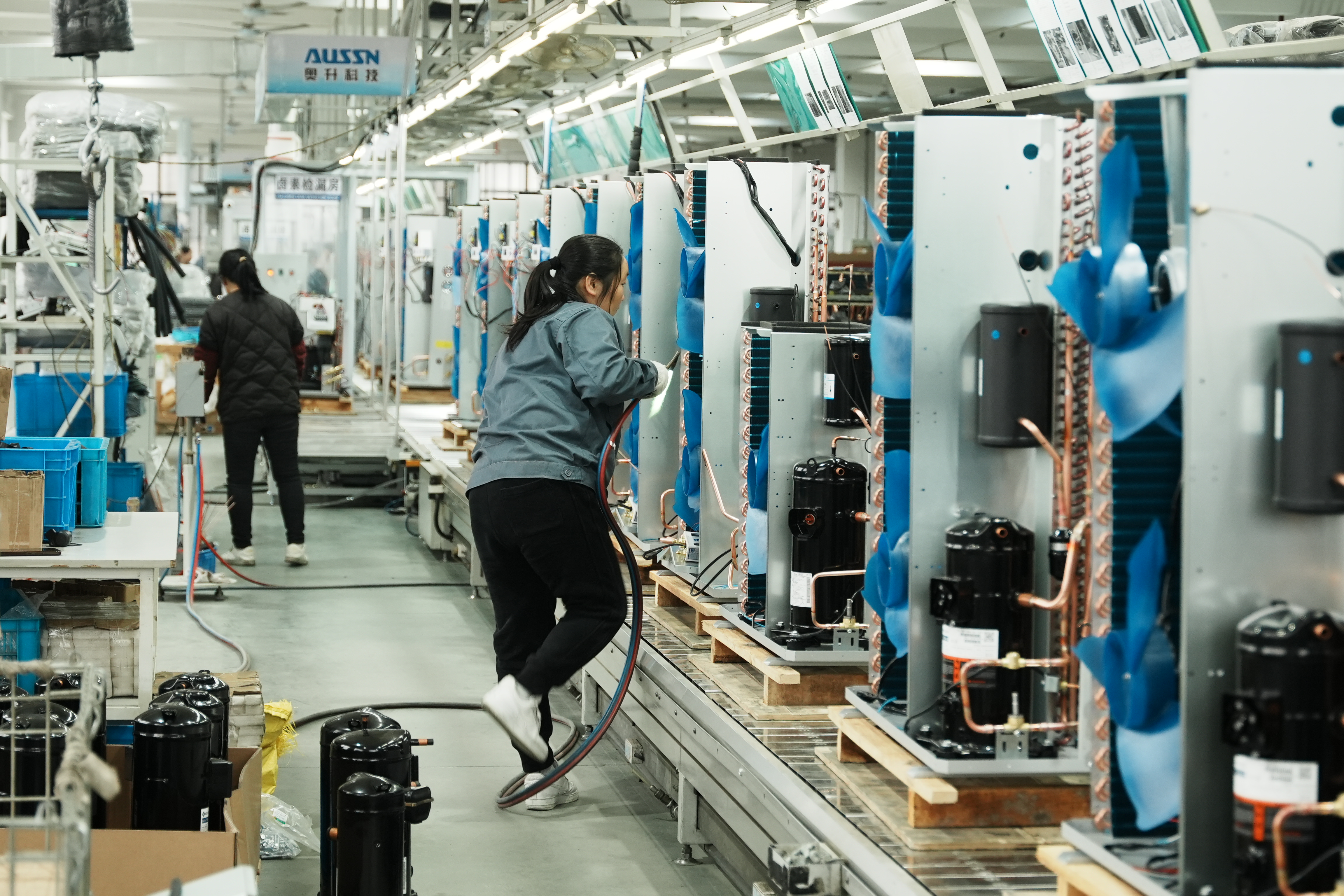
Choose the unit format (air cooled, box type or open type), the compressor brand and the horsepower that the load calculation supports. Where a project brief names a compressor brand, confirm that the supplier can configure and document it, and confirm the matching unit cooler at the same time.
Step 6 - Document the OEM/ODM scope, control system and safety functions
Write down every customized item - cooling capacity, temperature range, voltage, refrigerant, compressor selection, panel structure and complete system matching. On the control side, confirm the safety functions that will be delivered: intelligent controls, thermal protection, automatic stop protection, temperature sensors, safety limit switch, emergency stop system and overload protection.
Step 7 - Agree acceptance criteria, payment and delivery terms before production
Set the commercial terms in the same document as the technical specification. For Clevier, MOQ is 1 set with samples available, and payment terms are T/T with a 30% deposit and 70% before shipment. Acceptance criteria are 100% pre-shipment testing, performance inspection and function test. Agreeing these before production is what makes the compliance discussion enforceable rather than theoretical.

Use Cases: Where Compliance Choices Change the System
Fruit, vegetable and dairy chill rooms (up to +10°C)
Above-freezing rooms place the emphasis on humidity and air circulation rather than on extreme temperature. A DL series cold room air cooler matched to a correctly sized condensing unit covers most of these rooms. The compliance checkpoints are the electrical supply and the refrigerant: a chill room built for one market is often the unit most likely to be re-ordered for another, so the configuration needs to be documented well enough to repeat.
Frozen storage for meat and seafood (-18°C to -25°C)
This is the largest single band in cold storage, holding roughly 63% of the market in 2025 (Grand View Research), and it is where refrigerant rules bite hardest. A DD series cold room air cooler paired with a matched refrigeration condensing unit is the standard configuration, with the refrigerant selected for legality and serviceability at the destination. Pull-down time and door opening frequency should be stated in the specification, because both affect the delivered performance.
Low-temperature and blast freezing (down to -40°C)
Below -25°C, staging and compressor selection become the dominant design questions. A DJ series air cooler is combined with a compressor selection that can sustain the duty, and the refrigerant decision is taken early because some high-GWP blends are constrained in certain markets. Where rapid freezing is required, the specification should state the pull-down target and the product load rather than only the room volume.
Cold chain warehouses and logistics hubs
Warehouse and logistics projects combine several of the above bands in one building and add automation requirements. Compared with a traditional refrigeration arrangement, automated configurations deliver lower energy consumption, higher automation, safer operation and stable performance, with project-dependent figures of 20-35% energy saving and 30% faster operation, plus lower maintenance cost, longer service life and reduced labour cost. For a distributor or contractor, the value here is repeatability: one documented system architecture can be deployed across multiple sites.
Frequently Asked Questions
Which standards should a cold room refrigeration system be checked against?
Two international references form the baseline. IEC 60335-2-89:2019 specifies safety requirements for commercial refrigerating appliances with incorporated or remote units, including blast freezers. EN 378:2016 is the mandatory European safety and environmental standard for refrigerating systems and heat pumps in the EU. Around these, the destination market decides which refrigerants may be used and charged: R22 is an HCFC being phased out under the Montreal Protocol, while R404A and R507A are high-GWP HFC blends subject to phase-down rules. The revised IEC 60335-2-89 also raised the charge limit for flammable A3 refrigerants such as R290 in commercial appliances from 150g to 500g. A system should be checked against the standard that applies where it will be installed, not only where it is manufactured.
Can voltage, refrigerant and compressor brand be customized for a specific market?
Yes. Clevier supports OEM/ODM customization including cooling capacity, temperature range, voltage, refrigerant, compressor selection, panel structure and complete system matching. In practice, a project specified for a 380V three-phase supply can be configured differently from one specified for a 220V single-phase supply, and the refrigerant can be selected to match the rules of the destination market instead of a single default. Compressor selection falls within the same customization scope, and the finalized configuration is documented before production begins.
What are the purchasing terms, MOQ and sample availability?
For Clevier cold room refrigeration systems, MOQ is 1 set and samples are available. Payment terms are T/T, with a 30% deposit and 70% paid before shipment. Delivery terms are also based on 1 set, which makes single-unit validation possible before a distributor commits to a larger programme.
What acceptance criteria should be agreed before shipment?
Acceptance criteria should be written into the order and should include 100% pre-shipment testing, performance inspection and function testing. The handover documents should record the electrical configuration (voltage, phase and frequency), the refrigerant charged, the control setpoints, and the safety functions built into the system. Risk control in the delivered equipment is achieved through intelligent control systems, thermal protection and automatic stop protection methods, with contingency plans that include emergency stop systems and overload protection. These items belong on an acceptance checklist, not in a verbal agreement.
How do you choose a long-term Cold Room Refrigeration System supplier for cold storage projects?
Look past the first order. A supplier worth keeping should be able to repeat the same configuration across several markets - voltage, refrigerant and temperature band unchanged in the documents even when the destination changes - and should be able to trace every delivered system back to its own records for spare parts and later expansion. Clevier Refrigeration manufactures cold room refrigeration systems, condensing units, cold room air coolers, evaporators, air cooled condensers and polyurethane insulated panels in a 10,000 m² factory in Changzhou, Jiangsu, China, with a 30% export ratio and customers in Asia, South America, Africa and North America. A practical first step is to validate one configuration through a sample or a quotation before committing a multi-site project to a single supplier.
Conclusion: Compliance Is a Documented Agreement, Not a Specification
A cold room refrigeration system passes compliance checks when electrical supply, refrigerant legality and temperature band are all resolved before the order is placed - and when the agreed values are written down where a testing engineer can find them. Voltage and frequency belong to the site. Refrigerant legality belongs to the destination market. The temperature band belongs to the room type and, through it, to the air cooler series and compressor selection. Documentation is what connects the three.
For distributors and contractors, the operational pay-off is repeatability. A configuration documented as 380V / 50Hz, R404A, DD series air cooler, frozen storage band can be re-ordered for a second site without re-opening the engineering discussion - and where a market requires a different refrigerant or a 60Hz supply, the same platform can be re-specified through OEM/ODM customization.
Next Step: Validate One Configuration Before You Commit
If you are preparing a cold room refrigeration system order for one or more markets, start with a sample or a project quotation and test the compliance checklist against a real specification. Send the room type, required temperature band, site voltage and frequency, and destination market, and the engineering team will confirm the matching air cooler series, condensing unit configuration and refrigerant position.
Clevier Refrigeration (Jiangsu) Co., Ltd.
Website: www.cleviercool.com
WhatsApp: +86 18112512530
Tel: +86 132-7039-6182 | Email: ranerraner@cleviercool.cn
Address: Wujin District, Changzhou City, Jiangsu Province, China
Download the full product range and specifications: Clevier Product Catalog 2026 (English, PDF)