Cold Room Refrigeration System Supplier Audit: 9 Checks
A cold room refrigeration system supplier audit answers one question: can the supplier prove, on paper and before shipment, that the condensing unit, the cold room air cooler and the room envelope were sized together for your load, your set-point and your market's documentation rules? A quotation that lists three parts with no matching sheet has not answered it.
The checklist below is written for buyers at the evaluation-to-execution stage: cold storage contractors preparing a project order, distributors building a repeatable range, and engineering teams specifying a walk in freezer or a cold chain warehouse refrigeration package where one mismatched component resurfaces months later as a temperature complaint.
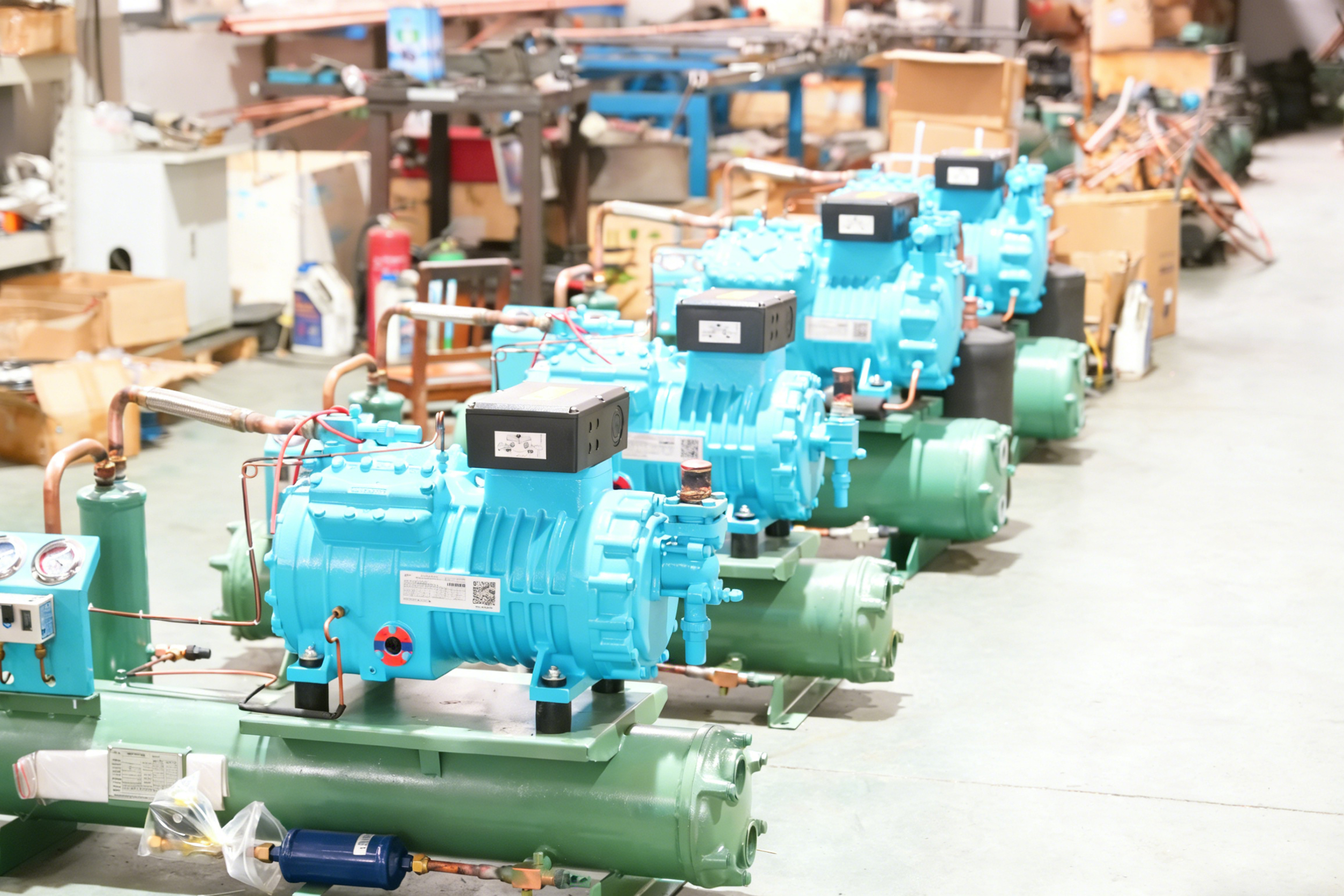
Factory-direct manufacturing shortens the chain between the specification and the unit that ships, but it does not replace the matching document.
What a supplier audit is actually testing
A cold room refrigeration system audit is a matching audit. The system has three interacting blocks: heat rejection (the refrigeration condensing unit and its condenser), heat absorption (the cold room air cooler, evaporator or unit cooler), and the room itself, including panels, doors, and the heat that door openings and door heaters add. Each block can be individually correct while the system fails, because the blocks were never selected against the same load.
The practical test is therefore not whether the supplier sells all three, but whether the supplier produces one document where all three appear against one load. That document — a matching sheet, selection report or system schedule — is the artefact the audit is looking for. The nine checks below verify whether the supplier can produce it, and whether its numbers survive contact with your project.
Why part-level quotations create the problem
When a quotation arrives as separate line items, the system design has been handed to the buyer. Three failures follow predictably.
- Duty mismatch. A condensing unit quoted at one evaporating temperature and an air cooler rated at another never deliver the design set-point, even though both nameplates are correct.
- Envelope omissions. Door openings, door heaters, lighting and defrost heat are left out of the load, so the equipment is right on paper and undersized in service.
- Interface gaps. Voltage and control system are agreed for the unit but not for the cooler fan motors; panels, doors and refrigeration reach site from different suppliers on different schedules, and nobody owns the join.
None of this requires a bad supplier. It only requires a supplier that quotes parts.
Where the supply base sits
Context affects how much verification a buyer needs. One commercial research report estimated global refrigeration equipment revenue at USD 67.06 billion in 2024 and put the combined revenue share of five large OEMs — Carrier, Johnson Controls, Daikin, Trane and Ingersoll Rand — at 25.2% for the same year. The rest of the market is served by a long tail of regional and specialist manufacturers, and company size on its own tells you nothing about whether any of them matches components properly.
Component documentation shows why matching has to be requested rather than assumed. Copeland describes indoor condensing units as self-contained systems that house the compressor, condenser coil and fan assembly, and lists cold rooms, freezers, industrial chillers and pharmaceutical storage among its low-temperature applications. The unit is already an assembly with its own internal logic; pairing it with a cooler and a room is a separate engineering act that a supplier either performs or leaves to you.
The nine audit checks
Each check names what to request and what makes the answer incomplete. They can be run in one supplier meeting if the documents are ready, and the sequence matters: load first, matching second, paperwork third.
1. Load basis and temperature band
Request the load calculation before the equipment list: room dimensions, insulation, product load and daily turnover, ambient design condition, door openings, and the design set-point. Cold room projects commonly span the band from about −40 °C in low-temperature freezer duty up to +10 °C in chilled holding and preparation areas, and the same nominal capacity means different hardware at either end. The audit point is whether the supplier places your set-point on that band and shows which air cooler series and which unit the set-point implies. A quotation that states −25 °C but carries no load basis has skipped the step where matching begins.
2. The component matching sheet
Ask for one sheet on which the condensing unit duty, the air cooler capacity, the design temperature difference, the refrigerant and the defrost method appear together, calculated from the same load. Housing style belongs on that sheet too: a box type condensing unit, an open type unit and a semi-hermetic variant need different clearances, service access and weather protection, and each changes what the cooler has to do. A useful test is to ask what changes if the set-point moves by 5 K, or if the daily door-opening pattern doubles. A supplier that built the selection can answer; a supplier that assembled three catalogue items will simply re-quote.
3. Compressor platform and refrigerant record
Verify the compressor at model level, not brand level. If your design basis names a platform — Copeland or Bitzer, for example — ask for the exact model, its capacity table at your evaporating and condensing temperatures, and the refrigerant the selection assumes. R404A, R507A and R22 all still appear in cold room specifications, and acceptance differs by market and by project, so the refrigerant record has to be checked against your own jurisdiction rather than accepted from the quotation. Copeland's condensing-unit documentation, for instance, covers low-temperature applications including cold rooms, freezers, chillers and pharmaceutical storage; that establishes where the platform family is used, not that a particular model suits your room.
4. Air cooler series, fan quantity and defrost
Cold room air coolers — also sold as cold room evaporators or unit coolers — are selected by temperature band, capacity, fan quantity and defrost method, and the physical arrangement matters as much as the rating: ceiling-mounted or side-discharge, and the outlet direction relative to your door and stacking pattern. Ask for the model designation, the number of fans, the defrost arrangement and the refrigerant. Then check the model against the supplier's certification scope, because certificates list models rather than product families, which is check 6.
5. Customization in writing
Customization should arrive as a list you can tick, not as an adjective. Clevier Refrigeration (Jiangsu) Co., Ltd. is a refrigeration equipment manufacturer based in Wujin District, Changzhou, Jiangsu, China, producing cold room refrigeration systems, condensing units, cold room air coolers, evaporators, air cooled condensers and polyurethane insulated panels. It lists its customization scope as voltage, size, capacity, material, structure, control system and installation solution, and states that it provides OEM, ODM and custom project manufacturing production services. For a distributor or OEM buyer that scope is what makes a repeatable range possible; for a contractor it is what makes a one-off room buildable. Add fan quantity, outlet direction and refrigerant to the same list, and confirm every item on the order confirmation rather than in a chat thread.
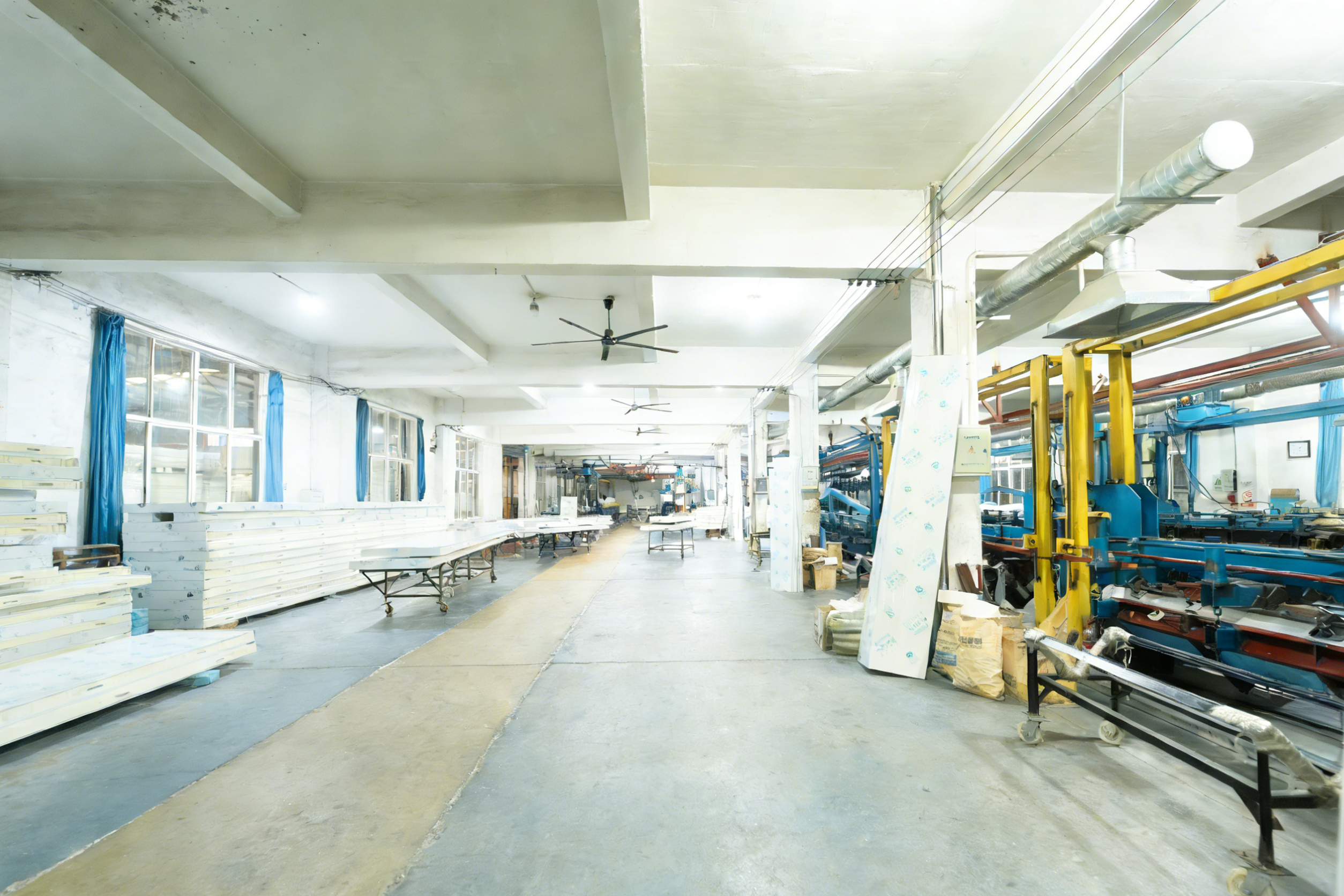
Assembly inside one plant allows the unit, cooler and panel scope to be checked against a single specification before dispatch.
6. Certification and conformity documents
Certification is a document check, not a logo check. Ask for the certificate number, issuing body, standards cited, issue date and model list, then confirm your ordered model appears on it. As a worked example of the format, Clevier holds CE certification issued on 13 May 2026 by Xihua International Testing & Certification (Shenzhen) Co., Ltd. under Machinery Directive 2006/42/EC. Certificate XH2605J1647279GC covers cold room air coolers, with models including DD-30, DD-100, DD-350, DCL401/2.1, DCL401/4.5 and DCL404/19.2 listed. Certificate XH2605J1647280GC is recorded against the air cooled condenser range, with main model H-60 and additional series models on the attached page. Both cite EN 60204-1:2018+A1:2025 for electrical equipment of machines, EN ISO 12100:2010 for risk assessment and EN ISO 13849-1:2023 for safety-related parts of control systems. Read the scope line carefully: a certificate for one series does not cover a customized variant that is not listed, and the validity date printed on each certificate should be checked against your delivery and warranty timeline.
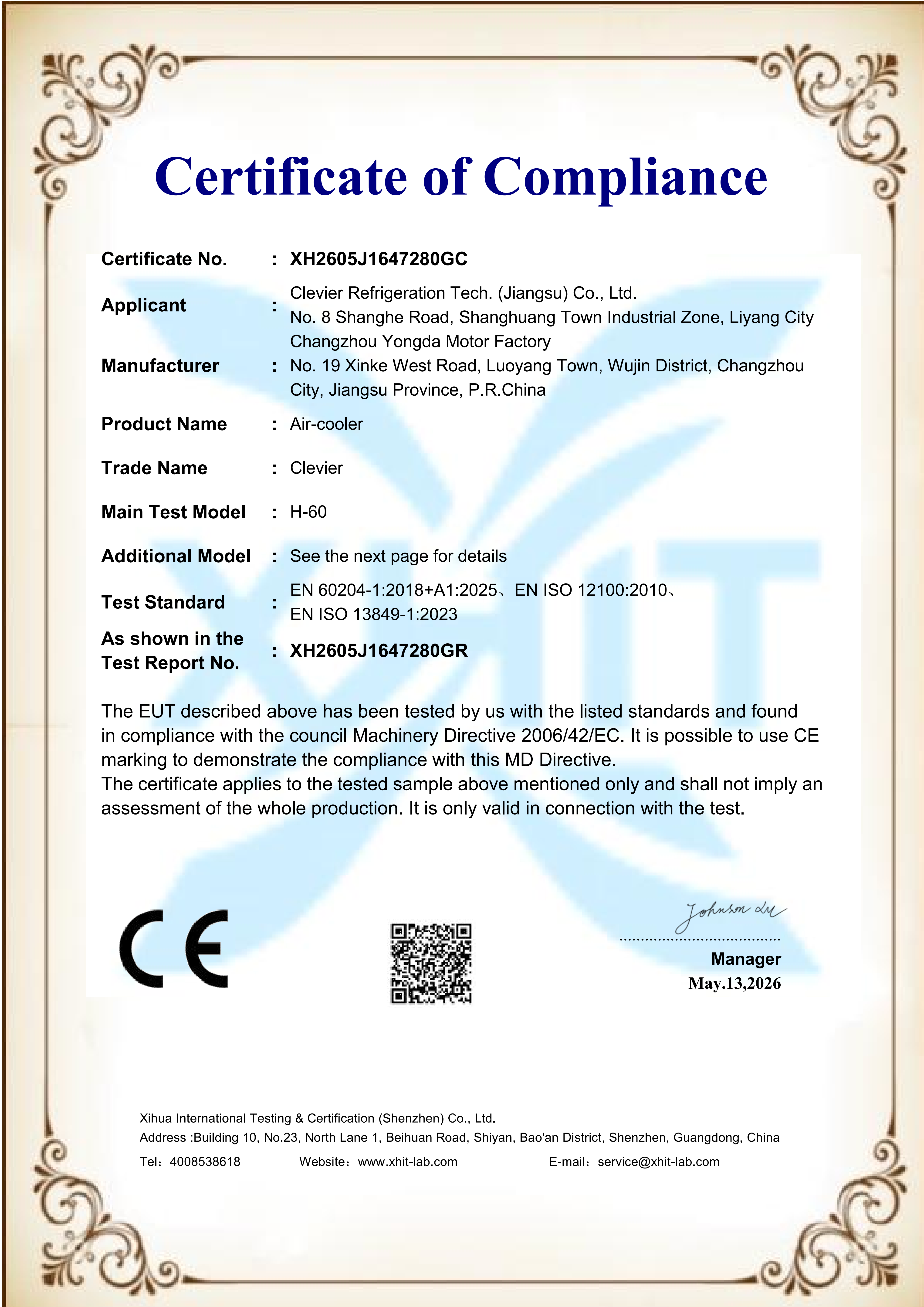
Certificate XH2605J1647280GC, issued 13 May 2026, recorded against the air cooled condenser range with main model H-60.
7. Pre-shipment acceptance testing
Agree acceptance criteria inside the purchase order, then ask which records you will receive. Clevier states 100% testing before shipment, covering performance testing and pressure testing, and lists its acceptance criteria as 100% pre-shipment testing, performance inspection and function test. Translate that into reviewable items: the unit test record, the pressure-hold record, the electrical and control check, and visual evidence of the run. On a multi-set project, ask whether every set is tested or only a sample, and who signs the record. A test claim without a document is a promise; a signed record is evidence.
8. Capacity, MOQ and lead-time commitments
Convert capacity and lead-time claims into your own schedule. Published figures normally describe a product mix rather than one model: Clevier quotes 8,000 to 15,000 units per month across mixed products, a 15 to 30 day lead time that depends on order quantity, and a minimum order of 1 set for a sample or system order, with T/T payment terms of 30% deposit and 70% before shipment. The audit questions are the ones the numbers do not answer: does the lead time start at deposit or at approved drawings, which model mix sits behind the capacity figure, and what happens to the schedule when one component is customized?
9. Installation, commissioning and after-sales route
Delivery assurance does not end at the container. Ask who provides installation guidance, whether the supplier delivers a project as a matched system solution rather than a parts list, and how spare parts are supplied after handover. Clevier lists online technical support, installation guidance, spare parts supply and project support as its after-sales scope, and its case record covers project quantities of 1 to 20 sets per engagement for cold storage contractors, food processing factories and cold chain logistics operators. For a distributor the same question becomes a range question: which models will still be available, and with which documentation, on the second and third order?

Production of condensing units and air coolers under one roof is what makes a single matching sheet practical.
Audit evidence table
The nine checks reduce to nine documents. The table maps each check to the evidence to request and to what that evidence establishes.
| Audit check | Document to request | What it establishes |
|---|---|---|
| 1. Load basis | Load calculation with room data, product load, ambient condition and door openings | The set-point is engineered, not assumed |
| 2. Component matching | One matching sheet: unit duty, cooler capacity, temperature difference, refrigerant, defrost | The three blocks were sized against the same load |
| 3. Compressor and refrigerant | Exact compressor model, capacity table, refrigerant record | The platform suits the duty and your market's rules |
| 4. Air cooler selection | Model, fan quantity, defrost method, mounting position, outlet direction | The cooler fits the room geometry and temperature band |
| 5. Customization | Written list: voltage, size, capacity, material, structure, control system, installation | What is standard and what is engineered to order |
| 6. Certification | Certificate number, issuer, standards, issue date, model list | Your ordered model sits inside the certified scope |
| 7. Acceptance testing | Test record, pressure test, function test, agreed acceptance criteria in the order | The unit that ships is the unit that was specified |
| 8. Capacity, MOQ, lead time | Confirmed quantities, lead-time start point, payment terms | The schedule is a commitment, not an estimate |
| 9. Installation and after-sales | Installation guidance scope, spare parts list, support route | The system is supported after handover |
Where the matching check changes the outcome
The same nine checks apply differently by project type, and it helps to know which ones carry the risk.
- Walk in freezer and low-temperature rooms. Defrost method, temperature difference and door heater load dominate. Ask for the cooler selection at the lowest evaporating temperature in the design, not at nominal rating.
- Meat and seafood processing. Clevier's case record covers meat storage, seafood storage, vegetable preservation and frozen food warehouses, with clients including cold storage contractors, food processing factories and cold chain logistics companies, and reports 2 to 5 years of stable operation. Treat that as a reference pattern rather than proof for your room: request the matching sheet for the application closest to yours.
- Chilled holding and preparation in the upper end of the band. Door traffic and product respiration matter more than raw capacity. Fan quantity, airflow and unit placement decide whether the room holds temperature without drying the product.
- Cold chain warehouse refrigeration. Several rooms with different set-points are usually served by one supplier. Here the matching sheet becomes a schedule: which unit and cooler pair serves which room, and in what order they arrive.
- Distributor and OEM ranges. Repeatability outweighs the single project. The model list on the certificate and the written customization scope must match the range you intend to sell for the next two years.
Delivery assurance: what to lock before the deposit
Delivery assurance is the set of commitments that survive the quotation: who signs the matching sheet, which records travel with the shipment, and who answers when a room underperforms in its first cooling season.
Company scale is useful context but not evidence of matching. Clevier was founded in 2023, operates a 10,000 m² factory with 50 employees and an annual output of 10,000 units, works with a two-engineer R&D team, and exports about 30% of output, with listed export markets of the EU, Middle East, Southeast Asia, South America and Africa. Read those figures as they are: a young, compact organisation with a defined export orientation. For an auditor, that raises two specific questions — who owns the selection calculation, and how quickly can a customized request be scoped in writing — because a small technical team means specification changes should be documented early rather than negotiated late.
Factory-direct OEM and ODM support matters most when the order is not a catalogue item. It shortens the path between your specification and the build, and it keeps the unit, cooler and panel scope inside one quality system with 100% pre-shipment testing. Project-based installation as a system solution matters most when the buyer is a contractor working across several sites, because the same supplier then carries the matching logic from the first room to the last.
Finally, agree the import paperwork. UN Comtrade lists refrigerating or freezing equipment under HS heading 8418, but that heading is a starting point, not a declaration: the six-digit or national tariff line for your condensing unit or air cooler should be validated with your customs broker before the shipment is booked.
Frequently asked questions
Which compliance documents should a cold room refrigeration system supplier provide?
Request the certificate number, issuing body, standards cited, issue date, validity date and the model list for the exact product you are buying. Clevier's CE certification was issued on 13 May 2026 by Xihua International Testing & Certification (Shenzhen) Co., Ltd. under Machinery Directive 2006/42/EC, with certificate XH2605J1647279GC covering cold room air coolers and certificate XH2605J1647280GC recorded against the air cooled condenser range; both cite EN 60204-1:2018+A1:2025, EN ISO 12100:2010 and EN ISO 13849-1:2023. Confirm that your ordered model appears in the scope, and check refrigerant and electrical requirements against your own market's rules rather than against the quotation.
How do you verify an OEM cold room refrigeration system manufacturer's capability?
Verify the matching process rather than the product list. A capable OEM or ODM supplier provides a load-based matching sheet linking condensing unit, air cooler and room envelope, names the compressor model and refrigerant, writes its customization scope as a checklist covering voltage, size, capacity, material, structure, control system and installation, states capacity and lead-time figures with their conditions, and provides pre-shipment test records. Clevier states OEM, ODM and custom project manufacturing services, 8,000 to 15,000 units per month across mixed products, and 100% testing before shipment.
Why do two quotations for the same cold room differ so much?
Quotations usually diverge on specification decisions rather than on margin. Compressor platform and model, air cooler series and fan quantity, refrigerant, voltage and control system, material and structure choices, and whether installation guidance and spare parts are included all change the scope behind the number. Compare the two quotations line by line against the same matching sheet before comparing totals, and ask each supplier to state what is excluded.
Can a single system be ordered as a sample before a project order?
Ask directly, because minimum order rules differ. Clevier sets a minimum order of 1 set for a sample or system order and applies acceptance criteria of 100% pre-shipment testing, performance inspection and function test, with payment terms of T/T, 30% deposit and 70% before shipment. A sample order is also the cheapest way to test the document trail: if the matching sheet, test record and certificate copy arrive with a single set, they will arrive with twenty.
What lead time should you plan for, and what starts the clock?
Clevier quotes a 15 to 30 day lead time that depends on order quantity. The number is only useful once you know its start point, so confirm in writing whether the clock begins at deposit, at approved drawings or at confirmed component availability, and how a customized voltage or control system affects it. For multi-room projects, also confirm the dispatch sequence, since the matching sheet is what determines which condensing unit and which air cooler must arrive together.
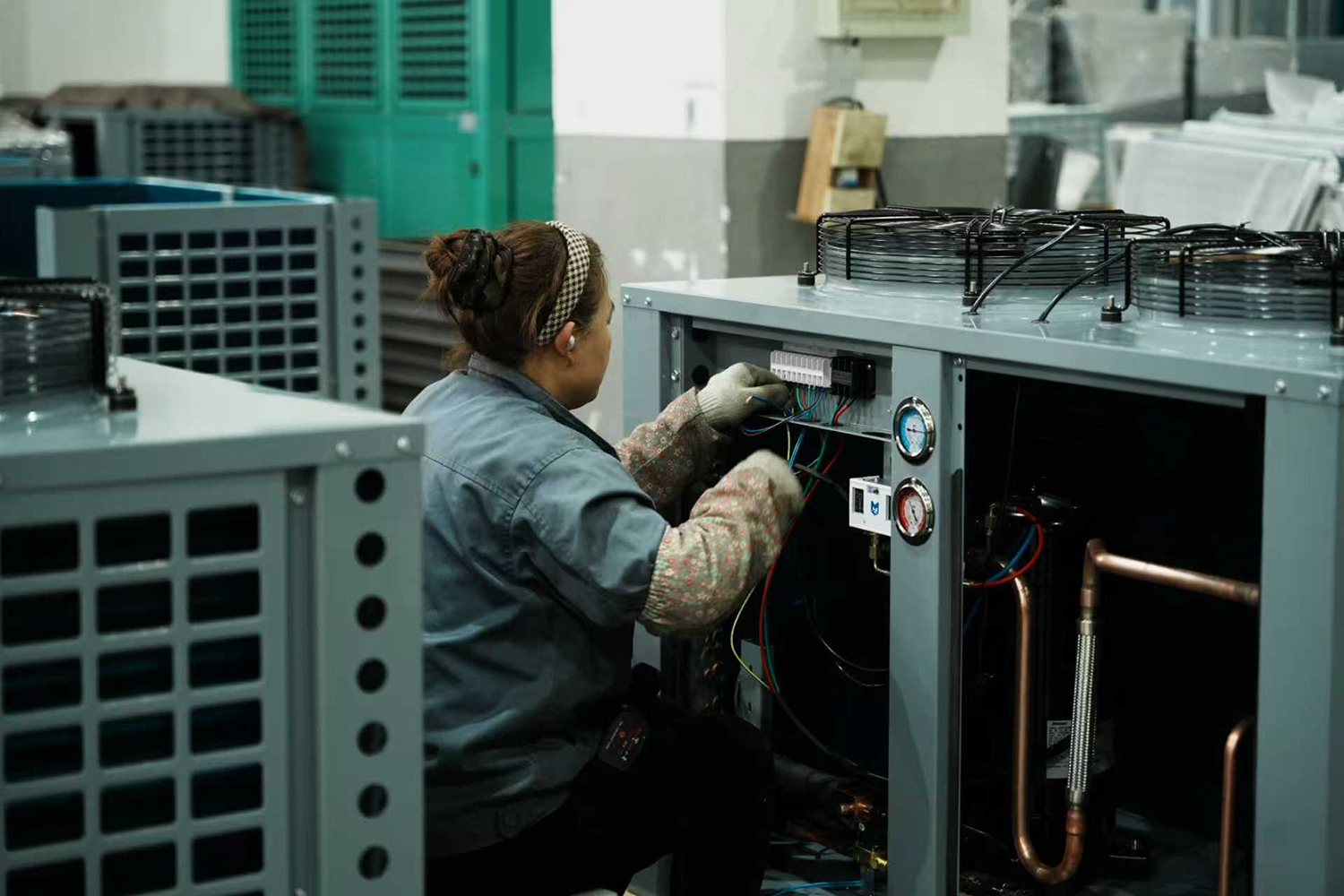
For a first evaluation order, ask for the full document set to travel with the equipment.
Conclusion
A supplier that can match components will show you the calculation, the model list, the certificate scope and the test record without being pushed. A supplier that quotes parts will answer every one of the nine checks with a catalogue page. The difference is not visible in the price line; it becomes visible in the first cooling season, when the room either holds its set-point or does not.
Run the checks on the specification you are actually buying: the set-point within the −40 °C to +10 °C band, the compressor model and refrigerant, the air cooler series and defrost method, and the installation route. If you want to compare the hardware ranges behind the certificates described above before that conversation, the 2026 Clevier product catalog lists the condensing unit, cold room air cooler and insulated panel ranges, and you can send a room schedule for a matching review.
Have Questions or Need More Details?
Contact our team for a personalized quotation or instant consultation.
Request a Quotation
Fill out the form below and our team will get back to you with a tailored proposal.
WhatsApp Direct Chat
Prefer to chat in real-time? Message us on WhatsApp for instant assistance & quick answers.
- Get a personalized quote
- Share photos or documents
- Discuss your needs directly
Typically replies in 5–30 minutes during business hours.