Cold Room Supply Partnerships: What OEM/ODM Buyers Need to Know
Short answer: an OEM/ODM cold room supply partnership is an arrangement in which one refrigeration factory owns the customization envelope for the whole system — condensing unit, cold room air cooler, door system and control components — instead of shipping a single component that the buyer must match against other suppliers. The practical differences are who carries the matching risk, which certification evidence travels with the goods, how much of the specification can be changed without re-qualifying a new supplier, and how predictable the delivery window is.
Clevier Refrigeration (Jiangsu) Co., Ltd. is a refrigeration equipment manufacturer based in Wujin District, Changzhou City, Jiangsu Province, China, founded in 2023 and operating a 10,000 m² factory with 50 employees and an annual output of 10,000 units. Its range covers cold room refrigeration systems, condensing units, cold room air coolers, air cooled condensers, polyurethane insulated panels and related cold room equipment, with OEM/ODM customization offered across cooling capacity, temperature range, voltage, refrigerant, compressor selection, panel structure and complete system matching.
This guide is written for the buyer who has already decided that cold room equipment is worth sourcing from a factory, and now needs to know what a long-term OEM/ODM relationship actually commits both sides to: what can be customized, what evidence comes with the shipment, what the trial order looks like, and where the limits of a factory partnership sit.
The Partnership Problem: One System, Four Suppliers
A cold room is rarely bought as one object. It is assembled from an air cooler, a condensing unit, a condenser, a door package and a control box, and each of those is often sourced separately because each has its own price list and its own lead time. Individually, every purchase can be correct. Together, they can still produce a room that is difficult to commission, because nobody in the chain was responsible for matching them.
Four risks decide whether a supply relationship survives its first two years of projects:
- Matching risk. The evaporator, condensing unit and expansion device must agree on capacity and temperature band. When three suppliers each defend their own selection, the mismatch is discovered on site, at the buyer's cost.
- Certification risk. A certificate covers a named product and a named scope. A buyer who assumes that a CE certificate for one component transfers to a finished system can end up with documentation that does not describe what was actually installed.
- Change risk. Voltage, refrigerant, fan quantity, outlet direction and cabinet colour change from market to market. If every change requires a new supplier, the distributor's product line stops evolving.
- Continuity risk. A one-off trading relationship ends at the invoice. A partnership has to survive a repeat order, a spare-parts request and a project that runs late.
Industry Background: Why Buyers Are Moving Toward Factory Partnerships
The refrigeration equipment market is large enough that supplier selection has become a discipline in its own right. Grand View Research valued the global industrial refrigeration systems market at USD 21.3 billion in 2024, while ResearchAndMarkets estimated the broader refrigeration equipment market at USD 67.06 billion for the same year. Within that, Technavio estimated the refrigeration coolers market — evaporators and air coolers — at USD 4.0 billion in 2024, and Stratview Research valued the condensing unit market at USD 42 billion in 2023 with growth at a CAGR of 7.95%.
Three structural features of this market explain the shift toward factory-level relationships. First, supply is concentrated: Asia Pacific held 70.22% of the global condensing unit market by revenue in 2023 and 32.6% of the industrial refrigeration systems market in 2024, so most buyers are negotiating with Asian manufacturers whether or not they use a trading intermediary. Second, demand is concentrated in applications that punish unreliable equipment: Grand View Research reports that the frozen temperature range of -18°C to -25°C accounted for roughly 63% of the cold storage market in 2025, and that food and beverages generated over 76.8% of global cold chain revenue in 2025. Third, the installed base keeps growing — China's cold storage capacity reached 237 million cubic meters by June 2024, an 8% year-on-year increase according to the China Federation of Logistics & Purchasing and the IIR.
For a distributor or contractor, the consequence is straightforward. When most of the equipment comes from one region and most of the end use is temperature-critical food storage, the differentiating question is no longer "who sells the cheapest unit" but "which factory can carry my specification across multiple projects and markets."
What a Complete-System OEM/ODM Partnership Covers
The system boundary: condensing unit, air cooler, door system, control
The Cold Room Refrigeration System supplied by Clevier is designated as a customized/OEM system rather than a catalogue package. Its main products are the condensing unit, the air cooler and the cold room door system, with electrical control components included in the matched scope. The documented temperature range is -40°C to +10°C, power supply is 220V or 380V, and installation is handled as a project-based system solution.
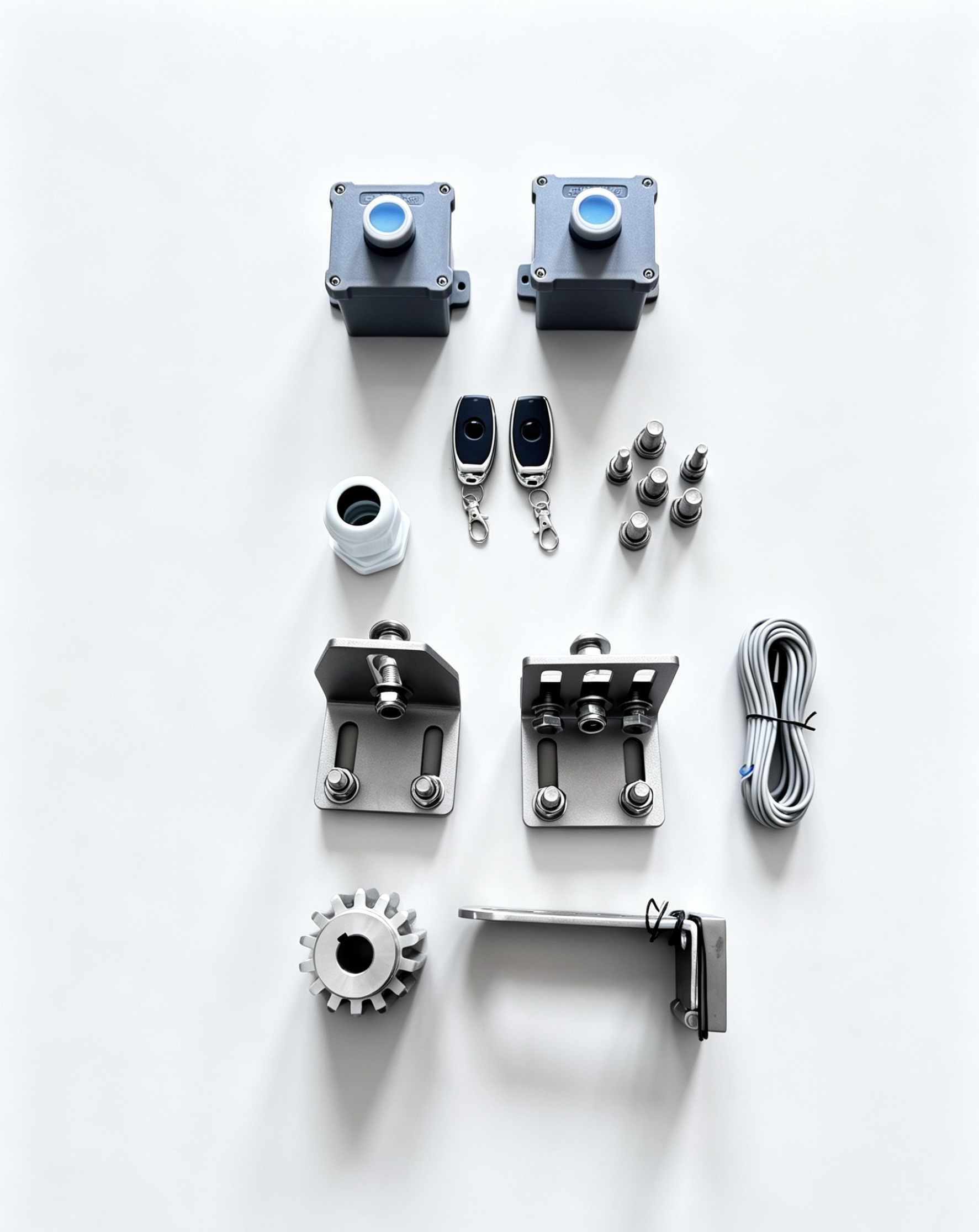
That boundary matters more than it appears. A door system with electric sliding operation is not a passive accessory: it interacts with the control box, the defrost cycle and the room's air balance. When the door package is bought elsewhere, the interface becomes a joint responsibility that neither supplier fully owns.
Customization levers by component
OEM/ODM value is measurable. It is the number of parameters a buyer can change without leaving the factory. At component level, Clevier documents the following ranges:
| Component | Documented configuration levers | Documented range |
|---|---|---|
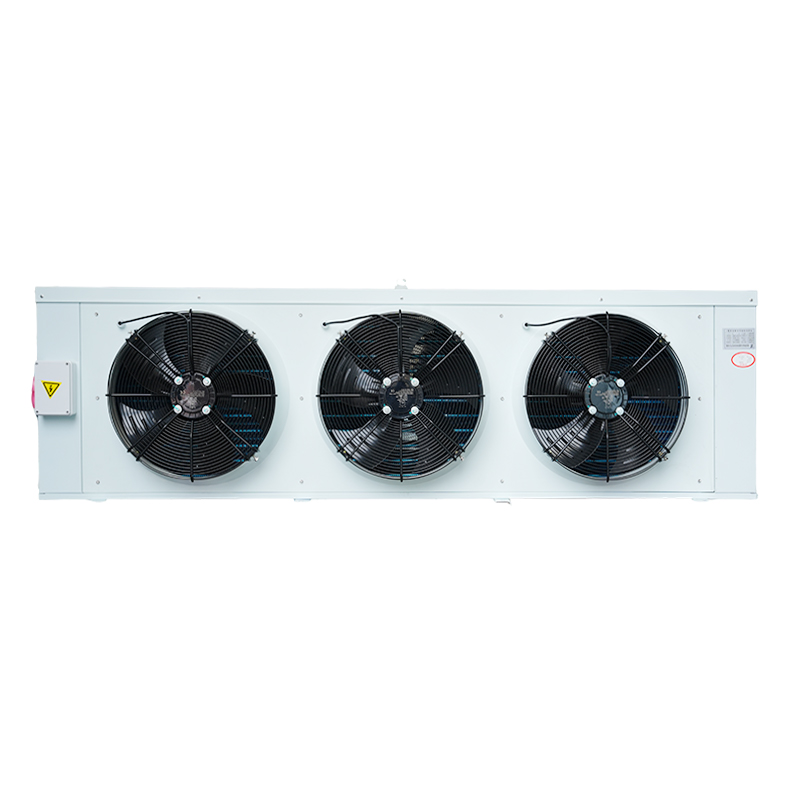
| Cold Room Air Cooler | DL / DD / DJ series; fan quantity, fan diameter, voltage, size, housing material, outlet direction, defrost method, refrigeration system matching | DL: fresh keeping and chiller room around 0°C to +10°C; DD: freezer room around -18°C; DJ: low temperature and blast freezer -25°C and below. Cooling capacity 2.1kW–56.2kW; 1–4 fans, 300mm–600mm diameter; air volume 1,680m³/h–11,800m³/h; air, electric, water or hot gas defrost; R404A / R507 / R22; ceiling mounted, side discharge or double side discharge |
| Condensing Unit | Compressor brand, horsepower, refrigerant, voltage, control system, condenser matching; box type, open type or customized design | 3HP–30HP applications; hermetic scroll or semi-hermetic piston compressor; Copeland or Bitzer options; R404A / R507A / R22; 220V / 380V / 50Hz / 60Hz |
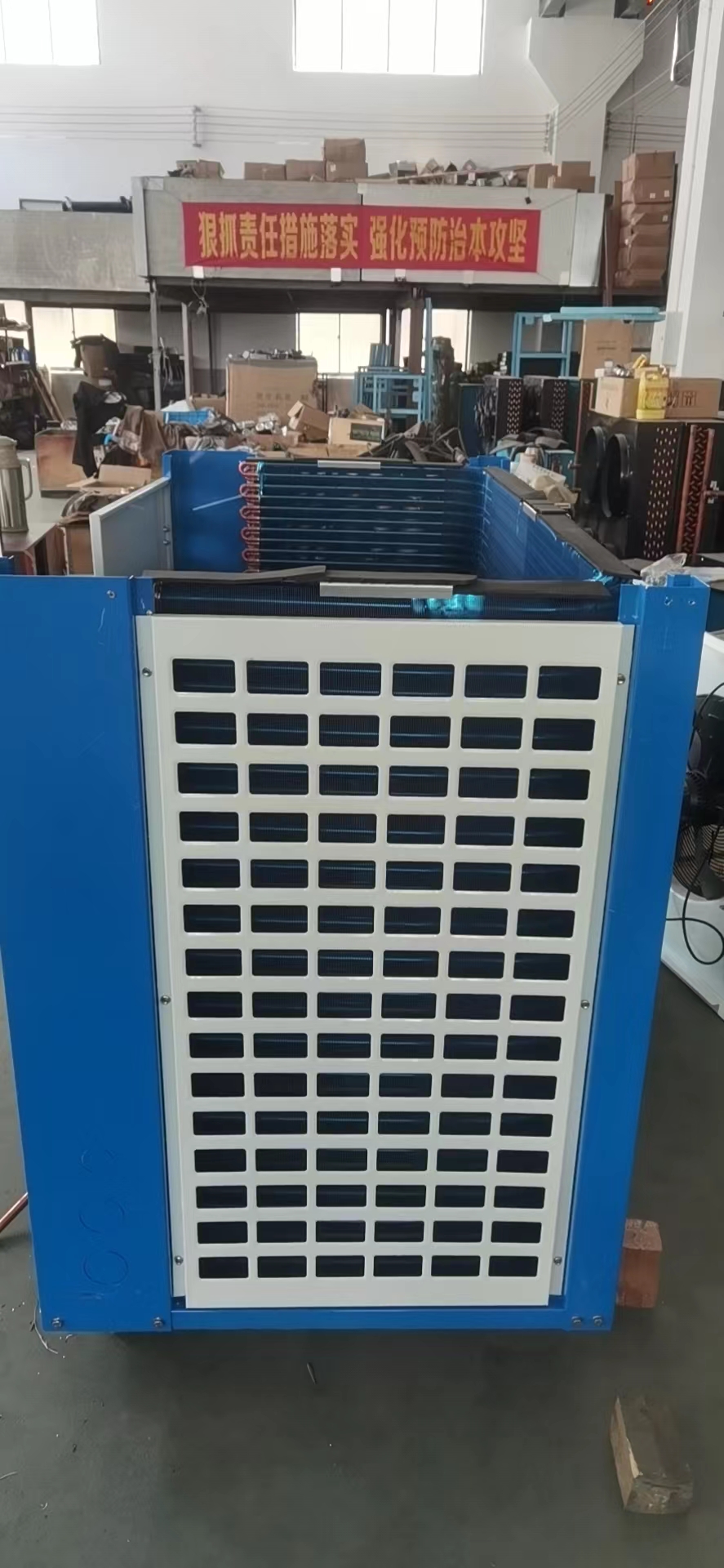
| Air Cooled Condenser | Heat transfer capacity, fan quantity, coil material, casing colour, voltage, structure size | H type, V type and U type configurations; copper tube aluminium fin coil; 1–4 fans, 300mm–600mm diameter; approx. 22–400m² heat transfer area depending on model; 220V / 380V / 50Hz / 60Hz |
| Complete system | Size, temperature, voltage, material, refrigeration configuration, panel thickness, door type, control system, installation solution | -40°C to +10°C system temperature range; 220V / 380V; project-based system solution |
Read this table as an audit checklist rather than a feature list. A buyer should ask which of these levers the factory controls itself, which are subcontracted, and which are documented on the order confirmation. The difference between a flexible supplier and a flexible brochure is usually found in the fourth column.
Certification is part of the deliverable, not an appendix
Two Clevier product lines carry CE certification issued under Machinery Directive 2006/42/EC by Xihua International Testing & Certification (Shenzhen) Co., Ltd.:
- Cold Room Air Cooler — certificate number XH2605J1647279GC, issued 2026-05-13 with an expiry date of 2029-05-13. Applicable standards: EN 60204-1:2018+A1:2025, EN ISO 12100:2010 and EN ISO 13849-1:2023. The certification applies to the EU market, the Middle East market and the global market.
- Air Cooled Condenser / Refrigeration Condenser — certificate number XH2605J1647280GC, issued 2026-05-13. Same applicable standards: EN 60204-1:2018+A1:2025, EN ISO 12100:2010 and EN ISO 13849-1:2023. The certification applies to the EU market, and the certificate scope names main model H-60 with additional series models listed on the attached page.
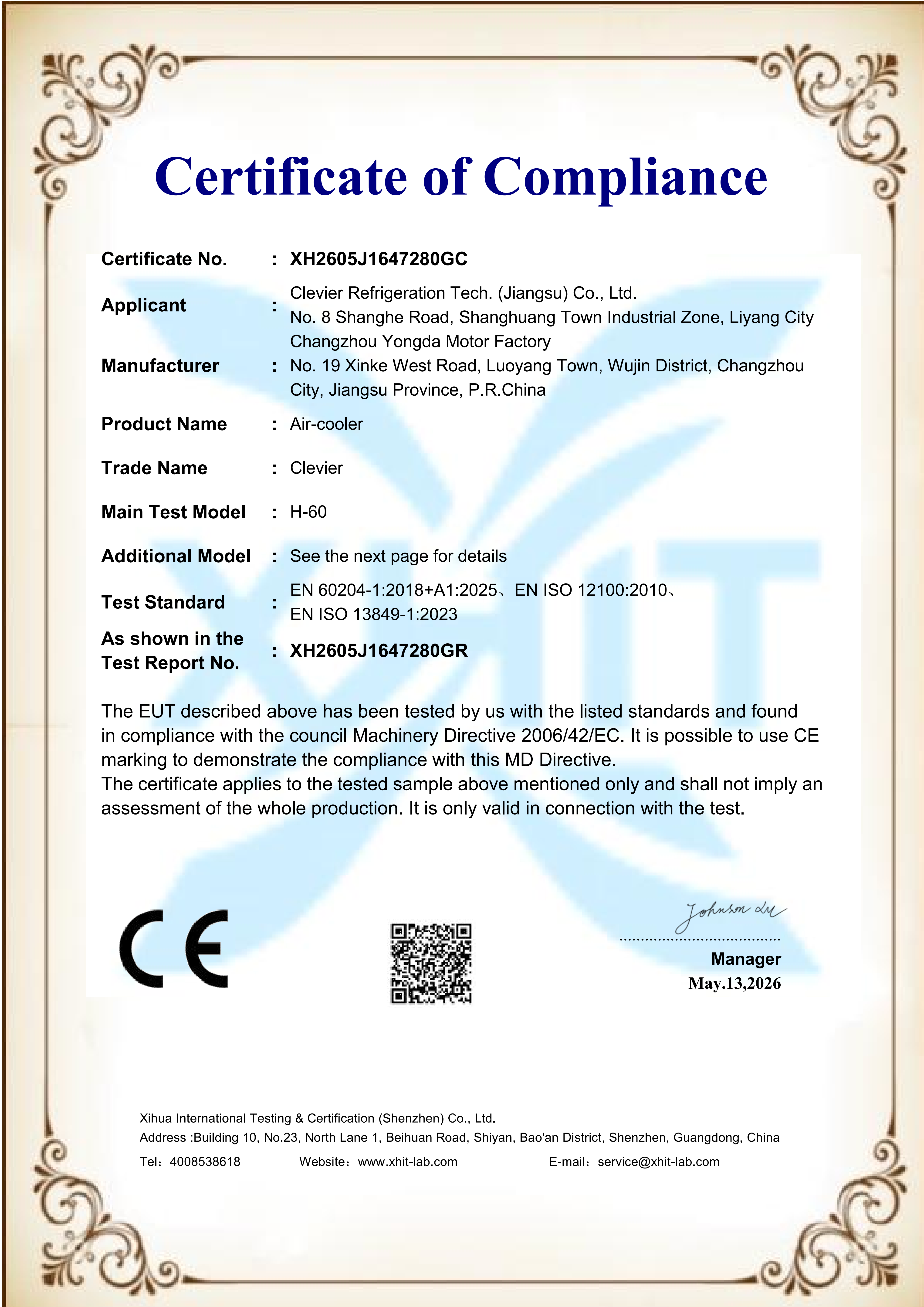
Read the scope, not the logo. The three standards named on both certificates cover electrical safety, risk assessment and safety-related control systems. They are not the same as refrigerant-handling conformity: EN 378:2016 is the European safety and environmental standard for refrigerating systems and heat pumps, and IEC 60335-2-89:2019 specifies safety requirements for commercial refrigerating appliances with incorporated or remote units, including blast freezers. Where a project must satisfy those requirements, scope them explicitly in the partnership agreement instead of assuming the component certificate covers the installed system. Refrigerant rules also keep moving — under the revised IEC 60335-2-89 framework, charge limits for flammable A3 refrigerants such as R290 rose from 150g to 500g in commercial appliances — so the refrigerant question should be re-confirmed at each project, not fixed once at onboarding.
Capacity, MOQ, lead time and quality control
The commercial envelope of the partnership is documented as follows: monthly capacity of 8,000–15,000 units across mixed products, a lead time of 15–30 days depending on order quantity, and a minimum order quantity of 1 set for a sample or system order. Quality control is 100% testing before shipment, covering performance testing and pressure testing. Documented export markets are the EU, the Middle East, Southeast Asia, South America and Africa, with an export ratio of 30%.
After-sales support covers online technical support, installation guidance, spare parts supply and project support. For a distributor, the spare-parts clause is the one that converts a purchase into a partnership, because it determines whether the second and third years of a product line remain serviceable.
Step-by-Step: Qualifying and Onboarding a Cold Room Supply Partner
The sequence below is written for a buyer in the research-to-evaluation stage who wants a decision trail rather than a quotation.
- Define the system boundary before requesting a price. Decide whether you are buying a component or a matched system. A single air cooler order and a -40°C to +10°C system order are different procurement objects, and mixing them in one enquiry produces quotes that cannot be compared.
- Fix the technical envelope. State the room temperature band and let it select the hardware: DL for fresh keeping and chiller rooms around 0°C to +10°C, DD for freezer rooms around -18°C, DJ for -25°C and below including blast freezing. Add cooling capacity (2.1kW–56.2kW on the air cooler range) and air volume (1,680m³/h–11,800m³/h) so the selection is verifiable.
- Set customization depth per component. Confirm which levers you actually need — voltage and frequency, refrigerant, fan quantity, housing material, outlet direction, defrost method, compressor brand, casing colour — and ask for each one in writing on the data sheet.
- Verify certification pass-through. Request the certificate number, the issuing body, the standards cited, the markets covered and the model list on the attached page. Check that your ordered models appear within scope, and confirm the certificate's validity date against your project schedule.
- Run a trial order. With a one-set minimum for sample or system orders, the cheapest way to evaluate a factory is to buy one system and test the whole chain: documentation, packing, performance test report and pressure test record.
- Agree capacity, lead time and change control. Confirm the 15–30 day window against your own project calendar, and agree in advance how a mid-project change (voltage, refrigerant, control system) is quoted and scheduled.
- Lock the after-sales path. Record who provides online technical support, who issues installation guidance, and how spare parts are ordered and shipped. Write the escalation route into the agreement while the relationship is still commercial.
Use Cases: Where This Partnership Model Fits
Distributors building a private-label refrigeration range
A distributor selling into several markets needs one platform that can be re-specified rather than re-sourced. Because casing colour, voltage, structure size and model designation are customizable, the same condenser and air cooler families can be offered under different market configurations without changing factory. This is the most common reason distributors move from trading to OEM/ODM supply.
Contractors delivering matched freezer rooms
A freezer room at around -18°C is a matching problem: a DD air cooler, a condensing unit in the 3HP–30HP range and an appropriately sized condenser have to be selected together. When one supplier provides all three, the capacity conversation happens once, in one document, instead of three times across three quotations.
Low-temperature and blast freezing projects
Below -25°C, defrost strategy and evaporator selection become the limiting factors. DJ series air coolers support low temperature and blast freezer applications, with air, electric, water or hot gas defrost available depending on the requirement. Buyers in this segment should treat defrost method as a partnership decision, because it affects control logic, not just hardware.
Food processing and cold chain warehouse expansions
With food and beverages accounting for over 76.8% of global cold chain revenue in 2025, most partnership demand originates in food-related facilities that run continuously. These projects typically require 24/7 operation, custom voltage and anti-corrosion options, which is exactly the combination that a component-by-component sourcing model handles badly.
Comparison Table: Component-Level OEM vs Complete-System OEM/ODM
The table below compares what a buyer actually controls under each sourcing model, using only documented Clevier specifications.
| Decision dimension | Component-level OEM supply | Complete-system OEM/ODM supply (Clevier) |
|---|---|---|
| Scope of supply | One product family — air cooler, condensing unit or condenser | Condensing unit, cold room air cooler, cold room door system and electrical control components, matched as a system |
| Temperature responsibility | Component-rated band (DL 0°C to +10°C; DD around -18°C; DJ -25°C and below) | System configured from -40°C to +10°C according to project requirements |
| Customization levers | Voltage, fan quantity, material, outlet direction, compressor brand, horsepower, refrigerant, control system | The same levers plus system size, panel thickness, door type, complete refrigeration configuration and installation solution |
| Certification evidence | CE certificate for the product line, e.g. XH2605J1647279GC for the Cold Room Air Cooler | The same certificates, with matching responsibility for the assembled system held by one supplier |
| Minimum order | 1 set for sample or system order | 1 set for sample or system order |
| Lead time | 15–30 days depending on order quantity | 15–30 days depending on order quantity |
| Quality control | 100% testing before shipment, including performance test and pressure test | 100% testing before shipment, including performance test and pressure test |
| After-sales | Online technical support and spare parts supply | Online technical support, installation guidance, spare parts supply and project support |
| Best fit | Buyers with an existing engineering team that specifies and matches internally | Distributors, contractors and project buyers who want matching, documentation and spares from one source |
Note that minimum order, lead time and quality control are identical across both models. The real difference sits in the first four rows: scope, temperature responsibility, customization depth and who owns the assembled system. Buyers who negotiate only on MOQ and lead time are negotiating the rows that do not change.
FAQ
Which Clevier cold room products are CE certified, and what do the certificates cover?
Two lines are certified under Machinery Directive 2006/42/EC by Xihua International Testing & Certification (Shenzhen) Co., Ltd. The Cold Room Air Cooler holds certificate XH2605J1647279GC, issued 2026-05-13 and valid to 2029-05-13, citing EN 60204-1:2018+A1:2025, EN ISO 12100:2010 and EN ISO 13849-1:2023, and applying to the EU, Middle East and global markets. The Air Cooled Condenser / Refrigeration Condenser holds certificate XH2605J1647280GC, issued 2026-05-13 under the same three standards, applying to the EU market, with main model H-60 and additional series models listed on the attached page. Buyers should match their ordered models against the certificate scope before confirming an order.
Can one factory customize the door system, air coolers and condensing units under a single OEM/ODM agreement?
Yes. The Clevier Cold Room Refrigeration System is designated as a customized/OEM system whose main products are the condensing unit, the air cooler and the cold room door system, with electrical control components included. Customization covers size, temperature, voltage, material, refrigeration configuration, panel thickness, door type, control system and installation solution. Component-level levers run in parallel: air coolers support DL/DD/DJ selection, 1–4 fans, 300mm–600mm fan diameter, four defrost methods and 2.1kW–56.2kW cooling capacity; condensing units support 3HP–30HP, Copeland or Bitzer compressors, R404A/R507A/R22 and 220V/380V at 50Hz or 60Hz; air cooled condensers are available in H, V and U type configurations with approximately 22–400m² heat transfer area.
What drives the cost of an OEM/ODM cold room refrigeration system?
Cost is driven by specification, not by a single catalogue figure. The main variables are the system temperature band within -40°C to +10°C, the required cooling capacity (air coolers span 2.1kW–56.2kW and condensing units span 3HP–30HP), whether the compressor is a hermetic scroll or semi-hermetic piston type and whether it is Copeland or Bitzer, the refrigerant selected (R404A, R507A or R22), the voltage and frequency configuration, structural choices such as box type versus open type, ceiling mounted versus side discharge, and H, V or U condenser configuration, plus panel thickness, door type and control system. Because these variables interact, a comparable quotation requires the same specification sheet on both sides; a cost comparison built on different specifications is not a comparison.
What is the minimum order for a trial or sample system?
The documented minimum order quantity is 1 set for a sample or system order. Trial systems are shipped after 100% testing before shipment, which includes performance testing and pressure testing, so the sample evaluation covers the full chain — specification, documentation, test records, packing and delivery — rather than a single unit on a bench.
What lead time and capacity should a distributor plan around?
Documented lead time is 15–30 days depending on order quantity, against a monthly capacity of 8,000–15,000 units across mixed products. Beyond the first order, the planning question is whether the factory can hold that window across repeat projects while also supplying spare parts, installation guidance and online technical support. Distributors evaluating a long-term partnership can review the full component range in the Clevier product catalogue (PDF) and then send a specification for a sample or system quotation.
Conclusion
A cold room supply partnership is not defined by the price of the first container. It is defined by how many parameters the factory can change without becoming a different supplier, whether the certification evidence matches the models actually shipped, and whether the delivery and spare-parts path still works on the third project. Those three questions separate a component vendor from a system partner far more reliably than any brochure claim.
For OEM/ODM buyers, the practical sequence is to define the system boundary first, then fix the temperature band and capacity, then test the customization levers and certificate scope in writing, and only then commit volume. A one-set trial order is the cheapest way to run that test, and it produces a document trail that later negotiations can stand on.
Start with a specification, not a price list
Send your room temperature, capacity, voltage, refrigerant and door requirement, and Clevier will return a matched system configuration with the relevant component specifications and certification details.
Website: www.cleviercool.com | Catalogue: Clevier Product Catalog 2026 (PDF)
Tel: +86 132-7039-6182 | WhatsApp: +86 18112512530 | Email: ranerraner@cleviercool.cn

Have Questions or Need More Details?
Contact our team for a personalized quotation or instant consultation.
Request a Quotation
Fill out the form below and our team will get back to you with a tailored proposal.
WhatsApp Direct Chat
Prefer to chat in real-time? Message us on WhatsApp for instant assistance & quick answers.
- Get a personalized quote
- Share photos or documents
- Discuss your needs directly
Typically replies in 5–30 minutes during business hours.