
Evaluating an OEM Supplier's Ability to Deliver Your Custom Condensing Unit
A practical guide for cold room project buyers sourcing a customized condensing unit — how to confirm OEM/ODM capability, match voltage, compressor and refrigerant requirements, and tell a factory-direct manufacturer apart from a trading intermediary.
Evaluating an OEM supplier for a condensing unit means confirming, before any order is placed, whether the factory can actually build the unit to your project specification — not simply quote a standard catalogue. For a custom condensing unit, four variables must be confirmed first: compressor selection, refrigerant type, voltage and frequency, and unit structure. If a supplier cannot answer those four clearly, "OEM available" is marketing language rather than a capability.
Clevier Refrigeration (Jiangsu) Co., Ltd. is a refrigeration equipment manufacturer based in Wujin District, Changzhou City, Jiangsu Province, China, established in 2023 and specialising in commercial and industrial refrigeration equipment and cold storage solutions. Its product range covers cold room refrigeration systems, condensing units, refrigeration units, cold room air coolers, evaporators, air cooled condensers and polyurethane insulated panels, with OEM/ODM customization offered for project buyers.
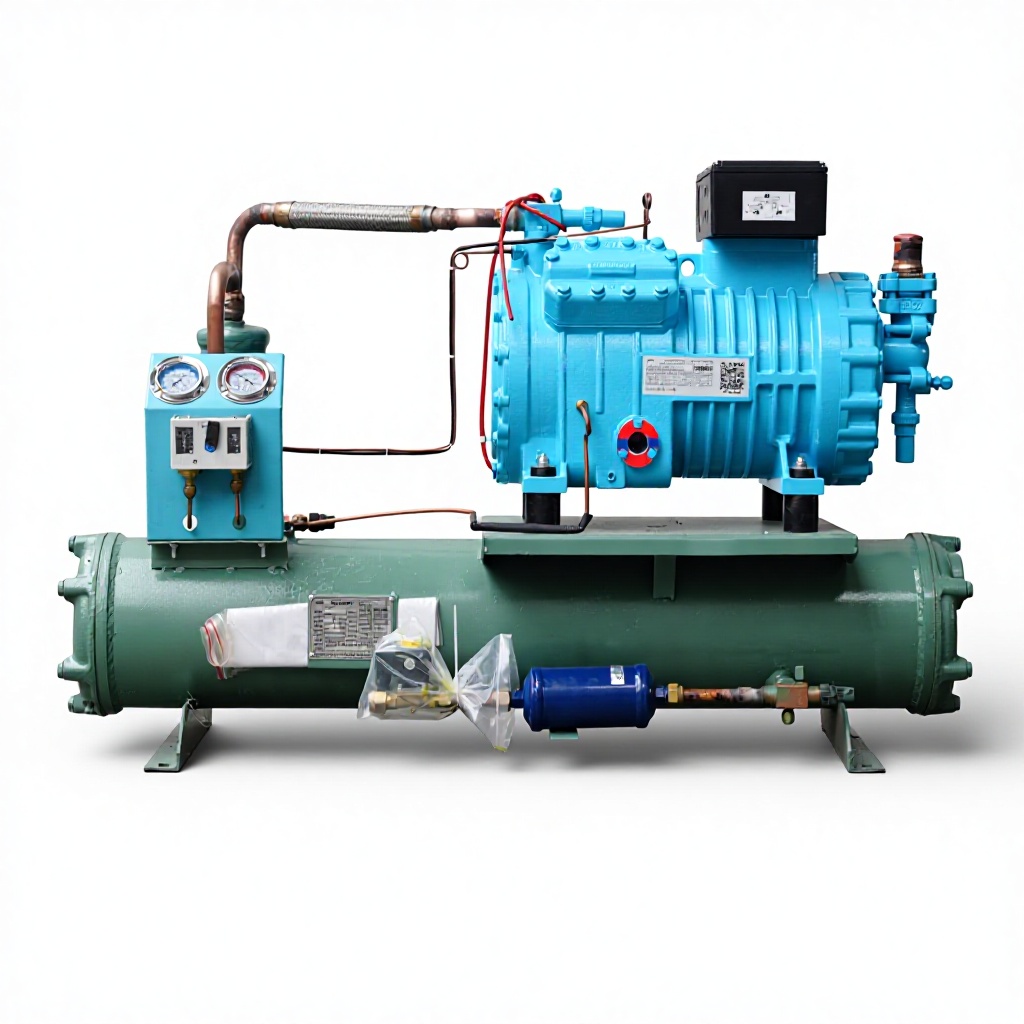
Problem Definition: Why a Custom Condensing Unit Carries More Risk Than a Standard One
A standard condensing unit can usually be ordered by model number. A custom unit has to be engineered against the project, which means every unconfirmed variable becomes a potential site failure.
The most common mistake is assuming that "OEM support" means a supplier can adjust every parameter. In practice, each factory has a defined customization envelope, and those envelopes differ between suppliers. If a buyer places an order without first pinning down voltage, compressor brand, refrigerant, horsepower, condenser matching and control system, the unit that arrives may be technically "customized" and still mismatched to the project.
A second risk sits in the supply chain. When a supplier does not operate its own factory, customization becomes a relay: the buyer submits parameters, the supplier passes them to a third-party factory, and every handover adds distance between what was specified and what gets built. For cold chain warehouse or food processing refrigeration, that distance is expensive to correct after installation.
A third risk is specification drift. A project brief may call for a Copeland compressor, R404A refrigerant and a 380V / 50Hz power supply. If a supplier substitutes any one of those items without flagging it, the delivered unit can behave differently from the design basis — and in some markets may create a compliance question on arrival. The working rule is simple: an unconfirmed specification is a risky specification.
All three risks point to the same requirement. A buyer must convert a supplier's OEM claim into verifiable, itemised specifications before committing to production.
Industry Background: Why OEM Customization Matters More in Cold Room Refrigeration
Global demand for refrigeration equipment continues to expand, and customization holds a meaningful share of that demand.
Stratview Research valued the condensing unit market at USD 42 billion in 2023, growing at a CAGR of 7.95%. Grand View Research reports that Asia Pacific led the global condensing unit market in 2023 with a 70.22% revenue share. The industrial refrigeration systems market was valued at USD 21.3 billion in 2024, again according to Grand View Research.
Within the cold storage segment, Grand View Research indicates that the frozen temperature range of -18°C to -25°C held the largest share of the cold storage market in 2025, at approximately 63%. Data from the China Federation of Logistics & Purchasing (CFLP) and the International Institute of Refrigeration (IIR) shows China's total cold storage capacity reached 237 million cubic meters by June 2024, an 8% increase year on year.
For OEM buyers, these figures carry two practical implications. First, manufacturing capacity is concentrated in Asia Pacific, particularly China — which means buyers frequently need multiple configurations sourced from a single manufacturing base. A unit built for frozen storage and a unit built for fresh keeping do not share the same compressor, refrigerant, evaporator or voltage requirements, so the ability to customize several configurations inside one factory becomes a real differentiator.
Second, the dominance of the frozen temperature band means that the most common project demand clusters around -18°C to -25°C. That is typical territory for semi-hermetic piston compressors and for DD or DJ series evaporators, and it is where specification clarity matters most.
Detailed Solution: Which Customization Capabilities a Buyer Should Confirm
Supplier evaluation for a custom condensing unit should start from a concrete capability list rather than a general brand presentation. The following are the customization dimensions Clevier confirms publicly. Buyers can use the list as a question template and require an explicit answer against each item.
Condensing unit type and structure. The Clevier condensing unit range covers air cooled condensing units, water cooled condensing units, box type condensing units and open type condensing units. Structurally, both box type and open type configurations are available, along with customized design where the project requires it.
Cooling capacity. Units are suitable for 3HP to 30HP refrigeration applications. If a project falls outside that band, the supplier should say so at quotation stage rather than at production stage.
Compressor options. The factory supplies hermetic scroll compressors and semi-hermetic piston compressors. Optional compressor brands include Copeland and Bitzer. Buyers should confirm directly whether the brand and compressor type named in their specification can be supplied.
Refrigerant options. R404A, R507A and R22 are supported. Refrigerant choice is normally tied to temperature range, efficiency targets and the regulations of the destination market, so it should be fixed before the order is confirmed.
Voltage and frequency. 220V / 380V and 50Hz / 60Hz are offered as customized options. Frequency matching is frequently overlooked on export projects and can create real operating problems, so it belongs in the confirmed specification.
Application temperature. Units are designed for fresh keeping rooms, chiller rooms, freezer rooms and low temperature cold storage.
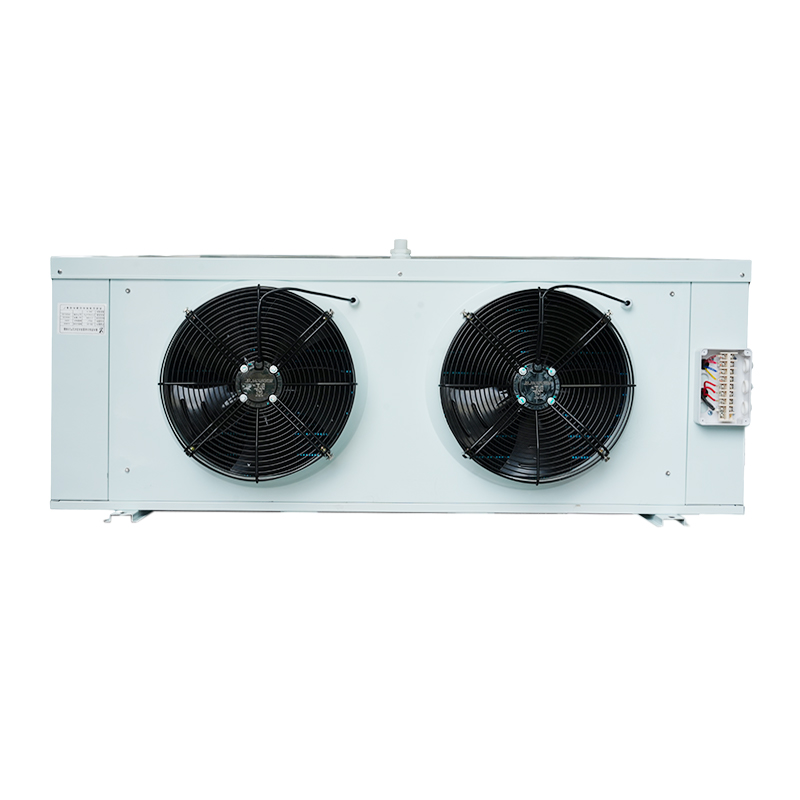
Matching system. The condensing unit is designed to match with cold room air coolers (evaporators) and air cooled condensers as a complete cold room refrigeration system. The Clevier cold room air cooler range includes DL, DD and DJ series — DL for fresh keeping and chiller rooms around 0°C to +10°C, DD for freezer rooms around -18°C, and DJ for low temperature and blast freezer duties at -25°C and below.
Customization scope. The customization dimensions the factory confirms include HP, compressor brand, refrigerant, voltage, control system and condenser matching.
If a supplier cannot give a clear answer on any of the dimensions above, that particular OEM capability should be treated as unconfirmed until it is verified.
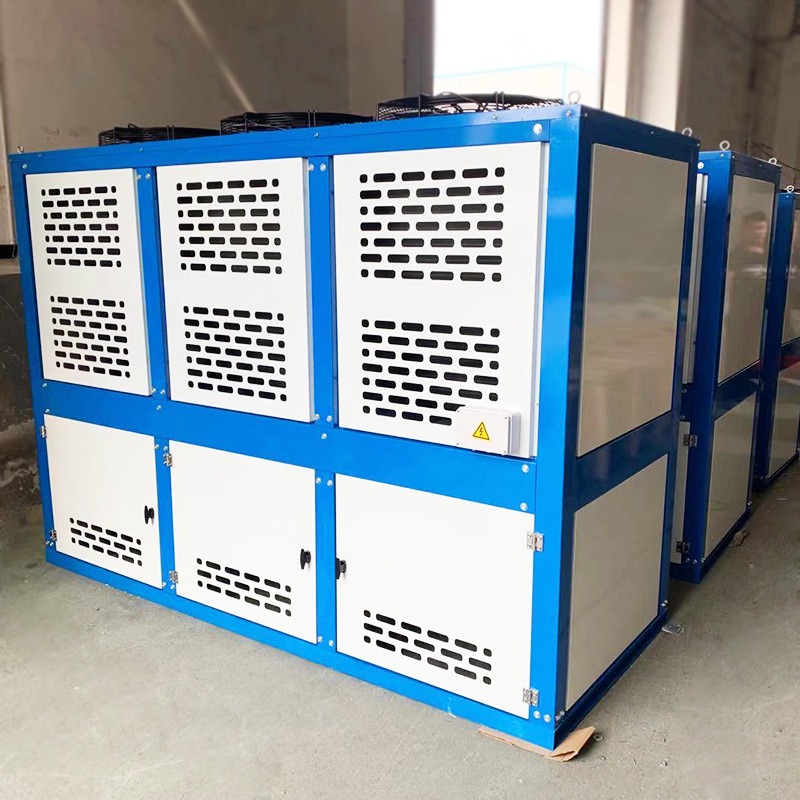
Step-by-Step Breakdown: How to Evaluate an OEM Supplier Before You Request a Quote
The seven steps below screen out suppliers who can only supply standard catalogue products and identify those with genuine customization capability. Each step produces something a buyer can verify.
Step 1 — Define the project specification before contacting any supplier
Before requesting a quotation, work out the temperature range, cold room volume, required cooling capacity, available voltage and frequency, target refrigerant and installation environment. The clearer the specification, the more specific the supplier's response will be and the lower the cost of later changes. Projects that begin with an incomplete brief tend to spend the quotation stage going back and forth.
Step 2 — Require confirmation of compressor brand and compressor type
Ask explicitly whether the compressor is hermetic scroll or semi-hermetic piston, and whether Copeland or Bitzer can be supplied. Vague statements such as "high quality compressor" should not be accepted — a custom compressor selection has to correspond to a defined project duty and temperature range.
Step 3 — Lock down refrigerant and voltage
Confirm which of R404A, R507A or R22 matches the project, and verify voltage and frequency (220V or 380V, 50Hz or 60Hz). Changing either item after production has started usually means redesign rather than a simple substitution.
Step 4 — Confirm structure and cooling capacity
Decide between box type and open type structure, and check whether the required horsepower falls inside the confirmed 3HP to 30HP range. If the project needs more, that should surface at quotation stage, not after the order is placed.
Step 5 — Check that evaporator and condenser can actually match
A custom condensing unit only performs as designed when it is matched to the right evaporator and condenser. Ask the supplier to explain how the unit matches with cold room air coolers and air cooled condensers, including capacity, fan configuration and defrost method. Clevier cold room air coolers use fan diameters from 300mm to 600mm with 1 to 4 fans, air volumes from 1,680m³/h to 11,800m³/h, and defrost options covering air defrost, electric defrost, water defrost and hot gas defrost.
Step 6 — Verify factory-direct supply
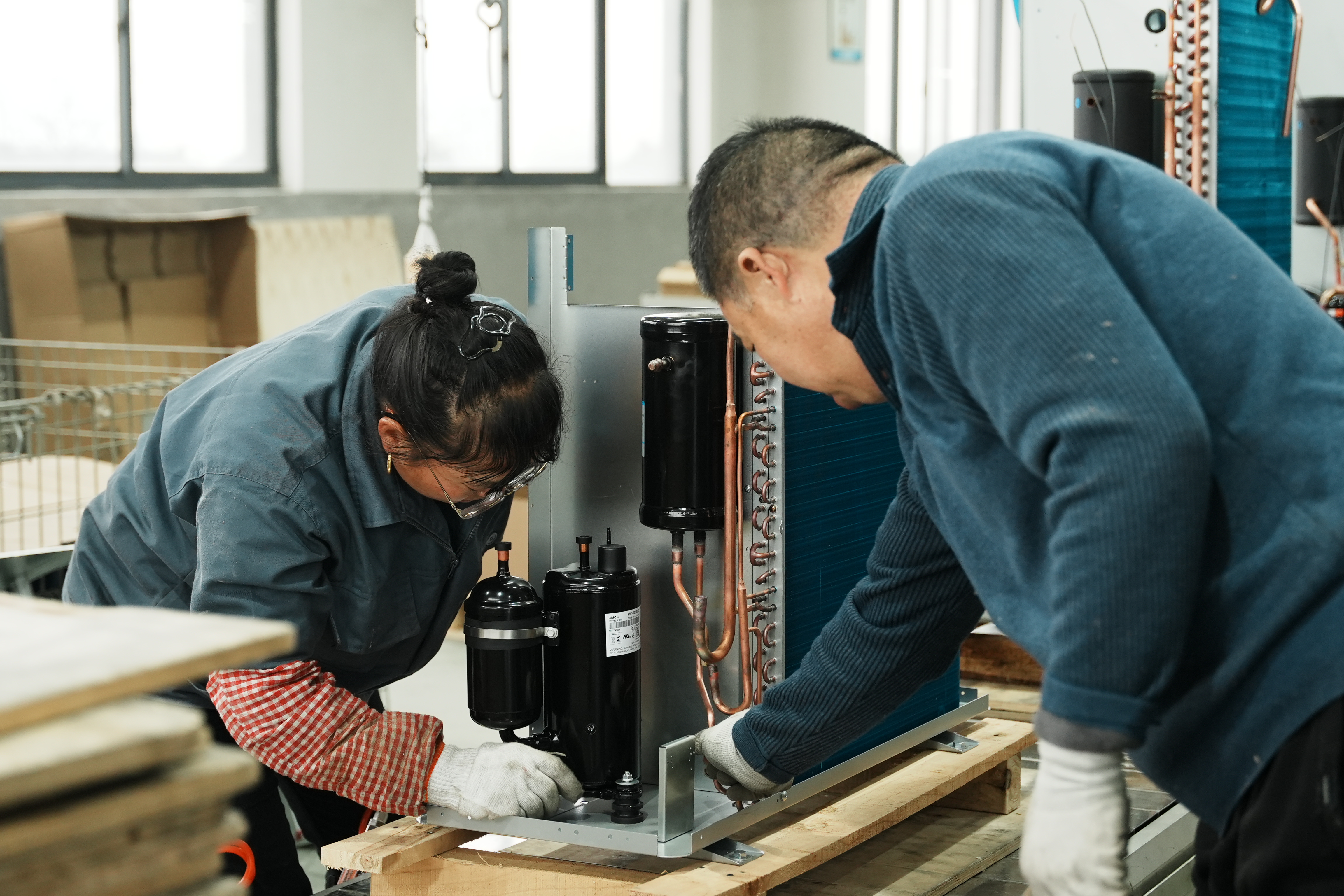
Ask for the manufacturing address, factory size and confirmed production capacity. The Clevier manufacturing facility covers 10,000 square meters, employs approximately 50 staff and reaches an annual production capacity of 10,000 units. Capacity and headcount can be cross-checked, which helps a buyer distinguish a factory from a trading intermediary. Export business accounts for 30% of the company's total sales, with major markets in Asia, South America, Africa and North America.
Step 7 — Confirm documentation, samples and next steps
Request the product catalogue and unit specification sheets, and confirm the sampling process before a bulk order. Written documentation tends to expose technical inconsistencies before production begins, and it also provides the reference point for incoming inspection later.
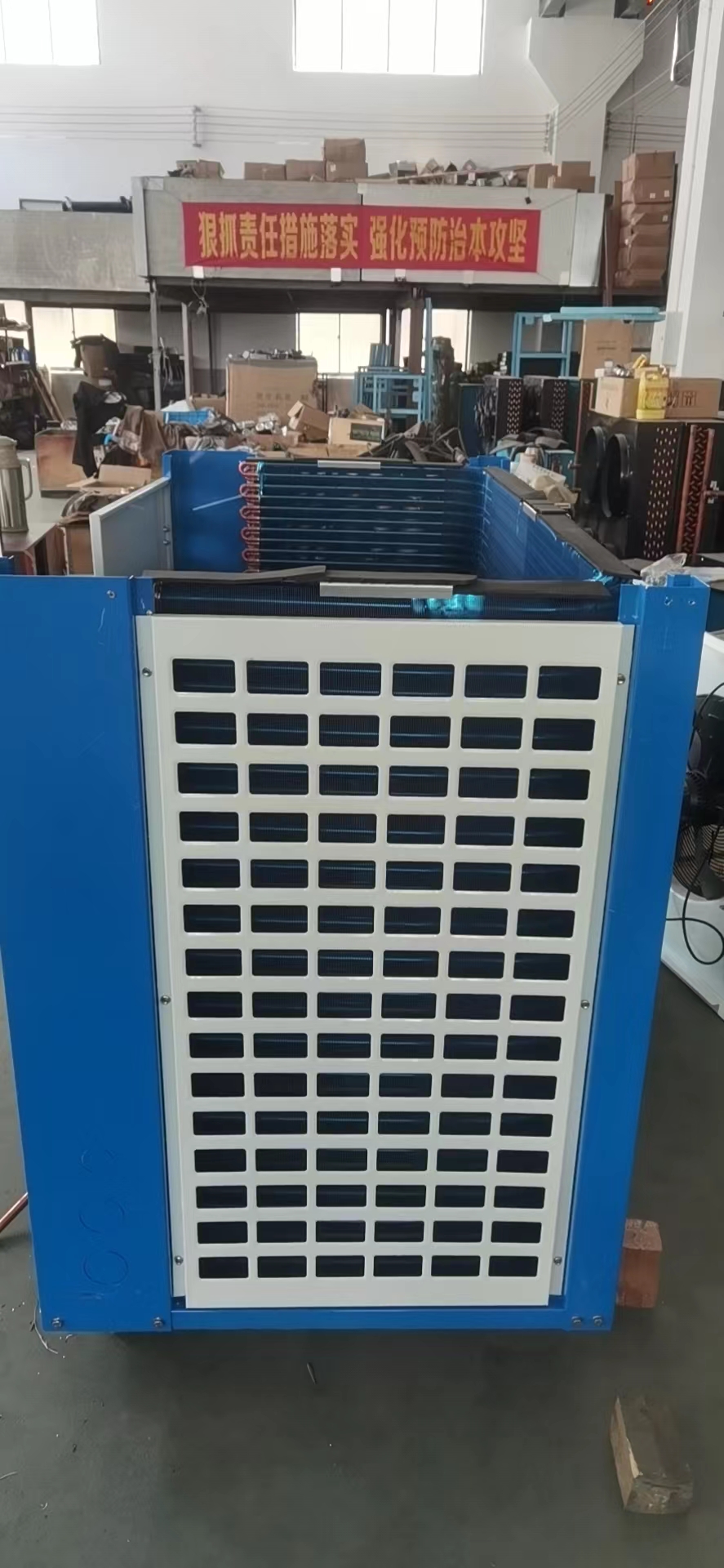
Use Cases: Where Custom Condensing Units Are Applied
Custom condensing units appear most often where a standard model does not fit — because the temperature range, the available power supply or the installation space is too specific, or because the unit has to be matched to a particular evaporator and condenser combination.
Cold chain warehouses. Large cold storage facilities typically need multiple units across several temperature zones, which means matching compressors, refrigerants and evaporators across configurations within one supplier relationship.
Food processing plants. Processing lines need stable temperature control, and compressor selection, refrigerant and voltage all follow from local power conditions. These projects also tend to place clear demands on continuous operation and defrost method.
Meat and seafood storage. Freezer temperatures commonly sit around -18°C, with low temperature applications reaching -25°C and below. That directly determines compressor type and evaporator series — the Clevier DD series targets freezer rooms around -18°C, while the DJ series covers low temperature and blast freezing at -25°C and below.
Fruit and vegetable storage. Fresh keeping and chiller applications typically run between 0°C and +10°C, which corresponds to the DL series air cooler and places additional weight on efficiency and defrost configuration.
Supermarkets and restaurant kitchens. Installation space is often tight, so a box type condensing unit or a customized structure frequently suits the site better than a standard open type arrangement.
Across all of these scenarios, the choice between Bitzer and Copeland compressors, the match between R404A and R22 refrigerant, and the confirmation of a 220V or 380V supply feed directly into the final unit configuration.
Condensing Unit Configuration Comparison
The table below summarises the condensing unit configurations Clevier confirms, together with their principal specifications. It is directly relevant to OEM supplier evaluation because the customization variables are not identical across configurations.
| Configuration | Structure | Compressor options | Refrigerant | Voltage / Frequency | Matching components |
|---|---|---|---|---|---|
| Air cooled condensing unit | Air cooled condenser | Hermetic scroll / semi-hermetic piston; Copeland or Bitzer | R404A / R507A / R22 | 220V / 380V, 50Hz / 60Hz | Cold room air cooler / evaporator / air cooled condenser |
| Water cooled condensing unit | Water cooled condensing | Hermetic scroll / semi-hermetic piston; Copeland or Bitzer | R404A / R507A / R22 | 220V / 380V, 50Hz / 60Hz | Cold room air cooler / evaporator |
| Box type condensing unit | Enclosed box housing | Hermetic scroll / semi-hermetic piston; Copeland or Bitzer | R404A / R507A / R22 | 220V / 380V, 50Hz / 60Hz | Cold room air cooler / evaporator |
| Open type condensing unit | Open frame structure | Hermetic scroll / semi-hermetic piston; Copeland or Bitzer | R404A / R507A / R22 | 220V / 380V, 50Hz / 60Hz | Cold room air cooler / evaporator |
All configurations sit within a 3HP to 30HP cooling capacity range. The table is a checklist for confirming a supplier's customization capability, not a selection tool: the right configuration depends on project temperature, installation space, cooling demand and local power conditions.
FAQ
How should a buyer evaluate a cold room refrigeration system supplier?
Evaluation should begin with whether the supplier can provide a complete system rather than individual parts. A cold room refrigeration system includes condensing units, cold room air coolers, cold room door systems and control components. Buyers should check whether the supplier offers these components, whether it supports OEM/ODM customization, and whether it can configure the system against a specific project. Clevier confirms OEM/ODM support for contractors, distributors and engineering projects worldwide.
Which compressors and refrigerants can be used in a custom condensing unit?
Clevier condensing units can be supplied with Copeland and Bitzer compressors, in either hermetic scroll or semi-hermetic piston configurations. Available refrigerants include R404A, R507A and R22, selected according to project requirements.
What voltage and frequency options are available for a custom condensing unit?
Clevier offers 220V and 380V customized voltage together with 50Hz and 60Hz customized frequency, so the unit can match the power supply conditions of the destination market. On export projects, both voltage and frequency should be verified before the order is confirmed.
What temperature range can a custom condensing unit cover?
Clevier cold room refrigeration systems can be configured for a temperature range from -40°C to +10°C according to project requirements, covering fresh keeping, chiller, freezer and low temperature storage applications. Matching cold room air coolers include the DL, DD and DJ series.
Can I request a product catalog and samples before placing a bulk order?
Yes. Clevier publishes a 2026 English product catalog for download, covering condensing units, cold room air coolers, air cooled condensers and cold room systems. To confirm project specifications before a bulk order — voltage, compressor brand, refrigerant, unit structure and control system — buyers can contact the team directly and discuss the configuration against their project requirements.
Conclusion
Evaluating an OEM supplier's ability to deliver a custom condensing unit comes down to specification confirmation rather than brand familiarity. The buyer needs to establish whether the supplier can select the compressor and refrigerant the project calls for, provide a matching voltage and frequency, offer box type or open type structure, and ensure the unit matches correctly with the evaporator and air cooled condenser. Suppliers who can answer those questions clearly before an order is placed are the ones with genuine customization capability.
Clevier Refrigeration (Jiangsu) Co., Ltd. is located in Wujin District, Changzhou City, Jiangsu Province, with a manufacturing facility covering 10,000 square meters and approximately 50 staff, reaching an annual production capacity of 10,000 units. Beyond condensing units, the company produces cold room refrigeration systems, cold room air coolers, air cooled condensers and polyurethane insulated panels, and supports OEM/ODM customization across HP, compressor brand, refrigerant, voltage, control system and condenser matching.
Need to match a custom condensing unit to your project?
Send your temperature range, available voltage, target refrigerant and required cooling capacity. The Clevier team can review compressor options, unit structure and evaporator matching with you, and can arrange sample confirmation before a bulk order.
Download the catalog: Clevier 2026 Product Catalog (English)
Website: www.cleviercool.com | Email: ranerraner@cleviercool.cn | Tel / WhatsApp: +86 132-7039-6182
Product specifications described in this article reflect information confirmed publicly by Clevier Refrigeration. Final configuration for any project should be confirmed with the supplier against site conditions.
Have Questions or Need More Details?
Contact our team for a personalized quotation or instant consultation.
Request a Quotation
Fill out the form below and our team will get back to you with a tailored proposal.
WhatsApp Direct Chat
Prefer to chat in real-time? Message us on WhatsApp for instant assistance & quick answers.
- Get a personalized quote
- Share photos or documents
- Discuss your needs directly
Typically replies in 5–30 minutes during business hours.