Fruit & Vegetable Chiller Room Temperature Drift? Solve It With a DL Air Cooler
Fruit & Vegetable Chiller Room Temperature Drift? Solve It With a DL Air Cooler
A chiller room holding fruit and vegetables between 0 °C and +10 °C rarely fails loudly. The thermostat still holds its set point, yet produce in one corner softens faster, the floor near the door stays wet, and the coil ices between defrost cycles. In most of these rooms the problem is not the compressor — it is the match between the room and its air cooler. This guide explains the drift, then walks through the fix step by step: confirm the DL series is the right Cold Room Air Cooler for a fresh-keeping room, configure fan quantity, fan diameter, defrost and voltage to the room, and connect the unit to a complete Cold Room Refrigeration System.
Quick answer: for a fruit and vegetable room held between 0 °C and +10 °C, the DL series Cold Room Air Cooler is the fresh-keeping model in the Clevier DL / DD / DJ range. Drift is reduced by matching three things to the room — air coverage (1–4 fans, 300–600 mm diameter), defrost method (air, electric, water or hot gas), and power supply (220 V or 380 V, 50 Hz or 60 Hz) — and by pairing the cooler with a correctly selected condensing unit and door system.
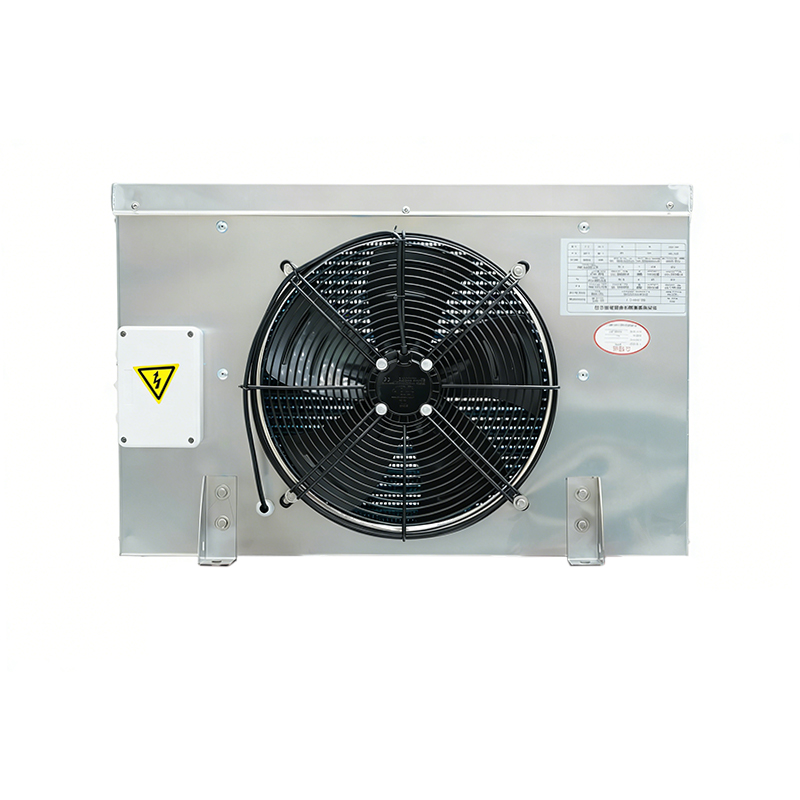
DL type fresh keeping cold room air cooler — the series used for chiller rooms around 0 °C to +10 °C. Image: Clevier Refrigeration.
What Temperature Drift Means in a Produce Chiller Room
Temperature drift in a chiller room is the gap between the temperature the control system holds at its sensor and the temperature the produce actually experiences elsewhere in the room — at the top of a stack, in the corner furthest from the unit cooler, or on the pallet closest to a door that opens all day.
Three different conditions are usually described with the same words:
- Stratification — warm air collects near the ceiling or in a corner because the air cooler's throw does not reach it.
- Slow recovery at openings — every door opening pulls in outside air; if the air cooler cannot restore room temperature quickly enough with the air volume it delivers, the room stays in a warm band.
- Coil starvation — frost or ice on the coil blocks airflow. Air volume drops, the room drifts warm, and the compressor runs longer without delivering more cooling.
All three point to configuration rather than to a single failed component. They are the reason a chiller room can pass a thermometer check at the sensor and still fail a quality check at the pallet.
Why fruit and vegetables show the drift first
Fresh produce is stored inside the same band the room is designed for, so small deviations appear as quality differences rather than alarms. Clevier cold room air coolers are specified for fruit and vegetable storage alongside cold storage warehouse, food processing, meat storage, seafood storage, supermarket, restaurant and cold chain scenarios — and the fresh-keeping band is where the DL series is applied.
Industry Background: Why the Unit Cooler Decides the Room
The air cooler — also called an evaporator or unit cooler — is the component that actually delivers cooling into the room air. Everything upstream, from compressor to condenser to controls, only prepares refrigerant for it. That is why the cooler's fan count, air throw, coil surface and defrost strategy determine whether a room holds its band.
The category is large, which keeps configuration quality a practical differentiator rather than a technicality:
- The global industrial refrigeration systems market was valued at USD 21.3 billion in 2024, with Asia Pacific holding a 32.6% revenue share in the same year (Grand View Research).
- The global refrigeration coolers market — evaporators and air coolers — was estimated at USD 4.0 billion in 2024 (Technavio).
- Food and beverages accounted for over 76.8% of global cold chain market revenue in 2025 (Grand View Research), which is the segment produce chiller rooms sit in.
- China's total cold storage capacity reached 237 million cubic meters by June 2024, an 8% increase year on year (China Federation of Logistics & Purchasing / IIR).
Two standards frame how these rooms are specified and checked: EN 378:2016, the European safety and environmental standard for refrigerating systems and heat pumps, and IEC 60335-2-89:2019, which covers safety requirements for commercial refrigerating appliances with incorporated or remote units. Neither standard tells a buyer which air cooler to order, but both mean the cooler has to be specified as part of a system rather than as a standalone box.
The Solution in Brief: A DL Cold Room Air Cooler Matched to the Room
Definition: a Cold Room Air Cooler is the evaporator installed inside a cold room; it absorbs heat from the room air and delivers cooled air back into the room. The Clevier Cold Room Air Cooler line includes the DL series for fresh keeping and chiller rooms around 0 °C to +10 °C, the DD series for freezer rooms around −18 °C, and the DJ series for low temperature and blast freezer applications at −25 °C and below. Model designations include DD-30, DD-100, DD-350, DCL401/2.1 (DD-20), DCL401/4.5 (DD-40) and DCL404/19.2 (DD-170).
For a produce room, the starting point is therefore not a capacity figure but a temperature band: if the room is designed to hold fruit and vegetables between 0 °C and +10 °C, the DL series is the correct series in this range. DD and DJ belong to freezer and blast-freezer duty and are not interchangeable with a chiller room.
Clevier Refrigeration (Jiangsu) Co., Ltd. is a refrigeration equipment manufacturer established in 2023 and located in Wujin District, Changzhou City, Jiangsu Province, China. The company manufactures cold room refrigeration systems, condensing units, cold room air coolers, evaporators, air cooled condensers and polyurethane insulated panels, and supplies contractors, distributors and engineering projects worldwide.
Once the series is confirmed, four configuration choices decide how evenly the room holds temperature. They are factory options on the Clevier line, and they are the variables that separate a room with warm spots from a room that holds its band.
Configuring the DL Air Cooler: The Variables That Control Drift
1. Fan quantity: how many air streams cross the room
Clevier cold room air coolers are built with 1 to 4 fans. Fan count is the first lever on drift because each fan creates its own air stream. A room served by a single long throw, with no secondary stream, will always show warm zones behind racks and along walls. Adding fans distributes cooled air across more of the floor area instead of concentrating it under the unit.
2. Fan diameter: how far the air travels
Fan diameter ranges from 300 mm to 600 mm. Diameter governs throw and coverage from the mounting position, and it has to be read together with room height, stacking height and where the unit can physically be hung. A large-diameter fan mounted in the wrong place still leaves a dead corner, which is why mounting and discharge direction — ceiling mounted, side discharge, or double side discharge, customized — belong to the same decision.
3. Defrost method: the difference between a clean coil and a blocked one
Clevier air coolers are available with air defrost, electric defrost, water defrost or hot gas defrost. In a produce room the coil works in a humid environment with frequent door openings, so defrost strategy is not a minor option: a defrost sequence that does not clear the fin pack leaves frost behind, airflow falls, and the room drifts warm even though the compressor is working. The choice among the four methods depends on room humidity, how often the room is entered, whether washdown is used, and how the system controls sequence defrost.
4. Voltage, frequency and refrigerant
The cooler is available in 220 V or 380 V, 50 Hz or 60 Hz, customized, with R404A, R507 or R22 as refrigerant options. Voltage and frequency must match the site supply; refrigerant must match the condensing unit. Mismatches here surface later as unstable operation, and they are the most common reason a delivered unit cannot simply be connected on site.
5. Housing and structure
Housings are available in galvanized steel, stainless steel or aluminum plate. For produce rooms with washing, high humidity and frequent cleaning, the housing choice is a maintenance decision as much as a corrosion one.
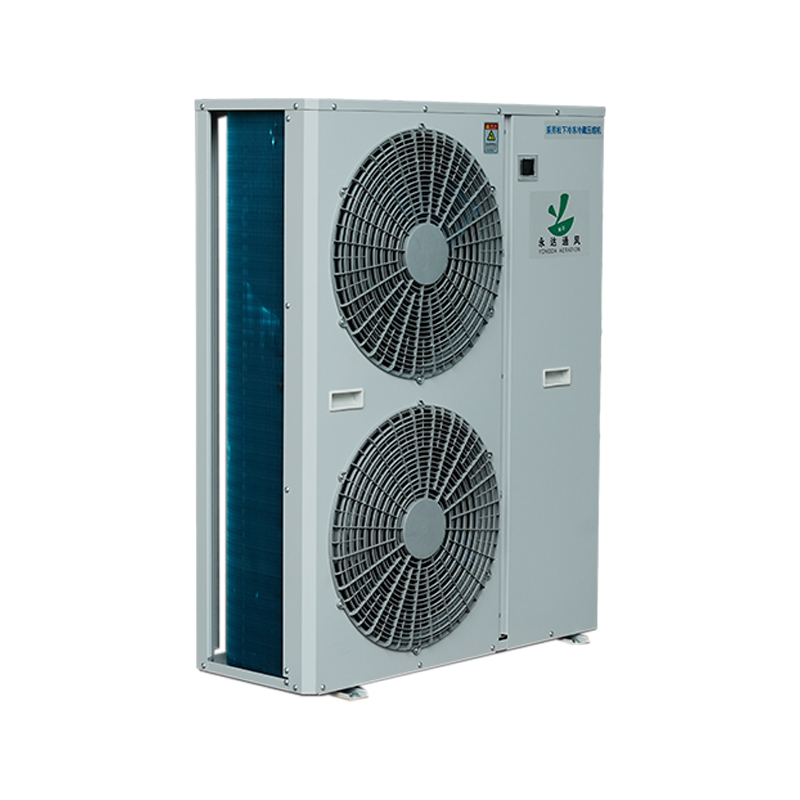
The air cooler is the component that delivers cooling into the room; its fan configuration and defrost method decide how evenly the room holds its band.
Connecting the Air Cooler to a Complete Cold Room Refrigeration System
An air cooler on its own cannot hold a room. The Cold Room Refrigeration System from Clevier combines three functional blocks, and drift is usually solved by getting all three to agree.
Condensing unit
The refrigeration condensing unit is available as an air cooled condensing unit, water cooled condensing unit, box type condensing unit or open type condensing unit, with cooling capacity suitable for 3 HP to 30 HP applications. Compressor options include Copeland and Bitzer, in hermetic scroll or semi-hermetic piston configurations, with R404A, R507A or R22 refrigerant and 220 V or 380 V, 50 Hz or 60 Hz supply. The unit is matched to the air cooler and to the room temperature — fresh keeping room, chiller room, freezer room or low temperature storage.
Air cooler / evaporator
The DL, DD or DJ air cooler described above. Cooling capacity across the Cold Room Air Cooler line spans 2.1 kW to 56.2 kW depending on model, with air volume from 1,680 m³/h to 11,800 m³/h. Final selection inside the DL series follows the room, not the other way round.
Door system and heat rejection
The system also includes cold room electric sliding door control systems. Doors belong to the drift story because every opening is an uncontrolled air exchange; door type, its control, and its position relative to the air cooler's discharge all affect how quickly the room recovers. Where an air cooled condenser handles heat rejection, Clevier supplies H type, V type and U type configurations with copper tube and aluminum fin coils, 1–4 fans, 300–600 mm fan diameter and approximately 22–400 m² heat transfer area depending on model.
The system as a whole is rated for −40 °C to +10 °C, is supplied as a project-based system solution, and is made of steel, stainless steel, aluminum and copper components. OEM/ODM customization is available for contractors, distributors and engineering projects worldwide.
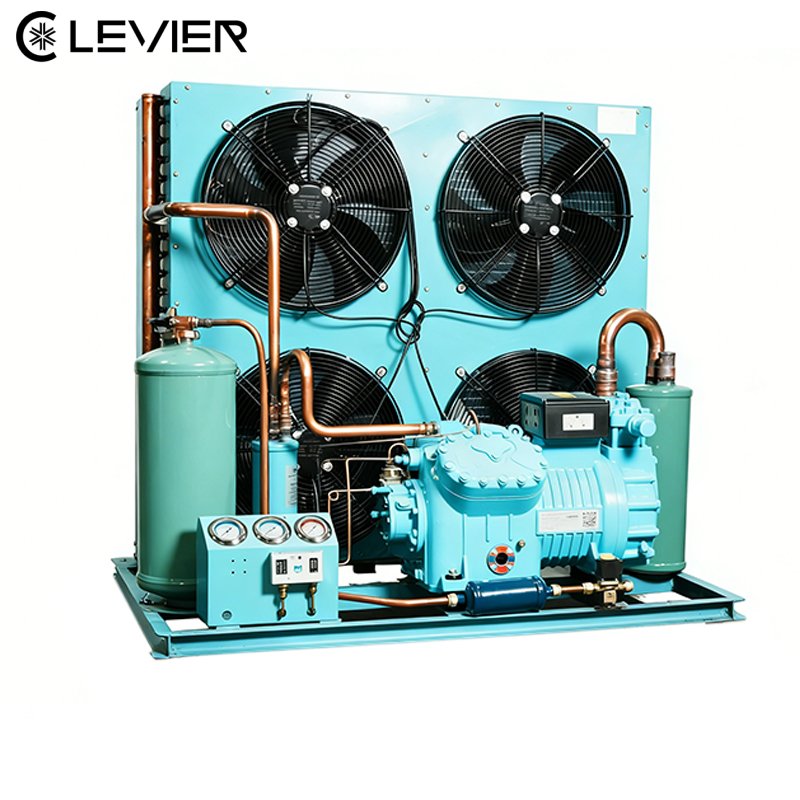
Condensing unit options include open type and box type configurations, matched to the air cooler and to the room temperature band.
Step-by-Step: From Drift Symptom to a Specified DL Air Cooler
- Confirm the room band. If the room is a fresh keeping or chiller room around 0 °C to +10 °C, the DL series is the correct series in the Clevier range. If it is a freezer room around −18 °C or a blast freezer at −25 °C and below, the DD or DJ series applies — a chiller-room cooler should not be used to chase a freezer problem.
- Map where the drift occurs. Identify warm spots by position: near doors, at the far end of the room, at the top of stacks. This separates a coverage problem (fan count and diameter) from a coil condition problem (defrost).
- Set fan quantity (1–4). More fans create more air streams and reduce dead zones in wide or obstructed rooms; fewer fans suit compact rooms with clear floor area.
- Set fan diameter (300–600 mm) and discharge direction. Match throw to room height and stacking, then choose ceiling mounted, side discharge or double side discharge according to where the cooled air must go and where the unit can be hung.
- Select the defrost method. Choose among air, electric, water or hot gas defrost based on room humidity, door traffic, cleaning routine and the way the system controls will schedule defrost.
- Fix the electrical and refrigerant interface. Specify 220 V or 380 V, 50 Hz or 60 Hz, and R404A, R507 or R22, so the cooler and the condensing unit share the same refrigerant and the site supply matches the nameplate.
- Match the rest of the system and commission as one unit. Pair the air cooler with a condensing unit sized for the room (3 HP–30 HP range, Copeland or Bitzer compressor options), a door system, and controls that sequence defrost. Clevier supports OEM/ODM configuration for cooling capacity, temperature range, voltage, refrigerant, compressor selection, panel structure and complete system matching.
Use Cases Where a DL Air Cooler Fits
- Fruit and vegetable cold storage — the core chiller-room application at 0 °C to +10 °C, where even air distribution protects quality across the stack.
- Supermarket and restaurant cold rooms — small rooms with frequent door openings, where fan coverage and recovery after opening matter more than raw capacity.
- Food processing plants — chiller rooms ahead of packing, where humidity and cleaning routines drive the defrost and housing choice.
- Cold chain warehouses — larger rooms where several air coolers and multi-fan configurations are combined to cover the floor area.
- Agriculture and distribution hubs — seasonal produce intake, where the room is used heavily for part of the year and must recover quickly after loading.
The series stays the same in each case; what changes is the configuration — fan count, fan diameter, defrost method, voltage, refrigerant and housing.
Comparison: Series, Configuration and System Match
DL vs DD vs DJ: the temperature band decides the series
| Series | Room type | Temperature band |
|---|---|---|
| DL | Fresh keeping / chiller room | Around 0 °C to +10 °C |
| DD | Freezer room | Around −18 °C |
| DJ | Low temperature / blast freezer | −25 °C and below |
Configuration matrix for a chiller room air cooler
| Parameter | Options available from Clevier | What it changes in the room |
|---|---|---|
| Fan quantity | 1–4 fans | Number of air streams; coverage of wide or obstructed rooms |
| Fan diameter | 300 mm – 600 mm | Air throw and coverage from the mounting position |
| Defrost method | Air / electric / water / hot gas defrost | How frost is cleared from the coil; airflow stability in humid rooms |
| Voltage and frequency | 220 V / 380 V, 50 Hz / 60 Hz (customized) | Match with the site power supply |
| Refrigerant | R404A / R507 / R22 | Must match the condensing unit |
| Mounting and discharge | Ceiling mounted, side discharge, double side discharge (customized) | Direction in which cooled air is delivered |
| Housing | Galvanized steel / stainless steel / aluminum plate | Cleaning, humidity and corrosion conditions |
What the Cold Room Refrigeration System includes
| System element | Options | Role in the system |
|---|---|---|
| Condensing unit | Air cooled, water cooled, box type, open type; 3 HP–30 HP; Copeland or Bitzer compressor; R404A / R507A / R22 | Prepares refrigerant for the air cooler |
| Cold room air cooler | DL / DD / DJ series; 2.1 kW–56.2 kW; 1,680–11,800 m³/h air volume | Delivers cooling into the room air |
| Cold room door system | Electric sliding door control system | Controls air exchange at openings |
| Air cooled condenser | H / V / U type; copper tube aluminum fin coil; 1–4 fans; 300–600 mm; approx. 22–400 m² | Heat rejection where an air cooled condenser is used |
FAQ
What temperature range does the DL series cover, and is it suitable for a fruit and vegetable chiller room?
The DL series is designed for fresh keeping and chiller rooms around 0 °C to +10 °C, which is the band used for fruit and vegetable chiller storage. In the same Clevier range, the DD series is for freezer rooms around −18 °C and the DJ series for low temperature and blast freezer applications at −25 °C and below. If a room is designed to hold 0 °C to +10 °C, the DL series is the correct series.
Which defrost method should be selected for a chiller room air cooler?
Clevier air coolers are available with air defrost, electric defrost, water defrost and hot gas defrost. The correct method depends on room humidity, door traffic, cleaning routine and how the system controls sequence defrost. All four are factory options, and the choice is fixed during configuration together with the condensing unit and controls.
How many fans and what fan diameter does a chiller room need?
Cold room air coolers are built with 1 to 4 fans and fan diameters from 300 mm to 600 mm. Fan count determines how many air streams cross the room and fan diameter determines throw; both must be read together with room height, stacking height and mounting position. Air volume across the Cold Room Air Cooler line runs from 1,680 m³/h to 11,800 m³/h depending on model.
Can voltage, frequency and refrigerant be customized?
Yes. Air coolers are available in 220 V or 380 V and 50 Hz or 60 Hz, customized, with R404A, R507 or R22 refrigerant. Condensing units use the same voltage and frequency options with R404A, R507A or R22 and Copeland or Bitzer compressor options. Clevier supports OEM/ODM customization for cooling capacity, temperature range, voltage, refrigerant, compressor selection, panel structure and complete system matching.
How do I shortlist Cold Room Refrigeration System suppliers for a chiller room project?
Check five things: whether the supplier offers the full system — condensing unit, air cooler and door system — rather than a single component; whether the air cooler series matches the room band (DL for 0 °C to +10 °C); the range of factory customization (fan quantity, fan diameter, defrost, voltage, refrigerant, housing); whether OEM/ODM support and project-based system solutions are available for contractors and distributors; and verifiable manufacturing facts. Clevier Refrigeration (Jiangsu) Co., Ltd. was established in 2023 in Wujin District, Changzhou City, Jiangsu Province, China, operates a 10,000 m² manufacturing facility with approximately 50 staff and an annual production capacity of 10,000 units, exports about 30% of its output, and serves markets in Asia, South America, Africa and North America. Requesting the product catalog or a configuration proposal is the fastest way to test a supplier's response.
Conclusion
Temperature drift in a fruit and vegetable chiller room is a matching problem before it is an equipment problem. A room held at 0 °C to +10 °C needs an evaporator that reaches the whole floor area, clears its coil in a humid environment, and shares refrigerant and power supply with the condensing unit beside it. The DL series Cold Room Air Cooler addresses the first requirement; the customization of fan quantity (1–4), fan diameter (300–600 mm), defrost method (air, electric, water or hot gas) and voltage (220 V or 380 V, 50 Hz or 60 Hz) addresses the rest.
The practical sequence is short: confirm the band, map the warm spots, configure the cooler, then match it to a condensing unit, door system and controls inside one Cold Room Refrigeration System. Contractors and distributors can run that sequence once and reuse the configuration across similar rooms.
Next Step
Review the full configuration range in the Clevier product catalog, or send your room temperature, dimensions and site voltage for a DL air cooler proposal.
Catalog (PDF): Clevier_Product_Catalog_2026_English.pdf
Website: www.cleviercool.com | Email: ranerraner@cleviercool.cn | Tel: +86 132-7039-6182
WhatsApp: +86 18112512530 — contact: Sherwin

Have Questions or Need More Details?
Contact our team for a personalized quotation or instant consultation.
Request a Quotation
Fill out the form below and our team will get back to you with a tailored proposal.
WhatsApp Direct Chat
Prefer to chat in real-time? Message us on WhatsApp for instant assistance & quick answers.
- Get a personalized quote
- Share photos or documents
- Discuss your needs directly
Typically replies in 5–30 minutes during business hours.