How to Match DL, DD and DJ Cold Room Air Coolers to Temperature
How to Match DL, DD and DJ Cold Room Air Coolers to Temperature
Direct answer: A cold room air cooler is matched to temperature by series. The DL series is designed for fresh-keeping and chiller rooms around 0°C to +10°C; the DD series is designed for freezer rooms around -18°C; and the DJ series is designed for low-temperature and blast-freezing rooms at -25°C and below. Once the series is fixed, the remaining specifications — cooling capacity, defrost method, airflow, mounting, voltage and refrigerant — are confirmed together with the condensing unit that serves the same room.
This guide is written for importers, distributors, cold room contractors, refrigeration engineers and procurement teams who have to convert a storage temperature into an equipment list. It explains what separates the DL, DD and DJ series, how to run the selection step by step, and where cold room projects most often get the match wrong.
Why Temperature Matching Decides How a Cold Room Performs
A cold room air cooler — also described as a cold room evaporator or cold room unit cooler — is the component mounted inside the refrigerated space. It absorbs heat from the room air and transfers it to the refrigerant, which the condensing unit then rejects outside the room. Because the cooler sits at the boundary between the stored product and the refrigeration circuit, its temperature band is the first specification that has to be correct, not a detail to be adjusted later.
Four failure patterns account for most mismatched cold room air coolers:
- The series does not match the room temperature. A cooler configured for a chilled room near 0°C to +10°C is a different product from one built for a -18°C freezer, which is again different from a unit built for a -25°C blast freezer. Selecting by physical size or price instead of by temperature band is the most common root cause of a room that never reaches its design temperature.
- Defrost is treated as an afterthought. Below 0°C, moisture that enters with product, packaging, pallets and door openings deposits as frost on the coil. If the defrost method and cycle do not suit the room, ice accumulates, airflow falls, and the room loses temperature gradually instead of failing obviously.
- Airflow never reaches the load. Fan quantity, fan diameter, air volume and discharge direction determine whether cold air mixes through the whole room or short-cycles along the ceiling. Stacking product directly in front of the cooler defeats even a correctly sized unit.
- The cooler and the condensing unit are specified separately. Cooling capacity, refrigerant, voltage and control logic have to line up. Two individually correct components ordered from two suppliers, without a matching check, can still produce an incorrect system.
The Cold Storage Market Behind the Temperature Question
The size of the installed base explains why air cooler selection matters commercially, not only technically. The global market for refrigeration coolers — evaporators and air coolers — was estimated at USD 4.0 billion in 2024, according to Technavio. Within the wider industrial refrigeration systems market, valued at USD 21.3 billion in 2024 by Grand View Research, Asia Pacific held the largest regional revenue share at 32.6%.
Demand concentrates in the colder bands that the DD and DJ series serve. The frozen temperature range of -18°C to -25°C accounted for approximately 63% of the cold storage market in 2025 (Grand View Research), and Food & Beverages represented over 76.8% of global cold chain market revenue in the same year. In practical terms, most refrigerated volume is stored in exactly the temperature bands where evaporator selection and defrost design are least forgiving.
Compliance sits alongside the technical question. IEC 60335-2-89:2019 specifies safety requirements for commercial refrigerating appliances with incorporated or remote units, including blast freezers, while EN 378:2016 is the European safety and environmental standard for refrigerating systems and heat pumps. Refrigerant rules are also moving: under the revised IEC 60335-2-89 framework, the charge limit for flammable A3 refrigerants in commercial appliances increased from 150 g to 500 g. That change does not alter how DL, DD and DJ series are matched to temperature, but it is a reminder that refrigerant selection belongs in the project specification rather than in an assumption.
The DL, DD and DJ Series: One Series per Temperature Band
DL series — fresh-keeping and chiller rooms (around 0°C to +10°C)
The DL series covers the chiller band: rooms held around 0°C to +10°C for fresh keeping. Typical duties include fruit and vegetable storage, chilled meat, dairy and beverage cooling, supermarket back-of-house rooms and restaurant walk-ins. At these temperatures the coil operates close to the freezing point rather than far below it, so the design emphasis falls on even air distribution and on a capacity that can pull a warm product load down steadily.
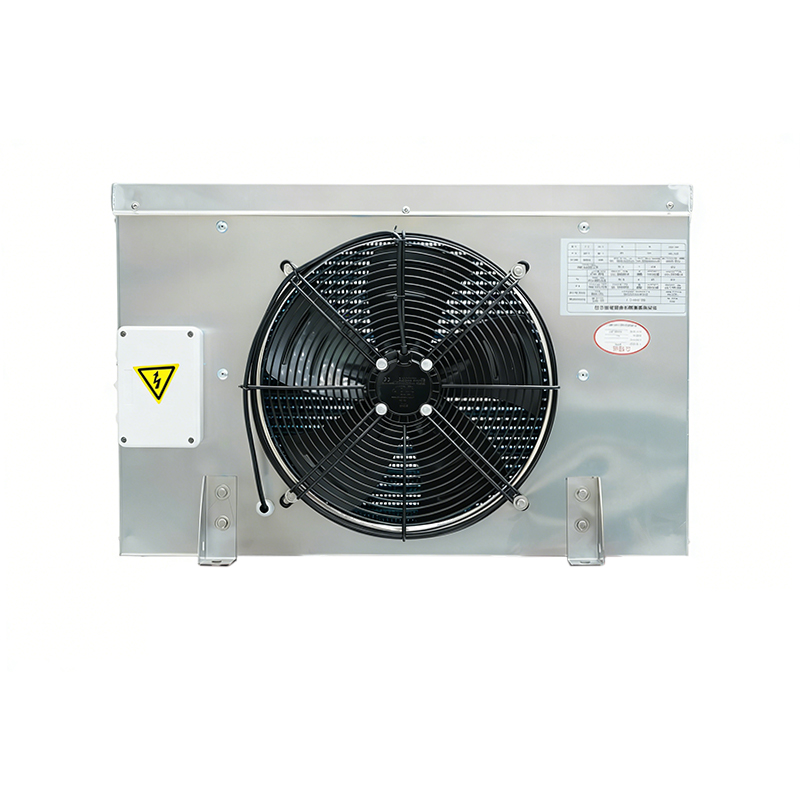
DD series — freezer rooms (around -18°C)
The DD series is the freezer-room band, designed for rooms held at approximately -18°C. These rooms hold frozen meat, seafood and frozen food in distribution centers, food processing plants and cold chain warehouses. Here the coil surface runs well below 0°C, so defrost is no longer an accessory to the duty cycle — it is part of it. Airflow also matters more, because frost build-up gradually narrows the gaps between fins and quietly reduces the volume of cold air the unit can deliver.
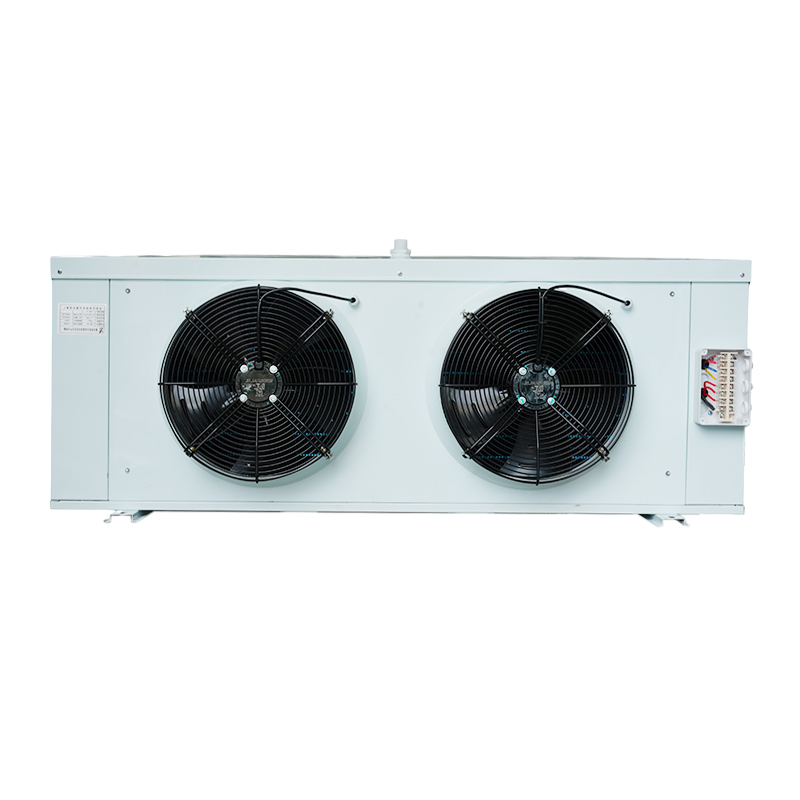
DJ series — low-temperature and blast freezing (-25°C and below)
The DJ series covers low-temperature storage and blast freezing at -25°C and below. These rooms are used to freeze product quickly — seafood, meat and processed foods — or to hold already-frozen goods at deep-freeze temperatures. Because the temperature difference between the room and the coil is larger, defrost loads are heavier and recovery time after each defrost cycle becomes a visible performance factor. This is the band where an under-specified cooler shows up fastest, since the room has the least reserve to recover from.
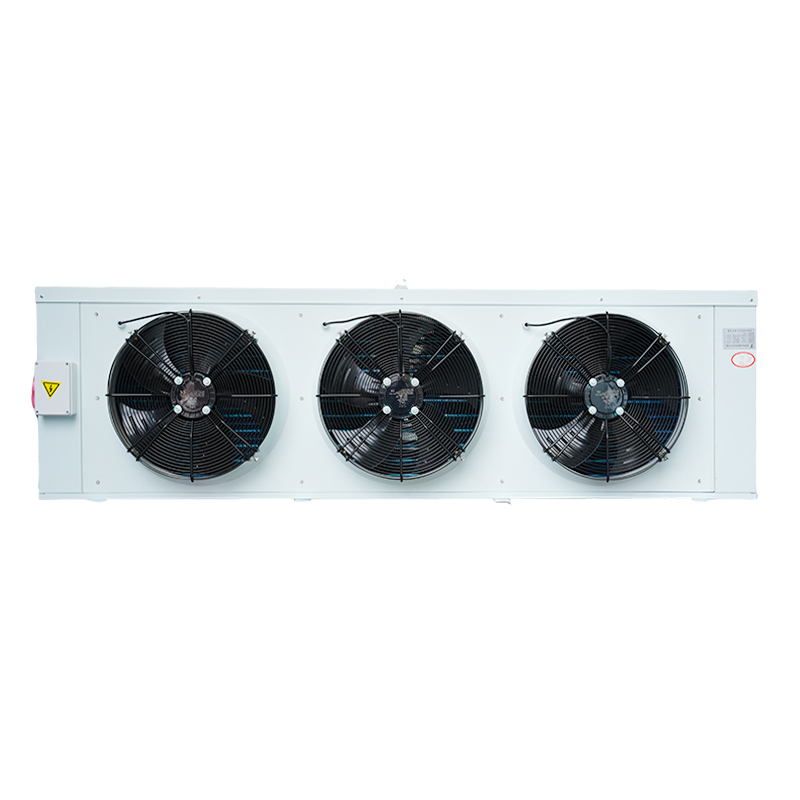
What all three series share
Clevier Refrigeration (Jiangsu) Co., Ltd. applies one construction approach across the DL, DD and DJ series: a copper tube and aluminum fin heat exchanger, external rotor fans for high-efficiency airflow, and a housing available in galvanized steel, stainless steel or aluminum plate. The line-level specification is:
- Cooling capacity: 2.1 kW to 56.2 kW, depending on model
- Fan quantity: 1 to 4 fans; fan diameter: 300 mm to 600 mm
- Air volume: 1,680 m³/h to 11,800 m³/h
- Voltage: 220V / 380V, 50 Hz / 60 Hz, customized
- Refrigerant: R404A / R507 / R22
- Mounting and discharge: ceiling mounted, side discharge or double side discharge (customized)
- Defrost: air defrost, electric defrost, water defrost or hot gas defrost
Model designations used in the line include DD-30, DD-100, DD-350, DCL401/2.1 (DD-20), DCL401/4.5 (DD-40) and DCL404/19.2 (DD-170). The products are stated for cold storage warehouses, food processing, meat storage, seafood storage, fruit and vegetable storage, supermarkets, restaurants and cold chain applications.
Defrost method: the second decision after temperature
Four defrost methods are available across the range — air, electric, water and hot gas — and they are not interchangeable. In general refrigeration practice, air defrost relies on air movement during the off cycle and is most naturally used where the room operates above freezing; electric defrost introduces heater elements to clear frost that builds continuously in sub-zero rooms; water defrost sprays water across the coil and therefore depends on a reliable water supply and drainage arrangement; and hot gas defrost uses hot compressor discharge gas and requires the refrigeration system to be arranged for it.
Because each method places different demands on the system, the confirmed configuration should follow the room's design temperature, moisture load, door traffic and product packaging. Clevier supplies all four options, and the final defrost configuration is fixed per project as part of the air cooler specification.
Step-by-Step: Matching a Cold Room Air Cooler to a Temperature Requirement
- Define the design room temperature and the stored product. Start with the air temperature the product actually requires and record the room type: fresh-keeping room, chiller room, freezer room, or low-temperature / blast freezing room. This single number selects the series before any capacity discussion begins.
- Select the series from the temperature band. 0°C to +10°C points to the DL series, around -18°C to the DD series, and -25°C and below to the DJ series. Where a project has several temperature zones, each room gets its own series; one cold chain warehouse can legitimately use DL, DD and DJ coolers in different rooms.
- Size the cooling capacity against the room load. Heat load comes from product entry temperature and daily turnover, insulation performance, door openings and traffic, internal loads, the ambient conditions around the room and the required pull-down time. Cold room air coolers in this line cover 2.1 kW to 56.2 kW depending on model, so the load estimate has to be in place before a model is fixed. Sizing on room volume alone is one of the most frequent mistakes.
- Choose the defrost method. Match defrost to the design temperature, moisture load and door traffic, and record it in the project specification. Air, electric, water and hot gas defrost are all available on this line.
- Confirm airflow, fan configuration and mounting. Fan quantity from 1 to 4, fan diameter from 300 mm to 600 mm, and air volume from 1,680 m³/h to 11,800 m³/h together define how the cold air is distributed. Ceiling mounted, side discharge and double side discharge options should be chosen against the room geometry and the intended stacking plan.
- Lock the electrical and refrigerant specification. Voltage is customizable at 220V or 380V with 50 Hz or 60 Hz, and refrigerant options are R404A, R507 and R22. For export projects, voltage and frequency should be confirmed against the destination market before the order is placed.
- Match the cooler with the condensing unit, condenser and controls. The air cooler is one part of a cold room refrigeration system. Clevier supplies air cooled, water cooled, box type and open type condensing units for 3HP to 30HP applications, with hermetic scroll or semi-hermetic piston compressors and Copeland or Bitzer options, alongside H Type, V Type and U Type air cooled condensers, cold room doors and control components. Evaporator, condensing unit, condenser, refrigerant and voltage should be verified as one system — which is why matching support from the manufacturer matters as much as the individual unit specification.
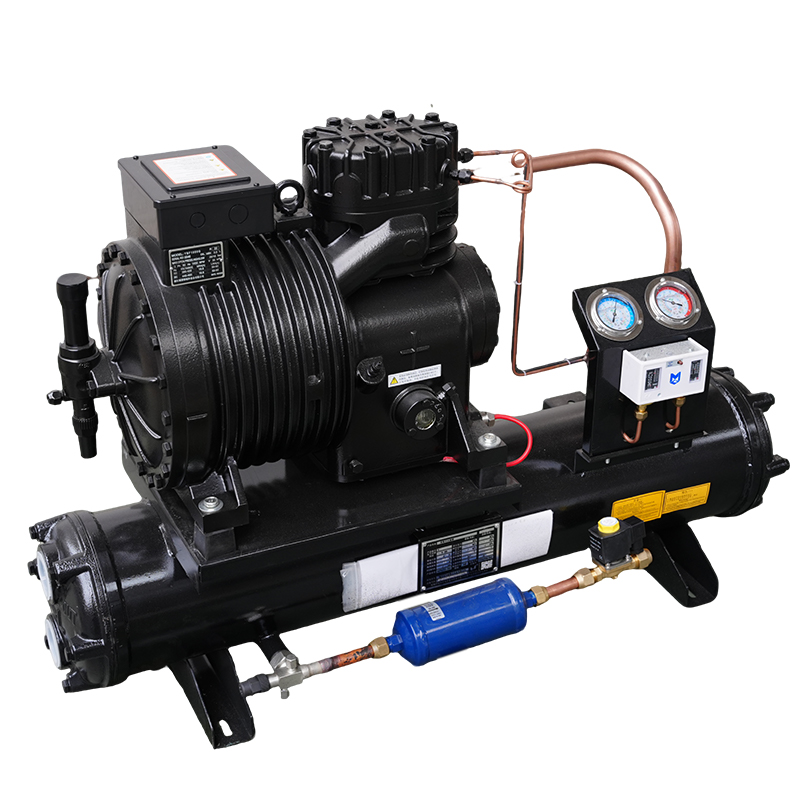
Because these decisions are interdependent, Clevier supports OEM/ODM customization covering cooling capacity, temperature range, voltage, refrigerant, compressor selection, panel structure and complete system matching, with a stated system range of -40°C to +10°C.
Use Cases: Which Series Fits Which Room
- Fruit and vegetable chiller rooms (0°C to +10°C): DL series. Produce brings moisture into the room and is sensitive to drying, so airflow and defrost behaviour deserve as much attention as nominal capacity.
- Chilled meat, dairy and beverage storage (0°C to +10°C): DL series, typically in food processing plants and distribution facilities where rooms are opened frequently.
- Frozen meat and seafood storage (around -18°C): DD series. Long holding periods and repeated door openings make defrost design and coil accessibility the deciding factors.
- Blast freezing and deep-freeze storage (-25°C and below): DJ series, used where product has to be frozen quickly or held at deep-freeze temperatures.
- Supermarkets, restaurants and cold chain warehouses: mixed zones. A single facility may combine DL coolers for preparation and chilled rooms, DD coolers for frozen stores and DJ coolers where blast freezing or deep-freeze storage is required. Each zone is specified independently and then matched to its own condensing unit.
The Cold Room Air Cooler line is stated for cold storage warehouses, food processing, meat storage, seafood storage, fruit and vegetable storage, supermarkets, restaurants and cold chain applications. Clevier Cold Room Refrigeration Systems are supplied as project-based system solutions, which means the cooler, condensing unit, condenser and door system can be specified together for the same temperature zone instead of being sourced separately.
DL vs DD vs DJ: Temperature Matching at a Glance
| Selection factor | DL series | DD series | DJ series |
|---|---|---|---|
| Design room temperature | Around 0°C to +10°C | Around -18°C | -25°C and below |
| Room type | Fresh keeping / chiller room | Freezer room | Low temperature / blast freezer |
| Typical applications | Fruit and vegetables, chilled meat, dairy, beverage, supermarket and restaurant chilled rooms | Frozen meat, seafood and frozen food storage, cold chain warehouses | Blast freezing and deep-freeze storage of seafood, meat and processed food |
| Defrost options | Air, electric, water or hot gas defrost — configured per project | Air, electric, water or hot gas defrost — configured per project | Air, electric, water or hot gas defrost — configured per project |
| Primary selection risk | Uneven air distribution and product drying | Frost build-up reducing airflow over time | Heavy defrost load and slow temperature recovery |
Line-level specifications below are shared across all three series rather than being series-specific.
| Shared specification | Value / option |
|---|---|
| Cooling capacity | 2.1 kW to 56.2 kW, depending on model |
| Fan quantity / fan diameter | 1 to 4 fans / 300 mm to 600 mm |
| Air volume | 1,680 m³/h to 11,800 m³/h |
| Voltage | 220V / 380V, 50 Hz / 60 Hz, customized |
| Refrigerant | R404A / R507 / R22 |
| Housing material | Galvanized steel, stainless steel or aluminum plate |
| Mounting / discharge | Ceiling mounted, side discharge, double side discharge (customized) |
| Matched system components | Condensing unit (air cooled, water cooled, box type, open type), air cooled condenser, cold room door system, control components |
Frequently Asked Questions
What temperature range does each cold room air cooler series cover?
The DL series is for fresh-keeping and chiller rooms around 0°C to +10°C. The DD series is for freezer rooms around -18°C. The DJ series is for low-temperature and blast-freezing applications at -25°C and below. At system level, the Clevier Cold Room Refrigeration System covers -40°C to +10°C, so the three series together span chilled, frozen and deep-freeze rooms.
Which defrost method should be used for a freezer room air cooler?
Air, electric, water and hot gas defrost are all available on Clevier cold room air coolers. In general refrigeration practice, air defrost relies on air movement during the off cycle and is most naturally used where the room operates above freezing, while electric, water and hot gas defrost are applied where frost accumulates continuously at sub-zero temperatures. The final choice is confirmed per project against the room design temperature, moisture load and door traffic, and is recorded in the air cooler specification.
Can a cold room air cooler be customized for voltage, refrigerant and structure?
Yes. Voltage can be customized at 220V or 380V with 50 Hz or 60 Hz, and refrigerant options include R404A, R507 and R22. Fan quantity, unit size, housing material (galvanized steel, stainless steel or aluminum plate), outlet direction and defrost method can also be specified. OEM/ODM support is available across the Cold Room Air Cooler line.
Does the air cooler need to be matched with a specific condensing unit?
It has to be matched as a system, because the evaporator and the condensing unit share capacity, refrigerant and voltage. Clevier supplies air cooled, water cooled, box type and open type condensing units for 3HP to 30HP applications, with hermetic scroll or semi-hermetic piston compressors and Copeland or Bitzer options, plus H Type, V Type and U Type air cooled condensers. Matching the air cooler with the condensing unit, condenser and controls during specification is what keeps the room's temperature band achievable in operation.
How should buyers compare cold room refrigeration system suppliers?
Four checks matter most: whether the supplier covers the full system rather than only the evaporator; whether temperature ranges and component options are documented rather than described in general terms; whether customization of capacity, voltage, refrigerant, structure and compressor brand is genuinely supported; and whether factory capability can be verified. Clevier Refrigeration (Jiangsu) Co., Ltd. was established in 2023 in Wujin District, Changzhou City, Jiangsu Province, China, operates a 10,000 m² manufacturing facility with approximately 50 staff and an annual production capacity of 10,000 units, and supports OEM/ODM customization. Export business accounts for 30% of sales, with markets in Asia, South America, Africa and North America. Sample and quotation requests can be sent through the contact details at the end of this guide, and the full product range is listed in the downloadable catalogue.
Conclusion: Temperature First, Then Everything Else
Matching a cold room air cooler to temperature is a short decision chain, but it has to be made in the right order: room temperature first, series second, capacity and defrost third, and system matching last. DL for the 0°C to +10°C chiller band, DD for the -18°C freezer band and DJ for -25°C and below keeps the coil, airflow and defrost behaviour consistent with the duty the room actually has — and prevents the slow, hard-to-diagnose under-performance that follows a cooler chosen for the wrong temperature.
Clevier Refrigeration (Jiangsu) Co., Ltd. manufactures cold room air coolers, evaporators, condensing units, air cooled condensers, polyurethane insulated panels and complete cold room refrigeration systems, and supports project-based matching for contractors, distributors and engineering projects worldwide through OEM/ODM customization.
Next Step
If you are specifying a room and want to confirm which series fits the temperature, send us the room type, target temperature and product load. We can return a suggested air cooler series, defrost configuration and matched condensing unit.
Download the 2026 product catalogue: Clevier Product Catalog 2026 (English PDF)
Website: www.cleviercool.com | Blog: blog.cleviercool.com
Contact: Tel +86 132-7039-6182 | WhatsApp +86 18112512530 | Email ranerraner@cleviercool.cn