
Preventing Temperature Fluctuations in Fruit Storage: A Cold Room System Solution
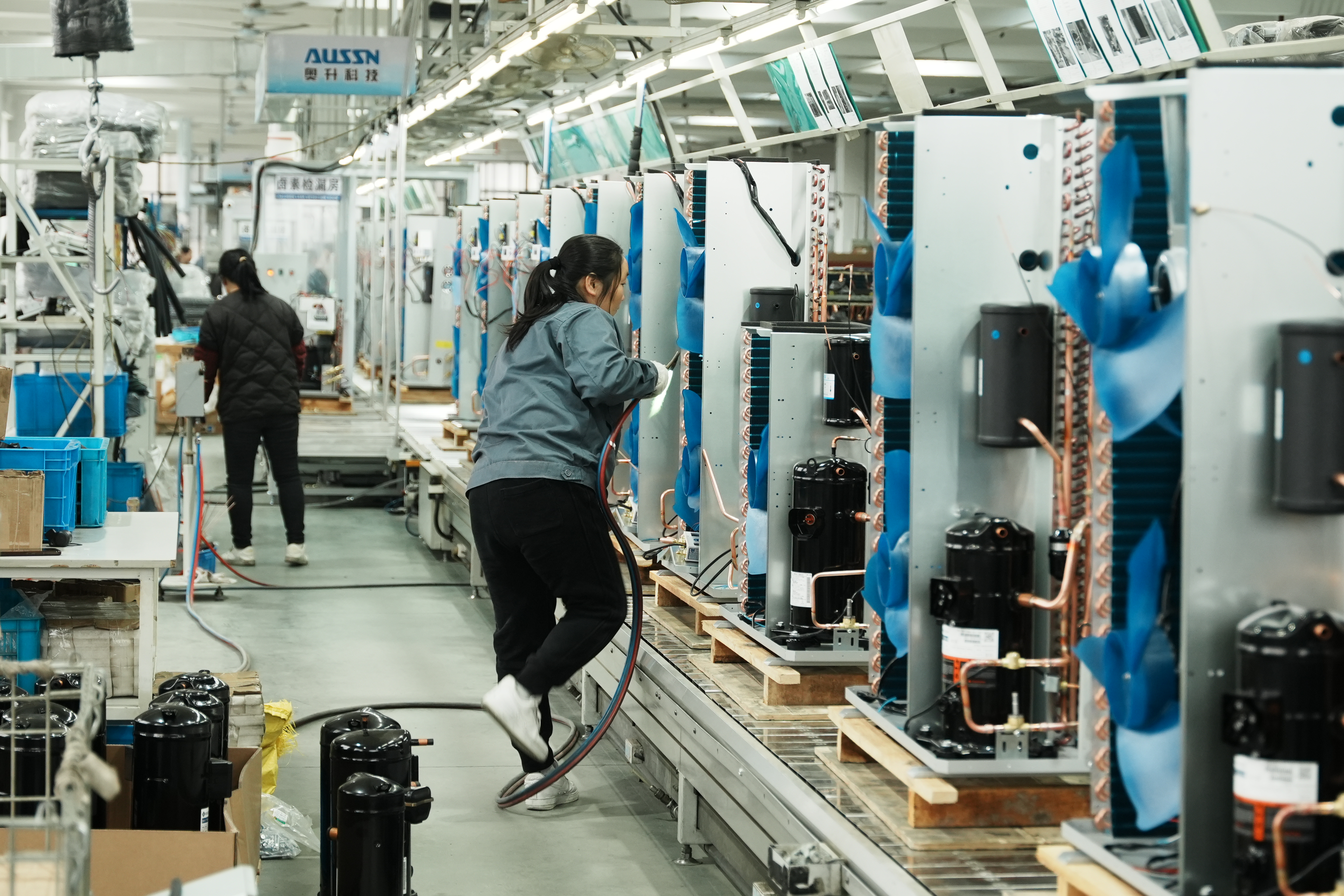
Clevier Refrigeration (Jiangsu) Co., Ltd. manufactures cold room refrigeration systems, evaporators, condensing units and PU panels in Changzhou, Jiangsu, China.
Temperature fluctuation in fruit storage is a system-design problem before it is an equipment problem. A room that swings a few degrees around its set point damages fruit faster than a room held steady at a slightly less ideal temperature, because every swing condenses moisture on the fruit surface, disturbs ripening, and moves the coldest spot in the room. The practical answer is a complete cold room refrigeration system in which the cold room air cooler (evaporator), the refrigeration condensing unit, the controls and the insulated envelope are selected as one matched set and held inside the +10°C to -40°C band the product needs.
Clevier Refrigeration (Jiangsu) Co., Ltd. is a refrigeration equipment manufacturer based in Wujin District, Changzhou City, Jiangsu Province, China. The company produces evaporators, condensing units, compressors, cold rooms and polyurethane insulated panels, and supplies complete cold room refrigeration systems for food processing, cold chain logistics, supermarkets, restaurants, agriculture, seafood and meat storage. This article explains where fruit-storage temperature swings come from, how a matched evaporator-and-condensing-unit system removes them, and how to specify and keep such a system for the life of the store.
The problem: what a temperature fluctuation actually looks like
A fruit store can pass a thermometer check and still damage its load. The number on the control panel is usually return-air temperature, not fruit temperature. Fruit pulp, especially in dense stacks and pallet cores, changes temperature slowly, so a room can read correctly while the product is still releasing field heat from the previous loading. The reverse also happens: a room can read correctly while the coldest air leaving the evaporator sits well below the target and the top layer of the stack is being chilled too hard.
That gap between air temperature, product temperature and the warmest spot in the room is where most fluctuation damage happens. It has a small number of repeatable causes:
- Evaporator and condensing unit selected separately. When the air cooler and the condensing unit are bought from different sources against different assumptions, the pair cycles instead of modulating, and the room drifts between short cooling bursts and long idle periods.
- Defrost heat. Every defrost cycle puts heat back into the room. If defrost runs on a fixed clock rather than on frost condition, the room is warmed on a schedule whether it needs it or not.
- Door openings and warm loading. Deliveries, inspections and incoming warm fruit create a step change in load that a system sized only for holding duty cannot absorb smoothly.
- Airflow that never reaches the product. Boxes stacked against the evaporator discharge, blocked return paths, or an air cooler positioned for the room shape rather than the stacking pattern leave dead zones that no control setting can fix.
- Sensor and control placement. A sensor near the door, inside the fan stream, or in the warmest corner changes what the controller believes the room is doing.
- Low-ambient cycling. An air cooled condensing unit running in cold weather without appropriate control can cycle on low pressure, which appears inside the room as temperature ripple.
The consequences are cumulative rather than dramatic: surface condensation and higher decay pressure, chilling injury in sensitive fruit, uneven ripening across a single pallet, extra weight loss, and localized freezing near the coil. None of these is solved by lowering the set point. They are solved by removing the cause of the swing.
Industry background: fruit storage is a stability question inside a growing cold chain
Fruit storage sits inside a cold chain that keeps expanding and keeps concentrating on food. Food and beverages accounted for over 76.8% of global cold chain market revenue in 2025, according to Grand View Research, and walk-in cold rooms were projected by Dataintelo to hold a 58.7% share of the cold room market by 2025. The frozen band between -18°C and -25°C held the largest share of the cold storage market at approximately 63% in 2025, per Grand View Research, which means a large part of installed capacity runs at low temperature where defrost behaviour and frost management dominate stability.
Equipment demand follows the same direction. Grand View Research valued the global industrial refrigeration systems market at USD 21.3 billion in 2024, with Asia Pacific holding a 32.6% revenue share, while the condensing unit market was valued at USD 42 billion in 2023 and described by Stratview Research as growing at a CAGR of 7.95%, with Asia Pacific accounting for 70.22% of revenue in 2023. China's total cold storage capacity reached 237 million cubic meters by June 2024, an 8% year-on-year increase, according to the China Federation of Logistics and Purchasing. Capacity of that scale is only useful if the rooms inside it hold their bands.
Regulation pushes the same point. IEC 60335-2-89:2019 sets safety requirements for commercial refrigerating appliances with incorporated or remote units, including blast freezers, and EN 378:2016 is the mandatory European safety and environmental standard for refrigerating systems and heat pumps. The revised IEC 60335-2-89 also raised the charge limit for flammable A3 refrigerants such as R290 in commercial appliances from 150 g to 500 g. For a fruit store those rules are not paperwork: refrigerant choice interacts with room volume, evaporator design, condensing unit selection and controls, so the refrigerant has to be fixed when the system is designed, not after the equipment has been ordered.
The solution: a cold room refrigeration system designed as one machine
A cold room refrigeration system is not a list of parts. It is an evaporator, a condensing unit, a control layer and an insulated envelope selected against one temperature band and one load profile. When those four are matched, the room holds its band because cooling capacity, airflow, defrost and control logic all respond to the same conditions.
The cold room air cooler: where stability is won or lost
The cold room air cooler, also called a cold room evaporator or cold room unit cooler, is the part of the system inside the room. It absorbs heat from the air, distributes that air across the stack, and removes moisture from the coil through defrost. Three characteristics decide whether the room stays stable: coil surface and fin geometry against the required temperature difference, airflow pattern against the actual stacking layout, and defrost method against the moisture load the fruit brings in. An air cooler chosen only on nominal capacity, without matching those three to the room, is the most common reason a store shows a regular temperature sawtooth.
The refrigeration condensing unit: rejecting heat predictably
The refrigeration condensing unit takes the refrigerant leaving the evaporator, raises its pressure and rejects the heat outside the room. In most fruit stores this is an air cooled condensing unit, which rejects heat to ambient air and therefore depends on where it is installed and what the ambient profile looks like across the year. Units of this type are usually supplied in two mechanical arrangements: a box type condensing unit, where compressor, condenser and fans sit in an enclosed housing, and an open type condensing unit, where the components are mounted on an open frame with direct service access. Choosing between them is a site decision about available space, ambient exposure, noise and maintenance access, and it should be made together with the evaporator selection rather than before it.
The control and safety layer
Controls are what convert matched hardware into a held band. Risk control is achieved through intelligent control systems, thermal protection and automatic stop protection methods, with temperature sensors, safety limit switches, emergency stop systems and overload protection as the hardware measures behind them. In practice the room responds to measured conditions rather than a fixed clock: defrost runs when the coil needs it, the compressor is protected from overload and short cycling, and the system stops safely rather than drifting when something moves out of range.
The envelope and the system match
An unstable envelope makes stable refrigeration impossible. Polyurethane insulated panels, correct panel structure for the band and a properly sealed room reduce the infiltration load the evaporator has to chase. Because Clevier manufactures evaporators, condensing units, compressors, cold rooms and PU panels within one product range, the envelope, the evaporator and the condensing unit can be specified together.
That single-range structure is also what makes long-term operation simpler. Clevier supports OEM/ODM customization including cooling capacity, temperature range, voltage, refrigerant, compressor selection, panel structure and complete system matching, so the same architecture can be repeated across multiple rooms, sites or a distributor's project pipeline instead of being redesigned each time. For buyers running repeat projects, a repeatable platform matters more than a one-off price.
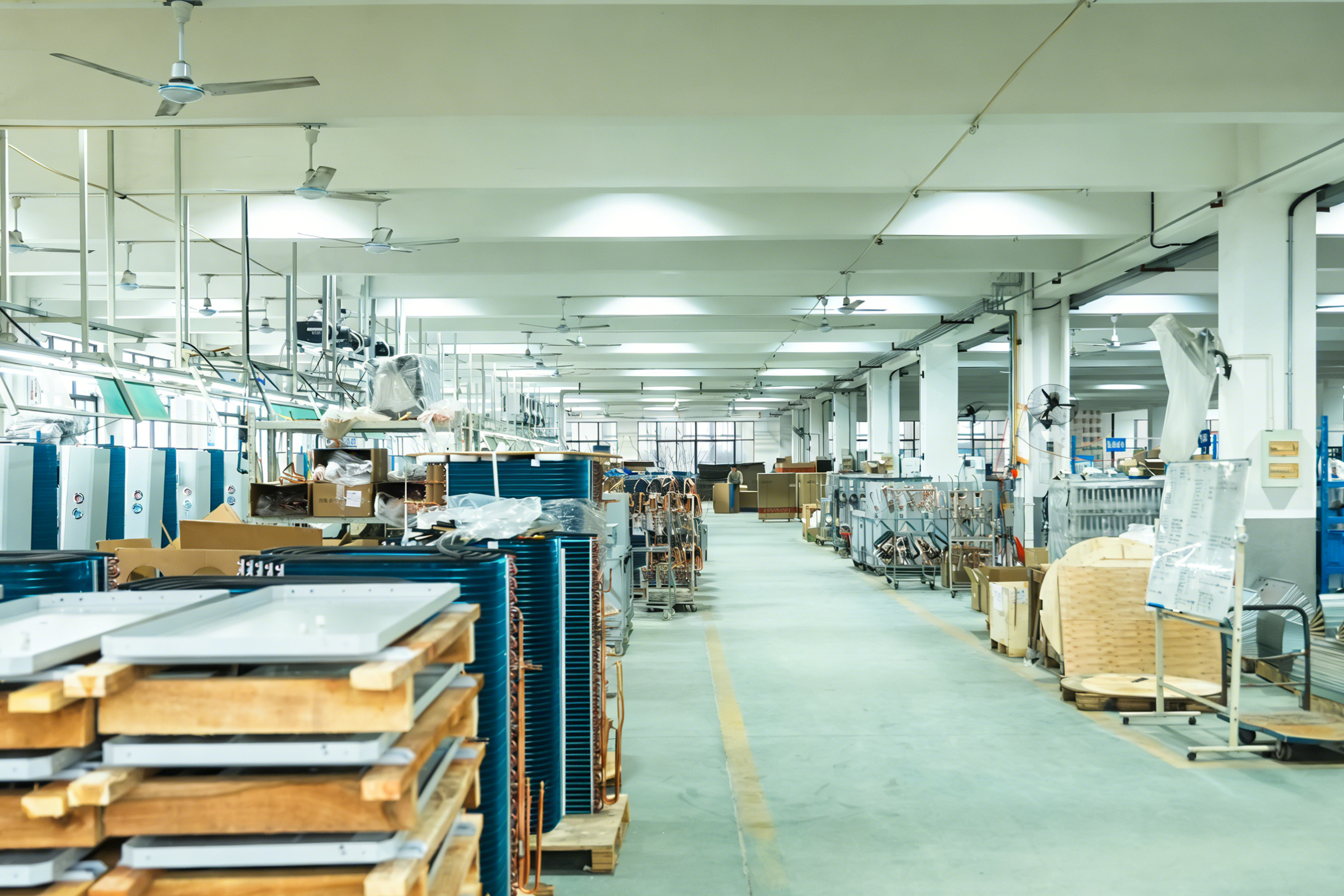
Evaporators, condensing units and PU panels are produced and matched within one manufacturing facility in Changzhou, Jiangsu.
Step-by-step: specifying a fruit store that holds its band
- Define the band and the tolerance, not just the set point. State the target product temperature inside the +10°C to -40°C range and the swing the fruit can accept. Chilling-sensitive fruit needs a narrow band near the upper end of the range; frozen fruit near -18°C to -25°C needs frost control. Everything downstream is judged against this number.
- Build the load from fruit, not from room volume. Include field heat from incoming fruit, respiration, infiltration through doors, defrost contribution and occupancy. A system sized for holding duty alone will struggle the moment a delivery lands.
- Select the cold room air cooler for airflow and defrost as well as capacity. Match the evaporator to stacking height, aisle layout and discharge direction, and choose the defrost approach against the moisture the product releases.
- Match the condensing unit to the site. Confirm ambient conditions, electrical supply and available space before choosing between a box type and an open type air cooled condensing unit. Voltage and refrigerant are part of the customization scope, so they belong in this step.
- Fix the control logic and the safety chain. Define sensor positions away from doors and fan streams, set defrost initiation, and confirm thermal protection, automatic stop protection, overload protection and emergency stop are all specified.
- Test before shipment and document the settings. Acceptance is built on 100% pre-shipment testing, performance inspection and function testing, so the band, defrost settings and safety limits are verified in the factory and handed over as a commissioning baseline.
- Plan the long-term path. Record set points, spare parts and service intervals, and keep the same equipment platform for future rooms. A stable store is a maintained store, so the specification should make maintenance straightforward rather than heroic.
Use cases: where fluctuation control decides the outcome
Apple, pear and kiwi cold stores
Long holding periods near 0°C leave little room for error. The damage here is rarely a single warm event; it is repeated defrost heat and uneven airflow across deep stacks, which shows up as soft fruit in specific positions rather than across the whole room. A matched evaporator with controlled defrost and a correctly positioned air pattern separates uniform storage from patchy storage.
Chilling-sensitive tropical fruit
Fruit that cannot approach freezing is held at the upper end of the +10°C to -40°C range. The risk shifts: it is not freezing but cold spots and short cycling. The evaporator should be selected for a small temperature difference and gentle air movement, with control settings that keep the compressor running smoothly instead of pulsing.
Frozen fruit and IQF buffer stores
In the -18°C to -25°C band, which represented the largest share of cold storage capacity in 2025, the stability problem is frost. Defrost timing, drain protection and door discipline dominate, and the condensing unit has to keep rejecting heat predictably in high ambient.
Cold chain warehouses and walk-in freezers
Distribution sites combine holding, order picking and frequent door cycles. Configurations built around lower energy consumption, higher automation and safer operation are positioned for cold storage warehouses, food processing plants, logistics cold chains and industrial refrigeration projects, where consistent performance across many rooms matters more than any single room's peak efficiency.
Comparison: matched system versus traditionally sourced components
The table below compares a matched cold room refrigeration system with the piston compressor, traditional refrigeration system or manual sliding door approach it is measured against. Performance figures are project dependent.
| Criterion | Matched cold room refrigeration system | Piston compressor / traditional system / manual sliding door approach |
|---|---|---|
| Energy consumption | Lower energy consumption | Reference configuration, higher consumption |
| Automation and door handling | Higher automation, safer operation | Manual sliding door operation |
| Cooling performance | Stable performance, optimized system control | Less coordinated control between components |
| Documented performance gap | 20–35% energy saving; 30% faster operation (project dependent) | Baseline for the comparison |
| Maintenance | Less manual operation, lower failure rate, easy maintenance | More manual intervention |
| Cost over life | Lower maintenance cost, longer service life, reduced labor cost | Higher labor and maintenance burden |
| Best suited to | Cold storage warehouse, food processing plant, logistics cold chain, industrial refrigeration projects | Lower-automation installations with manual door handling |
Risk control measures built into the system
Contingency plans cover emergency stop systems and overload protection as defined risk mitigation measures. The control set addresses the three risk types that most often interrupt fruit storage:
| Risk type | Control method | Hardware measure |
|---|---|---|
| Motor overheating | Thermal protection, automatic stop protection | Overload protection |
| Electrical failure | Intelligent control system | Safety limit switch, emergency stop system |
| Door jam prevention | Automatic stop protection | Temperature sensors, safety limit switch |
FAQ
Which safety standards apply to a fruit storage cold room refrigeration system?
Two standards are commonly referenced when a fruit store is specified for international projects. IEC 60335-2-89:2019 covers safety requirements for commercial refrigerating appliances with incorporated or remote units, including blast freezers. EN 378:2016 is the mandatory European safety and environmental standard for refrigerating systems and heat pumps in the EU. Both connect refrigerant selection, room volume and electrical design, so refrigerant and voltage should be fixed at the specification stage rather than after the equipment is chosen. Clevier supports OEM/ODM customization covering cooling capacity, temperature range, voltage, refrigerant, compressor selection, panel structure and complete system matching, which allows a system to be configured against the requirements of its destination market.
Can the evaporator and condensing unit be matched to a specific fruit temperature band?
Yes. The company supports OEM/ODM customization including cooling capacity, temperature range, voltage, refrigerant, compressor selection, panel structure and complete system matching. In practice the target band is defined first, inside the +10°C to -40°C range, and the cold room air cooler and refrigeration condensing unit are then selected together, so that the evaporator's airflow and defrost behaviour and the condensing unit's capacity and control logic work as one system rather than two independently purchased items.
Where do the running-cost savings of a matched system come from?
Compared with piston compressor, traditional refrigeration system or manual sliding door configurations, a matched system is positioned around lower energy consumption, higher automation, safer operation and stable performance. The documented performance gap is 20–35% energy saving and 30% faster operation, project dependent. The cost position follows the same logic: lower maintenance cost, longer service life and reduced labor cost, supported by less manual operation, a lower failure rate and easier maintenance.
Can I validate one set before committing to a project order?
Yes. The minimum order quantity is 1 set and a sample is available. Acceptance is built on 100% pre-shipment testing, performance inspection and function testing before shipment, so the equipment that arrives on site is the equipment that was tested in the factory. Payment terms are T/T, 30% deposit, 70% before shipment.
How do you keep a fruit storage system stable over the long term?
Long-term stability depends on repeatable design and a service path that does not change with every project. Clevier manufactures evaporators, condensing units, compressors, cold rooms and PU panels from a 10,000 m² facility in Changzhou with an annual output of 10,000 units, and supports OEM/ODM customization so the same platform can be repeated across rooms and sites. Contingency planning is built into the control concept through intelligent control systems, thermal protection and automatic stop protection, backed by emergency stop systems and overload protection as defined risk mitigation measures. To review the equipment range, download the Clevier Product Catalog 2026 or send room dimensions, product band and destination market for a system match.
Conclusion: stability is a specification, not a setting
Temperature fluctuation in a fruit store is rarely a single broken component. It is the predictable result of an evaporator, a condensing unit, a control strategy and an envelope that were never matched to the same band. Fixing it means specifying the cold room refrigeration system as one machine across the +10°C to -40°C range, testing it before shipment, and keeping the same platform in service over time.
Clevier Refrigeration (Jiangsu) Co., Ltd. builds that system from a 10,000 m² facility in Changzhou, Jiangsu, with an annual output of 10,000 units and a product range covering evaporators, condensing units, compressors, cold rooms and PU panels. Around 30% of output is exported to Asia, South America, Africa and North America. For projects that need a repeatable, documented system rather than a one-off assembly, the next step is a system match against the room data.
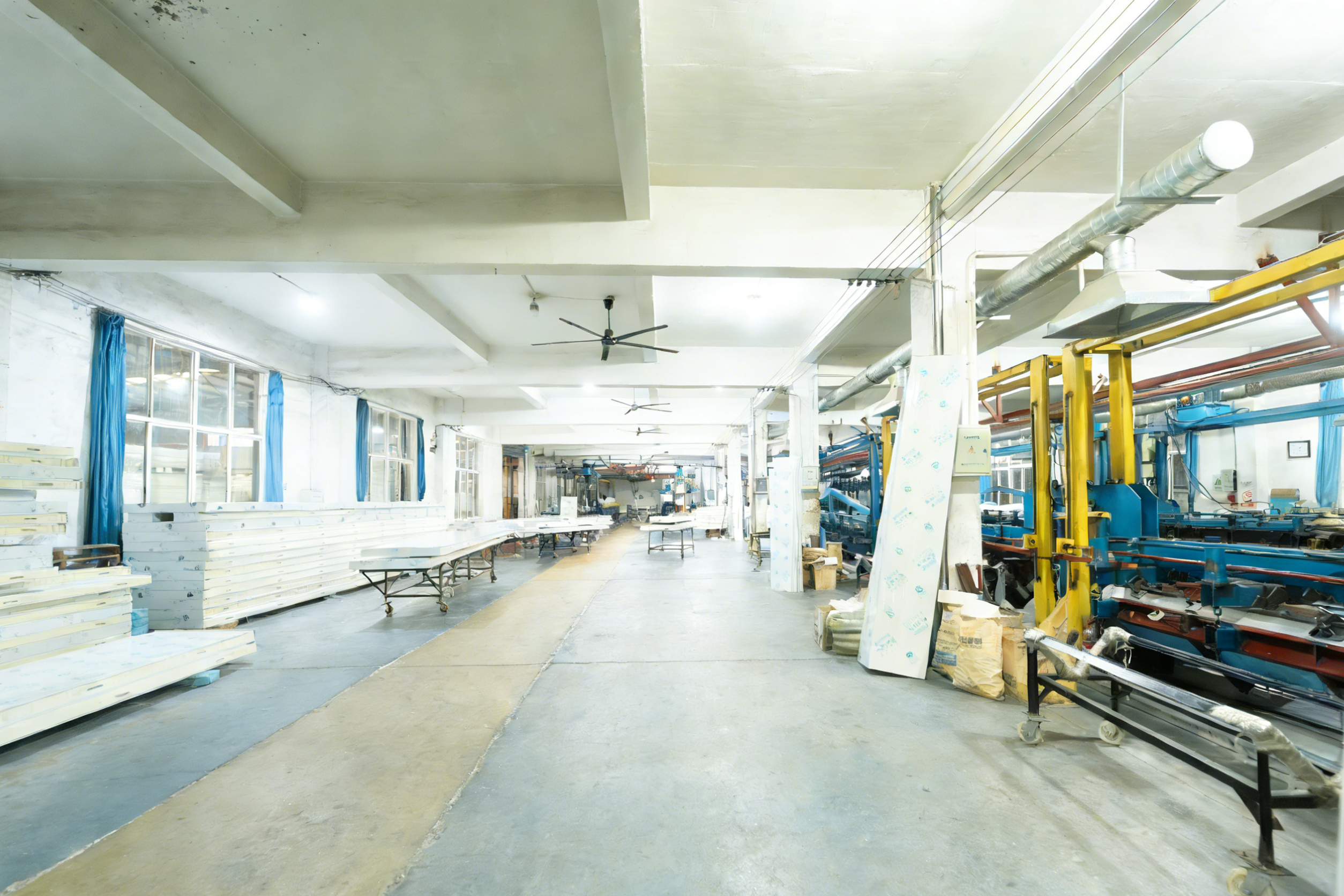
Systems are tested before shipment, including performance inspection and function testing.
Next step: match a cold room refrigeration system to your fruit store
Send the room dimensions, product band and destination market, and Clevier Refrigeration will confirm the evaporator and condensing unit combination. Minimum order quantity is 1 set, with samples available.
- Catalog: Clevier Product Catalog 2026 (PDF)
- Website: www.cleviercool.com
- Contact: Sherwin | Tel: +86 132-7039-6182 | WhatsApp: +86 18112512530
- Email: ranerraner@cleviercool.cn
- Address: Wujin District, Changzhou City, Jiangsu Province, China
Have Questions or Need More Details?
Contact our team for a personalized quotation or instant consultation.
Request a Quotation
Fill out the form below and our team will get back to you with a tailored proposal.
WhatsApp Direct Chat
Prefer to chat in real-time? Message us on WhatsApp for instant assistance & quick answers.
- Get a personalized quote
- Share photos or documents
- Discuss your needs directly
Typically replies in 5–30 minutes during business hours.