
Top 3 Cold Room Refrigeration System Air Cooler Series for Chiller, Freezer and Low-Temp Rooms
A Cold Room Refrigeration System is usually specified from the outside in. The condensing unit and the air cooled condenser get the attention, while the air cooler inside the room is treated as a line item. In operation it is the indoor evaporator that decides whether a chiller room holds its band, whether a freezer room stays at temperature, and whether a low-temperature room can be defrosted cleanly, shift after shift.
This ranking compares the three Clevier cold room air cooler series — DL, DD and DJ — against a single question: which series belongs in which room, and what has to be confirmed before the order is placed?
Ranked answer. DL ranks first for chiller and fresh-keeping rooms running from 0 °C to +10 °C. DD ranks second for freezer rooms around -18 °C. DJ ranks third for low-temperature applications beyond the freezer band. The order is a temperature-band order, not a quality order: the series serving the broadest chilled band ranks first, the series serving the freezer band ranks second, and the specialist low-temperature series ranks third.

The selection problem: a cooler rated for the wrong temperature band
A cold room air cooler is three things in one housing: a finned coil that absorbs heat, a fan set that moves air across it, and a defrost method that removes the frost that builds up on it. Each of those three is designed around a temperature band. When the band is wrong, the failure is rarely immediate — it appears as drift, longer run times and product loss.
Take the most common mistake first. A cooler designed for fresh-keeping duty is installed in a room that is pulled down to -18 °C. Frost builds on the coil faster than the defrost cycle clears it, airflow falls, the air-on temperature drops, and the compressor runs longer to hold the same room temperature. The second mistake is the mirror image: a freezer-specification cooler in a +2 °C chiller room produces a larger coil-to-air temperature difference than the room needs, which pulls moisture out of the product and raises dehydration loss. Neither mistake shows up as a broken machine. Both show up in the electricity bill and in the shrink report.
This is why the air cooler matters more than its price tag in a Cold Storage Solution. It is the component closest to the product, the one exposed to every door opening, and the one handling defrost water and humidity inside the room. Temperature band is therefore the first filter. Fan quantity, fan diameter, defrost method and voltage are second-order decisions that only make sense once the band is fixed.
Industry background: where the chilled and frozen volume actually sits
The category is large and it is concentrated in exactly the two bands these series serve. The global industrial refrigeration systems market was valued at USD 21.3 billion in 2024, with Asia Pacific holding a 32.6% revenue share in the same year (Grand View Research). The broader refrigeration equipment market was estimated at USD 67.06 billion in 2024 (ResearchAndMarkets / Business Wire). Within that, the segment closest to this article — refrigeration coolers, meaning evaporators and air coolers — was estimated at USD 4.0 billion in 2024 (Technavio).
Two structural facts explain why the DL and DD bands carry most of the demand. First, the frozen temperature range of -18 °C to -25 °C held the largest share of the cold storage market in 2025, at approximately 63% (Grand View Research). Second, the Food & Beverages segment accounted for over 76.8% of global cold chain market revenue in 2025 (Grand View Research), and food storage is where both chilled and frozen rooms are used. Walk-in cold rooms are also projected to hold a 58.7% share within the cold room market by 2025 (Dataintelo).
Capacity growth supports the same conclusion. China's total cold storage capacity reached 237 million cubic meters by June 2024, an 8% increase year on year (China Federation of Logistics & Purchasing / IIR), and China was the leading exporter of industrial evaporative air coolers in 2024 with exports valued at USD 577 million (OEC). In practical terms: most rooms being built or refurbished today are chilled or freezer rooms, which is precisely the DL and DD territory.
How the three series were ranked
Four criteria were applied in a fixed order. A series that fails the first criterion cannot recover on the others.
- Temperature-band fit. Does the series cover the room band without being pushed outside its design intent?
- Configuration freedom. Can the fan count, fan diameter, defrost method and voltage be fixed to match the project?
- System integration. Does the series match cleanly to a refrigeration condensing unit and an air cooled condenser within one system?
- Room-type coverage. How many of the standard room types — chiller, freezer, low-temperature — does the series serve as the intended choice?
| Rank | Series | Typical room band | Primary room type | Why it ranks here |
|---|---|---|---|---|
| 1 | DL | 0 °C to +10 °C | Chiller and fresh-keeping rooms | Serves the widest chilled band and the most common room type |
| 2 | DD | Around -18 °C | Freezer rooms | Serves the freezer band, where defrost control dominates operation |
| 3 | DJ | Low-temperature applications | Low-temperature rooms | Specialist series for duty beyond the freezer band |
Rank 1 — DL Air Cooler Series: chiller and fresh-keeping rooms, 0 °C to +10 °C
RANK 1
The DL series is the cold room unit cooler specified for fresh-keeping and chiller rooms running from 0 °C to +10 °C. It ranks first because that band covers the largest number of rooms a buyer is likely to build or refurbish, and because the DL is the intended fit rather than an approximation. Deliveries that arrive above freezing, retail back rooms, chilled processing areas and produce holding rooms all sit in this range.
The operating profile of the chilled band is different from the freezer band in a way that matters at specification stage. Frost load is lighter than in a freezer room, and the coil-to-air temperature difference is smaller, so airflow and humidity control matter more than aggressive defrosting. The DL series still carries the full configuration set: fan quantity from 1 to 4, fan diameter from 300 mm to 600 mm, defrost by air, electric, water or hot gas, and voltage at 220V or 380V on 50Hz or 60Hz. Air defrost is frequently the practical choice in this band, while electric, water and hot gas defrost remain available where the project requires them.
Stated limit. The DL is not a freezer cooler. Where a room runs two setpoints — chilled by day, frozen overnight — the cooler should be specified against the lowest temperature the room will actually hold, not against the average. Specifying for the chilled setpoint and operating at the frozen one is the single most common cause of frost-related complaints in this band.
Rank 2 — DD Air Cooler Series: freezer rooms around -18 °C
RANK 2
The DD series is the cold room evaporator specified for freezer rooms around -18 °C. It ranks second not because it is less capable, but because it serves a narrower band than the DL — a band that nonetheless carries the largest single share of cold storage capacity, with the -18 °C to -25 °C range holding approximately 63% of the market in 2025 (Grand View Research).
In the freezer band, defrost becomes the dominant operating variable rather than a secondary setting. Moisture from product, from door openings and from personnel enters the room continuously and leaves as frost on the coil. The defrost method has to remove that frost faster than it accumulates and then return the coil to duty without a temperature excursion. The DD series supports air, electric, water and hot gas defrost, with the method selected per project against room temperature, defrost water handling and cycle frequency. It also carries the same fan range — 1 to 4 fans at 300 mm to 600 mm diameter — and the same 220V/380V, 50Hz/60Hz voltage options.
Model examples in this family include DD-30, DD-100 and DD-350, together with DCL401/2.1 (DD-20). These are examples, not a complete range. The full code — including prefixes such as DCL and bracketed suffixes such as (DD-20) — should be read against the supplier's selection table line by line, because the code alone is not a substitute for the configuration list.
Stated limit. The DD is specified around -18 °C. When a room has to run below the freezer band, the correct move is to the DJ series rather than to a DD unit pushed past its intended duty.
Rank 3 — DJ Air Cooler Series: low-temperature applications
RANK 3
The DJ series is the low-temperature air cooler, specified for rooms that run beyond the freezer band. It ranks third because it is a specialist: fewer rooms need it, but the rooms that do cannot be served by the other two series.
The technical pressure in low-temperature duty sits in two places. Defrost has to be complete and repeatable, since residual frost at low temperature compounds quickly and reduces airflow. Electrical and mechanical safety margins also come under more strain, which is why quality safeguards rather than nominal capacity tend to decide whether a low-temperature installation runs cleanly over years. The DJ series is configured on the same principles as the other two: fan quantity from 1 to 4, fan diameter from 300 mm to 600 mm, defrost by air, electric, water or hot gas, and voltage at 220V or 380V on 50Hz or 60Hz.
Stated limit. A DJ unit selected for a low-temperature room is not the right match for a 0 °C to +10 °C chiller room, where the DL is the intended fit. Matching in the other direction is equally important: the series must be chosen from the room's coldest operating point, not its setpoint label.
Step-by-step: locking a DL, DD or DJ selection
The seven steps below run in order. Each one narrows the configuration until a single model code remains.
Step 1 — Fix the room band and the lowest setpoint
Record the normal operating temperature and the coldest temperature the room will ever hold. On dual-setpoint rooms the second number governs the series choice.
Step 2 — Choose the series against the band
0 °C to +10 °C → DL. Around -18 °C → DD. Beyond the freezer band → DJ. This step is a filter, not a preference.
Step 3 — Size the fan set
Fan quantity from 1 to 4 and fan diameter from 300 mm to 600 mm are the two parameters used to match the cooler to the room. Larger diameter and higher fan count move more air across the coil; the right combination is the one that holds the room with acceptable air throw and without short-cycling.
Step 4 — Choose the defrost method
Four options are available across the series: air defrost, electric defrost, water defrost and hot gas defrost. The choice is made against room temperature, the amount of moisture entering the room, and how defrost water is drained. It should be fixed on the order, not adjusted on site.
Step 5 — Confirm voltage and frequency
Voltage is specified at 220V or 380V, with 50Hz or 60Hz supply. This matters most on export projects, where the room's electrical supply and the destination market's standard may differ from the supplier's default build.
Step 6 — Match the condensing unit and the air cooled condenser
The air cooler is the indoor half of the system. The refrigeration condensing unit — supplied in box type or open type format — and the air cooled condenser must be selected at the same design evaporating and condensing temperatures as the cooler. A cooler selected at a warmer evaporating temperature than the room requires will never reach setpoint, whatever the condensing unit is rated at.
Step 7 — Confirm the model code and the quality documents
Write the full code with its prefix and suffix, then confirm fan count, fan diameter, defrost method and voltage against that code. Quality safeguards should also be listed: safety limit switches, emergency stop systems, and the specific countermeasures for motor overheating, electrical failure and door jam prevention.
How the air cooler sits inside a complete Cold Room Refrigeration System
A Cold Room Refrigeration System moves heat in one direction through three components. The cold room air cooler, also described as a cold room evaporator or unit cooler, absorbs heat from the room air and boils refrigerant at low pressure. The refrigeration condensing unit raises that refrigerant to high pressure. The air cooled condensing unit, or the air cooled condenser that serves it, rejects the heat outside the room.
All three have to agree on two temperatures: the design evaporating temperature inside the room and the design condensing temperature outside it. The cooler's duty at the design evaporating temperature must equal the condensing unit's capacity at the design condensing temperature. When those numbers are matched, the system holds setpoint with stable run times. When they are not, one component compensates for the other until it fails.
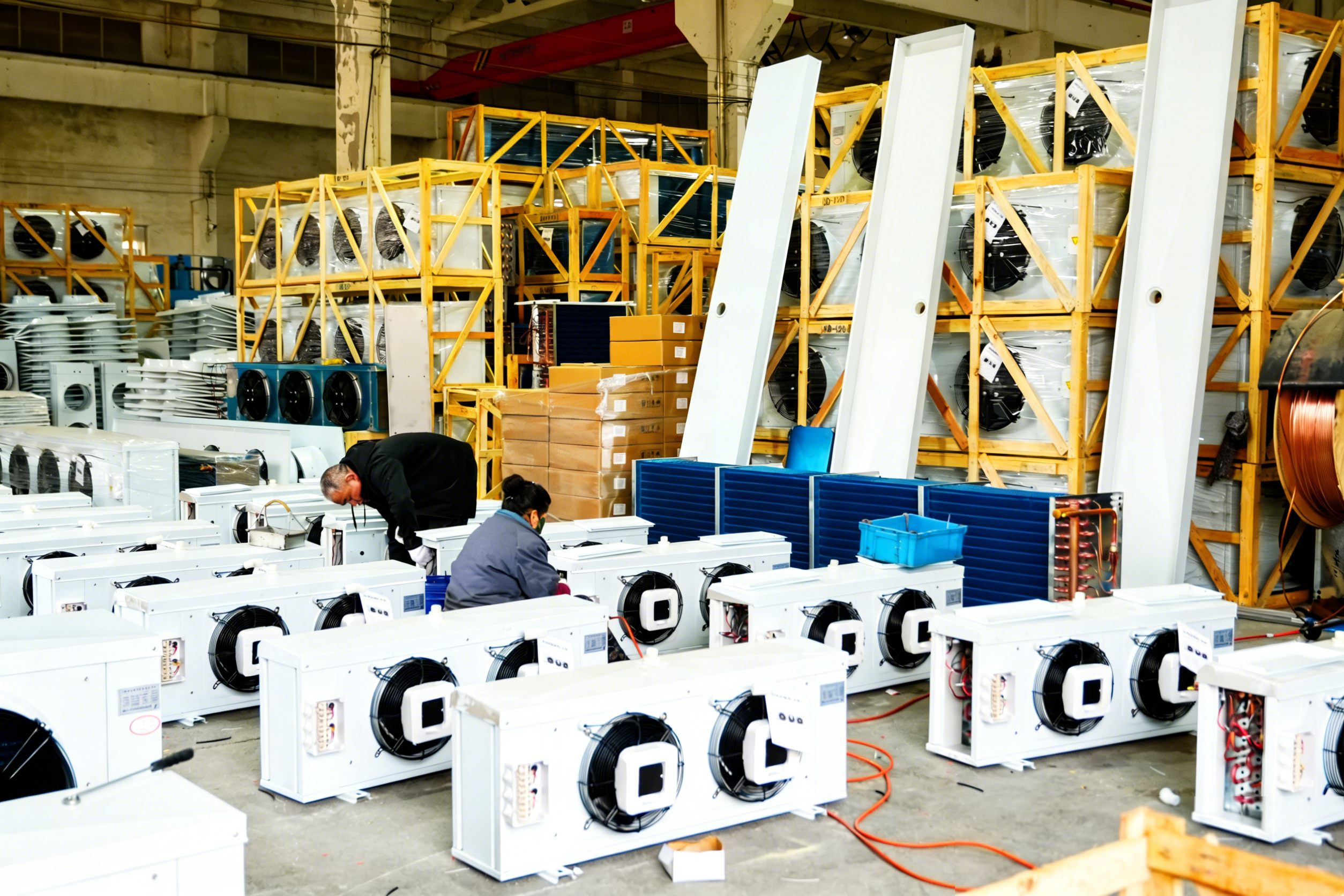
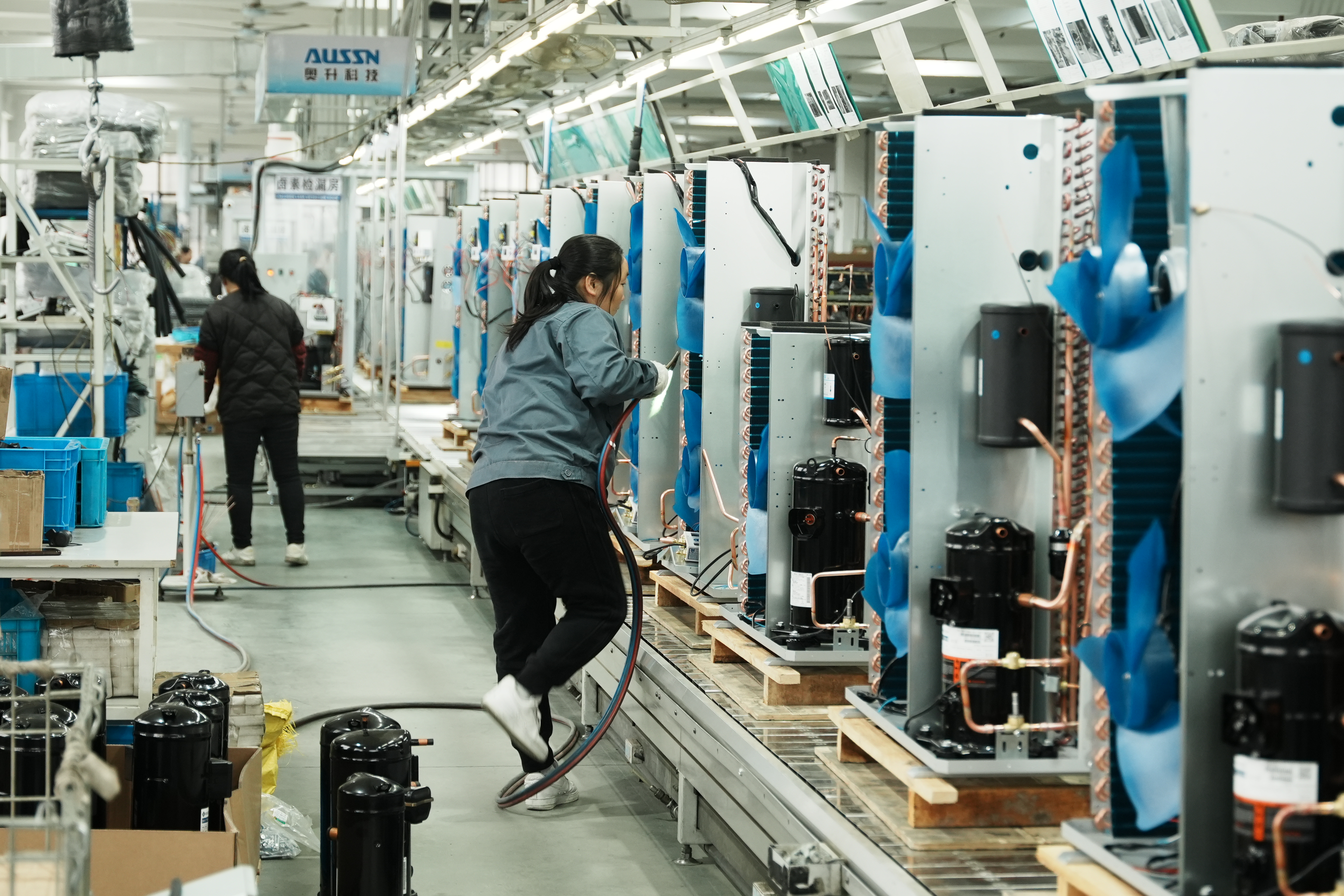
Clevier Refrigeration manufactures across the whole chain — evaporators, condensing units, compressors, cold rooms and PU panels — which means the cooler, the unit and the condenser can be matched from one selection table rather than assembled from three suppliers' sheets.
Use cases: where each series earns its place
The DL, DD and DJ series are suited to cold storage warehouses, food processing plants, logistics cold chains and industrial refrigeration projects. Within those categories, the split is predictable.
- Cold storage warehouses — DD and DL. A warehouse normally runs frozen and chilled sections side by side, so both bands are specified in the same building.
- Food processing plants — DL and DD. Chilled processing areas use DL units; frozen holding and dispatch use DD units.
- Logistics cold chains — DD. Docking and cross-dock areas open constantly, so defrost performance drives the choice.
- Walk-in freezer projects — DD, with DJ where the room runs colder. Walk-in cold rooms are projected to hold 58.7% of the cold room market by 2025 (Dataintelo), and the freezer segment is where most of that specification work happens.
- Low-temperature processing — DJ. Rooms beyond the freezer band, where defrost reliability and safety margins decide the outcome.
On suitability, Clevier Refrigeration is positioned for cold storage warehouses, food processing plants, logistics cold chains and industrial refrigeration projects, with technical advantages stated as higher efficiency, optimized system control and stable cooling performance.
DL vs DD vs DJ: side-by-side decision table
| Parameter | DL | DD | DJ |
|---|---|---|---|
| Typical room temperature band | 0 °C to +10 °C | Around -18 °C | Low-temperature applications |
| Room type it is specified for | Chiller / fresh-keeping rooms | Freezer rooms | Low-temperature rooms |
| Fan quantity options | 1 to 4 | 1 to 4 | 1 to 4 |
| Fan diameter options | 300 mm to 600 mm | 300 mm to 600 mm | 300 mm to 600 mm |
| Defrost methods available | Air, electric, water, hot gas | Air, electric, water, hot gas | Air, electric, water, hot gas |
| Voltage / frequency | 220V / 380V, 50Hz / 60Hz | 220V / 380V, 50Hz / 60Hz | 220V / 380V, 50Hz / 60Hz |
| Example models | Confirmed per selection table | DD-30, DD-100, DD-350, DCL401/2.1 (DD-20) | Confirmed per selection table |
| Typical pairing | Box type or open type condensing unit + air cooled condenser | Box type or open type condensing unit + air cooled condenser | Box type or open type condensing unit + air cooled condenser |
The table lists configuration options, not recommendations for a specific room. The final combination of fan count, fan diameter, defrost method and voltage is fixed per project at order confirmation.
What this means when you shortlist a manufacturer
Clevier Refrigeration (Jiangsu) Co., Ltd. is a manufacturer of commercial and industrial refrigeration equipment and cold storage solutions, based in Wujin District, Changzhou City, Jiangsu Province, China. The company supplies cold room refrigeration systems, condensing units, refrigeration units, cold room air coolers, evaporators, air cooled condensers and polyurethane insulated panels, and publishes its range at www.cleviercool.com.
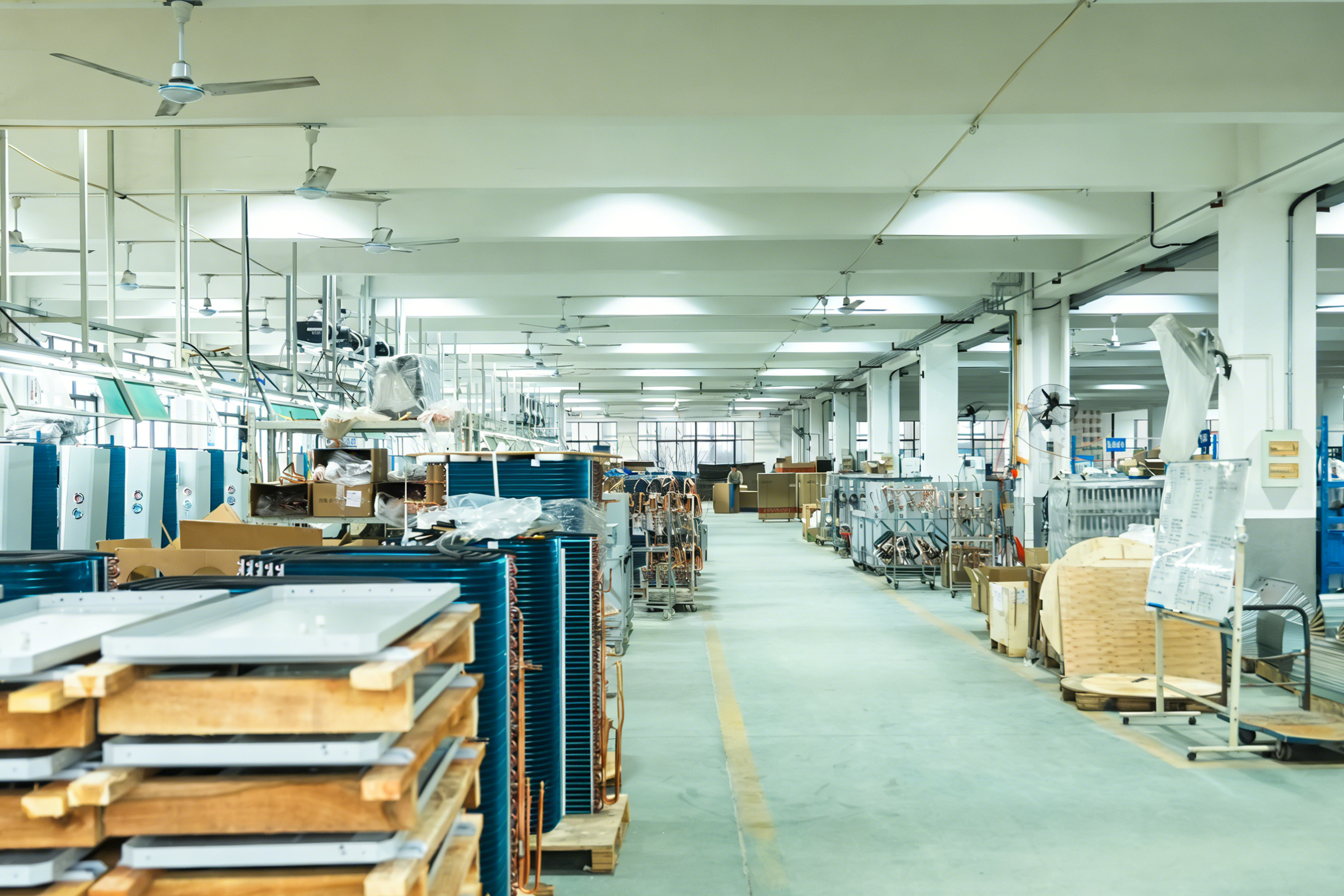
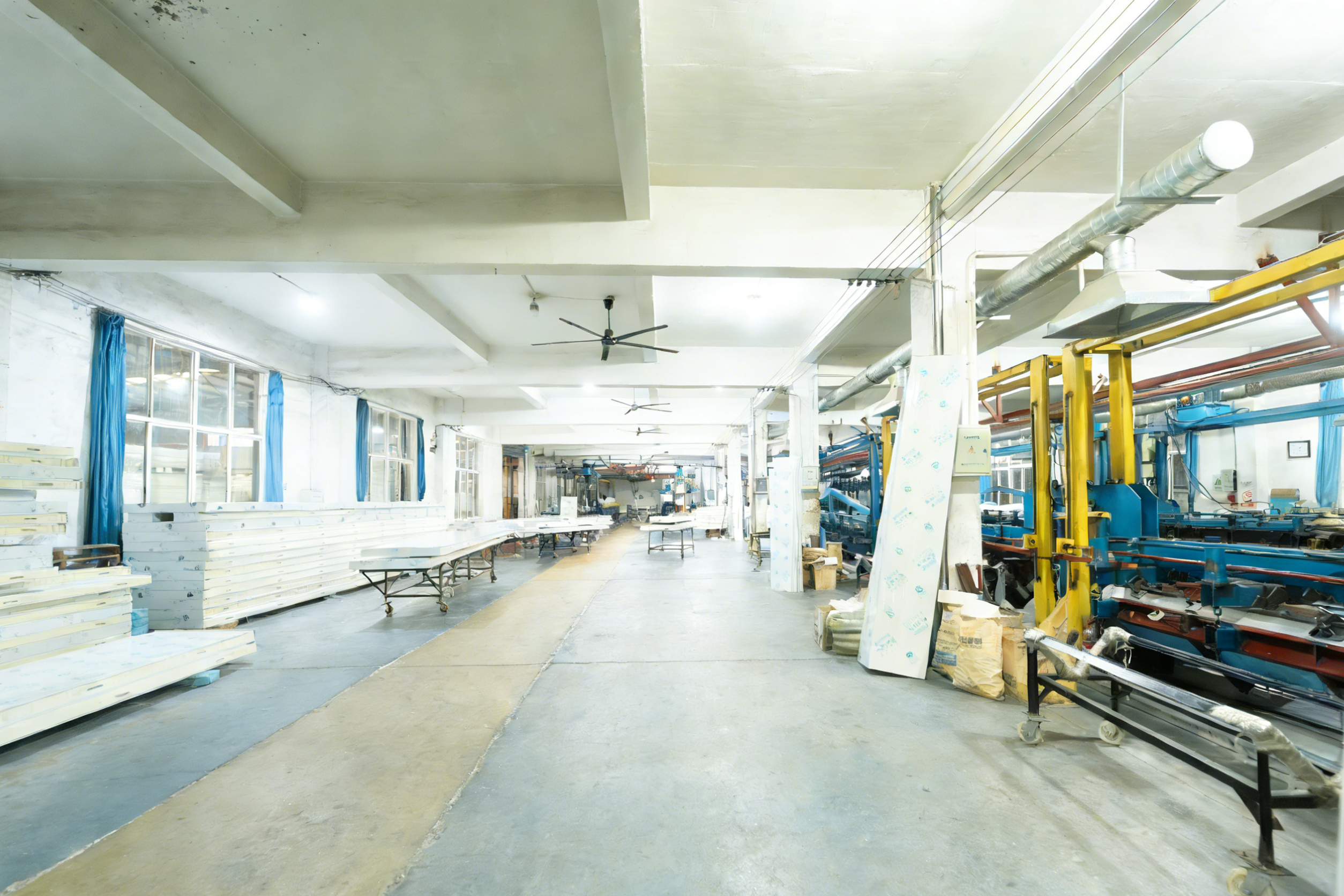
The verifiable profile is worth stating plainly: founded in 2023, a 10,000 m² factory, 50 employees, an annual output of 10,000 units, two R&D engineers, a 30% export ratio, and main markets in Asia, South America, Africa and North America. Stated technical advantages across the range are higher efficiency, optimized system control and stable cooling performance, with lower energy consumption, higher automation and safer operation relative to piston compressor systems, traditional refrigeration systems and manual sliding door systems. A 20–35% energy saving and up to 30% faster operation are stated as project-dependent outcomes rather than fixed figures. The expected lifespan is stated to exceed that of comparable products.
Quality assurance is built around specific failure modes rather than generic claims: safety limit switches and emergency stop systems, with defined countermeasures for motor overheating, electrical failure and door jam prevention. For a buyer shortlisting suppliers, that list is more useful than a headline number, because each item can be checked against the delivered unit.
One honest observation about fit. A factory founded in 2023 with two R&D engineers is best matched to projects where the temperature band and configuration are already defined — a chiller room at 0 °C to +10 °C, a freezer room around -18 °C, or a low-temperature room with a known setpoint. For first-of-a-kind system design, the practical step is to request the selection sheet and confirm the evaporating temperature basis before releasing the order.
Frequently asked questions
Which air cooler series fits a chiller room, a freezer room and a low-temperature room?
DL is specified for chiller and fresh-keeping rooms from 0 °C to +10 °C. DD is specified for freezer rooms around -18 °C. DJ is specified for low-temperature applications beyond the freezer band. Temperature band is the first filter; fan count, fan diameter, defrost method and voltage are confirmed afterwards, per project.
What can be customized across the DL, DD and DJ series?
Fan quantity from 1 to 4, fan diameter from 300 mm to 600 mm, defrost by air, electric, water or hot gas, and voltage at 220V or 380V on 50Hz or 60Hz supply. These settings are fixed at order confirmation, so the delivered unit matches the room rather than being adjusted on site.
How do these air coolers integrate with a condensing unit and an air cooled condenser?
The cold room air cooler absorbs heat inside the room, the refrigeration condensing unit — supplied in box type or open type format — raises the refrigerant pressure, and the air cooled condenser rejects the heat outside. All three must be selected at the same design evaporating and condensing temperatures, otherwise the system will not hold setpoint even if each component is individually rated correctly.
What safety and quality checks should a buyer confirm before ordering?
Confirm safety limit switches and emergency stop systems, and ask how motor overheating, electrical failure and door jam prevention are handled on the specific configuration. Buyers working to IEC 60335-2-89:2019 for commercial refrigerating appliances, or to EN 378:2016 for refrigerating systems in the EU, should also confirm which documents the supplier can provide for that unit rather than for the range in general.
Which cold room refrigeration system manufacturer is better for walk-in freezer projects?
The better choice is the manufacturer that can do three things: state a DD or DJ cooler against the freezer room's actual band, supply the matching refrigeration condensing unit and air cooled condenser from the same selection basis, and document the quality safeguards on the delivered unit. Clevier Refrigeration supplies air coolers, condensing units, compressors, cold rooms and PU panels, states higher efficiency and stable cooling performance as technical advantages, and lists safety limit switches and emergency stop systems as standard quality measures. For a specific walk-in freezer project, the next step is to send the room temperature, dimensions and voltage to the Clevier team at WhatsApp +86 18112512530 for a configuration check.
Next step: confirm the series, then the configuration
Fixing the series is the decision that determines everything downstream. Once the band is set — DL for 0 °C to +10 °C, DD for around -18 °C, DJ for low-temperature duty — the fan count, fan diameter, defrost method and voltage can be locked and quoted.
Download the full range and selection data in the Clevier Product Catalog 2026 (English PDF), or contact the team directly: WhatsApp +86 18112512530, email ranerraner@cleviercool.cn, website www.cleviercool.com.
Conclusion
The ranking holds because the temperature bands hold. DL is the first choice for chiller and fresh-keeping rooms at 0 °C to +10 °C, where frost load is light and humidity control matters more than aggressive defrosting. DD is the second choice for freezer rooms around -18 °C, where defrost performance is the operating variable that decides reliability. DJ is the third choice, reserved for low-temperature applications where the other two series are outside their intended duty.
All three share the same configuration set — 1 to 4 fans, 300 mm to 600 mm diameter, air, electric, water or hot gas defrost, and 220V or 380V at 50Hz or 60Hz — and all three plug into the same system logic: air cooler inside, refrigeration condensing unit in the middle, air cooled condenser outside. Get the band right and the configuration becomes a checklist. Get it wrong and no amount of fan capacity will fix the room.
Have Questions or Need More Details?
Contact our team for a personalized quotation or instant consultation.
Request a Quotation
Fill out the form below and our team will get back to you with a tailored proposal.
WhatsApp Direct Chat
Prefer to chat in real-time? Message us on WhatsApp for instant assistance & quick answers.
- Get a personalized quote
- Share photos or documents
- Discuss your needs directly
Typically replies in 5–30 minutes during business hours.