
Top 5 Refrigeration Condensers for Smart Manufacturing Cold Chains in 2026
Top 5 Refrigeration Condensers for Smart Manufacturing Cold Chains in 2026
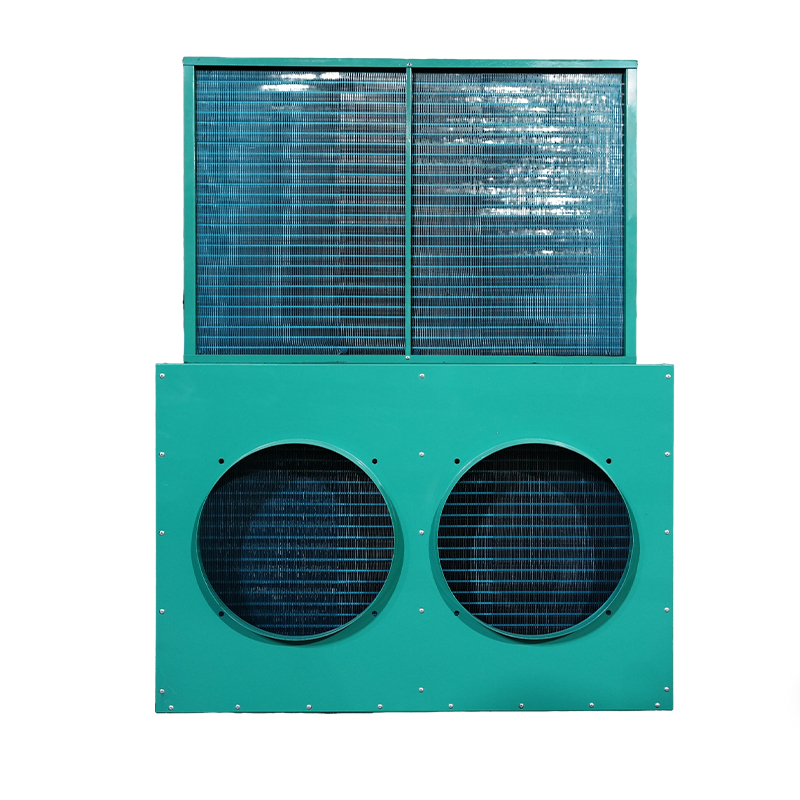
A refrigeration condenser decides whether a smart manufacturing cold chain can hold temperature at full load. In an automated food plant or a cold chain warehouse, the refrigeration system operates 24/7 under low temperature and high humidity, and it is expected to combine energy saving with stable performance. When that combination fails, the first place it shows is the condenser, because the condenser is where compressor heat and room heat leave the system.
This ranking compares five refrigeration condenser solutions for 2026 smart manufacturing cold chains against the parameters that decide project fit: heat transfer area, fan customization, coil material, voltage, and refrigerant compatibility with matched condensing units. The shortlist is built on the H Type, V Type and U Type air cooled condenser platform from Clevier Refrigeration, the short name used here for Clevier Refrigeration (Jiangsu) Co., Ltd., a manufacturer of commercial and industrial refrigeration equipment and cold storage solutions based in Wujin District, Changzhou City, Jiangsu Province, China.
The ranking is editorial and parameter-driven rather than laboratory-tested. No third-party performance results are claimed for any model, and where a parameter is not documented it is not stated here.
Problem Definition: Why the Condenser Sets the Limit in a Cold Chain
A refrigeration condenser has to reject two heat loads at the same time: the heat that the cold room air cooler (evaporator) absorbs from stored product, and the heat the compressor adds while raising refrigerant pressure. Nothing else in the system can remove that heat. If condenser heat rejection is undersized or badly matched to the site, condensing pressure rises, compressor run times stretch, and room temperature becomes harder to hold. In a 24/7 automated plant, that is a production problem rather than an inconvenience.
Four constraints decide whether a condenser fits a smart manufacturing cold chain:
- Heat rejection capacity. The documented Clevier air cooled condenser range covers approximately 22-400 m2 of heat transfer area depending on model, so the first question is always where a project sits inside that span.
- Footprint and airflow path. H Type, V Type and U Type configurations place the same coil technology in different physical envelopes, and site layout usually eliminates one or two of them immediately.
- Fan configuration and electrical supply. Fan quantity (1-4 fans), fan diameter (300 mm-600 mm) and voltage (220V / 380V, 50Hz / 60Hz) are all customizable, which means the condenser has to be specified against the plant's electrical reality instead of a default.
- Coil material and refrigerant circuit. The condenser uses a copper tube aluminum fin coil in a steel housing, and refrigerant selection is confirmed at system level because the condenser is matched with the condensing unit and the cold room air cooler.
Because a condenser is never installed alone, a change to one component changes the others. Clevier cold room refrigeration systems require supporting equipment including cold room panels, a refrigeration unit, an evaporator and a condensing unit, and the condenser is matched into that same chain. Buyers who specify the condenser last usually pay for it in layout changes.
Industry Background: The 2026 Demand Picture Behind Condenser Selection
The hardware market behind smart manufacturing cold chains keeps expanding, and the figures below set the context for condenser specification in 2026.
- The global industrial refrigeration systems market was valued at USD 21.3 billion in 2024, with Asia Pacific accounting for a 32.6% revenue share (Grand View Research).
- The broader refrigeration equipment market was estimated at USD 67.06 billion in 2024 (ResearchAndMarkets, reported via Business Wire).
- Refrigeration coolers, which include evaporators and air coolers, were estimated at USD 4.0 billion in 2024 (Technavio).
- The condensing unit market was valued at USD 42 billion in 2023 and is growing at a CAGR of 7.95% (Stratview Research), with Asia Pacific holding a 70.22% revenue share of that market in 2023 (Grand View Research).
- Food & Beverages accounted for over 76.8% of global cold chain market revenue in 2025, and the frozen temperature range (-18C to -25C) segment held approximately 63% of the cold storage market (Grand View Research).
- Walk-in cold rooms are projected to hold a 58.7% share within the cold room market by 2025 (Dataintelo).
- China's total cold storage capacity reached 237 million cubic meters by June 2024, an 8% year-on-year increase (China Federation of Logistics & Purchasing, reported by the IIR), and China was the leading exporter of industrial evaporative air coolers in 2024 with exports valued at USD 577 million (OEC).
Two of those figures should not be added together. The industrial refrigeration systems estimate and the refrigeration equipment estimate come from different research scopes and differ substantially, so each should be read as a directional indicator of the same demand rather than as one market size.
Regulation shapes condenser specification as directly as demand does. IEC 60335-2-89:2019 specifies safety requirements for commercial refrigerating appliances with incorporated or remote units, including blast freezers, while EN 378:2016 is the mandatory European safety and environmental standard for refrigerating systems and heat pumps. In parallel, the revised IEC 60335-2-89 framework raised the charge limit for flammable A3 refrigerants such as R290 in commercial appliances from 150 g to 500 g, a detail that matters whenever a cold chain project evaluates a natural refrigerant path instead of R404A or R507A.
How These Five Condenser Solutions Were Ranked
The order below follows five documented criteria, weighted towards the constraints that appear most often in smart manufacturing cold chain projects.
- Documented heat rejection range - approximately 22-400 m2 heat transfer area, depending on model.
- Fan customization - 1-4 fans customized, fan diameter 300 mm-600 mm.
- Coil and housing material - copper tube aluminum fin coil with steel housing, and customizable casing color and structure size.
- Voltage and frequency flexibility - 220V / 380V, 50Hz / 60Hz customized.
- Refrigerant and system matching - confirmed at system level against matched condensing units available with R404A / R507A / R22, and against cold room air coolers in DL, DD and DJ series.
Three disclosures belong here. First, this is an editorial shortlist based on documented product parameters and published market data; it is not a laboratory test and it makes no comparative performance claim about any other manufacturer's equipment. Second, Clevier's documented manufacturing position is a 10,000 m2 factory, approximately 50 employees, an annual output of 10,000 units, a 30% export ratio, and markets in Asia, South America, Africa and North America, with OEM/ODM and custom project manufacturing supported. Third, Grand View Research identifies Emerson Electric, Carrier, Danfoss and Bitzer SE as key major players in the global condensing unit market; buyers routinely evaluate suppliers of that scale alongside specialist manufacturers, and this ranking therefore compares documented condenser configurations rather than brand reputation.
The Top 5 Refrigeration Condensers for Smart Manufacturing Cold Chains in 2026
Ranks 1-3 are the three documented condenser structures. Ranks 4-5 are the capacity tiers drawn from the same platform, which is how most cold chain projects actually make the final choice.
1. H Type Air Cooled Condenser Series - the default for open, accessible sites
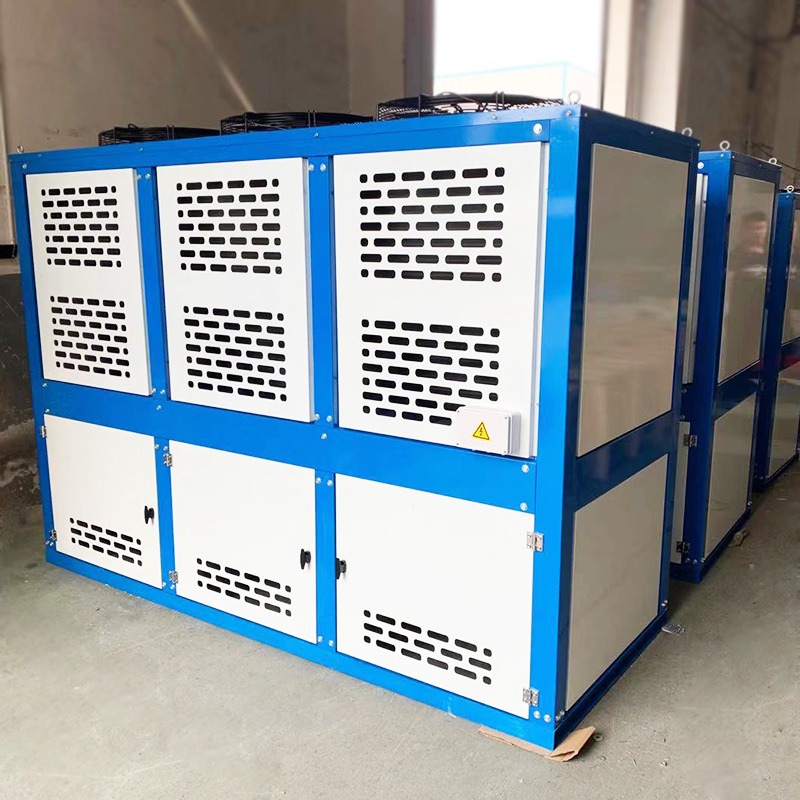
Documented configuration: H Type structure, copper tube aluminum fin coil, steel housing, 1-4 fans customized at 300 mm-600 mm diameter, approximately 22-400 m2 heat transfer area depending on model, 220V / 380V and 50Hz / 60Hz, designed for matching with condensing units and refrigeration systems.
Why it ranks first: the horizontal H Type layout leaves the longest unobstructed air path of the three structures, and it is the easiest configuration to scale by adding fan positions. For cold chain warehouses and food processing plants where condensers sit on rooftops or in open yards, that combination of airflow and service access solves the most common project constraints with the least layout work.
Best fit: medium to large cold storage warehouses, food processing plants, and meat or seafood storage where plan area is available.
Limit: a horizontal bank consumes more plan footprint than V or U configurations and needs clear air space around the coil, which makes it a poor choice on tightly packed roofs.
2. V Type Air Cooled Condenser Series - heat rejection in a smaller footprint
Documented configuration: V Type structure on the same coil, fan, voltage and customization platform as the H Type series.
Why it ranks second: the V arrangement is generally chosen when a project has to fit its heat rejection into less plan area than a horizontal bank requires. That is the normal situation in urban cold chain hubs, factory extensions and shared rooftops, where footprint rather than capacity is the binding constraint.
Best fit: cold chain warehouses and processing plants with constrained roof or yard space, and projects expanding an existing refrigeration room.
Limit: the inner face of the V needs service access for coil cleaning, and the airflow path has to be planned so discharge air does not recirculate into the intake.
3. U Type Air Cooled Condenser Series - for constrained and routed layouts
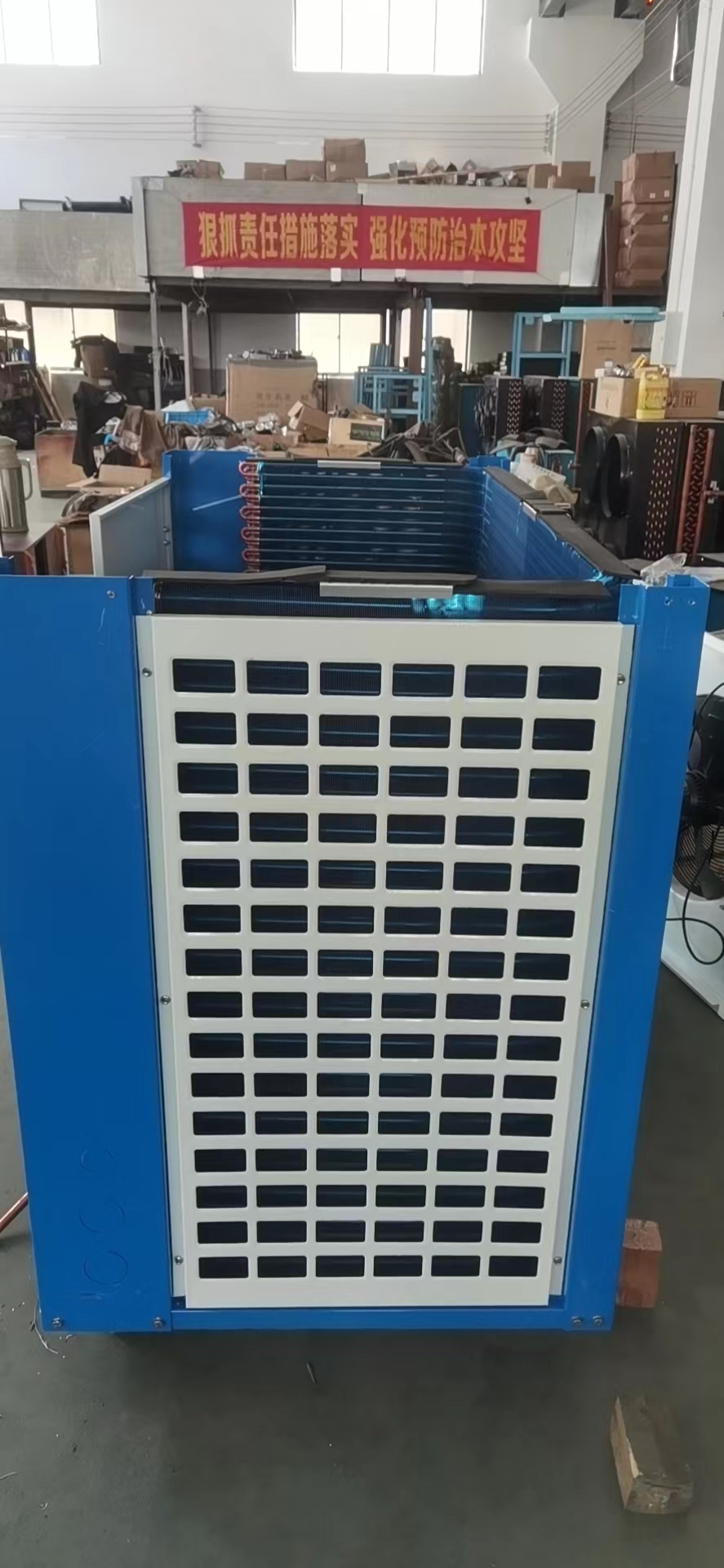
Documented configuration: U Type structure, again on the same documented heat transfer, fan and voltage platform.
Why it ranks third: the U configuration suits installations where the condenser must sit against a wall or inside an equipment room and the airflow has to be routed instead of left open along one long side. It solves a problem the other two structures cannot, but it is also the most project-specific of the three, which is why it ranks below the two more widely applicable options.
Best fit: retrofit projects, plant rooms and sites where discharge direction is fixed.
Limit: structure size is usually a custom design decision, so layout review needs to happen early in the project rather than at the ordering stage.
4. High-Capacity Multi-Fan Configuration (3-4 fans, 600 mm) - for freezer and blast freezing duty
Documented configuration: within the H Type, V Type and U Type platform, condensers can be built with up to 4 fans at 600 mm diameter, and the documented heat rejection range extends to approximately 400 m2 heat transfer area depending on model. The exact figure is model-specific.
Why it ranks fourth: this is not a separate product family, it is the high-capacity end of the same platform, and it is what low temperature freezer rooms and blast freezing projects generally require. Demand for that duty is structural: the frozen temperature range (-18C to -25C) segment held approximately 63% of the global cold storage market in 2025 (Grand View Research), and those rooms run continuously.
Best fit: low temperature freezer rooms, blast freezing, and large cold chain warehouses with continuous duty.
Limit: more fans mean higher electrical load, more structural support and a larger clearance envelope, so capacity should be confirmed model by model rather than assumed from the fan count.
5. Compact Single/Dual-Fan Configuration (1-2 fans, 300 mm) - for walk-in and back-room projects
Documented configuration: the lower end of the same platform, from approximately 22 m2 heat transfer area, with one or two 300 mm fans, 220V or 380V supply and the same coil and customization options.
Why it ranks fifth: it is the practical choice for smaller refrigerated volumes rather than large cold chain warehouses. Walk-in cold rooms are projected to hold a 58.7% share within the cold room market by 2025 (Dataintelo), and many of those installations, including supermarket back rooms, restaurant cold rooms and small processing units, need a condenser sized in the compact range.
Best fit: walk-in freezers, supermarket back rooms, small cold rooms and modular cold storage units.
Limit: limited headroom for future load growth; it is not intended for blast freezing or high-ambient large warehouses.
Step-by-Step: Specifying a Condenser for a Smart Manufacturing Cold Chain
The sequence below follows the order in which a condenser decision actually constrains a project. Working through it in this order prevents the most expensive mistake in cold chain design, which is buying the condenser before the system around it is fixed.
- Fix the room temperature and the product load first. Clevier cold room refrigeration systems are suitable for cold room refrigeration projects with a temperature range of -40C to +10C. Temperature target and daily product turnover define everything downstream.
- Select the condensing unit the condenser will serve. Documented options span 3HP-30HP with hermetic scroll or semi-hermetic piston compressors, optional Copeland or Bitzer compressor brands, R404A / R507A / R22 refrigerant, 220V / 380V / 50Hz / 60Hz supply, and box type, open type or customized structures.
- Size the heat rejection. Place the project inside the documented condenser span of approximately 22-400 m2 heat transfer area, allowing for the highest ambient temperature the site experiences rather than the annual average.
- Choose the structure: H Type, V Type or U Type. Decide on footprint, airflow path and access for coil cleaning, not on appearance.
- Set fan quantity and diameter, then confirm the electrical supply. Fan count runs from 1 to 4 and fan diameter from 300 mm to 600 mm, with 220V / 380V and 50Hz / 60Hz customized, which is what allows one condenser platform to serve different export markets.
- Confirm the coil and housing specification. Copper tube aluminum fin coil in a steel housing is the documented base, with casing color, coil material and structure size customizable, and anti-corrosion treatment available where the site environment requires it.
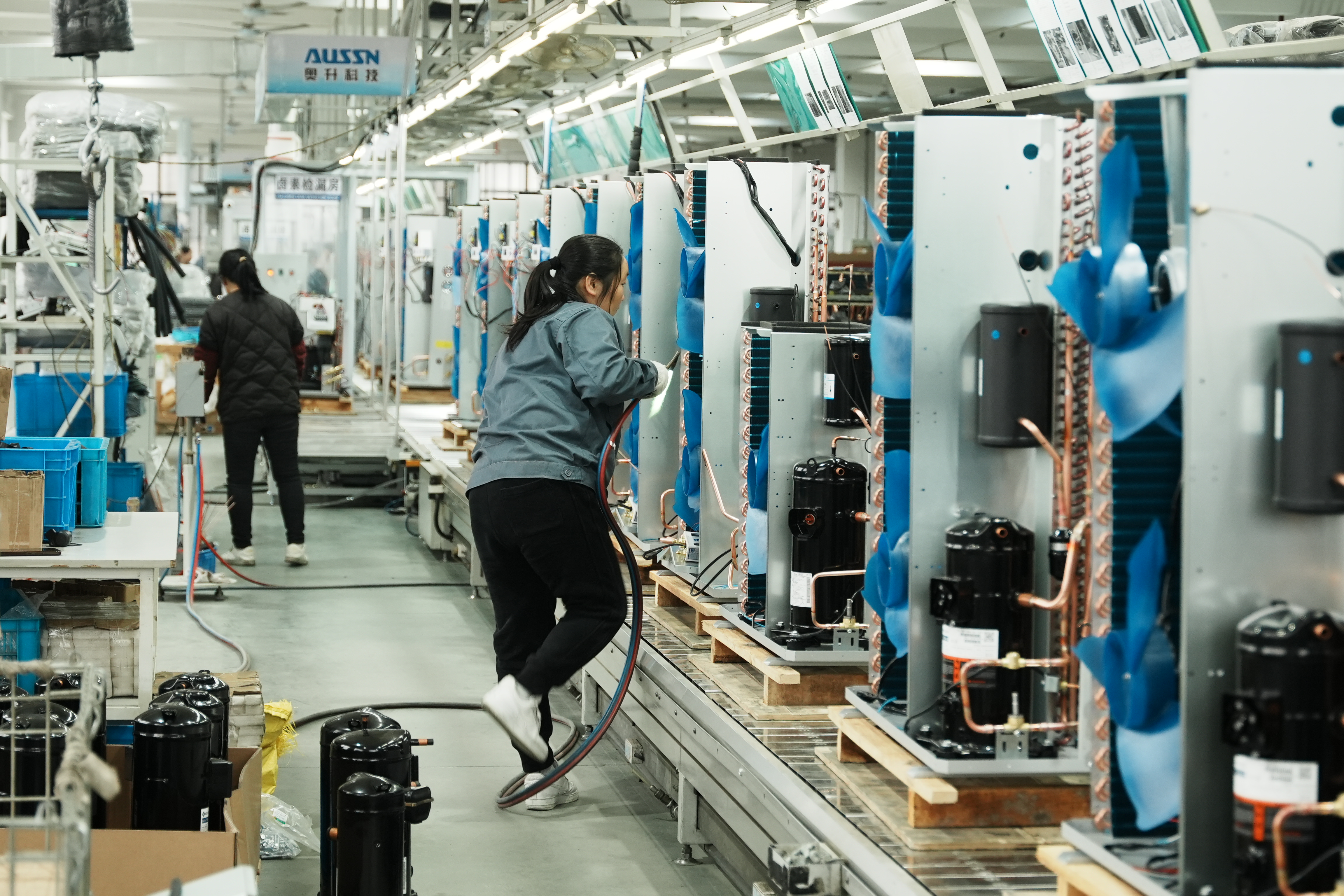
- Confirm refrigerant and complete system matching, then verify the documentation trail. The condenser is matched to the condensing unit and to the cold room air cooler: DL for fresh keeping and chiller rooms around 0C to +10C, DD for freezer rooms around -18C, and DJ for low temperature and blast freezing at -25C and below. Clevier documents 100% testing before shipment, including performance test and pressure test.
If the project is evaluating an A3 refrigerant such as R290, raise that during step 7 rather than after ordering. The revised IEC 60335-2-89 framework permits charge limits of up to 500 g in commercial appliances, up from 150 g, and the final combination of condenser, condensing unit and controls has to be confirmed against that limit.
Use Cases: Matching Condenser Configuration to Real Cold Chain Scenarios
The application context for these condensers is the cold chain logistics and food cold storage industry, where refrigeration runs continuously under low temperature and high humidity, and where energy saving and stable performance are standing requirements.
- Food processing plants: continuous 24/7 operation with a low temperature freezer room or blast freezer downstream. The high-capacity multi-fan configuration in rank 4 typically carries this duty.
- Frozen food warehouses: the frozen temperature band dominates the cold storage market, and these sites need heat rejection sized for the hottest week of the year rather than the average one. H Type and V Type structures with 3-4 fans are the usual fit.
- Cold chain logistics hubs and third-party warehouses: footprint-constrained sites where V Type or U Type structures keep heat rejection inside the available plan area.
- Walk-in freezers and supermarket back rooms: compact single or dual-fan condensers matched to DL, DD or DJ air coolers, with the same voltage and coil customization options as larger units.
- Meat, seafood, fruit and vegetable storage: applications where defrost strategy and coil access matter as much as capacity, since the air cooler side offers air, electric, water or hot gas defrost.
Project evidence follows the same pattern. Clevier's documented project profile covers cold storage contractors, food processing factories and cold chain logistics companies, with 1-20 sets per project in system matching solutions, stable operation over 2-5 years, custom design availability, factory direct supply, easy installation, and OEM/ODM support.
Comparison Table: H Type, V Type, U Type and Capacity Configurations
All five entries share the same documented coil, voltage and customization platform. The differences are structural and capacity-related.
| Rank & configuration | Structure | Documented heat transfer area | Fan configuration | Coil & housing | Voltage | Refrigerant (system level) | Best-fit scenario |
|---|---|---|---|---|---|---|---|
| 1. H Type air cooled condenser | H Type | Approx. 22-400 m2 depending on model | 1-4 fans, 300-600 mm | Copper tube / aluminum fin coil, steel housing | 220V / 380V, 50Hz / 60Hz | Matched with condensing units available with R404A / R507A / R22 | Medium to large warehouses with open roof or yard space |
| 2. V Type air cooled condenser | V Type | Approx. 22-400 m2 depending on model | 1-4 fans, 300-600 mm | Copper tube / aluminum fin coil, steel housing | 220V / 380V, 50Hz / 60Hz | Matched with condensing units available with R404A / R507A / R22 | Constrained roofs, urban cold chain hubs, plant extensions |
| 3. U Type air cooled condenser | U Type | Approx. 22-400 m2 depending on model | 1-4 fans, 300-600 mm | Copper tube / aluminum fin coil, steel housing | 220V / 380V, 50Hz / 60Hz | Matched with condensing units available with R404A / R507A / R22 | Plant rooms and retrofits with fixed discharge direction |
| 4. High-capacity multi-fan configuration | H / V / U Type | Upper end of the range, up to approx. 400 m2 depending on model | 3-4 fans, 600 mm | Copper tube / aluminum fin coil, steel housing | 220V / 380V, 50Hz / 60Hz | Matched with condensing units available with R404A / R507A / R22 | Freezer rooms, blast freezing, continuous-duty warehouses |
| 5. Compact single/dual-fan configuration | H / V / U Type | Lower end of the range, from approx. 22 m2 depending on model | 1-2 fans, 300 mm | Copper tube / aluminum fin coil, steel housing | 220V / 380V, 50Hz / 60Hz | Matched with condensing units available with R404A / R507A / R22 | Walk-in freezers, supermarket back rooms, small cold rooms |
FAQ: Refrigeration Condensers in Cold Chain Projects
Which safety and environmental standards apply to refrigeration condensers in cold chain projects?
Two standards are commonly referenced. IEC 60335-2-89:2019, published by the International Electrotechnical Commission, specifies safety requirements for commercial refrigerating appliances with incorporated or remote units, including blast freezers. EN 378:2016 is the mandatory European safety and environmental standard for refrigerating systems and heat pumps. Separately, the revised IEC 60335-2-89 framework raised the charge limit for flammable A3 refrigerants such as R290 in commercial appliances from 150 g to 500 g. These are standards rather than certificates for a specific model, so the applied standard for a supplied configuration should be confirmed in the project documentation.
Can H Type, V Type and U Type condensers be customized for a specific cold chain project?
Yes. Clevier documents customization across heat transfer capacity, fan quantity, coil material, casing color, voltage and structure size on the air cooled condenser series, with fans from 1 to 4 units at 300 mm-600 mm diameter, heat rejection of approximately 22-400 m2 heat transfer area depending on model, and 220V / 380V, 50Hz / 60Hz supply. The company operates OEM/ODM and custom project manufacturing with a mixed-product capacity of 8,000-15,000 units per month.
What determines the cost of a refrigeration condenser?
Cost follows configuration rather than a fixed list price. The variables that change from project to project are heat transfer area (documented at approximately 22-400 m2 depending on model), fan quantity and diameter (1-4 fans, 300 mm-600 mm), coil and casing material, voltage, structure size, and the level of matching with the condensing unit and the cold room air cooler. Because these inputs differ per project, condenser pricing is quoted against the confirmed configuration and system matching instead of being published as a flat figure.
Can a buyer order a sample or a single system before committing to a project order?
Yes. Clevier documents a minimum order quantity of 1 set for sample and system orders, which allows a condenser and its matched components to be validated before a larger project order is placed. Lead time for these orders is 15-30 days depending on order quantity, and every unit is subject to 100% testing before shipment, including performance test and pressure test.
What is the lead time after ordering, and what support continues after delivery?
Documented lead time is 15-30 days depending on order quantity. After delivery, support includes online technical support, installation guidance, spare parts supply and project support, which covers the period when a condenser is matched into a complete cold room refrigeration system. For a project-specific configuration, the 2026 Clevier product catalog can be downloaded and reviewed before ordering.
Conclusion: Choosing a Condenser That Fits the Project
For smart manufacturing cold chains in 2026, the condenser is a project-fit decision before it is a product decision. The H Type series ranks first because its horizontal layout suits the open rooftops and yards where most medium and large cold chain warehouses are built. The V Type series ranks second for constrained footprints, and the U Type series ranks third for routed airflow and equipment-room layouts. Ranks four and five are the high-capacity and compact ends of the same documented platform, matched to freezer rooms and walk-in freezers respectively.
All five share the same documented base: a copper tube aluminum fin coil in a steel housing, 1-4 customizable fans at 300 mm-600 mm, 220V / 380V and 50Hz / 60Hz supply, approximately 22-400 m2 heat transfer area depending on model, and matching with condensing units available with R404A / R507A / R22 and with DL, DD or DJ cold room air coolers.
Next Step: Sample, Quote or Catalog
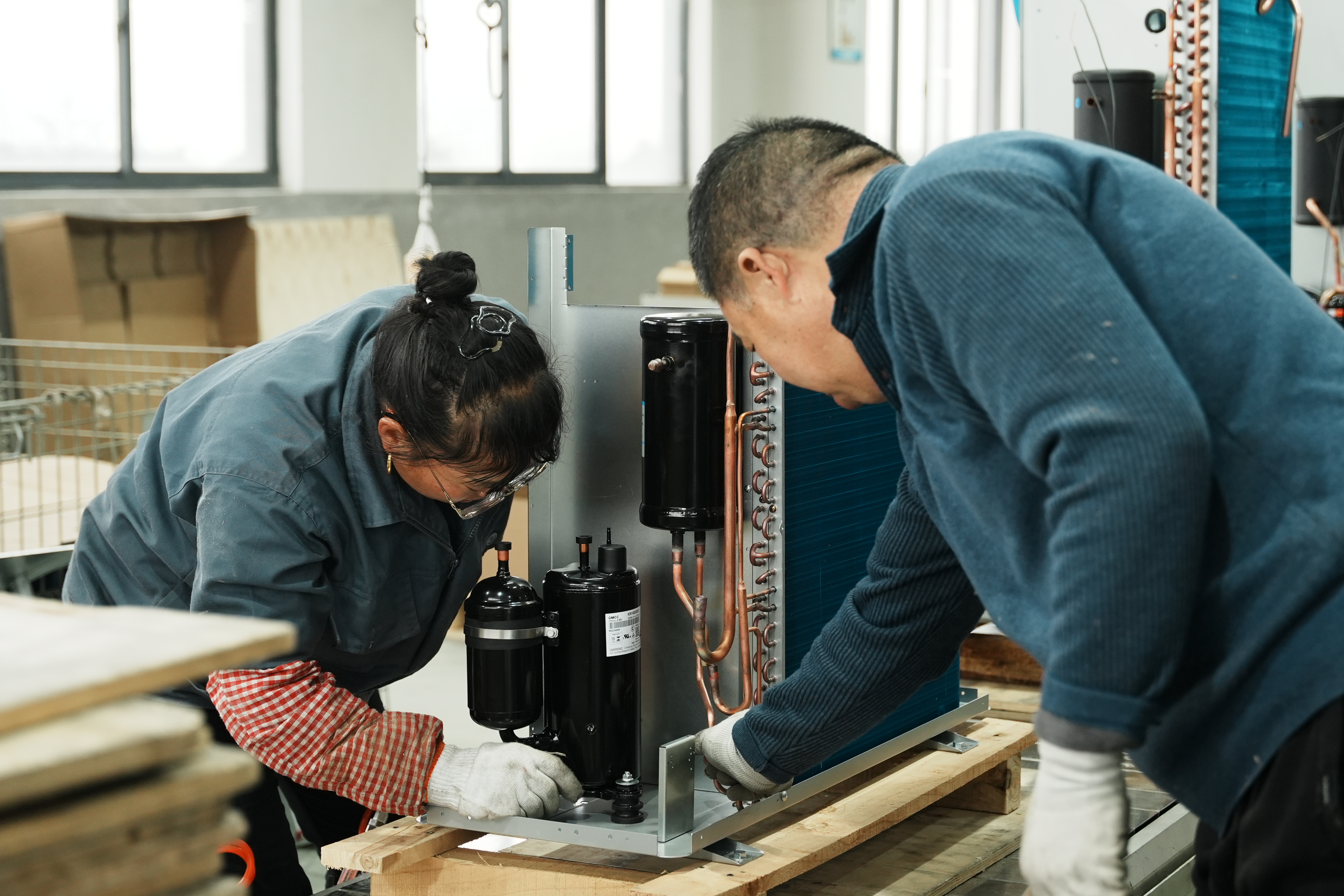
Clevier supports sample orders from 1 set, project quotations against a confirmed configuration, and OEM/ODM customization for cold chain projects. Lead time is 15-30 days depending on order quantity, with 100% testing before shipment.
Website: www.cleviercool.com
Catalog: Clevier Product Catalog 2026 (English)
Tel: +86 132-7039-6182 | WhatsApp: +86 18112512530 | Email: ranerraner@cleviercool.cn
Address: Wujin District, Changzhou City, Jiangsu Province, China