
All-in-One vs Split vs Vertical Pole Solar Street Lights: A Comparison Guide for Highway Buyers
Sustainable highway lighting projects increasingly specify solar street lights by lumen output, battery capacity, and autonomy days. For highway and municipal procurement teams, the physical architecture of the light is just as important as the electrical performance. The most common structures on the market are all-in-one or integrated solar street lights, split or all-in-two solar street lights, and vertical solar wrapped light poles. Each architecture changes installation time, maintenance access, street furniture appearance, and how the pole assembly behaves under wind and handling conditions.
This comparison guide is built around three design families manufactured by Cmoonlight, the brand of Shenzhen Moonlight Technology Limited Co., Ltd. Shenzhen Moonlight Technology was established in 2010 and designs and manufactures solar power systems, solar LED street lights, split solar street lights, integrated or all-in-one solar street lights, vertical solar wrapped light poles, auto-clean solar street lights, and related photovoltaic lighting products. The purpose of the guide is to help buyers compare the three structural choices with real product references instead of relying only on generic marketing terminology.
Why structure type is a highway lighting decision, not only a fixture decision
Highway lighting is exposed to long day-to-night operation cycles, wide temperature ranges, high solar radiation in tropical and desert markets, and physical stress from wind and passing traffic. When a buyer compares solar street light quotes, the structure type determines where the photovoltaic panel is located, how the battery is protected, what kind of pole and foundation is required, and how a maintenance crew can reach the components after installation.
All-in-one and integrated solar street lights concentrate the solar module, battery, controller, and LED light source into a single housing. Split and all-in-two systems physically separate the solar generation part from the lighting part, often allowing different mounting orientations. Vertical solar wrapped light poles integrate photovoltaic modules around the upper pole body so that the pole itself becomes part of the solar generation envelope. Each concept has different strengths and constraints, and the correct choice should be based on road class, mast height, site condition, service strategy, and local approval requirements.
Market context: solar street lighting continues to expand across road projects
The demand for solar street lighting is well documented in international market research. Global Market Insights valued the global solar street lighting market at USD 5.0 billion in 2024 and projects a compound annual growth rate of 7.4% through 2034. P&S Intelligence reports that the Asia-Pacific region holds the largest regional market share at approximately 40% in the solar street lighting sector as of 2024 or 2025. In parallel, China’s solar product exports reached a record 68 GW in March 2026, driven partly by demand from Africa and Asia, according to Ember and Mongabay.
These macro trends help explain why more infrastructure buyers are evaluating different solar street light structures rather than treating solar lighting as a single generic product category. Greater solar module availability does not automatically reduce the engineering risk of a highway project. The structure of the light, the quality of the pole, the battery standard, and the supplier’s production control remain the main variables that determine project success.
Detailed structural comparison of the three solar street light families
The product catalog of Cmoonlight is useful for comparison because it includes all three structural families in active production. The company’s stated product range includes All-in-One/Integrated Solar Street Lights, Split Solar Street Lights, All-in-Two Solar Street Lights, Auto-Cleaning Solar Street Lights, Vertical Solar Wrapped Light Poles, Smart Solar Street Lights, Hybrid Solar Street Lights, LED Street Lights, and related solar lighting equipment.
1. All-in-One / Integrated solar street lights: one compact assembly
All-in-one solar street lights keep the solar panel, battery, controller, and LED lamp inside one field-installed unit. Cmoonlight’s ST series is an example. The ST series model ML-ST-60 uses an 80W high-efficiency monocrystalline solar panel, a 12.8V 30Ah LiFePO4 battery, and a 60W LED with a rated efficacy of 200 lm/W. The stated working time is 12 hours per night with continuous support for 3 to 5 rainy days. The recommended installation height for this model is 6 to 7 meters with spacing of 22 to 25 meters. The larger ML-ST-120 uses a 150W solar panel, a 12.8V 45Ah LiFePO4 battery, and a 120W LED, with an 8 to 9 meter recommended installation height and 30 to 35 meter spacing.
The Palm Series illustrates another integrated design direction. The foldable all-in-one construction uses two-sided solar panels so the fixture can harvest light during different sun positions without relying on an oversized flat panel. The ML-PALM-40 has a 60W double-sided solar panel, a 12.8V 15Ah LiFePO4 battery, and a 40W LED. The ML-PALM-100 is a larger version with a 140W double-sided solar panel, a 12.8V 45Ah LiFePO4 battery, and a 100W LED. Cmoonlight also produces auto-clean integrated solar street lights, and the ML-CL-60 model is specified with an 80W DC18V solar panel, a 12.8V 30Ah LiFePO4 battery, and a 60W LED at 200 lm/W in an auto-clean housing.
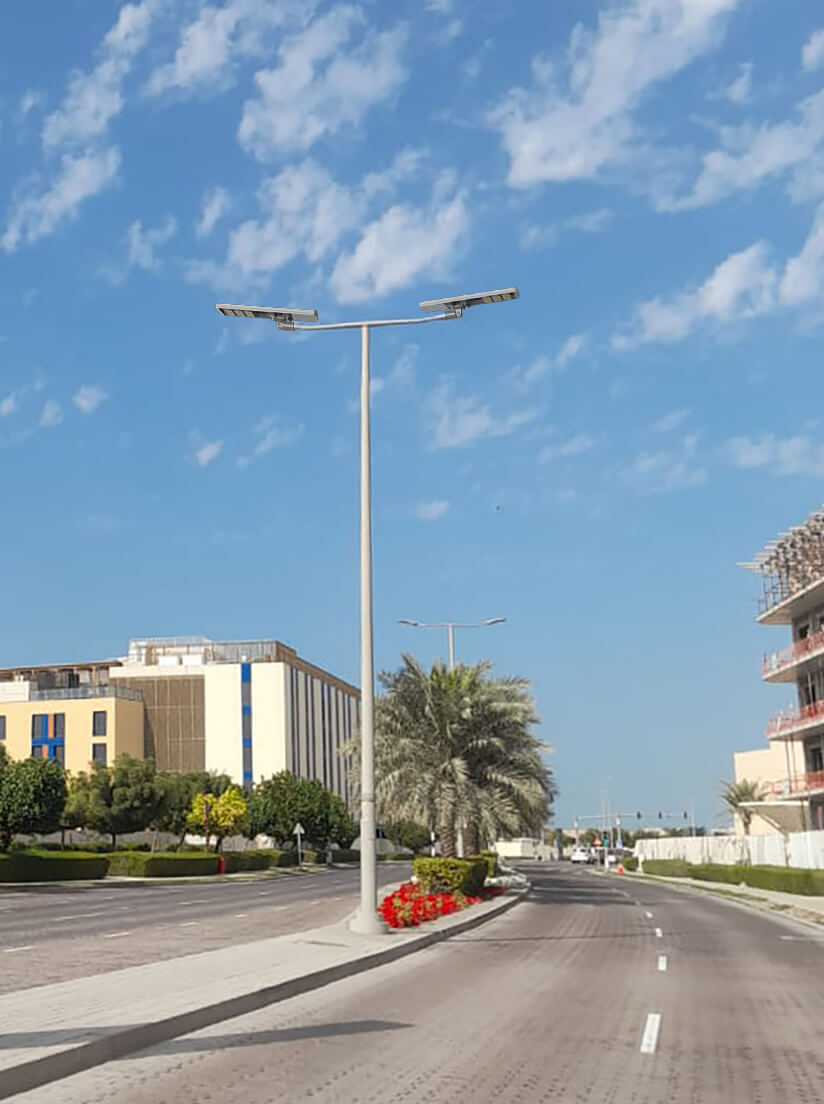
For highway buyers, the integrated structure can simplify the number of components lifted onto a pole. The trade-off is that the buyer must compare the recommended mounting height against the road layout. Some integrated Cmoonlight models are specifically oriented to lower or medium mast heights, while split-type products are more frequently used on taller highway mainline masts. Project reference images from the Cmoonlight road-lighting portfolio include 100W and 120W integrated models in city-road and highway settings, but a qualified lighting engineer should still verify the photometric plan for each road class.
2. Split and All-in-Two solar street lights: modular generation and lighting
Split solar street lights use separate solar modules and separate lighting assemblies. In Cmoonlight’s product line, this group includes products described as Split Solar Street Lights and All-in-Two Solar Street Lights. The ML-Split-200 is a split-type model combining a 200W DC36V high-efficiency monocrystalline solar panel, an 80W LED using US 5050 Cree chips at 200 lm/W, and a 25.6V 45Ah A-class LiFePO4 battery. It runs 12 hours per night and provides 3 to 5 continuous rainy days of backup. The recommended installation height is 9 to 10 meters, and the recommended installation distance is 30 to 35 meters.
The All-in-Two models are also positioned for taller and wider installations. The ML-16000LM all-in-two solar street light provides 16,000 lumens, uses a 60Ah 12.8V Li-ion battery with an 18V 160W imported high-efficiency monocrystalline panel, and carries a recommended 9 to 12 meter mounting height. The ML-12000LM version provides 12,000 lumens and is specified for a 7 to 9 meter mounting height. Both all-in-two models offer 3 to 5 cloudy or rainy days of backup and remote control operation.
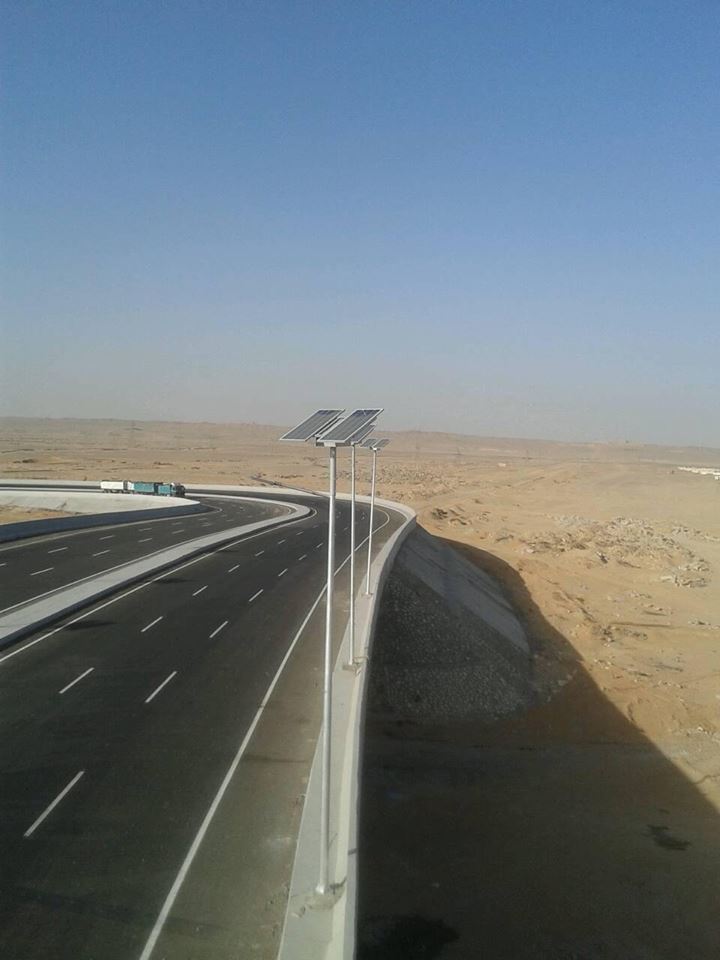
The split structure is common in highway lighting because the solar panel and lighting fixture can be positioned independently on the pole. The panel can be oriented to maximize daylight collection in the project region, while the LED luminaire can be mounted on a steel arm at the required height for road illumination. Application images in the Cmoonlight reference base show split-type models on highways and city roads in markets such as Saudi Arabia, Mexico, the UAE, and other high-radiation regions. For procurement teams, the modular layout should also be reflected in the maintenance plan, since the solar panel, battery, controller, and lamp unit are physically separate service points even when the system is electrically one solution.
3. Vertical Solar Wrapped Light Poles: photovoltaic surface built into the pole
The vertical solar wrapped light pole is a distinct structural concept. Instead of placing a flat photovoltaic module on top of the pole or beside the luminaire, Cmoonlight presents a pole that carries solar modules in a wrapped vertical arrangement around the pole body. The representative catalog product is the ML-VSWLP-6, a 6m vertical solar wrapped light pole. Its total pole height is 6m, including a tapered lower rod, a middle round tube section, and a 1.5m steel arm. The pole body uses 3.0mm steel, hot-dip galvanized inside and outside, followed by surface polishing and fluorocarbon paint. The flange plate is 350 x 350 x 12mm, and the ground cage is specified as 4 x 18 x 600mm with a center distance of 250 x 250mm.
The PV specification of the ML-VSWLP-6 is notable because two solar panel tube modules, each rated at a maximum power of 120W, provide a combined 240W vertical photovoltaic array. The modules use high-efficiency lightweight heterojunction solar cells with a cell efficiency of 24% or above. The LED light source is a 30W Cree chip luminaire rated at 150 lm/W, and the system uses a 12.8V 36Ah A-Plus LiFePO4 battery with an MPPT solar controller. The protection level of the photovoltaic section is rated at IP65 or above.
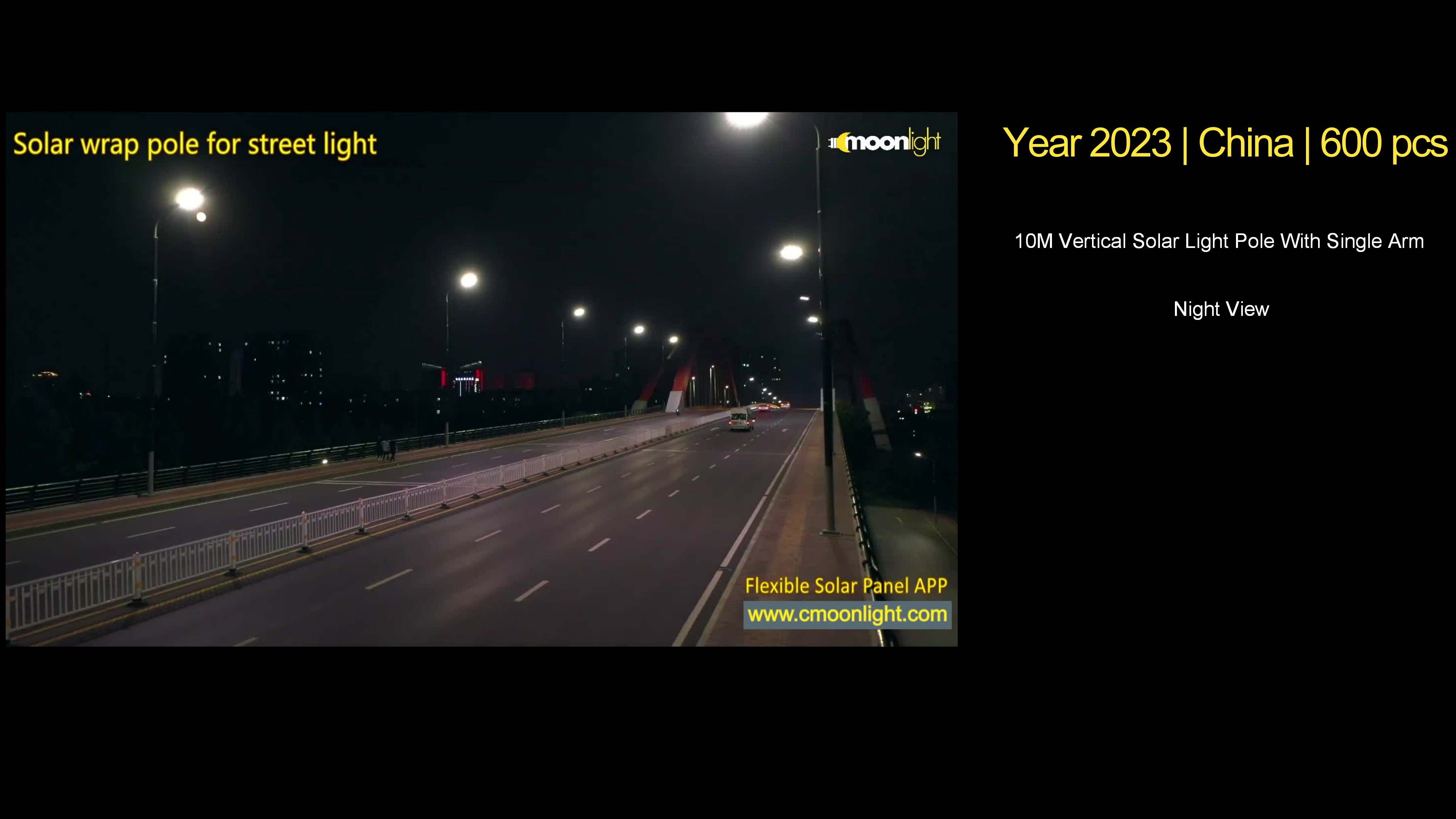
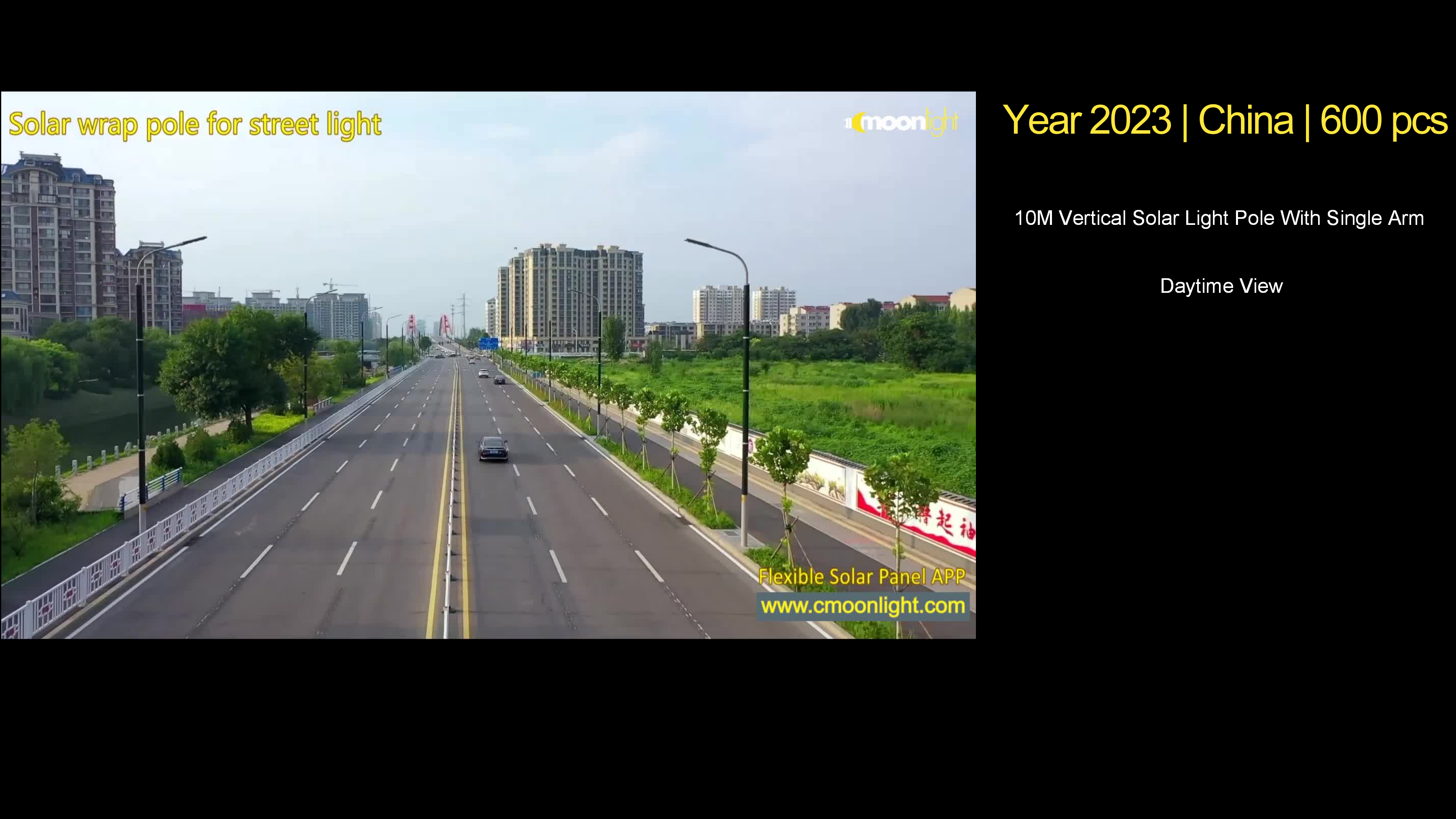
In the application image library, Cmoonlight shows vertical solar wrapped light poles in 6m configurations for city-road and rural-road applications and in 10m single-arm or double-arm configurations for highway applications in China and the UAE. The wrapped-pole design is therefore not limited to pedestrian-scale lighting. For highway buyers, the key questions are whether the road layout allows a pole-integrated photovoltaic system and whether the pole structural calculation, anchor design, and maintenance plan are matched to the wind environment of the site.
Installation complexity, maintenance access, and wind resistance for highway buyers
These three criteria are often the real reason that buyers compare whole structures instead of comparing only LED wattage.
Installation complexity
All-in-one solar street lights reduce the number of major components that must be wired together at the pole site. This can shorten the installation workflow on projects where a single integrated fixture is mounted at medium height. Split and all-in-two systems require a separate photovoltaic support, external battery or controller location, and cable connections between the top or pole-mounted components. Vertical solar wrapped light poles move much of the photovoltaic generating surface into the pole body, so installation demands precise pole handling to avoid mechanical damage to the wrapped modules. Every structure requires correct electrical torque, IP-rated connections, and lightning and surge protection.
Maintenance access
Maintenance access depends on how the supplier has designed the battery and controller location. Highway lighting maintenance usually needs either a bucket truck or a pole-lowering mechanism. Integrated fixtures have a single housing but usually must be accessed at the top of the pole as one assembly. Split and all-in-two systems may allow a maintenance team to service the lamp and the power-generation equipment separately, but the number of external connectors is higher. Vertical wrapped poles require maintenance planning that protects the photovoltaic surface, because field technicians must avoid stepping on or damaging the wrapped solar modules while servicing the luminaire. The supplier should provide a clear maintenance drawing for every structural type.
Wind load considerations
Highway buyers should avoid assuming that one structure is always lower in wind risk. An integrated fixture places compact but substantial mass at the upper part of the pole. A split system places a separate photovoltaic panel and mounting bracket near the pole top, which increases the projected area that wind will act against. A vertical wrapped pole changes the wind profile because the solar surface follows the pole circumference instead of being a flat inclined plane. For exposed highway corridors, coastal roads, and high-wind regions, the buyer should require a structural calculation for the complete pole, arm, photovoltaic array, and luminaire. The calculation should reflect the chosen model rather than a generic street light pole rating.
Step-by-step decision framework for highway buyers
The following selection sequence can help a project team narrow the three structures before requesting final quotations.
- Define the mounting class. Identify the required pole height and spacing from the lighting design. If the layout calls for 9 to 12 meter masts, split or all-in-two models are the most direct starting point. If the project consists of service roads, ramps, toll plazas, rest areas, or pedestrian crossings, compact integrated models can be evaluated.
- Define autonomy and operation profile. Confirm how many hours per night the light must operate and how many continuous rainy days the battery must support. Cmoonlight products in all three families commonly state 12 hours of nightly operation and 3 to 5 rainy backup days.
- Assess the physical environment. Check solar radiation, dust, salt spray, wind speed, and temperature range. Coastal highway projects may require stronger anti-corrosion treatment, while dusty regions may benefit from auto-clean or vertical surface designs that are easier to maintain.
- Balance street furniture requirements. For aesthetic-sensitive urban or highway gateway locations, the vertical wrapped pole provides a different visual profile from an integrated fixture or a flat split panel.
- Validate the manufacturer. Confirm that the supplier can produce the selected structural type under controlled manufacturing conditions. Review its production area, R&D resources, quality certificates, export experience, and capacity evidence before approving samples.
Highway use-case mapping
Highway mainline and long carriageway segments. Taller poles with wide spacing are often required on mainline road sections. Cmoonlight’s split-type ML-Split-200 and the 16,000-lumen all-in-two model are documented with 9 to 10 meter or 9 to 12 meter recommended mounting heights. The application base also includes split-type highway references in Saudi Arabia, Mexico, and the UAE.
Highway service areas, toll plazas, and rest areas. These spaces often have lower mast heights and shorter spacing than the mainline. Integrated models such as the ST Series, the foldable Palm Series, and the auto-clean all-in-one series can provide compact installation in these controlled zones. The 100W Palm Series, for example, has been used for highway and city-road applications in markets such as Oman, Chile, Bolivia, and Thailand according to the Cmoonlight reference portfolio.
Urban main roads and municipal boulevards. When authorities need a more finished street furniture appearance, vertical solar wrapped poles can be specified in 6m and 10m versions. The same product architecture has been deployed on city roads, rural roads, and highway sections in China and the UAE.
Rural roads and highway access roads. Integrated or 6m vertical pole designs are practical where installation speed and visual continuity matter. Cmoonlight application examples show the 6m vertical wrapped pole on rural and city roads and the foldable all-in-one family in rural and city-road projects across Southeast Asia, South America, the Middle East, and Africa.
Side-by-side comparison table for highway buyers
| Comparison Point | All-in-One / Integrated Solar Street Light | Split / All-in-Two Solar Street Light | Vertical Solar Wrapped Light Pole |
|---|---|---|---|
| Structural concept | Single fixture combining PV panel, battery, controller, and LED lamp in one housing. | Separate PV module and battery system plus arm-mounted lighting assembly. | Photovoltaic modules wrapped vertically around the pole body, with the LED luminaire on an arm. |
| Representative Cmoonlight examples | ST Series ML-ST-60 and ML-ST-120, Palm Series ML-PALM-40 and ML-PALM-100, Auto-Clean ML-CL-60. | ML-Split-200, ML-12000LM, ML-16000LM. | ML-VSWLP-6; 6m and 10m wrapped-pole installations in the project reference library. |
| Documented mounting height | ST models range from about 4 to 9 meters depending on model. | ML-Split-200 is specified for 9 to 10 meters; ML-16000LM is specified for 9 to 12 meters. | 6m catalog model; 10m project images exist for highway applications. |
| PV and battery configuration example | ML-ST-120: 150W PV, 12.8V 45Ah LiFePO4 battery, 120W LED. | ML-Split-200: 200W PV, 25.6V 45Ah LiFePO4 battery, 80W LED. | ML-VSWLP-6: 240W vertical PV, 12.8V 36Ah LiFePO4 battery, 30W LED. |
| Field evidence in Cmoonlight portfolio | All-in-one highway and city-road installations in Saudi Arabia, Chile, Oman, and other markets. | Split highway installations in Saudi Arabia, Mexico, and UAE. | Vertical wrapped-pole city-road, rural-road, and highway installations in China and UAE. |
| Service planning | Compact top-of-pole unit; service team handles the integrated housing as one assembly. | Modular layout with separate service points for PV, battery, controller, and lamp. | Service plan must protect the wrapped PV surface and include pole-level access steps. |
| Typical highway fit | Ramps, service areas, underpasses, lower-mast road segments, and municipal road sections. | A conventional fit for 9 to 12 meter highway masts and wide spacing. | Highway gateways, visual corridors, and projects needing a more integrated pole appearance. |
Manufacturing reliability: evidence that the structure can be delivered consistently
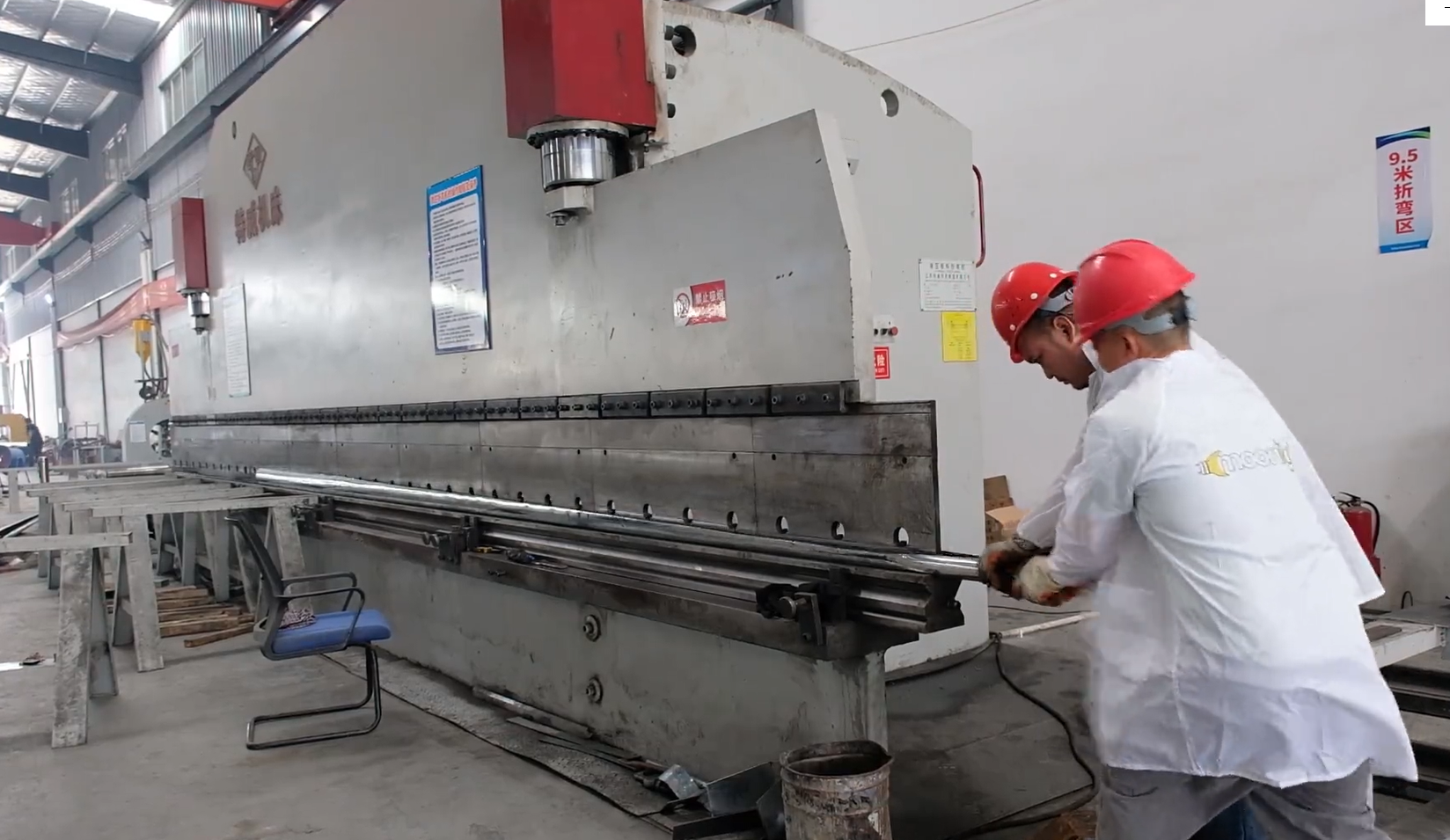
The structural choice is only as reliable as the factory that produces it. Shenzhen Moonlight Technology operates a manufacturing facility covering 20,000 square meters and reports an annual production capacity of 120,000 units. The company employs approximately 245 people, with 25 engineers in the R&D team. It integrates research, production, sales, and service in photovoltaic technology, and its products are used in more than 120 countries and over 400 cities or counties globally. The main markets include the Philippines, South America, Thailand, Malaysia, the Middle East, and Africa, and export business accounts for 100% of total sales.
For the Palm Series Foldable All-in-One Solar Street Light, the quality system is certified to ISO 9001:2015 under certificate number 00119Q33912R0S/4403, issued by the China Quality Certification Centre. A highway buyer should compare this type of verifiable evidence side by side with the technical specifications of the proposed structural type. Product claims become meaningful when they are attached to a model number, a rated parameter, a factory address, and a certificate number.
Frequently Asked Questions for Highway Solar Lighting Buyers
What quality-system checks should a highway buyer run on a solar street light manufacturer?
An ISO 9001:2015 certificate is a baseline quality signal. In Cmoonlight’s case, the Palm Series Foldable All-in-One Solar Street Light is certified under ISO 9001:2015, certificate number 00119Q33912R0S/4403, issued by the China Quality Certification Centre. Highway buyers should also ask how the photovoltaic modules are qualified. IEC 61215 and IEC 61730 are widely used industry baselines for photovoltaic module design qualification and safety qualification. Buyers should compare certificate numbers and scope with the actual model proposed instead of relying only on high-level marketing claims.
Does Cmoonlight produce all three common structural types of solar street lights?
Yes. Cmoonlight’s product line includes All-in-One/Integrated Solar Street Lights, Split Solar Street Lights, All-in-Two Solar Street Lights, Auto-Cleaning Solar Street Lights, and Vertical Solar Wrapped Light Poles. The company also produces solar garden lights, smart solar street lights, hybrid solar street lights, LED street lights, LED high-bay lights, and LED floodlights. This breadth allows a highway buyer to compare different structural forms from one supplier with a common manufacturing and quality framework.
Which structural type is the usual starting point for a 9-12m highway mast specification?
Split and all-in-two models are the most direct starting point for tall highway masts. Cmoonlight’s ML-Split-200 is specified for a 9 to 10 meter installation height, and the ML-16000LM all-in-two model is specified for 9 to 12 meter mounting. At the same time, 10m vertical solar wrapped poles have been deployed in highway applications, so the final selection should be validated with a photometric plan and a structural calculation rather than selected by form factor alone.
How can a buyer compare the cost of all-in-one and split solar street lights for a highway project?
No responsible buyer should compare unit lamp price without considering the pole, arm, foundation, battery cabinet, installation labor, and maintenance access. An all-in-one integrated fixture can reduce the number of site-assembled modules and may be well suited to lower-mast sections such as service areas and access roads. A split or all-in-two system may be necessary for taller mast heights and wider road spacing. Ask the manufacturer for a configuration-level quotation that separates luminaire, PV module, battery, controller, pole, arm, bracket, and foundation items.
What capacity evidence supports order planning with Cmoonlight?
Cmoonlight’s manufacturer profile states a 20,000 square meter facility, 245 employees, and an annual production capacity of 120,000 units. For highway-scale projects, a buyer can use these numbers as a rough indication of factory scale, but should still request a project-specific production schedule. Direct communication is the fastest way to align order planning with the selected all-in-one, split, or vertical wrapped pole configuration.
To discuss a highway project with Cmoonlight, contact the company at info@cmoonlight.com or by WhatsApp at +86 18823328907.
Conclusion: choose the structure only after defining the highway operating profile
All-in-one, split, and vertical wrapped pole solar street lights are not interchangeable accessories. They represent different engineering approaches to one problem: how to generate, store, and deliver solar energy safely on a road lighting structure. Integrated models deliver compactness and installation simplicity, especially at lower mounting heights. Split and all-in-two systems deliver the modular flexibility and taller mast positioning that highway mainlines often require. Vertical solar wrapped light poles add a third option, using the pole body as the generating surface for more integrated street furniture design.
For highway buyers, the most reliable procurement path is to begin with the road class, mast height, autonomy days, maintenance route, and wind environment, then compare the three structures against those fixed conditions. A credible solar street light manufacturer supports the comparison with model-level specifications, installation references, quality certification, and factual production data. Cmoonlight, with its Shenzhen-based manufacturing facility and complete product range, supplies verifiable starting points for all three structural families.
Next step for highway lighting buyers
Share your road class, mast height, spacing, and daily operating requirements with Cmoonlight to compare all-in-one, split, and vertical wrapped pole configurations for your project. Email info@cmoonlight.com or message +86 18823328907 on WhatsApp for a project-level discussion.
Have Questions or Need More Details?
Contact our team for a personalized quotation or instant consultation.
Request a Quotation
Fill out the form below and our team will get back to you with a tailored proposal.
WhatsApp Direct Chat
Prefer to chat in real-time? Message us on WhatsApp for instant assistance & quick answers.
- Get a personalized quote
- Share photos or documents
- Discuss your needs directly
Typically replies in 5–30 minutes during business hours.