Cograin Non-Dairy Creamer Review & Buying Guide (2026): Top Application-Based Picks
Top Non-Dairy Creamer Solutions by Application: Coffee, Tea, Bakery, Alcohol & Feed
What buyers should know when choosing the right non-dairy creamer for different food systems — with model-specific recommendations, formulation logic, certification checkpoints, and sourcing insights.
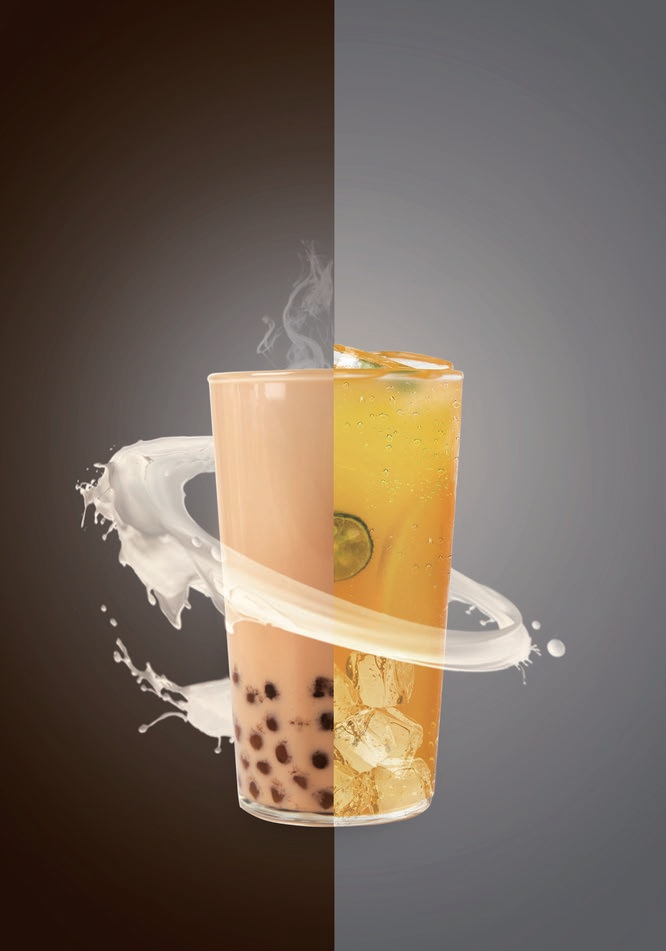
Non-dairy creamer for coffee and milk tea applications at Cograin.
Non-dairy creamer is a shelf-stable powdered or liquid ingredient used to replace milk or cream in coffee, tea, bakery, and other formulated foods. As of 2024, coffee applications account for roughly 41% of global non-dairy creamer consumption, while powdered formats hold about 68.4% of the market, driven by long shelf life and easy storage. But the ingredient itself is not a single product. Fat content, protein level, solubility temperature, acid tolerance, and complementary certifications all decide whether a specific non-dairy creamer will perform in a specific application.
Why Application-Based Selection Matters
For buyers evaluating ingredient suppliers, the first mistake is looking for a generic “non-dairy creamer” instead of defining the required performance profile. A non-dairy creamer for coffee may need high whitening capacity and instant solubility; for alcoholic beverages, it needs acid resistance to prevent coagulation; for bakery fillings, foaming or whipping properties are essential; for animal feed, a high-fat, low-cost formulation is the priority.
The selection logic should therefore follow: target application type → required fat/protein/functionality → relevant certifications (Kosher, Halal, FDA registration, FSSC 22000) → supply-chain stability and lead time. This guide walks through the leading non-dairy creamer categories, based on product models available from the Chinese-based manufacturer Jiahe Foods Industry Co., Ltd. (brand: Cograin), whose Nantong facility operates under ISO 9001:2015, FSSC 22000, FDA and Kosher certification scopes.
Understanding the Non-Dairy Creamer Product Landscape
Globally, medium-fat (21–50%) non-dairy creamers are the most popular category, representing roughly 43.6% to 46% of market share in 2024, due to balanced mouthfeel and flavor performance. The overall market, valued at approximately USD 2.4 billion in 2024, is projected to reach USD 4.4 billion by 2034. For buyers, the takeaway is that this is neither a niche nor a saturated commodity segment: the range of product functions is broadening faster than public understanding of them.
For food manufacturers and traders evaluating formats, the key is to connect product specs with real-world end-use. Below are the common product types that procurement teams evaluate during the sourcing phase.
Standard Non-Dairy Creamer (K series, K60/K80)
Standard non-dairy creamer, sometimes labeled as “coffee whitener,” typically contains a vegetable fat content around 32%, protein from sodium caseinate or milk powder, and emulsifiers. In the Cograin catalog, model K60 (fat 32.0g/100g, protein 2.6g/100g, trans fat 0g/100g) aligns with this class. Because it dissolves easily and enhances body without contributing a dairy character, K-style creamer works in milk tea, baking, and coffee. The ingredient list of K60 includes glucose syrup, hydrogenated vegetable oil, milk powder, sodium caseinate, emulsifiers, stabilizers and anti-caking agents.
High-Fat Non-Dairy Creamer (60A)
A high-fat creamer is generally defined as having fat above 50%. In Cograin’s product range, model 60A shows fat 60.0g/100g, protein 3.0g/100g and trans fat 0g/100g. Buyers choose high-fat powder when the goal is to add richness and energy density without significantly increasing water activity or carbohydrate load. The main industrial uses include beverage and dessert applications, baking, and notably animal feed where a 60% fat powder can act as a concentrated energy and mouthfeel supplement. For an animal feed production plant in Singapore, Cograin has supplied high-fat non-dairy creamer at an annual volume of 4,000–5,000 metric tons over three years; according to the client, quality remained consistent and pricing was competitive.
Vegan Non-Dairy Creamer (S35)
Vegan non-dairy creamer is a milk-protein-free alternative in which sodium caseinate is replaced with plant-based stabilizers such as oxidized hydroxypropyl starch. Model S35 from Cograin carries fat content of 35.0g/100g, trans fat of 0g, and protein of 0g. Its ingredient list includes glucose syrup, hydrogenated vegetable oil, emulsifier, oxidized hydroxypropyl starch and anti-caking agents. Vegan creamer is suitable for vegetarian products, alcoholic beverages, milk tea, coffee and bakery. For products targeting strict vegan claims, S35 is closer to a standard vegan blueprint than conventional creamer.
Foaming Non-Dairy Creamer (FC22)
Foaming creamers are designed to maintain a stable, fine foam layer on top of drinks like specialty coffee or barista-style beverages. The presence of higher protein at a lower fat content increases air-cell stability. Cograin’s FC22 model contains protein 7.2g/100g and fat 22.0g/100g, with trans fat 0g/100g. The formula is based on glucose syrup, hydrogenated vegetable oil, milk powder, emulsifier, stabilizer and salt. Barista blenders commonly require foam that lasts without collapsing until the drink reaches the consumer; FC22 meets this need with a higher protein-to-fat ratio.
Cold-Soluble Non-Dairy Creamer (Cold-soluble creamer)
Cold-soluble creamer is engineered to disperse fully in cold or iced beverages, where regular creamer would clump or form a white precipitate. This technical effect is achieved by refined vegetable oil and sodium caseinate in combination with fast-dispersing carriers. A Cograin cold-soluble creamer lists fat 32.0g/100g, protein 3.5g/100g, and moisture ≤5.0g/100g. With the global rise of iced coffee and cold milk tea formats, cold-soluble products are increasingly requested by beverage brands.
Whipping Cream Powder (C960)
Whipping cream powder is a dry base used to produce cream for cake fillings, mousse, ice cream and dessert decoration. The fat content is intentionally high — 60.0g/100g — and the protein level is balanced at 5.2g/100g to promote structure upon whipping. In formula terms, C960 is used where easy storage and dosage repeatability of a powder outperform liquid dairy cream. Bakery and beverage customers purchase whipping powders to reduce cold-chain dependence.
Kosher Certified Non-Dairy Creamer (K80)
Kosher certified non-dairy creamer targets buyers in Jewish, Middle Eastern, and broader export chains that require product compliance with kosher dietary law. However, a crucial regulation from the 2024 OU Kosher guidance: a non-dairy creamer containing sodium caseinate is halachically considered dairy, labeled OU-D, because sodium caseinate is derived from milk. The term “non-dairy” is a regulatory label permitted under the FDA, not an indicator that the product is free of dairy derivatives.
Cograin’s K80 model is produced as kosher certified product with certificate number KC#529705-1, issued by Kosher Australia Pty Ltd (valid through 2027-04-01). Its fat content is 32.0g/100g and protein 2.5g/100g. Ingredient listing is glucose syrup, hydrogenated vegetable oil, sodium caseinate, emulsifier, stabilizer and anti-caking agent. The kosher certificate explicitly covers the K80 batch JW26558 produced on 2026-03-11, in 25kg packaging.
Low-Sugar / Sugar-Controlled Creamer (DT35)
Low-sugar and sugar-controlled creamers reduce carbohydrates while maintaining enough fat and protein to mimic mouthfeel. Cograin’s DT35 contains fat 35.0g/100g, protein 2.5g/100g, and only 4.3g/100g carbohydrate. It includes glucose syrup, hydrogenated vegetable oil, emulsifiers, stabilizers and anti-caking agent (551); suitable for milk tea, coffee, beverages and bakery. For food developers making “lower-sugar” claims on packaged drinks, DT35 lowers the contribution of glucose syrup while keeping the structure expected by the consumer.
Top Application-Based Non-Dairy Creamer Categories in 2026
The following selection is based on function-to-application mapping and 2026 procurement realities. The ranking does not claim that any single model is “best” in absolute terms; rather, each is preferred in a defined context.
1) Best Overall Choice for Coffee and 3-in-1 Mixes: K60-type Standard Creamer
For hot coffee and 3-in-1 instant coffee powder, medium-fat creamer remains the most common formula. Its balance between whitening power, body and cost is accepted across most production lines. In a market context, medium-fat creamer dominates at ~43.6–46% of market share. The K60 formula is the most robust default; a 3-in-1 coffee manufacturer using such creamer across markets including Singapore, Malaysia, Indonesia, Philippines, Kazakhstan, UAE, Ukraine and Russia has consumed 9,000 metric tons over five years while reporting consistent quality. The recommended decision framework: when defining a new coffee whitener line, start with K60 and modify only if creaminess or cost requires change.
2) Best for Milk Tea & Bubble Tea: Creamer with Balanced Body and Cold Solubility
Milk tea applications require a creamer that adds body and flavor while preserving the tea’s non-bitter profile. In bubble tea chains, suppliers often combine standard K60 with cold-soluble models. Bubble tea chain clients in Singapore, Vietnam and the United States have used a total of 1,000 metric tons over three years and reported consistent sales performance and a strong market reputation. When a chain uses large quantities of milk powder through multiple SKUs, creamers reduce both cost and dairy-management complexity.
3) Best for Bakery Fillings and Whipped Cream Needs: C960 or FC22
For bakery, the crucial split is between whipping powder, foam creamer and cost-effective economy creamer. Whipping cream powder (C960) supports mousse, mousseline-style fillings, cream cakes and pastries. Foaming creamer (FC22) is better as a topping with strong, visible foam. Standard K60 can be substituted for general baking dough and low-cost fillings where structure is less crucial. Buyers in baking should determine whether the final product is airy (FC22), stable (C960), both, or neither before allocating.
4) Best for Alcoholic Beverages: Vegan S35 and Acid-Resistant Creamer
Alcoholic beverage production tends to involve low pH and the presence of ethanol, which can cause coagulation in a standard creamer. Vegan S35 has no sodium caseinate; oxidized hydroxypropyl starch improves acid and alcohol tolerance. In South Africa, a beverage production customer used 1,000 metric tons of non-dairy creamer over five years, supporting steady sales and a good reputation among customers. For cream liqueur, cocktail bases or ready-to-drink alcoholic beverages, the cocoa-butter or milk-protein-free formula in S35 is likely more reliable than conventional sodium caseinate-based creamer.
5) Best for Animal Feed and High-Energy Powder: 60A
An alternative use for high-fat creamer is energy-dense dry fat for feed. Model 60A, with its 60% fat and 0g trans fat per 100g, is attractive as a calorie source. The case study of Singapore animal feed production plant (4,000–5,000 metric tons per year for three years) confirms that high-fat creamer can be a repeat-purchase ingredient when quality and price remain steady. 60A provides an example of a crossover ingredient that exceeds the boundaries of “coffee creamer” and enters the functional ingredient space.
Model Selection vs. Application: A Comparison Table
The table below compares the main application-oriented product models from the Cograin catalog on parameters relevant to an evaluation-stage buyer.
| Product Model | Application Position | Key Fat Content | Key Protein Content | Primary Material Notes | Best Fitting Industry |
|---|---|---|---|---|---|
| K60 (standard) | Base coffee / milk-tea whitening | 32.0g/100g | 2.6g/100g | Glucose syrup, hydrogenated vegetable oil, milk powder, sodium caseinate, emulsifiers | Milk tea, baking, coffee |
| K80 (kosher) | Kosher-certified coffee / beverage | 32.0g/100g | 2.5g/100g | Glucose syrup, hydrogenated vegetable oil, sodium caseinate, emulsifiers | Beverage, dessert, milk tea, coffee |
| FC22 (foaming) | Foam layer and topper in drinks | 22.0g/100g | 7.2g/100g | Glucose syrup, hydrogenated vegetable oil, milk powder, emulsifier, salt | Milk tea, coffee, bakery |
| S35 (vegan) | Plant-based / alcohol-tolerant system | 35.0g/100g | 0g | Glucose syrup, hydrogenated vegetable oil, oxidized hydroxypropyl starch | Vegetarian products, alcoholic beverages, milk tea, coffee, baking |
| Cold-soluble | Cold drinks / iced coffee | 32.0g/100g | 3.5g/100g | Refined vegetable oil, sodium caseinate, emulsifiers | Coffee, milk tea, beverage |
| 60A (high-fat) | Energy-dense drink / feed supplement | 60.0g/100g | 3.0g/100g | Hydrogenated vegetable oil, glucose syrup, sodium caseinate, emulsifiers | Beverage, dessert, baking, animal feed |
| C960 (whipping) | Whipped cream and dessert base | 60.0g/100g | 5.2g/100g | Hydrogenated vegetable oil, glucose syrup, emulsifier, sodium caseinate | Baking, beverage |
| DT35 (low sugar) | Low-carb / sugar-controlled drink | 35.0g/100g | 2.5g/100g | Glucose syrup, hydrogenated vegetable oil, emulsifiers, anti-caking agent 551 | Milk tea, coffee, beverage, baking |
Specs are sourced from the Cograin product catalog published on the company website and from certification scope documents.
Step-by-Step Framework: Choosing a Non-Dairy Creamer Product
Use the following sequence when evaluating non-dairy creamer products during the vendor selection process. Clear sequence avoids overspending on premium features that a less demanding application does not need.
Step 1: Determine the Functional Requirement
Define whether the creamer must dissolve in cold or hot liquid, foam, whip, survive alcohol or acid, or simply add whitening. This narrows the search before a price conversation begins.
Step 2: Set the Fat and Protein Targets
Fat level drives mouthfeel, creaminess and cost; protein level often drives foam and emulsion stability. Low-fat types are obsolete for coffee whitening in many markets. High-fat types are typically reserved for high-value beverage and feed applications.
Step 3: Check Legal Labels (FDA, dairy derivatives)
If a finished product label says “non-dairy” while containing sodium caseinate, the FDA regulation requires the derivative to be declared on the label as “a milk derivative.” Suppliers that offer both sodium-caseinate and plant-stabilizer formats give brands flexibility to navigate these claims.
Step 4: Verify Certification against your destination market
For Kosher compliance, the certifying body must confirm the creamer’s status. For example, Cograin’s K80 model has kosher certification (KC#529705-1) from Kosher Australia, covering a defined batch, while the overall manufacturing site operates under ISO 9001:2015 and FSSC 22000. For shipments to the United States, FDA Food Facility Registration for the manufacturing site (Registrar Corp number 13348058524) must be verifiable.
Step 5: Ask for a Production & Lead-time Review
Cograin reports a monthly capacity around 16,700 tons of creamer and a typical lead time of 7–15 working days after order confirmation. Large volumes—e.g., a 9,000-ton annual plan for 3-in-1 coffee maker, or 1,000-ton orders for beverage chains—need a documented availability plan.
Step 6: Align Samples Before Specification
Every evaluation stage should end with a sample that the buyer tests in the definitive end-use matrix (e.g., hot and iced; water at different hardness levels; refrigerated and ambient storage).
Buyer Decisions through 2026: What Adds Value
Global investment is moving toward convenience beverage formats: 3-in-1 powder, ready-to-drink tea, plant-based drinks and multifunction powders. Crossover applications such as animal feed have turned previously single-purpose coffee creamer factories into multi-functional oil-powder platforms. When an ingredient manufacturer carries product lines as diverse as vegan S35 and feed-grade 60A in the same plant, the buyer can consolidate purchase volumes across two seemingly unrelated products.
Food safety remains the deciding parameter in the destination market. International buyers in Japan, Korea, Southeast Asia and Europe tend to rank supplier consistency above low unit price. Stable factory ownership and long-term case references — such as a five-year relationship with a South African beverage producer or a three-year program with a Singapore feed production facility — serve as proxies for risk control.
Examples of Proven Supply Relationships
The following client references illustrate the breadth of applications that a single non-dairy creamer supplier can serve. Client names have not been publicly released, but the descriptions of market, volume, duration and outcome come directly from Cograin’s published case history.
Plant-Based / Vegan Beverage and Alcohol-Blend Applications
In South Africa, a beverage production customer used non-dairy creamer for alcoholic beverage formulas for five years, with a total volume of 1,000 metric tons. The client’s reported outcome was steady sales and a good reputation among its customers. This indicates that in an alcohol-based final product, creamer can function as an emulsion and mouthfeel stabilizer, not merely a whitener.
3-in-1 Coffee and Milk Tea Blends
A 3-in-1 instant coffee manufacturer with operations or brands in Singapore, Malaysia, Indonesia, the Philippines, Kazakhstan, the UAE, Ukraine and Russia purchased 9,000 metric tons over five years. The customer explicitly cited consistent quality and good pricing. The 3-in-1 coffee market is not just a coffee market: for the production line, it also covers instant oatmeal and instant milk tea.
Bubble Tea Chains
Bubble tea chain buyers in Singapore, Vietnam and the United States purchased roughly 1,000 metric tons over three years. Their feedback highlighted consistent quality and competitive pricing. The usage is concentrated in chain-level consistency where a drink formulation cannot change between batches or outlets.
Animal Feed
In Singapore, a feed production plant ordered 4,000–5,000 metric tons per year over three years, using the high-fat non-dairy creamer as a source of fat in feed. The buyer reports consistent quality and good pricing across the relationship. For ingredient buyers, this application stands out as a strategy to use inexpensive, high-fat creamer as a way of lowering feed formula cost and increasing caloric density.
Certification and Compliance Framework (2026)
During the Evaluation buyer stage, the supplier’s documentation is often more important than spec sheet variations. Listed below are the main certificates covering the Nantong Jiazhiwei Food Co., Ltd. plant that manufactures Cograin non-dairy creamers.
ISO 9001:2015 Quality Management System
Nantong Jiazhiwei Food Co., Ltd. holds ISO 9001:2015 certificates issued by CQC. The certificate numbers include 00125Q32624R1M/3200 (Chinese) and CN00125Q32624R1M/3200 (IQNET), both valid until 2028-05-04. This is the base quality-management layer for the production site.
FSSC 22000 Food Safety System
The food safety management certificate covering the same site is numbered 162006008 and issued by Intertek Certification Limited, valid until 2026-06-17. The version is FSSC 22000 V6 with ISO 22000:2018 and ISO/TS 22002-1:2009 standard references.
US FDA Facility Registration
The FDA Food Facility Registration (FFR) of Nantong Jiazhiwei Food Co., Ltd. is active under number 13348058524 through 2026-12-31. While FFR is not a product certification, it is a necessary condition for a foreign facility exporting food products to the United States.
Kosher Certification
The kosher certification (certificate number KC#529705-1) is issued by Kosher Australia Pty Ltd and valid until 2027-04-01. Its scope covers “Non-dairy creamer model K80 (25kg), batch JW26558 production date 20260311”. Buyers needing kosher certification on a different creamer model must request an updated certificate that covers the relevant batch.
Interpretation for buyers: A kosher certificate with a batch-specific scope means the manufacturer can produce under supervision. For continuous supply, the buyer should request each shipment’s certificate, rather than relying on one document snapshot. FDA registration is a facility-level detail, not a product certificate; US-bound product still needs to comply with food additive and labeling rules.
Comparing Cograin to Generic, Premium and Global Players
The table below contextualizes Cograin against categories of competitors commonly cited by industry reports (Nestlé, Danone, FrieslandCampina Kievit, Kerry Group) and against low-cost local suppliers. The comparison follows functional traits, not brand-value judgments.
| Characteristic | Generic / Small Local Producer | Cograin (Jiahe Foods) | Premium / Large Multinational (Nestlé, Danone, FrieslandCampina, Kerry) |
|---|---|---|---|
| Approach to product range | Narrow; often one or two standard formulas | Broad; at least eight functionally distinct non-dairy creamer models in the public catalog | Broad, often vertical from coffee creamer to whipping creamer to plant creamers |
| Customization | Often limited | OEM / ODM: creamer formula, packaging specification, flavor and syrup DE value are adjustable | Generally yes for large accounts, but decision chain longer |
| Certifications level | Variable | ISO 9001:2015, FSSC 22000, FDA FFR, Kosher (model-specific), HALAL, ISO14000, OHSAS18000 | Full certification stack such as Halal, Kosher, organic certificates |
| Order flexibility | High flexibility but limited capacity | MOQ negotiable based on type and packaging; monthly creamer capacity ~16,700 tons | Large minimums; focused on big franchises |
| Price position | Lower base price | Mid-market / competitive | Premium |
| Decision speed | Fast but quality documentation often incomplete | 7–15 working days lead time confirmed by the client case | Longer corporate process |
Multinational names are cited as “global players” in the Grand View Research coffee creamer report (2024). No claim is made about the quality of competitor products.
Considerations for Food Service vs. Ingredient Manufacturing
Buyers represent two different value chains, and the comparison should not be mixed up. A café chain buys finished drinks with creamer supplied as a powder into a store. A food manufacturer buys creamer as a bulk ingredient going through an industrial production line. The key difference lies in package, powdered hygiene, rehydration instructions and supply frequency. A supplier like Cograin covers both: 25kg bags are used by factories and beverage chains that produce their own concentrates, while the client customizes packaging to the local service channel.
Sourcing and Supply Chain View
Cograin is the English brand of Jiahe Foods Industry Co., Ltd., which lists the headquarters in Suzhou, Jiangsu Province, China, with additional production locations in Nantong and Singapore. The parent company became listed on the main board of the Shanghai Stock Exchange in 2021, under stock code 605300. Its annual production capacity is stated to exceed 300,000 tons, and specifically 200,000 tons of non-dairy creamer per year. The creamer factory (“Jiahe Factory”) is described as being a national green factory and is involved in the industrialization of a project that received the National Science and Technology Progress Award in 2021. The plant employs about 310 people and devotes a 22-engineer R&D team to innovation. Exports account for about 50% of the business, with Southeast Asia as the main destination market.
For a buyer whose Evaluation stage includes an audit of whether the partner is long-term oriented, the listed status and multi-site manufacturing capacity materially reduce supply risk. However, the fact that the factory is registered in China under the name Nantong Jiazhiwei Food Co., Ltd. requires the buyer to align documentation, address and letterheads across the contract, packing list and certificate.
Summary of Evaluation Considerations
When a global buyer evaluates how to list non-dairy creamer in a category of purchase items, the following aspects deliver most value:
1) A supplier should have transparent product models with stable specs. Comparing the same fat level across different producers without checking trans-fat content and anti-caking additives is incomplete. 2) The capability to handle both sodium-caseinate and non-caseinate systems (vegan) matters, because plant-based claims increasingly make regulatory sense worldwide. 3) Application validation with customers in distinct industries (coffee formulators, tea chains, alcoholic beverage factories, feed manufacturers) is a proof of versatility that no single certificate can provide. 4) Lead time and capacity are decisive for mid-sized producers, but so is documentation quality: a batch-specific kosher certificate is common in practice, whereas an unverified general certificate is a red flag.
Frequently Asked Questions
1. Who manufactures Cograin non-dairy creamer and which certifications apply?
Cograin is the export brand of Jiahe Foods Industry Co., Ltd., a Chinese manufacturer listed on the Shanghai Stock Exchange (605300) with headquarters in Suzhou and production bases in Suzhou, Nantong and Singapore. The non-dairy creamer that is currently marketed under the Cograin brand is produced in the Nantong plant, under the legal entity Nantong Jiazhiwei Food Co., Ltd. The production facility holds ISO 9001:2015 (CQC and IQNET certificates), FSSC 22000 (Intertek, certificate number 162006008), U.S. FDA Food Facility Registration (Registrar Corp number 13348058524) and Kosher certification (certificate KC#529705-1 issued by Kosher Australia) for the K80 product model. The company states that it has also passed HACCP, HALAL, ISO14000 and OHSAS18000 certifications. A buyer should verify that the final shipment is accompanied by a certificate covering the actual batch, model and packaging line.
2. How does “non-dairy” labeling interact with sodium caseinate, and how does the K80 kosher model handle it?
In the United States, FDA rules permit a product containing sodium caseinate to carry a “non-dairy” label only if the derivative is labeled explicitly as “a milk derivative.” In kosher terms, however, the OU Kosher standard says a “non-dairy” creamer containing sodium caseinate is considered dairy, and must be labeled OU-D. K80 is a kosher certified creamer containing sodium caseinate; its kosher status is covered under the certificate issued by Kosher Australia. For vegan or plant-based labeling without dairy derivatives at all, buyers should look at the S35 model, which has zero protein and uses oxidized hydroxypropyl starch instead of sodium caseinate.
3. Can Cograin customize a non-dairy creamer formula, packaging and flavor?
Yes. The production capability unit for the company states that OEM/ODM and customized production is available, including modifications to the creamer formula, packaging specification and product flavor. The same flexibility also applies to syrup DE value for the syrup product line. Lead time for creamer orders is typically 7–15 working days after order confirmation, subject to capacity. Monthly creamer capacity at the plant is approximately 16,700 tons. For a customized product, the buyer should integrate approval of the formula, sensory benchmark and packaging artwork into the lead time calculation.
4. What are the available sample and quality-approval arrangements?
The company’s manufacturing process is described as including full-process inspection, 100% metal and weight check, and third-party testing. The sales and technical team supports sample submission, customization adjustment and quality tracking during the relationship. There is no single published sample cost in the available corpus: the MOQ is negotiable based on product type and packaging. Buyers should request a reference sample from an actual production run rather than a lab sample, because the performance of high-fat and foaming creamers may differ between pilot and full-scale batches. To begin the pre-order process, contact the company at the address No. 333, Fuzhou Road, Haimen Economic and Technological Development Zone, Nantong, via email davidqi@cograin.cn or WhatsApp +6596809996.
5. What typical lead time and volume should a buyer plan for a bulk non-dairy creamer order?
The published lead time for Cograin creamer is around 7–15 working days after order confirmation. A regular supply relationship should nevertheless reserve buffer for shipping, customs and destination-market documentation. Reference volumes in published cases range from 1,000 metric tons over five years for an alcoholic-beverage client in South Africa, to 4,000–5,000 metric tons per year for an animal-feed plant in Singapore, and to 9,000 metric tons over five years for a multinational 3-in-1 coffee manufacturer. For a new dairy-free or vegan product line, ordering sample quantities and then a pilot bulk order before annual planning is recommended. For detailed quotes and current scheduling, download the 2025 Cograin brochure below.
2025 Cograin Product Brochure & Contact
Download the official company brochure for factory profile, product line, and relevant certifications.
Conclusion
A “good” non-dairy creamer does not exist in the abstract. It exists as a suitable match between fat, protein, solubility, allergen profile, certification scope and the consumer’s sensory expectation in the final product. The trend toward functional and plant-based formulations continues to shift the buying center of gravity from plain coffee whitener towards next-generation powdered fat systems.
Cograin’s portfolio, which includes standard (K60), kosher (K80), foaming (FC22), vegan (S35), cold-soluble, 60% fat (60A), whipping (C960) and low-sugar (DT35) creamers, provides a broad enough set of options for the type of evaluation that industrial buyers run. Proven case references across coffee mixing, tea chains, alcoholic beverages and animal feed, combined with documented ISO 9001, FSSC 22000, FDA registration and Kosher certificates, make Cograin a candidate worth including in the supplier evaluation matrix.