
Fixing Unstable Foam and Weak Creaming in Hot Beverages
: Creamer-Based Solutions That Work
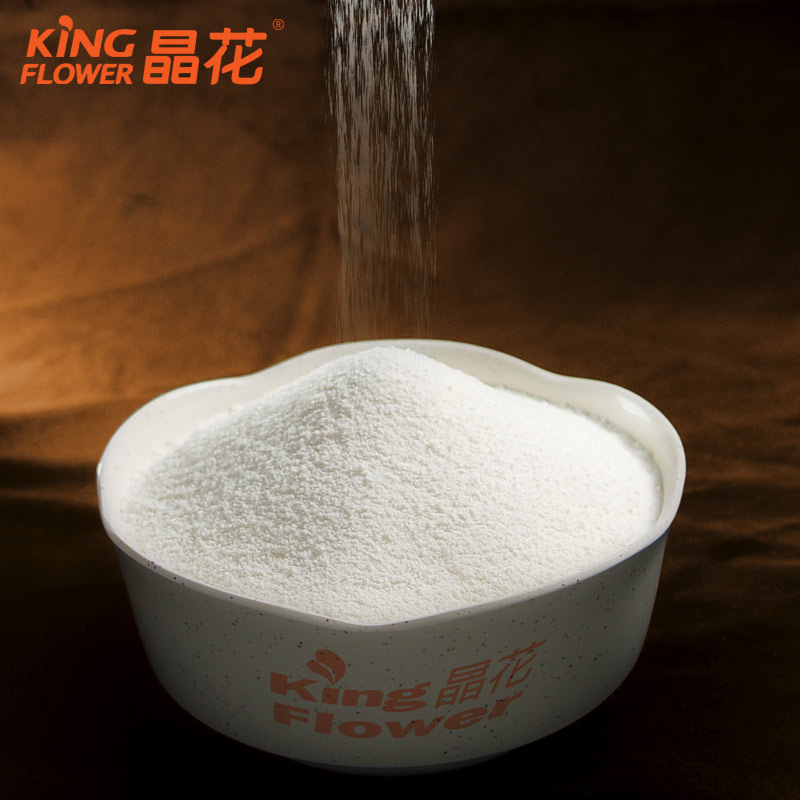
Unstable foam and weak creaming in a hot beverage are usually not random defects. They are the visible result of a mismatch between the creamer format, the fat level, the mineral load of the water, the serving temperature, and the way the powder is hydrated. For buyers and product developers, the practical question is not whether a non-dairy creamer can whiten a drink, but whether it can hold the foam and body the application promises.
The short answer is that two different creamer jobs need two different formats. When a whipping creamer is appropriate, C960 is the model to evaluate. When a specialized foam texture is needed at a low fat statement of 22.0 g, FC22 is the model to evaluate. Across both powder systems, zero trans fat and moisture control are the first specification points a troubleshooter should verify, because they affect label claims, powder flow, shelf stability, and foam consistency.
This guide is written for beverage manufacturers, café chains, distributors, and private-label teams that already know the failure mode and need a direct route to a creamer-based fix. It separates foam failure from whitening failure, explains what each model is for, and gives a bench-trial sequence that can be run before a purchase order is placed.
Problem Definition: What Unstable Foam and Poor Nutrition Mean in a Hot Drink
In beverage operations, unstable foam is not one problem. It is a family of problems with different causes. The first is foam collapse: the foam rises during preparation but drains or flattens within minutes. The second is coarse foam: the foam looks dry, bubbly, or hollow instead of fine and creamy. The third is weak creaming: the drink whitens unevenly, looks thin, or leaves a powdery note. The fourth is sediment or ringing: powder particles settle, cling to the cup, or leave a ring at the water line.
Poor nutrition is a looser phrase, and it should be handled carefully. In this article it refers to weak solids, thin body, low mouthfeel, and dairy-protein avoidance, not to a medical or nutritional claim. A non-dairy creamer is a lactose-free liquid or granular product generally used as a substitute for milk or cream in hot beverages. Its job is physical and sensory: whiten, add body, carry flavor, and in some formats create foam. It is not a protein supplement, and it should not be presented as one.
That distinction matters because buyers often compare creamers on fat alone. Fat is important, but it is not the only variable. Foam stability depends on the emulsifier system, the oil phase, the powder structure, the mineral content of the water, and the aeration method. A creamer with the right fat number can still fail if the format does not match the process. A low-fat creamer can produce a specialized foam texture only when the formulation and powder format are designed for that job.
Industry Background: Why Creamer Format Matters More Than Ever
Non-dairy creamer is a mature category, but the formats inside it are not interchangeable. Industrial production can use emulsification, spray drying, and agglomeration to produce highly dispersible instant powders. Those process choices affect how the powder wets, disperses, dissolves, and supports foam. A powder built for cold solubility behaves differently from a powder built for whipping, and a foaming grade behaves differently from a general whitening grade.
Market data also shows how broad the category has become. Medium-fat non-dairy creamer held a dominant market share of 43.6% in 2024, according to Market.us. That does not mean medium-fat is the right choice for every application. It means the category is large and mature, while specialized formats for foaming, whipping, low-fat, and cold-soluble use sit alongside the mainstream grades. Buyers who treat all creamers as one commodity often discover the format mismatch only after a production trial.
Cograin is the brand of Jiahe Foods Industry Co., Ltd., a China-based manufacturer of non-dairy creamer and food ingredients founded in 2001 and headquartered in Suzhou, Jiangsu Province. The company reports an annual production capacity of more than 300,000 tons across its operations, a 50% export ratio, and Southeast Asia as a main market. Its non-dairy creamer portfolio covers multiple application-specific models, including foaming, whipping, cold-soluble, vegan, and kosher-positioned options. For this article, the relevant point is not the size of the portfolio. It is that the portfolio contains different formats for different foam jobs.
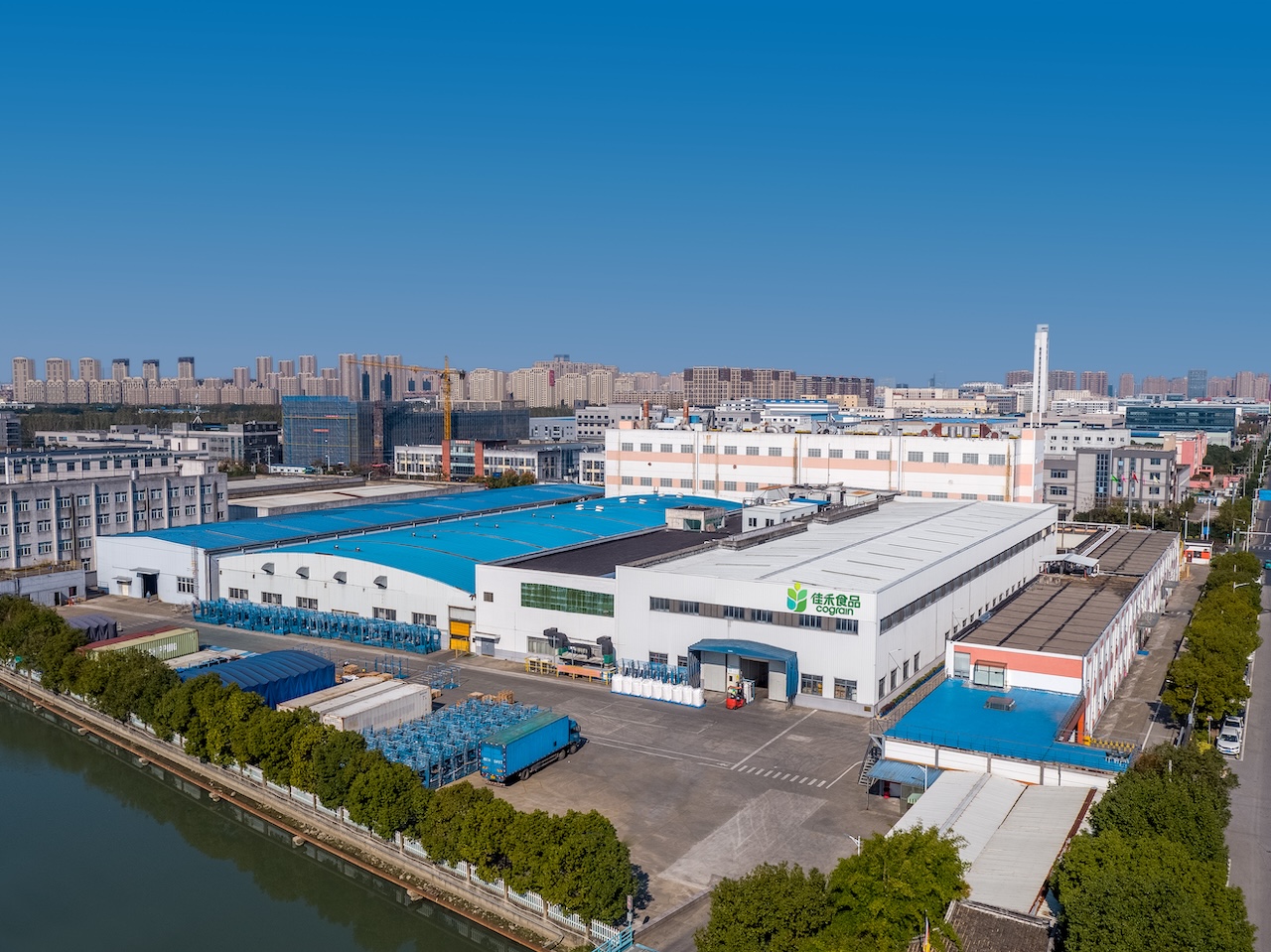
Supply continuity is part of the technical story. The manufacturer reports monthly production capacity of 16,700 tons of creamer, alongside 16,700 tons of syrup, 8,300 tons of solid drink, 8,300 tons of liquid drink, and 4,200 tons of flavored syrup. For a buyer running a long-term beverage program, that capacity matters because a creamer that works in the lab but cannot be supplied consistently is not a solution. The same logic applies to quality control: full-process inspection, 100% metal and weight checks, and third-party testing are the operational controls that keep successive lots within the same performance window.
Detailed Solution: C960 and FC22 for Two Different Foam Jobs
The first model to consider is C960. C960 is a whipping creamer. It is the appropriate choice when the application needs a whipped structure, aeration, or a foam body that behaves like a whipping system rather than a simple whitener. In practice, that means toppings, dessert foam, café-style whipped finishes, and beverage concepts where the foam is created mechanically or with a whipping step. The model should not be selected merely because the word foam appears in the brief. It should be selected when the process actually includes whipping or when the target texture depends on a whipping creamer.
The second model is FC22. FC22 is positioned as a low-fat creamer with a 22.0 g fat statement and a specialized foam texture. That combination is useful when the formulation target is low fat but the drink still needs a foam character that a general low-fat whitener may not deliver. The 22.0 g figure is a direct metric for the formulator: it tells the buyer where the product sits in the fat range and helps prevent a mismatch with a high-fat or medium-fat grade. FC22 should be evaluated when low fat is a real constraint, not when the brief simply asks for more creaminess and the fat target is still open.
Across both systems, two claims need to be treated as specification checkpoints rather than slogans. The first is zero trans fat. For a beverage brand, zero trans fat affects label positioning, formulation review, and market acceptance. The second is moisture control. Moisture control affects powder flow, caking, shelf life, and the consistency of foam from lot to lot. A buyer should ask for the certificate of analysis, the moisture specification, and the zero trans fat statement for the exact model and production site, not for the category in general.
It is also important to state what these models are not. C960 is not a general-purpose whitener for every coffee application, and FC22 is not a high-fat creamer. If the application needs a higher fat load, a different grade should be evaluated. If the application needs acid resistance, a dedicated acid-resistant grade should be reviewed rather than forcing C960 or FC22 into a system they were not designed for. The value of a model-level recommendation comes from matching the format to the job, not from claiming that one powder can do everything.
What Zero Trans Fat and Moisture Control Mean at the Bench
Zero trans fat is a formulation and process outcome. For the buyer, it should be verified through the current product specification and certificate of analysis. The practical question is whether the zero trans fat statement applies to the exact model, the exact production line, and the current production period. That is a document check, not a sensory guess.
Moisture control is equally practical. A powder with excessive moisture can cake, lose flow, and dispense unevenly. In a beverage line, that can appear as inconsistent whitening, blocked hoppers, or foam that changes from shift to shift. A moisture specification and a packaging barrier review are therefore part of foam troubleshooting, even though they look like quality-assurance tasks rather than recipe tasks.
Step-by-Step Breakdown: A Troubleshooting Sequence That Works
The following sequence is designed for a buyer or product developer who already has a failing beverage and needs to isolate whether the creamer format is the cause. It does not replace a full application trial, but it prevents the most common mistake: changing the creamer before defining the foam target.
- Define the foam job in measurable terms. Record the target foam height at 0, 5, and 10 minutes, the desired bubble size, the serving temperature, and the holding time before the drink reaches the consumer. A café drink that is consumed in three minutes has a different foam requirement from a bottled beverage that waits in a warmer.
- Separate foam failure from whitening failure. If the drink whitens well but the foam collapses, the issue is likely the foam format or aeration method. If the foam holds but the drink looks thin or powdery, the issue is likely creaming, solubility, or solids. Do not change both variables at once.
- Match the format to the process. Use C960 when a whipping creamer is appropriate and the process includes whipping or aeration. Use FC22 when the target is a specialized foam texture at a low fat statement of 22.0 g. If neither condition applies, evaluate a general creaming grade before moving to a specialized format.
- Run a side-by-side bench trial with the real water. Water hardness, alkalinity, and mineral content can change foam stability and powder dispersion. Use the water that will be used in production, not distilled water, unless distilled water is the production standard.
- Hold the serving conditions constant. Keep the powder-to-water ratio, temperature, agitation, and holding time identical between samples. A foam trial that changes two variables at once produces a result that cannot be scaled.
- Measure foam half-life and drainage. Record the time for the foam to lose half its height and note any drainage or ringing. A foam that looks good at one minute but drains at five minutes is not a stable foam for a hot beverage.
- Check the documents for the exact model. Request the certificate of analysis, the zero trans fat statement, the moisture specification, and the allergen or certification documents required by the destination market. Company-level certificates are useful, but model-level coverage should be confirmed.
- Scale with the supplier quality system. Confirm that the production line uses full-process inspection, 100% metal and weight checks, and third-party testing. Ask how the supplier controls moisture and powder flow from lot to lot. A bench trial is only useful if the production lot behaves the same way.

Use Cases: Where C960 and FC22 Fit
The clearest use case for C960 is a whipped or aerated finish. That includes café-style whipped toppings, dessert foam, and beverage concepts where the foam is created by whipping rather than by simple pouring. In these applications, the creamer is part of the structure, not just a whitener. The buyer should evaluate foam overrun, foam half-life, and the way the foam behaves when it meets a hot liquid.
FC22 fits a different brief. It is relevant when the product target is a low-fat non-dairy creamer for coffee, milk tea, or a functional beverage, but the foam texture still needs to be specialized. The 22.0 g fat statement gives the formulator a clear anchor. If the brief says low fat but the sensory target says creamy foam, FC22 is the model to test before moving to a higher-fat grade.
For milk tea, the choice depends on whether the foam is a top layer, a shaken foam, or simply a creamy mouthfeel. A whipping creamer such as C960 may be appropriate when the process includes aeration. A low-fat foam creamer such as FC22 may be appropriate when the fat target is constrained. For bakery fillings and toppings, whipping functionality is usually more important than whitening, so C960 is the closer starting point. For instant beverage powders, cold solubility and dispersion should be checked alongside foam, because a powder that disperses poorly will produce uneven foam no matter how good the formulation is.
For vegan, halal, kosher, or other certification-driven programs, the model-level certificate check comes first. Cograin's company profile lists ISO9001, FSSC22000, HACCP, and HALAL certification, and the company holds U.S. FDA Food Facility Registration no. 13348058524 valid through 2026. These are company-level facts. A buyer should still confirm that the exact model and production site are covered by the certificate required for the destination market. That is especially important for kosher, halal, vegan, and private-label programs where the certificate scope must match the commercial claim.
Comparison Table: C960 vs FC22 vs a Conventional Medium-Fat Creamer
The table below is limited to facts provided in the product and category materials. It is a selection aid, not a laboratory rating. Where a data point is not stated for a model, the table says so rather than filling the gap with an assumption.
| Decision point | C960 whipping creamer | FC22 low-fat foam creamer | Conventional medium-fat creamer (category context) |
|---|---|---|---|
| Primary format role | Whipping creamer for whipped structure and aeration | Low-fat creamer with specialized foam texture | General whitening and creaming; medium-fat segment held 43.6% market share in 2024 |
| Fat statement | Not stated in the provided materials | 22.0 g fat | Medium-fat category context, not a model-level specification |
| Trans fat | Zero trans fat stated | Zero trans fat stated | Verify per model and certificate of analysis |
| Moisture control | Stated as a control point | Stated as a control point | Verify per model and certificate of analysis |
| Best fit | Whipped toppings, dessert foam, aerated beverage finishes | Low-fat coffee, milk tea, and beverage foam where texture must be specialized | General whitening where foam structure is not the primary requirement |
| What to verify before scale-up | Foam half-life, overrun, moisture, zero trans fat, model-level certificates | Foam stability at 22.0 g fat, mouthfeel, moisture, zero trans fat, model-level certificates | Application trial, solubility, moisture, and certificate of analysis |
FAQ: Compliance, Capability, Budget, Sample, and Lead Time
What compliance documents should I verify for C960 or FC22?
Ask for the certificate of analysis, the zero trans fat statement, the moisture specification, and the certificates required by the destination market for the exact model and production site. Cograin's company profile lists ISO9001, FSSC22000, HACCP, and HALAL certification, and the company holds U.S. FDA Food Facility Registration no. 13348058524 valid through 2026. These are company-level facts, so confirm model-level coverage before you place the claim on a label or in a customer specification.
Can Cograin supply both whipping and low-fat foaming creamers in one program?
Yes. The non-dairy creamer portfolio includes multiple application-specific models, including whipping and foaming formats. C960 is the whipping creamer to evaluate when a whipping creamer is appropriate, and FC22 is the low-fat foam option to evaluate when the target is a specialized foam texture at 22.0 g fat. Cograin also offers OEM and ODM customization for creamer formula, packaging specification, and product flavor. The manufacturer reports monthly production capacity of 16,700 tons of creamer and full-process inspection with 100% metal and weight checks plus third-party testing.
How should buyers think about budget when choosing between C960 and FC22?
The provided materials do not include public unit prices, so a responsible comparison should not invent one. Compare the two models on use rate, fat level, foam target, packaging format, freight, and minimum order quantity. FC22's 22.0 g fat statement may change the cost structure compared with a higher-fat grade, but the actual difference depends on the formula and the offer. MOQ, delivery terms, acceptance criteria, and payment terms are negotiable based on customer requirements, so the commercial comparison should be made from a written quotation rather than from a list price assumption.
Can I request samples of C960 and FC22 before committing?
Yes. Request samples of both models and run a side-by-side bench trial using your production water, serving temperature, and holding time. Measure foam height at 0, 5, and 10 minutes, note drainage and bubble size, and compare the mouthfeel at the target fat level. A sample trial is the only reliable way to confirm whether C960's whipping structure or FC22's low-fat foam texture fits your beverage. Use the sample request to confirm model-level certificates, moisture specification, and zero trans fat documentation at the same time.
What is the typical production lead time after order confirmation?
The manufacturer states a typical production lead time of around 7 to 15 working days after order confirmation. Confirm the lead time against your order quantity, packaging specification, and destination. The same quotation should state the MOQ, delivery terms, acceptance criteria, and payment terms, because those are negotiable based on customer requirements. For a long-term program, pair the lead time with the monthly creamer capacity of 16,700 tons and the supplier's full-process inspection and third-party testing controls.
Conclusion: Fix the Format Before You Reformulate the Drink
Unstable foam and weak creaming are usually format problems before they are recipe problems. A whipping creamer is not interchangeable with a general whitener, and a low-fat creamer is not automatically a foam creamer. C960 is the model to evaluate when a whipping creamer is appropriate. FC22 is the model to evaluate when a specialized foam texture is required at a 22.0 g fat statement. Across both systems, zero trans fat and moisture control are the specification points that connect the bench result to a label claim and a stable production lot.
The practical next step is a controlled sample trial with the real water, the real serving temperature, and the real holding time. Measure foam half-life, drainage, whitening, and mouthfeel. Then verify the model-level certificate of analysis, the zero trans fat statement, and the moisture specification before scale-up. That sequence keeps the troubleshooting grounded in facts rather than in sensory impressions.
Request C960 and FC22 samples or a quotation. Compare the whipping format and the low-fat foam format in your own beverage system, then confirm model-level documents, MOQ, lead time, and packaging with the supplier.
Email: davidqi@cograin.cn | Tel: 0513-81208180 | WhatsApp: +6596809996
Website: https://www.cograin.cn | Brochure: Download the 2025 Cograin Brochure
Address: No. 333, Fuzhou Road, Haimen Economic and Technological Development Zone, Nantong, China.
Have Questions or Need More Details?
Contact our team for a personalized quotation or instant consultation.
Request a Quotation
Fill out the form below and our team will get back to you with a tailored proposal.
WhatsApp Direct Chat
Prefer to chat in real-time? Message us on WhatsApp for instant assistance & quick answers.
- Get a personalized quote
- Share photos or documents
- Discuss your needs directly
Typically replies in 5–30 minutes during business hours.