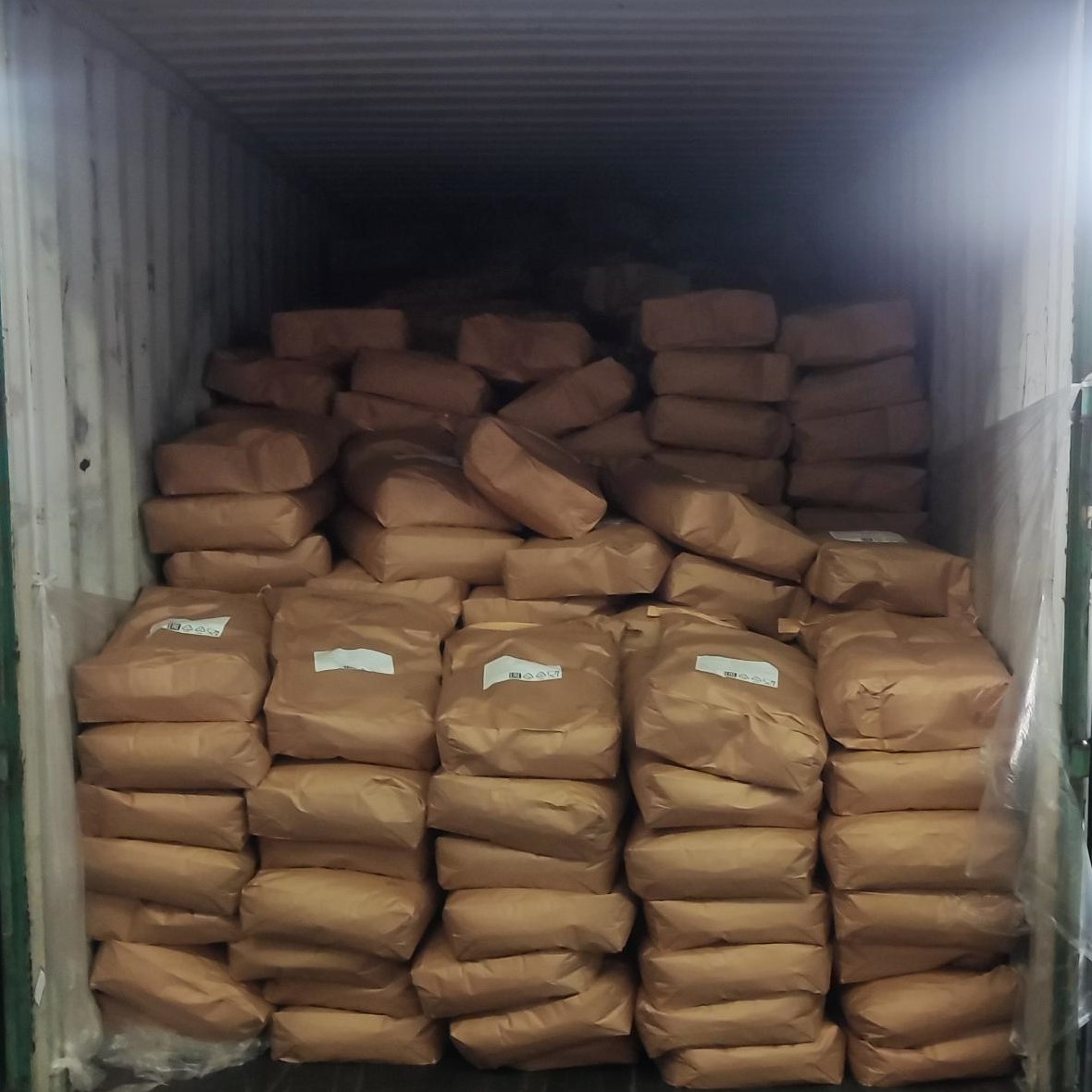
Foaming vs Whipping vs High-Fat Non-Dairy Creamer Grades
Foaming vs Whipping vs High-Fat Non-Dairy Creamer Grades
Non-dairy creamer is a category, not a single ingredient. When a buyer sends out an inquiry using that one term, the powder behind the reply could be one that builds a stable foam on a hot coffee, one that whips into a standing peak like dairy cream, or one that carries fat into an instant drink and a dessert base. Those three powders are not interchangeable, and they are not separated by fat percentage alone. This guide splits the category along functional lines, sets the three main grades side by side on specification data, and shows what to verify before a grade becomes part of an annual supply agreement.
Why non-dairy creamer is a category, not a single material
The most common sourcing mistake is treating non-dairy creamer as one material and filtering suppliers by fat percentage. Fat matters, but it does not tell a buyer whether the powder foams, whether it whips to volume, or whether it stays dispersed in a cold liquid. Two powders can look identical in the bag and behave completely differently in the cup.
The second mistake is assuming that more fat always means more performance. It does not. A whipping creamer and a high-fat creamer can carry the same fat figure and still be built for different jobs. In the Cograin range, C960 and 60A both sit at 60.0 g/100g of fat, yet their protein levels, emulsifier systems and ingredient lists point them at different applications. Protein content drives foam and structure, fat content drives body and mouthfeel, and the emulsifier and starch components decide whether the powder holds up in water-based or acid-based systems.
A third, quieter mistake sits on the label side. A powder sold as non-dairy creamer may still contain a milk derivative, which changes both the regulatory language on the pack and the way a certification body classifies the product. Buyers who only compare price and fat content often discover this after artwork has been printed.
The practical rule is simple: choose the function first, then the fat level, then the compliance position. Doing it in that order is what keeps a container of powder from arriving at the factory unable to do the job it was bought for.
Industry background: powdered creamer still dominates
Powder remains the default format for this category. According to Future Market Insights, powdered non-dairy creamers held a 68.4% share of the market in 2024, driven by shelf life and storage simplicity. The same source values the global non-dairy creamer market at USD 2.4 billion in 2024, with a projection to USD 4.4 billion by 2034. Coffee applications represent the largest single demand segment at approximately 41% of global utilization, based on Business Research Insights data.
The mid-fat band is the commercial centre of gravity. Medium-fat variants in the 21% to 50% fat range held a 43.6% to 46% share in 2024, according to Future Market Insights and Business Research Insights, because they balance texture against cost. That is useful context for this comparison: the largest volume of creamer sold is not the foaming grade or the whipping grade, but the everyday mid-fat grade used in drinks. FC22, C960 and 60A are not fighting for that mid-fat volume. They exist because specific applications need behaviour that a general-purpose powder cannot deliver.
One caution on third-party numbers: market sizing for creamer varies widely with scope. Grand View Research, working from the broader coffee creamer market, put that segment at USD 4.95 billion in 2024, while the narrower non-dairy creamer definition lands at USD 2.4 billion. Both figures can be correct at the same time. Buyers building a procurement model should confirm which boundary a number uses before quoting it internally.
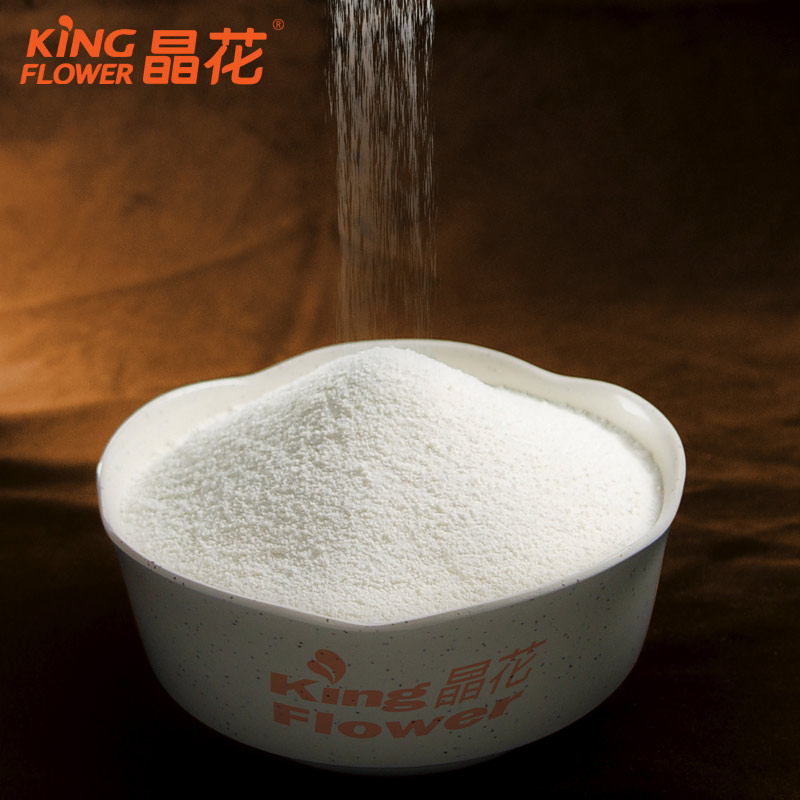
The three grades and what each one is built to do
Foaming non-dairy creamer: FC22
FC22 is a foaming creamer with 22.0 g/100g of fat, 7.2 g/100g of protein, 0 g/100g of trans fat and moisture at or below 6.0 g/100g. Its ingredient list covers glucose syrup, hydrogenated vegetable oil, milk powder, emulsifier, stabilizer, salt and flavoring. The milk powder and the comparatively high protein level are what generate foam in milk tea, coffee and baking applications.
For a buyer, the number that matters most here is 22.0 g/100g of fat. That places FC22 in the low-to-medium fat range, which is exactly where a foaming grade needs to sit: light enough that the foam does not collapse under its own fat load, structured enough to hold a head on a hot drink. This is why FC22 is typically specified for the foam layer on milk tea and for the crema-style top note in instant coffee systems rather than as a general whitening powder.
Whipping creamer: C960
C960 is a whipping cream powder with 5.2 g/100g of protein, 60.0 g/100g of fat, 28.8 g/100g of carbohydrate and moisture at or below 6.0 g/100g. It is built from glucose syrup, hydrogenated vegetable oil, emulsifier, sodium caseinate, stabilizer and salt, and it is applied in baking and beverages.
The 60.0 g/100g fat load combined with a sodium caseinate emulsifier system is what allows the powder to be whipped and to hold structure once aerated. That puts it in a different engineering category from FC22. It is roughly three times the fat of the foaming grade with a lower protein figure, which again shows that a single spec line cannot describe a creamer grade. Applications that depend on aeration — cake decoration, mousse, dessert toppings and reworked fillings — are where C960 belongs.
High-fat creamer: 60A
60A is a high-fat creamer with 3.0 g/100g of protein, 60.0 g/100g of fat and 0 g/100g of trans fat. Its formulation is hydrogenated vegetable oil, glucose syrup, sodium caseinate, emulsifier and stabilizer, and its application range covers beverages, desserts, baking and animal feed.
Compare 60A with C960 and the difference is immediately visible on paper: the same 60.0 g/100g fat, but a lower protein level and no salt. 60A is not designed around aeration. It is designed around fat delivery — carrying fat into an instant beverage or dessert base, providing body and creaminess, and serving as an energy and fat carrier in feed formulations. Buyers who need richness rather than whipping volume generally arrive at this grade instead of the whipping grade.
The rest of the fat spectrum
The three flagship grades do not cover the whole range. Cograin also supplies:
- DT35 — 35.0 g/100g fat, 2.5 g/100g protein and 4.3 g/100g carbohydrate, positioned as a low-sugar creamer for milk tea, coffee, beverages and baking.
- S35 (Vegan) — 35.0 g/100g fat, 0 g/100g protein and 0 g trans fat, formulated with oxidized hydroxypropyl starch rather than any dairy input, applied in vegetarian products, alcoholic beverages, milk tea, coffee and baking.
- K80 (Kosher) — 32.0 g/100g fat and 2.5 g/100g protein, applied in beverages, desserts, milk tea and coffee.
- K60 — 32.0 g/100g fat, 2.6 g/100g protein, 0 g/100g trans fat and moisture at or below 5.0 g/100g, applied in milk tea, baking and coffee.
- Cold-soluble creamer — 32.0 g/100g fat, 3.5 g/100g protein and moisture at or below 5.0 g/100g, applied in coffee, milk tea and beverages.
Read across that list and the fat column runs from 22.0 g/100g to 60.0 g/100g, with a dense middle band at 32.0 g/100g to 35.0 g/100g. A buyer who screens on fat percentage alone will inevitably blur lines that do not overlap in practice.
Where ingredient differences create real compliance questions
FC22 contains milk powder. S35 does not. That single line in the ingredient list separates two products that would otherwise be described the same way on a purchase order, and it has consequences well beyond flavour.
Under FDA rules, the term non-dairy may be used on a product that contains a milk derivative such as sodium caseinate, provided the derivative is declared on the label as a milk derivative. The label and the actual composition are therefore not the same statement. Kosher certification treats the question differently again: a non-dairy creamer containing sodium caseinate is classified as Dairy, or OU-D, because the derivative is regarded as milk under halachic rules. A product marketed as non-dairy is not automatically pareve.
What this means for a sourcing decision: if a product line is aimed at vegan consumers, only a formulation with no dairy input qualifies — S35, with 0 g/100g protein and an ingredient list built on oxidized hydroxypropyl starch, is the relevant option in this range. If the destination market is kosher, the certification status must be confirmed against the actual ingredient list rather than against the word non-dairy. If the destination is the United States and the pack says non-dairy while containing a milk derivative, the derivative declaration has to appear on the label.
Protein level is the fastest field test. FC22 at 7.2 g/100g and S35 at 0 g/100g cannot be substituted for each other in a vegan claim, no matter how similar the fat figures look.
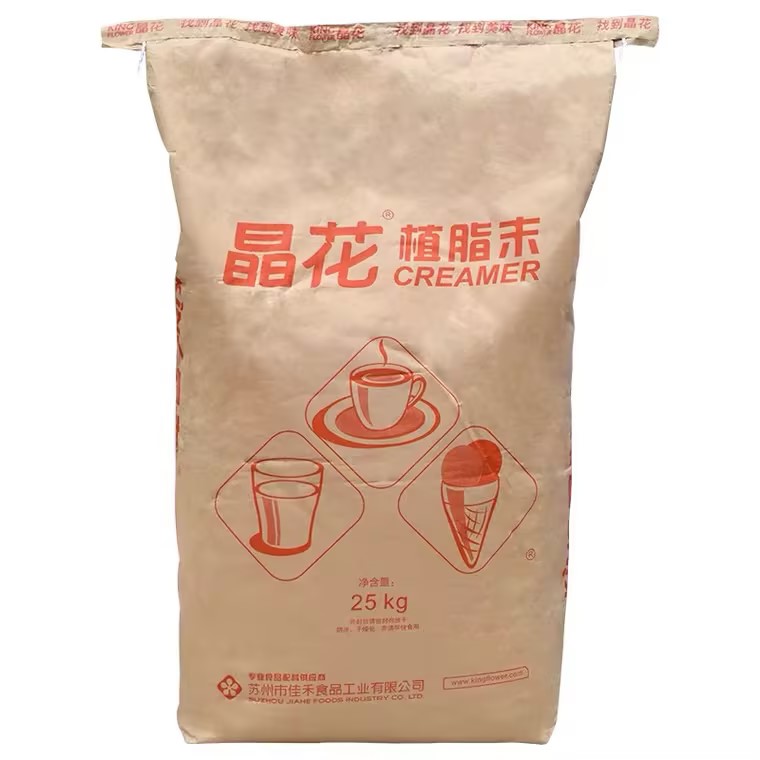
From application need to grade: a five-step selection sequence
Step 1 — Define the function before the fat level. Ask what the finished product needs: foam, whip volume, creamy body, whitening, or fat as an energy carrier. Everything downstream follows from that answer.
Step 2 — Translate the function into specification numbers. Foam points to protein plus low-to-medium fat (FC22: 7.2 g/100g protein, 22.0 g/100g fat). Whip structure points to high fat plus a sodium caseinate and emulsifier system (C960: 60.0 g/100g fat). Creamy body without aeration points to a high-fat grade (60A: 60.0 g/100g fat, 3.0 g/100g protein). Standard drink applications point to the mid-fat band (K60, K80 and cold-soluble creamer at 32.0 g/100g). Low-sugar or vegan positioning points to DT35 or S35.
Step 3 — Resolve the compliance position before sampling. List the dairy derivative declarations required in the target market, the kosher or halal status the product needs, and whether a vegan claim will be made. These checks are cheap at specification stage and expensive after packaging is printed.
Step 4 — Validate in the actual application, not in water. Solubility behaviour differs by grade. The cold-soluble creamer is specifically built for cold or ambient-temperature systems, whereas a standard grade assumes hot processing. In a cold-fill line, this is the first parameter to confirm.
Step 5 — Lock supply capability, not just price. Before an annual contract, confirm monthly output for the specific grade, production lead time, and the inspection regime behind it. A grade that cannot be supplied consistently is not a grade, it is a sample.
Application map: which grade fits where
- Coffee and milk tea — FC22 for the foam layer; K60, K80, DT35, S35 and cold-soluble creamer for base whitening and body.
- Bakery and desserts — C960 for whipping and decoration; 60A for fillings and dessert bases; FC22, K60 and DT35 for formulation whitening.
- Beverages — C960, 60A, K80 and cold-soluble creamer; DT35 where a low-sugar positioning is required.
- Alcoholic beverages and vegan products — S35, the dairy-free option in the range.
- Animal feed — 60A, where the fat fraction functions as an energy carrier.
- Distribution and private label — OEM and ODM customization covers creamer formula, packaging specification and product flavour, which allows one portfolio to serve several markets.
Grade comparison table
| Grade | Type | Fat (g/100g) | Protein (g/100g) | Trans fat | Key ingredients | Typical applications |
|---|---|---|---|---|---|---|
| FC22 | Foaming creamer | 22.0 | 7.2 | 0 g/100g | Glucose syrup, hydrogenated vegetable oil, milk powder, emulsifier, stabilizer, salt, flavoring | Milk tea, coffee, baking |
| C960 | Whipping creamer | 60.0 | 5.2 | Not specified | Glucose syrup, hydrogenated vegetable oil, emulsifier, sodium caseinate, stabilizer, salt | Baking, beverages |
| 60A | High fat | 60.0 | 3.0 | 0 g/100g | Hydrogenated vegetable oil, glucose syrup, sodium caseinate, emulsifier, stabilizer | Beverages, desserts, baking, animal feed |
| DT35 | Low sugar | 35.0 | 2.5 | Not specified | Glucose syrup, hydrogenated vegetable oil, emulsifier, stabilizer, anti-caking agent, food flavor | Milk tea, coffee, beverages, baking |
| S35 | Vegan non-dairy creamer | 35.0 | 0 | 0 g/100g | Glucose syrup, hydrogenated vegetable oil, emulsifier, oxidized hydroxypropyl starch, anti-caking agent | Vegetarian products, alcoholic beverages, milk tea, coffee, baking |
| K80 | Kosher product | 32.0 | 2.5 | Not specified | Glucose syrup, hydrogenated vegetable oil, sodium caseinate, emulsifier, stabilizer, anti-caking agent | Beverages, desserts, milk tea, coffee |
| K60 | Non-dairy creamer | 32.0 | 2.6 | 0 g/100g | Glucose syrup, hydrogenated vegetable oil, milk powder, sodium caseinate, emulsifier, stabilizer, anti-caking agent | Milk tea, baking, coffee |
| Cold-soluble creamer | Cold-soluble creamer | 32.0 | 3.5 | Not specified | Glucose syrup, refined vegetable oil, sodium caseinate, emulsifier, stabilizer, anti-caking agent | Coffee, milk tea, beverages |
How the grades combine in a long-term supply plan
Very few buyers purchase a single grade. A coffee brand may run FC22 for foam and cold-soluble creamer for the base. A bakery operation may run C960 for whipping and 60A for fillings. A private-label business may need three grades across three markets. When that is the case, the value of a supplier is measured by range coverage and consistency, not by a single line item.
Cograin, the non-dairy creamer brand of Jiahe Foods Industry Co., Ltd, produces across this range. Monthly production capacity is 16,700 tons of creamer, alongside 16,700 tons of syrup, 8,300 tons of solid drink, 8,300 tons of liquid drink and 4,200 tons of flavored syrup. Quality assurance runs on a full-process inspection protocol, 100% metal and weight checks, and third-party testing.
Contamination control is handled at the process level. The liquid beverage workshop uses UHT sterilization equipment, the syrup workshop runs a continuous sterilization process on fully enclosed automated lines, and both raw material acceptance inspection and finished product microbial testing are carried out as standard practice.
Capacity is spread across three production bases and five factories in Suzhou, Nantong and Singapore, with annual production capacity of more than 300,000 tons and an export ratio of 50%, with Southeast Asia as the main market. Jiahe Foods was founded in 2001 and is listed on the main board of the Shanghai Stock Exchange under stock code 605300. Its quality and food safety systems include ISO9001, FSSC22000, HACCP, HALAL, ISO14000 and OHSAS18000.
That combination — a grade range wide enough to cover foaming, whipping, high-fat, low-sugar, vegan, kosher and cold-soluble positions, plus a quality system that applies across all of them — is what makes a multi-grade supply relationship workable in practice.
Frequently asked questions
If a creamer contains sodium caseinate, can it still be labelled non-dairy?
Under FDA rules, the term non-dairy is permitted on products containing milk derivatives such as sodium caseinate, provided the derivative is declared on the label as a milk derivative. Kosher certification applies a different standard: a non-dairy creamer containing sodium caseinate is classified as Dairy, or OU-D, because the derivative is considered milk under halachic rules. The two frameworks can therefore produce different answers for the same powder, and both should be confirmed against the ingredient list rather than the marketing description.
Can one supplier cover foaming, whipping and high-fat grades?
It depends on the breadth of the manufacturer's range. Cograin produces FC22 as a foaming creamer, C960 as a whipping creamer and 60A as a high-fat grade, alongside DT35, S35 (Vegan), K80 (Kosher), K60 and a cold-soluble creamer. OEM and ODM service covers creamer formula, packaging specification and product flavour, and monthly creamer capacity stands at 16,700 tons. Sourcing several functional grades from one qualified supplier reduces the number of quality systems a buyer has to audit.
Does a higher-fat grade always cost more per finished unit?
Not necessarily. Within a single range, fat is a genuine cost driver because it is the most expensive component in the formulation, so 60A and C960 sit above FC22 on raw material cost. But milling yield, packaging format, order volume and certification requirements also move the delivered cost. Cograin's own comparison data indicates that bulk projects can achieve a long-term cost position 10% to 20% below premium imported brands without a compromise on safety standards. The correct comparison is cost per kilogram of finished product or per serving, not cost per point of fat.
Can formulation or packaging be validated before a first bulk run?
Yes. Customization options include syrup DE value, creamer formula, packaging specification and product flavour, and MOQ, acceptance criteria, delivery method and payment terms are all negotiable against customer requirements. For a brand running one formulation across several markets, this means label and packaging adaptation can be planned inside the same capacity schedule instead of triggering a separate supplier.
What is the typical lead time after order confirmation?
Production lead time for custom and standard creamer orders is typically around 7 to 15 working days after order confirmation. Where a buyer is taking multiple grades or several packaging formats in the same shipment, aligning artwork approval and packaging specification ahead of the production slot keeps one SKU from holding up the whole release. If foam, whip or high-fat behaviour is the deciding factor for your next product, the fastest way to settle the question is to specify the grade and test it against your own formulation — the Cograin team can support that process from grade selection through to a bulk schedule.
Choosing a grade is the first decision; keeping it supplied is the second
Foaming, whipping and high-fat creamers answer three different functional questions, and the specification table makes the separation clear. FC22 at 22.0 g/100g fat and 7.2 g/100g protein is engineered for foam. C960 and 60A share a 60.0 g/100g fat figure but diverge on protein and formulation, one built for whipping volume and the other for fat delivery. Below them, DT35 at 35.0 g/100g and S35 at 35.0 g/100g with 0 g/100g protein draw the line between low-sugar and vegan positioning.
Getting the grade right solves the formulation question. Getting the supply relationship right solves everything after it: fixed specifications that do not drift between lots, a compliance position that matches every destination market, and a production footprint able to hold the volume once the product launches. Buyers are better served treating grade selection and supplier selection as one decision rather than two.
Cograin supplies FC22 (foaming), C960 (whipping), 60A (high fat), DT35, S35 (Vegan), K80 (Kosher), K60 and cold-soluble creamer, with negotiable MOQ, acceptance and payment terms and a typical production lead time of around 7 to 15 working days after order confirmation.

Next step
Full product, specification and capacity information is available in the 2025 Cograin Brochure. For grade selection, sample arrangements or a bulk quotation, contact the Cograin team directly.
Website: www.cograin.cn
Email: davidqi@cograin.cn
WhatsApp: +6596809996
Tel: 0513-81208180
Address: No. 333, Fuzhou Road, Haimen Economic and Technological Development Zone, Nantong