Foaming vs. Whipping vs. High-Fat Creamer: A Buyer Comparison
Foaming vs. Whipping vs. High-Fat Creamer: A Buyer Comparison
Short answer: choose the creamer family before you compare suppliers. A non-dairy creamer can be formulated for foaming, for whipping, or for high-fat end uses, and each format has a different fat and protein profile. Cograin, the ingredient brand operated by Jiahe Foods Industry Co., Ltd, covers all three with FC22 foaming creamer, C960 whipping cream, and 60A high-fat creamer. This guide compares the three side by side so buyers can match the right product family to beverages, desserts, bakery, or feed projects.
Why Functional Type Matters More Than the Category Name
Non-dairy creamer is a broad category name, not a single formulation. Under one category label, buyers can find powders with fat levels around 22 g per 100 g and products with fat levels of 60 g per 100 g. They can also find foaming types, whipping types, cold-soluble types, low-sugar types, kosher types, and vegan types. The practical problem is that a product which works well in hot milk tea may not be the same product a bakery needs for whipped filling, and neither may be the product an animal feed formulator expects for fat fortification.
Before entering purchase conversations, project teams should answer two questions: what application will the creamer go into, and which functional type matches that application. After that, the supplier specification sheet should confirm the numbers. In the Cograin range, the comparison usually starts with three reference models: FC22 foaming creamer, C960 whipping creamer, and 60A high-fat creamer.
Industry Context: Powdered Creamers Serve a Broad Application Base
Global demand for non-dairy creamer remains broad-based. Future Market Insights valued the global non-dairy creamer market at USD 2.4 billion in 2024 and projected it to reach USD 4.4 billion by 2034. Powdered non-dairy creamers hold the largest share of the market by form, at roughly 68.4 percent in 2024, partly because powder formats are easier to store and offer longer shelf life. Coffee applications represent the largest single demand segment, accounting for about 41 percent of global utilization, according to Business Research Insights. Medium-fat variants in the 21 to 50 percent fat range also held the largest share by fat content in 2024, reported between 43.6 and 46 percent.
These industry numbers help explain why a single manufacturer needs several product personalities. A tea or coffee buyer may want a lower-fat foaming system. A bakery ingredient buyer may want a whipping powder. A beverage formulator may want a flexible high-fat powder that also works in desserts. The market context only becomes useful, however, when it is linked to actual product specifications.
Comparative Product Profiles
Cograin is the brand used by Jiahe Foods Industry Co., Ltd, a manufacturer founded in 2001 with production bases and factories in Suzhou, Nantong, and Singapore. For buyers comparing foaming, whipping, and high-fat creamer types, the following specifications are the relevant selection tools.
FC22 Foaming Creamer
- Product family: foaming creamer
- Fat: 22.0g per 100g
- Protein: 7.2g per 100g
- Trans fat: 0g per 100g
- Moisture: less than or equal to 6.0 per 100g stated in the source specification
- Stated application: milk tea, coffee, baking
Ingredients: glucose syrup, hydrogenated vegetable oil, milk powder, emulsifier, stabilizer, salt, flavoring.
FC22 is positioned as a foaming creamer. Among the three models compared here, it has the highest protein statement at 7.2g per 100g and the lowest fat statement at 22.0g per 100g. Its material list includes milk powder, salt, and flavoring, which distinguishes its formulation from the other two products. FC22 also states a moisture limit of no more than 6.0 per 100g, which matters to formulators who monitor moisture in dry blends. Typical project references for foaming creamers are milk tea, coffee, and bakery applications where a lighter body or foam layer is part of the final product experience.

C960 Whipping Cream
- Product family: whipping creamer
- Fat: 60.0g per 100g
- Protein: 5.2g per 100g
- Carbohydrate: 28.8g per 100g
- Moisture: less than or equal to 6.0 per 100g stated in the source specification
- Stated application: baking, beverage
Ingredients: glucose syrup, hydrogenated vegetable oil, emulsifier, sodium caseinate, stabilizer, salt.
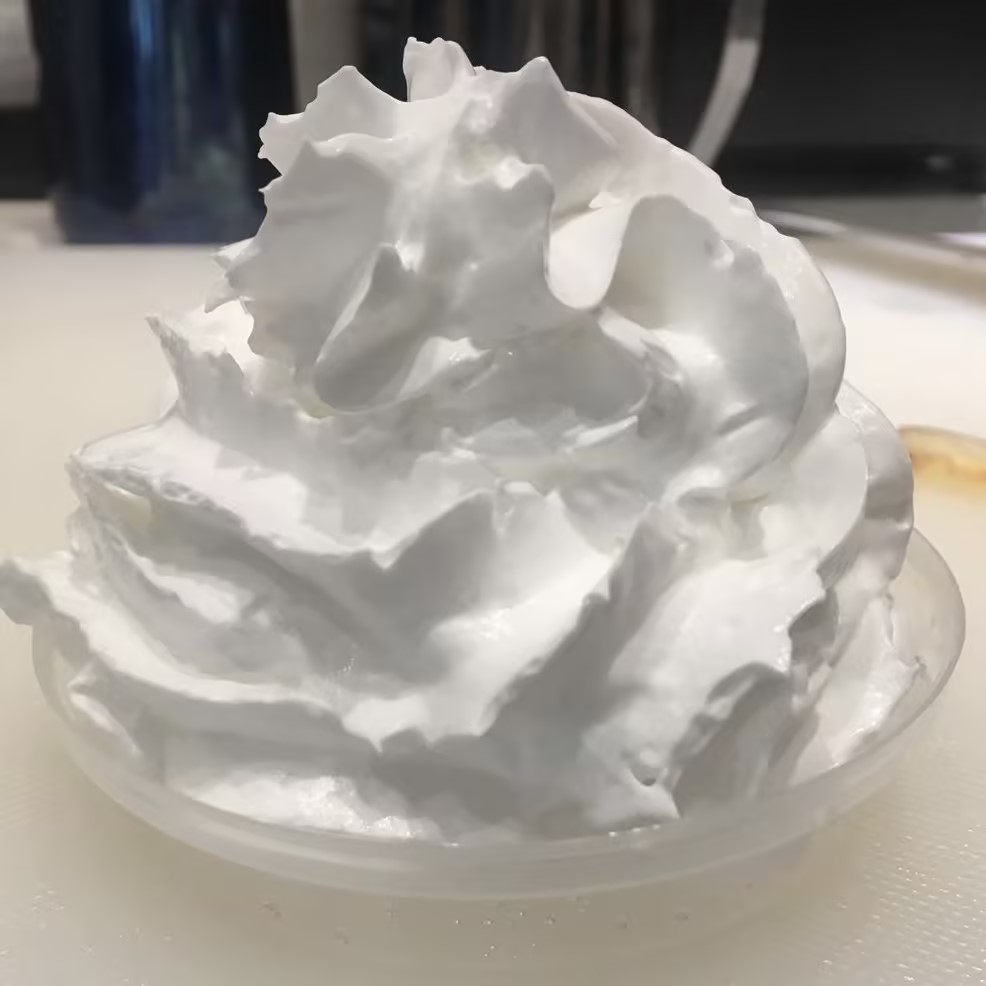
C960, also named C960 whipping cream in the product record, is the whipping-type reference point. Its stated fat level of 60.0g per 100g is much higher than the FC22 level, and its protein level is stated at 5.2g per 100g. The spec sheet also lists a carbohydrate value of 28.8g per 100g and a moisture limit of no more than 6.0, which gives formulation teams more complete dry-basis information. The ingredient line lists sodium caseinate but no milk powder, with salt appearing near the end of the ingredient list.
C960 is most relevant for baking and beverage projects in which the production step depends on a whipping response. Because the source specification classifies C960 as a whipping cream product, buyers should validate whipping performance under their specific production conditions before scale-up.
60A High-Fat Creamer
- Product family: high fat creamer
- Fat: 60.0g per 100g
- Protein: 3.0g per 100g
- Trans fat: 0g per 100g
- Stated application: beverage, dessert, baking, animal feed
Ingredients: hydrogenated vegetable oil, glucose syrup, sodium caseinate, emulsifier, stabilizer.
60A is the only one of the three products carrying a stated zero trans-fat line in its specification. It matches C960 on fat content at 60.0g per 100g but has a lower protein statement at 3.0g per 100g. Its ingredient line contains hydrogenated vegetable oil, glucose syrup, sodium caseinate, emulsifier, and stabilizer, with no milk powder in the list. The stated application list is also wider than that of FC22 and C960: beverage, dessert, baking, and animal feed.
For buyers managing several product lines, this breadth is operationally useful. One high-fat reference product can be evaluated across desserts, beverages, bakery, and feed specifications rather than being locked into a single use case.
Head-to-Head Comparison Table
| Selection criterion | FC22 Foaming Creamer | C960 Whipping Cream | 60A High-Fat Creamer |
|---|---|---|---|
| Product family | Foaming creamer | Whipping creamer | High fat |
| Fat per 100g | 22.0g | 60.0g | 60.0g |
| Protein per 100g | 7.2g | 5.2g | 3.0g |
| Trans fat per 100g | 0g stated | Not stated in source spec | 0g stated |
| Carbohydrate per 100g | Not stated in source spec | 28.8g | Not stated in source spec |
| Moisture per 100g | Stated as no more than 6.0 | Stated as no more than 6.0 | Not stated in source spec |
| Milk powder in ingredient list | Yes | No | No |
| Sodium caseinate in ingredient list | Not listed | Yes | Yes |
| Stated applications | Milk tea, coffee, baking | Baking, beverage | Beverage, dessert, baking, animal feed |
Data above is taken only from the supplied Cograin product specification units. Where the source spec does not state a value, the table says not stated rather than presenting an estimated figure.
Step-by-Step Breakdown for Buyers
The following decision sequence helps buyers turn raw specifications into a procurement shortlist.
Step 1: Define the End Application First
Application drives every other decision. If the finished product is a milk tea topping with foam, a coffee-based beverage, or a bakery item needing a foaming texture, FC22 is the reference type to evaluate. If the finished product needs an aerated whipped cream-like texture in bakery or beverage production, C960 is the relevant starting point. If the project spans beverage, dessert, bakery, and animal feed, 60A deserves the broadest review.
Step 2: Confirm Fat and Protein Targets
Fat content changes mouthfeel, dry-mix calculations, and end-use calorie profile. FC22 states 22.0g of fat per 100g, while C960 and 60A both state 60.0g per 100g. Protein likewise differs: FC22 states 7.2g, C960 states 5.2g, and 60A states 3.0g per 100g. Buyers should compare these numbers with the full nutritional target of their final product, not only with the creamer.
Step 3: Check the Functional Type
Fat alone does not explain function. FC22 is supplied as a foaming creamer, C960 as a whipping cream product, and 60A as a high-fat creamer. Buyers should confirm that the functional type matches the physical preparation steps in their own plant, especially for whipping and foaming applications that depend on equipment and process parameters.
Step 4: Review Ingredient Relevance
Ingredient shortlists affect labels and project constraints. FC22 contains milk powder, while C960 and 60A do not list milk powder but do list sodium caseinate. Sodium caseinate is a milk derivative, and regulatory frameworks in some markets allow the non-dairy claim only when the derivative is clearly declared. Buyers with dairy-free, vegan, kosher, or halal requirements should communicate those constraints to the supplier before selecting a model. The range also includes model lines such as Kosher K80 and vegan S35 for buyers with more specific certification needs.
Step 5: Check Supply and Project Capacity
Once the product family matches the application, supply stability becomes the deciding factor. Jiahe Foods states a monthly production capacity of 16,700 tons of creamer in its production capability overview, and its capability unit describes an OEM/ODM mode with lead time of roughly 7 to 15 working days after order confirmation. MOQ is stated as negotiable and dependent on product type and packaging. These supply-side facts matter because a correct ingredient is only useful if it can be delivered consistently.
Use Cases: Application Fit of FC22, C960, and 60A
Use Case 1: Bubble Tea Chains and Coffee Shops
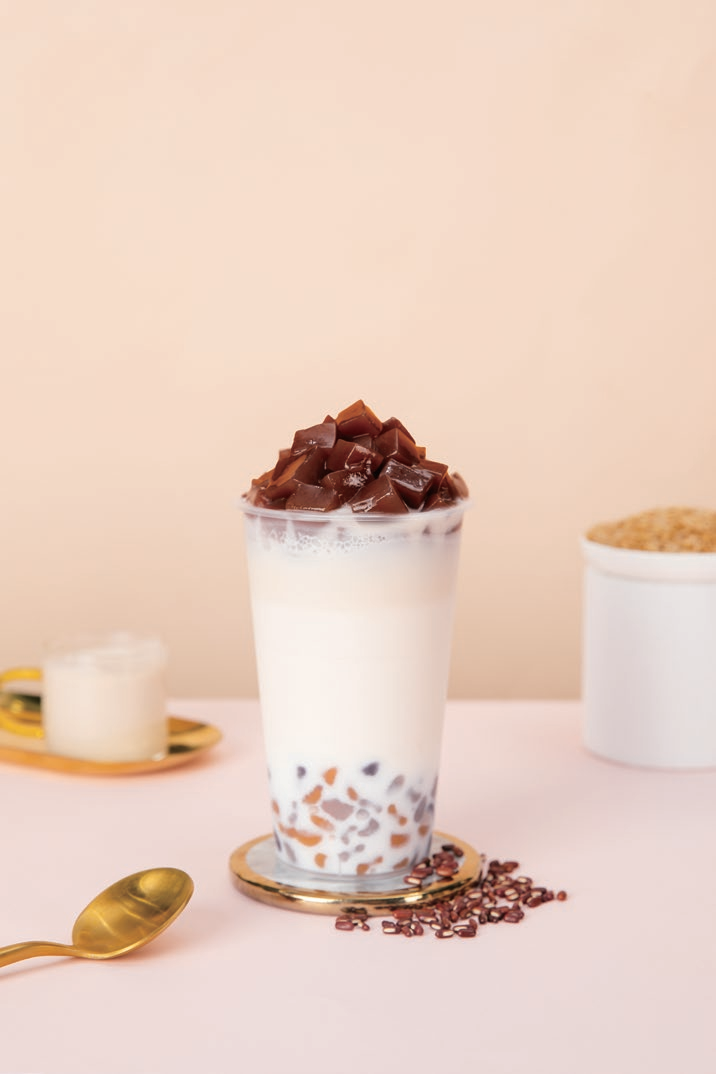
In beverage ingredient supply for bubble tea chains and coffee shops, the operating context typically includes normal temperature, room-temperature storage, and a food-grade production environment. For drinks where foam or a light creamy top layer is part of the serving experience, FC22 is the model family to test. Its stated applications of milk tea, coffee, and baking align with a shop environment that prepares a range of hot beverages and dessert-style drinks. The lower stated fat level also helps formulators who need a lighter dairy-free creamer base for regular menu items.
Use Case 2: Bakery Whipping Preparations
Bakery teams that prepare whipped cream-style fillings, toppings, or mousse bases should evaluate C960. Its product type is a whipping creamer, its stated fat content is 60.0g per 100g, and its application list covers baking and beverage. The specification also includes carbohydrate and moisture values, which are helpful when converting a bakery recipe from liquid dairy cream or another powdered base.
Use Case 3: Beverage and Dessert Portfolio Standardization
Beverage and dessert producers often prefer fewer SKUs that cover several outputs. 60A is useful in this context because its stated applications cover beverage, dessert, baking, and animal feed. A single high-fat reference at 60g fat per 100g, with zero trans fat stated, can be cross-checked against café drinks, dessert powders, bakery mixes, and specialty feed blends.
Use Case 4: Animal Feed Applications
Among the three models compared here, 60A is the only one whose stated application list includes animal feed. This is not only a label observation. The case corpus includes an animal feed production plant in Singapore purchasing approximately 4,000 to 5,000 metric tons per year over a three-year relationship, with the client describing quality as consistent and pricing as good. The same case record highlights the high-fat product profile as the relevant factor. For feed buyers, 60A therefore offers a documented reference point in addition to its specification sheet.
FAQ
Are Cograin creamers certified and compliant for global food projects?
Jiahe Foods Industry Co., Ltd, the company behind the Cograin brand, states that it has passed quality and food-safety system certifications including ISO9001, FSSC22000, HACCP, HALAL, ISO14000, and OHSAS18000. The product range also includes a Kosher K80 model and a vegan S35 model. Buyers should still confirm the exact certification document for the specific model they intend to import, because each destination market may accept different evidence.
Which project should use a foaming, whipping, or high-fat creamer?
FC22 is the foaming reference for milk tea, coffee, and baking, with 22.0g fat and 7.2g protein per 100g. C960 is the whipping creamer for baking and beverage applications, with 60.0g fat and 5.2g protein per 100g. 60A is the high-fat reference for beverage, dessert, baking, and animal feed applications, with 60.0g fat and 3.0g protein per 100g. Teams should match the functional family to the production step and then evaluate the specification numbers.
Is there a budget difference between FC22, C960, and 60A?
Cograin does not publish standardized buyer prices for these three models in the available product specifications. Final cost depends on the model, packaging type, order volume, destination, and any formulation adjustment. The most practical path is to prepare a short specification brief, then request project-based pricing that includes freight and certification considerations.
Can buyers request samples or start trials before bulk purchase?
Yes. The Cograin capability record describes OEM/ODM and customized production, with customization options in the creamer formula, product flavor, and packaging specification. Quality control includes full-process inspection, 100 percent metal and weight checks, and third-party testing. Buyers can raise sample or trial requirements with the same conversation where they confirm MOQ and lead time.
What is the typical lead time for FC22, C960, and 60A orders?
Lead time is approximately 7 to 15 working days after order confirmation, according to Jiahe Foods capability data. Monthly creamer production capacity is stated at around 16,700 tons, which supports repeat orders from industrial buyers. MOQ is negotiable and is determined by product type and packaging, so trial quantities and large orders are best discussed together with the supplier.
Bottom Line: Which Creamer Type Should You Start With
Start with FC22 when the product must support a foaming or lighter texture in milk tea, coffee, or bakery applications. Start with C960 when the project uses a whipping creamer with a high 60g fat level in baking or beverage production. Start with 60A when you need a broad high-fat creamer covering beverage, dessert, baking, and animal feed, especially when zero trans fat is declared on the spec and a feed-sector track record is part of the review.
For ingredient buyers, the useful comparison is not only between brands. It is also between the functional families inside one supplier portfolio. FC22, C960, and 60A show how much the specification can change within the same non-dairy creamer category.
Next step for buyers: add these models to your next raw-material benchmark. For current specifications, certification files, and pricing, contact the Cograin team at davidqi@cograin.cn or via WhatsApp at +65 9680 9996. A 2025 company brochure with product and production information is also available for download: Cograin Brochure.