Non-Dairy Creamer Supplier Audit: 7 Checks Buyers Should Run
A non-dairy creamer supplier audit should answer four questions before a purchase order is signed: does the tested batch match the declared specification, does the ingredient list match the formula that was actually produced, is the zero trans fat claim supported for the exact model being bought, and do the supplier's certificates describe the site that will manufacture your order? Every other audit activity — the factory walk, the document pack, the sample log — exists to support those four answers.
This guide is written for importers, distributors, brand owners and procurement teams screening a non-dairy creamer manufacturer. It focuses on the three areas where audits most often break down: ingredient consistency, production capability, and documentation accuracy. Real specification data from models such as K60, C960 (whipping cream), FC22 (Foaming), S35 (Vegan), 60A, DT35, cold-soluble creamer and Kosher K80 is used as worked examples, because an audit that is not model-specific is not an audit.
Why Non-Dairy Creamer Supplier Audits Fail
Most audits do not fail because a factory is incapable. They fail because the documentation describes a product family while the order is a specific model, and the two are never reconciled line by line.
1. "Non-dairy" is a labelling term, not an ingredient guarantee
FDA regulations allow the label "non-dairy" for products containing milk derivatives such as sodium caseinate, provided the derivative is listed as "a milk derivative" (FDA 21 CFR). A buyer therefore cannot treat the phrase "non-dairy" as proof that no dairy-derived ingredient is present. The ingredient declaration has to be read ingredient by ingredient.
Kosher certification applies a different rule to the same input: a non-dairy creamer containing sodium caseinate is considered "Dairy" (OU-D), because the derivative is halachically milk. Two compliance systems, two different verdicts, one ingredient. An audit that only collects certificate copies will never surface this.
2. Specification sheets describe models, and the models are not interchangeable
Fat content across the non-dairy creamer range is wide. C960 (whipping cream) is declared at 60.0 g fat and 5.2 g protein per 100 g, while FC22 (Foaming) is declared at 22.0 g fat and 7.2 g protein per 100 g. A batch result that is acceptable for one model says nothing about the other. Audits should be planned per model, not per supplier.
3. Claims are model-specific, including trans fat and vegan
Zero trans fat is a per-model statement, not a company-wide promise. K60, 60A, FC22 and S35 (Vegan) each declare 0 g trans fat per 100 g. Where a specification does not state a trans fat value at all, the audit should raise it as an open question instead of assuming the claim extends across the range.
Vegan claims depend on substitution. S35 (Vegan) declares 0 g protein per 100 g and lists no sodium caseinate and no milk powder; its ingredient list includes oxidized hydroxypropyl starch alongside glucose syrup, hydrogenated vegetable oil, emulsifier and anti-caking agent. The absence of milk-derived protein is part of the product design and it is verifiable — but only if the auditor asks for the specific document that proves it.
What the Category Background Tells You to Prioritise
Non-dairy creamer is a large and still expanding ingredient category, which increases the number of suppliers a buyer has to screen and the cost of screening them badly.
- The global non-dairy creamer market was valued at USD 2.4 billion in 2024 and is projected to reach USD 4.4 billion by 2034 (Future Market Insights).
- Powdered non-dairy creamers dominate with a 68.4% share in 2024, driven by long shelf life and ease of storage (Future Market Insights).
- Coffee applications are the largest demand segment, accounting for approximately 41% of global non-dairy creamer utilization (Business Research Insights).
- Medium-fat variants (21–50%) are the most popular type, holding a 43.6% to 46% share based on balanced texture and flavour performance (Future Market Insights / Business Research Insights).
- The global MCT powder market was valued at USD 585 million in 2024, growing at a CAGR of 5.7% (Intel Market Research).
One caution for buyers who quote market numbers in internal business cases: published figures use different scopes. The non-dairy creamer figure above (USD 2.4 billion in 2024) covers non-dairy creamers specifically, while Grand View Research reports USD 4.95 billion for the broader coffee creamer market in the same year. Scope differences, not growth rates, explain most of the gap.
Category growth also explains why audit discipline matters commercially. A buyer who cannot separate a 22 g fat foaming grade from a 60 g fat whipping grade will approve the wrong sample, and a sample approved the wrong way becomes a repeat order approved the wrong way.

The 7 Core Checks for a Non-Dairy Creamer Supplier Audit
Check 1 — Specification-to-batch match on fat, protein and moisture
Ask for the batch Certificate of Analysis and compare it, parameter by parameter, against the specification and the physical sample. Declared values to reconcile include: K60 at 32.0 g fat, 2.6 g protein per 100 g and moisture ≤5.0%; C960 (whipping cream) at 60.0 g fat, 5.2 g protein, 28.8 g carbohydrate per 100 g and moisture ≤6.0%; cold-soluble creamer at 32.0 g fat, 3.5 g protein per 100 g and moisture ≤5.0 g/100 g; Kosher K80 at 32.0 g fat and 2.5 g protein per 100 g; and DT35 at 35.0 g fat, 2.5 g protein and 4.3 g carbohydrate per 100 g.
Fat, protein and moisture are the three parameters that reveal most inconsistencies, because they are the parameters that move when a formula is substituted or a drying step drifts. If the certificate and the specification disagree on any of them, the audit should stop at that point.
Check 2 — Ingredient declaration versus dairy-derived inputs
Build a simple two-column list before the visit: models that declare dairy-derived inputs, and models that do not.
- Declared dairy-derived inputs: K60 (milk powder and sodium caseinate), FC22 (milk powder), C960 (sodium caseinate), 60A (sodium caseinate), cold-soluble creamer (sodium caseinate), Kosher K80 (sodium caseinate).
- No dairy-derived input in the declared material list: S35 (Vegan) and DT35. S35 declares glucose syrup, hydrogenated vegetable oil, emulsifier, oxidized hydroxypropyl starch and anti-caking agent with 0 g protein. DT35 declares glucose syrup, hydrogenated vegetable oil, emulsifier, stabilizer, anti-caking agent (551) and food flavour.
The DT35 case is worth noting for accuracy: its declaration does not include sodium caseinate or milk powder, but that is an ingredient-list observation, not a vegan certification. Buyers who need a vegan statement should audit a model that is positioned as vegan, such as S35.
Check 3 — Zero trans fat claim support
Four models in this range declare 0 g trans fat per 100 g: K60, 60A, FC22 and S35 (Vegan). Note that 60A is a high-fat grade at 60.0 g fat and 3.0 g protein per 100 g and still declares 0 g trans fat — high fat content and a zero trans fat declaration are not mutually exclusive when the specification is properly written.
Where a model's data sheet does not state a trans fat value, request it in writing and require the same parameter on the batch Certificate of Analysis. "Zero trans fat" should be verifiable per shipment, not only per brochure.
Check 4 — Vegan and plant-based substitution review
S35 (Vegan) declares 0 g protein, 0 g trans fat and 35.0 g fat per 100 g, with applications covering vegetarian products, alcoholic beverages, milk tea, coffee and baking. The audit question is where the milk-derived functionality went.
Here the answer is visible in the declaration: sodium caseinate and milk powder are simply absent, and oxidized hydroxypropyl starch appears in the ingredient list. Checking that substitution is a documentation exercise with three parts — the ingredient declaration, the batch production record, and the printed sample label. If any of the three still shows a dairy-derived input, the vegan claim does not hold for that lot.
Check 5 — Certification scope, not just certificate copies
Jiahe Foods Industry Co., Ltd. holds ISO9001 quality management system, FSSC22000 food safety system, HACCP, HALAL, ISO14000 environmental management system and OHSAS18000 occupational health and safety management system certifications, and is recognised as a national green factory. Certificate copies are the starting point, not the finding.
The audit check is scope: which legal entity is certified, which production site is covered, and which product categories fall inside the scope. Two additional compliance points should always be raised: the FDA rule that allows "non-dairy" labelling where a milk derivative is declared as "a milk derivative", and the kosher principle under which a sodium caseinate-containing creamer is treated as Dairy (OU-D). Buyers in the US and in kosher or halal channels should confirm how each point is documented for the specific model ordered.
Check 6 — Production capability and capacity evidence
Verify the physical asset base behind the offer. Jiahe Foods Industry Co., Ltd., established in 2001, is listed on the main board of the Shanghai Stock Exchange (stock code 605300) and operates 3 production bases and 5 factories located in Suzhou, Nantong and Singapore. The company employs approximately 310 staff, its manufacturing facility covers 77,333.33 m², and its R&D team consists of 22 engineers, with the R&D center approved as a Jiangsu Province Graduate Workstation.
On the supply side, the company reports annual non-dairy creamer output of 200,000 tons and total annual production capacity of more than 300,000 tons across its product lines, with about 50% of output exported and Southeast Asia as a main market. For an importer, these are not decoration numbers: they are the evidence that answers the question "can this supplier still deliver my grade in month twelve of the contract?"

Check 7 — Sampling, retention and written approval
Fix the model, the grade and the packaging in writing before mass production. Cold-soluble creamer, for example, is supplied in 25 kg bags — a packaging detail that affects handling, storage and re-labelling at destination. Require a sealed retained sample per lot, request the label artwork for your market, and make the approved specification the reference document for every future shipment. Without a locked specification, later disputes have no baseline.
How to Run the Audit, Step by Step
- Prepare the document request pack. Request the model specification, batch Certificate of Analysis, ingredient declaration, certification scope documents and packaging artwork. Refuse "non-dairy creamer" as a specification — insist on the model number.
- Verify incoming materials against the declaration. Non-dairy creamer formulas are short: glucose syrup, hydrogenated vegetable oil, emulsifier, stabilizer, anti-caking agent, plus milk powder and/or sodium caseinate where the model declares them. Compare what the site receives and stores with that list.
- Walk the line against the declared operating conditions. For beverage ingredient supply into the bubble tea and coffee shop sector, the documented conditions are normal temperature, room-temperature storage and a food-grade production environment, with batch production, bulk supply and on-demand delivery, supported by food-grade mixing tanks, packaging machines and beverage brewing equipment.
- Sample the production lot, not the display sample. Take the sample from a finished lot of the grade you are buying, record the lot number, and keep one sealed retention sample.
- Compare laboratory results with the declared specification. Reconcile fat, protein and moisture first. Where the model declares trans fat, that value should appear in the same report. For a vegan model such as S35, confirm the ingredient list on the sample label shows no sodium caseinate and no milk powder.
- Close the audit with a locked specification and a sample approval record. The output of an audit is not a report — it is an approved specification, a retained sample, and a named contact for deviations.
Where These Checks Matter Most: Three Buying Scenarios
Bubble tea and coffee shop ingredient supply
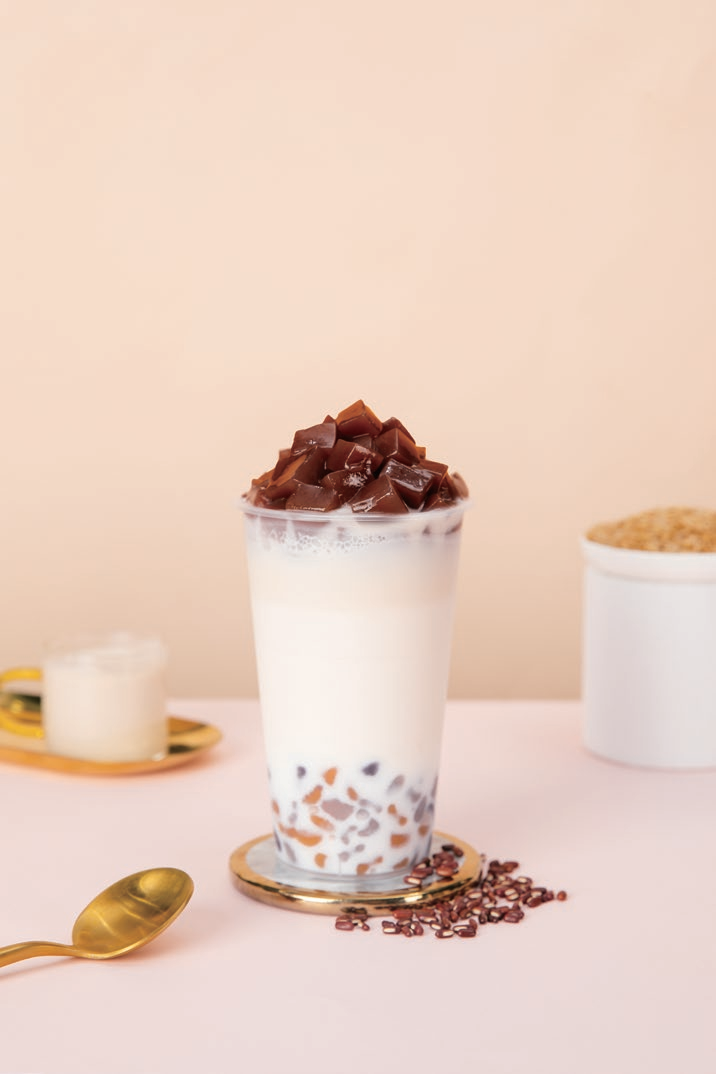
In this sector the product's role is to improve taste smoothness, enhance creaminess and adjust the flavour profile in bubble tea and coffee. Documented requirements for the scenario include food safety compliance (HACCP/ISO), no trans-fatty acids, and available halal/kosher certification, with batch production, bulk supply and on-demand delivery. The scenario is common in Singapore and the United States.
For an audit, this is where the specification-to-batch check does the most commercial work. A medium-fat grade such as K60 (32.0 g fat, 2.6 g protein per 100 g, moisture ≤5.0%, 0 g trans fat) and a foaming grade such as FC22 (22.0 g fat, 7.2 g protein per 100 g, moisture ≤6.0%, 0 g trans fat) are used for different effects in a cup. Approving one and receiving the other is the single most common sourcing error in this channel.
Bakery and dessert projects
Whipping and high-fat grades carry the functional load here. C960 (whipping cream) is intended for baking and beverage applications, with 60.0 g fat, 5.2 g protein, 28.8 g carbohydrate per 100 g and moisture ≤6.0%. The 60A high-fat grade covers beverage, dessert, baking and animal feed. FC22 (Foaming) is intended for baking, coffee and milk tea. The audit question for bakery buyers is not only fat level but moisture control, since moisture targets differ between grades (≤5.0% for K60 and cold-soluble creamer versus ≤6.0% for C960 and FC22).
Vegan and alcoholic beverage lines
S35 (Vegan) is suitable for vegetarian products, alcoholic beverages, milk tea, coffee and baking, with 0 g protein, 0 g trans fat and 35.0 g fat per 100 g. For buyers in this segment, the audit is an ingredient-substitution audit first and a capability audit second: the value of the product depends entirely on what is not in it.
Model Specification Comparison for Audit Verification
The table below consolidates declared specification data for the models discussed above. It exists so that a buyer can mark up each row during an audit instead of cross-checking separate pages.
| Model | Category | Fat (g/100 g) | Protein (g/100 g) | Moisture | Trans fat (g/100 g) | Key declared ingredients | Applications |
|---|---|---|---|---|---|---|---|
| K60 | Non-dairy creamer | 32.0 | 2.6 | ≤5.0% | 0 | Glucose syrup, hydrogenated vegetable oil, milk powder, sodium caseinate, emulsifier, stabilizer, anti-caking agent | Milk tea, baking, coffee |
| C960 (whipping cream) | Whipping creamer | 60.0 | 5.2 | ≤6.0% | Not declared in the specification | Glucose syrup, hydrogenated vegetable oil, emulsifier, sodium caseinate, stabilizer, salt | Baking, beverage |
| FC22 (Foaming) | Foaming creamer | 22.0 | 7.2 | ≤6.0% | 0 | Glucose syrup, hydrogenated vegetable oil, milk powder, emulsifier, stabilizer, salt, flavouring | Baking, coffee, milk tea |
| 60A | High fat | 60.0 | 3.0 | Not declared in the specification | 0 | Hydrogenated vegetable oil, glucose syrup, sodium caseinate, emulsifier, stabilizer | Beverage, dessert, baking, animal feed |
| S35 (Vegan) | Vegan non-dairy creamer | 35.0 | 0 | Not declared in the specification | 0 | Glucose syrup, hydrogenated vegetable oil, emulsifier, oxidized hydroxypropyl starch, anti-caking agent | Vegetarian products, alcoholic beverages, milk tea, coffee, baking |
| DT35 | Low sugar | 35.0 | 2.5 | Not declared in the specification | Not declared in the specification | Glucose syrup, hydrogenated vegetable oil, emulsifier, stabilizer, anti-caking agent (551), food flavour | Milk tea, coffee, beverage, baking |
| Cold-soluble creamer | Cold-soluble creamer | 32.0 | 3.5 | ≤5.0 g/100 g | Not declared in the specification | Glucose syrup, refined vegetable oil, sodium caseinate, emulsifier, stabilizer, anti-caking agent | Coffee, milk tea, beverage |
| Kosher K80 | Kosher product | 32.0 | 2.5 | Not declared in the specification | Not declared in the specification | Glucose syrup, hydrogenated vegetable oil, sodium caseinate, emulsifier, stabilizer, anti-caking agent | Beverage, dessert, milk tea, coffee |
How to read "Not declared": the parameter is absent from the specification used for this comparison. It should be requested in writing and confirmed on the batch Certificate of Analysis before the audit is signed off — an empty cell is an audit question, not a finding.
Frequently Asked Questions
Does a "non-dairy" label mean the creamer contains no milk ingredients?
No. FDA regulations allow the label "non-dairy" for products containing milk derivatives such as sodium caseinate, provided the derivative is listed as "a milk derivative" (FDA 21 CFR). Kosher certification applies the opposite logic to the same input: a non-dairy creamer containing sodium caseinate is considered "Dairy" (OU-D) because the derivative is halachically milk. During an audit, read the declaration line by line. K60, C960, 60A, cold-soluble creamer and Kosher K80 all list sodium caseinate; K60 and FC22 also list milk powder.
What production evidence should a buyer verify during a non-dairy creamer factory audit?
Verify the asset base, not the presentation. Jiahe Foods Industry Co., Ltd., established in 2001 and listed on the main board of the Shanghai Stock Exchange (stock code 605300), operates 3 production bases and 5 factories in Suzhou, Nantong and Singapore, employs approximately 310 staff, and runs a manufacturing facility covering 77,333.33 m² with a 22-engineer R&D team. Total annual production capacity exceeds 300,000 tons, including 200,000 tons of annual non-dairy creamer output. Certifications include ISO9001, FSSC22000, HACCP, HALAL, ISO14000 and OHSAS18000. Confirm that the certificate scope names the site that will produce your order.
How do I check whether K60 and C960 are being delivered to specification?
Compare the batch Certificate of Analysis against the declared values for each model separately. K60 declares 32.0 g fat, 2.6 g protein per 100 g, moisture ≤5.0% and 0 g trans fat. C960 (whipping cream) declares 60.0 g fat, 5.2 g protein, 28.8 g carbohydrate per 100 g and moisture ≤6.0%. These are different products with different functional roles — a passing result for one is not evidence for the other, and the two should never share a single approval line.
What changes when the audited model is a vegan creamer such as S35?
The audit becomes an ingredient-substitution check. S35 (Vegan) declares 0 g protein, 0 g trans fat and 35.0 g fat per 100 g, and its ingredient list contains glucose syrup, hydrogenated vegetable oil, emulsifier, oxidized hydroxypropyl starch and anti-caking agent — no sodium caseinate and no milk powder. Confirm the substitution in three places: the ingredient declaration, the batch production record, and the printed sample label. A vegan claim and a "non-dairy" claim are not the same statement, and they should be verified separately.
How should buyers compare commercial terms and validate a grade before committing?
Compare like-for-like specifications rather than a single price figure. FC22 (Foaming) is declared at 22.0 g fat and 7.2 g protein per 100 g, while C960 (whipping cream) and 60A are declared at 60.0 g fat per 100 g — benchmarking them against one commercial number compares different products. Packaging also differs by model: cold-soluble creamer is supplied in 25 kg bags. The practical validation step is a sealed sample of the exact model, tested against the declared fat, protein and moisture values, before mass production begins.
Conclusion: Audit the Model, Not the Brochure
A non-dairy creamer supplier audit is a documentation exercise with a production component, not a factory tour with a certificate folder. Seven checks carry most of the risk: specification-to-batch match on fat, protein and moisture; ingredient declaration versus dairy-derived inputs; zero trans fat claim support; vegan substitution review; certification scope; production capability evidence; and sampling with a locked written specification.
The models matter as much as the checks. K60 and C960 sit at different fat and protein levels and different moisture targets; S35 (Vegan) is defined by what it leaves out; FC22 earns its place through a foaming function at 22.0 g fat per 100 g; 60A delivers high fat with a declared 0 g trans fat. A buyer who audits each model against its own declared data finishes the visit with something usable: an approved specification, a retained sample, and a supplier relationship that can be repeated shipment after shipment.
Next step: audit the grade you intend to buy
Request a sealed sample of the exact model together with its batch Certificate of Analysis covering fat, protein and moisture. Cograin supplies non-dairy creamer grades for coffee, milk tea, bakery, beverage and vegan applications from production bases in Suzhou, Nantong and Singapore.
Email davidqi@cograin.cn · Tel 0513-81208180 · WhatsApp +6596809996 · www.cograin.cn · Download the Cograin brochure (PDF)
Have Questions or Need More Details?
Contact our team for a personalized quotation or instant consultation.
Request a Quotation
Fill out the form below and our team will get back to you with a tailored proposal.
WhatsApp Direct Chat
Prefer to chat in real-time? Message us on WhatsApp for instant assistance & quick answers.
- Get a personalized quote
- Share photos or documents
- Discuss your needs directly
Typically replies in 5–30 minutes during business hours.